China, definitely the country that intrigued me the most, but also the one I was most apprehensive about. Before leaving, we really didn’t know much about it, aside from what the media tells us. And although we live in a democracy, our media (and therefore we) have biases.
One thing’s for sure: spending a month in China leaves an impression. Discovering a country where everything is so… colossal is no small thing. A vast 9.5 million km² area, landscapes that seem to stretch on forever, XXL cities, and an omnipresent surveillance that makes you feel Big Brother’s breath on your neck.
I’ll tell you the story of China through a series of encounters. Buckle up, here we go!
Chapter 1: The Chinese Canadian I Met in Japan
In Japan, I met a Chinese man living in Canada. He warned me about the two things you should never do in China. First, never smoke a joint. Easy enough. But most importantly, avoid talking about politics. Now, that’s already trickier for me… Especially since I had just binge-listened to five hours of France Inter’s podcast on the situation in China before leaving. An additional trigger that would make it difficult for me to keep my lips sealed.
We easily forget how much politics shapes a country, especially when we’ve lived so long in Belgium, where saying what you think is second nature! But in China, everything is different. Politics is the glue that holds everything together; it shapes the environment and the way people live and think.
And when a dictatorship stays in place long enough, the pattern is always the same: a society remolded to reflect the regime’s image.
To achieve this, dictatorships follow a well-tested formula: intense nationalism, external enemies (often neighbors, with the United States naturally in the lead as well), total control over the media, carefully rewritten school textbooks to mold the youth, a custom-modified constitution to stay in power as long as possible, and… mass surveillance. Add a bit of this, let simmer for 5, 10, 20 years, and you have a well-oiled cocktail.
The Chinese government has mastered it perfectly.
- Starting with the famous Chinese firewall, poetically dubbed the “Great Firewall,” blocking access to over 8,000 platforms. Our European smartphone becomes rather pointless, as 80% of the apps and sites we use daily are inaccessible here:
- Facebook and Instagram? Forget it unless you’re keen on Chinese social media (hello, TikTok). Google, Outlook, Yahoo? Not happening.
- Almost no newspapers: Le Monde, CNN, BBC. Nothing gets through. Good news: sports newspaper work, and ironically, so does Fox News. Even an authoritarian regime knows the difference between news and… other things 😉.
Foreigners like us can bypass this firewall with a VPN, but for the Chinese? Nada. And television doesn’t help either: everything is state-controlled.
- Thinking ChatGPT might save the world? Not here. It’s blocked, and China is naturally developing its own AI model. Handy, right? Teach it what you like, and voilà, it tells you that Taiwan is a Chinese region.
- President Xi Jinping has revised the constitution to remain in power longer. Who said two terms were enough?
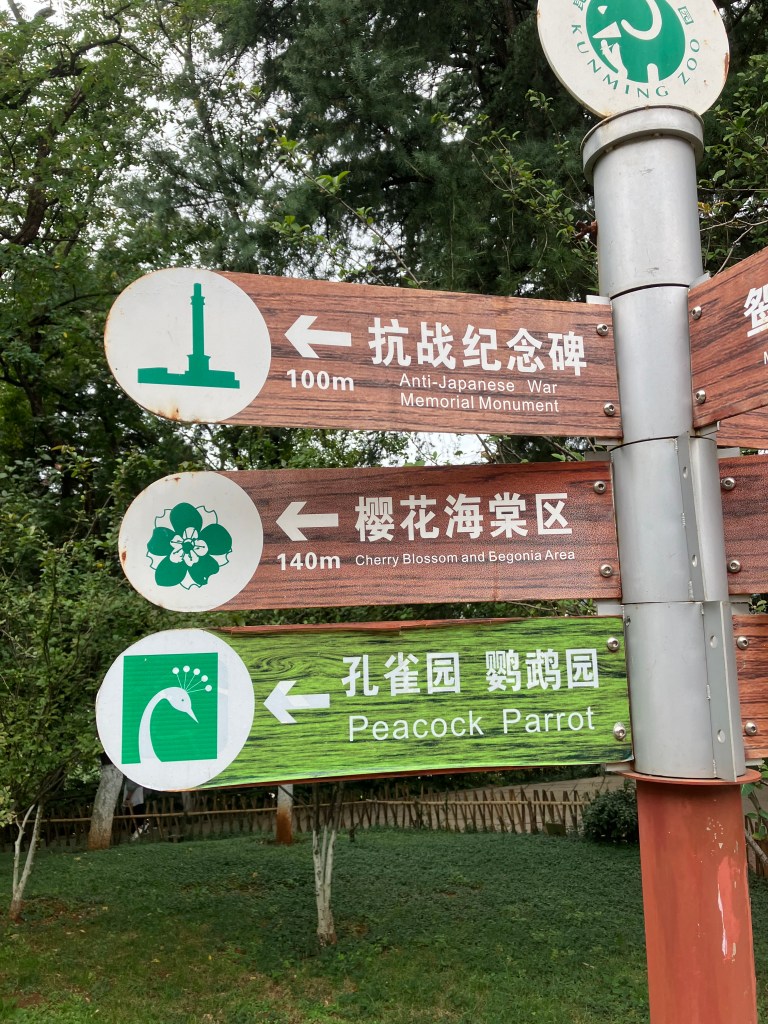
Then there’s the memorable 18th of September, “National Humiliation Day.” Every year, sirens blare at 9:18 a.m. to commemorate the Japanese invasion in 1931. This day, established in 2001, fuels nationalist discourse: “We, the Chinese people, against foreigners.” An amazing tactic to increase nationalist sentiments. We’ve seen a lot of “anti-Japanese” monuments as well.
- GDPR or privacy? Forget it. At the airport, our passports are instantly linked to our faces. On screens, our names appear with gate information: “Susan Decock, gate 26”. Saying “we didn’t sign anything” doesn’t really help here… facial recognition, no more anonymity, you can’t even scratch your nose or they’ll know.
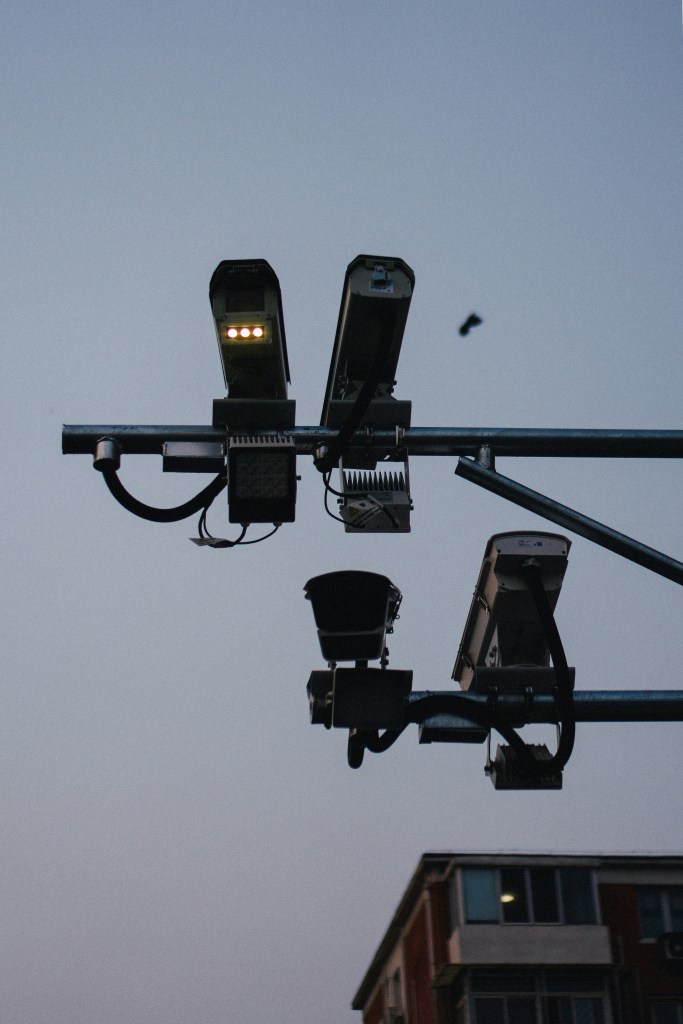
And then there are the cameras. They’re EVERYWHERE! In taxis, on train conductors (yes, they wear them on their chest), in hostels, minibuses, and on the streets. With facial recognition as a bonus; they always know where you are, what you’re doing… even before you know it yourself.
Ironic, isn’t it? China calls itself the “People’s Republic of China.” The people, really?
Chapter 2: The Cops of Beijing
Beijing surprises us. Everywhere you look, there are colorful bicycles, electric scooters, and luxury cars. The city breathes a certain level of wealth. Despite their abysmal level of English, all the signs are translated. English is one of the three core subjects in secondary education, but honestly, you have to look hard to find someone who can speak even one sentence!
I don’t feel at ease. To enter the famous Tiananmen Square, we have to show our passports three times and empty our backpacks. I try to explain that the ridiculous ninja stars brought back from Japan are toys for children. The police are everywhere. Nola keeps asking me why there are so many cops, especially after spending a month and a half in Japan, where you hardly see any.
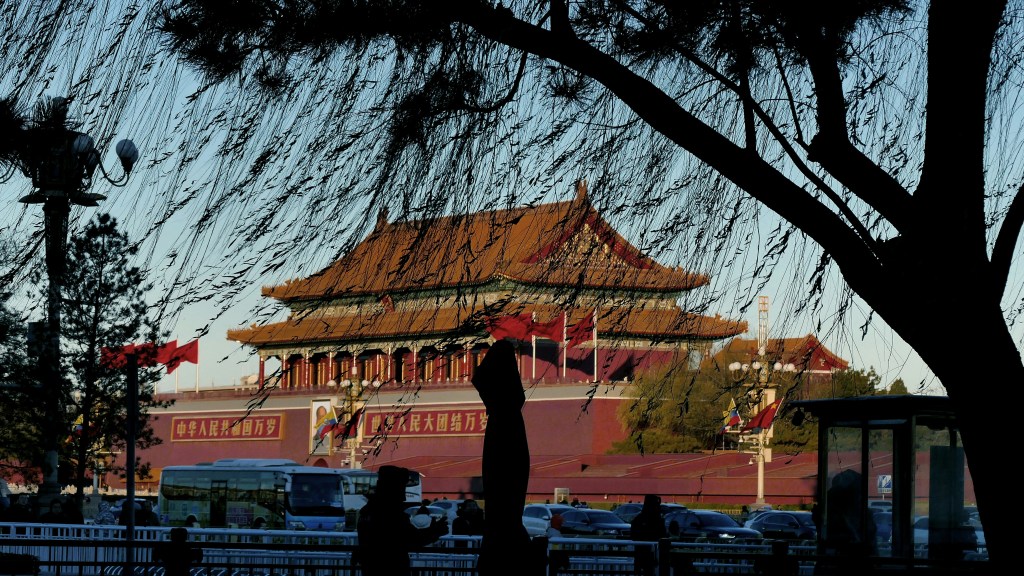
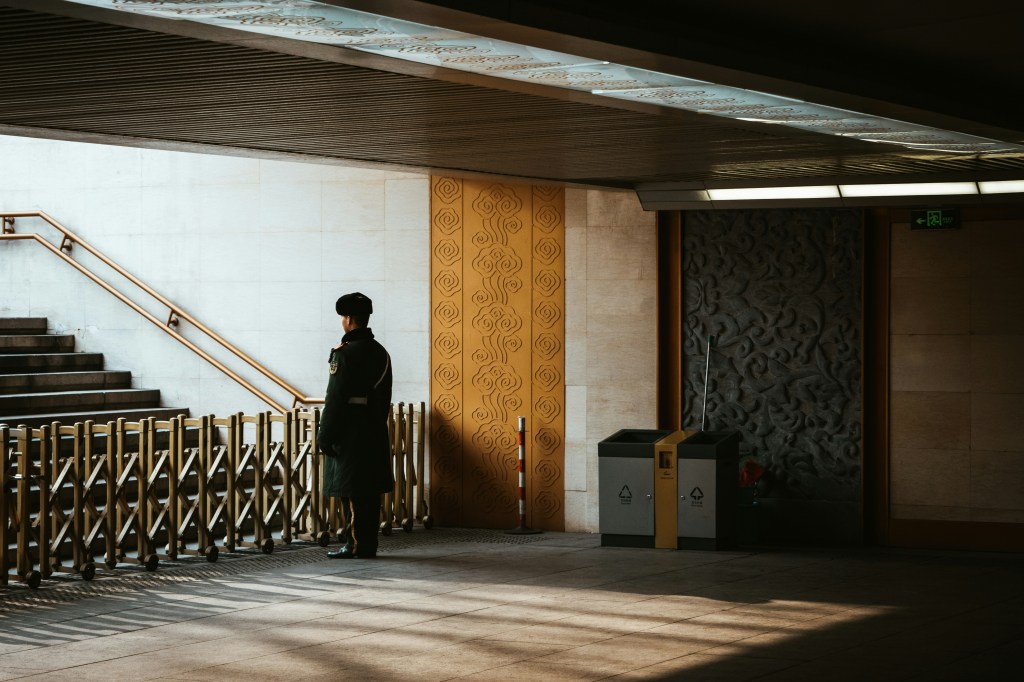
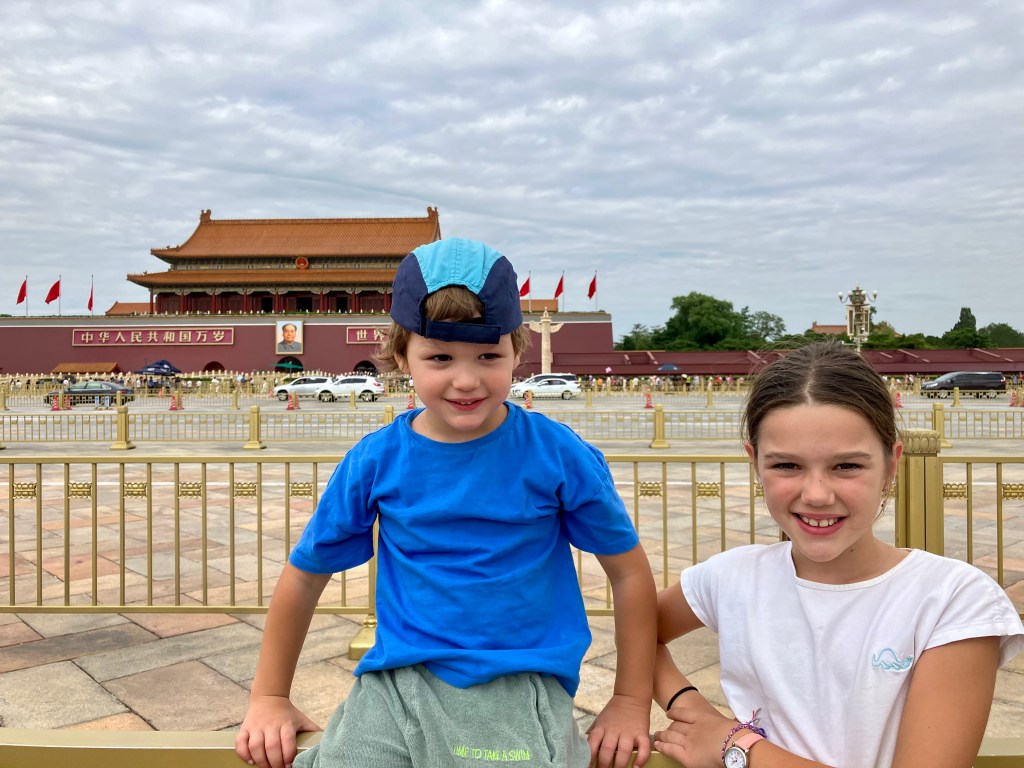
Not that we are being singled out for security checks: the Chinese themselves are also subjected to this surveillance. Their ID cards act as a pass for every entry. No favoritism here; it’s the grand equality of security.
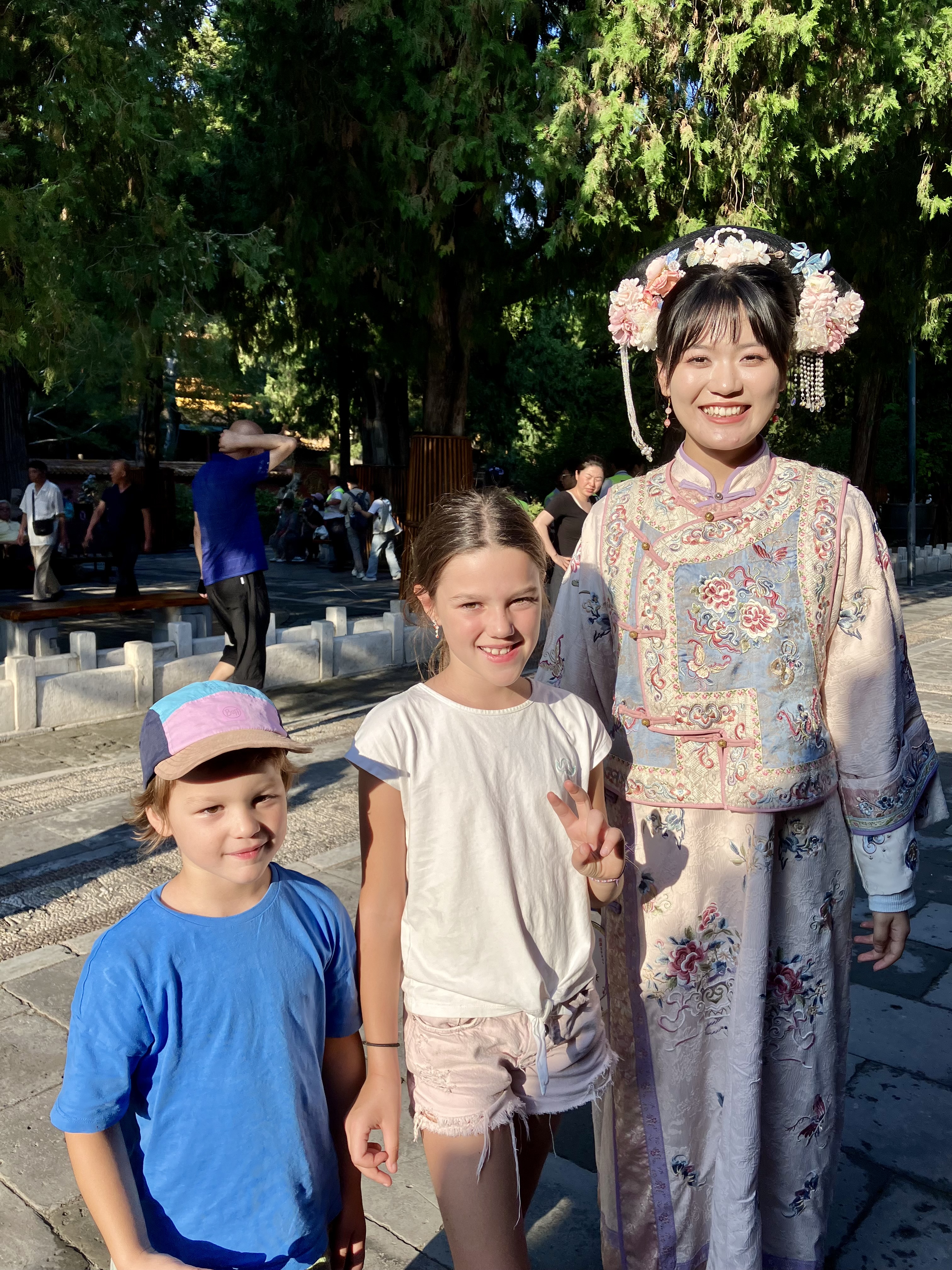
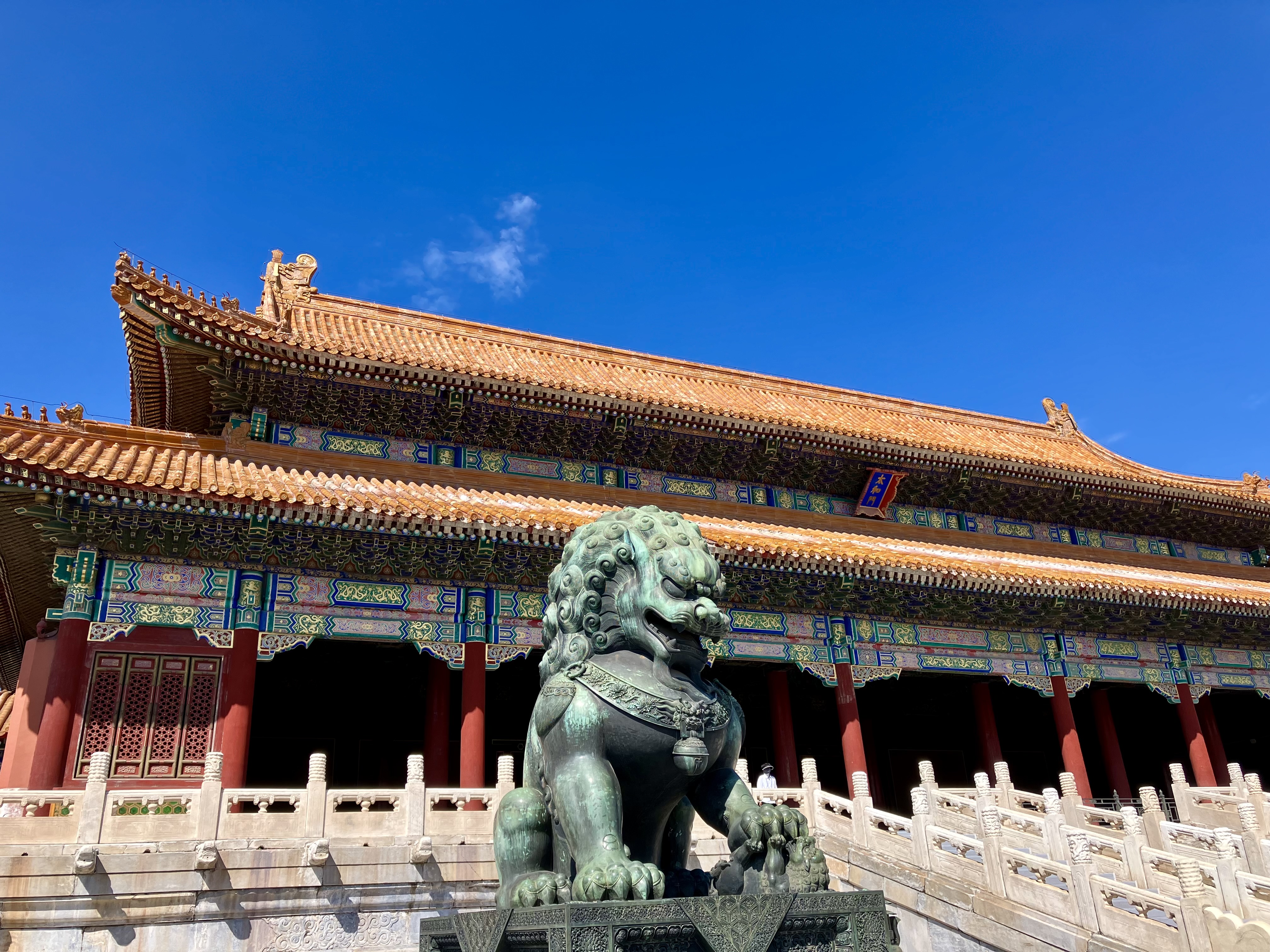
Then we arrive at the Forbidden City. The sight is so breathtaking that I start to relax.
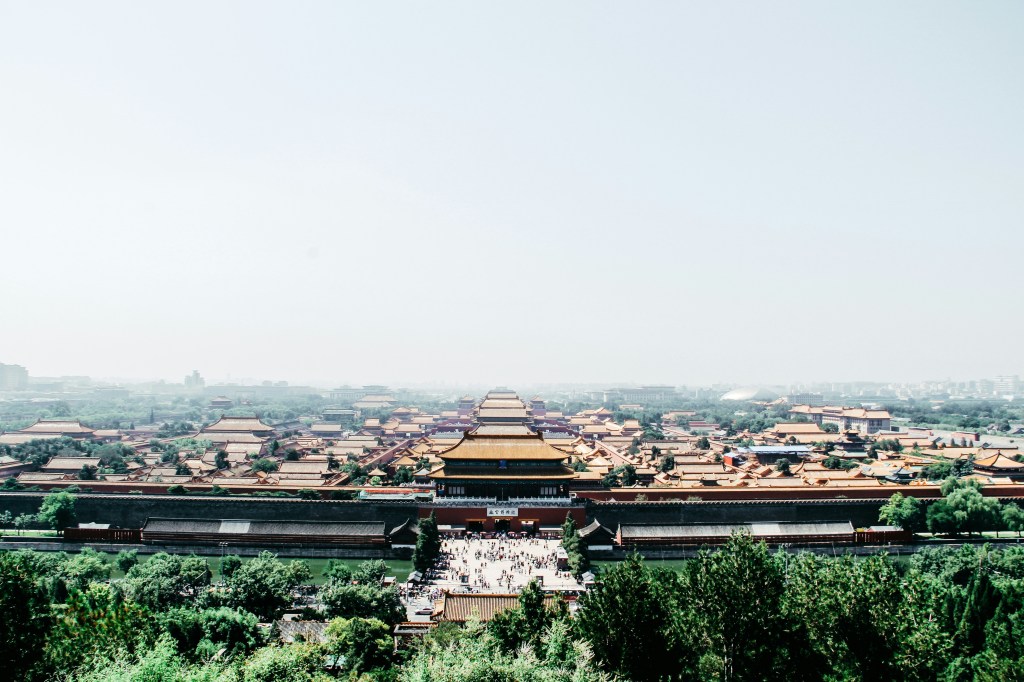
The vastness of the place takes my breath away. It feels endless. From one gigantic courtyard to another, some can hold up to 100,000 people.
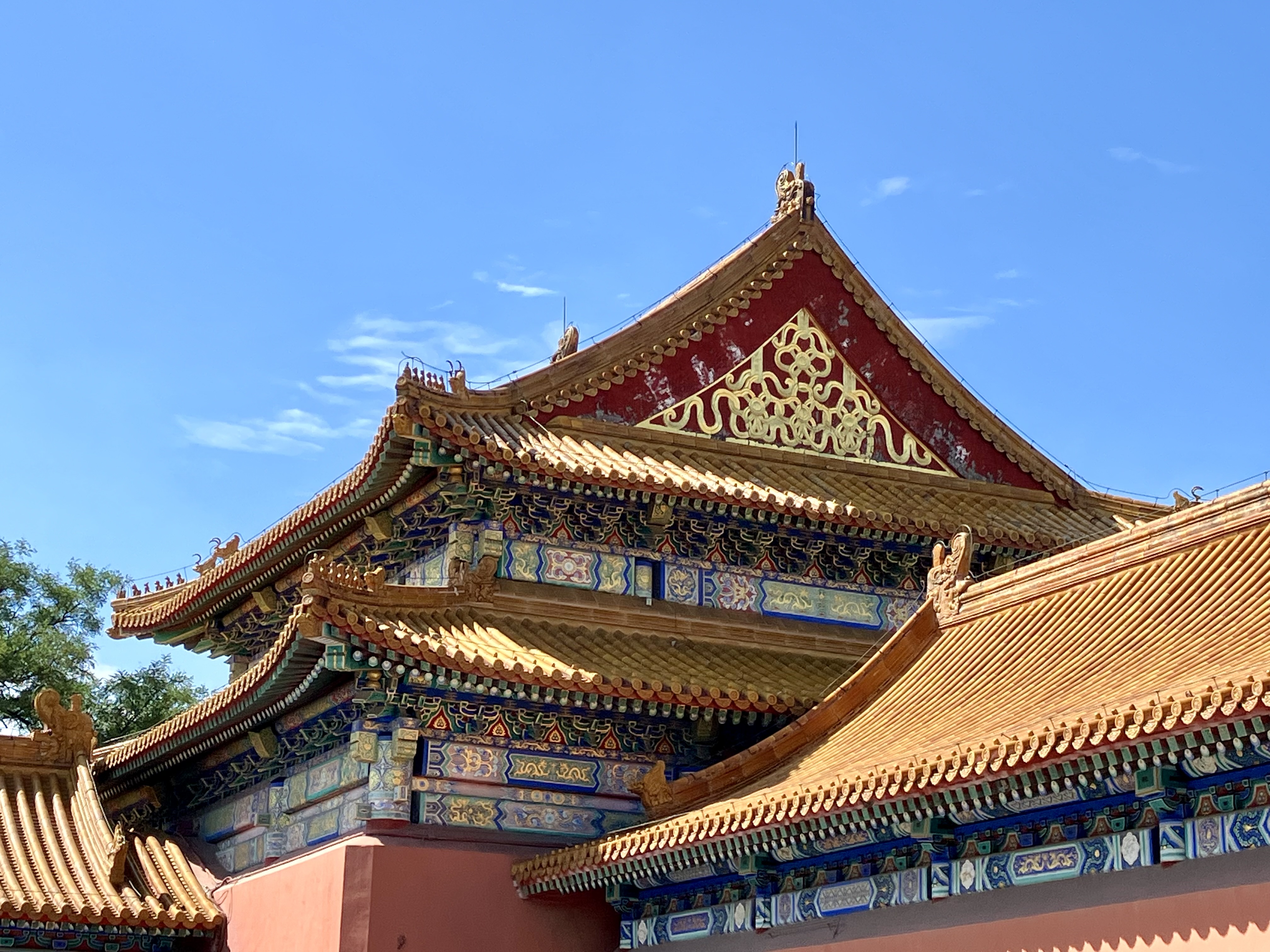
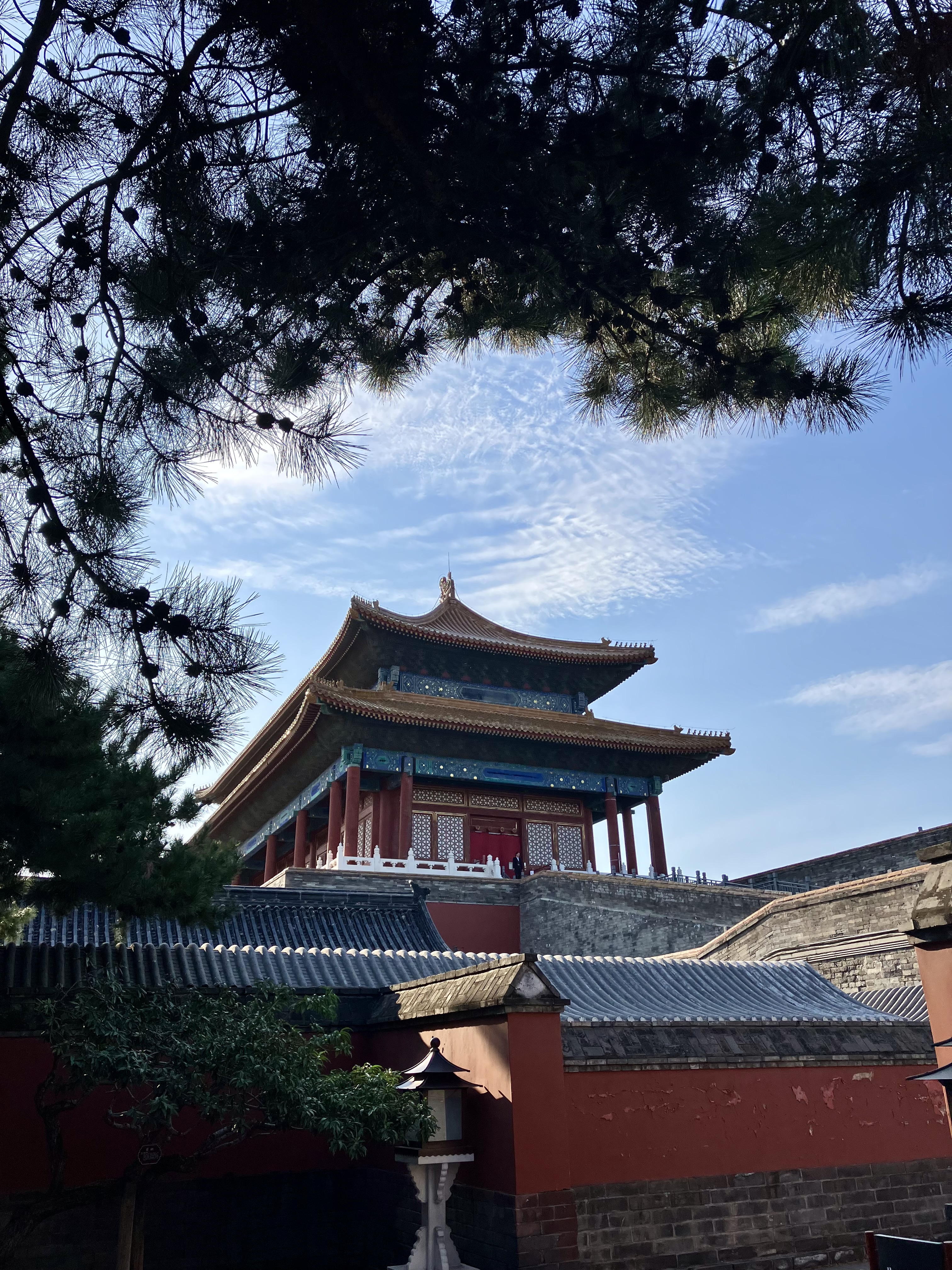
Here are some numbers to give you vertigo: the Forbidden City covers about 720,000 m², with more than 8,700 rooms spread across 980 buildings. For nearly 500 years, 24 emperors called this place home. They knew how to indulge themselves, even though the construction of this jewel cost many lives. And as often happens, no photo does this kind of place real justice. You have to experience it in person.


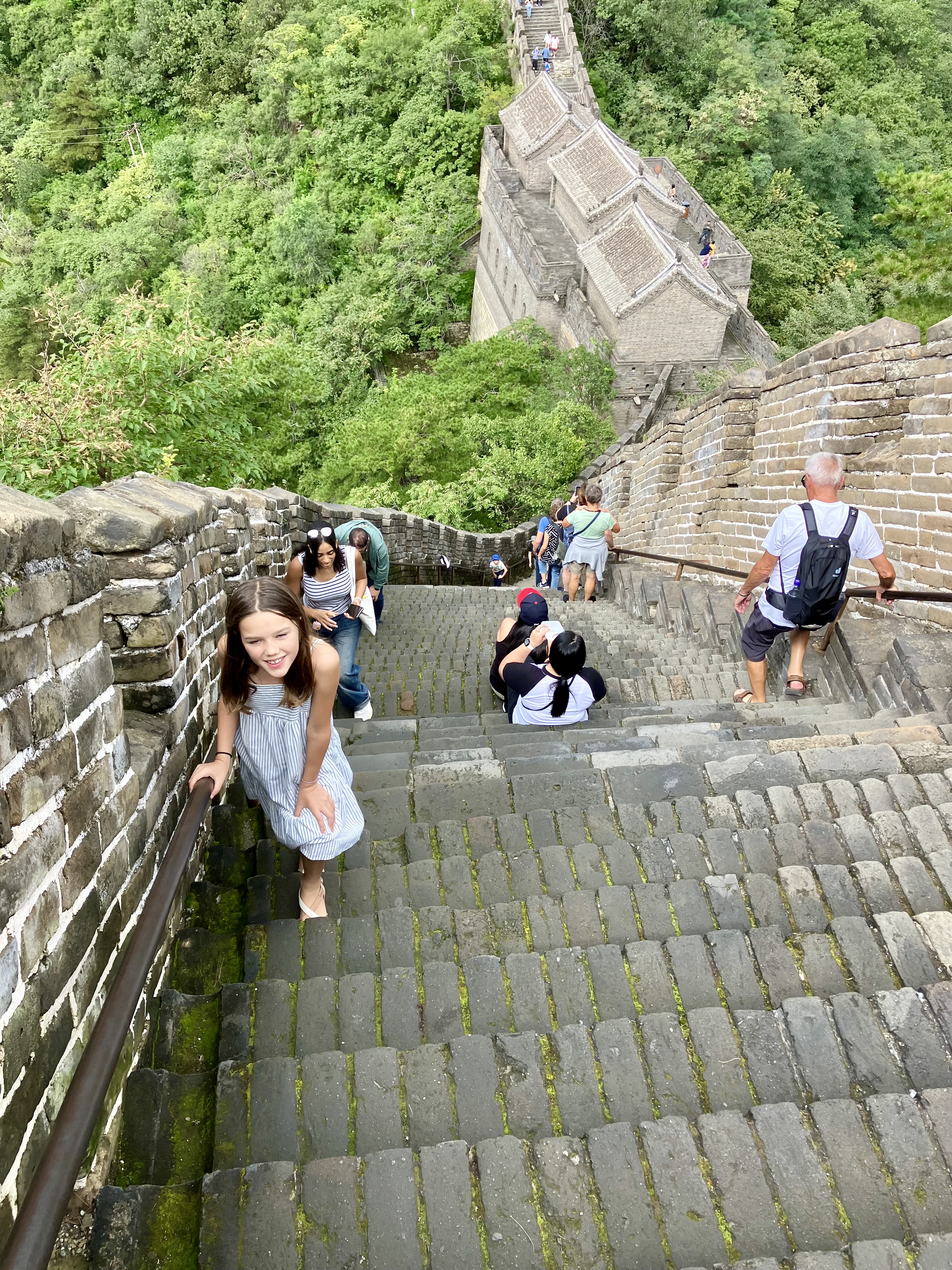
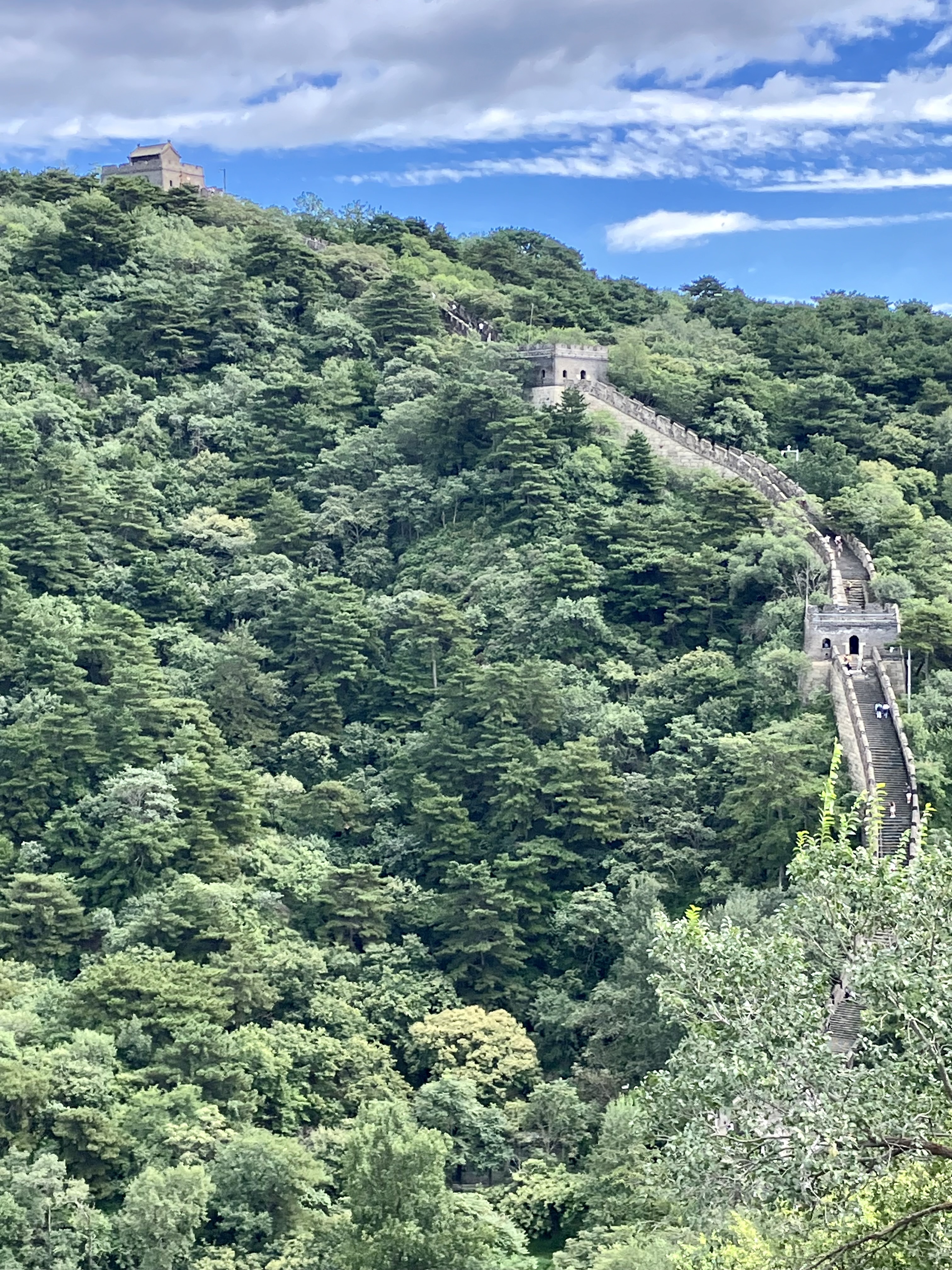
Nearby (well, a two-hour drive away), lies the Great Wall, which has been on my bucket list forever. With its 6,500 km of continuous wall, it’s already an achievement. But when you add up all the sections built over the centuries, it reaches about 21,196 km. Yes, you read that right! It’s the longest human-made structure ever. It was built to fend off invaders. What surprises me most while walking on it is its height, sometimes exceeding 10 meters, and especially its mountainous surroundings. The wall literally follows the mountains, and walking on it feels almost like a constant ascent. For us, at least. The soldiers, on the other hand, were on horses…
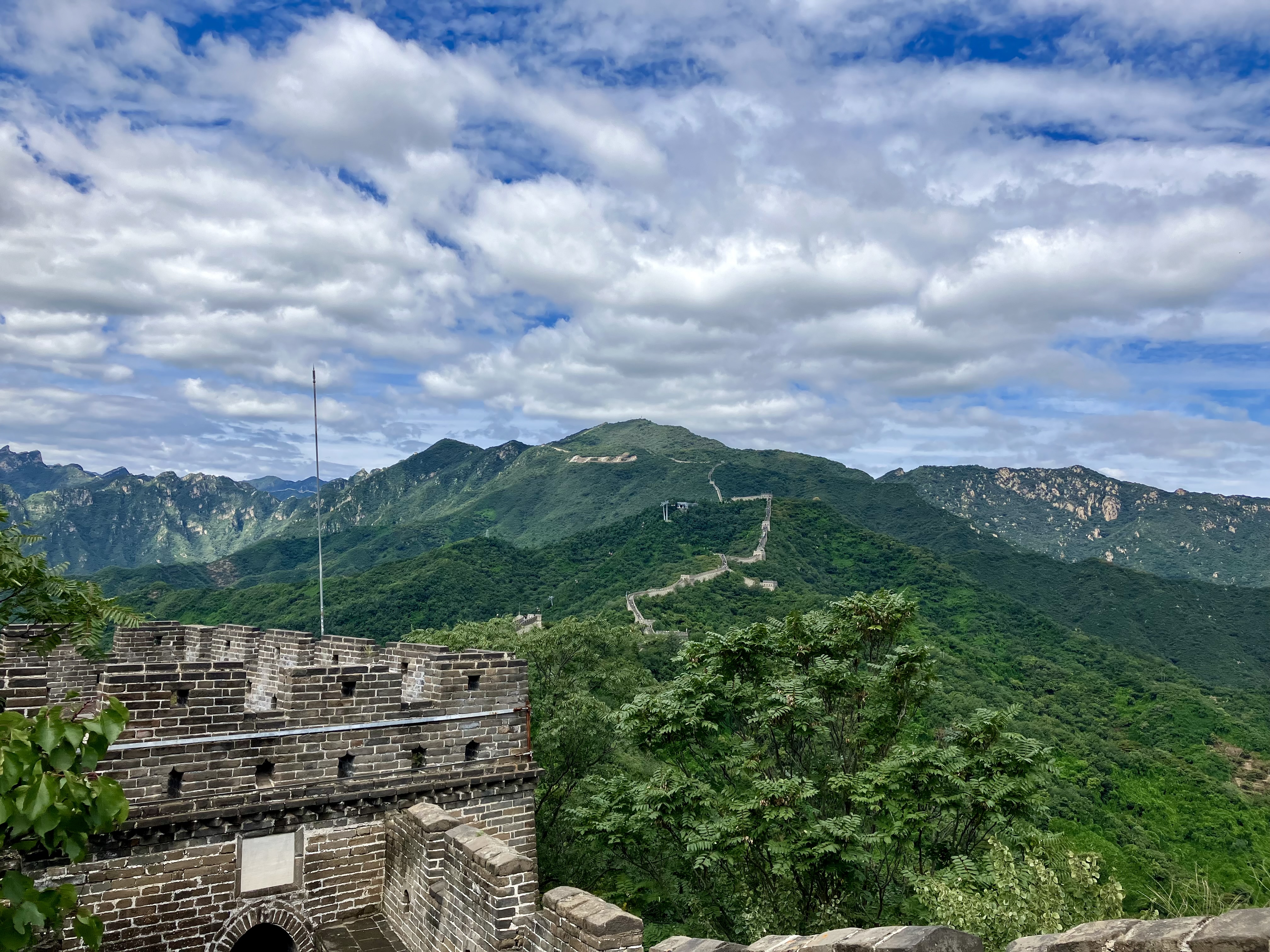
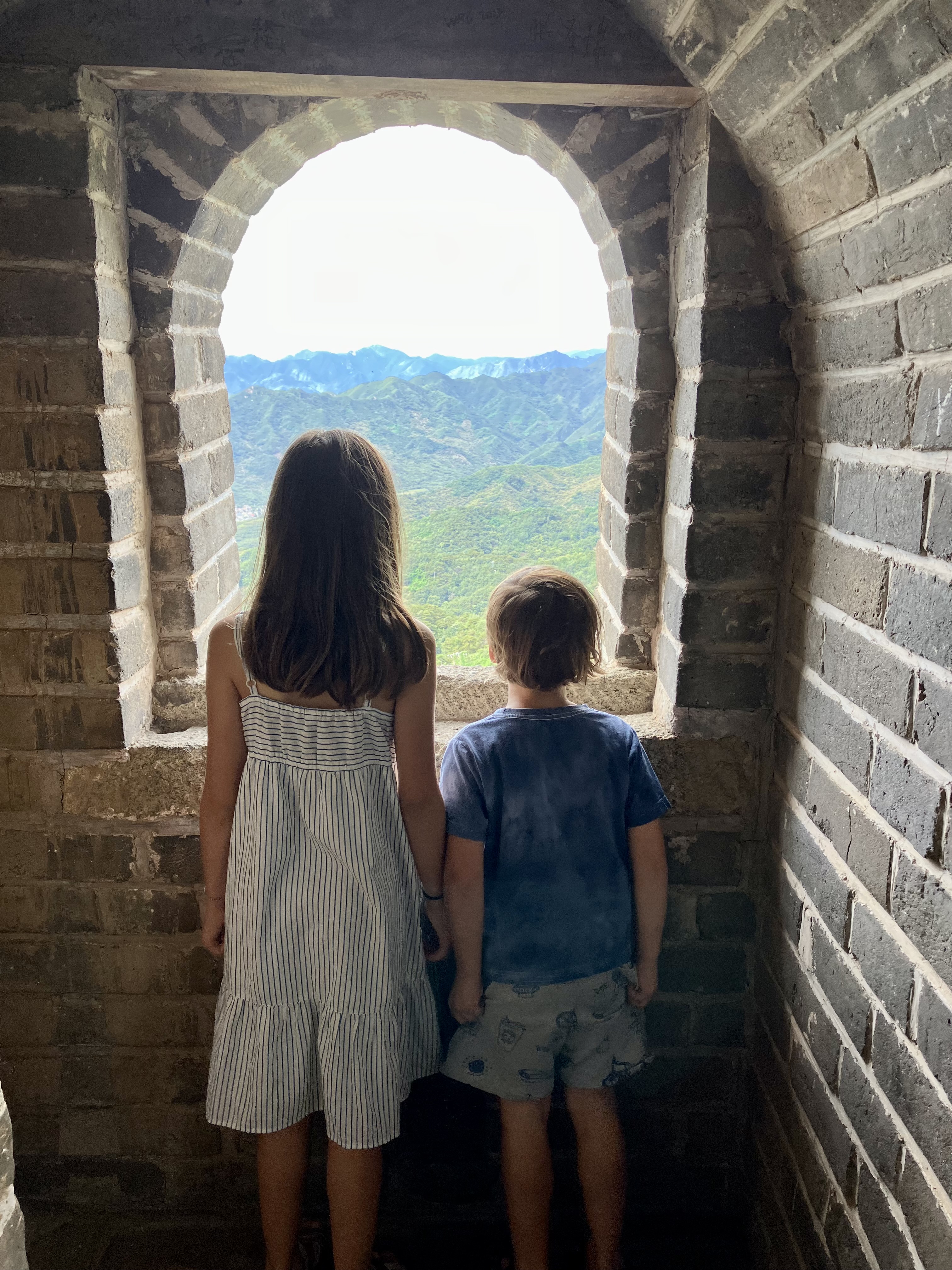
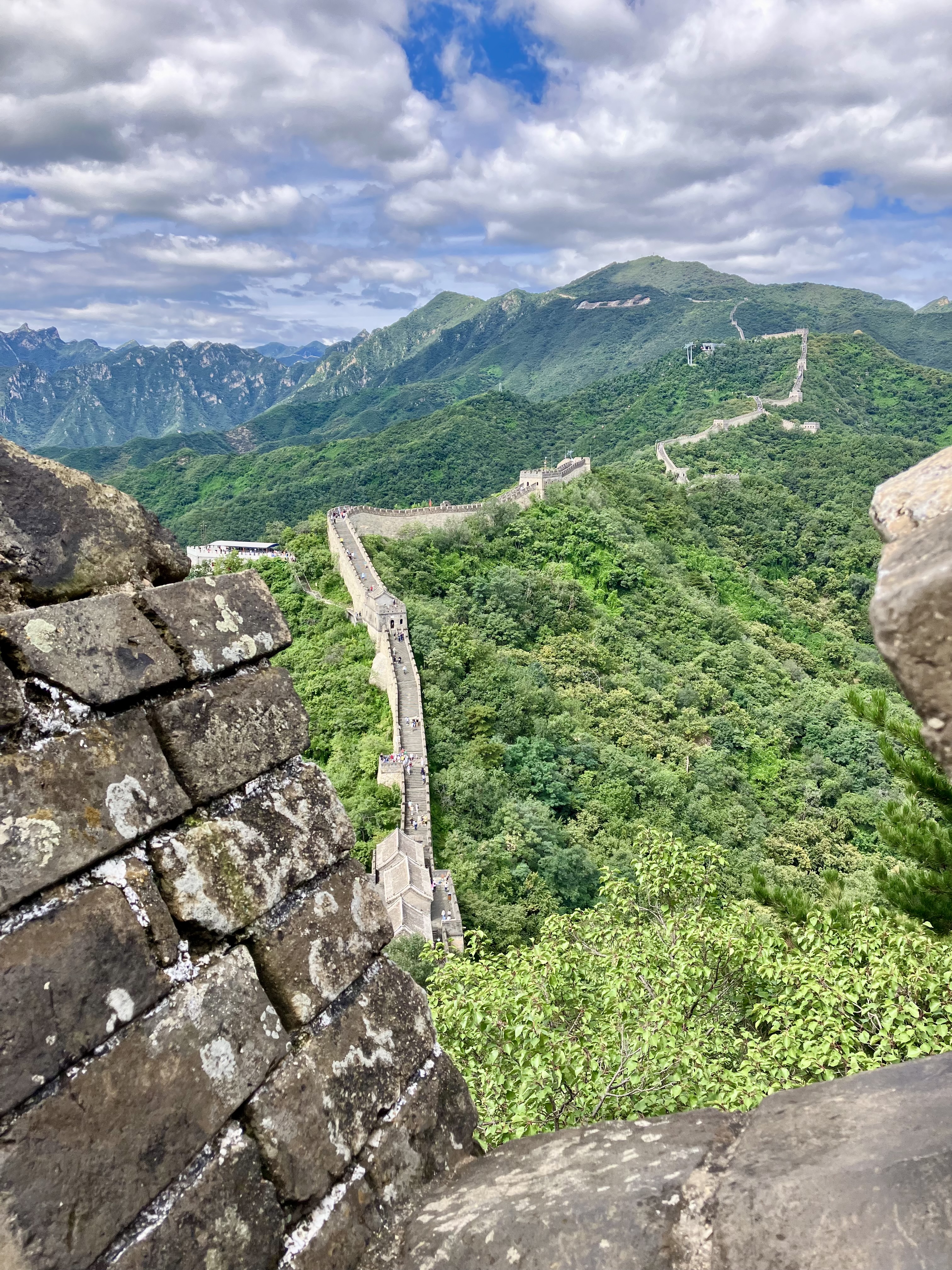
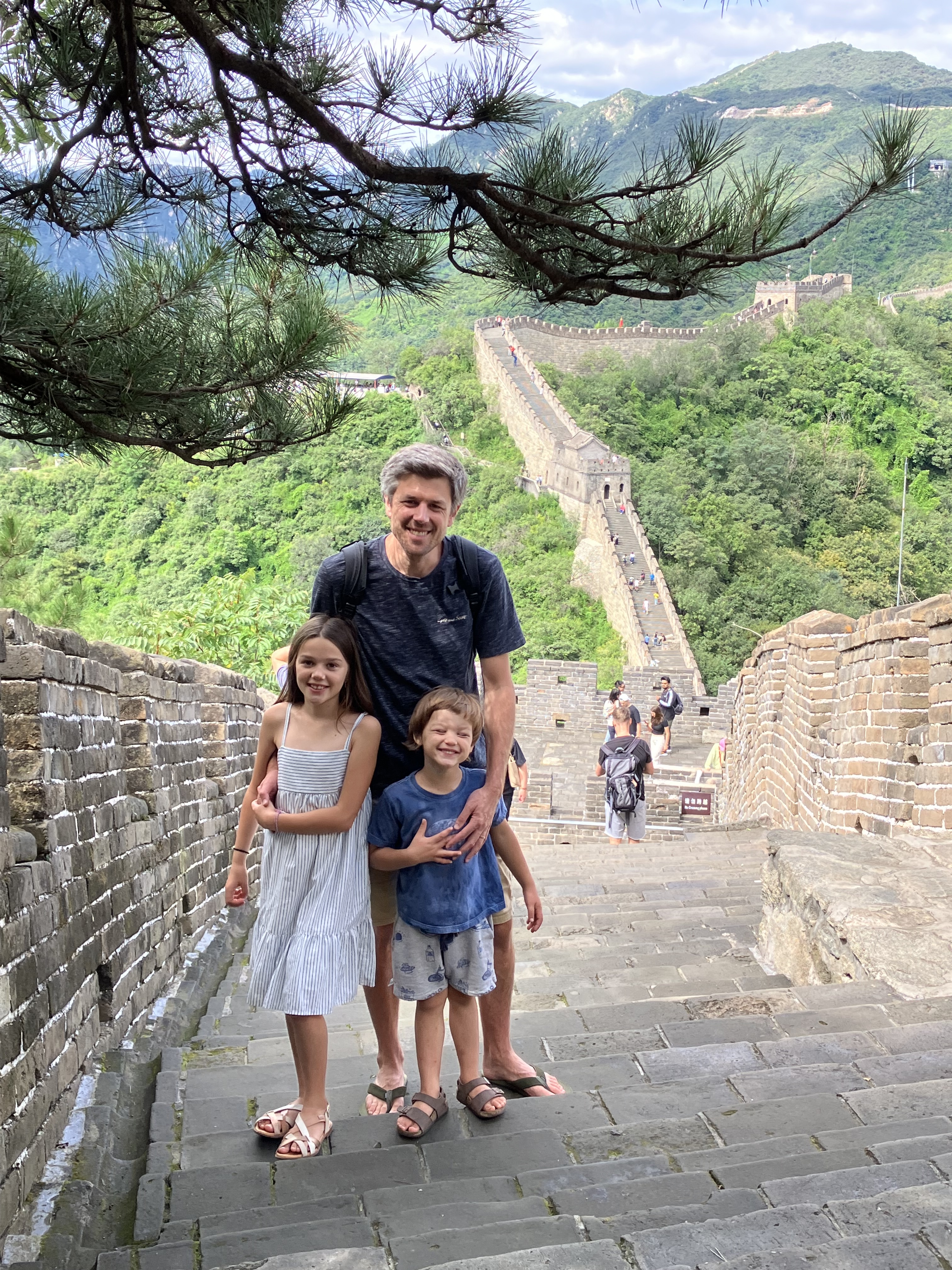
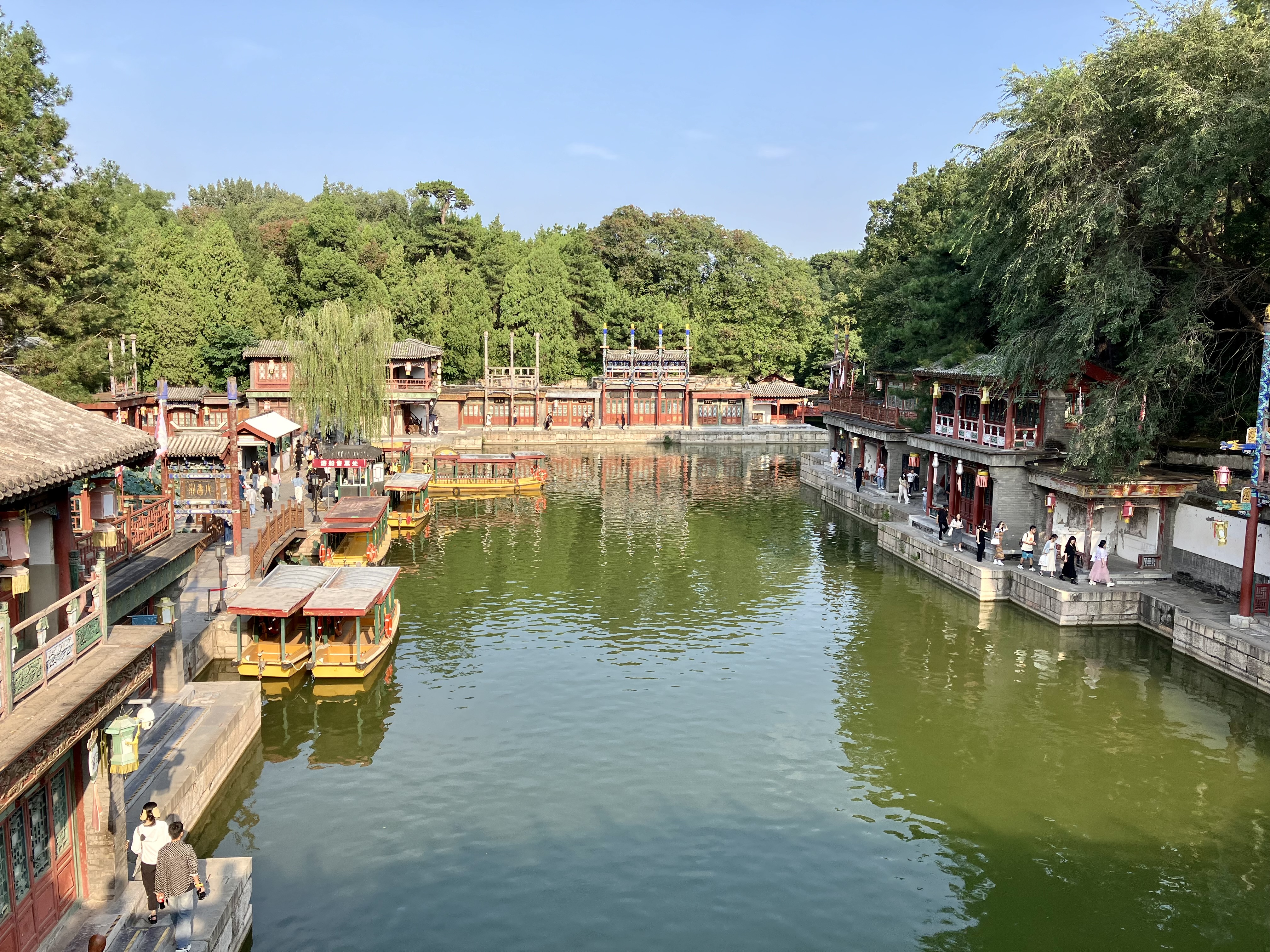
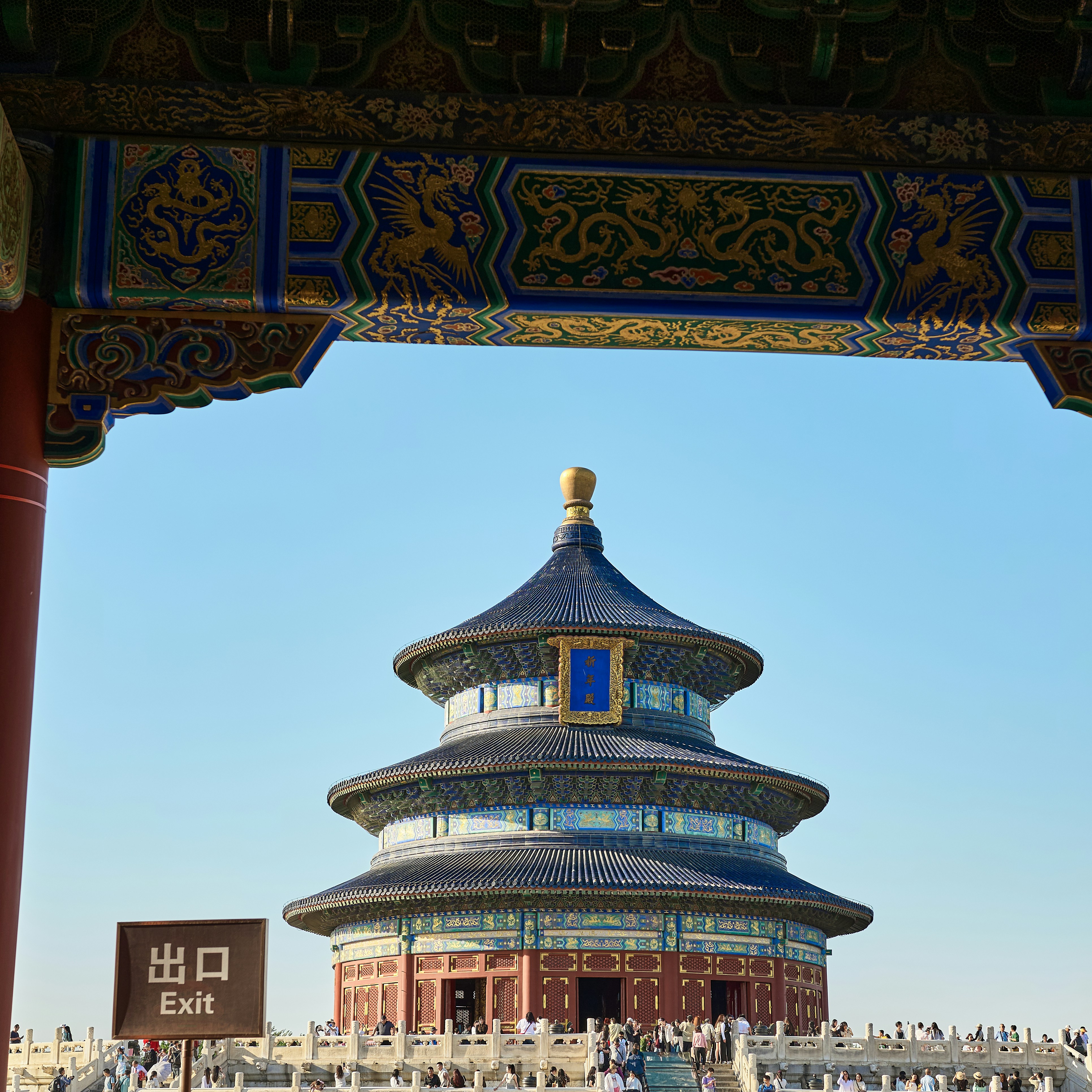
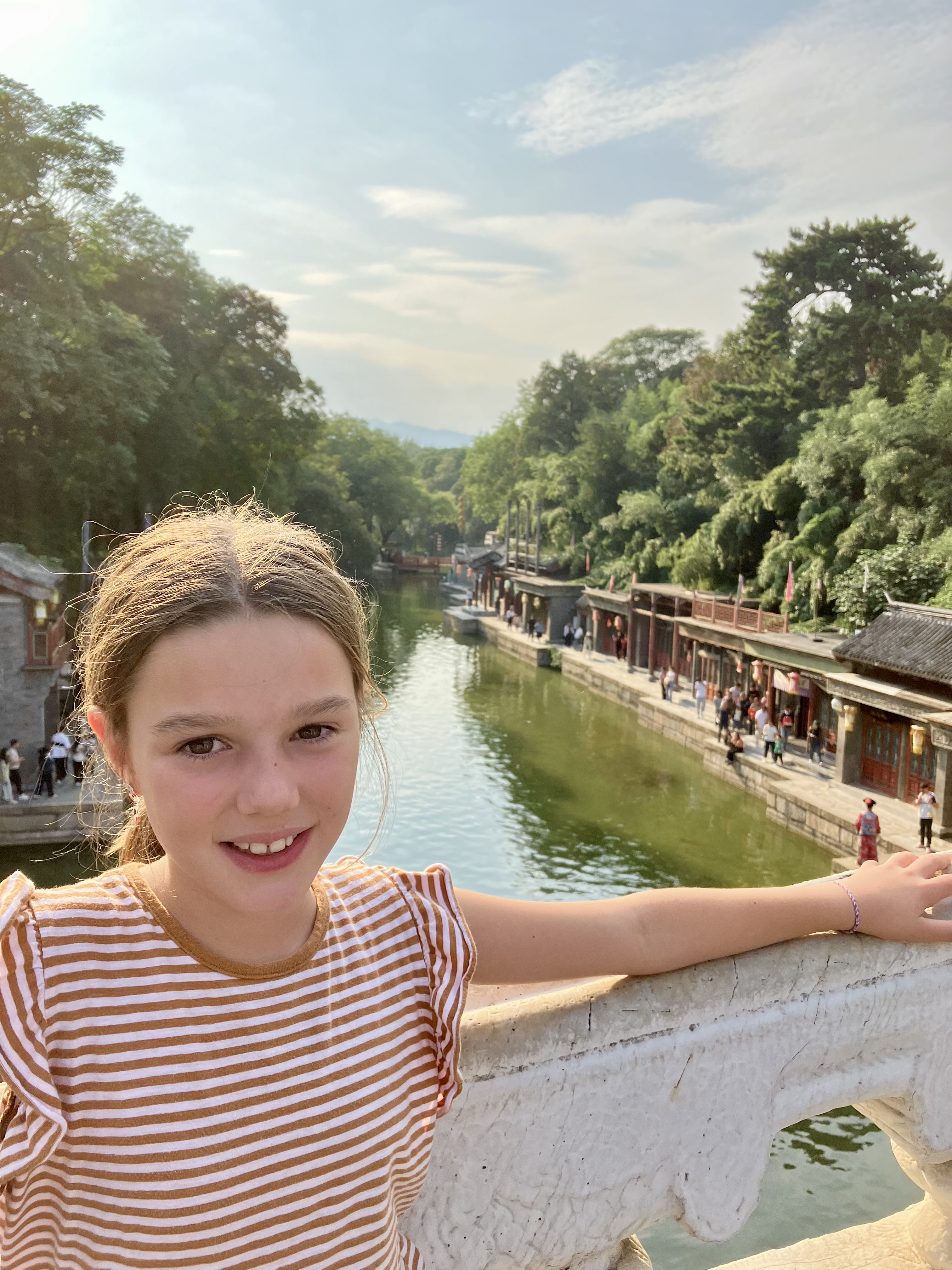
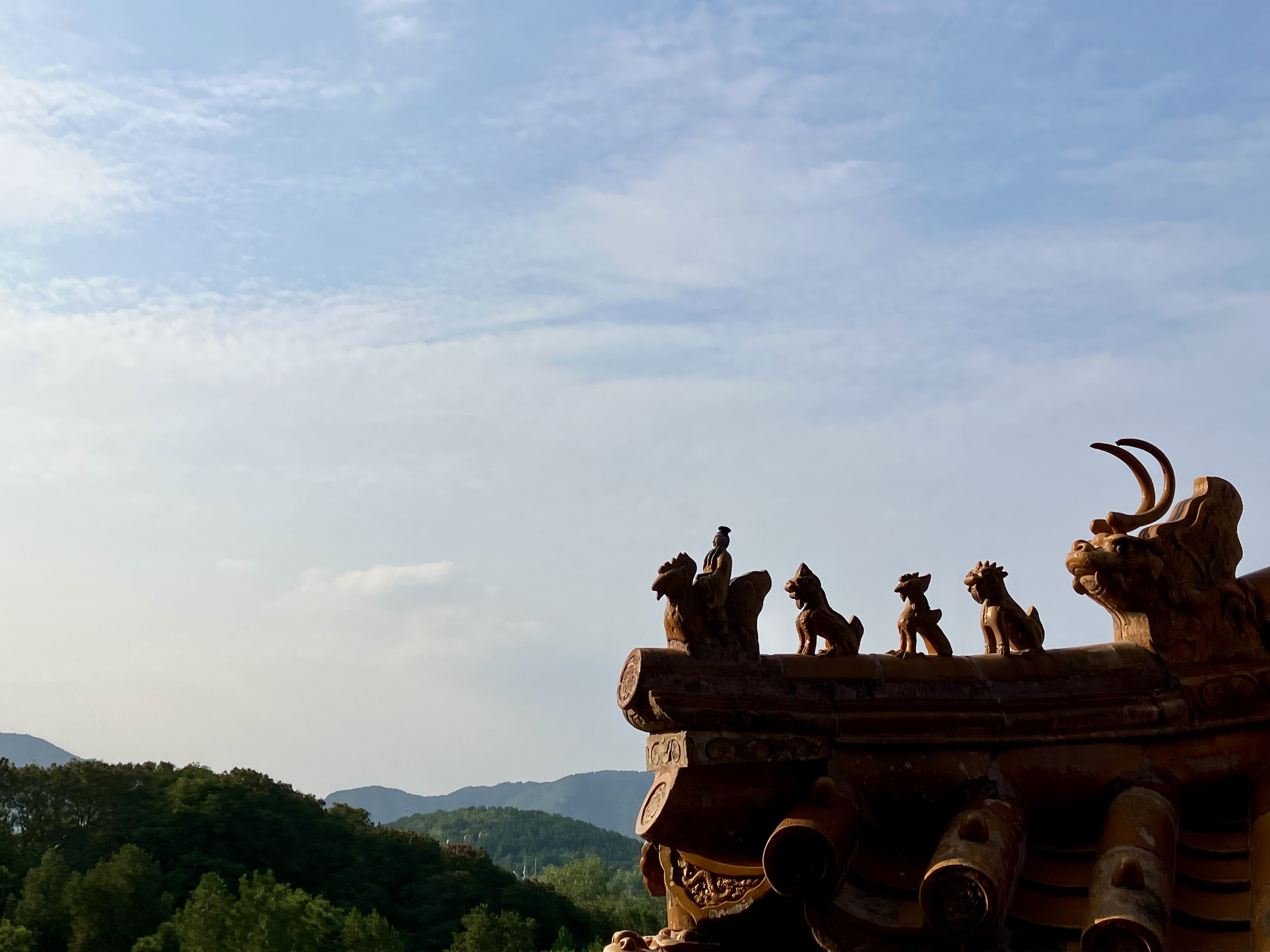
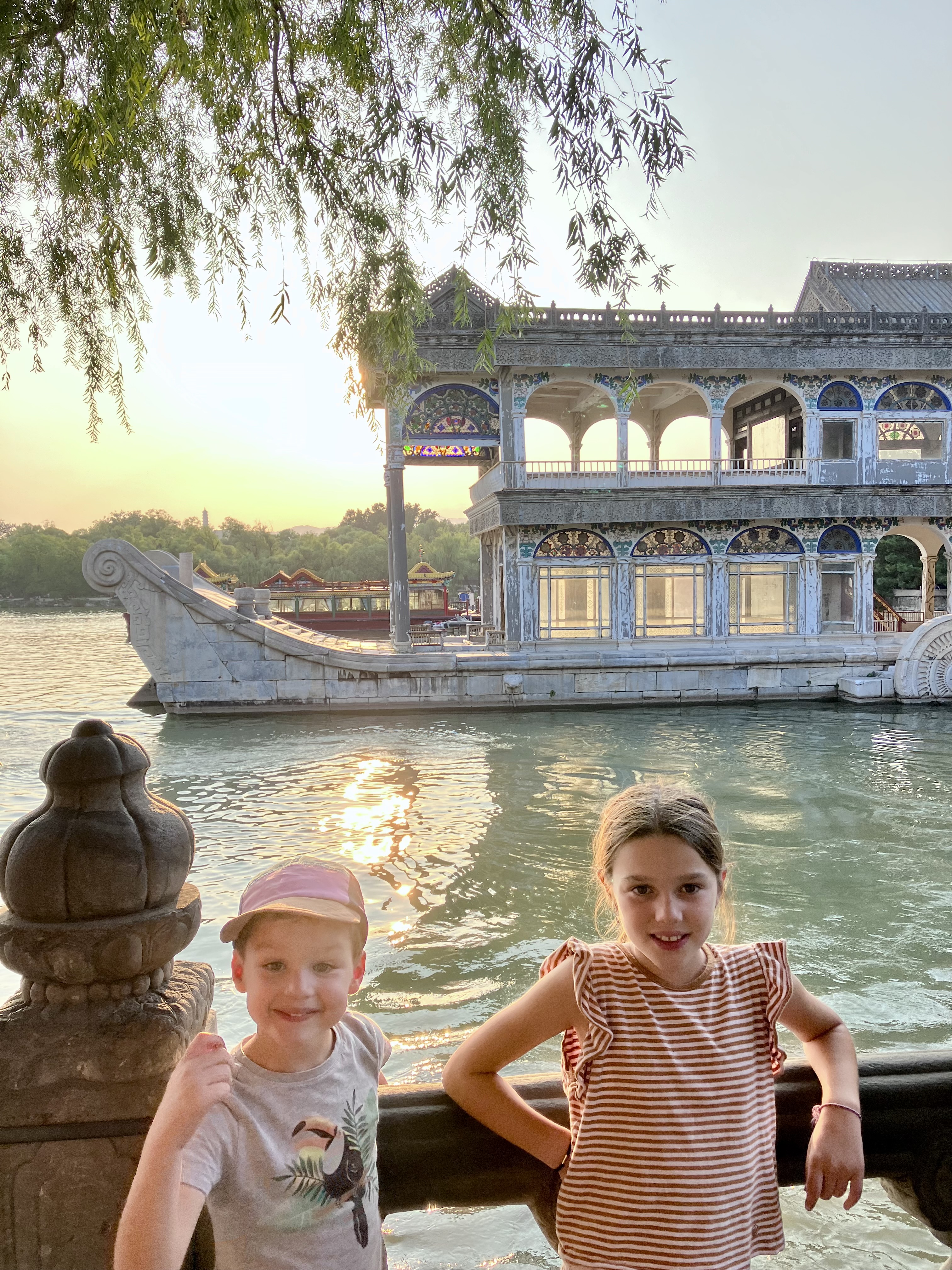
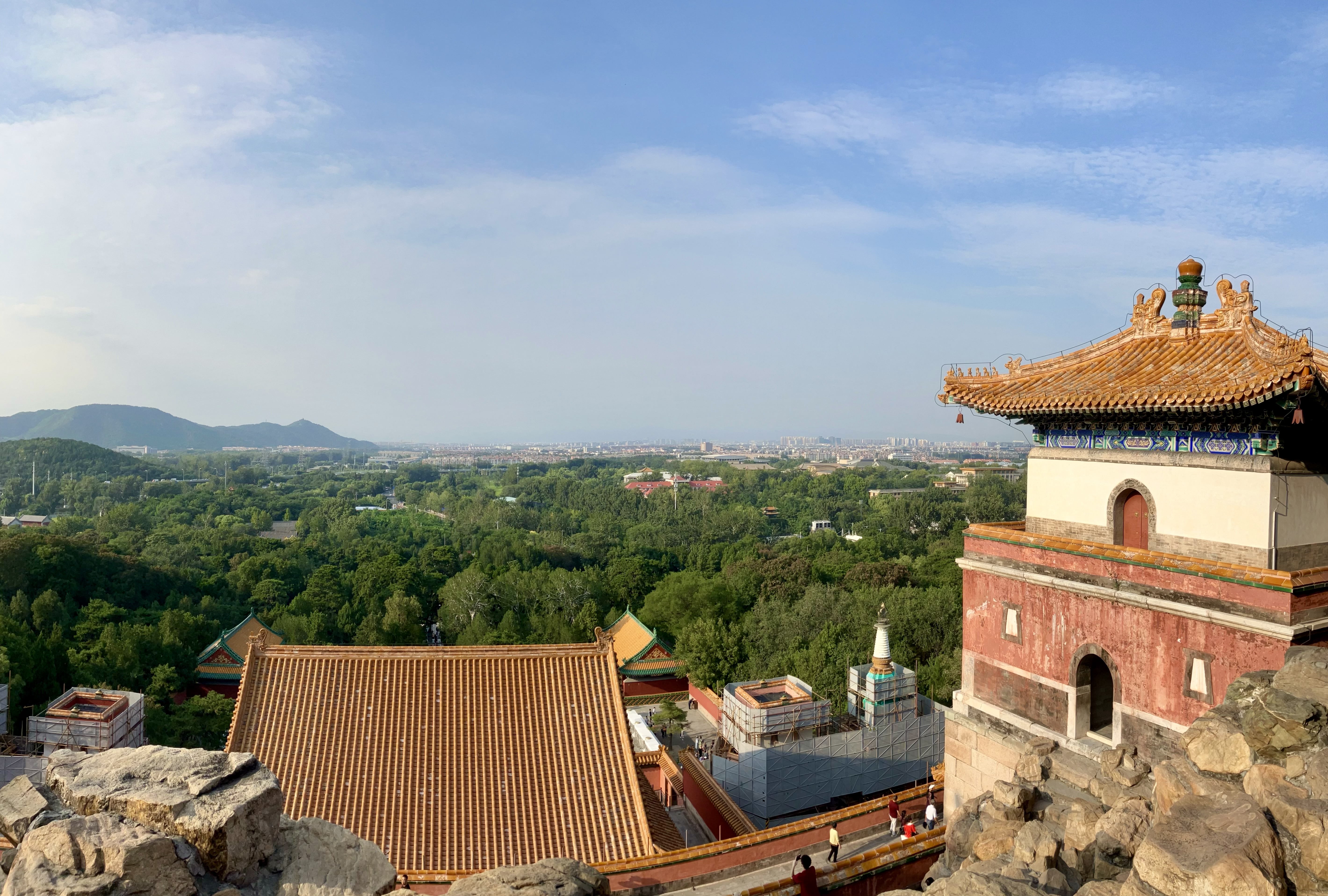
In addition to all this, we visited the Summer Palace and the Temple of Heaven, both must-sees. These places are just as impressive for their grandeur as for their beauty. Three days in Beijing was honestly too short. We should have stayed one or two days longer to really enjoy this fascinating capital.
Chapter 3: The Children on the Train
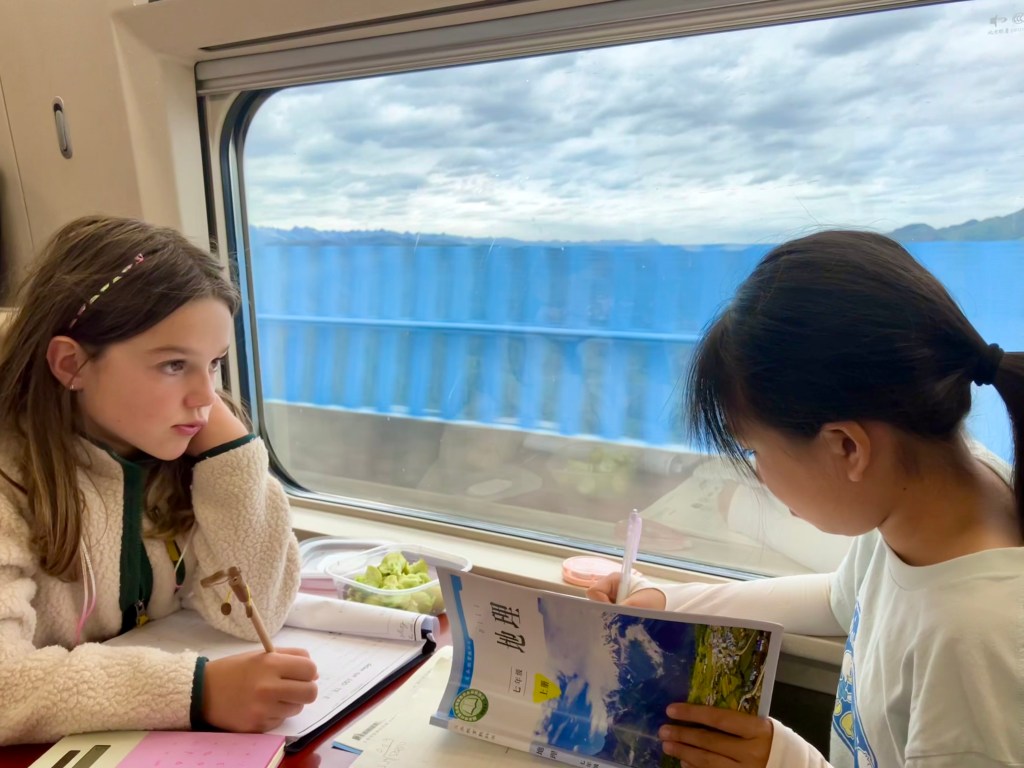
We’re on the high speed train. Nola is doing her homework at a table with another 11-year-old girl. Quickly, we find ourselves surrounded by six children. A boy corrects Nola’s math exercises, Matteo plays with toy cars with a little girl, and I look over the English exercises of her older sister! It’s a nice mix.
I love trains; they foster encounters, are eco-friendly, and let you see how a country is structured. And with China’s insane high-speed rail network, we were not disappointed. We traveled over 5,000 km of the 45,000 km of high-speed rails that China holds. That’s 55% of the world’s high-speed train network… which highlights the importance of trains here and the development of China in general.
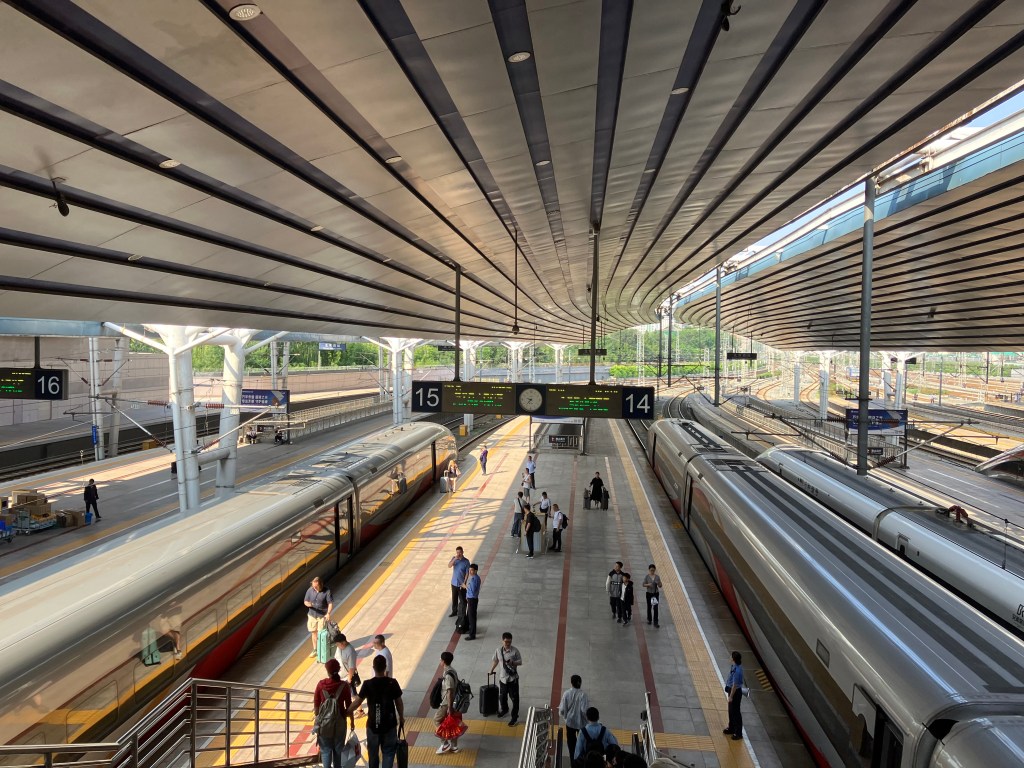
The train from Beijing to Xi’an crosses various cities at over 300 km/h, many of which you’ve probably never heard of (Zhengzhou, Shijiazhuang, and Xi’an). They all share one common characteristic: they are cities with more inhabitants than Belgium. Yes, each of these cities has a population of over 11 million. When I say everything is massive here, I really mean it.
All these cities look somewhat similar, with enormous residential buildings jutting up like mushrooms and ultra-modern skyscrapers, all surrounded by new roads. Between these cities, there’s a lot of nature, fields, mountains, and villages filled with single-story houses made of metal and concrete. Japan made me feel like it was densely populated everywhere. In China, I have more of a sense that there are many cities and not much in between. The regions we traveled through are actually quite green outside of the cities.
This reflects what has happened over the past few decades: a real estate market that has kept building, cities that keep growing. They needed to urbanize as many Chinese as possible… The current problem is that they built too much, and today 30% of housing units are unoccupied because high prices make it difficult for many Chinese to buy. As a result, some of these companies are going bankrupt. That’s a big thorn in the government’s side.
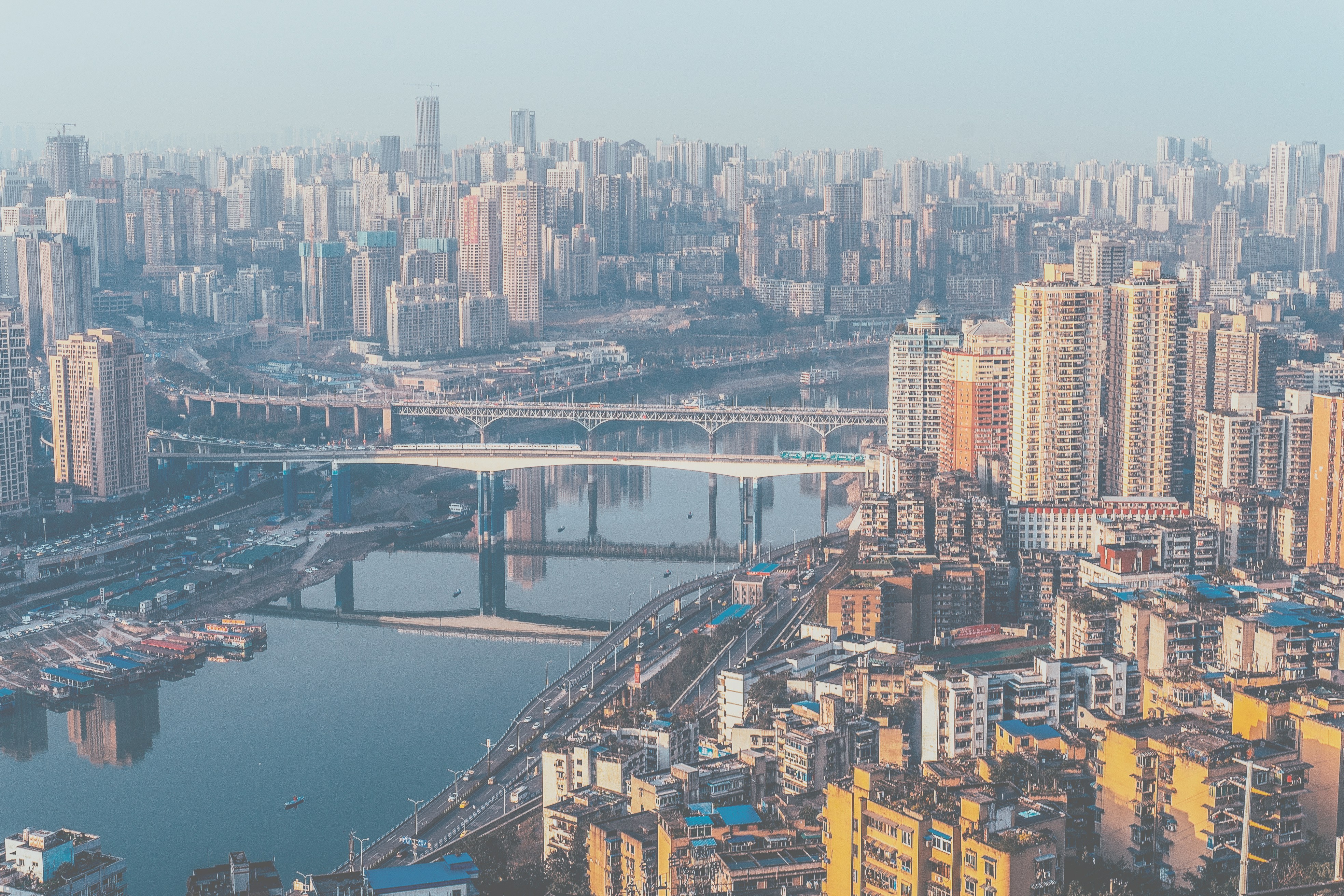
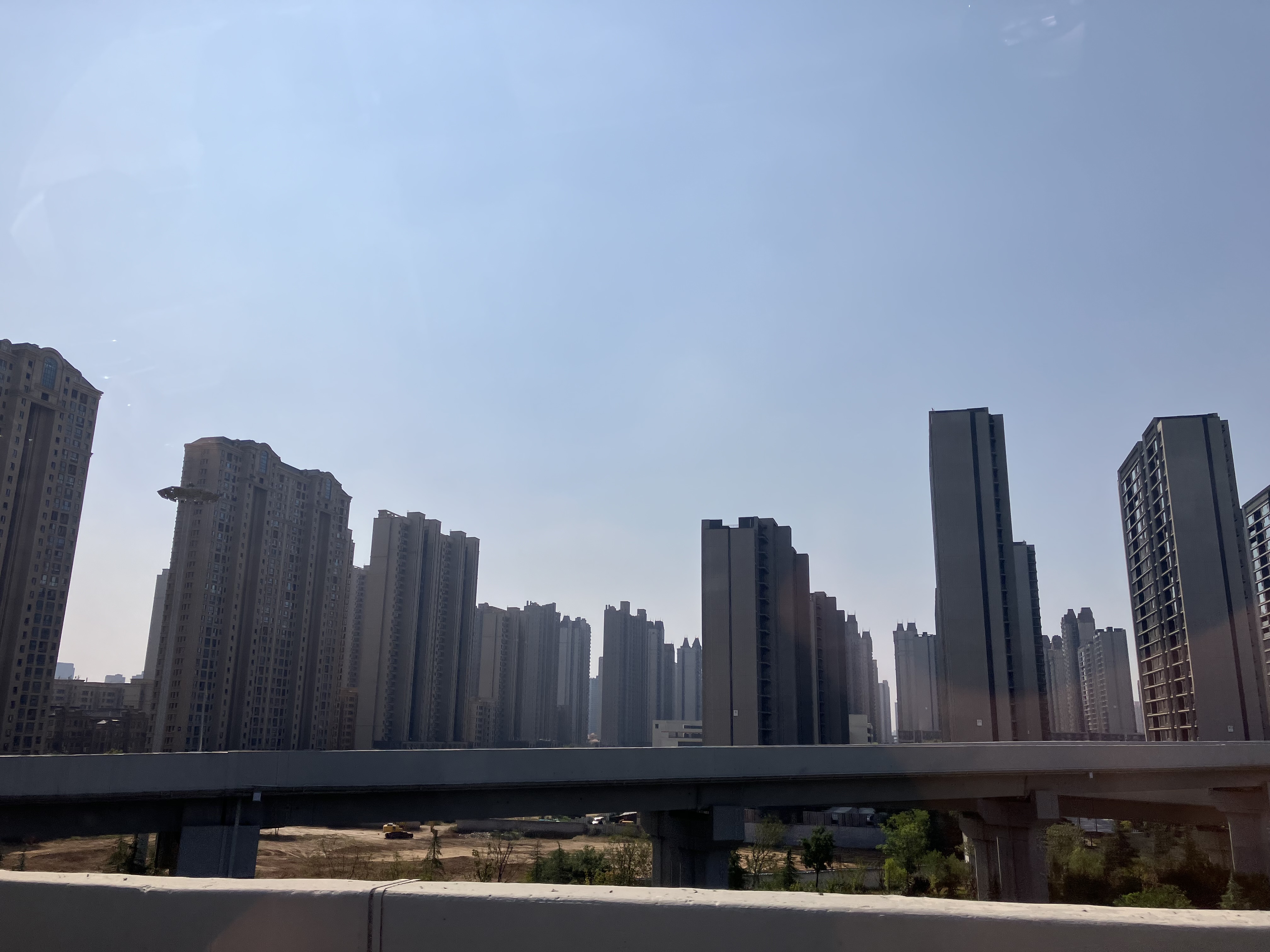
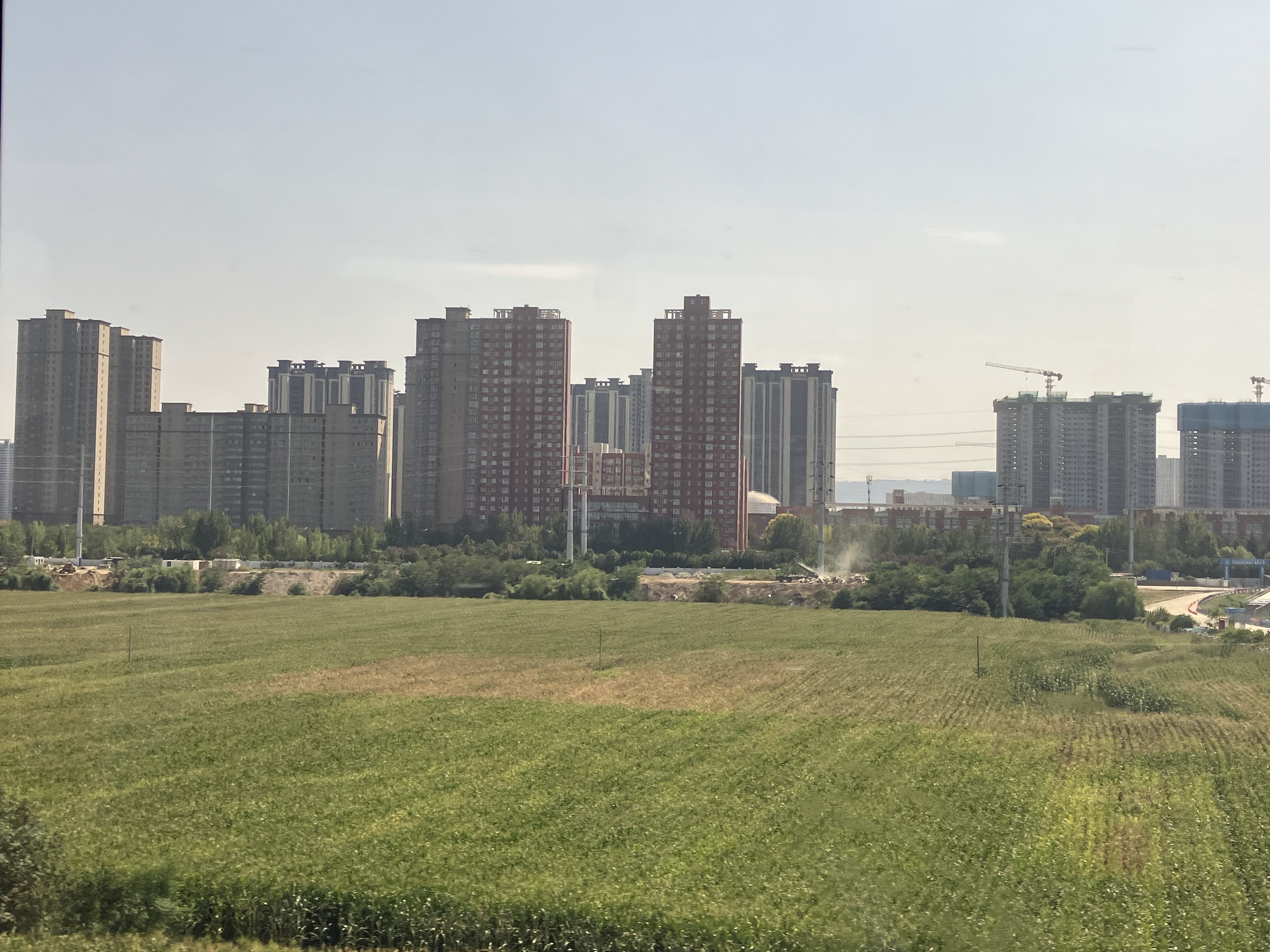
Is it a shame to have built these skyscrapers? Urbanistically, certainly. For the Chinese, I don’t know. We slept in a kind of dormitory city. It resembles social housing a bit… but social housing where you feel good. At the base of these tall towers, it’s very green, very clean, and very secure. If you remove the omnipresence of these large apartment buildings, it’s actually rather pleasant.
So, were we right to apprehend the country? After a week, the answer is less obvious. Sure, everything seems easier once you understand the codes: taxis are models of speed and efficiency, the streets exude cleanliness, and safety is a given (one of the few perks of a well-oiled dictatorship). Yes, it works. But this is just the surface, a first layer of gloss over the vastness of the country.
What lies beneath this gloss? You’ll have to stay tuned to find out. The next episode will take us to Yunnan and Guangxi, at the heart of China. The program includes breathtaking mountains, stretching rice terraces, terracotta soldiers, and, of course, a parade of colorful characters – taxi drivers with a poet’s soul and ego-fueled TikTokers, the new kings of attention. Because China, behind its facade of smiles, still has many secrets to reveal.
 365 days of summer
Leave a comment