Chapter 7: Meeting the Anti-Regime Couple in Guangxi
Guangxi province — never heard of it, right? No worries, we hadn’t either until we set foot there. Located in southern China, it’s a central point between the east and west of the country, a sort of natural crossroads. We spent a week there, first in the mountains of Longji, then in the heart of the karst hills of Yangshuo. The landscapes are absolutely breathtaking. If you’re traveling to China, we highly recommend making a stop here.
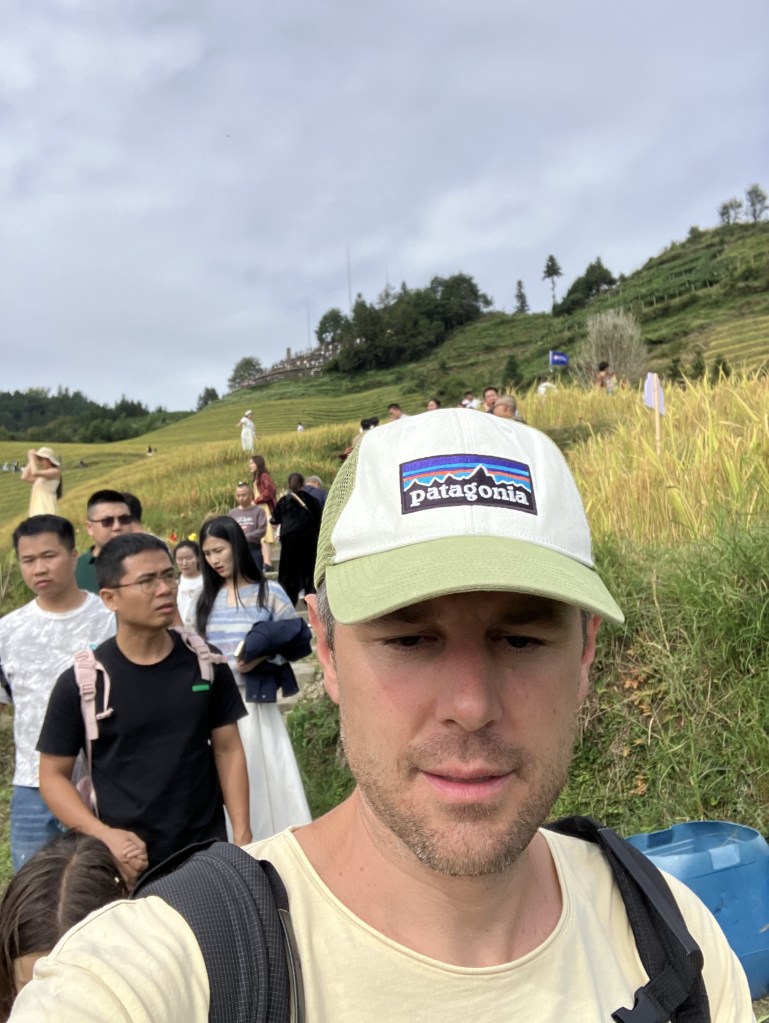
It was a bit crowded at times since we were there during Golden Week, THE holiday week for the Chinese. Just to give you an idea: on the first day of the holiday, 21.5 million Chinese people took the train for a getaway. When we talk about migration… it’s quite the understatement.
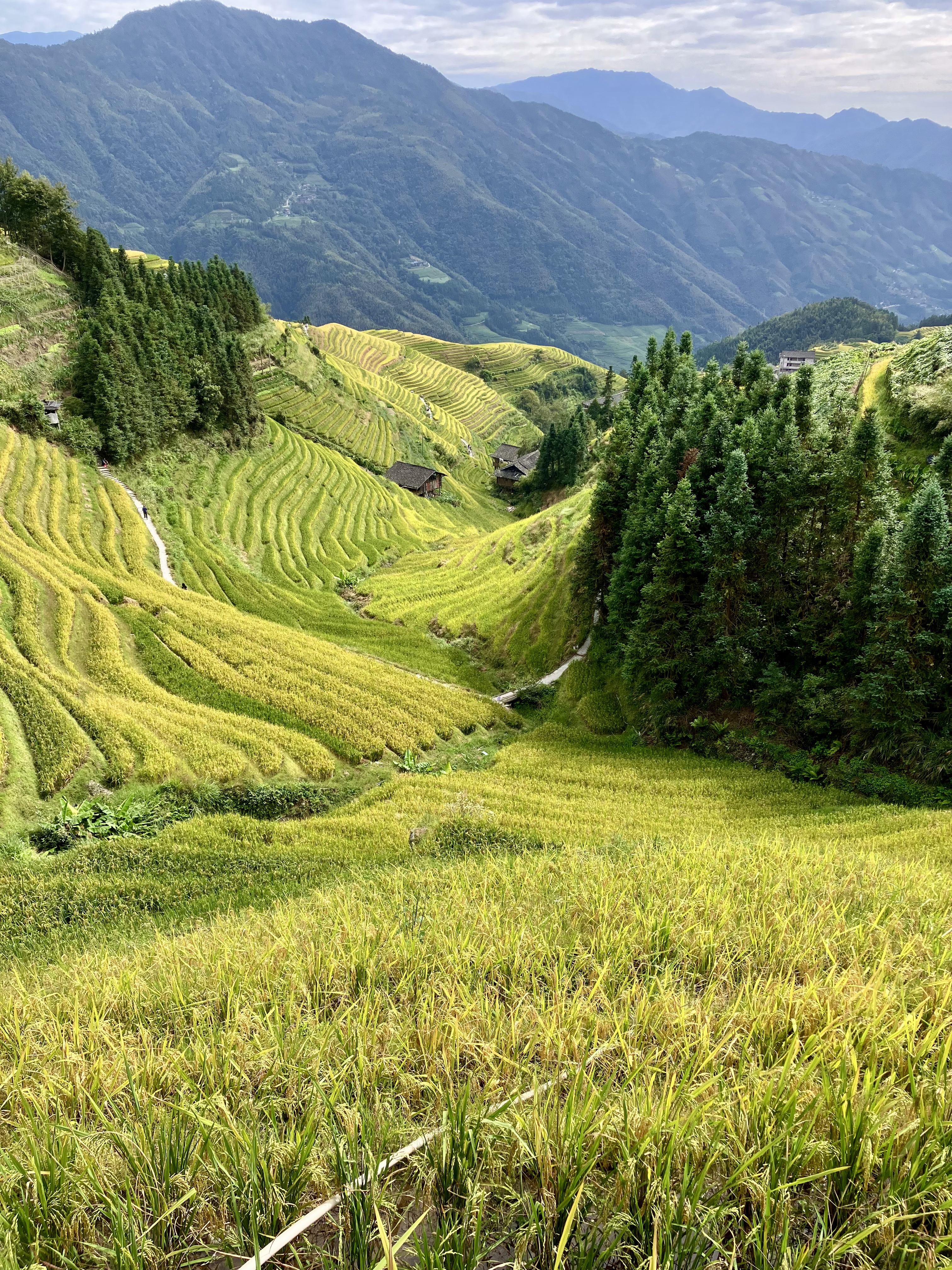
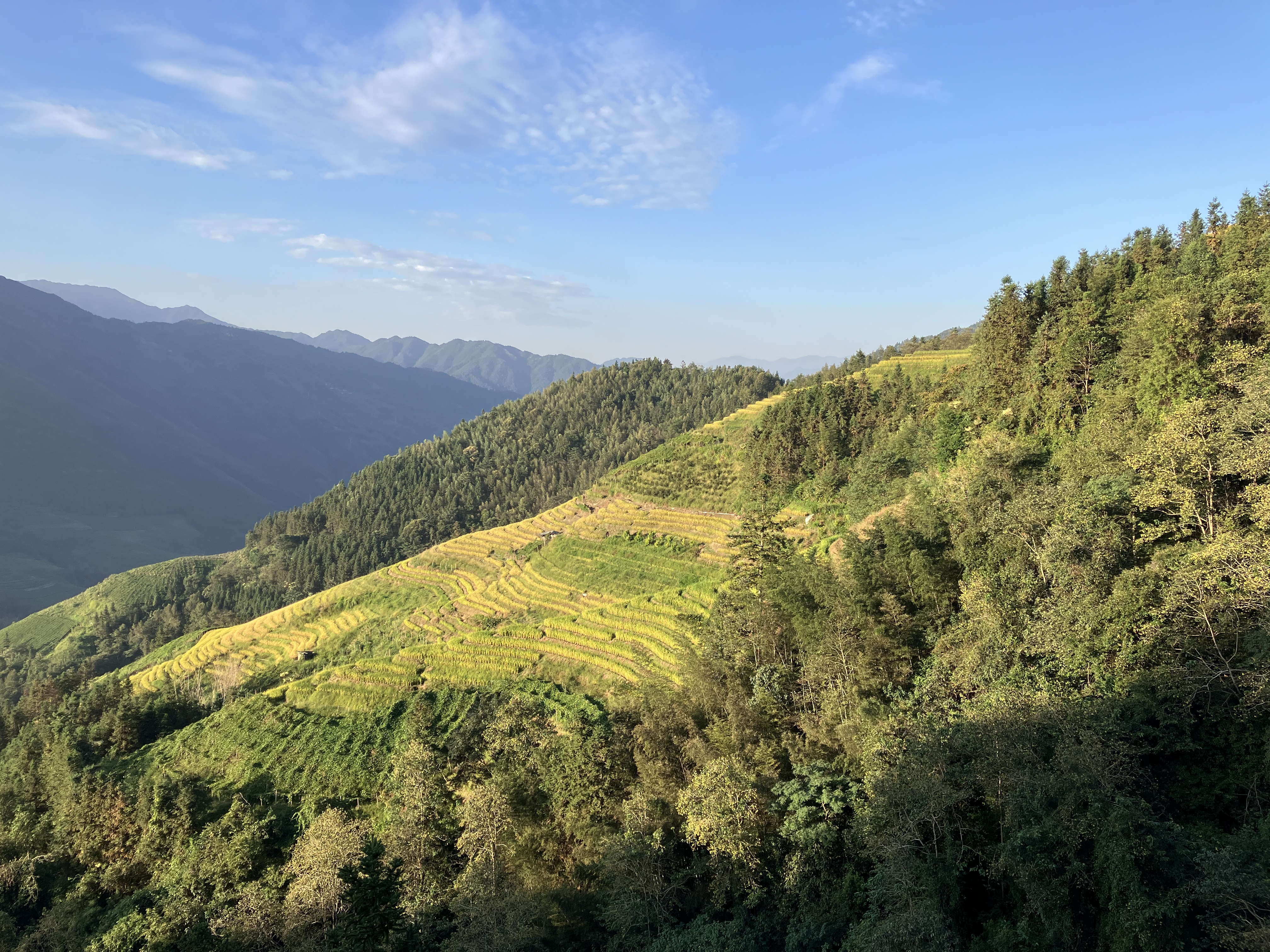
Our arrival in Longji involved a journey by taxi, high-speed train, and car. The village is scattered along a winding road that snakes up the mountainside.
We settled into a small hotel where the charm was immediate. Everything is made of wood, and the view from our balcony is breathtaking. Sitting there, facing the vastness, we felt that unique mountain serenity — the kind of zen you can only find in the mountains or by the sea.
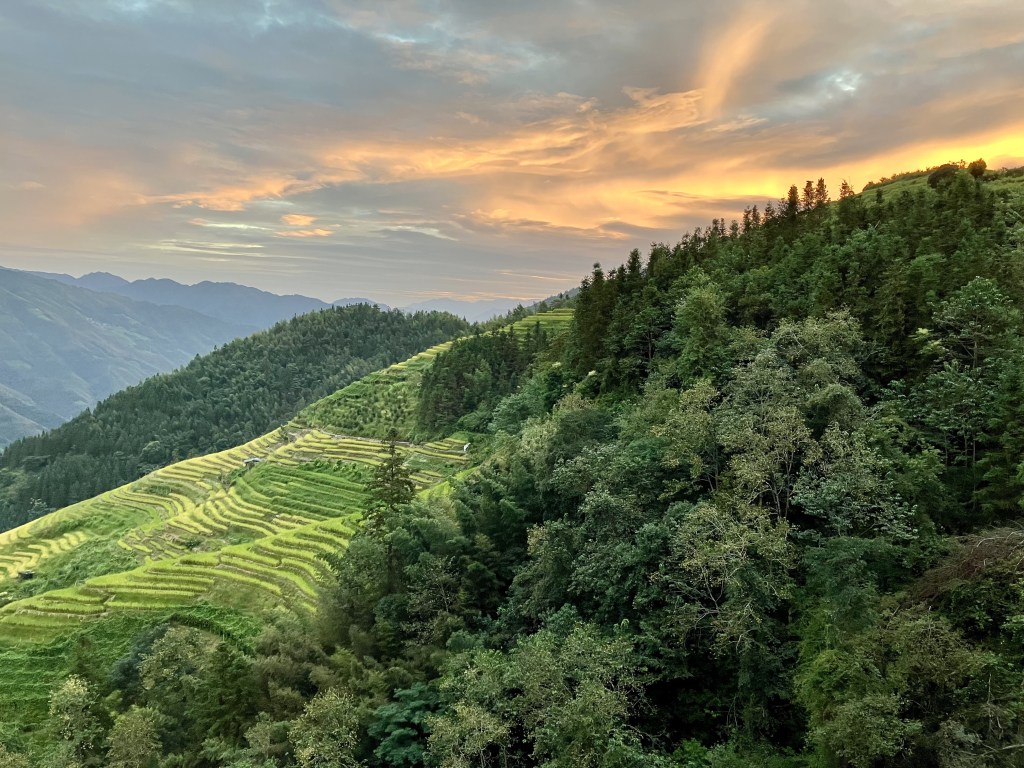
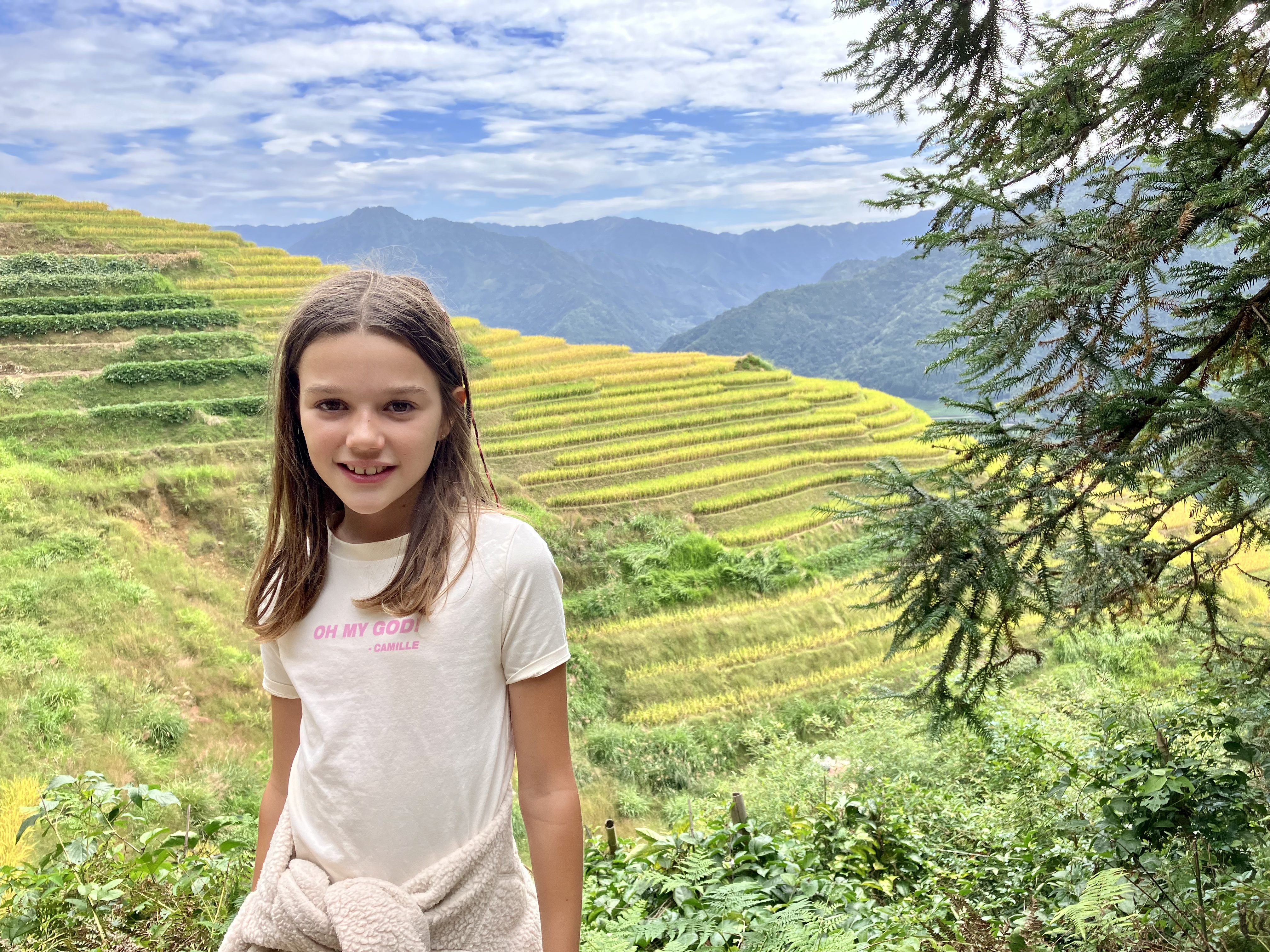
The next day, we set out to explore what is known here as “the most beautiful rice terraces in China.” Yes, it was busy, but as often happens, the 95% rule worked wonders: 95% of tourists hardly walk at all. As soon as you step off the main path, you’re practically alone. We had to motivate Matteo for this three-hour hike, but the scenery was worth every effort.
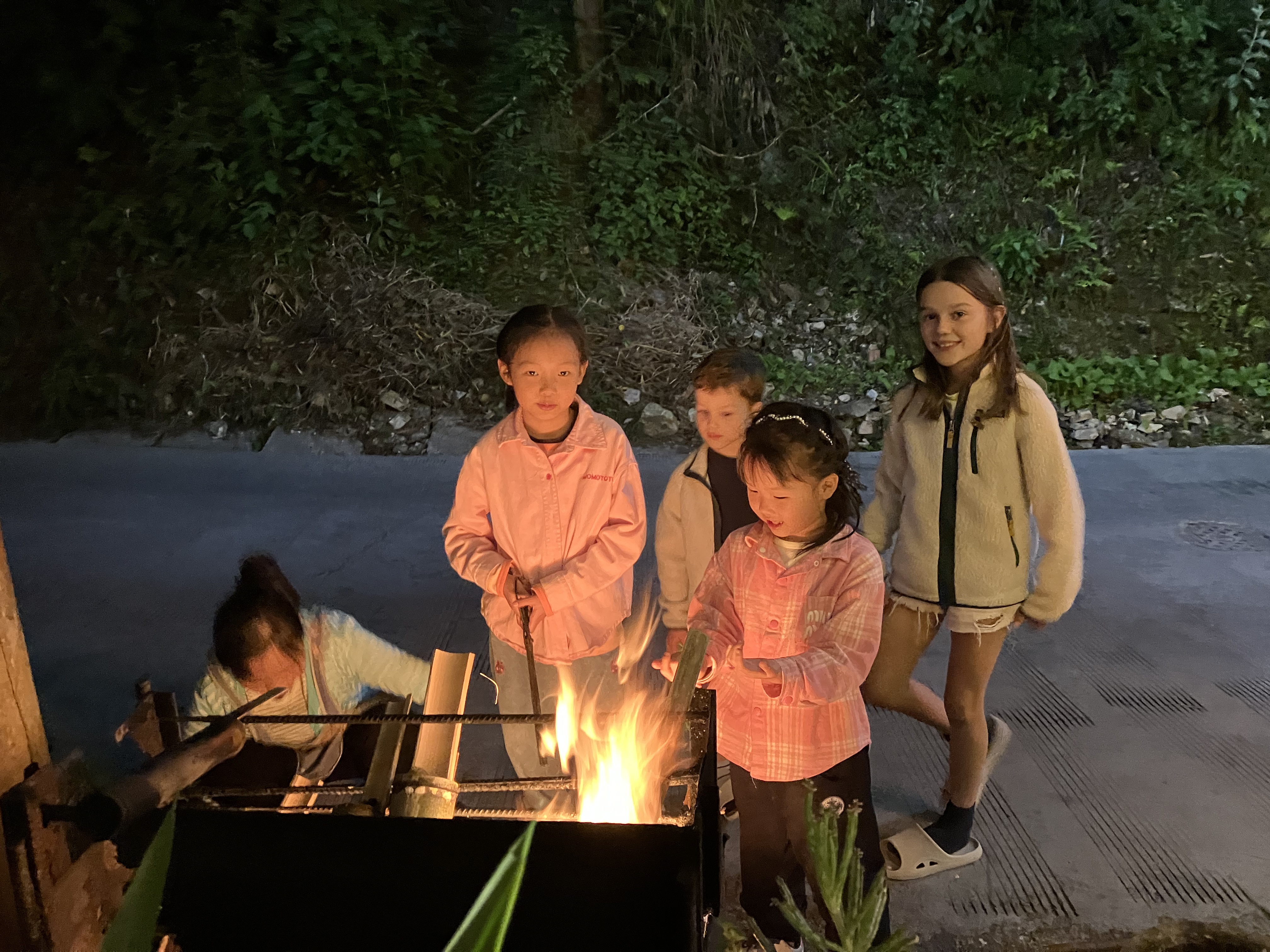
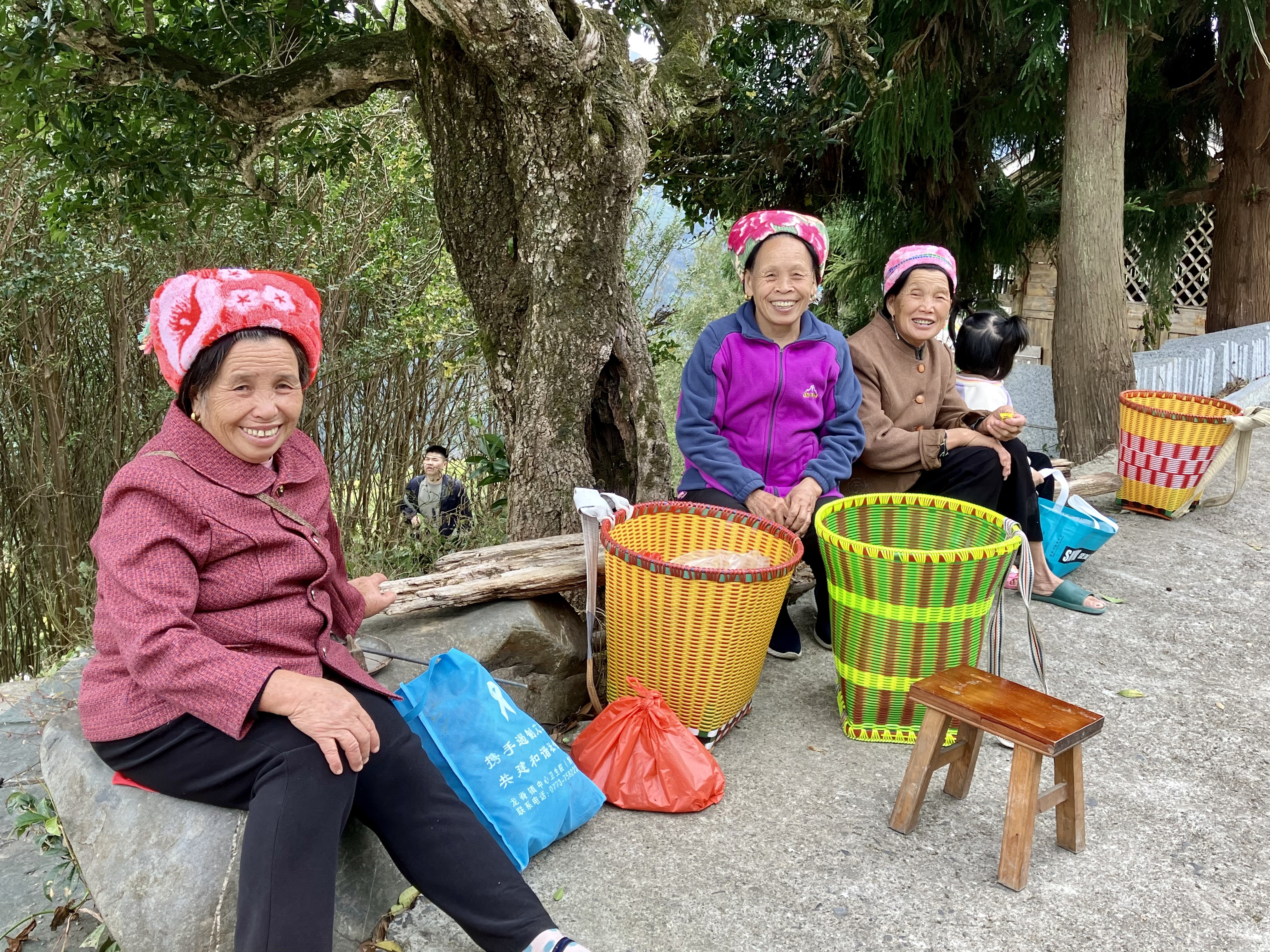
After two days, we left the mountains behind for the famous karst hills of Yangshuo. The road was a chaotic mess, a direct consequence of Golden Week: all of China was on the road. At the hotel, the kids got a big surprise: a swimming pool! It had been two months since we last took a dip. After days of unpredictable weather, we found a perfect climate here: ideal for breakfast on the terrace, lounging by the water… It felt like a holiday, less like traveling, and it was a welcome change.
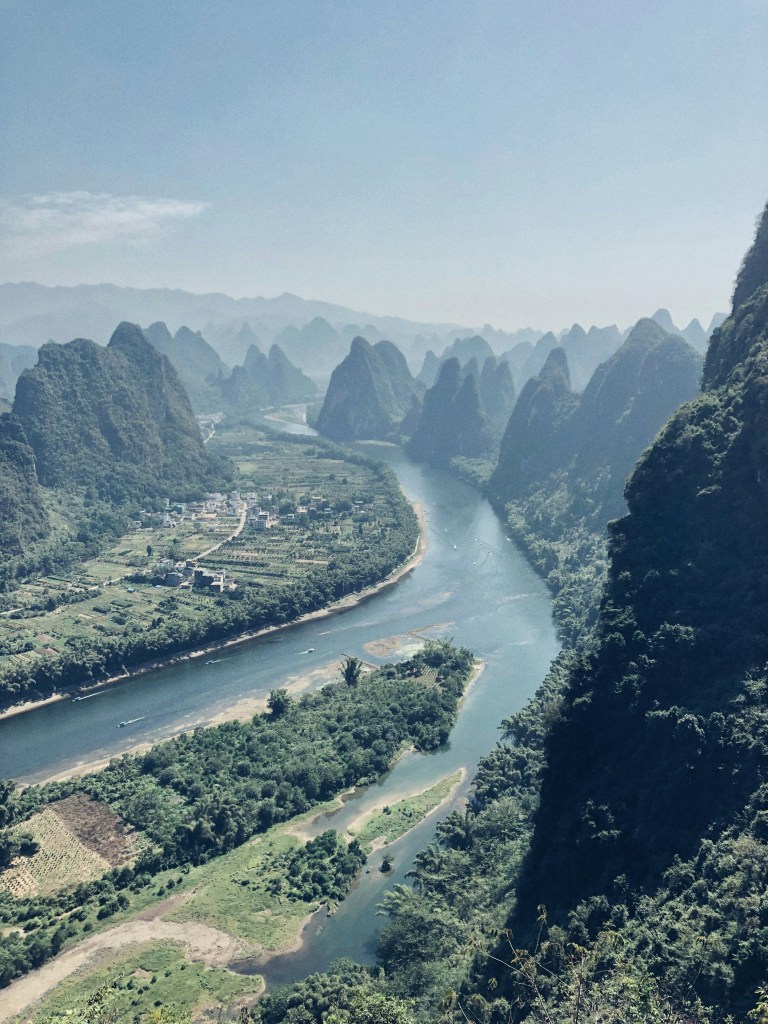
Especially since the karst hills of Yangshuo are impressive, with their unique silhouettes formed by erosion over millions of years. These steep rock formations, which can reach over 300 meters in height, rise from the ground like dragon’s teeth, surrounded by winding rivers and lush vegetation. It’s a stunning natural spectacle, worthy of the most beautiful postcards.
We spent five wonderful days here, exploring the area by boat, motorbike, and even cable car. As is often the case in China, we went from remote corners where locals still wash their clothes in the river to ultra-modern infrastructures. From the cable car, we accessed an improbable route traversing the hills via suspension bridges 60 meters high and glass walkways… A bit kitschy, sure, but we couldn’t help but enjoy it.
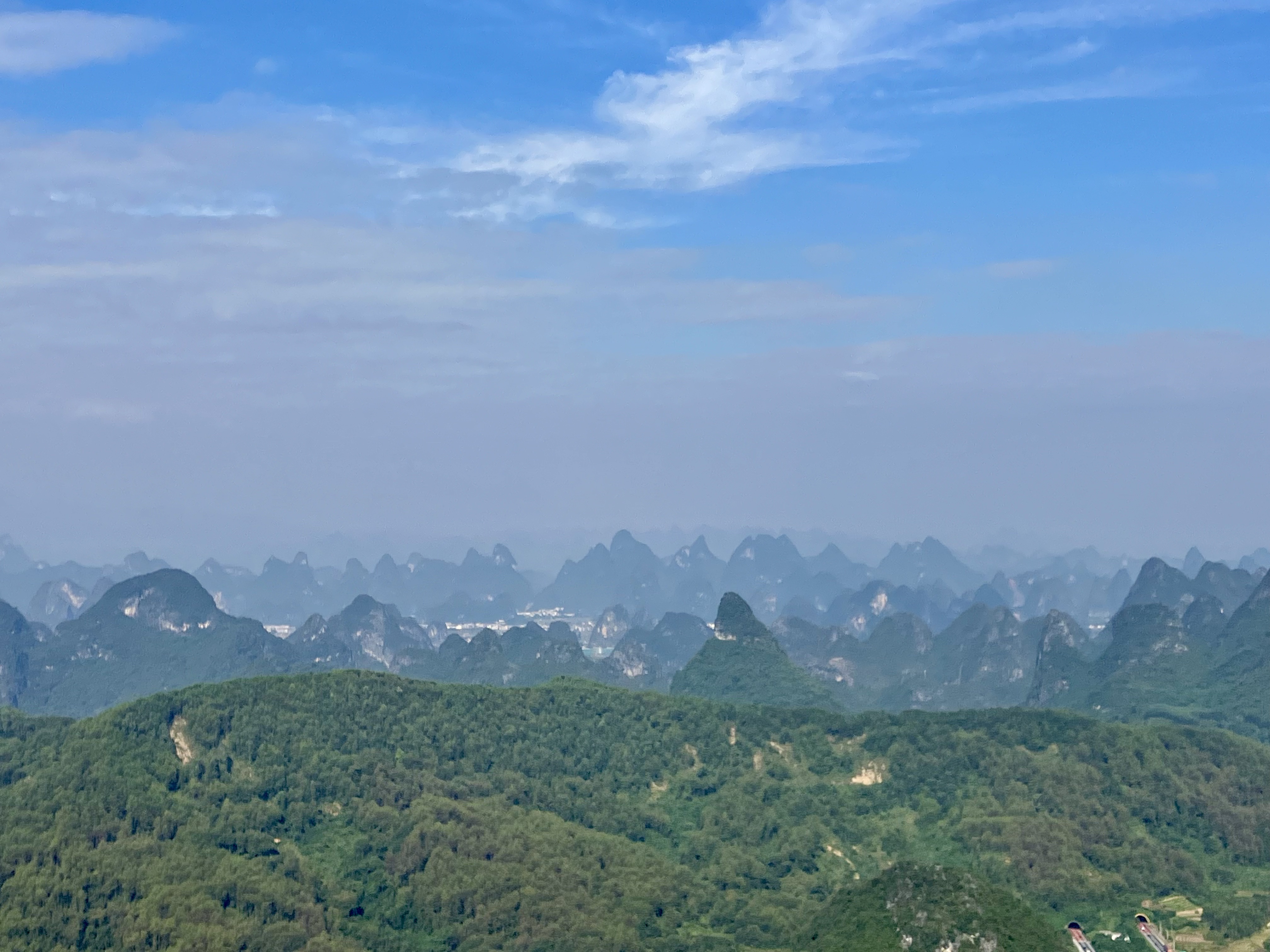
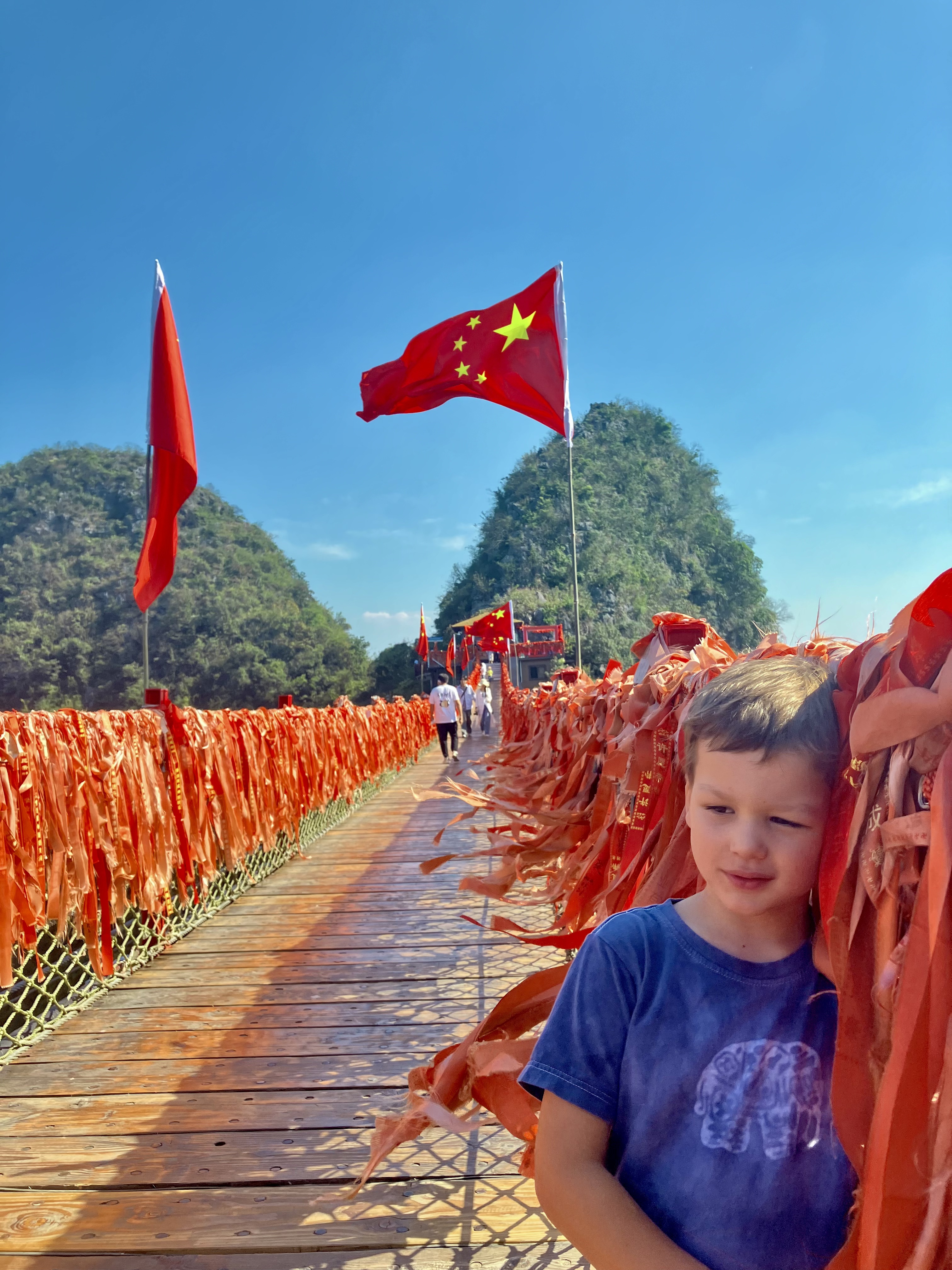
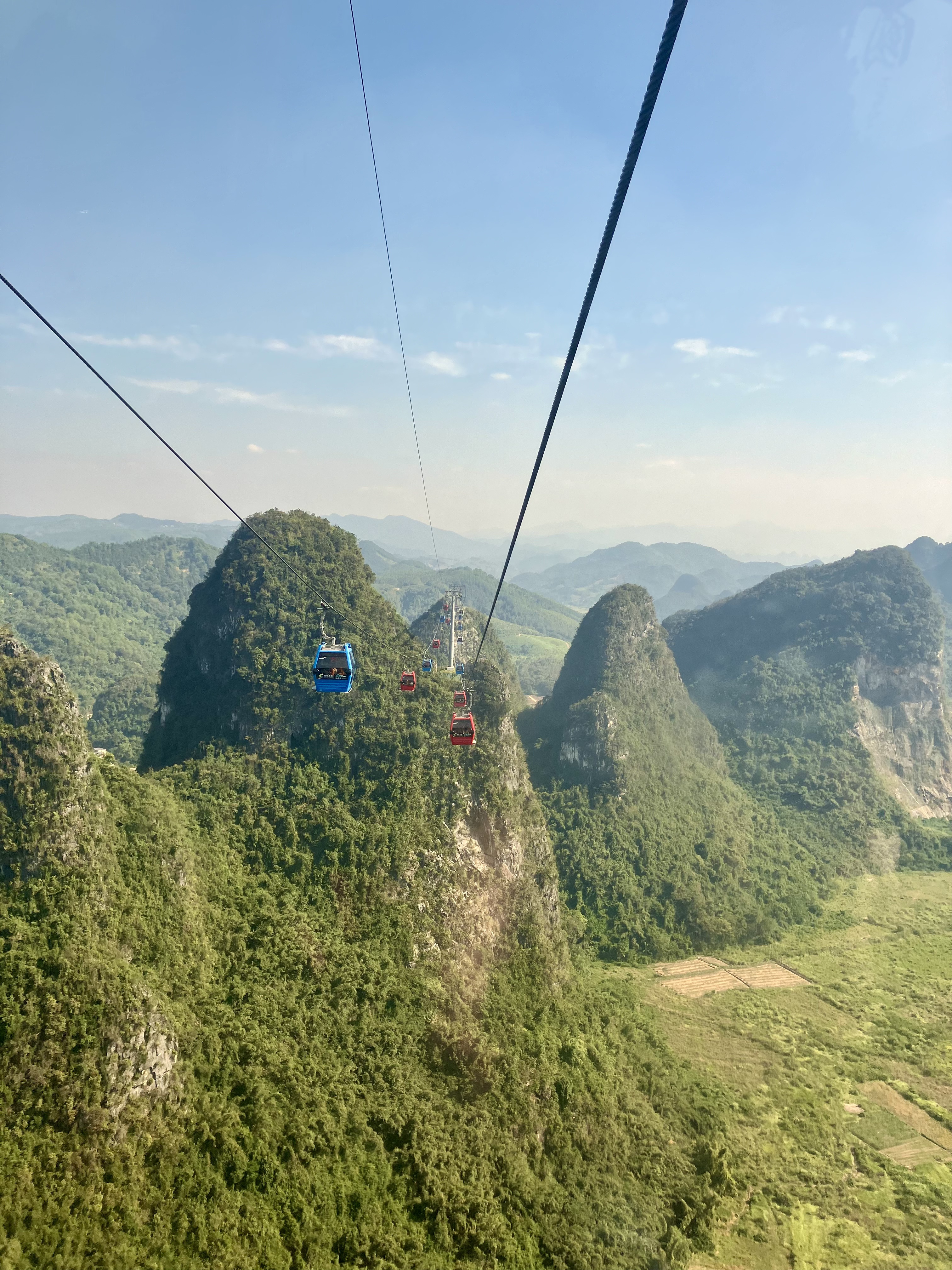
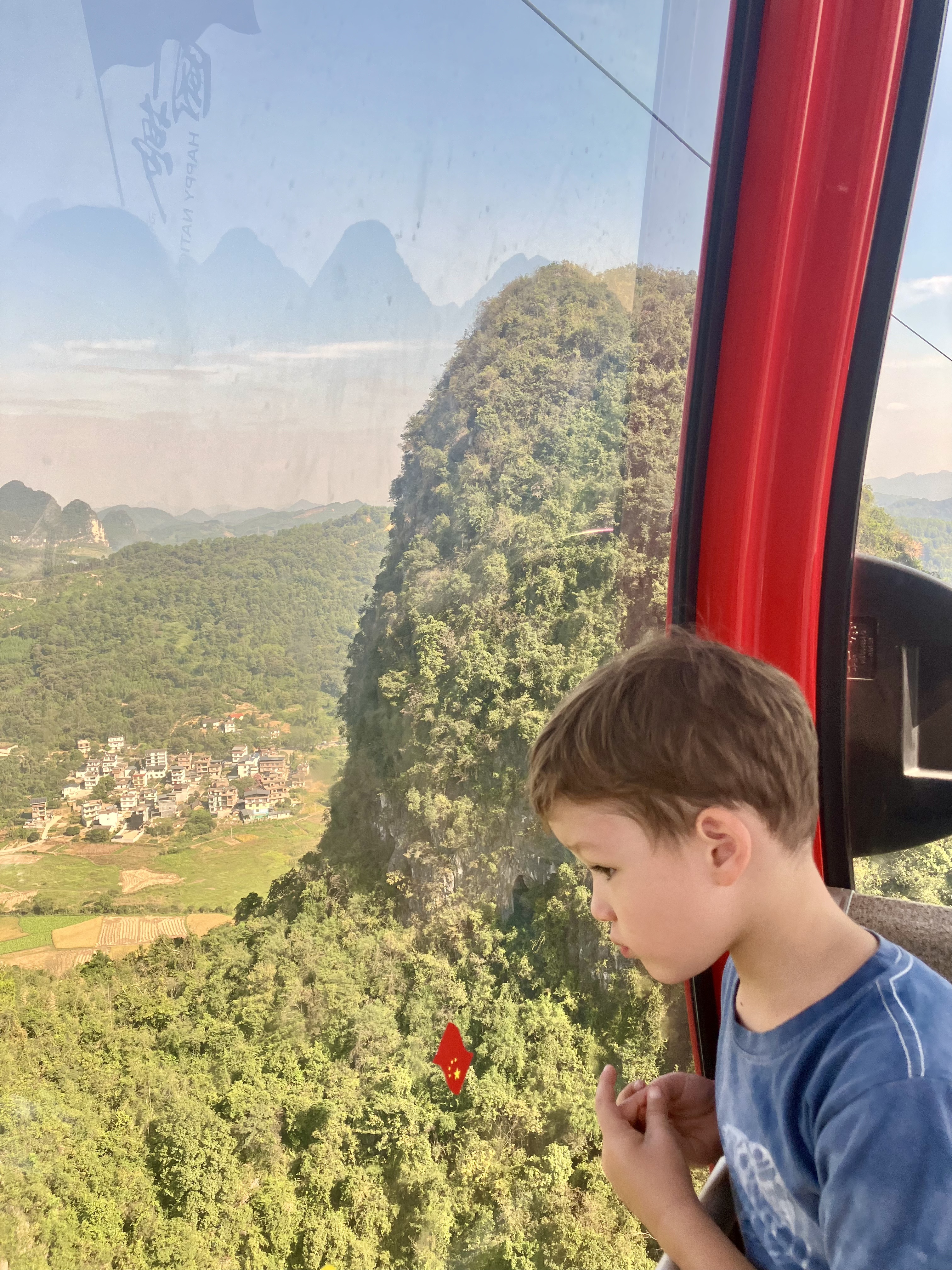
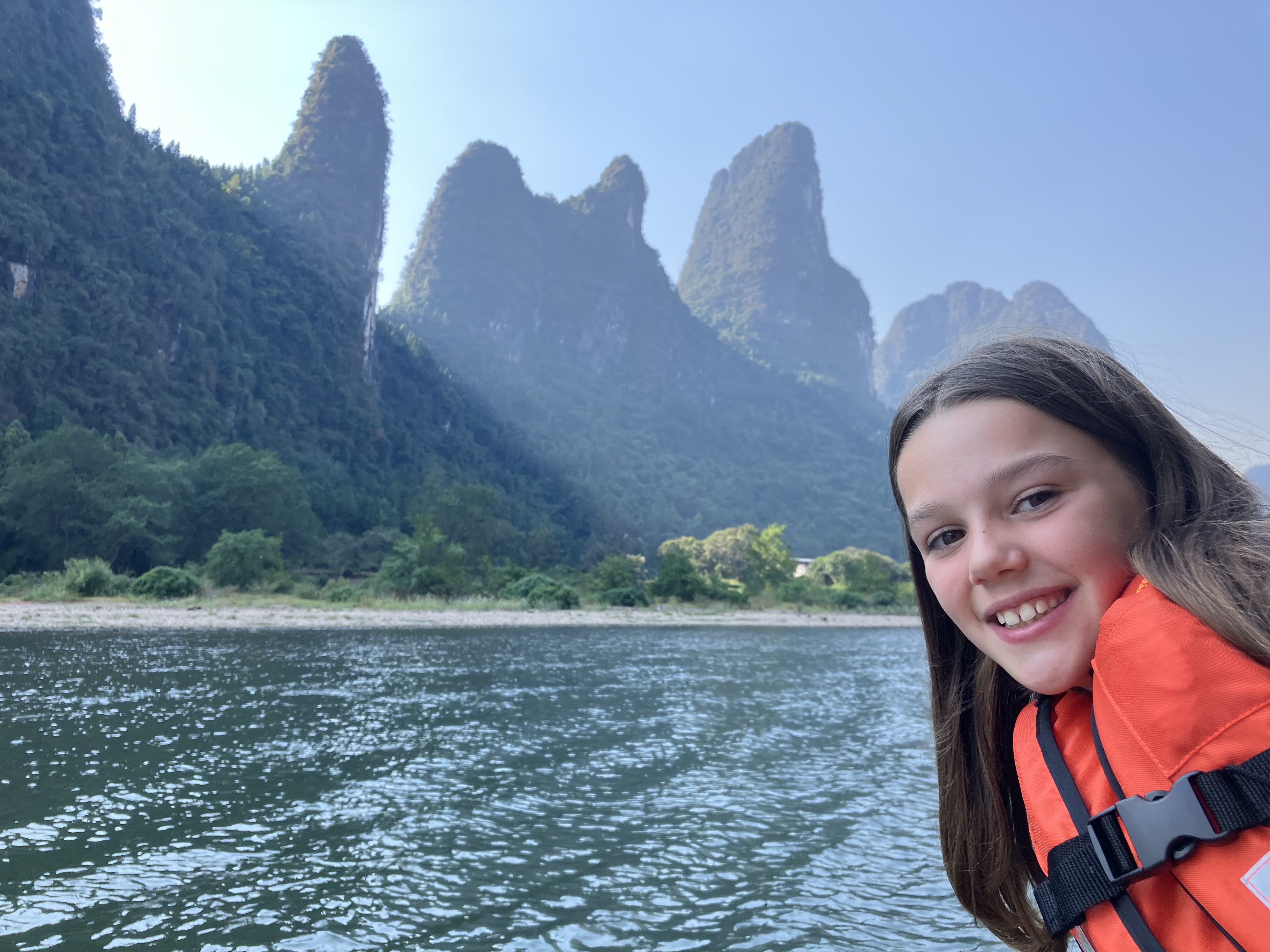
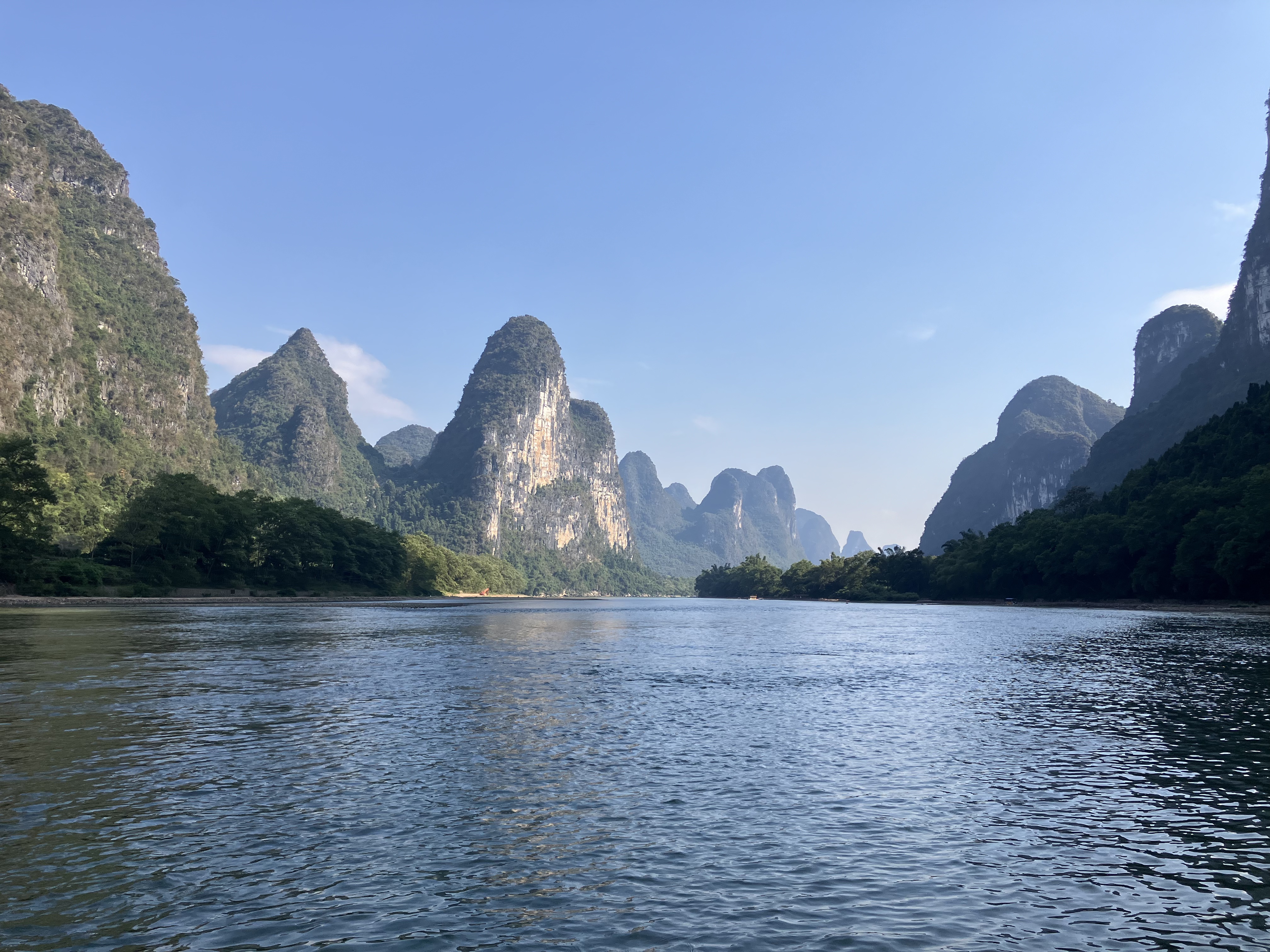
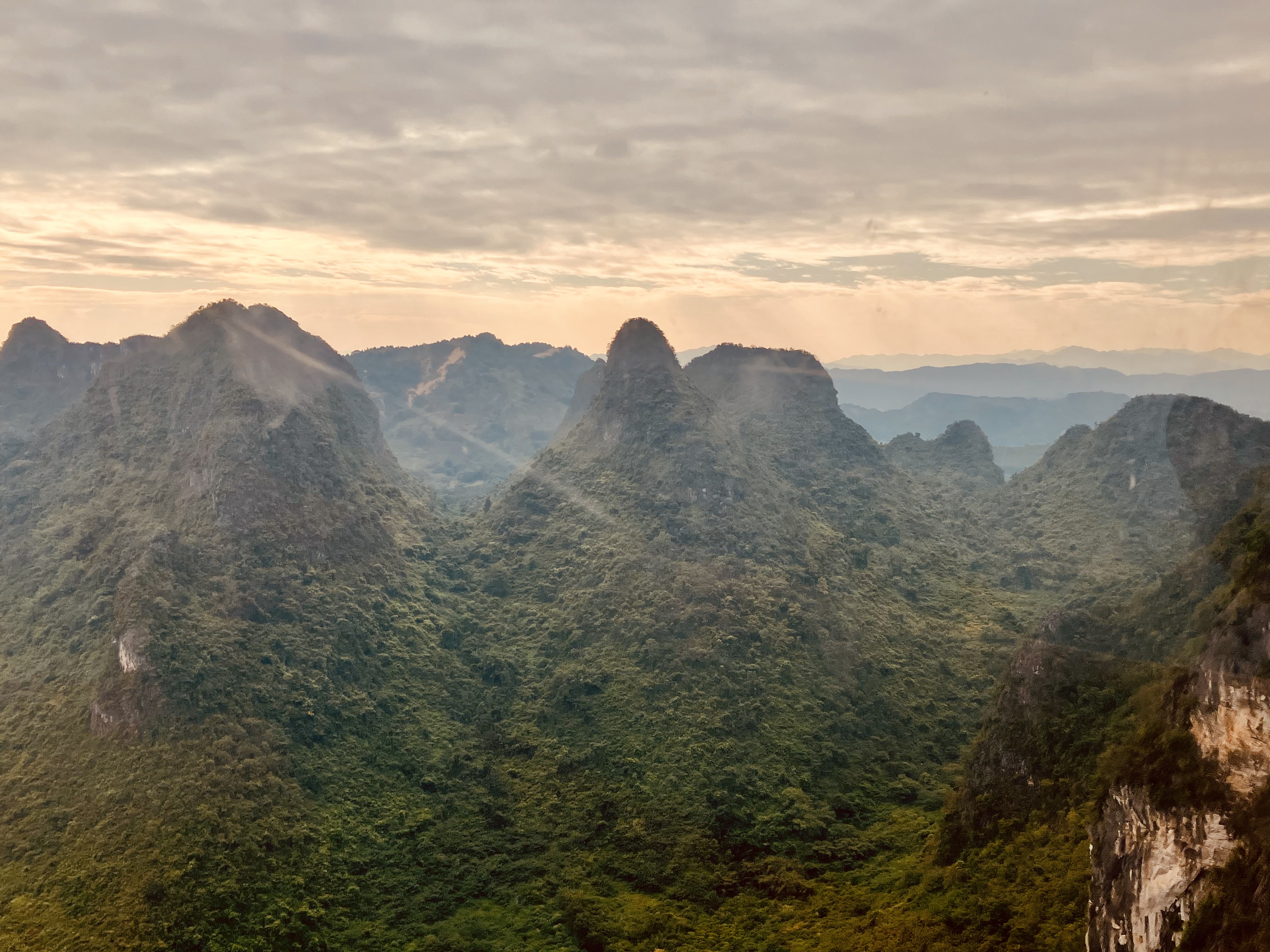
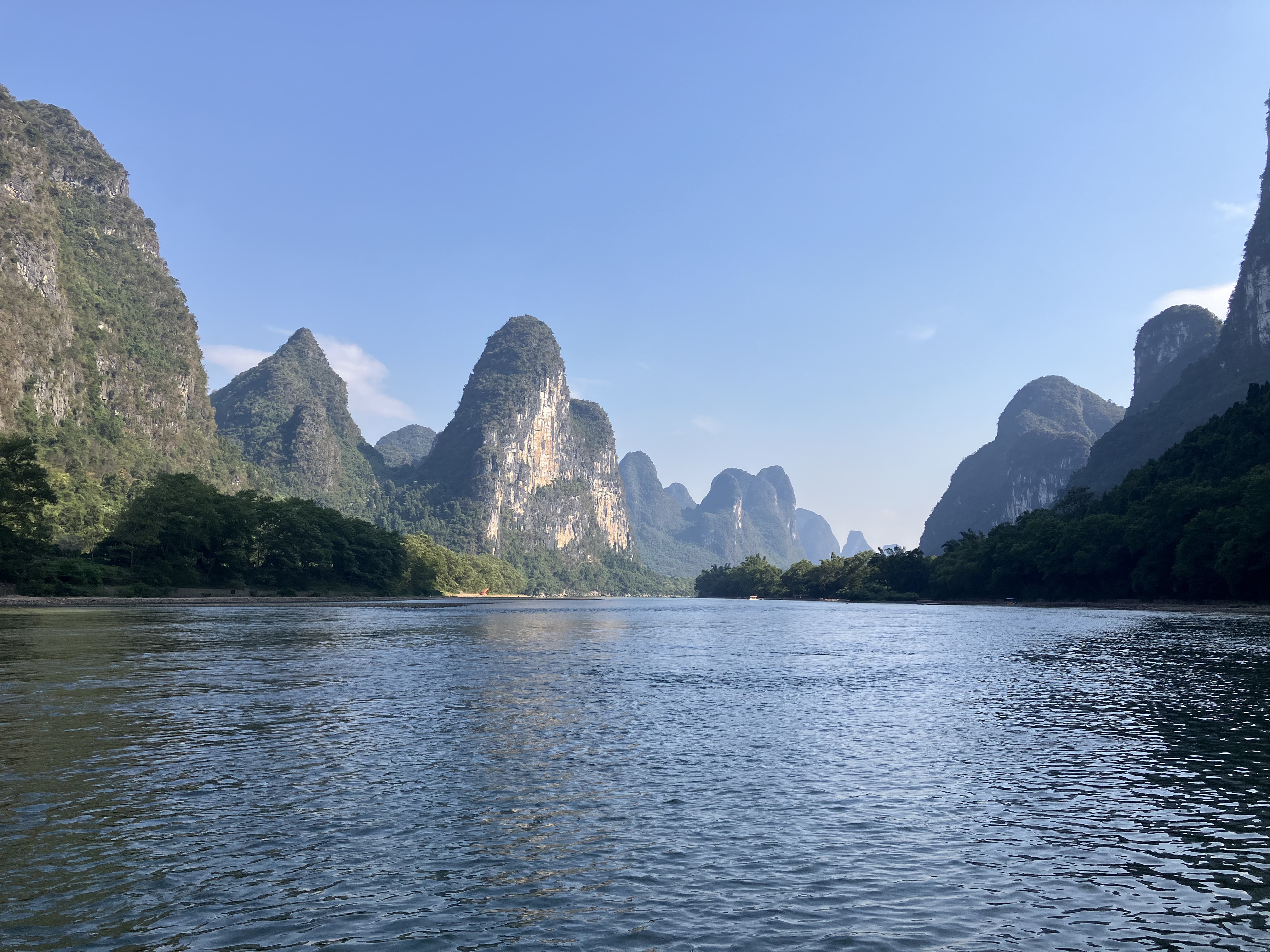
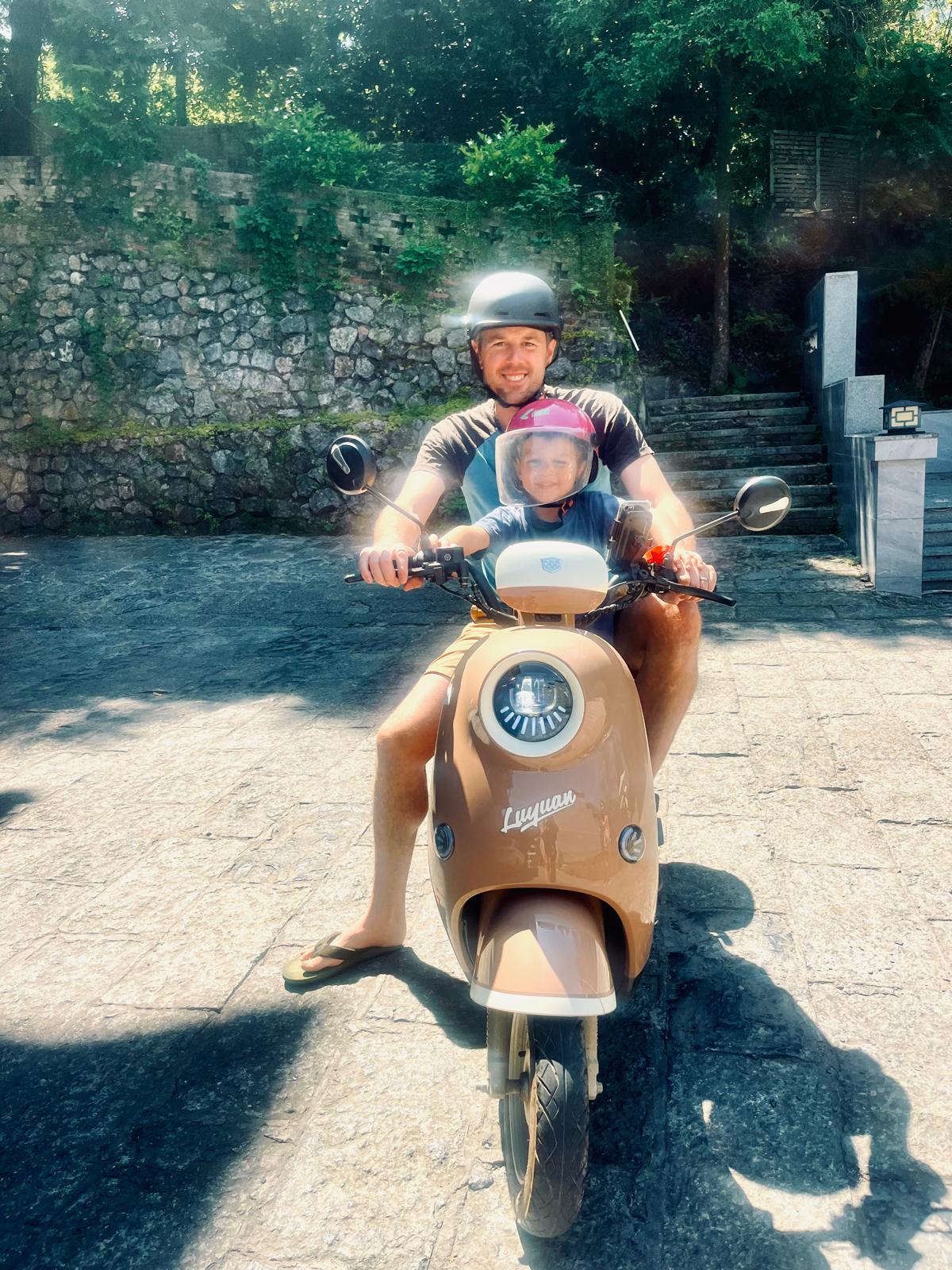
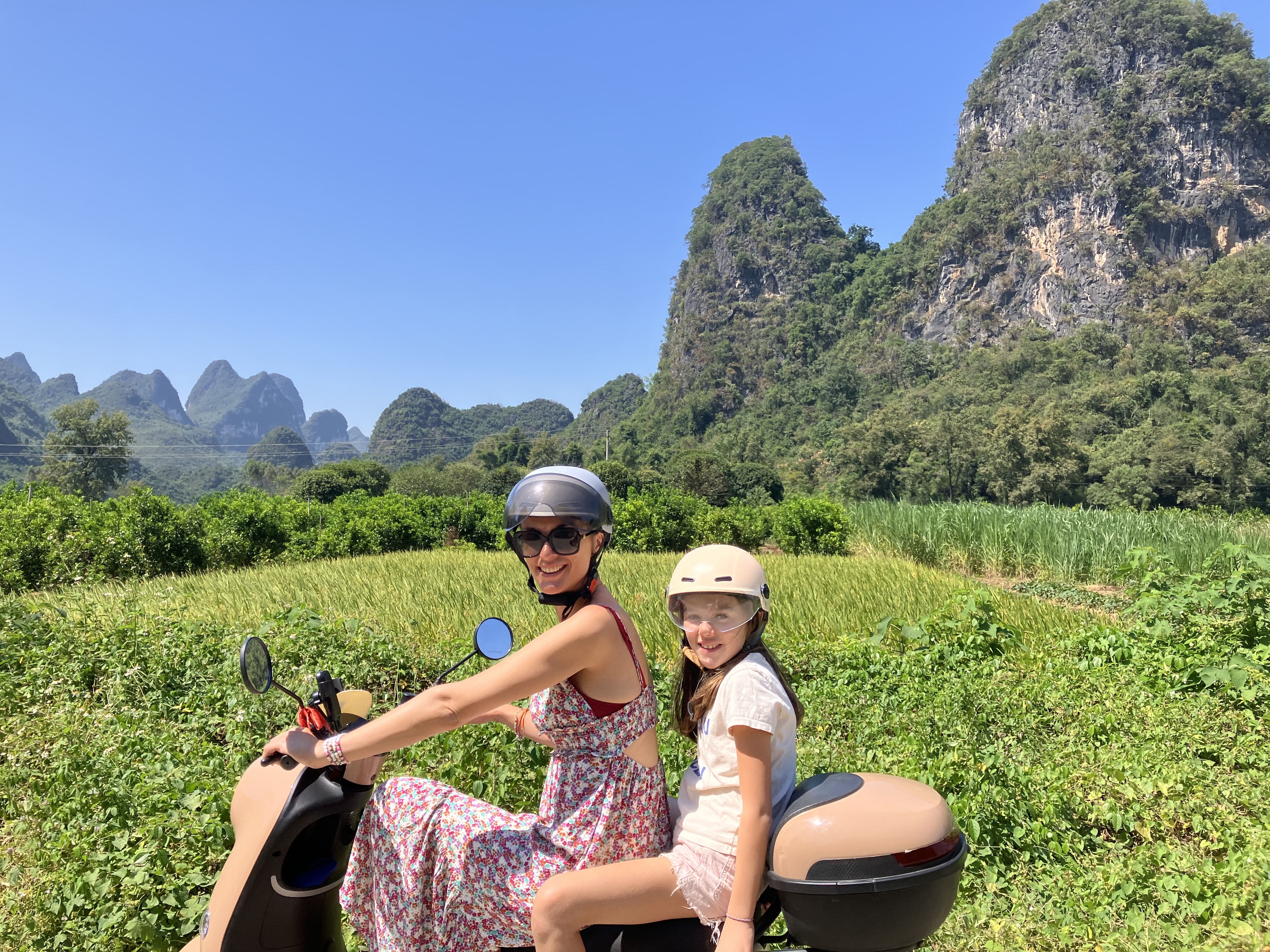
Tonight, we are in the middle of these five days, having dinner in the town of Yangshuo.
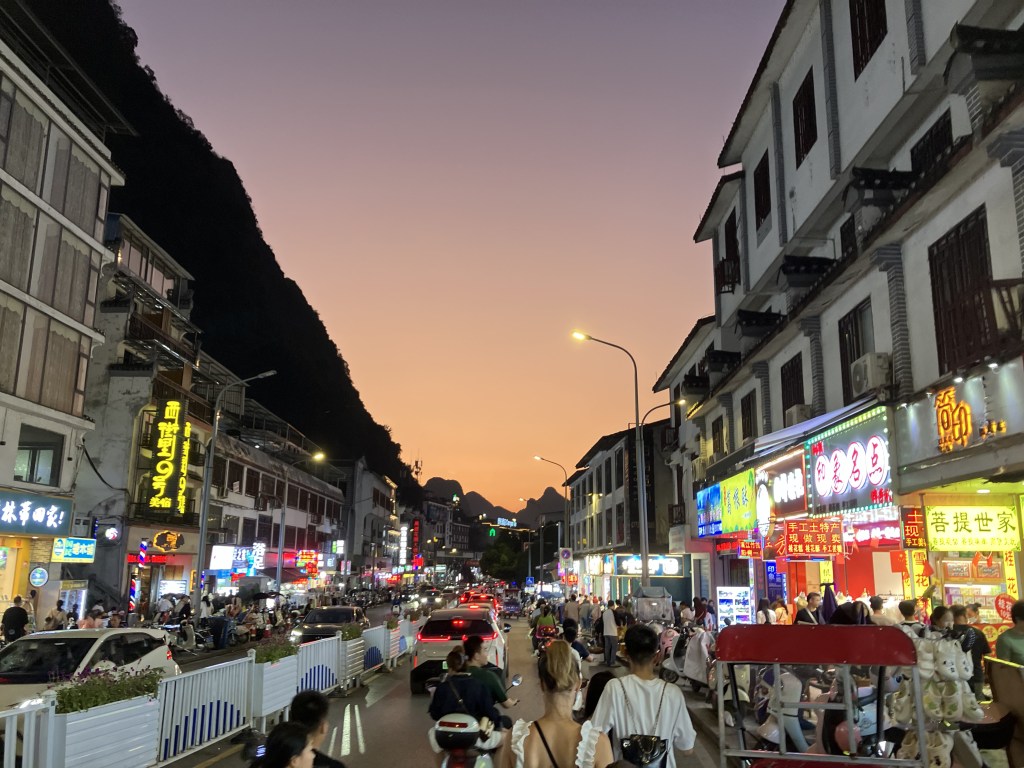
The town is ugly, there’s no other way to put it. It was apparently once a quiet village, but now it’s become a city filled with huge buildings that have no architectural coherence and with chaotic traffic (note for travelers: stay a bit outside the town).
Thank you, mass tourism and uncontrolled development! It’s a shame because the setting is beautiful, with buildings surrounded by hills. The crowd is very, very dense tonight. We have to keep a close eye on the kids. For once, we escaped this human tide by going to… an Indian restaurant.
Two tables away from us, there’s a couple: in their thirties judging by their faces, in their twenties judging by their clothes. I think they’re Japanese. After spending 1.5 months in Japan and almost 1 month in China, I’ve become somewhat of an “expert” in facial recognition.
So I figure, they, lost in this country steeped in anti-Japanese sentiments, and me, filled with memories of Japan — we’re kind of like blood brothers, aren’t we?
…I’ll never know because they turned out to be Chinese…
But my boldness paid off, as it was a couple who spoke fairly good English (hallelujah) and were eager to chat. They were lovely: they’d only been together for a month, and this was their first vacation together. And here I come, barging in without giving them a chance to brush me off because I wanted to talk to Chinese people who actually wanted to talk.
When I first spoke to them, they exchanged a brief, almost nervous glance but ended up smiling and opening up to the conversation. After about ten minutes, we were talking about China… Here are a few snippets from our conversation that I jotted down right after we parted:
- “We’re learning English so we can leave the country.”
- He, who does stand-up comedy: “With the censorship in this country, it’s a very, very tough job. What can you joke about, and what can’t you? You never know what the censors will do.”
- “People disappear. One day, you just don’t see them anymore. And everyone acts like nothing happened.”
I asked if they were afraid. “No, not really, because we’re not important enough.”
She runs an online shop: “We have no real economic data since all the numbers given by the government are false. But we can tell the economy is doing very poorly. People haven’t been buying anything since Covid. The elastic has snapped.”
This matches what we read in the Western press, but I’m surprised that Chinese people, subject to such censorship, are so aware of it.
There’s currently a deep unease in China. Since the start of the century, the country experienced a long period of optimism, driven by double-digit economic growth. But today, doubt is taking over. Since Covid and its needlessly harsh and prolonged lockdowns (the Chinese told us they would go out without their phones to avoid being tracked), doubt has turned into distrust.
This distrust is exacerbated by the huge real estate crisis and the extremely high unemployment rate among young graduates (the numbers are unclear, but we know it’s severe). There’s also a growing lack of trust in President Xi Jinping. Before Covid, his approval ratings were high, but since then, it’s been a steep decline. (The few surveys available show a drop from 78% satisfaction to 39%.)
According to them, “Nothing will change for now; it’s in the mentality of the Chinese people, maybe in 5 or 10 years.” They shrug, resigned. But who knows? China has already shown it can change course unexpectedly.
I’m not judging. What can they do today, knowing that protesters are arrested at home without anyone reacting because the network of cameras has identified them? Gone are the days when, if you didn’t get arrested during a protest, you were safe.
To be honest, this was just one conversation. It’s impossible to know how the population as a whole feels. This country is so vast and diverse, and the risk of speaking up is so high…
Chapter 8: All Those Taxi Drivers
In China, every taxi ride becomes an adventure in itself. There was that driver in Shanghai, a real rally pilot, who got us to our destination in thirty minutes flat, while the Alipay app had predicted 40. Then, there was the laid-back, easygoing driver and even a few female drivers — a breath of fresh air after Japan. And then there were the unforgettable ones: the singer (with a… unique voice) and the professional throat-clearer… Suzanne was this close to smacking the last two.
And let’s not forget the omnipresence of electric vehicles. As someone working in the automotive industry, I was aware of China’s lead in electric mobility, but knowing it from an office in Belgium and experiencing it on a daily basis are worlds apart. China has seized this technological revolution to boost local brands like BYD, Forthing, Leapmotor, Haval, Wuling, Xpeng, Aion, Changan, Nio… Names that probably mean little or nothing to you, but they’re already gaining ground outside of China. While we imagine ourselves leading the charge, Europe is getting overtaken, and China is unapologetically building its national champions.
Then there’s the digital payment experience. Here, every taxi functions like an “Uber” thanks to local apps like DiDi. Everything in China is digitalized — forget about cash: the Chinese don’t go anywhere without their smartphone. A Chinese person would be shocked to find out you can’t pay for everything with your mobile in Europe. In major cities, some restaurants don’t even have paper menus anymore: a QR code on the table, and voilà, the menu appears on your phone. Even high up in the mountains, the lady selling coffee holds up her QR code for digital payment. In the last two days, I ended up paying everything in cash… simply because I still had banknotes from a withdrawal made a month earlier!
Of course, this digitalization also has its perks for the government: with just two major payment giants, Alipay and WeChat, and all transactions centralized, everything and everyone becomes easily traceable.
This immersion offers a glimpse into a future where everything is interconnected and we move beyond the hassle of cash. For tourists, there’s no point in resisting: WeChat and Alipay have become indispensable, even for buying a simple cup of coffee. Welcome to China!ple café. Bienvenue en Chine !
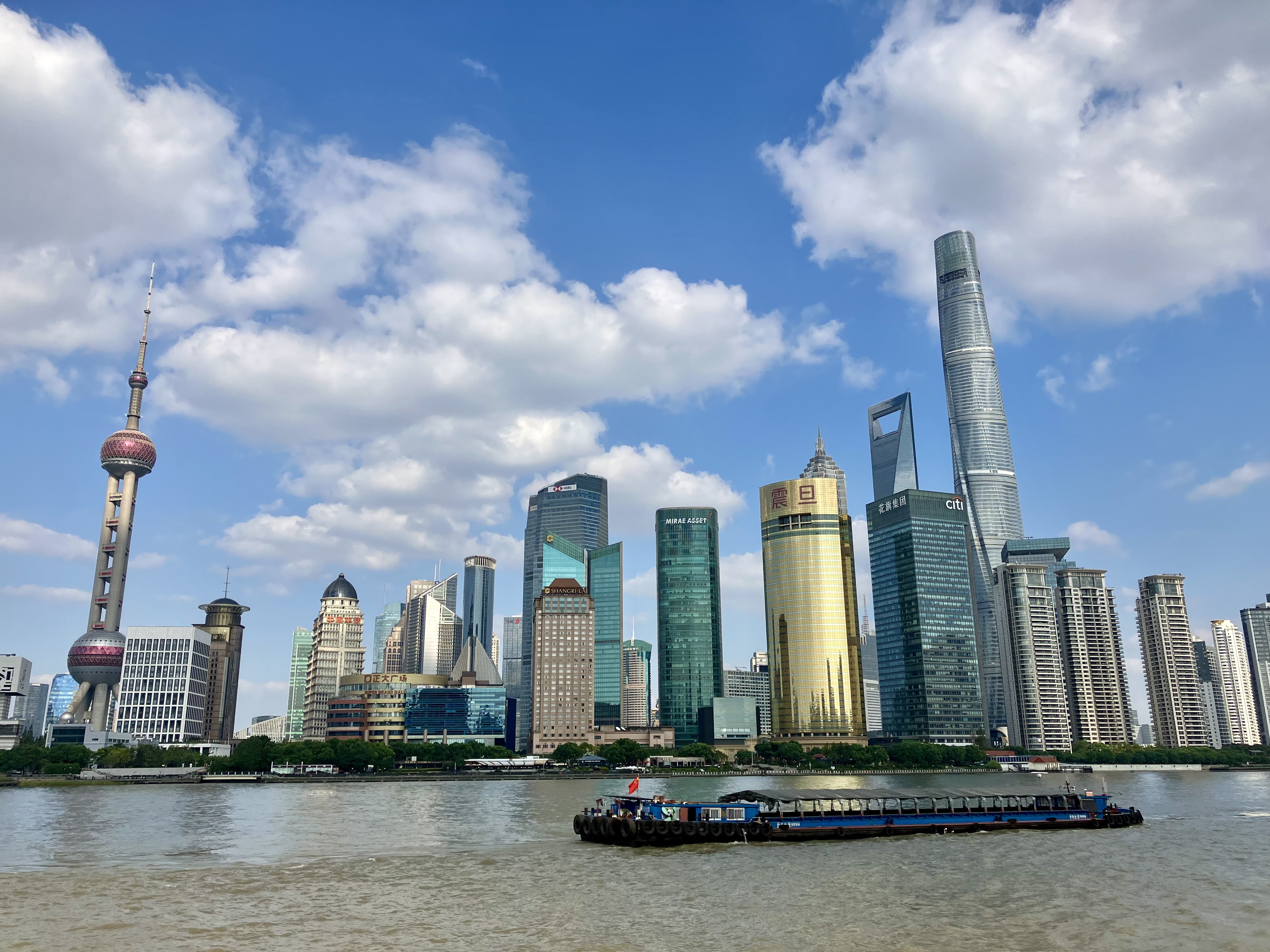
Chapter 9: Shanghai, the Soulless Megalopolis?
In the rankings of the world’s largest cities, Shanghai is in the top 5.
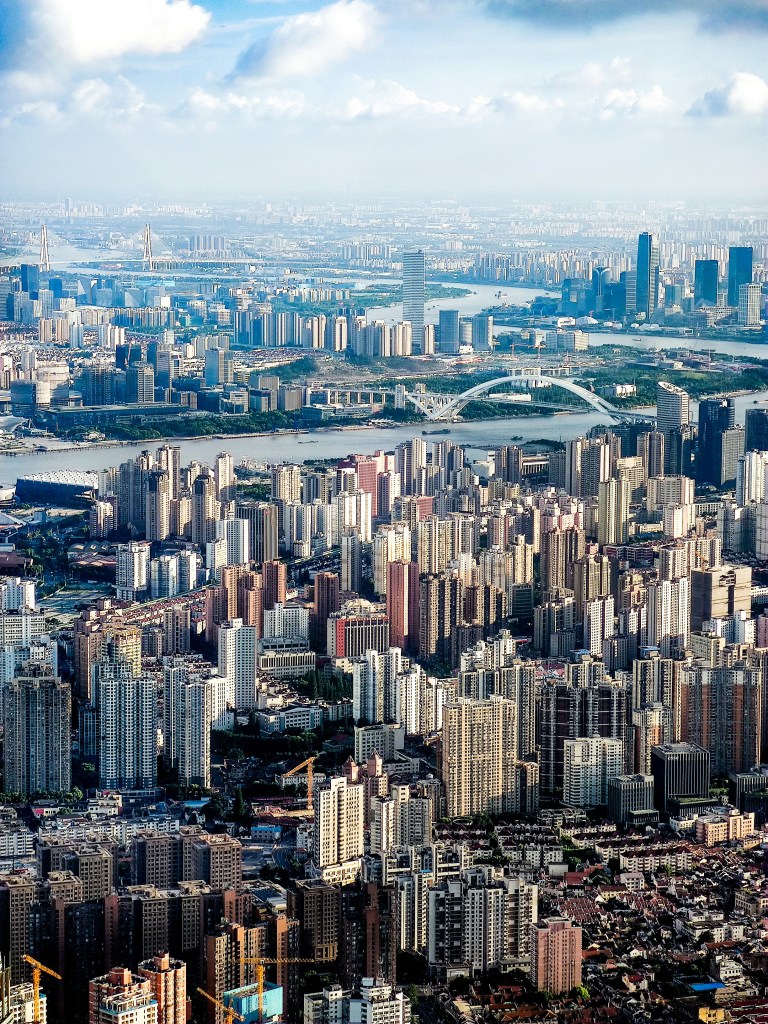
Surprising? Not really. With its 25 million residents, it’s one of the most populous cities on the planet. Shanghai is THE economic and financial powerhouse of China (sorry, Beijing!), and the world’s largest port in terms of container volume. Just that. And for the history buffs, let’s not forget that until 1943, Shanghai was still a British concession — a piece of the Empire within the Empire.
On the one hand, Shanghai impresses with its international standards: museums, restaurants, trendy bars… it’s all there. It feels like we’ve returned to a modern metropolis where anything seems possible, where the city’s energy pulls us in.
On the other hand, it’s hard to find the charm of old cities like Tokyo or even Beijing here. Shanghai feels like it lacks soul. Many buildings are brand new or still under construction.
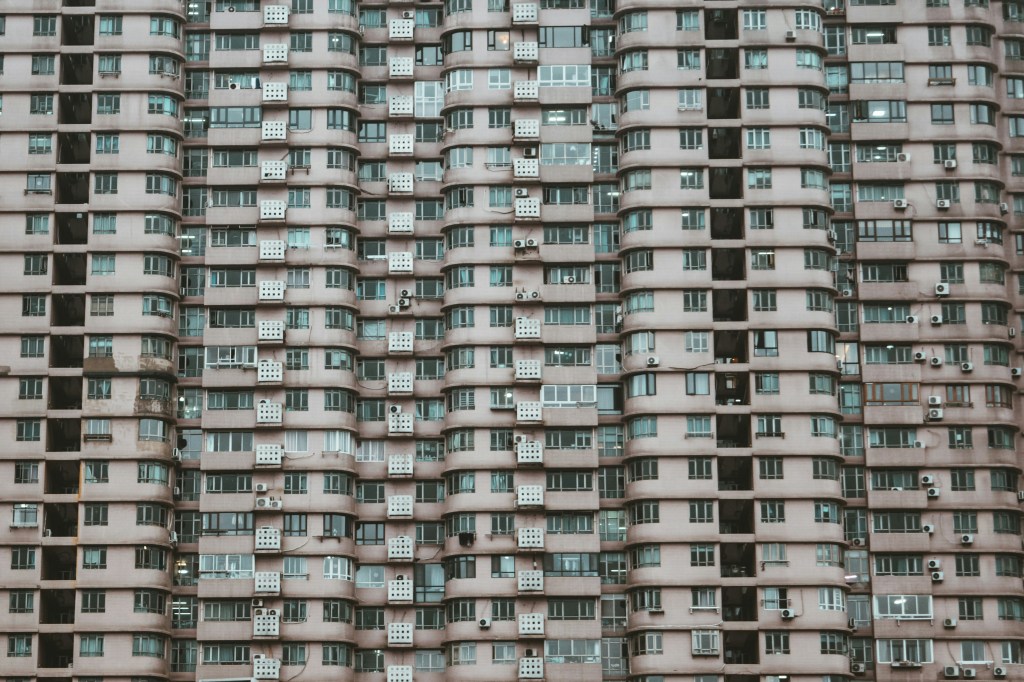
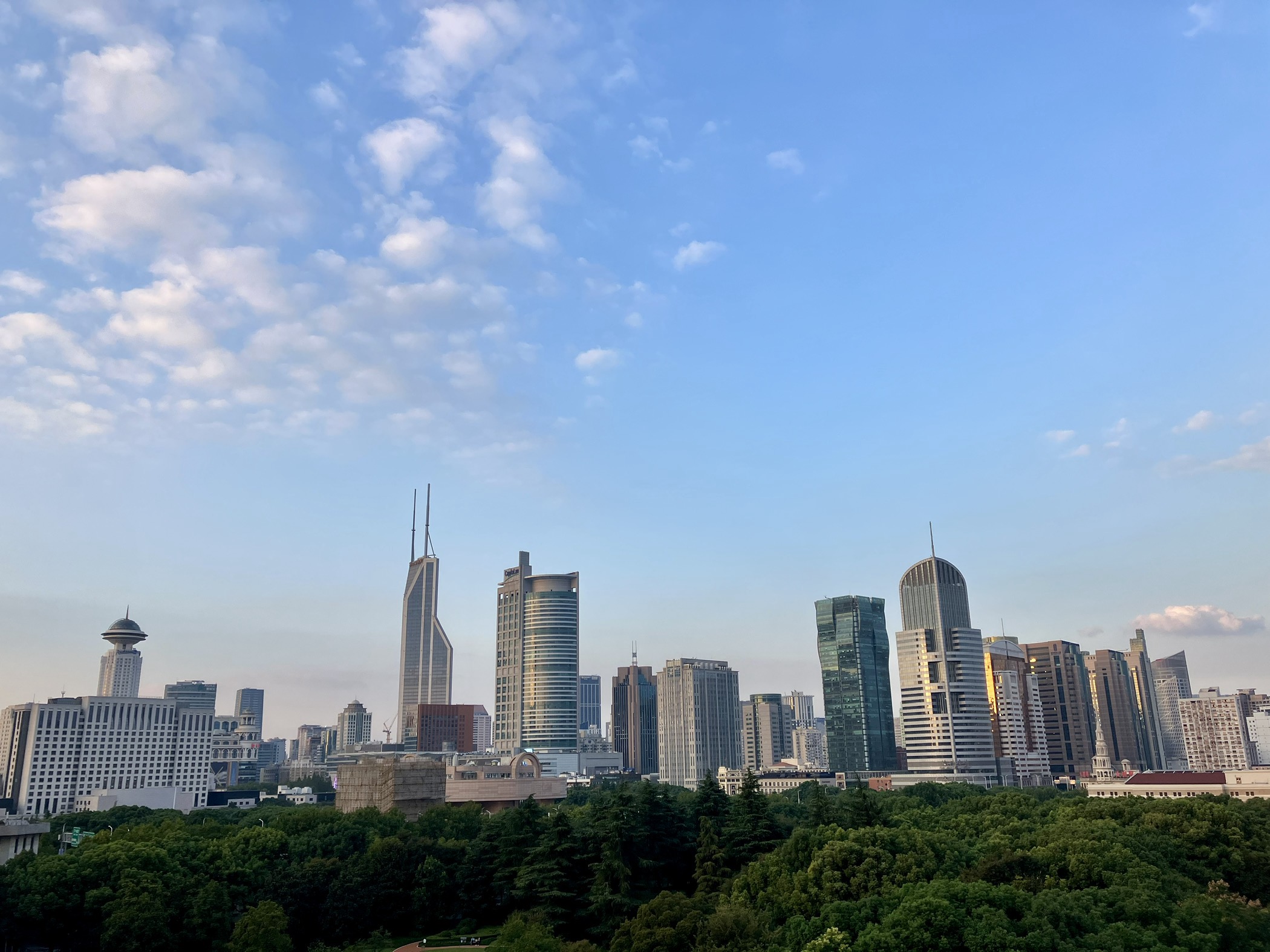
The iconic skyscrapers and massive apartment complexes dominate the skyline — after all, you need to house 25 million people in an area of 6,300 square kilometers
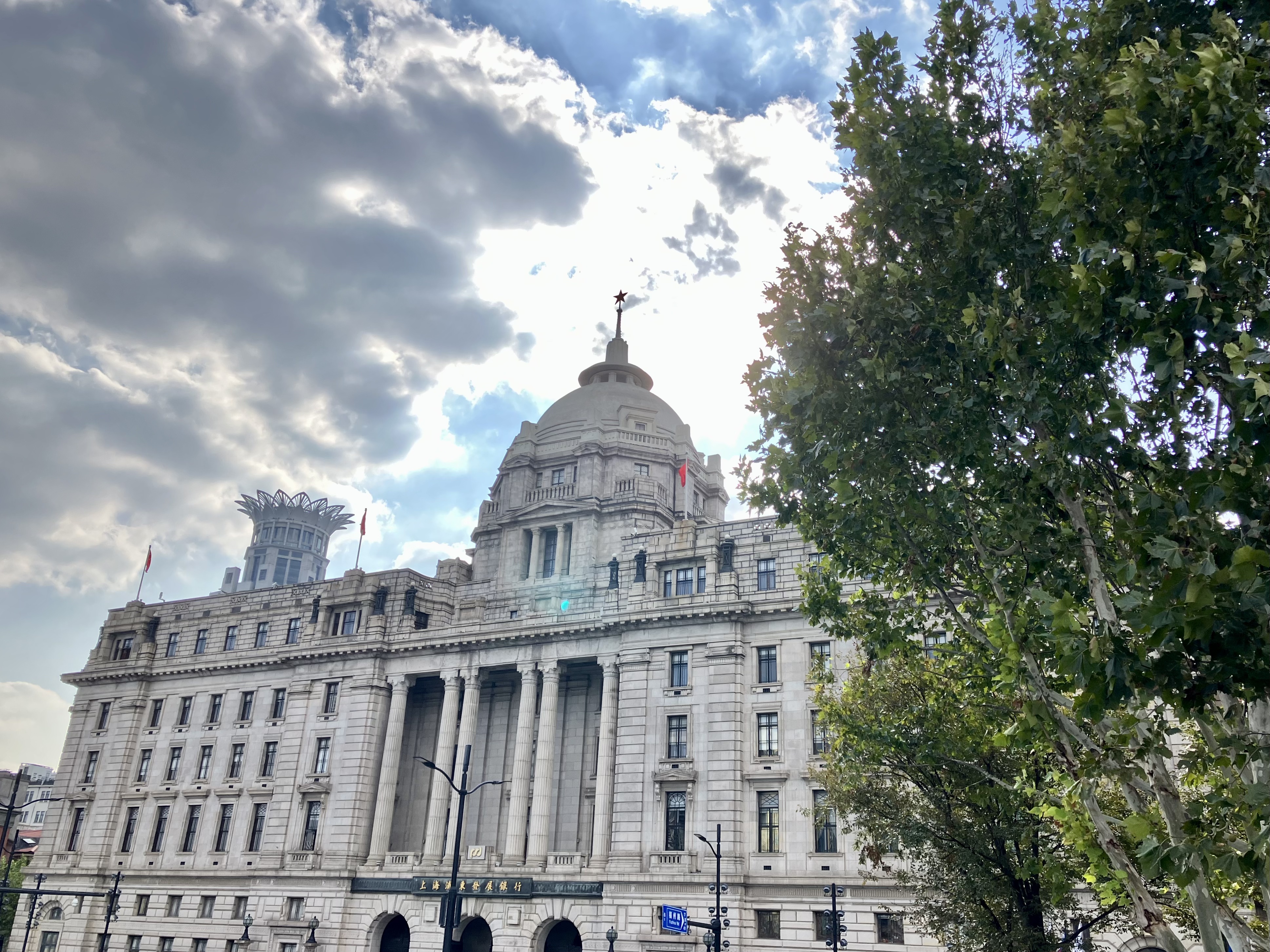
Of course, there are exceptions. We had a pleasant time in the former French Concession and its surrounding neighborhoods. It almost makes you forget you’re surrounded by towering skyscrapers. The streets are lined with plane trees, the buildings are lower, reminiscent of Europe. The vibe is trendy and undeniably chic, reflecting the city’s prosperity. This little slice of Shanghai reminds us that the city isn’t just a forest of concrete and glass.
And then there’s that massive elevated highway, stretching 250 kilometers across the city. When you consider that in Belgium it takes us eight years to renovate the Vilvoorde Viaduct — barely 1.6 kilometers long — you start to wonder. Here, infrastructure progresses at a dizzying speed, as if to remind us that in Shanghai, certain things simply don’t hold the same value.
Chapter 10: The Cigarette
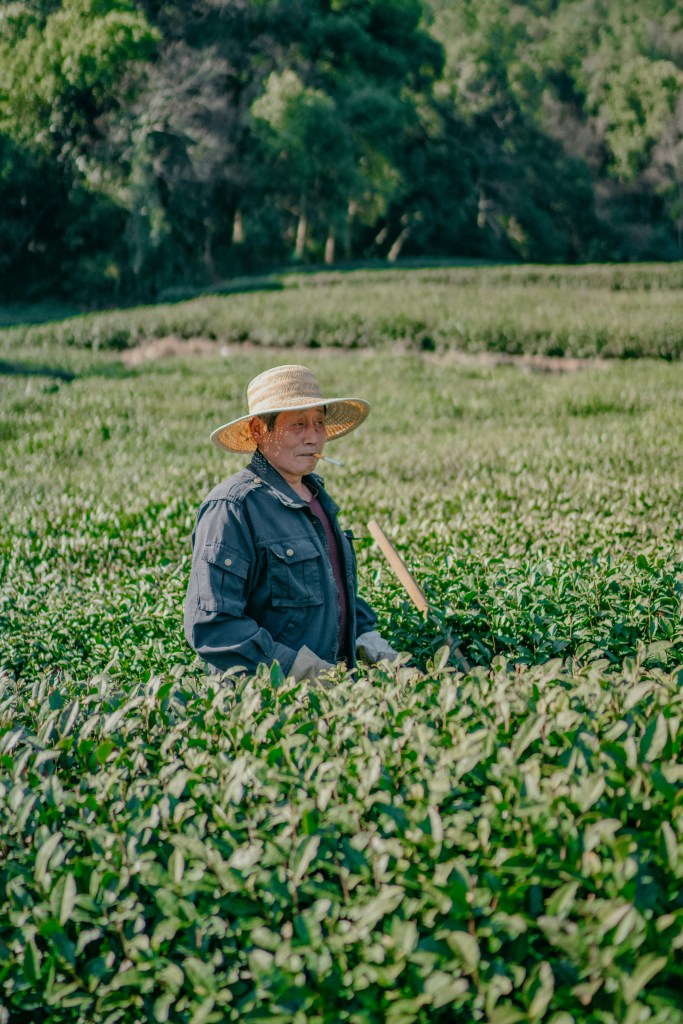
I hesitated to mention it, but it’s so omnipresent that it forced its way into this story, just as it forces its way into every corner of China. While smoking has practically disappeared from public spaces in Japan (and Western Europe), in China, the cigarette remains king. In the street, in restaurants, in taxis, and even on trains (between carriages). Yes, even when there’s a big red NO SMOKING sign. It’s as if those signs are just there for decoration.
We tried several hotels proudly labeled as “non-smoking,” yet the smell of cigarettes often lingered. And the Chinese? They don’t seem to care at all. The no-smoking signs and the threats of fines have absolutely no effect.
It’s quite ironic when you think about it: in a dictatorship, you’d expect rules to be followed to the letter. But no, here, smoking anywhere and everywhere feels like a kind of national resistance… or maybe just an excuse to light up.
Chapter 11: Suzanne, Nola & Matteo
We leave China with a light heart, happy to have explored this mysterious country. Grateful to have seen with our own eyes and felt what a part of China is really like. That’s exactly why we love traveling, and we’re glad we could offer this experience to our children. Nola’s questions say it all: “But can’t people do whatever they want here? Why are there so many cameras? What is a democracy? Why can’t they access Facebook or Instagram?”
The worries we had before leaving turned out to be overblown. Traveling in China is actually quite simple (though maybe we’re a bit biased?), especially when you use the right apps (Trip.com, Alipay, WeChat). We tasted unfamiliar fruits, were dazzled by a culture more than 2,000 years old, and discovered truly spectacular landscapes.
But China is as fascinating as it is puzzling, with its unexpected modernity and omnipresent control. Behind the skyscrapers and the hustle and bustle lies a society in constant motion, full of dynamism, commanding respect but also prompting deep reflection. This journey was an immersion into a world that challenged us, unsettled us, and ultimately left us in awe. That said, China might not be the ideal destination for a first trip to Asia. Few people speak English, and you need to be prepared to adapt and sometimes assert yourself.

But I’m proud of how we navigated this month as a family. Sure, there were a few moments of tension (we traveled at a breakneck pace, as if we were only away for three weeks), but in the end, there were far fewer arguments than expected.
If you ask me if I would return to China, my answer is yes, because there is still so much more to discover. Suzanne, however… her answer is a bit more nuanced.
Above all, though, we’re happy to change scenery. These 80 days have been extraordinary, filled with breathtaking landscapes and an immersion into fascinating cultures. But there were few social encounters, many nights spent in tiny rooms (only four times did we have a door between us and the kids), and travels through countries with an impressive population density.
It’s almost time to leave Asia, but not before one final stop: Bali. We’ll stay for ten days, including a week with just me and the kids, as Suzanne will spend a few days with her friend Naomi. Bali brings to mind beaches, swimming, and relaxation… At least, that’s what the kids think. But they might be in for a surprise because I have a very different itinerary planned. Shhh, don’t tell them, or they might end up hating me.
See you soon, sending you all a big hug!
 365 days of summer
Leave a comment