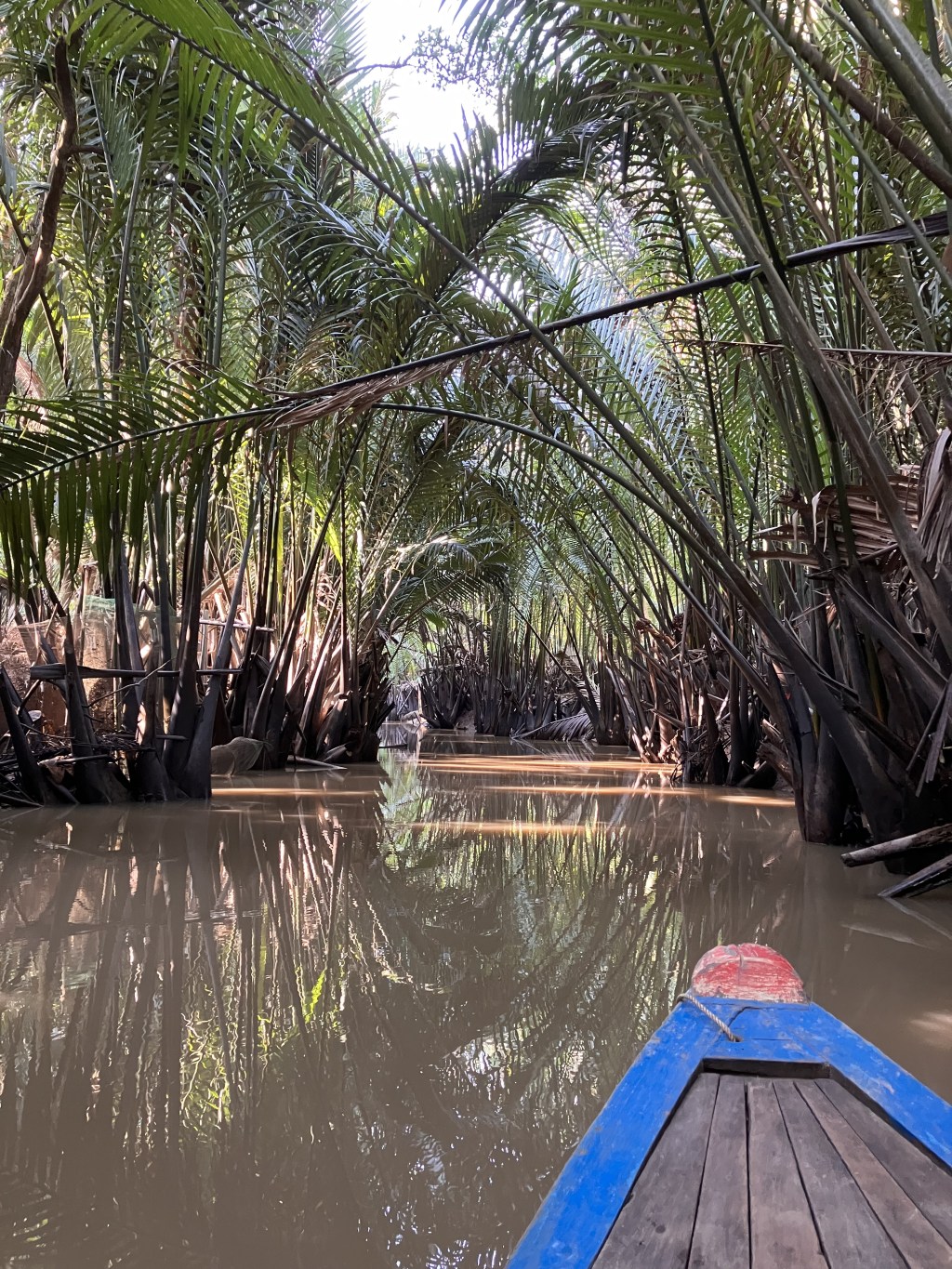
Back to Southeast Asia! This time, we’re dropping our bags in Vietnam for a month before heading to Cambodia to reunite with our friends Bru & Astrid. A quick stop in a region where most round-the-world travelers tend to linger… but for us, a month is more than enough—we’ve already explored many of its corners on past trips.
Curious to learn more about Vietnam? Buckle up and follow the guide!
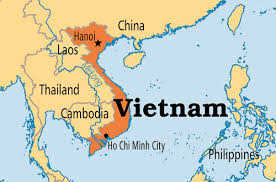
Vietnam is a long, snake-shaped country stretching over 2,000 km, squeezed between the sea and the mountains. A land shaped by war, it managed to overthrow two empires (the French and the Americans) and rebuild itself against all odds.
In 2024, its economy is growing at over 6%, and poverty has dropped from 50% in the 1990s to just 2% today. Not bad for a country that could have been left in ruins.
A wealthy nation, then? Not so fast. Its GDP per capita is around €4,700—more than ten times lower than Belgium’s!
But beyond the numbers and clichés, what is Vietnam today? That’s what we’re here to find out. Three acts, three faces of the country. Hop on board!
Act 1: 22/12 – 02/01 | The South, the Mekong Delta – Raw energy
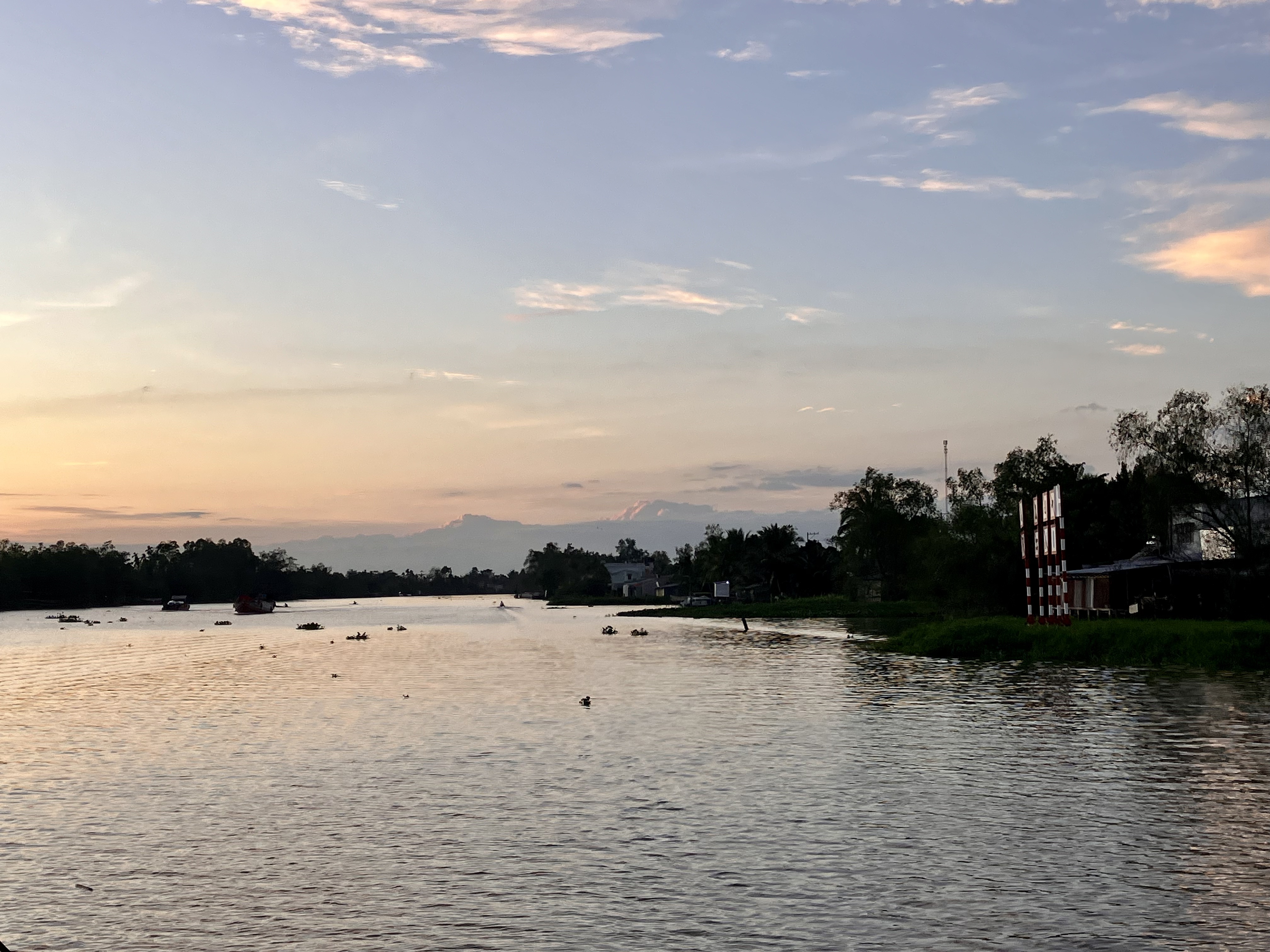
First stop: the Mekong Delta, Can Tho & Ben Tre. One week of immersion in this region that, despite covering only 12% of the country’s surface, produces 40% of Vietnam’s food. Here, everything grows. Mango trees, papayas, banana trees, coconut palms… A lush jungle surrounded by canals.
Unlike the country’s tourist hotspots, the Mekong Delta isn’t overrun with visitors, with no real ancient temples or grand historical cities to tick off a list.
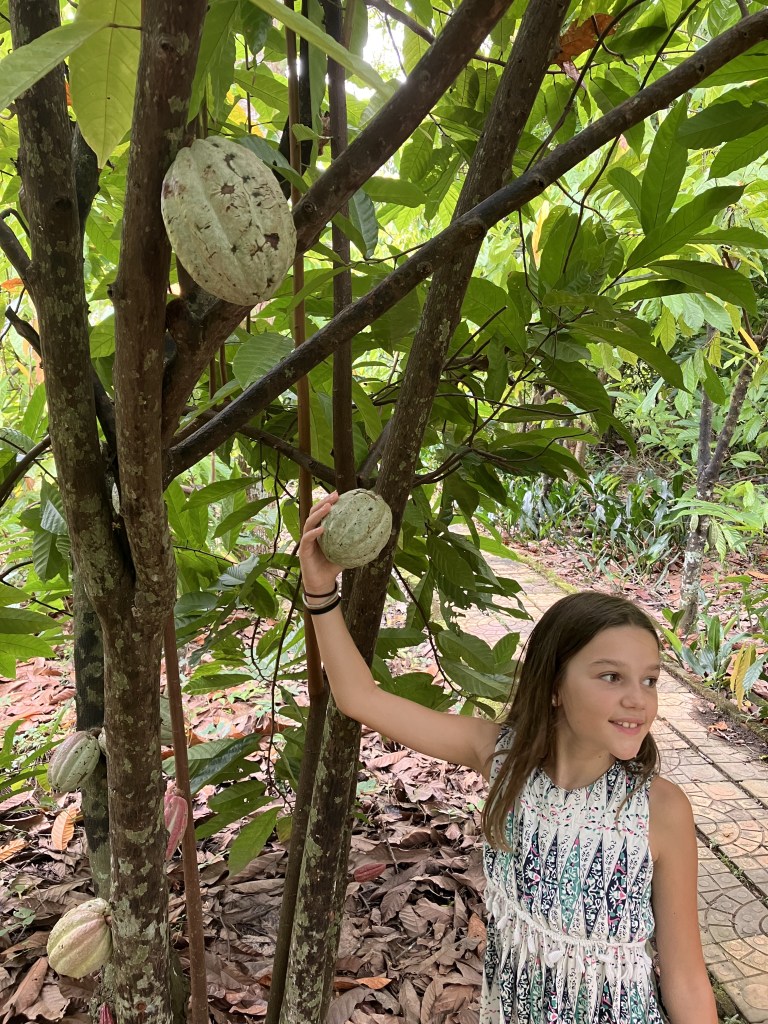
What makes the experience interesting here is the water, ever-present, and especially the people. Simply step away from the main roads to get lost on side paths, cross canals by ferry, observe the crops, and discover the daily life of the delta—without any filter.
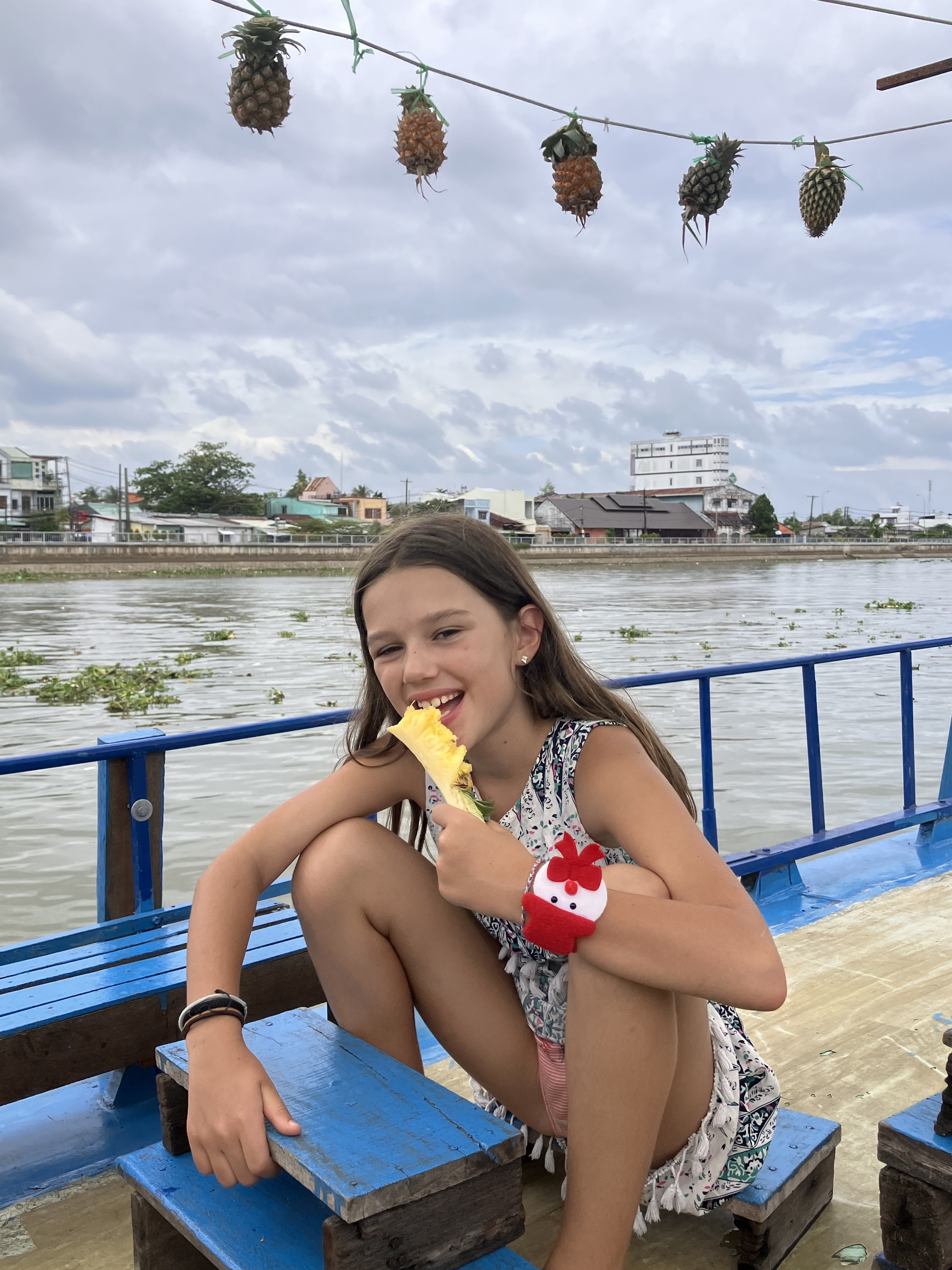
And what a daily life! Making coconut candy, forging knives, baking bricks, pressing coffee, eating pineapples at a floating market… We tried it all.
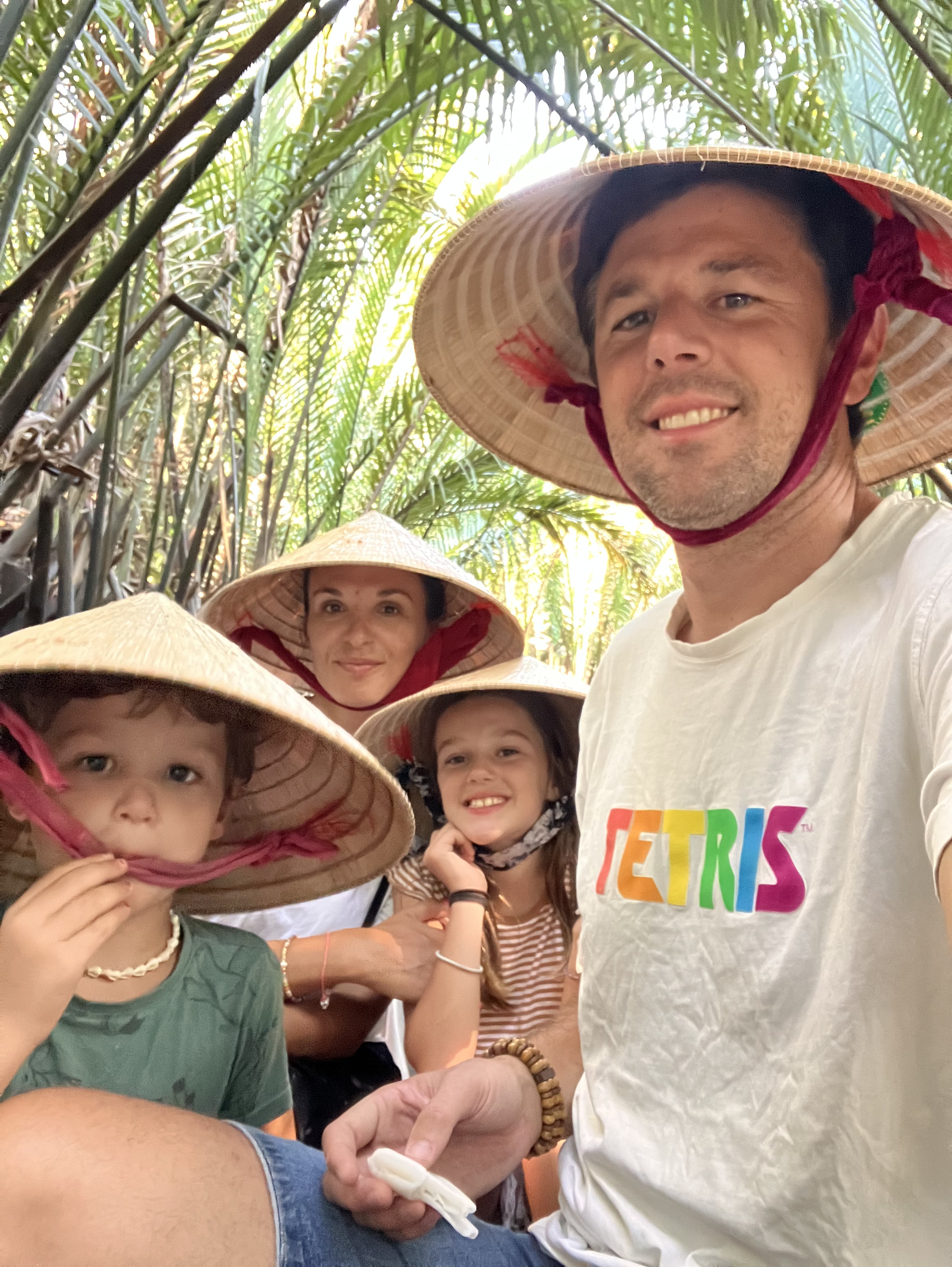
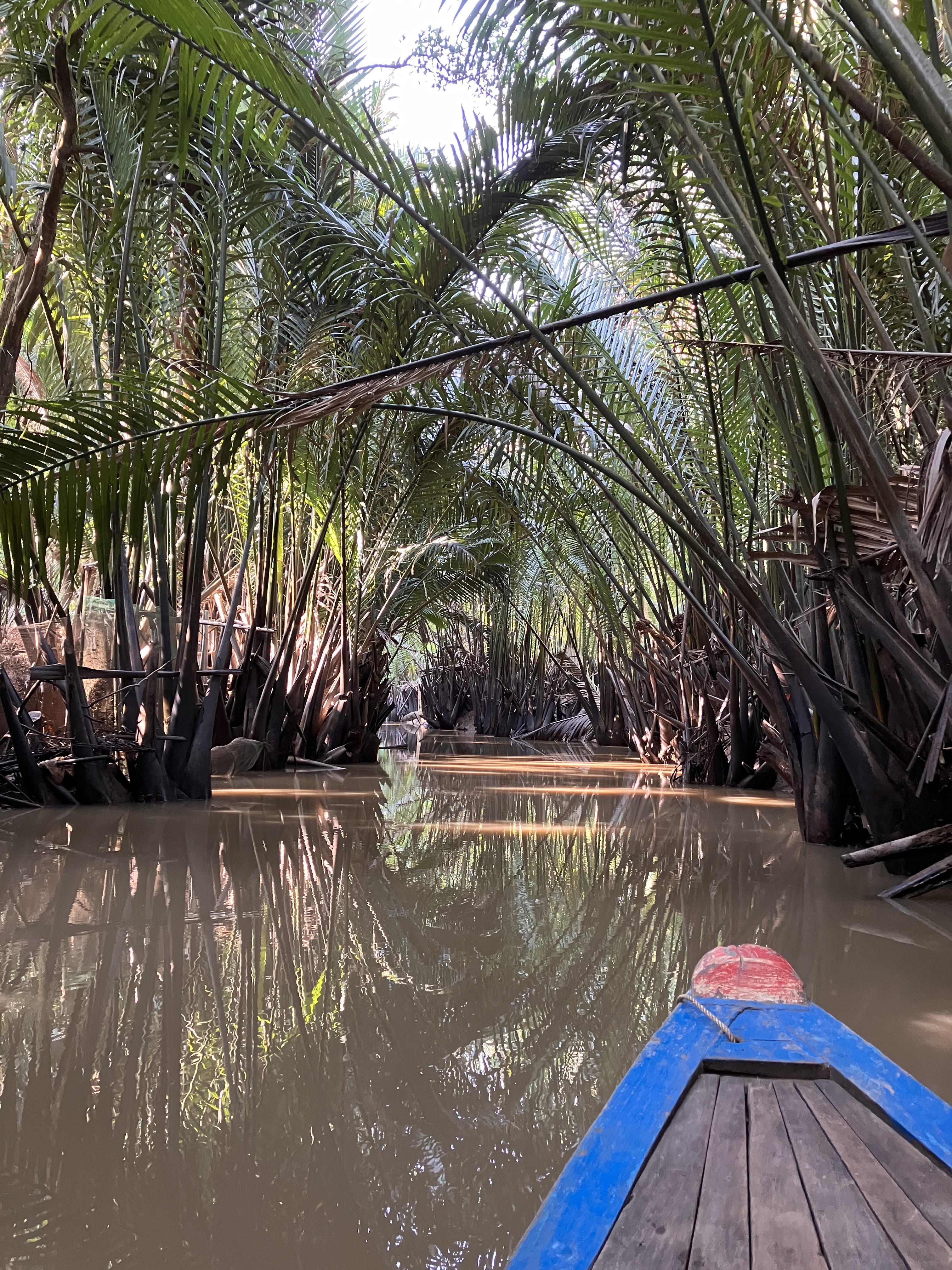
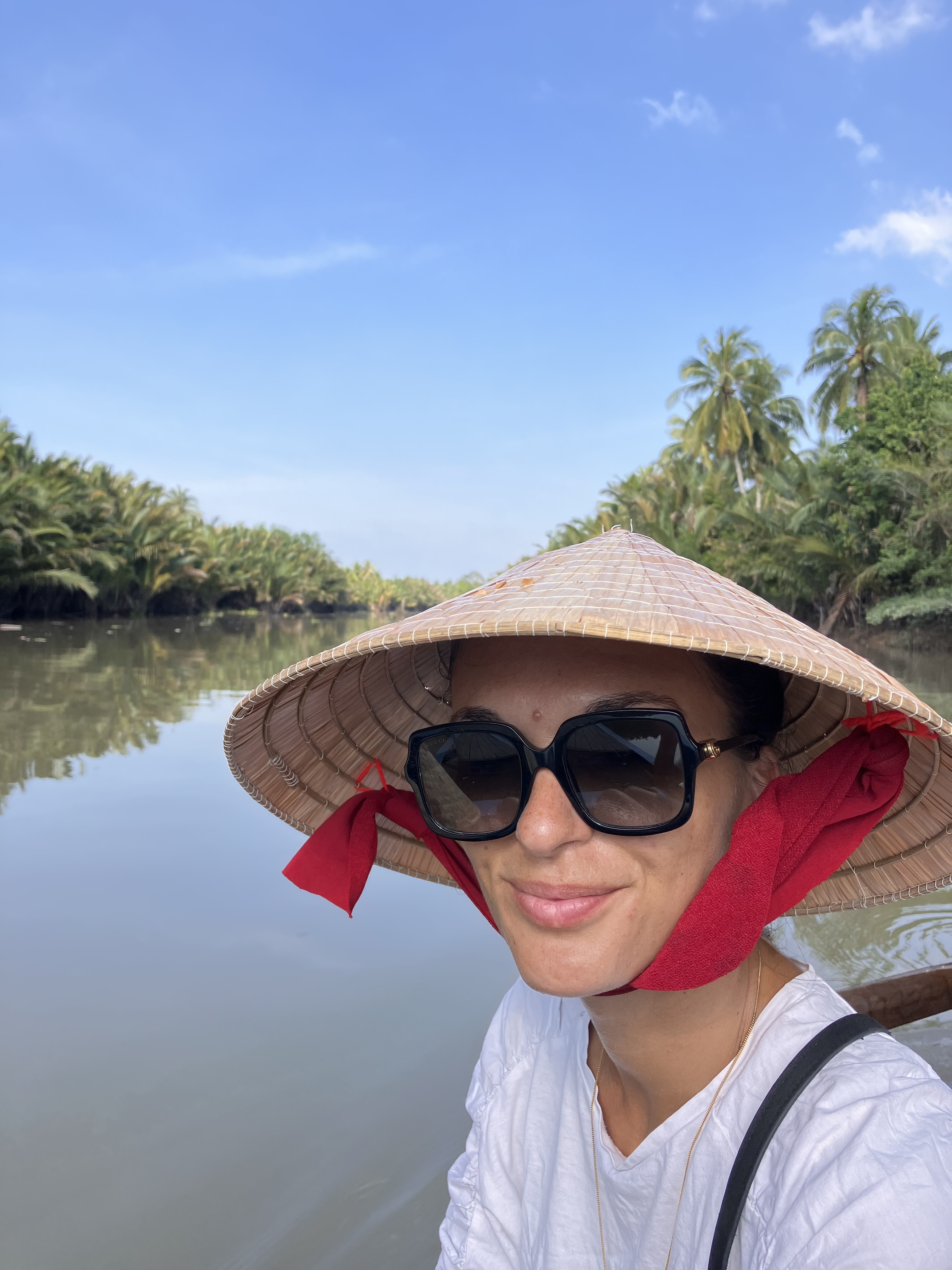
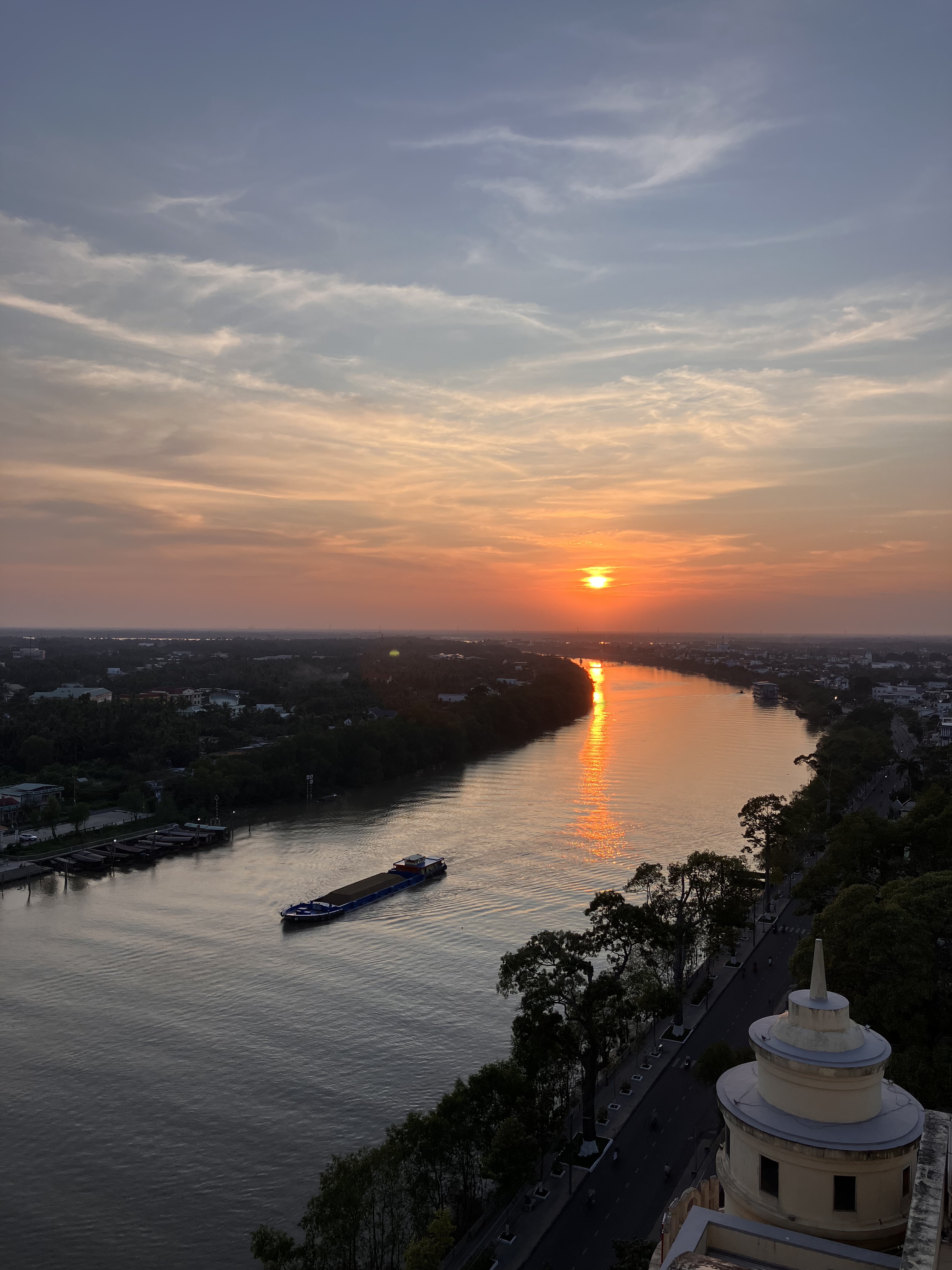
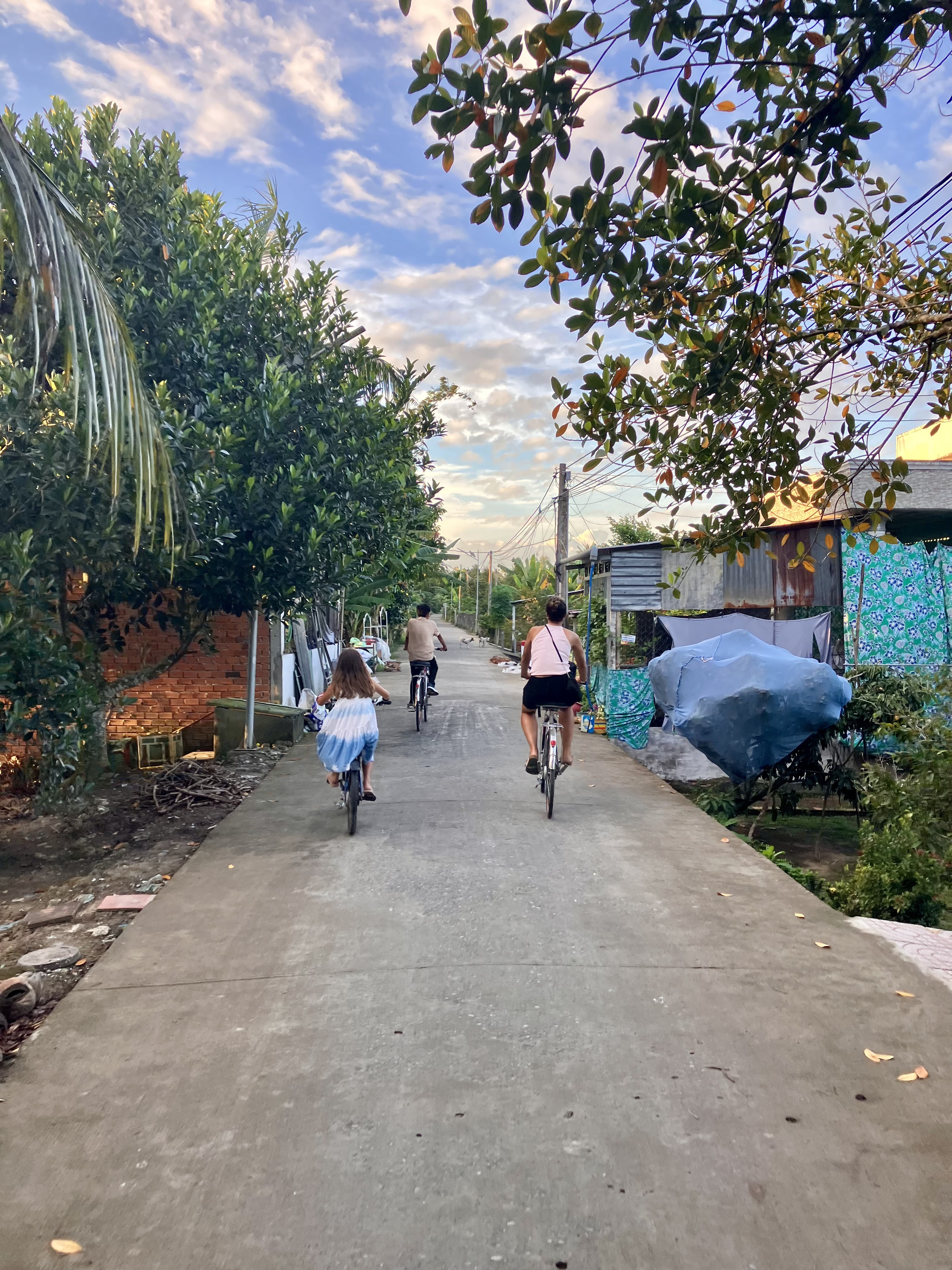
Along the way, temples, churches, and pagodas appear one after the other, reflecting a country that is officially communist, but where religion still holds a significant place. While Buddhism remains the majority, here’s a surprise: 7% of Vietnamese are Christians, a direct legacy of French colonization.
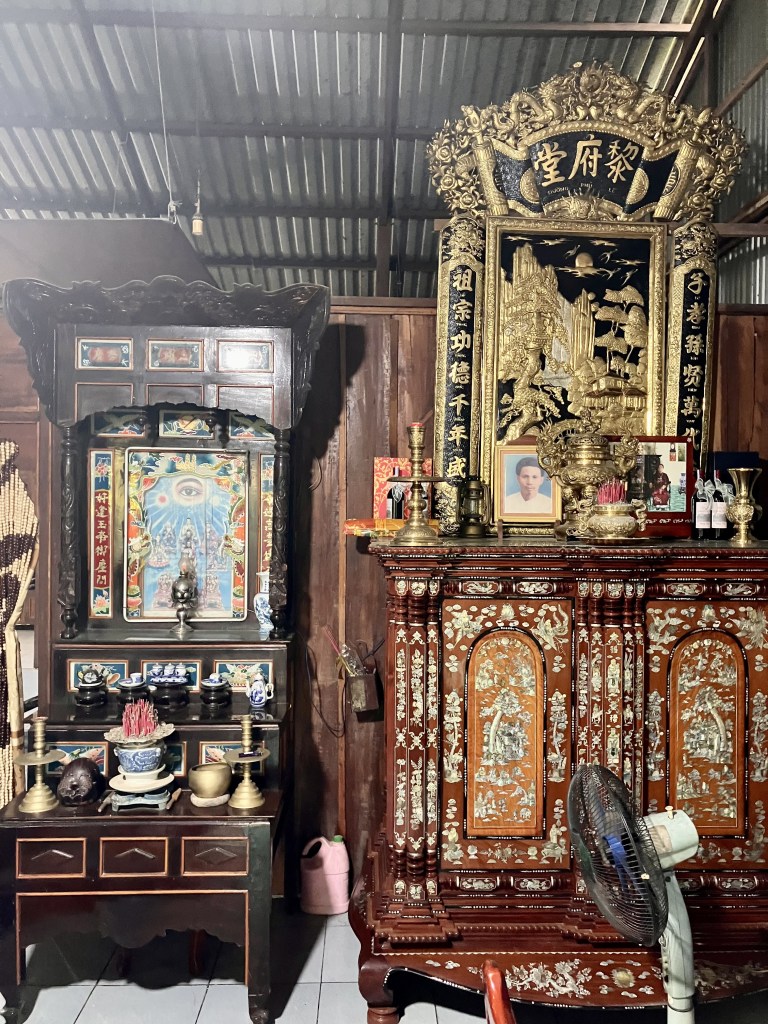
But more than the temples, it’s the ancestor worship that dominates. In every home, there’s a small altar dedicated to the deceased, and often, family tombs are right in front of the door.
This presence changes everything: in our culture, death is kept at a distance, institutionalized, medicalized. Here, it’s part of daily life.
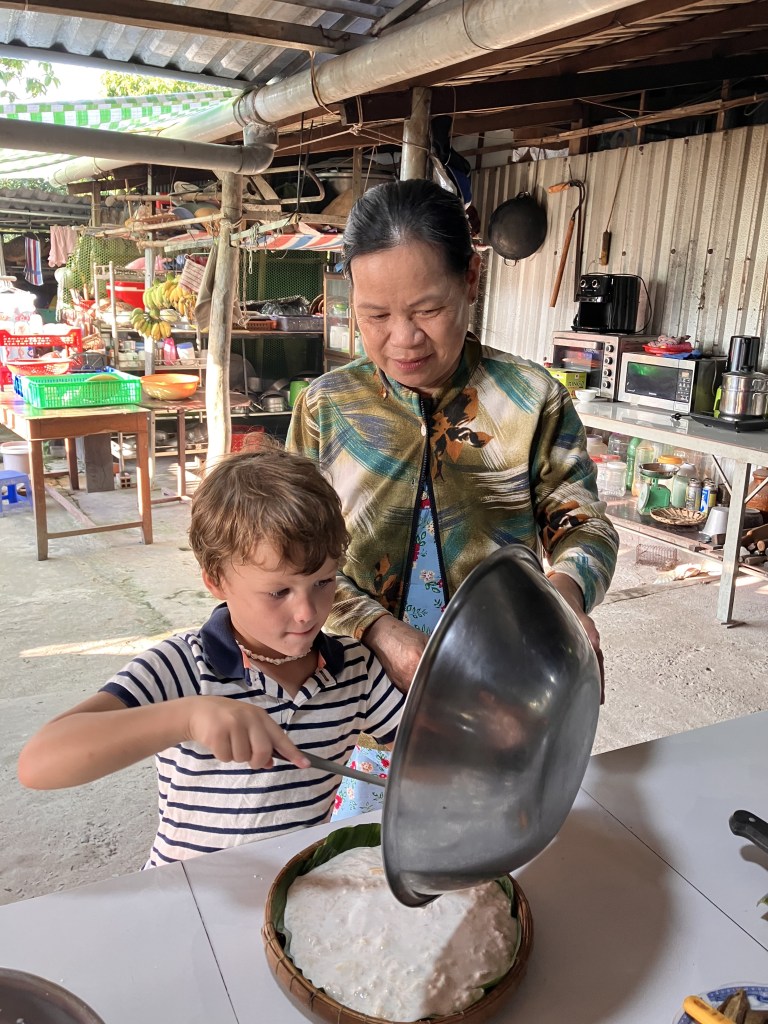
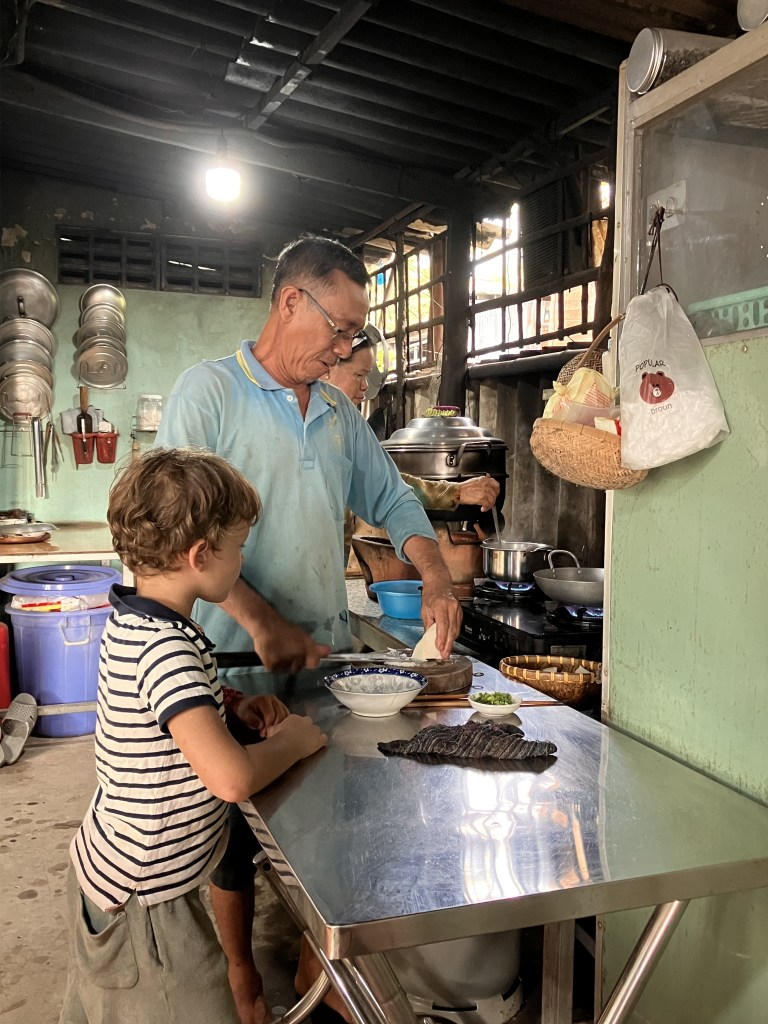
And daily life is also about family. We spent some time with a family: the grandmother teaches us how to make a pie while the grandfather prepares the meal for the grandchildren coming back from school and the parents, who finish their workday. Simple lives, without excess or frivolity. Not rich, in the way we understand it. But happy, judging by their answers.
“Happiness?” They talk to me about family, friends, and the village.
A week on the Vietnamese roads, and four things immediately stand out to me.
First, the density. With 105 million people over 310,000 km², Vietnam is one of the most densely populated countries in the world. And the Delta is one of its densest areas: an area comparable to the Netherlands, with 17 million inhabitants… but when you’re there, it feels like there are far more. Everything is in constant motion here. The markets are bustling, motorcycles zooming by, the streets vibrating with an endless flow of movement. Raw energy, perpetual motion.
Next, urban planning: where China builds upwards, Vietnam stretches out horizontally. Tens of kilometers of uninterrupted houses and shops line the main roads, to the point where it’s hard to tell where one village ends and another begins. And alongside the roads, canals spanned by dozens of bridges connect the houses.
Then, there’s the road. Here, patience is key. Few highways, main roads full of holes, and a continuous flow of motorcycles, trucks, and buses weaving together in an astonishingly controlled chaos. The average speed? 35 to 40 km/h. Barely faster than a determined cyclist, but with a deafening soundtrack of horns honking non-stop.
Finally, it’s impossible to ignore the issue of waste. Plastics on the side of the roads, rivers littered with trash… A structural as well as cultural problem, inherited from a time when everything was biodegradable. Here, waste management hasn’t kept pace with the country’s rapid growth, and plastic packaging is everywhere. It’s ugly, it’s frustrating, but it’s also a reality that many travelers notice.
Heading to Phú Quốc Island
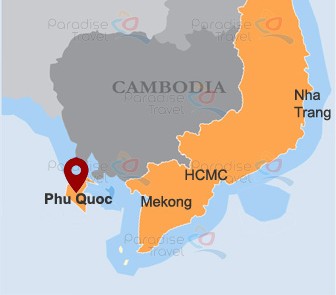
After the delta, we venture a bit further west to board a boat to Phú Quốc, the most visited island in Vietnam. Right below Cambodia, it managed to stay on the Vietnamese side during independence – I always wonder how they managed to keep this island.
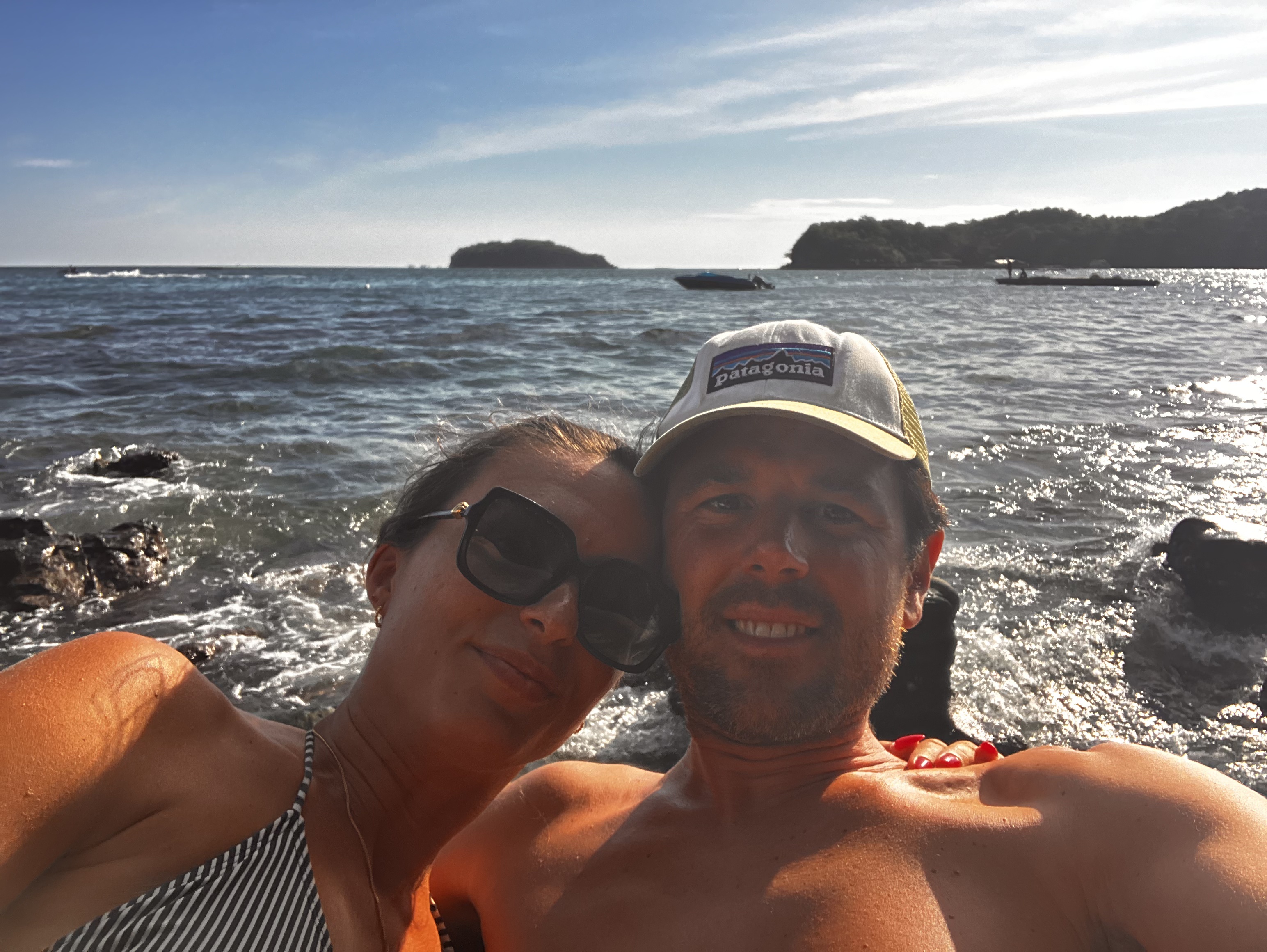
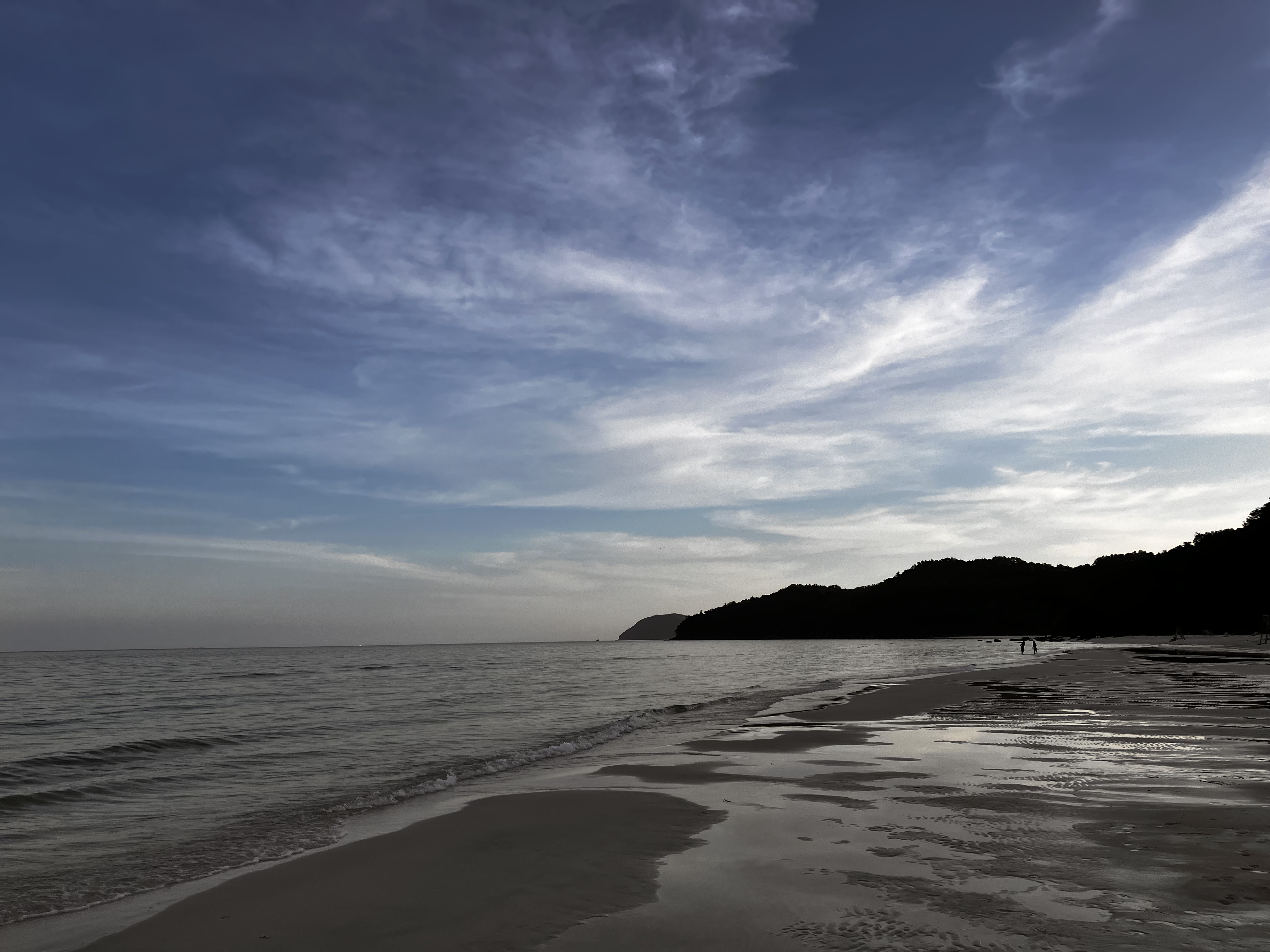
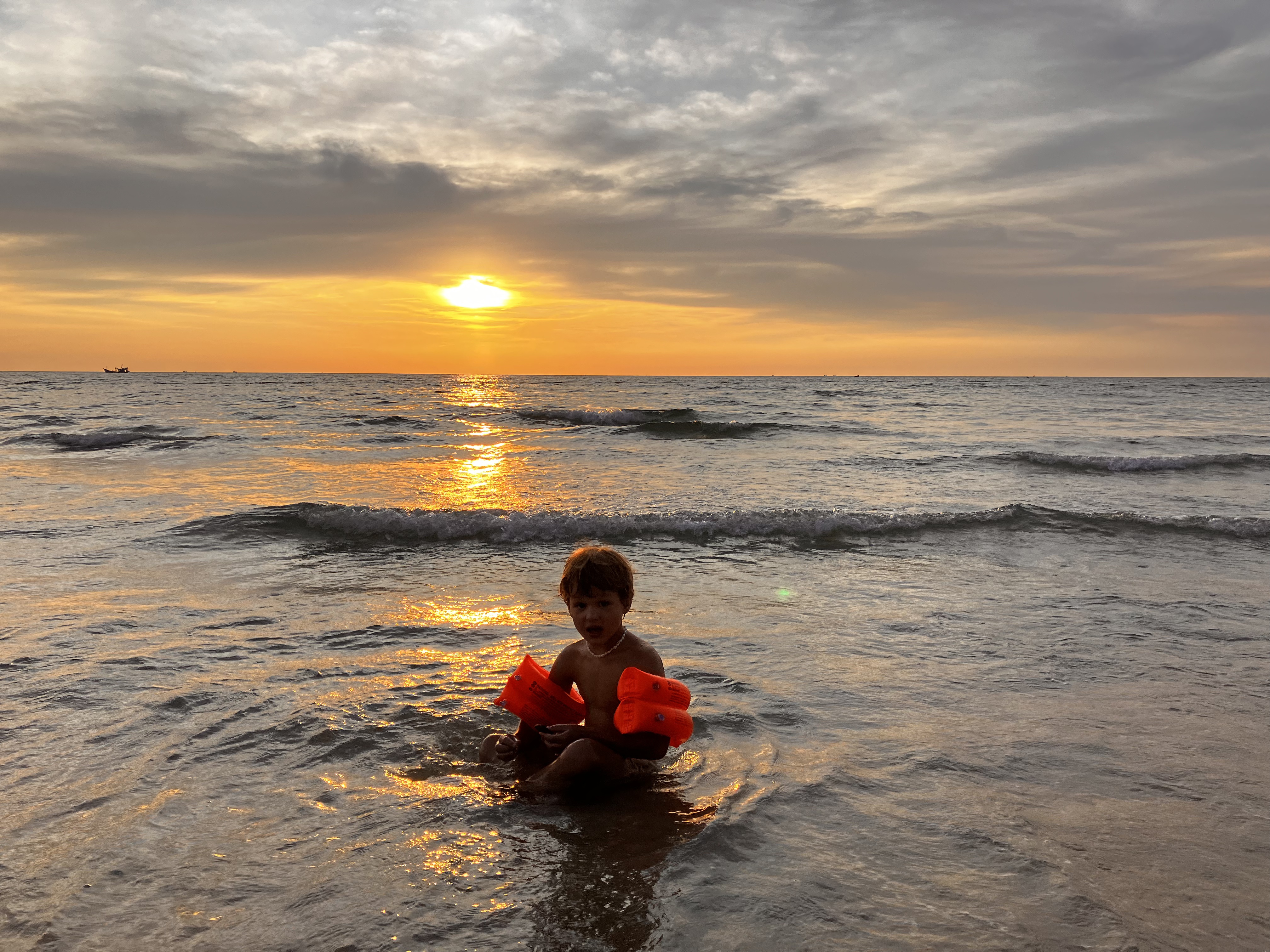
“Touristy,” maybe a bit too much for our taste, but in the end, the essentials are there: perfect weather, 70% of the island designated as a nature reserve, a cuisine that delights, and a few activities worth doing.
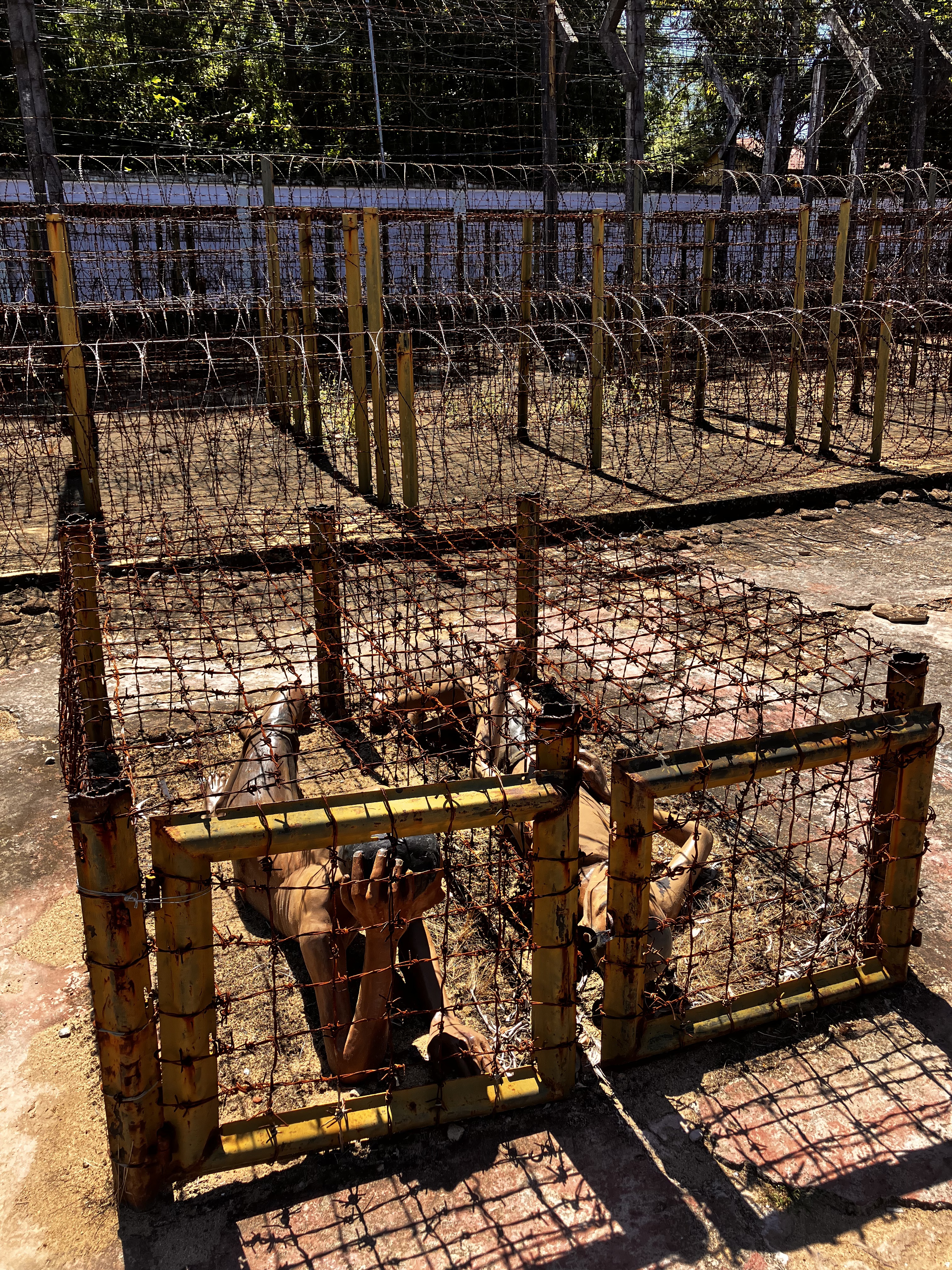
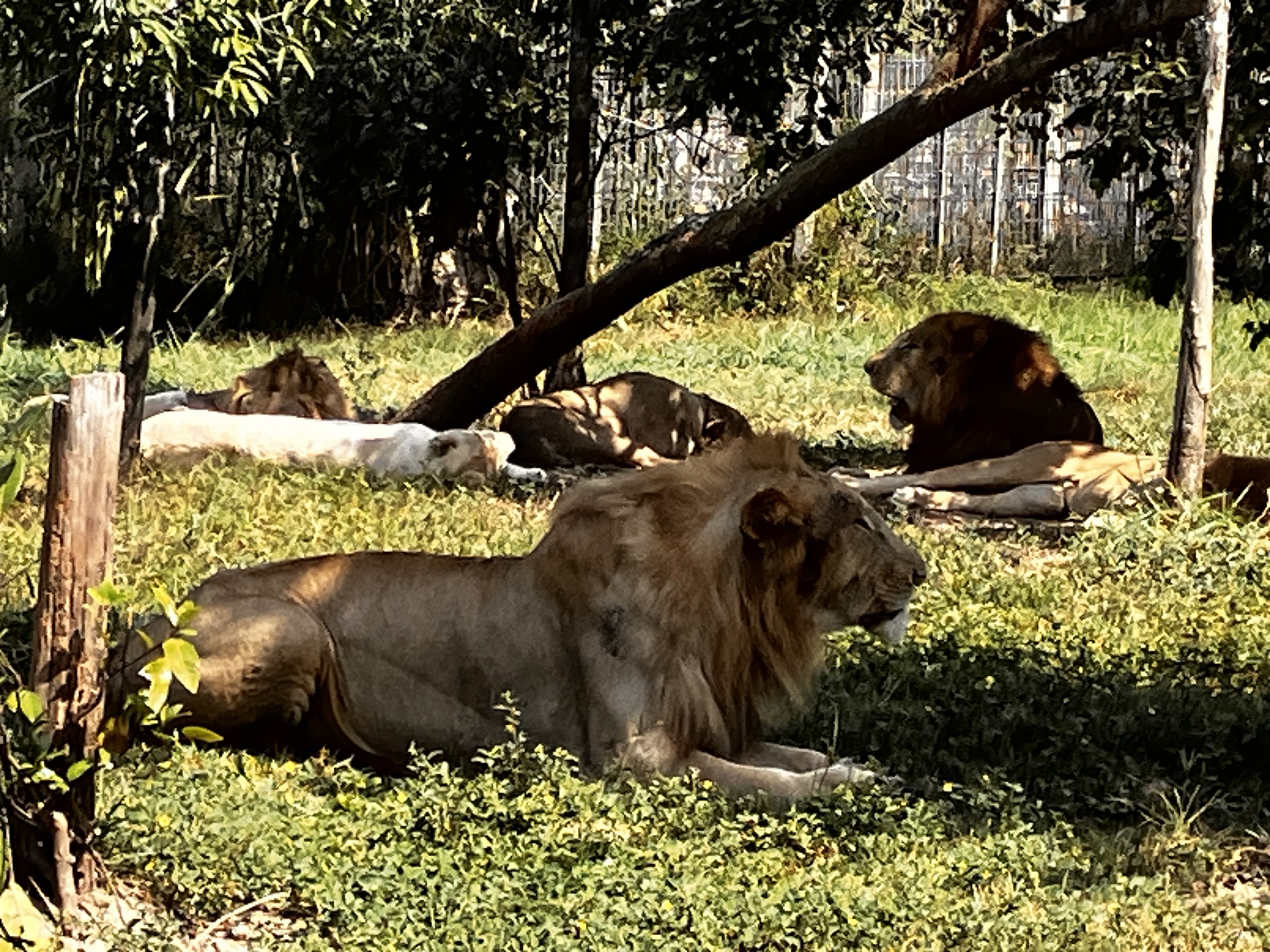
The safari zoo offers us a nice surprise, the beaches are pleasant, and the prison gives us a chilling dive into history, once again illustrating humanity’s ability to inflict suffering.
Some places offer a very different view of what we imagine the Vietnamese experience to be – like this city that attempts to recreate a Vietnamese version of Venice, with canals and plastic gondolas.

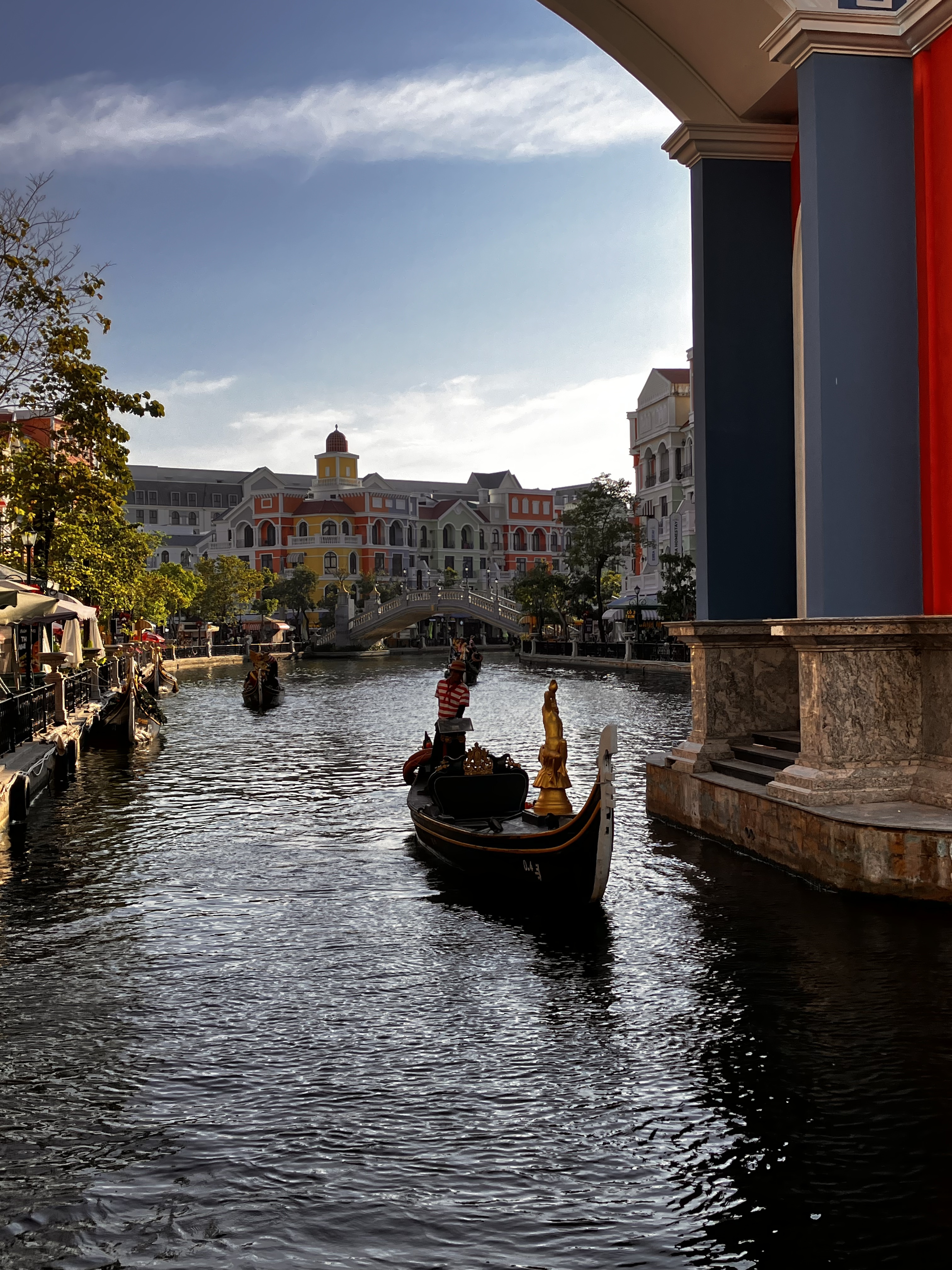
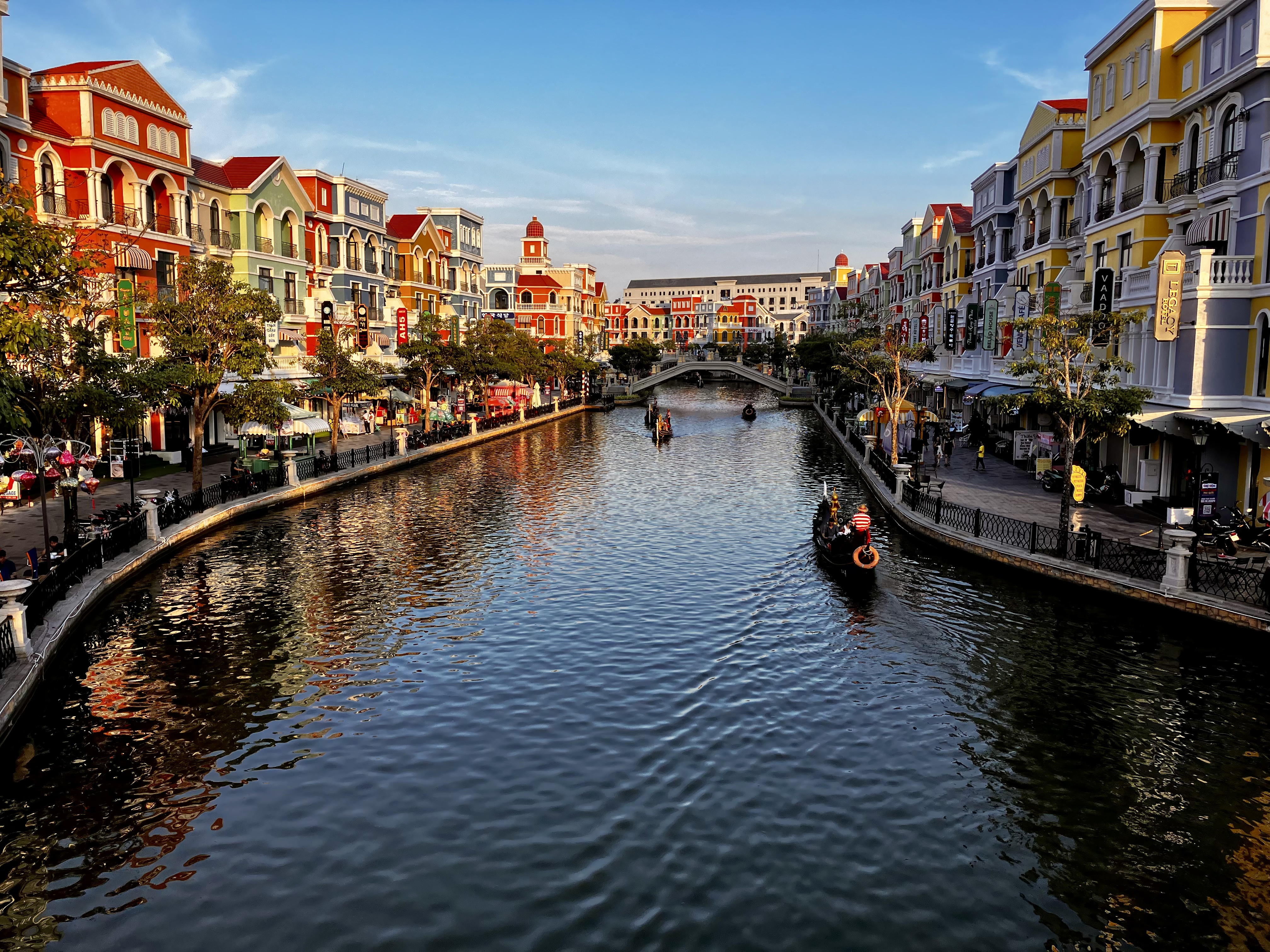
Some places downright flirt with kitsch – like this city that decided to recreate a Venice with a Vietnamese twist, complete with canals and plastic gondolas worthy of an amusement park. But then again, who am I to judge? After all, the vast majority of Vietnamese will never have the chance to stroll along the Grand Canal.
Overall, we are also struck by some attractions that present a highly idealized version of old Vietnam, such as shows or even this entirely recreated Vietnamese town. What’s surprising is that these places mainly attract a Vietnamese clientele. These reconstructions, often a little artificial, may reflect a deep desire among the Vietnamese to reconnect with a time when the country was less industrialized, a time they may perceive as simpler and more authentic.
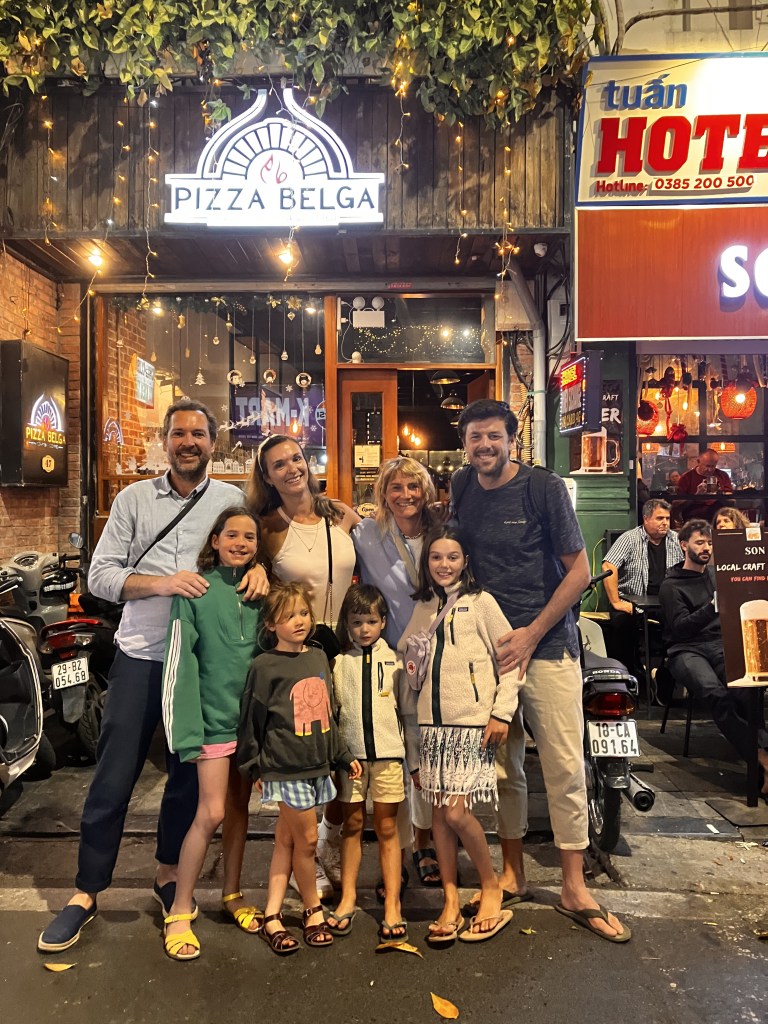
But what truly marked this stay was meeting Maya, David, Ada, and Nan, a Belgian family with whom we shared ten unforgettable days traveling through Vietnam. Kids the same age as ours, parents who see things the same way… A real connection.
From Phú Quốc Island, we had planned initially to continue our journey to the center of the country, exploring Hué and Hoi An, following the coast. But the weather had other plans: endless rain, floods in some areas… Not exactly ideal. Rather than spending our days waiting for a break in the weather, we chose to change direction and head north. A little cooler, certainly, but mostly drier. And, more importantly, this is where we would meet our new travel companions to extend the adventure together.
But before heading north, it’s time to tell you more about this country, because it’s impossible to travel through Vietnam without being caught by its history. Here, every landscape, every city still bears the marks of a recent past, shaped by war and trauma.
I won’t go over the entire colonial chapter… in short: France began its conquest of Vietnam in 1858 and eventually incorporated the country into French Indochina in 1887. Vietnam was the heart of it, while Cambodia and Laos were just secondary provinces.
In 1945, Ho Chi Minh declared the country’s independence. But for the French, it was just a formality: they continued to govern as if nothing had changed… until Dien Bien Phu. In 1954, they were dealt a crushing blow during this memorable battle against communist forces.
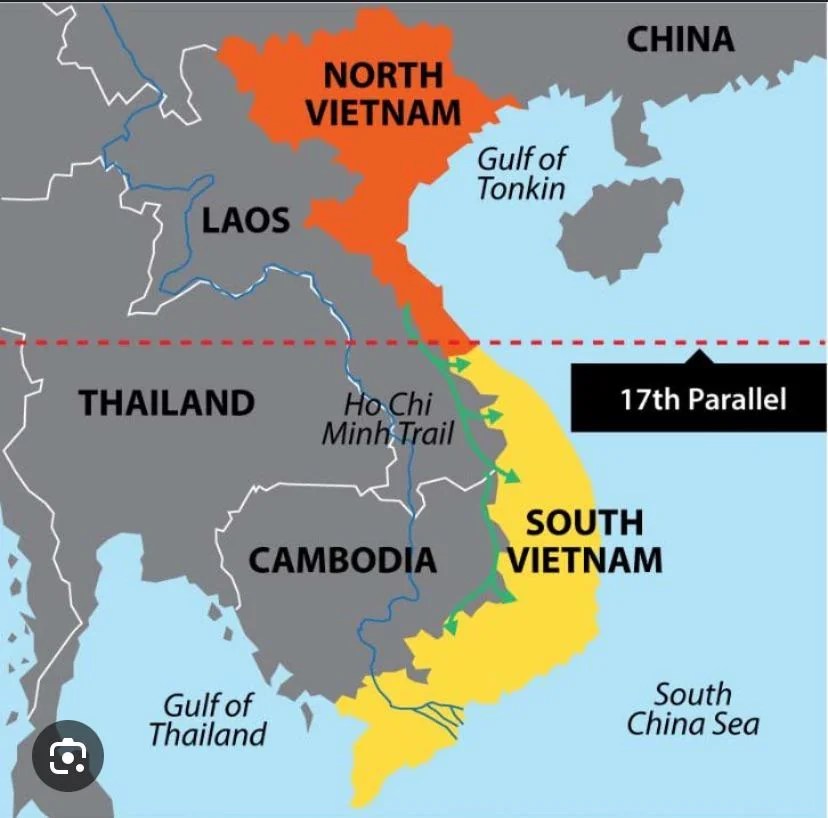
Colonization collapses and, two years later (1956), the country is split in two: in the north, the communist regime of Ho Chi Minh; in the south, a regime supported by the United States. A scenario that eerily resembles Korea… and as often happens, the result is war. Tensions between the two Vietnams escalate: Washington gets involved.
The Americans replace the French, convinced they’ll do better, that they’re stronger, smarter. Their goal? To create a prosperous South Vietnam, a showcase of the free world against communism.
But this war, which would probably have broken out with or without the Americans, turns into an absolute nightmare. The United States will drop nearly four times as many bombs on Vietnam (and neighboring Cambodia) as all countries involved during World War II!
The U.S. keeps launching offensives, questionable strategies, miscalculations. Nothing works. A monumental failure. A war the United States didn’t win. The result? Nearly 60,000 American soldiers dead and, most tragically, more than 3 million Vietnamese killed, a shattered economy, torn families, generations traumatized. Even Nixon loses his re-election over it.
A ceasefire was signed in 1973, 17 years after the war began. The Paris Peace Accords provided for an American withdrawal and a status quo between the North and the South, but nothing really forced Hanoi to give up its reunification goal. Two years later, the North invaded the South, reunifying the country under a single communist state.
As history constantly proves – and as the current discussions about peace in the Middle East or Ukraine remind us – a signed agreement isn’t enough to resolve a conflict if the conditions aren’t clear and accepted by all parties. In such cases, we’re just delaying the inevitable.
A war, a ruined country, a people scarred forever. But Vietnam didn’t stop there. Today, it has rebuilt itself, transformed, while still carrying the scars of its past.
And while the South bears the most visible marks, the North is its beating heart. Hanoi, its vibrant alleys, its majestic mountains, the legendary Ha Long Bay… Another Vietnam, another story.
Stay tuned for the next post for the continuation of our adventures through North and Central Vietnam.
Sending you love!
 365 days of summer
Leave a comment