Welcome to the second chapter of our Vietnamese adventure. Settle in comfortably, grab a strong cup of coffee, some tea, or perhaps a good glass of red wine, and let yourself be transported to the heart of Northern and Central Vietnam.
Act 2: 02/01/2025 – 16/01/2025 The North – The Beating Heart
Hanoi, the mountains, Ha Long Bay… The hustle and bustle, the noise, the thousand-year-old culture, the ever-present communism. This is historic Vietnam—the heart of the independent country from 939 to 1802. The political Vietnam. The proud Vietnam. This is the part of the country that fought against the French and the Americans. And at the core of this Vietnam, one man embodies both the struggle and the unity of its people: Ho Chi Minh. He is the one who unified the country after decades of war and division, and his shadow looms over every street corner, every monument, every park.
Hanoi, Tuesday morning, 8 AM
The sun barely pierces through the mist, and already the city rumbles. I went out to buy pastries—an ultimate pleasure when traveling for a long time, a remnant of the French colonial presence. The French left quite a mark on Vietnam, but despite their love for morning soup, the Vietnamese have retained an impressive talent for making exquisite pastries!
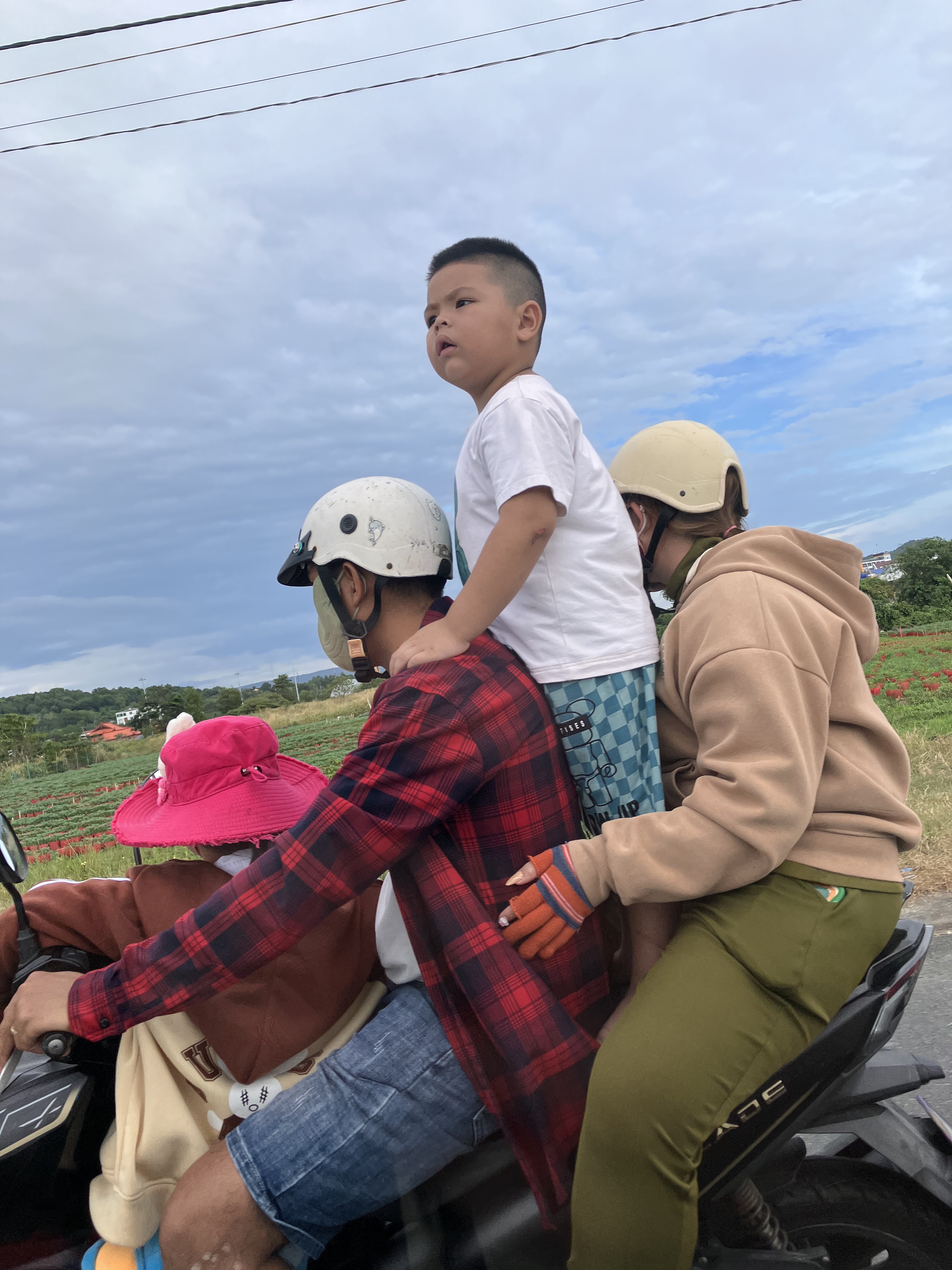
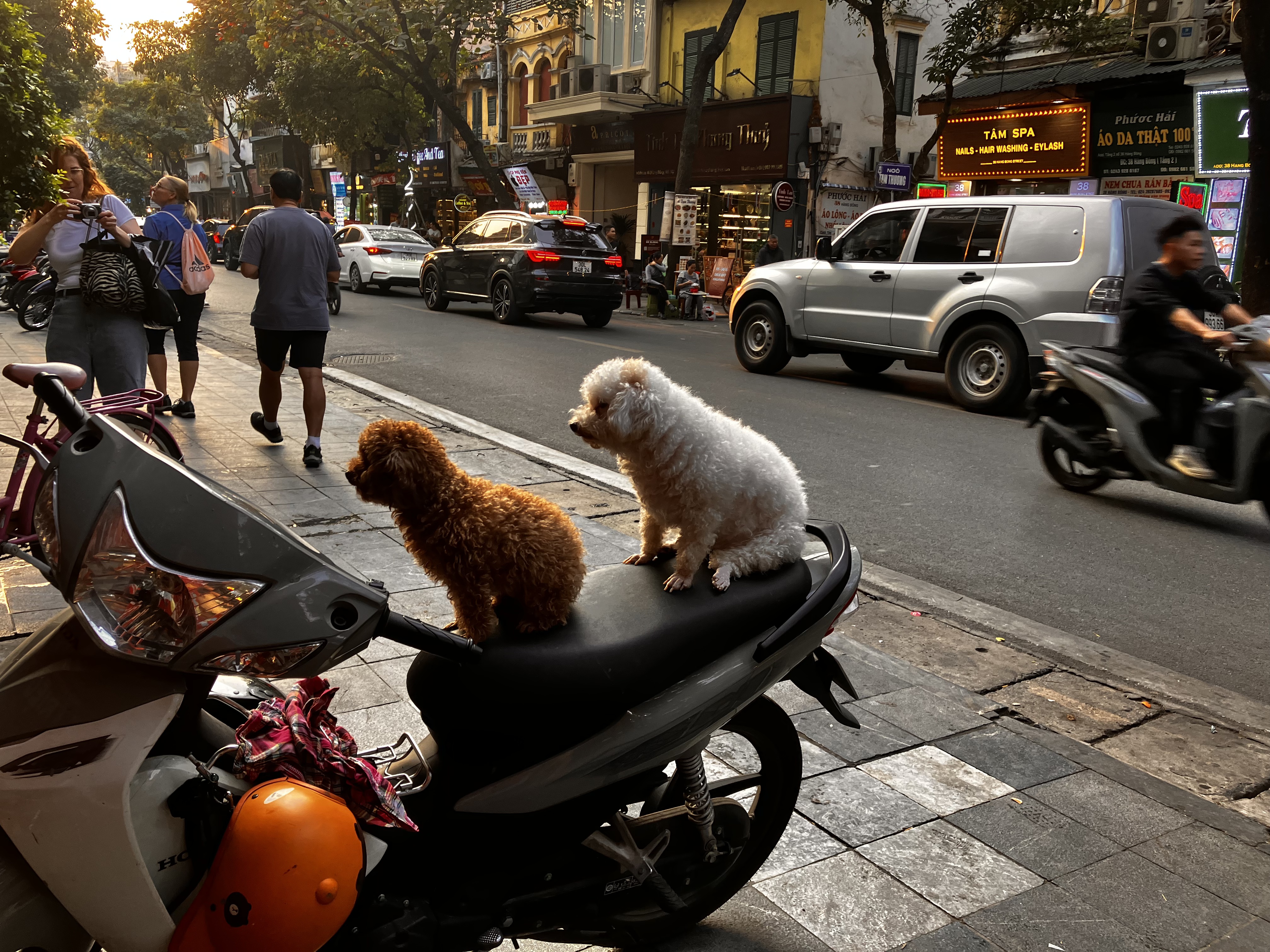
On the way, a sea of scooters collides in a perfectly orchestrated chaos: three, sometimes four passengers squeezed onto a single seat, a child dozing off between his parents, a rooster precariously perched on a luggage rack. I’m used to disorder, but I must admit—Hanoi takes it to another level. Horns blare from every direction, scooters brush past you, sidewalks are nearly impassable, taken over by parked motorbikes. Scooters are everywhere in Asia, but here, in Vietnam, they reign supreme. Crossing the street is an adventure in itself.
And as I weave my way through this chaos, I suddenly find myself standing in front of Ho Chi Minh’s Mausoleum, an imposing structure in the middle of the city. From the restless streets of Hanoi, I step onto this quiet, almost solemn square, guarded by uniformed soldiers. It’s fascinating how this place is both a memorial and a living tribute, flooded with waves of Vietnamese people coming to honor their hero.
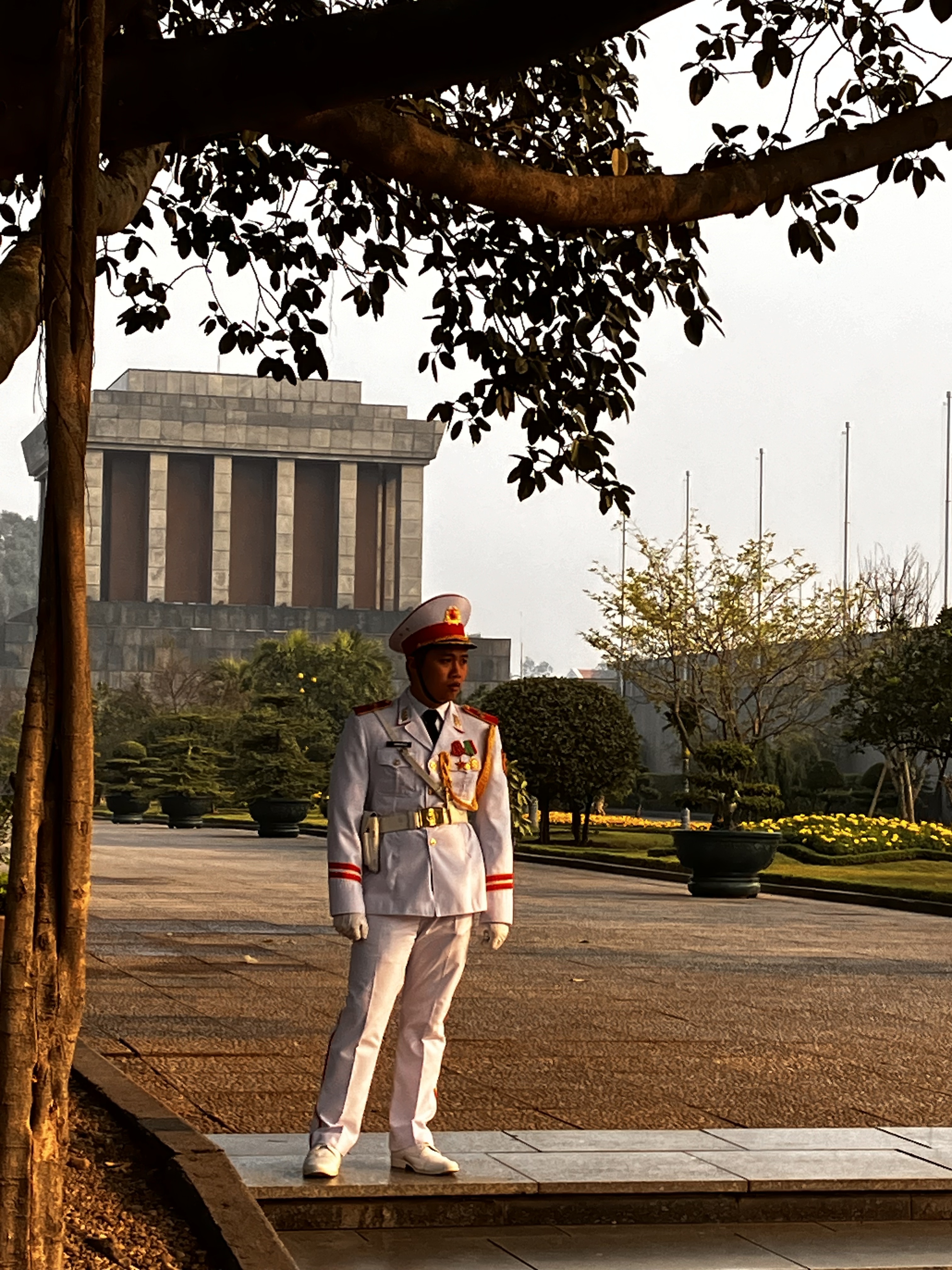
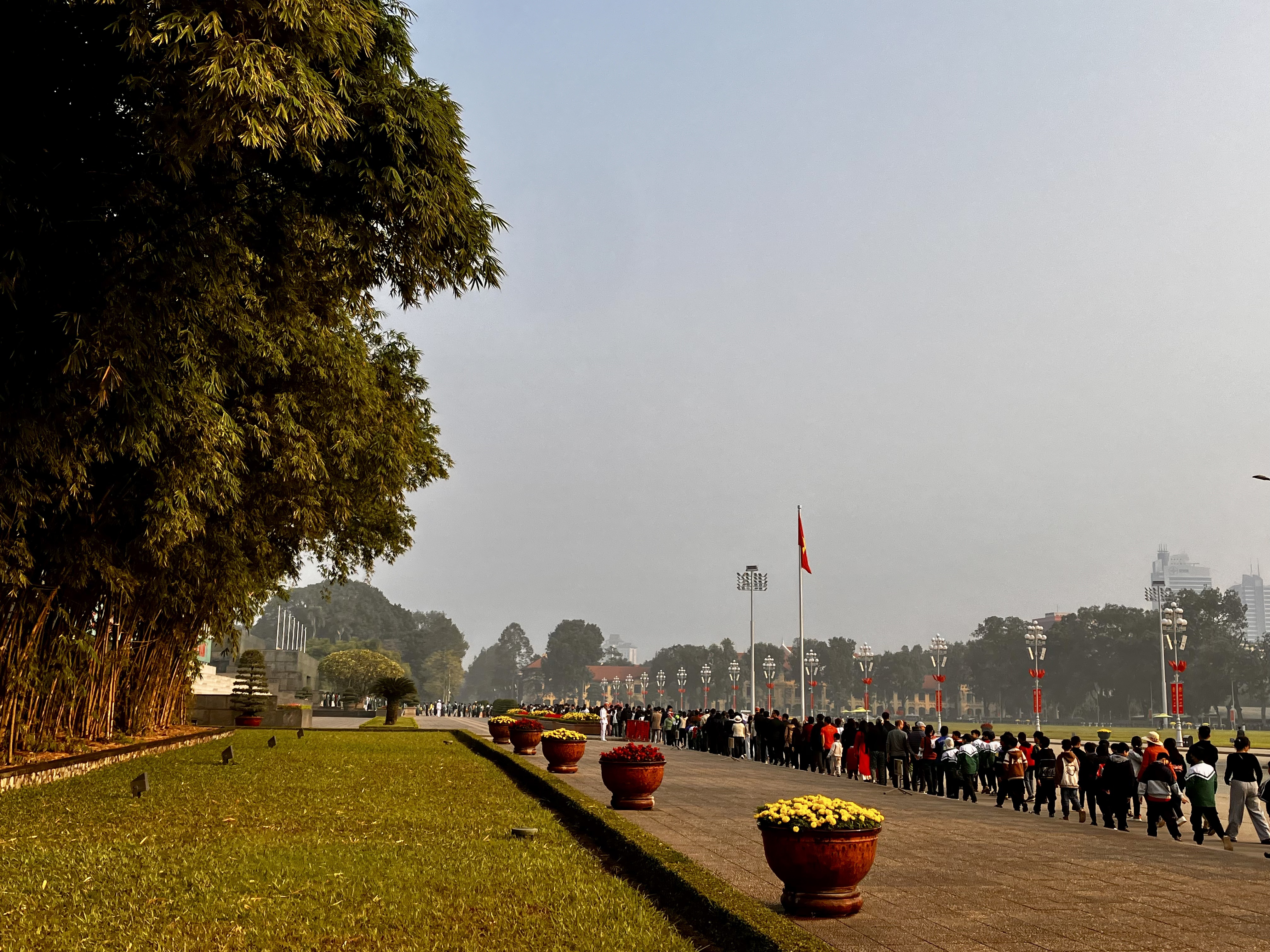
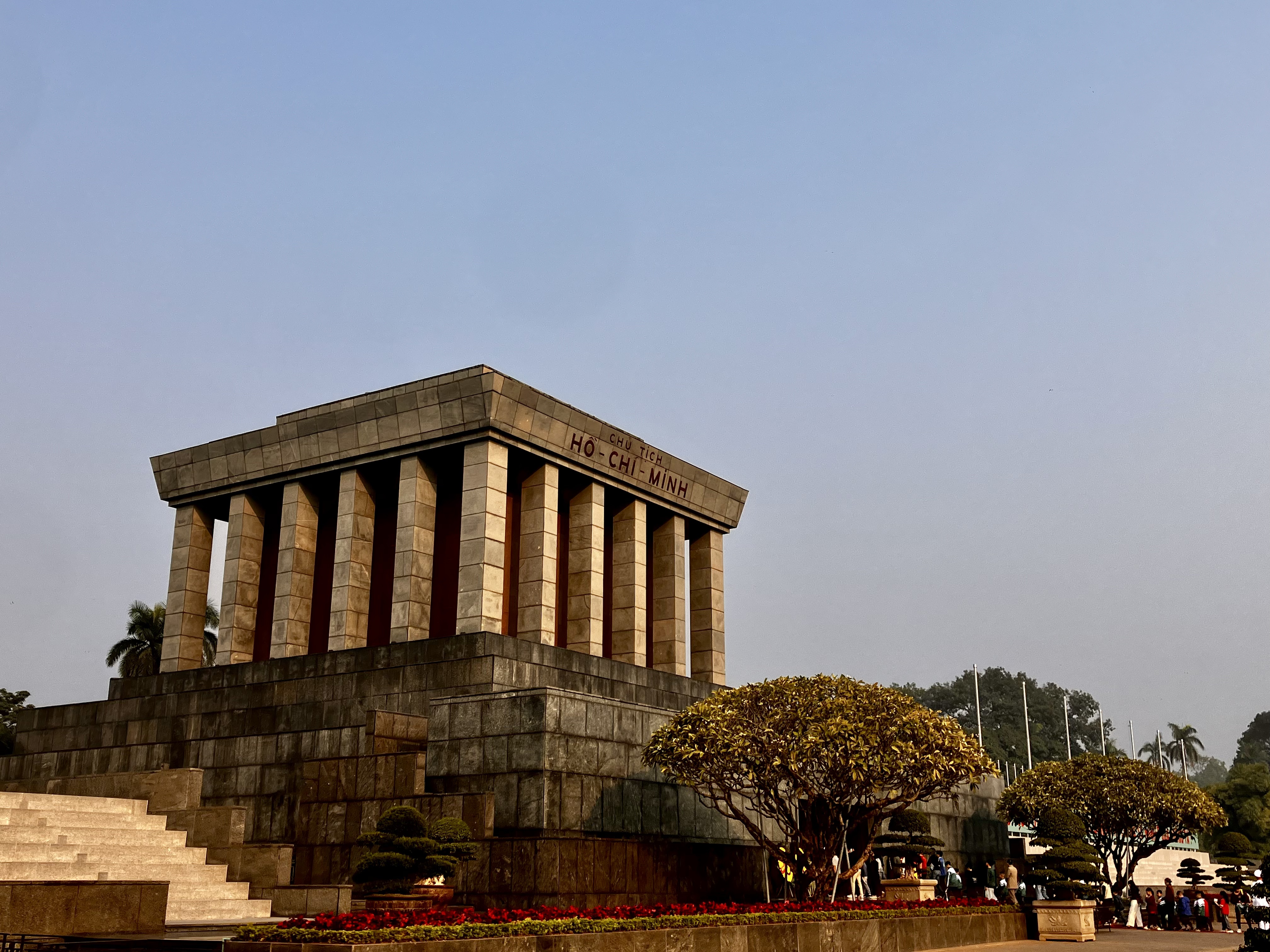
The line to enter the tomb is long but moves quickly. No photos allowed, no talking, everyone moves forward in silence. The guards enforce the rules with unwavering discipline—I still don’t know why. Inside, stopping is forbidden.
And then, there he is. Ho Chi Minh, lying in his sarcophagus, his embalmed body frozen in eternity. Fifty years after his death, he is still here. His waxy complexion, his impassive face… an almost surreal presence. There is something sacred about this moment, a sense of deep reverence—as if Ho Chi Minh, even beyond death, continues to guide his people.
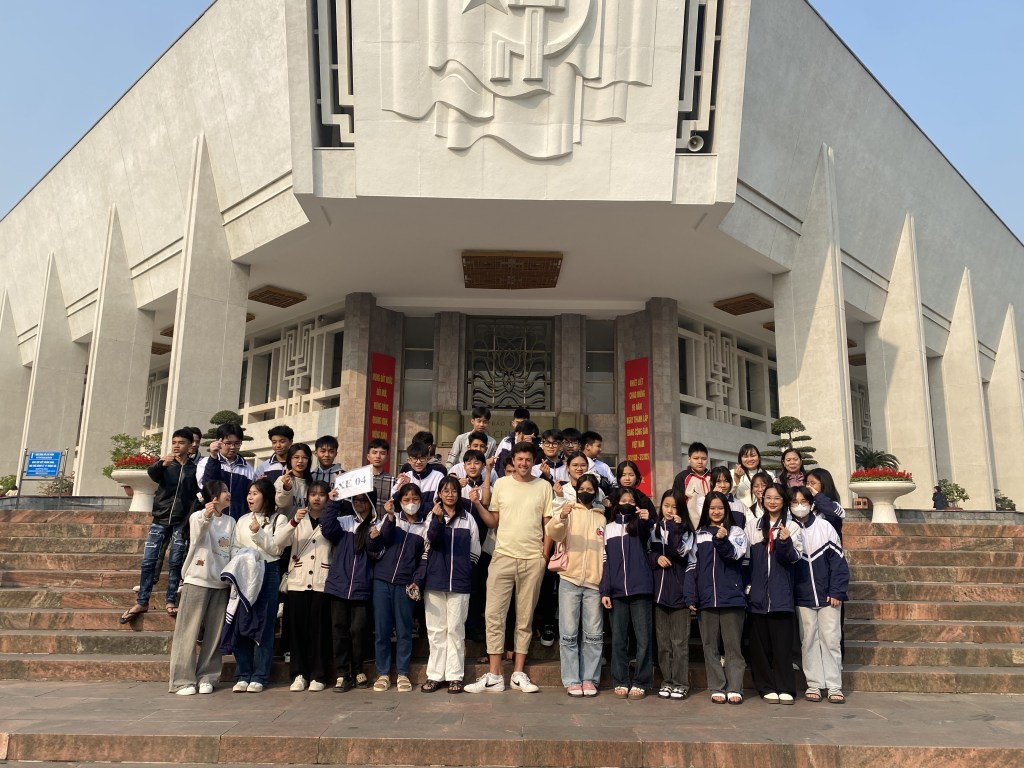
As I exit, I am immediately surrounded by groups of schoolchildren visiting the mausoleum. It’s Sunday, yet these students had to leave their homes as early as 5 AM. They already have school from Monday to Saturday, and apparently, even that isn’t enough.
Sunday is reserved for a visit to good old Ho Chi Minh, who has been dead for 50 years. And tomorrow, they’ll be back in class again. I strike up a conversation with a few teenagers who speak English and ask if they are happy and why. They are—because their country is at peace.
I love this city, caught between modernity and tradition. Beyond the mausoleum, you can visit the cathedral, the Temple of Literature, and that famous train that cuts right through the city…
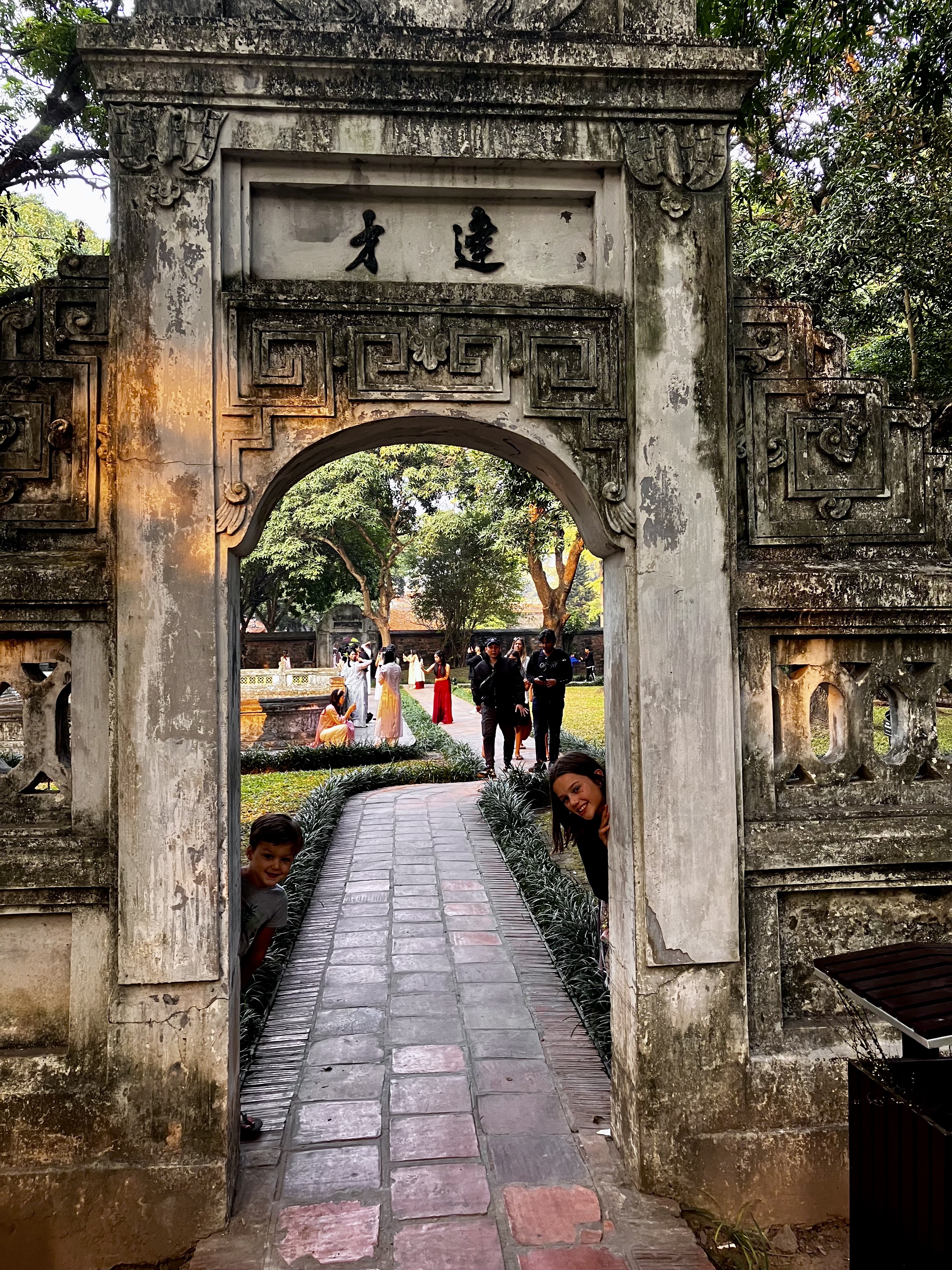
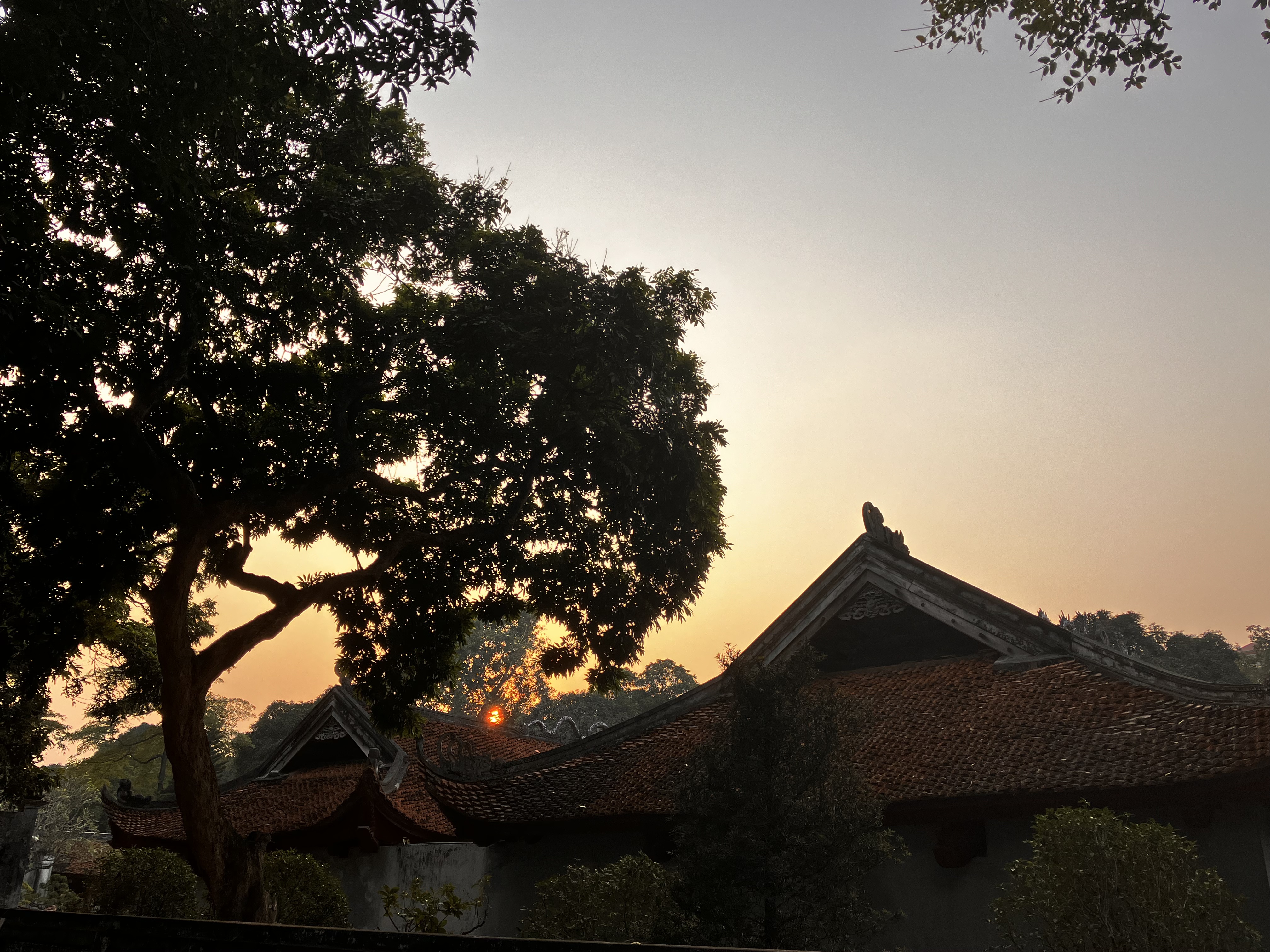
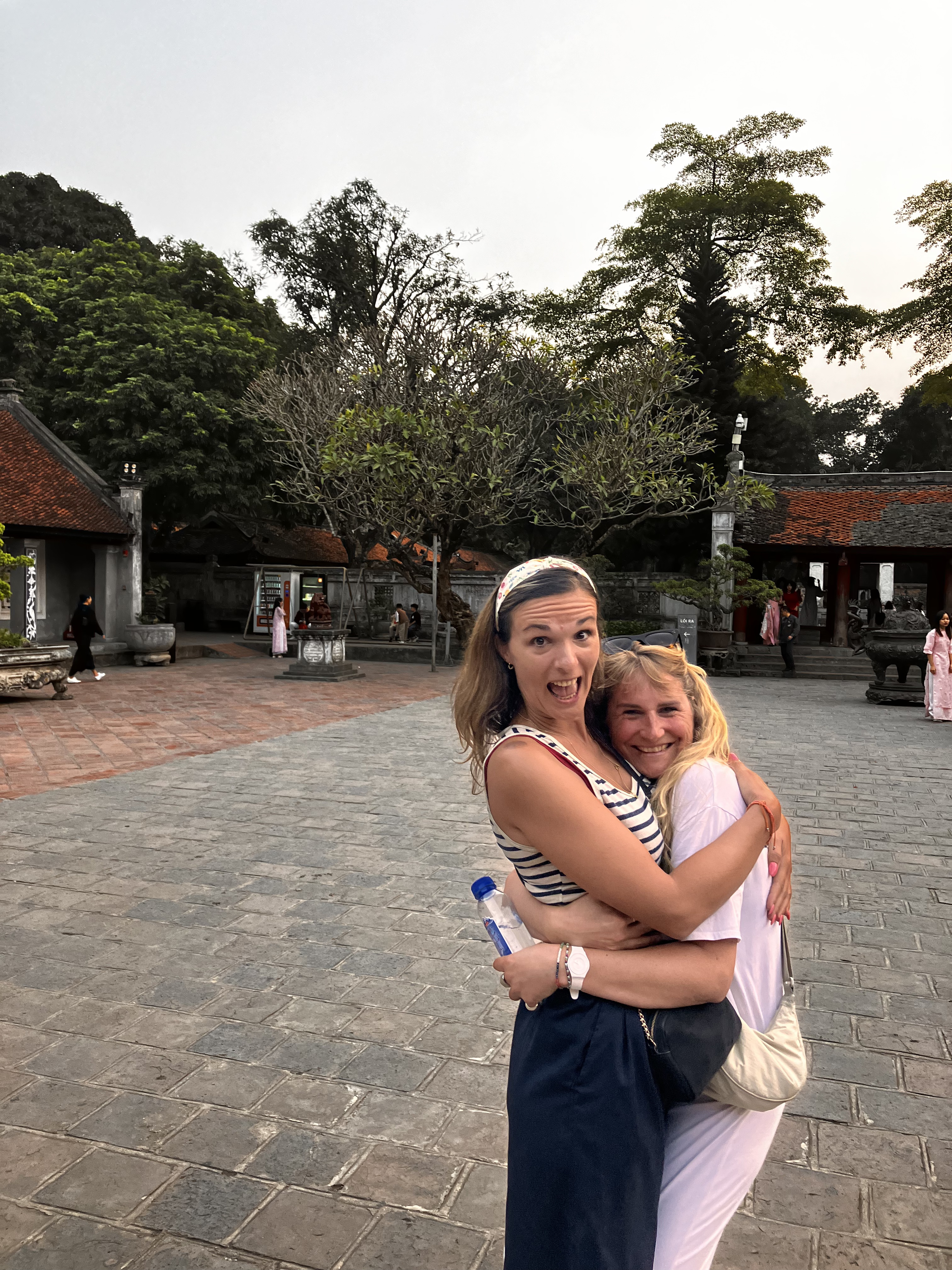
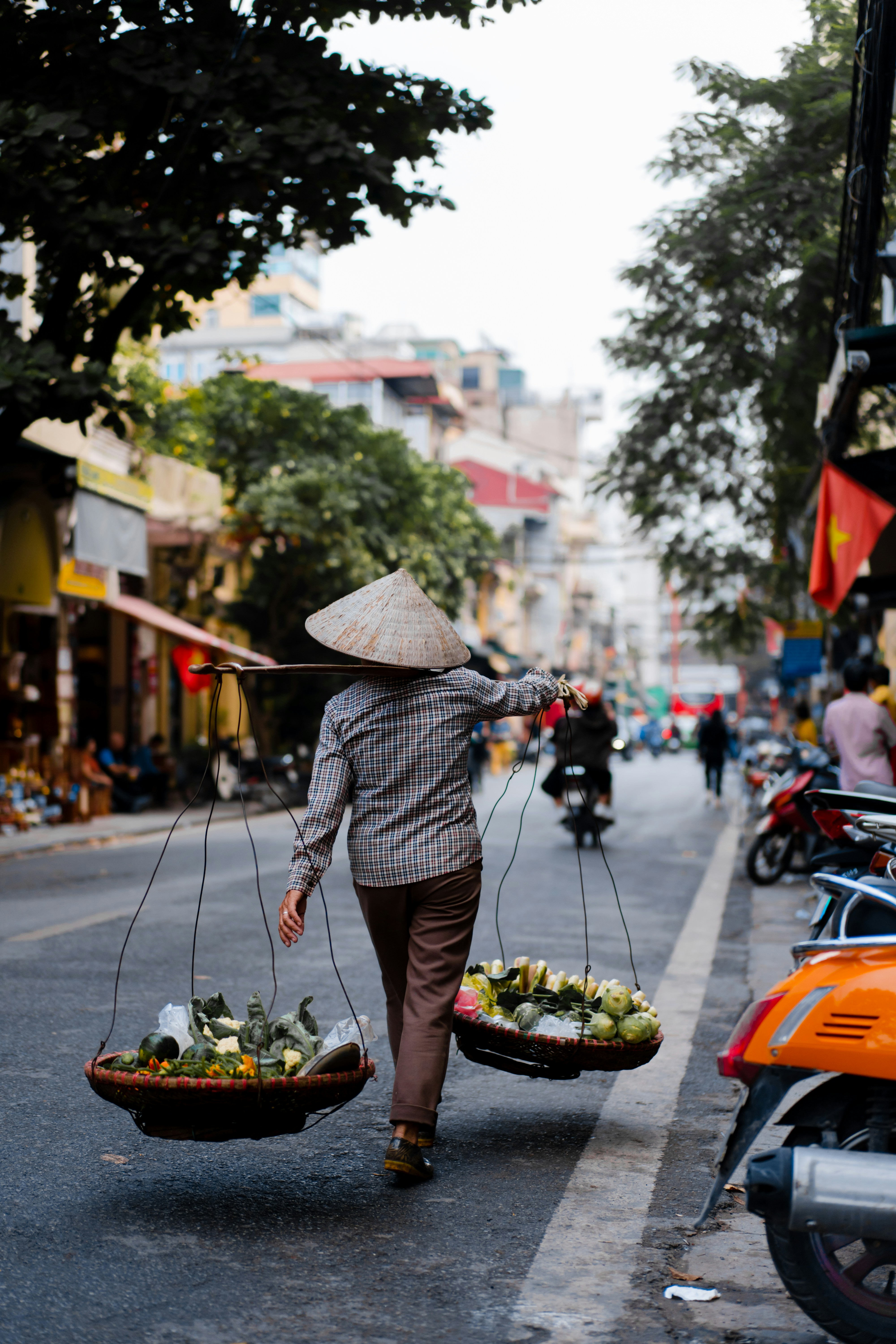
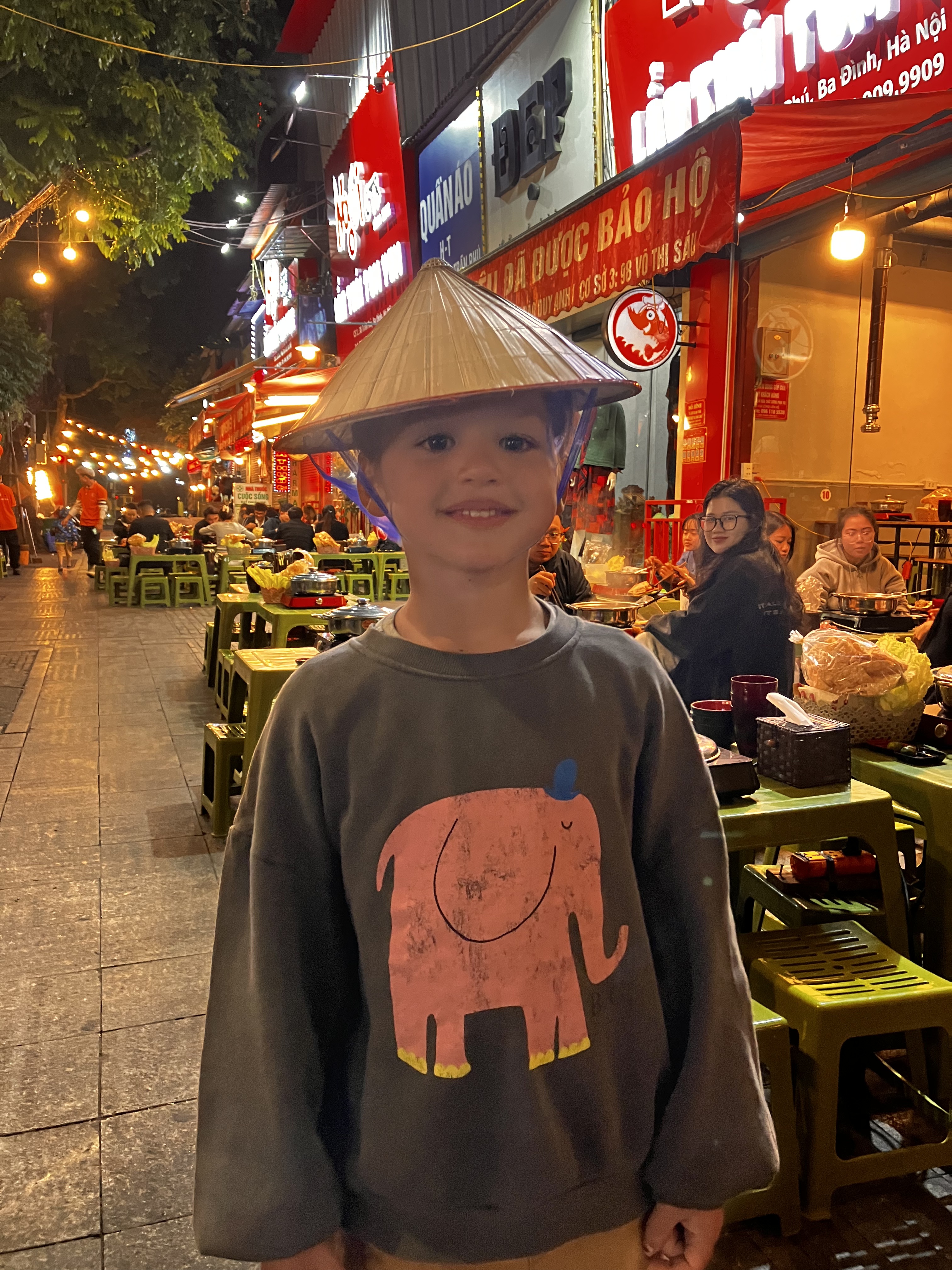
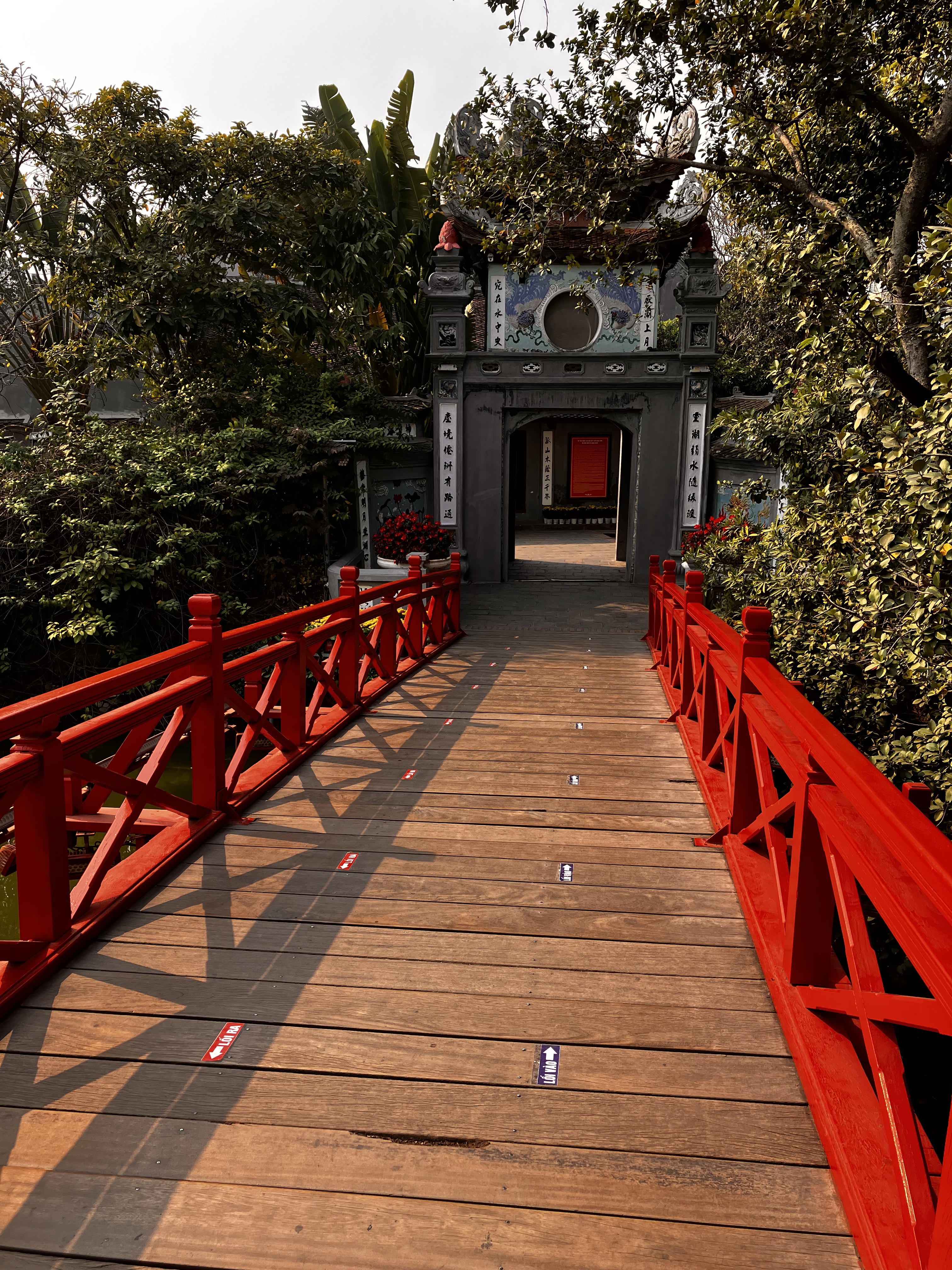
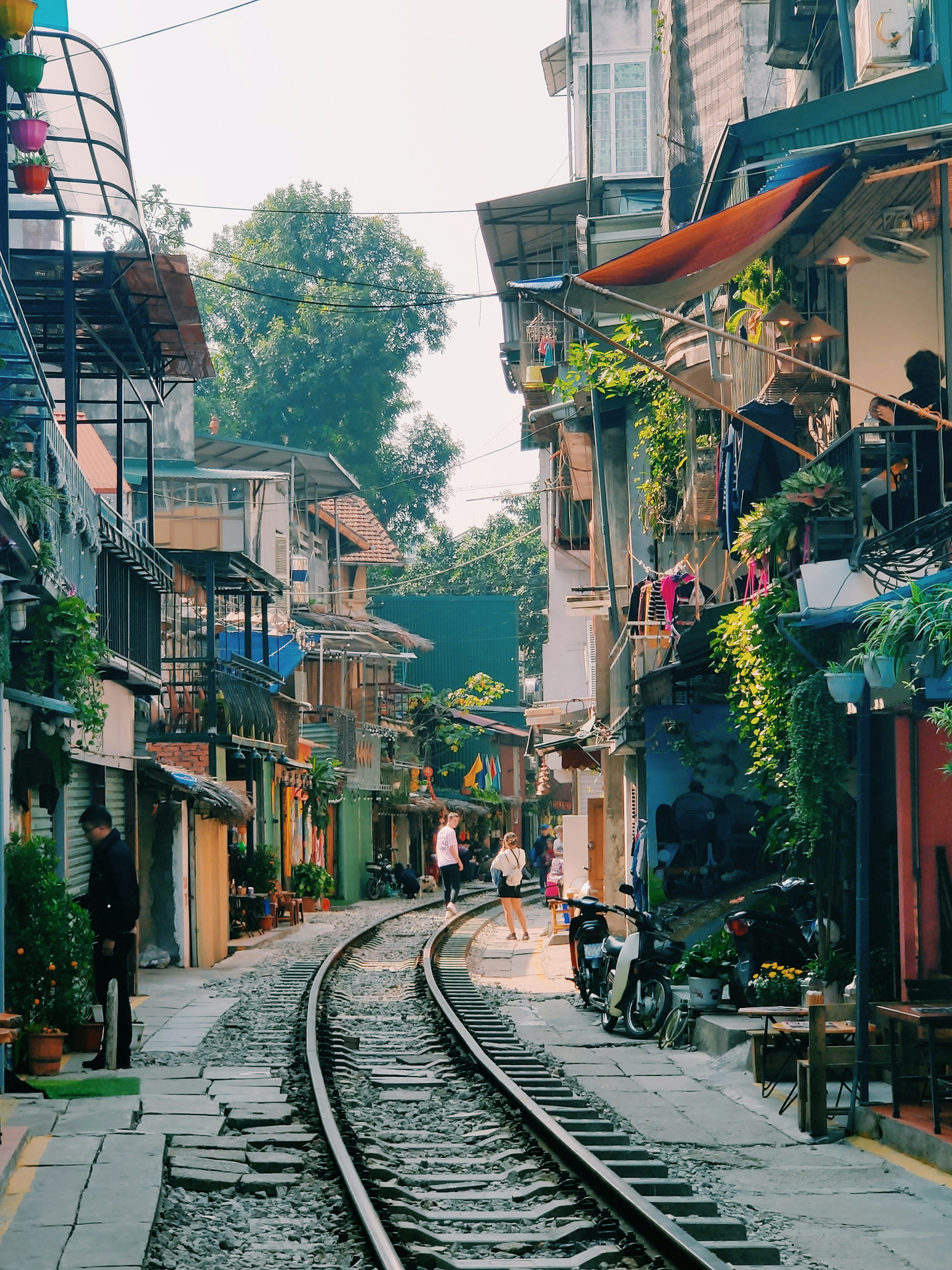
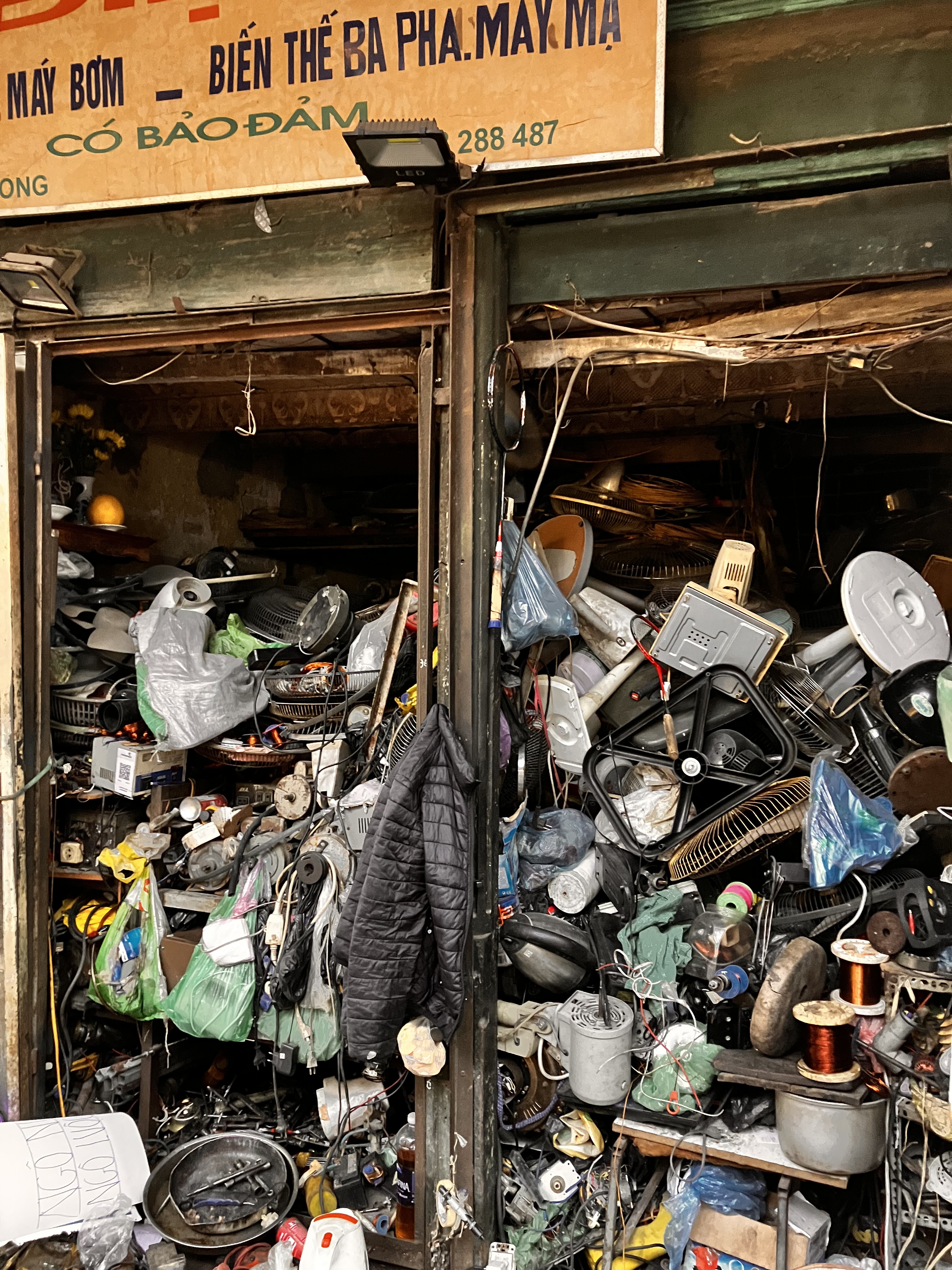
Hanoi is also the place to go shopping for clothes, shoes, and more. Everything is either fake or real—you can never be sure, since all the factories are in the same place. One thing is certain: it’s a lot cheaper here, and the real challenge is telling the quality apart. Nike for 15 euros, t-shirts for 2-3 euros, and the list goes on.
But let’s be honest—you don’t visit Hanoi, or Vietnam for that matter, for its architecture. Apart from the tiny town of Hội An (which we’ll talk about in Act 3), most of Vietnam’s traditional and colonial heritage was lost in the wars that shook the country between 1950 and 1980.
After 3 nights in Hanoi, it’s time to head to Cát Bà, right next to the famous Hạ Long Bay.
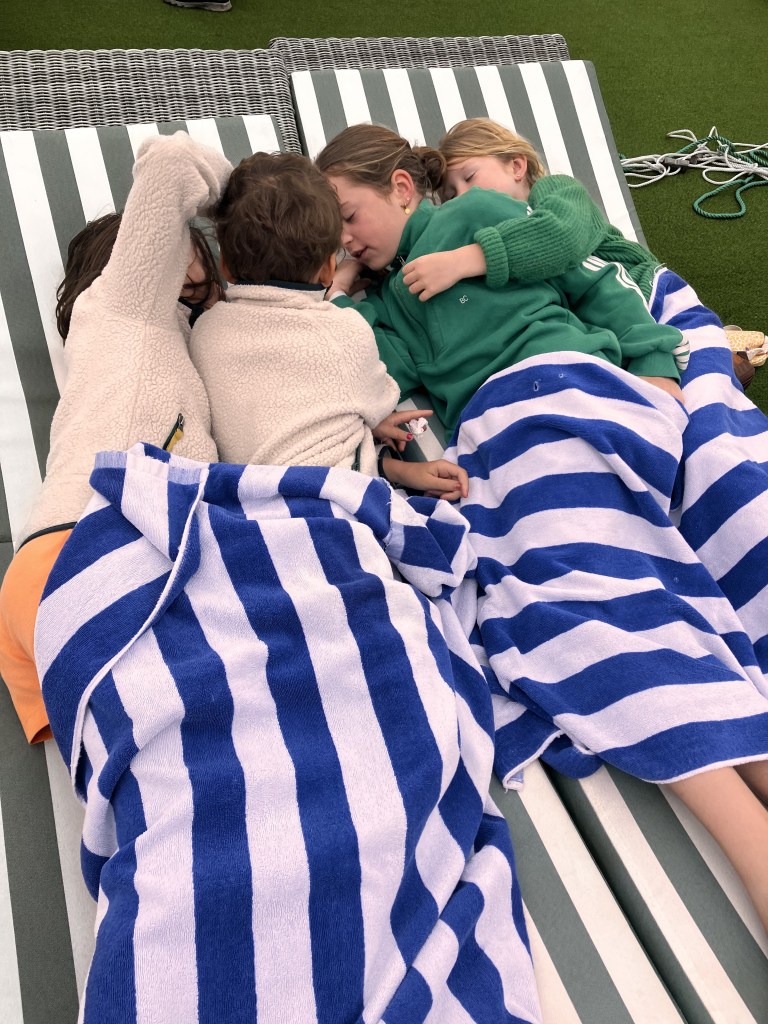
It’s winter here, and while it’s not exactly cold, temperatures range between 15 and 20 degrees.
We’re feeling it a bit with our one and only pair of pants, one sweater, and one thermal shirt, which I have to take to the laundry in the evening and request to have ready by the next morning.
This feeling is amplified by the air pollution, which is quite terrible in the north. Every morning, we wake up to a thick haze that blankets the sun.
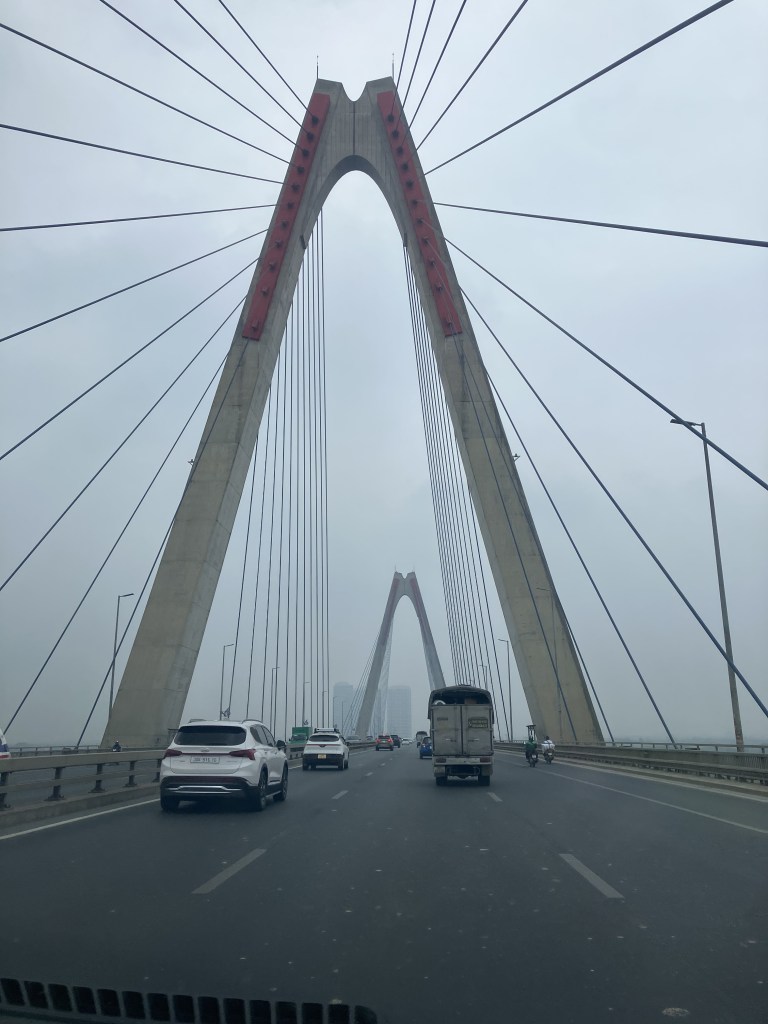
If there are no clouds, we can still feel the sun, but it doesn’t manage to warm up the atmosphere.These pollution clouds stretch across parts of China and northern Vietnam. It’s a typical winter phenomenon, where pollution gets trapped by the cold high-altitude winds.
I’m not very optimistic about the future… This kind of pollution will only get worse, causing more and more deaths.
Suzanne falls ill (no, nothing to do with the pollution), and she isn’t well for a good week. Our pace slows down, but we still manage to spend time with our friends David, Maya, and their two kids, and to do the two must-do activities in the area:
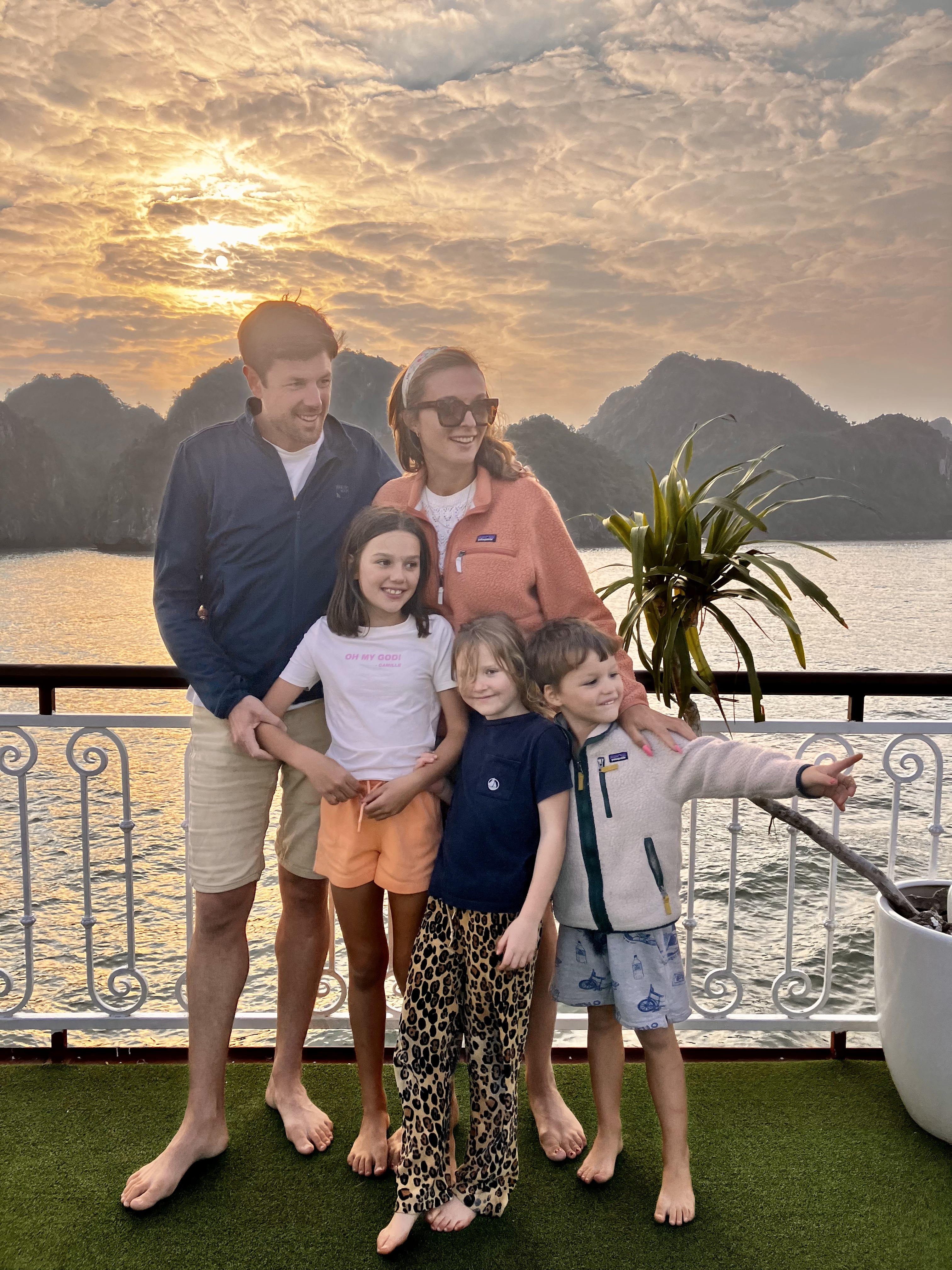
- The famous Hạ Long Bay, that postcard-perfect landscape with thousands of karst formations… often shrouded in mist.
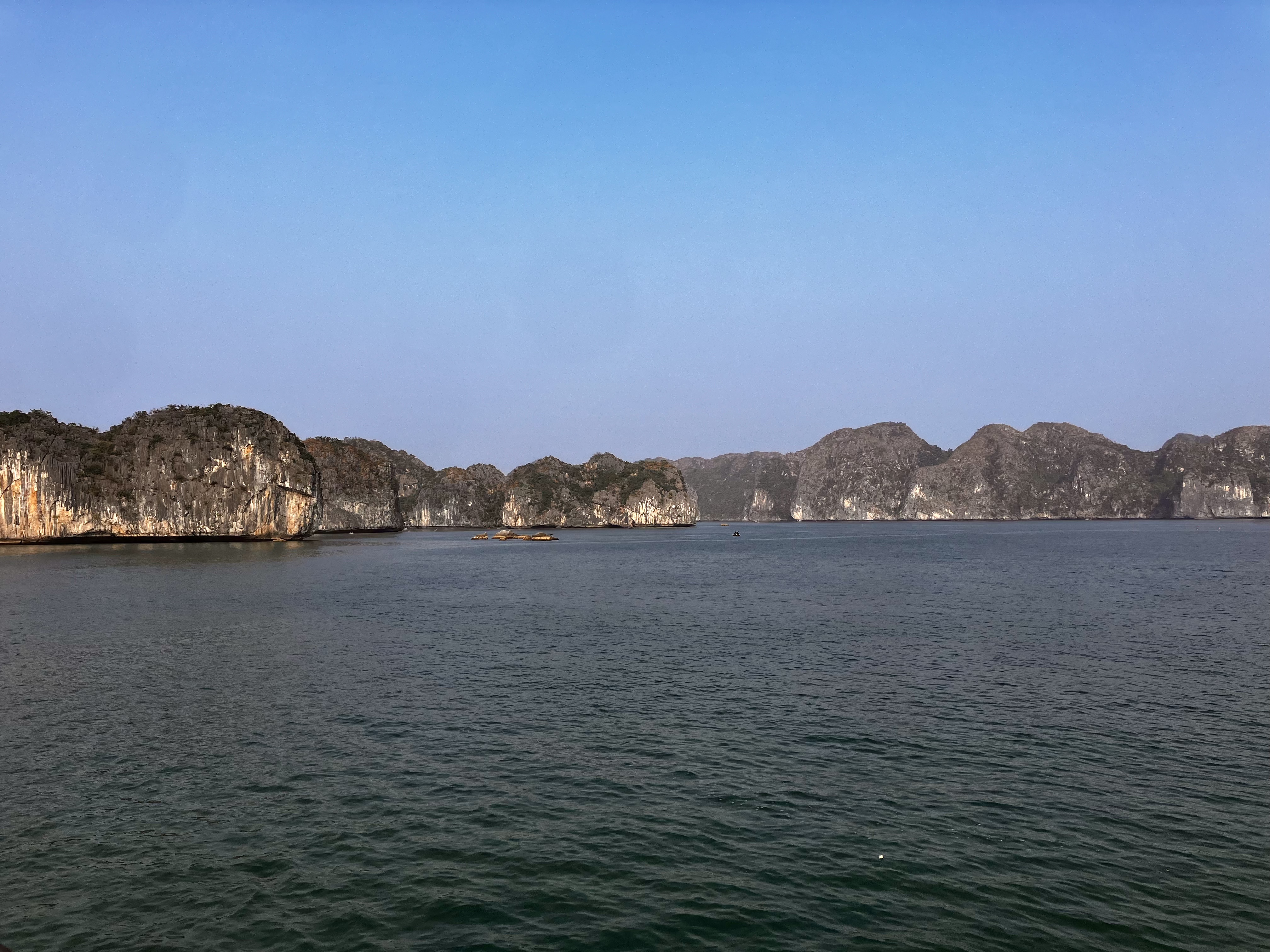

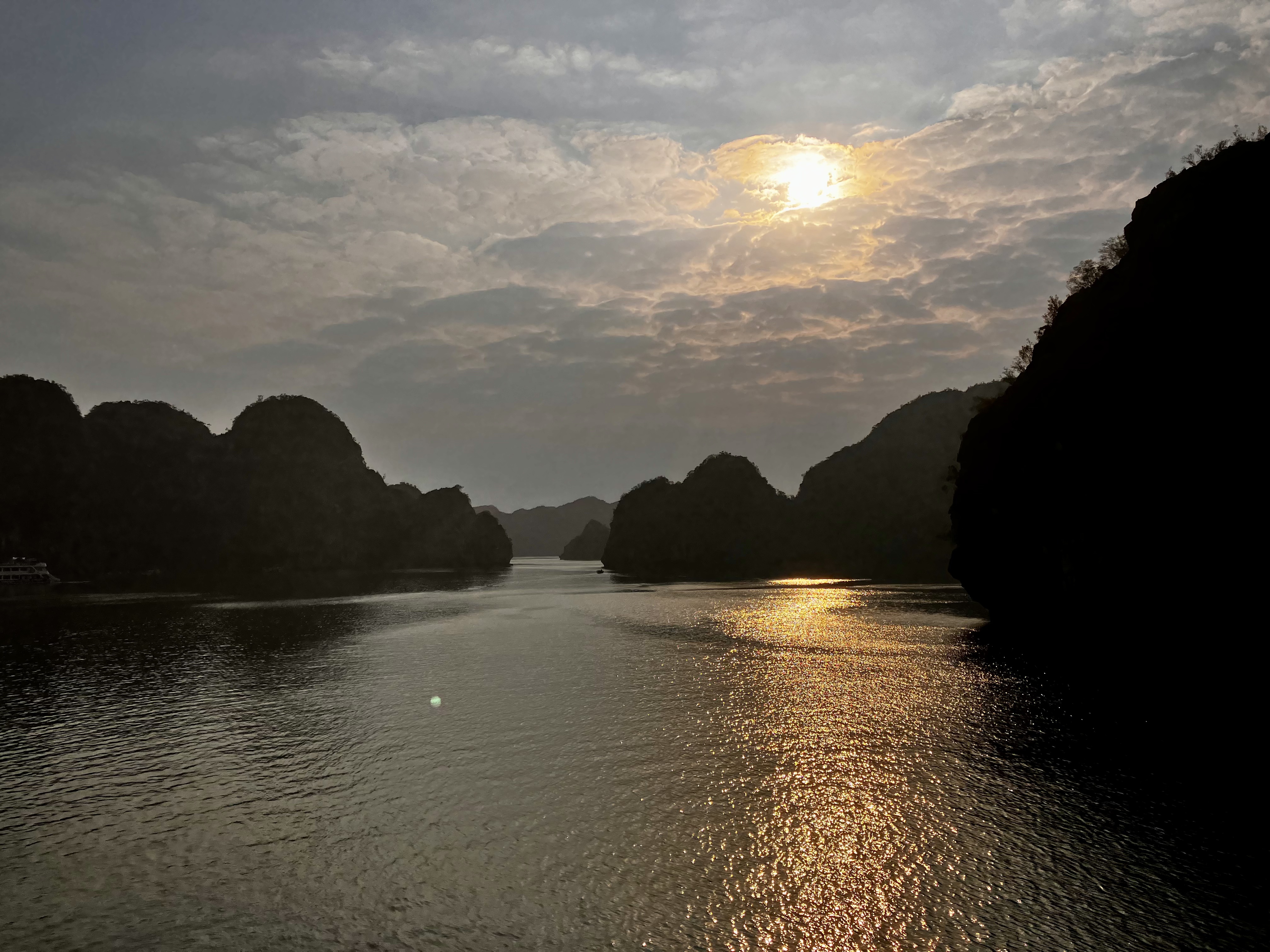
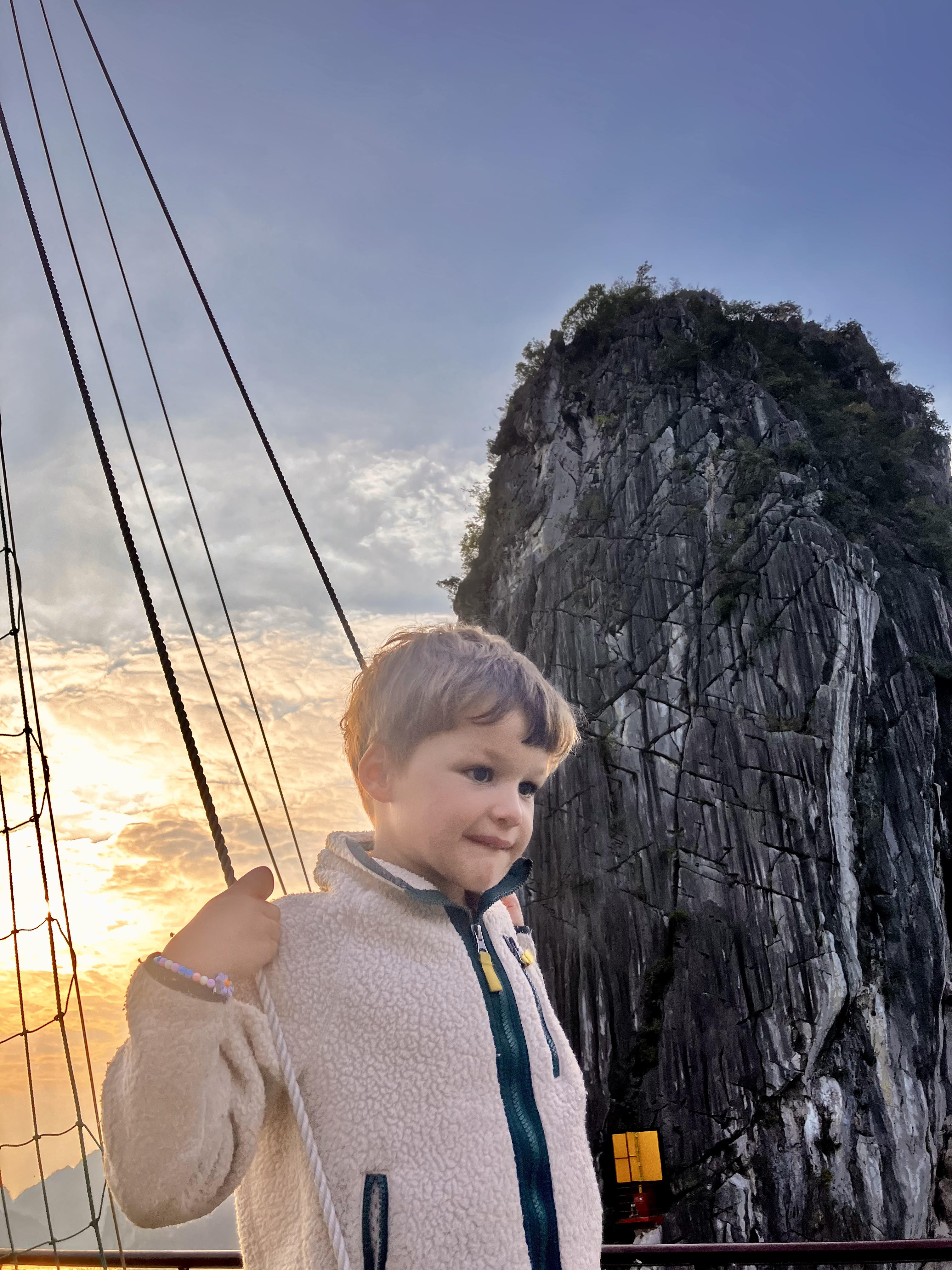
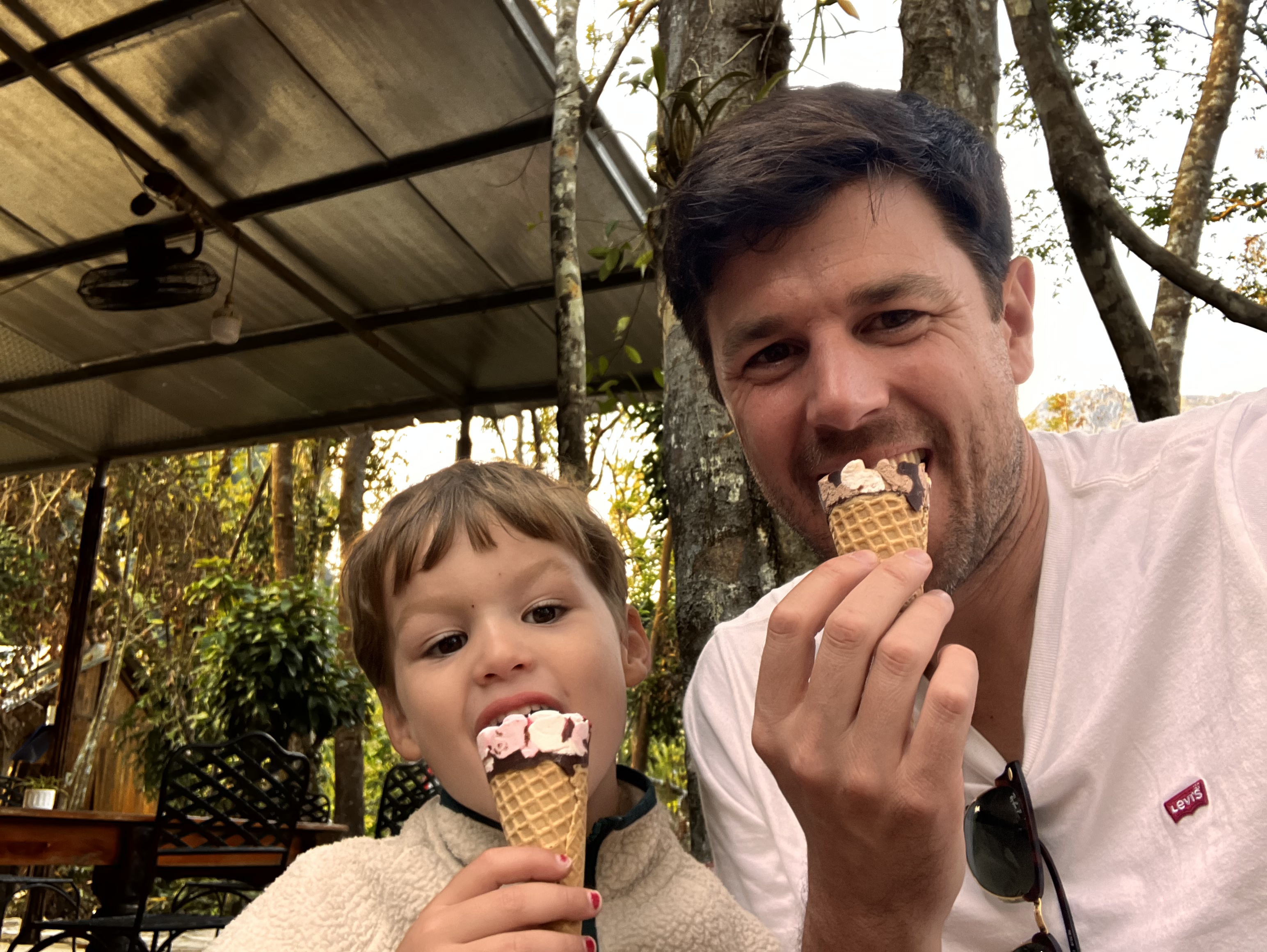
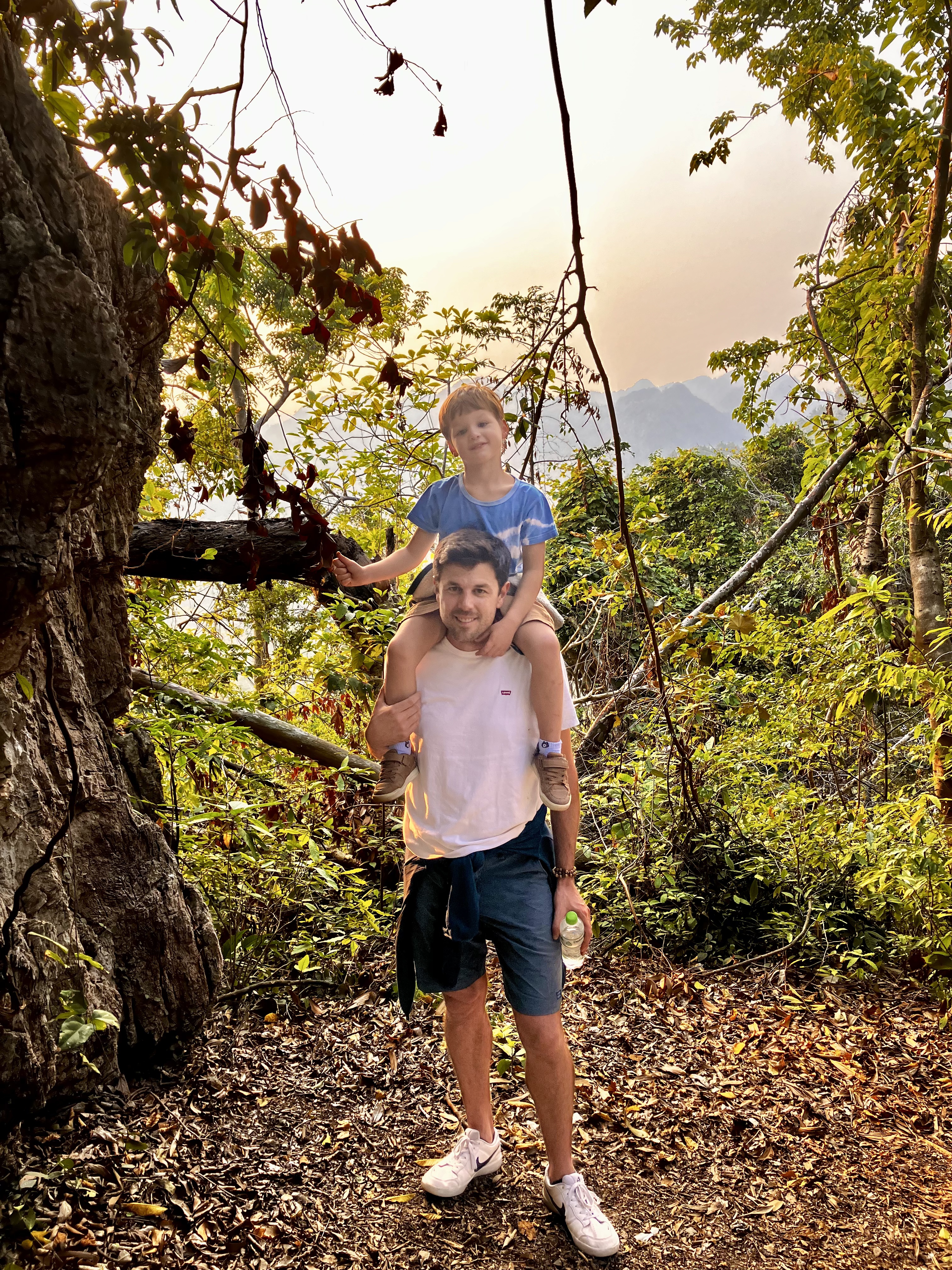
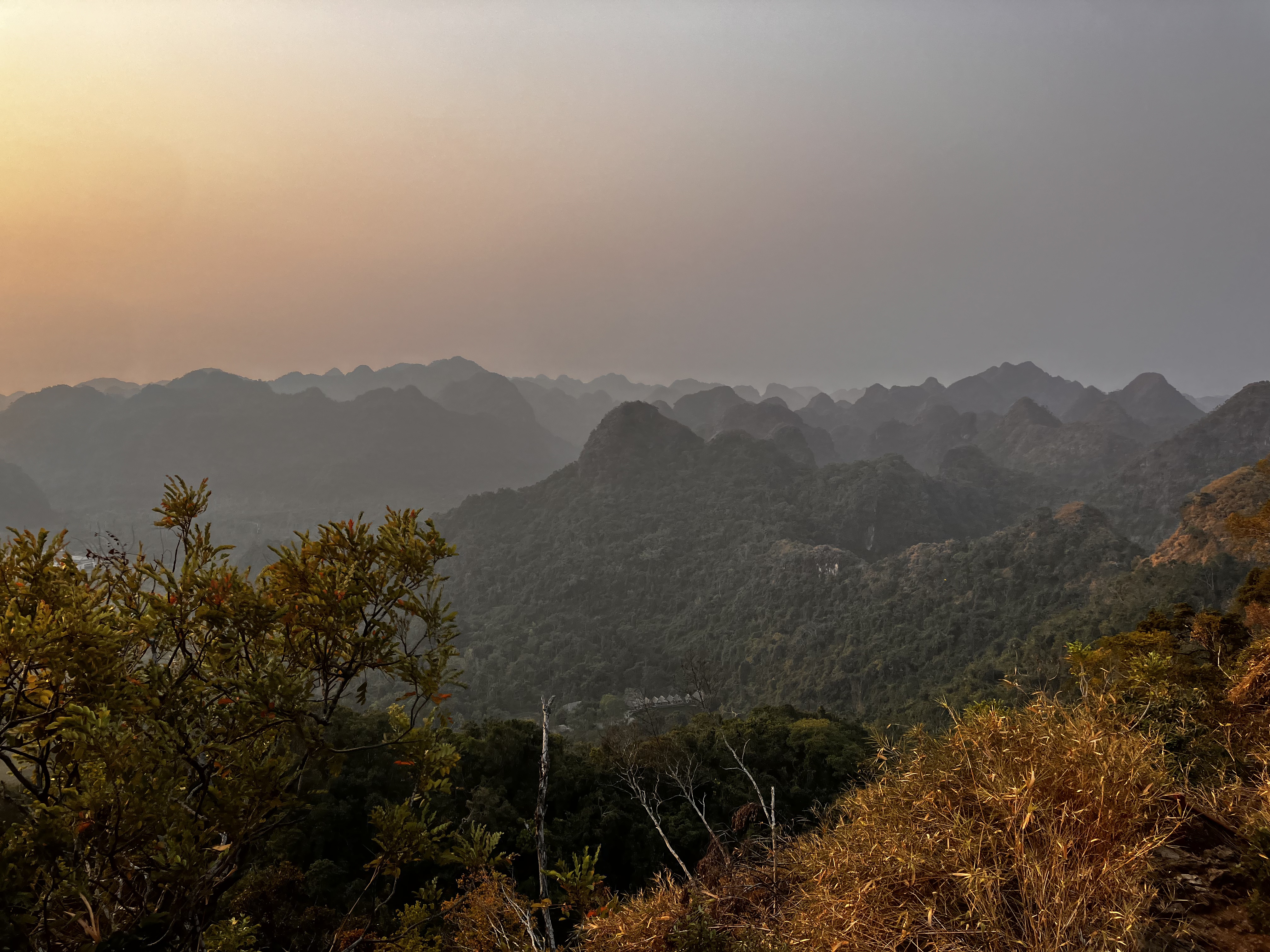
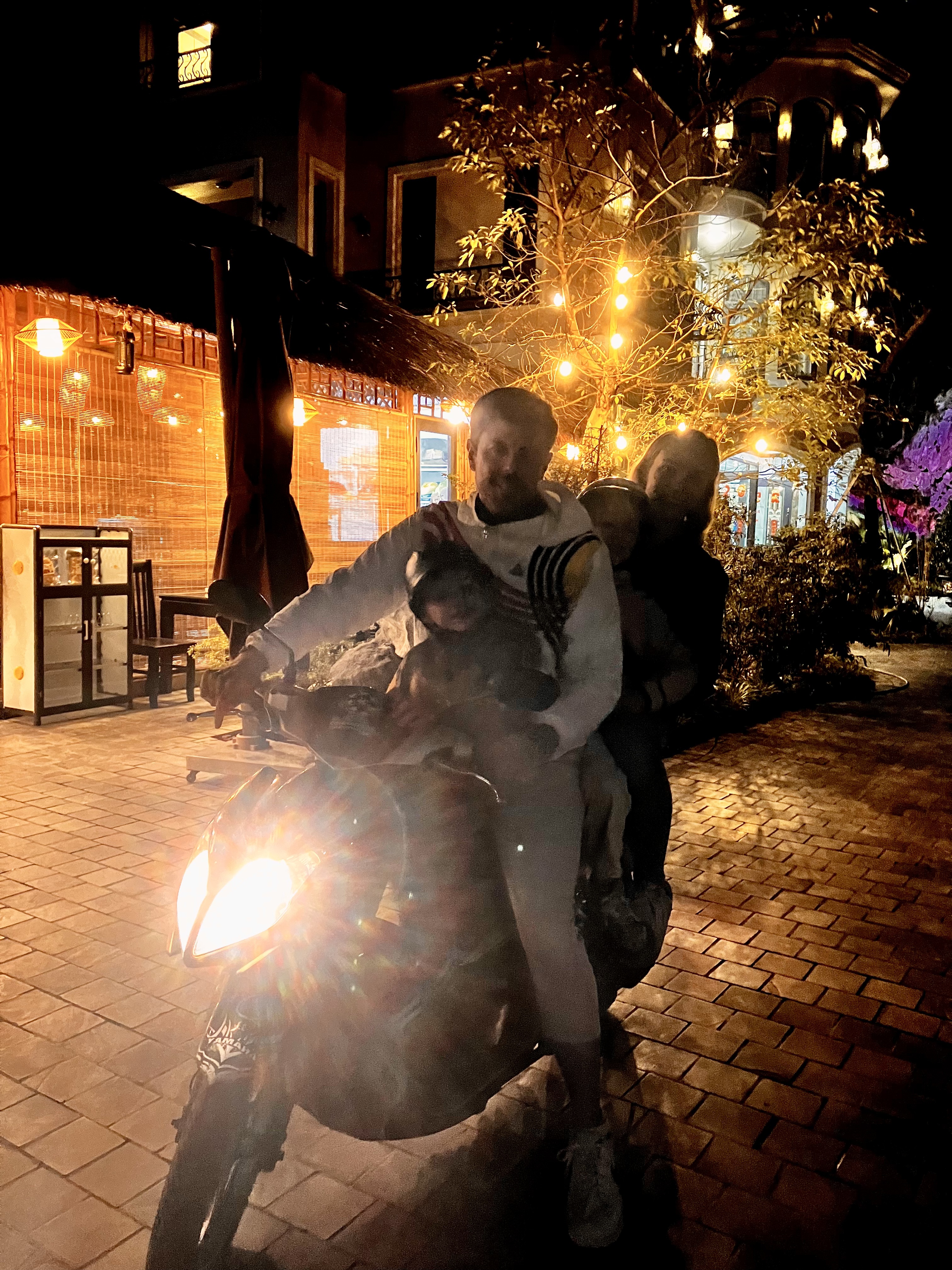
2. A motorbike adventure for the boys to explore Cát Bà Island, while Nola and Suzanne opted for a well-deserved break.
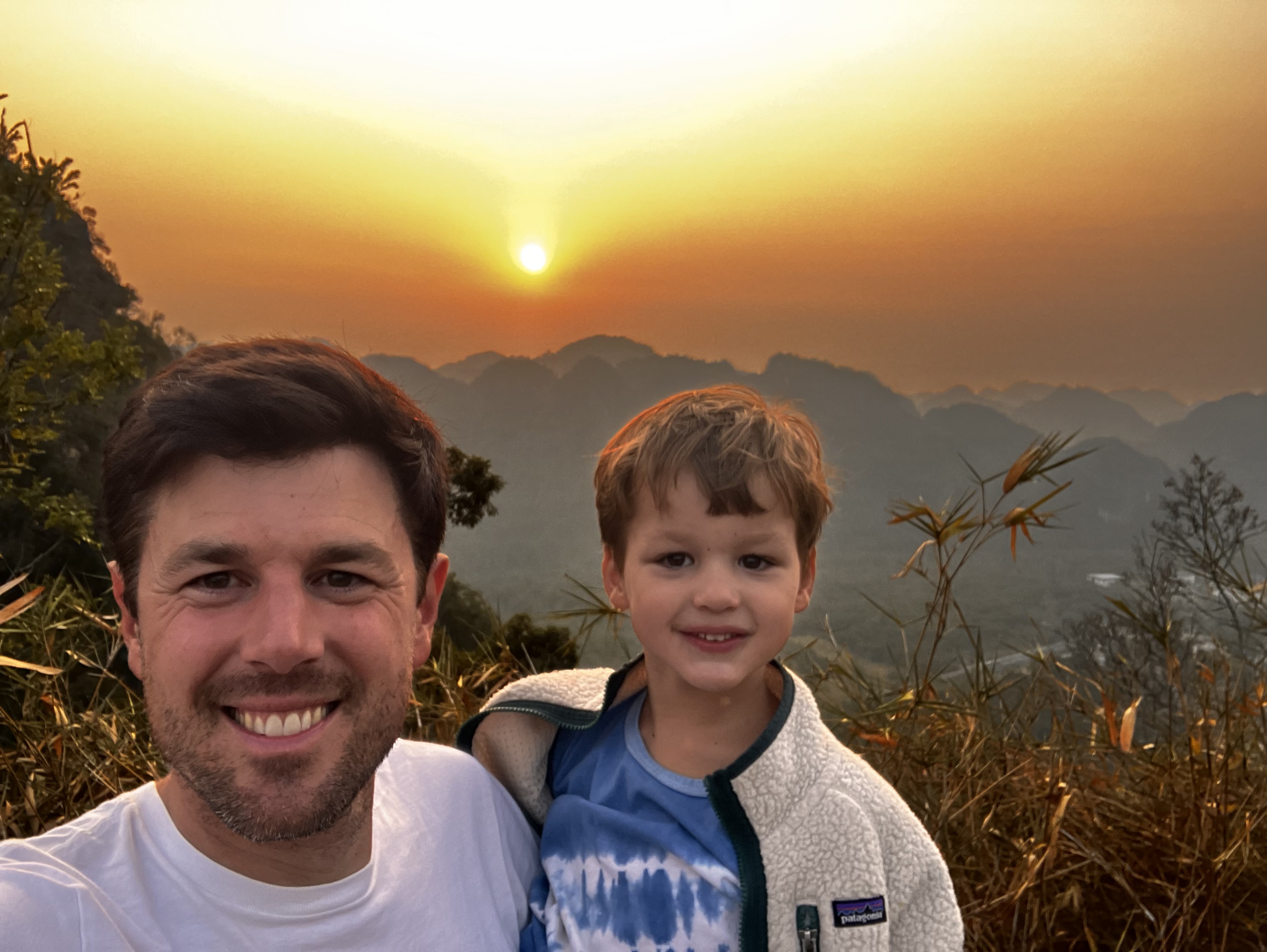
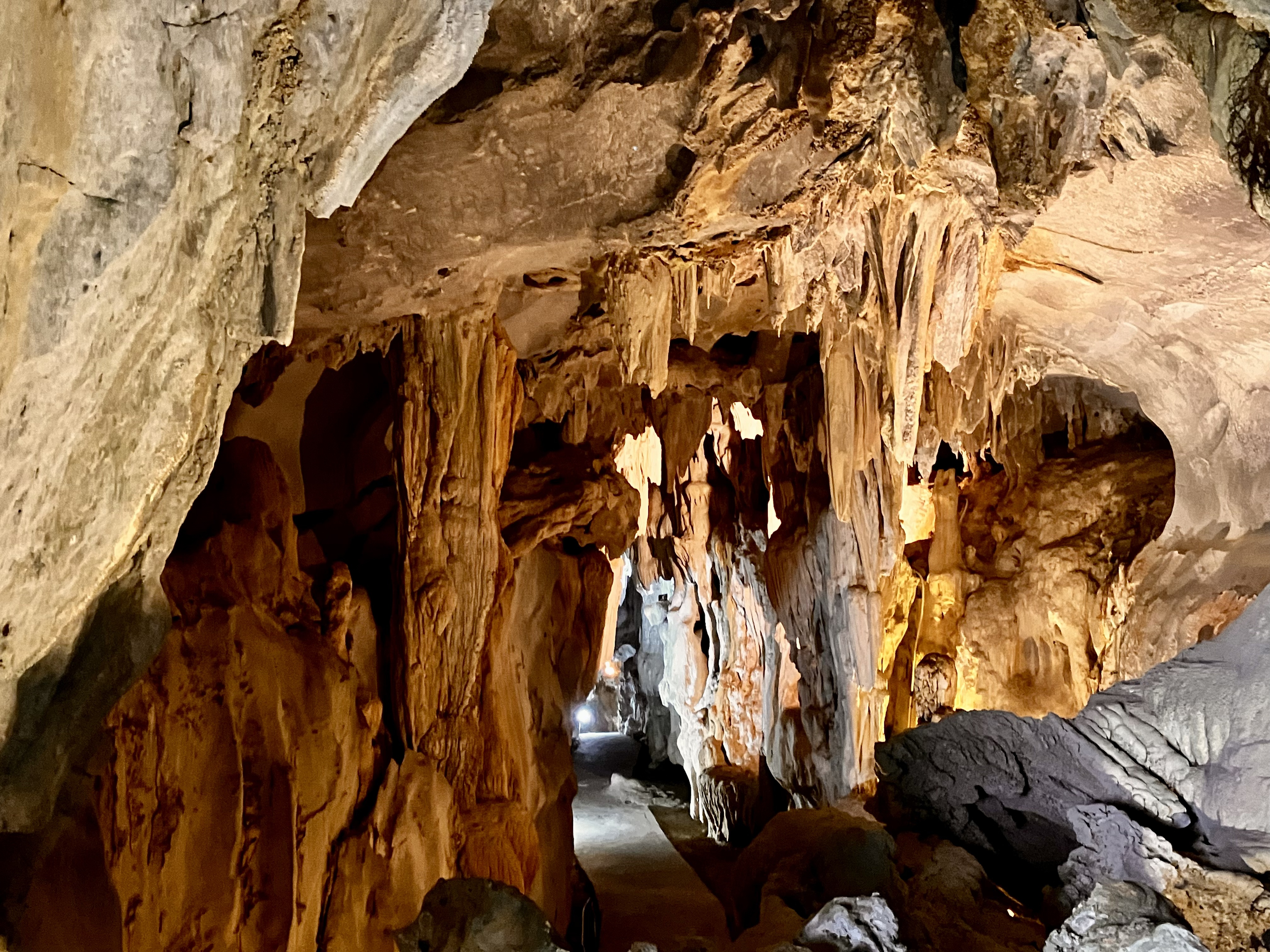
We say goodbye to our friends and leave Cát Bà, happy to have crossed paths with them. In the end, we decide to skip the high mountains—with only 10-degree temperatures and our light gear, it’s better to be reasonable. Since Suzanne isn’t fully recovered, we go for a much gentler Plan B: exploring two of Vietnam’s natural wonders.
First, Ninh Binh, often called the “Inland Ha Long Bay.” If Ha Long Bay is the sea pierced by rocky peaks, here it’s the opposite: flooded plains where jagged rocks rise between rivers and rice paddies. Aboard a small boat, we glide between these karst formations, passing under natural caves, moving at the slow rhythm of rowers who, surprisingly, paddle… with their feet.
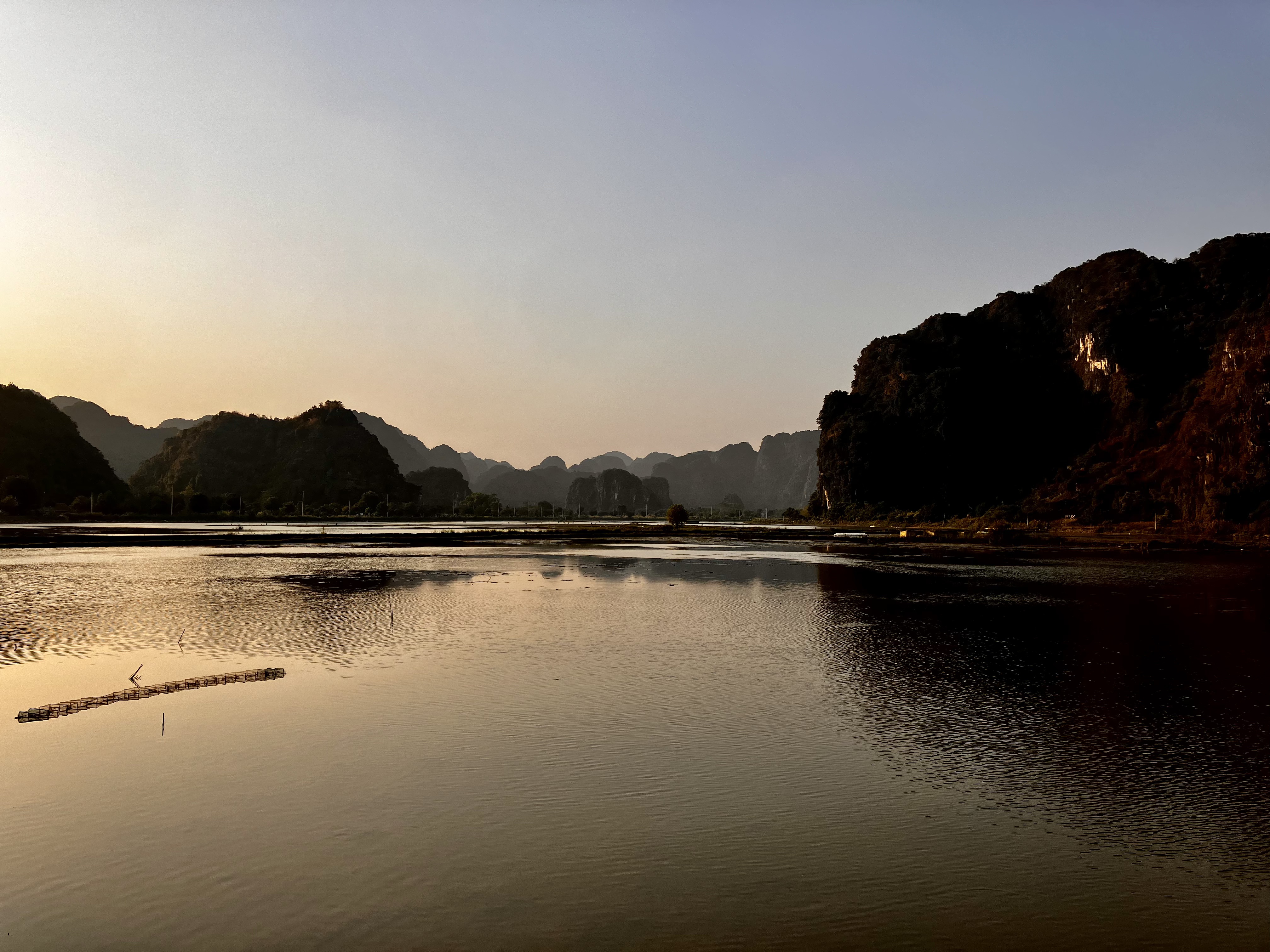
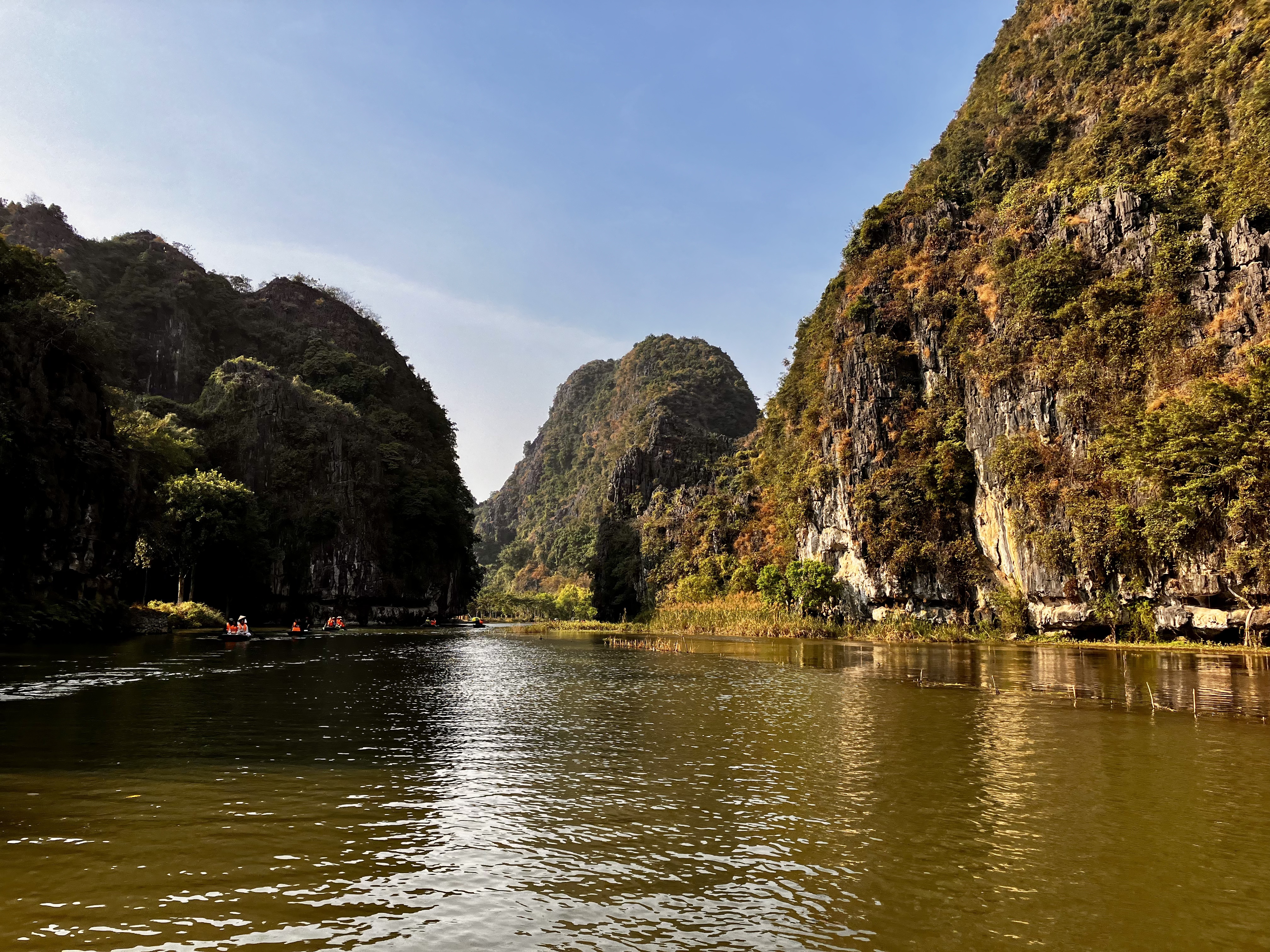
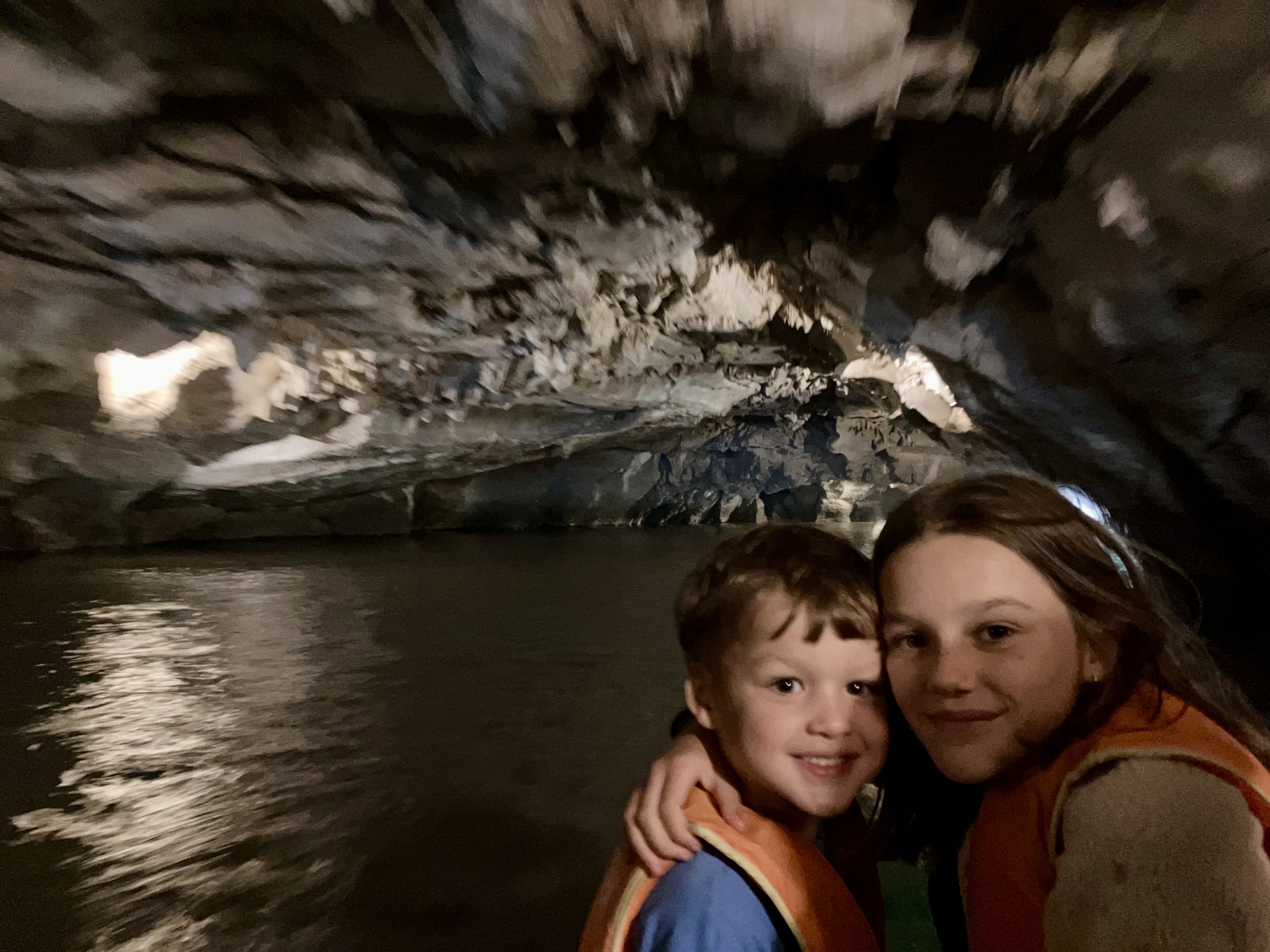
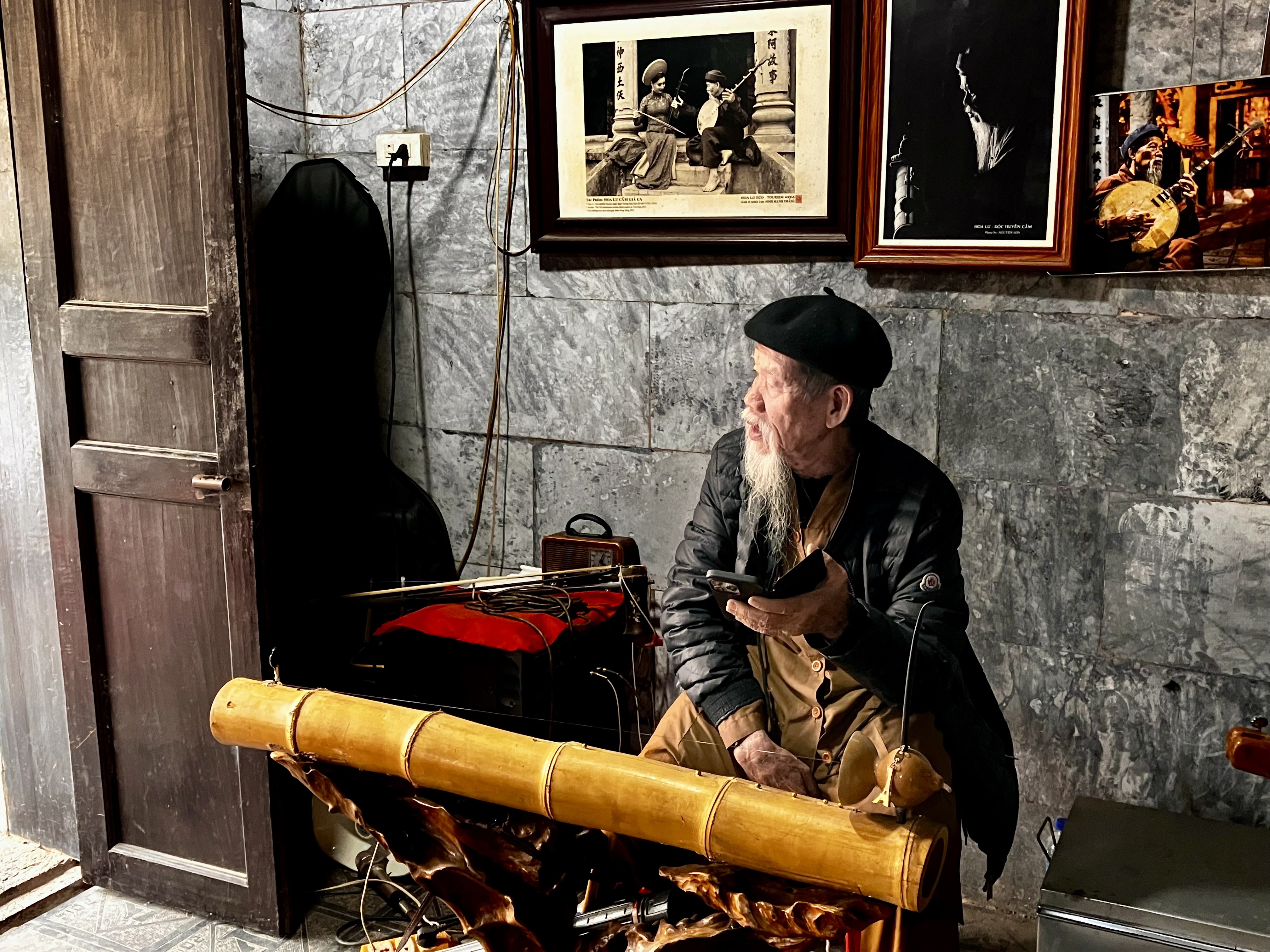
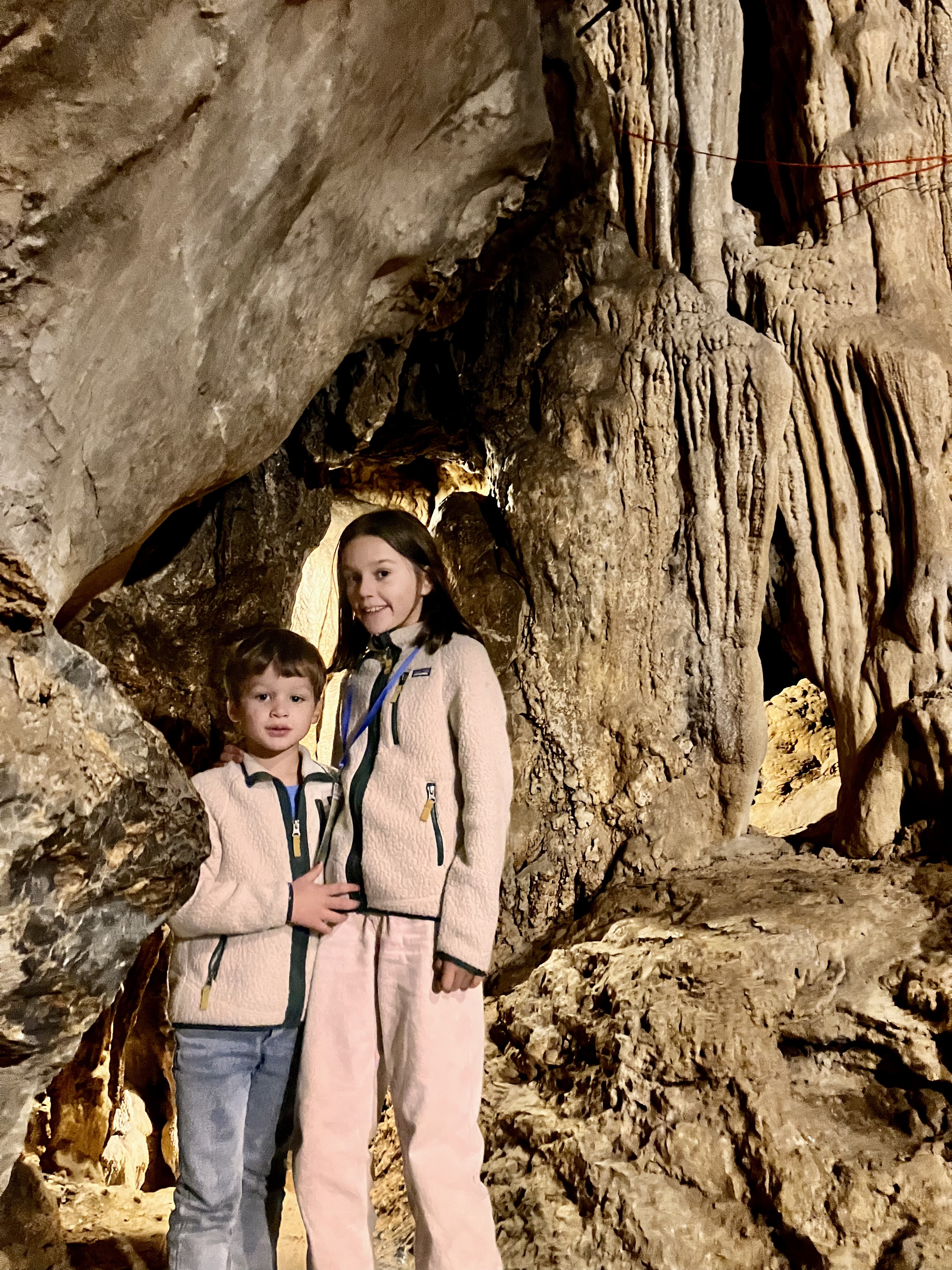
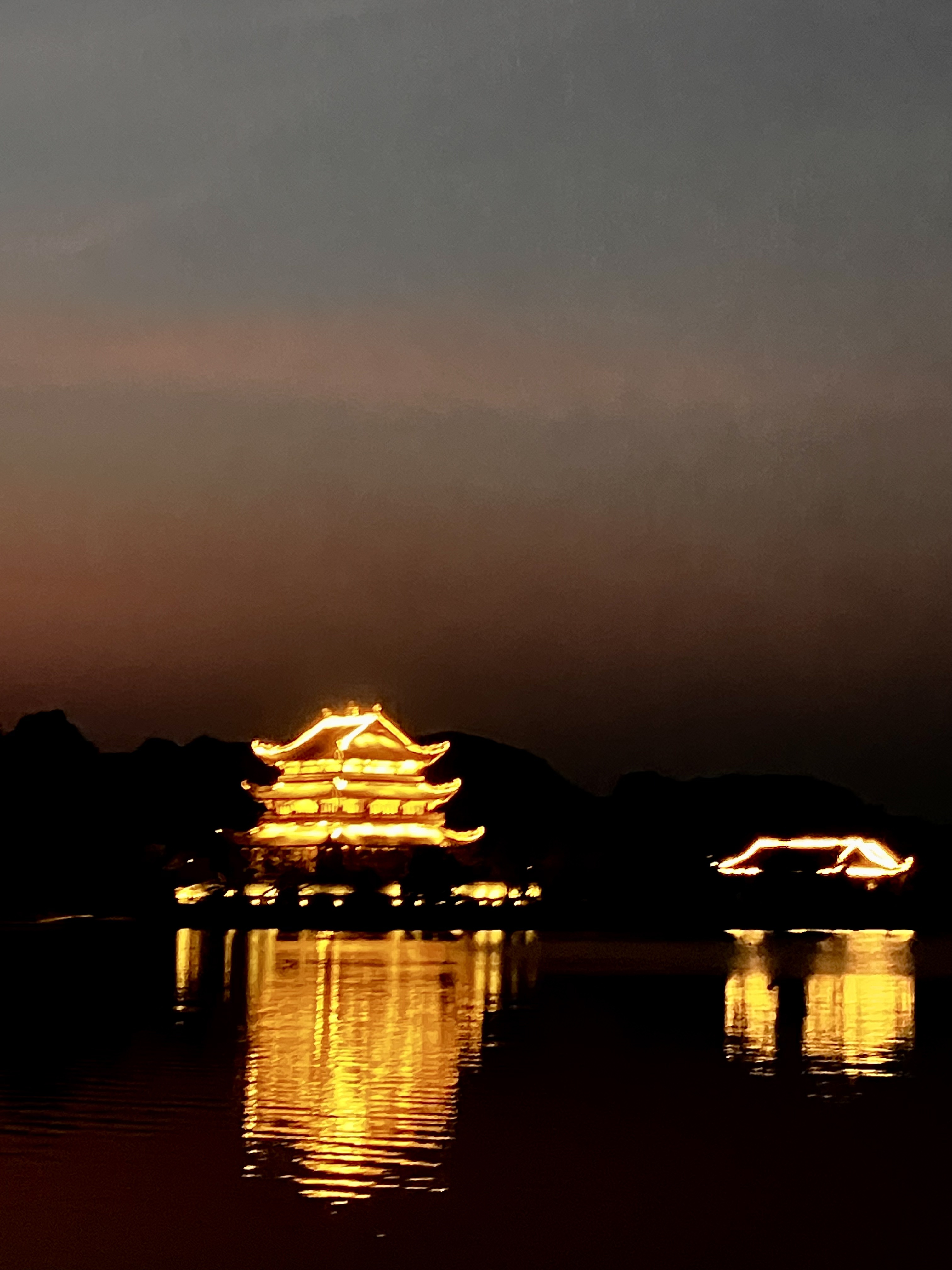
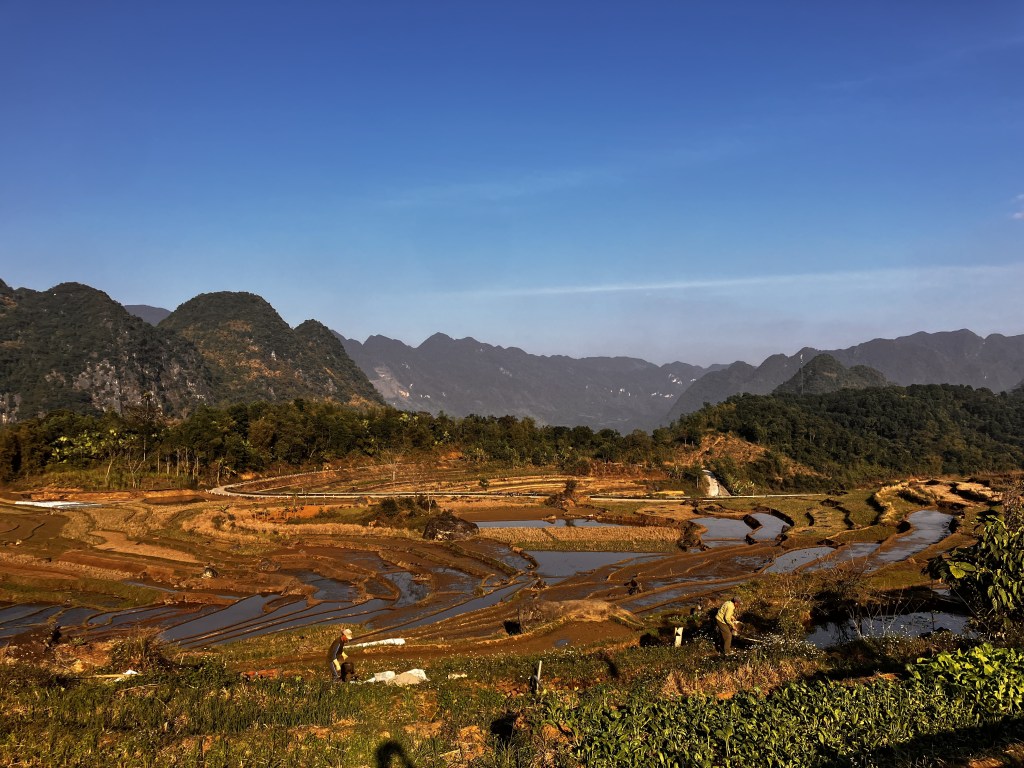
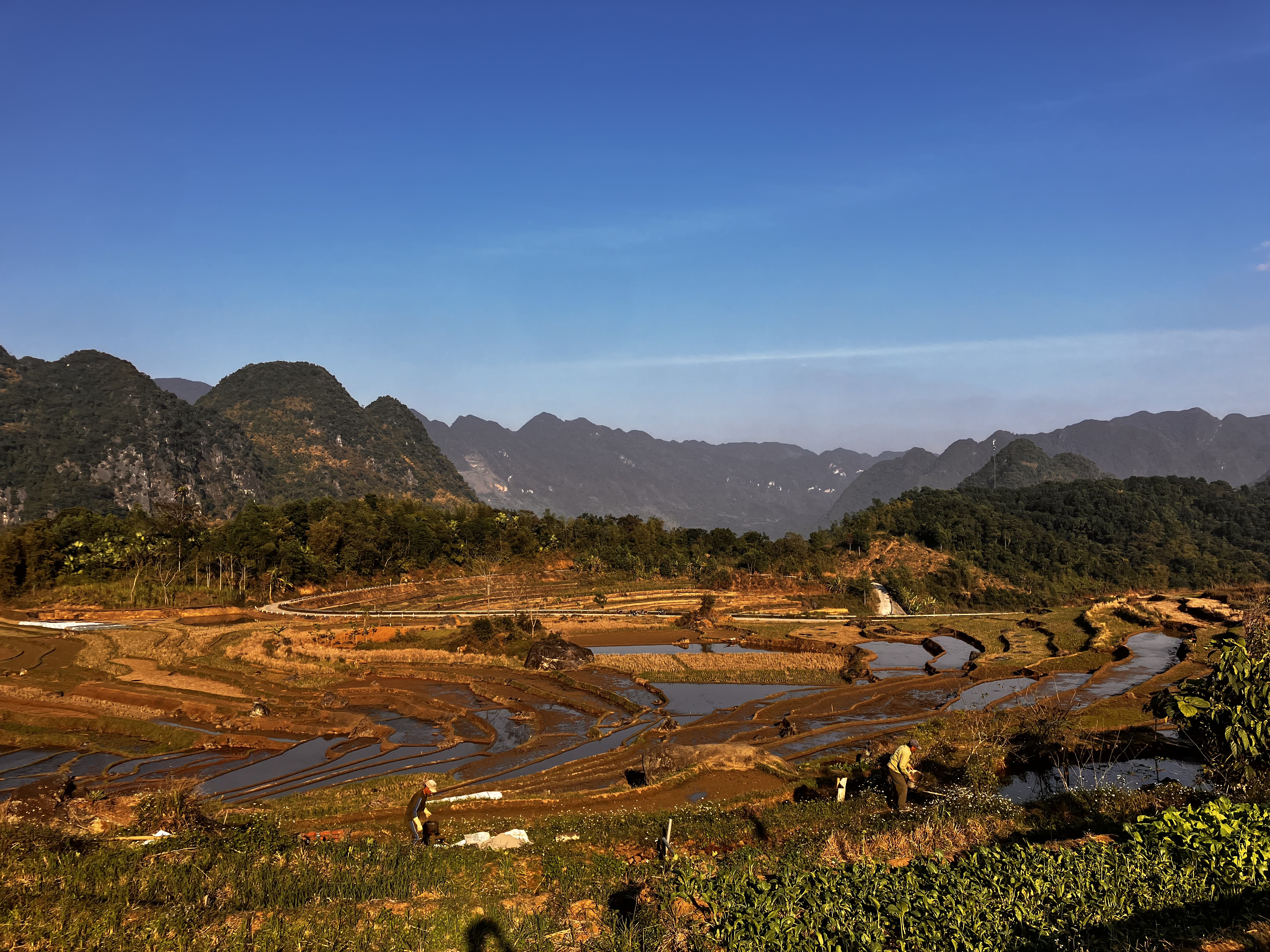
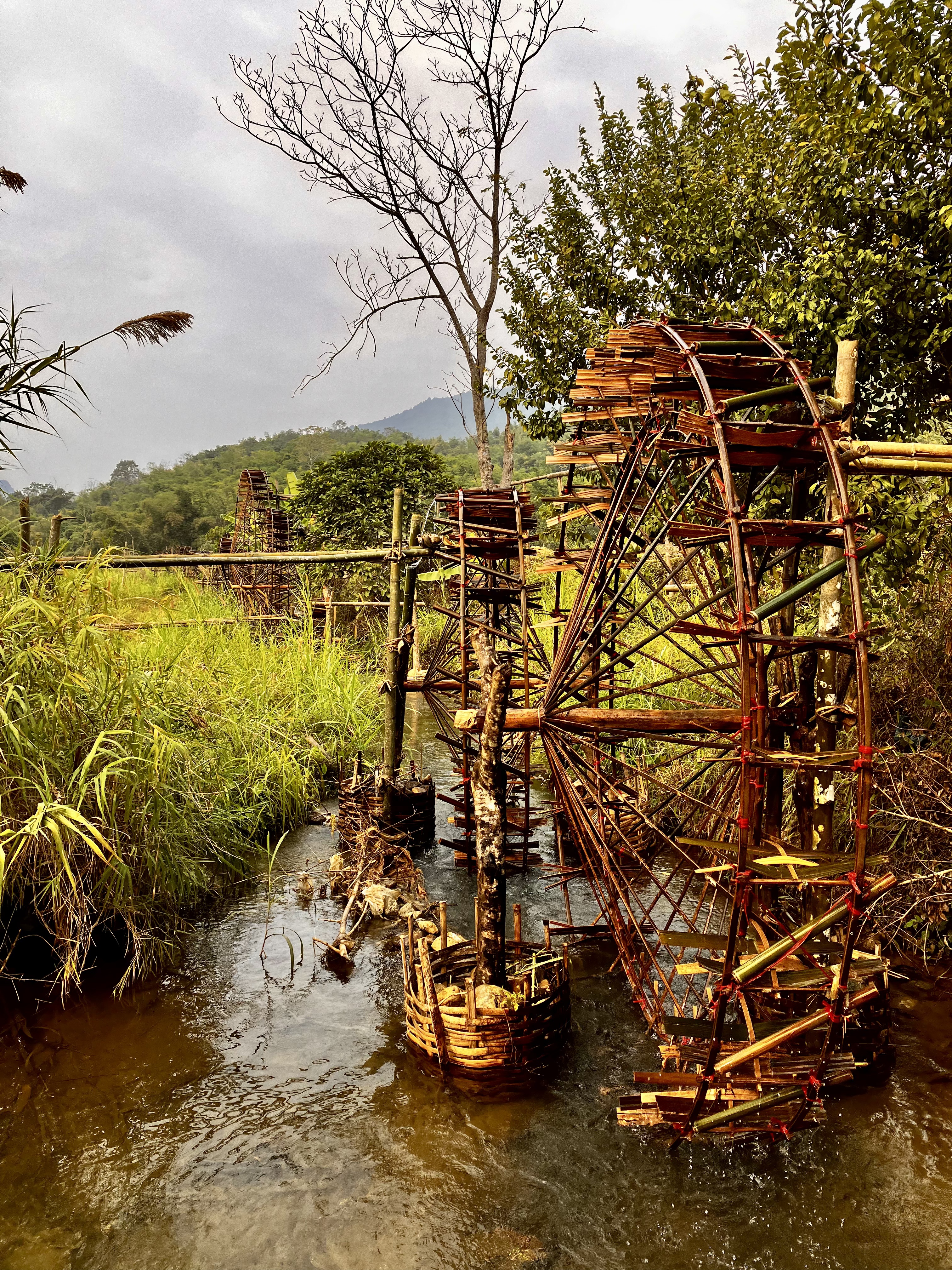
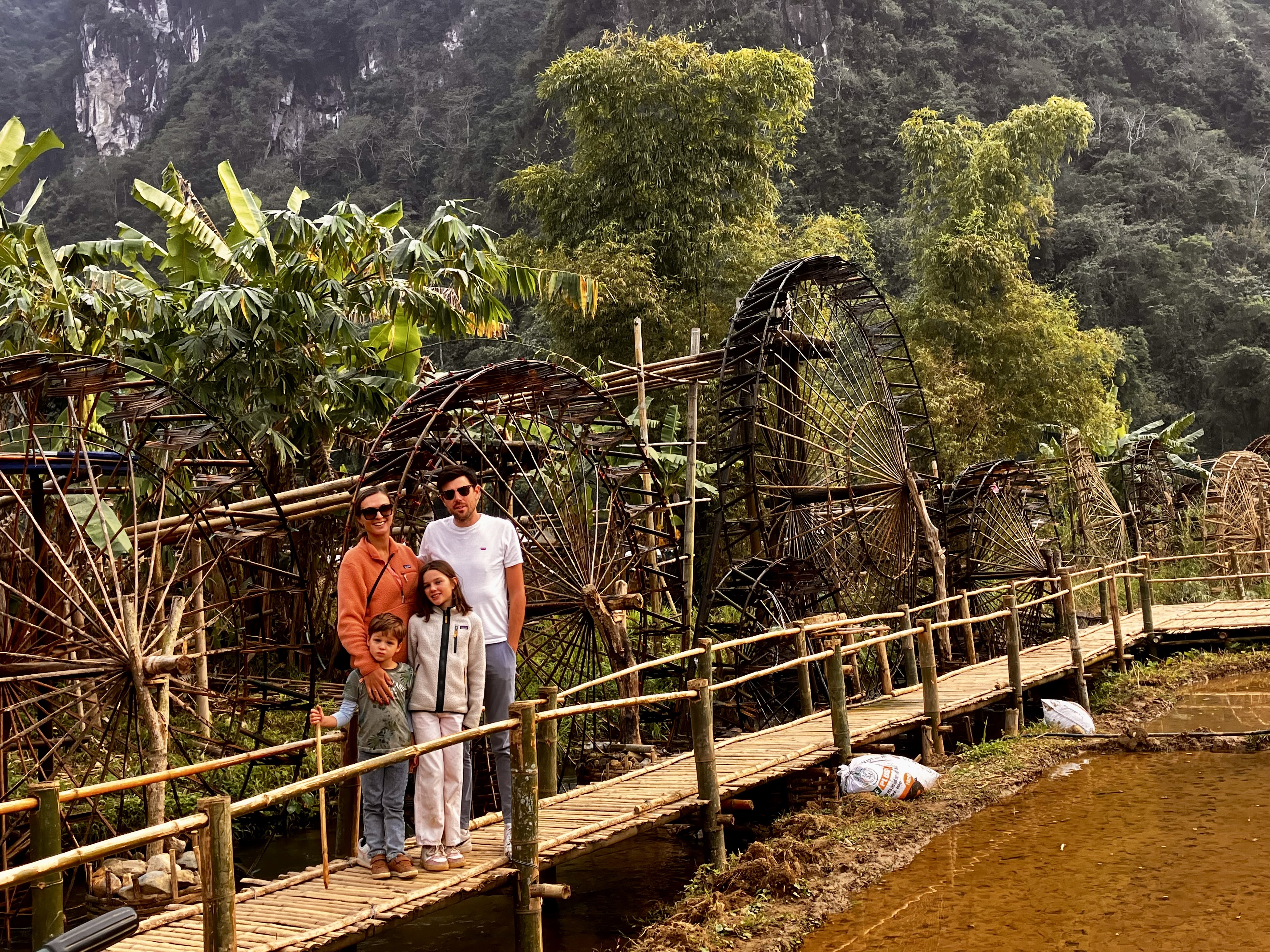
Then, after a three-hour journey, we arrive in Pu Luong, a little slice of paradise nestled in a valley surrounded by mountains, far from everything. Pu Luong feels frozen in time, a natural sanctuary where rural life still reigns supreme. We explore the region by motorbike, winding through isolated hamlets and soaking in the rhythm of Vietnamese daily life. Everywhere, rice paddies stretch as far as the eye can see, more than I’ve seen anywhere else. They form a patchwork landscape, irrigated by massive bamboo water wheels that turn slowly, lifting water from the rivers to nourish the fields. Even though the rice paddies aren’t green—wrong season—the ingenious ancestral dance of these bamboo wheels gives the scenery an incredible charm.
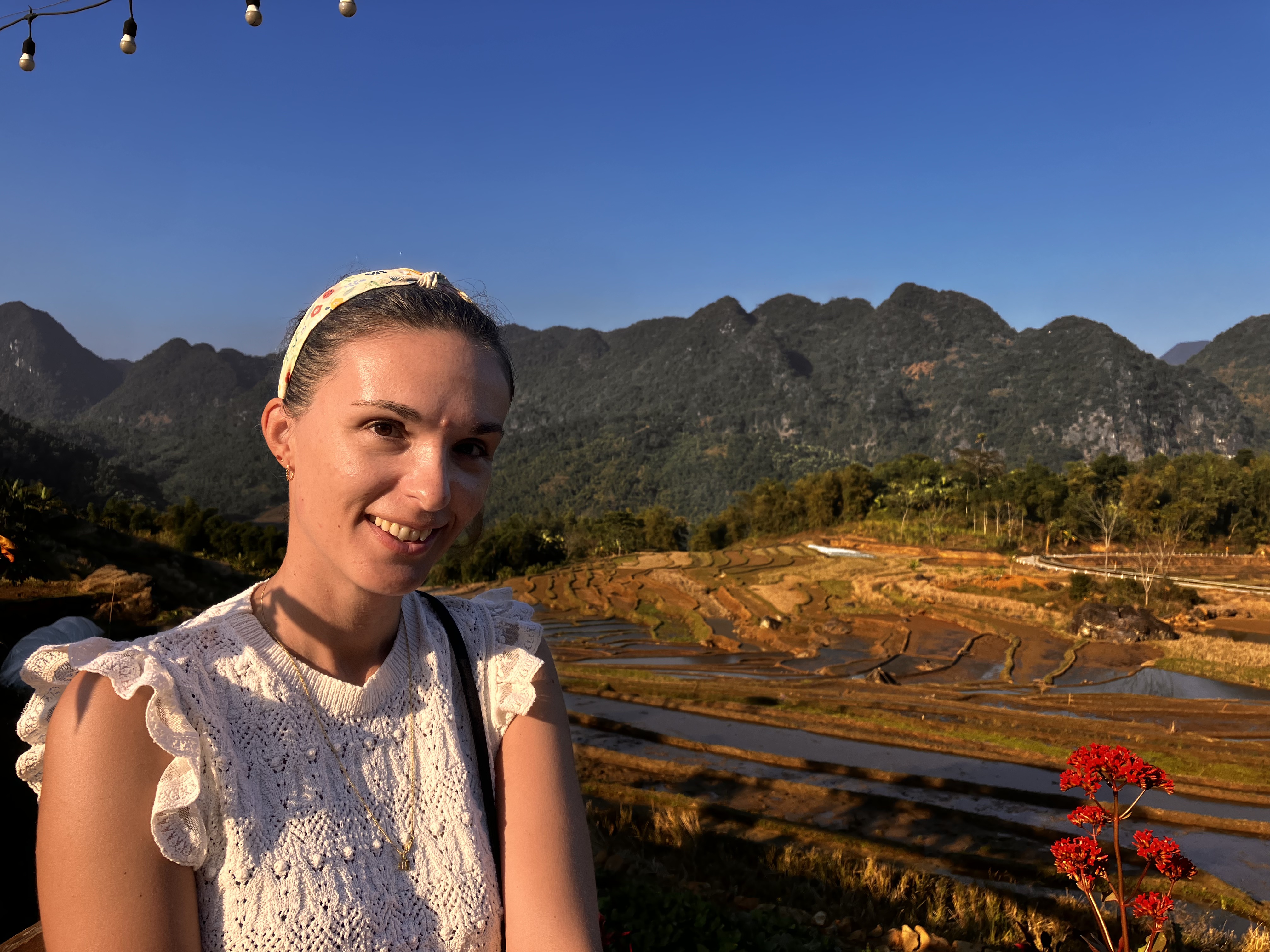
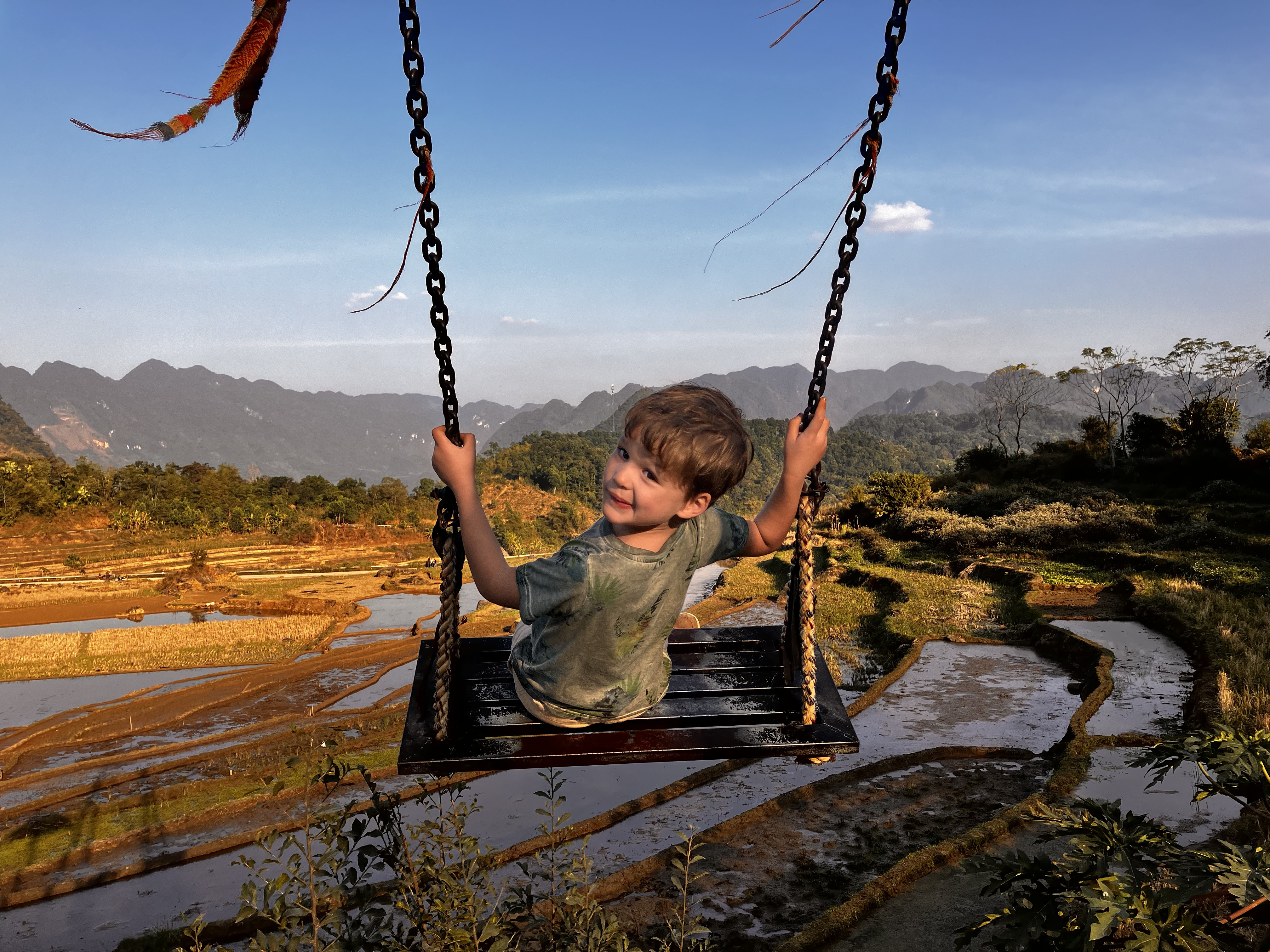
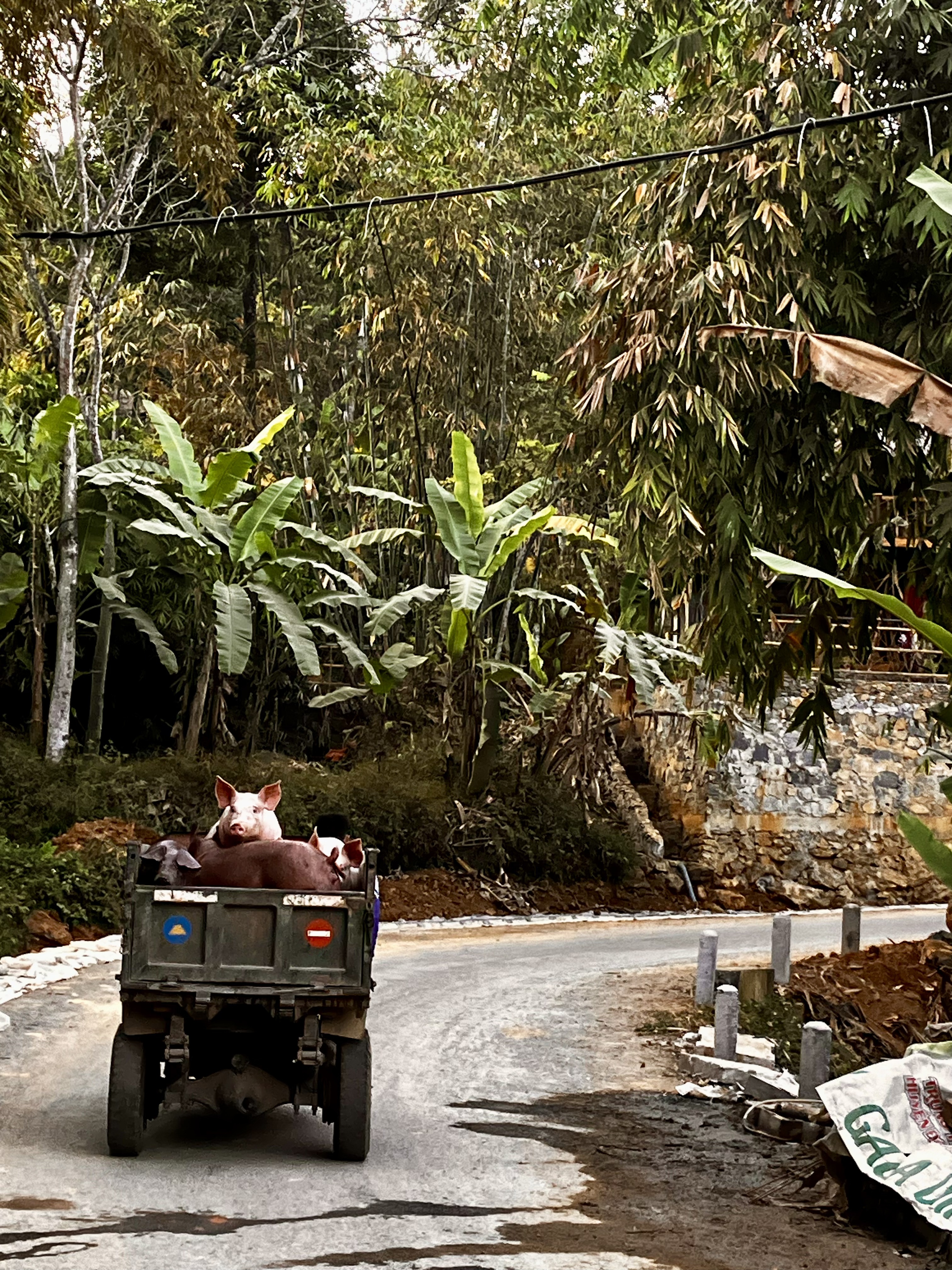
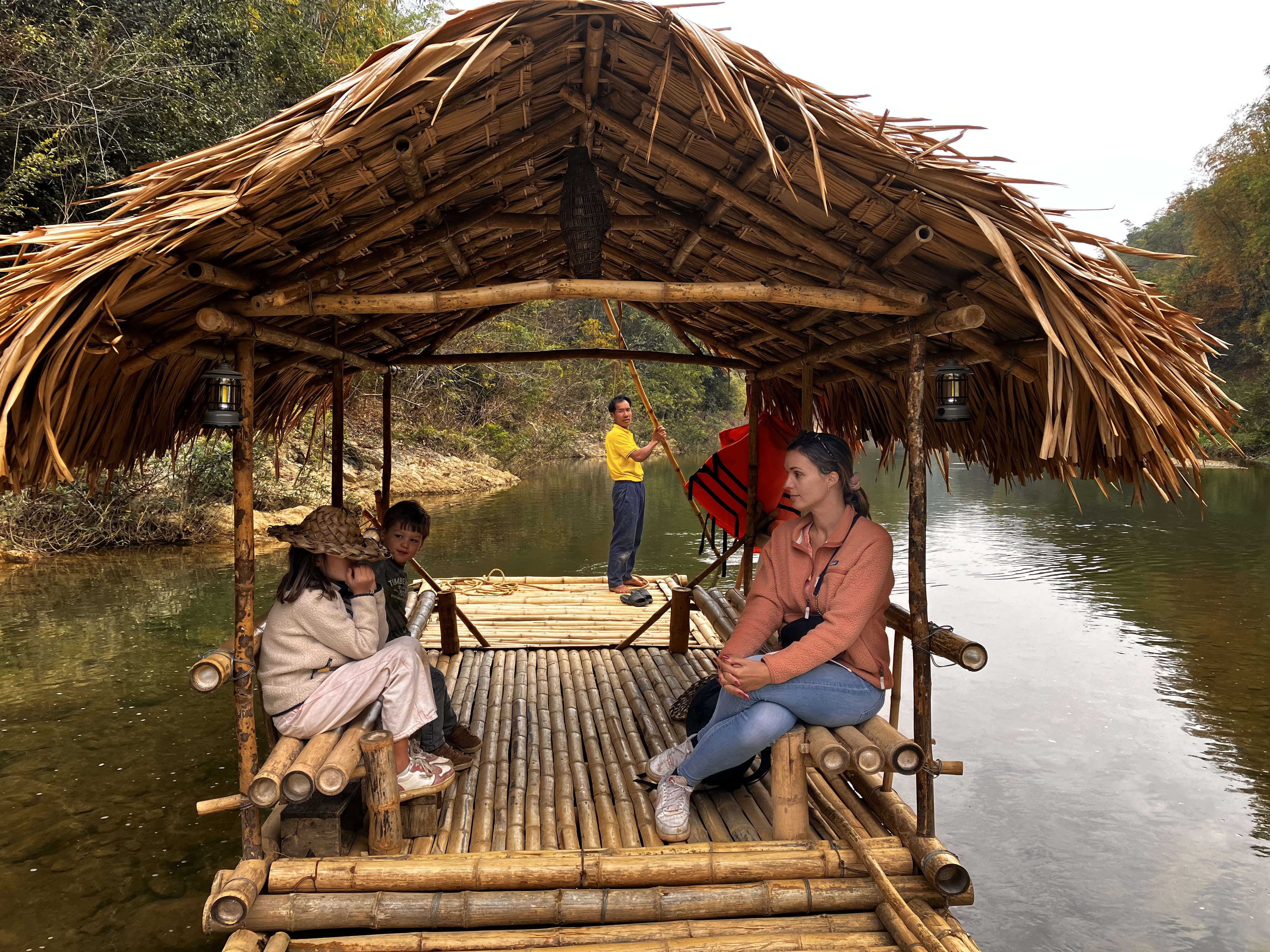
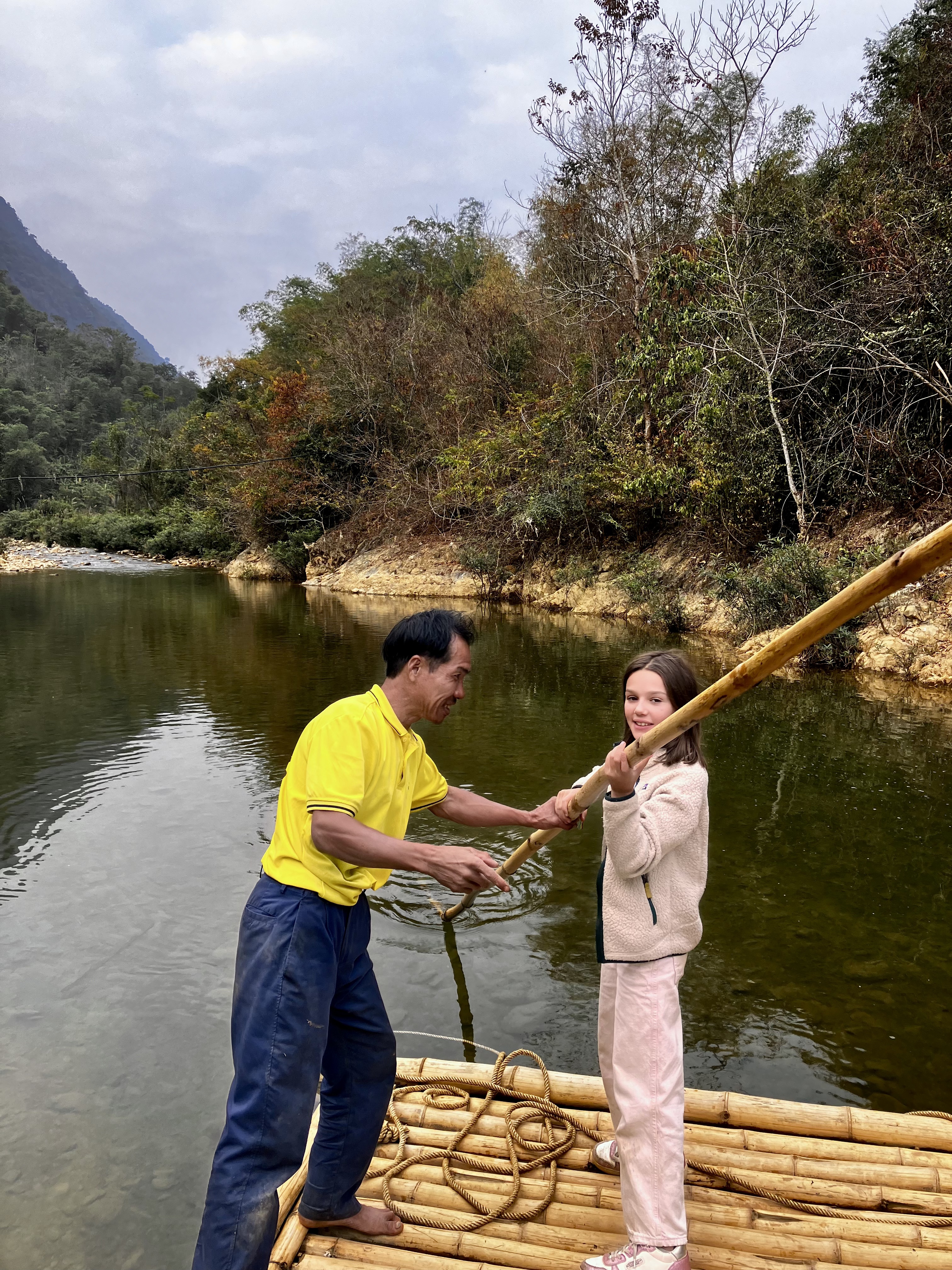
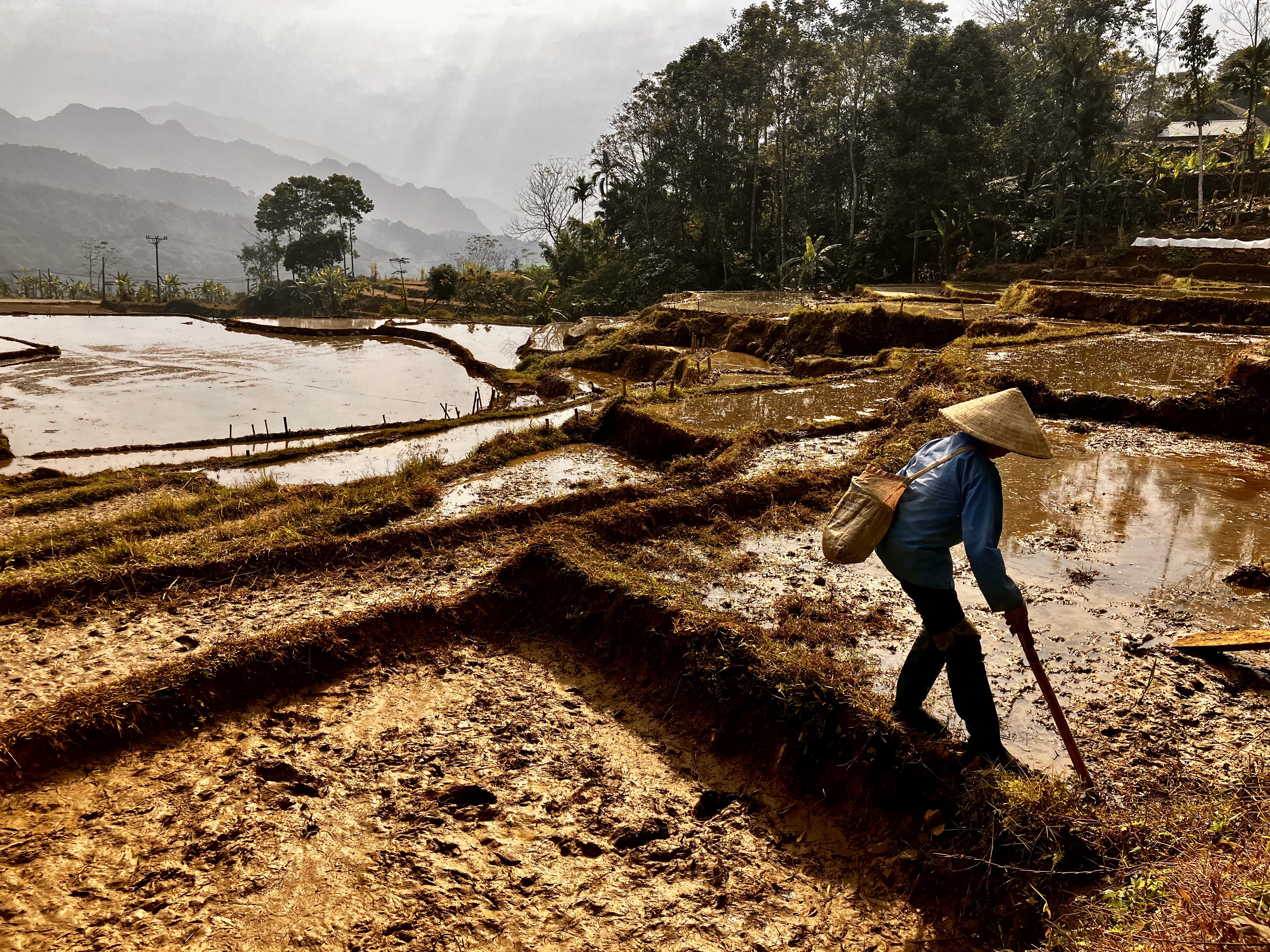
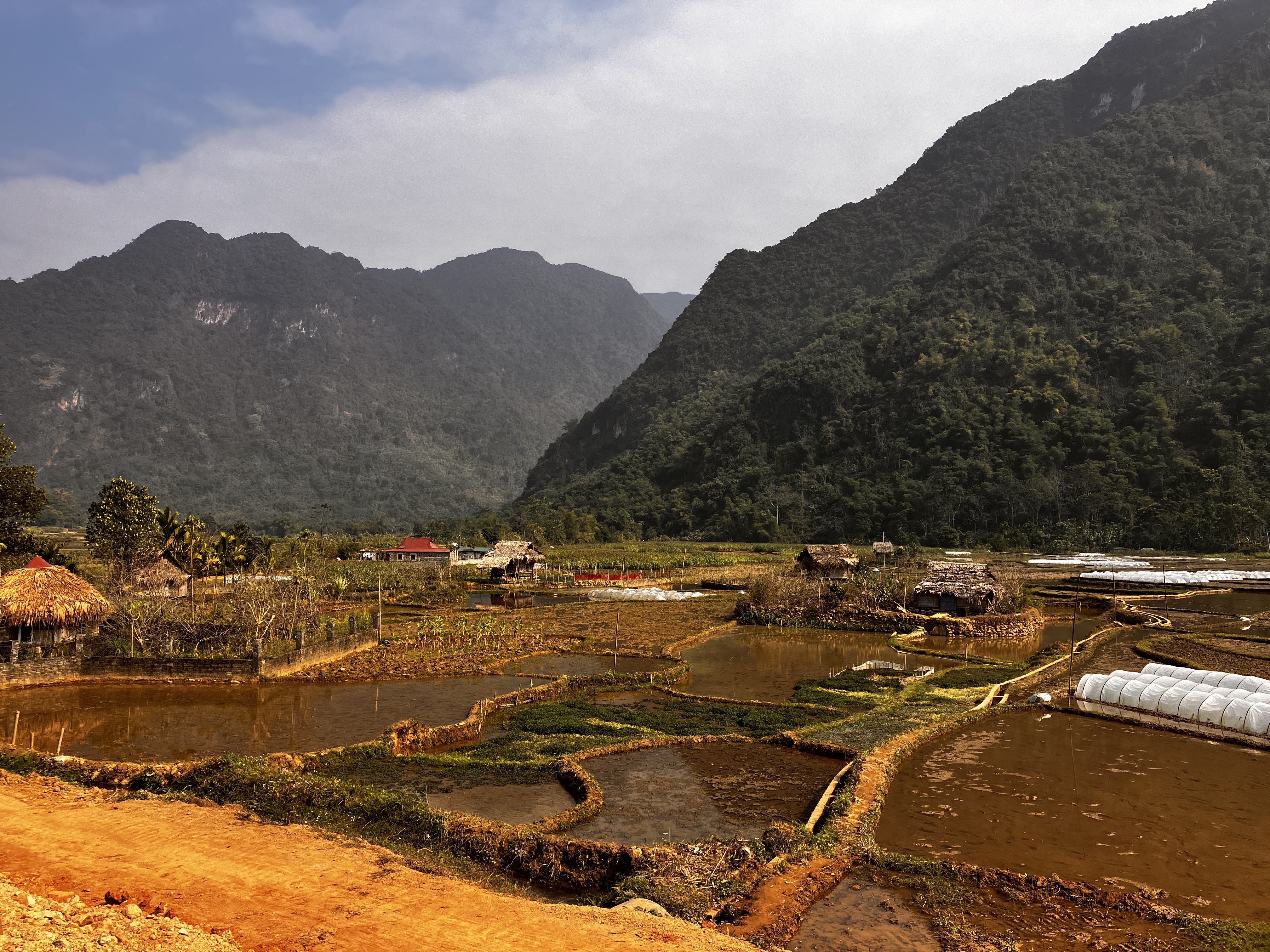

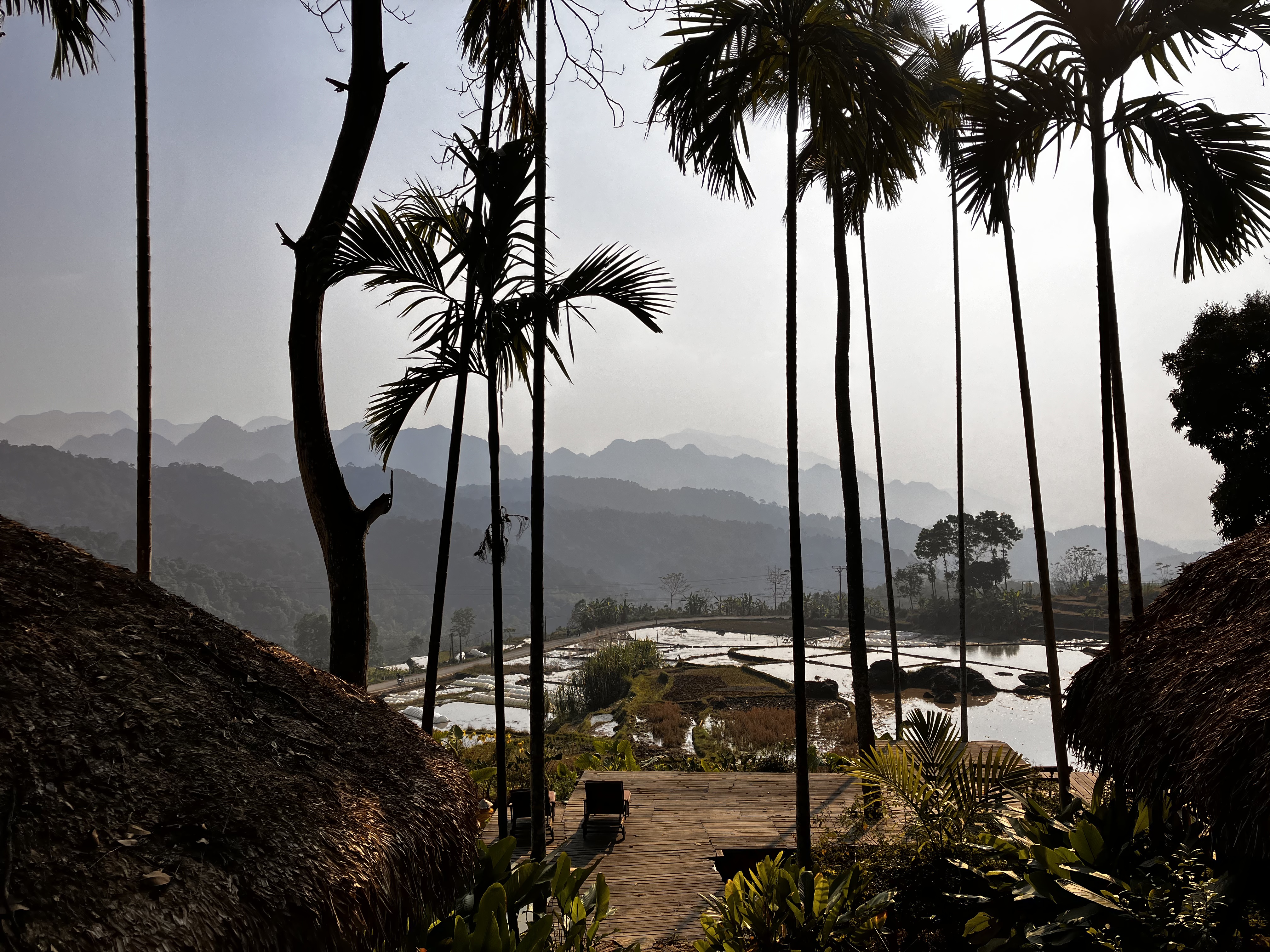
The North is probably Vietnam’s most stunning region. While some must-see spots, like Ha Long Bay, are overrun with tourists, you only need to wander a little further to find more untouched and peaceful corners. As for the locals, they aren’t the warmest in Asia, but they’re not unfriendly either. Let’s just say they have better things to do than handing out smiles left and right.
The weather definitely influenced our experience. Even though the temperatures were mild for one of the coldest months of the year, traveling for a year means accepting that you won’t always be equipped for every season. No thick down jackets or Gore-Tex hiking boots in our bags, and when the humidity kicks in, you feel it. But hey, that’s part of the adventure!
Act 3: The Center – 16/01/2025 – 23/01/2025 The Crucible of the Past
Huế, Hội An, Da Nang… Names that ring out like fragments of history. Here, just a few decades ago, the country was split in two. Here, the emperors of the 19th century ruled with absolute power. And here, even today, colorful lanterns float above the streets, suspended between tradition and modernity.
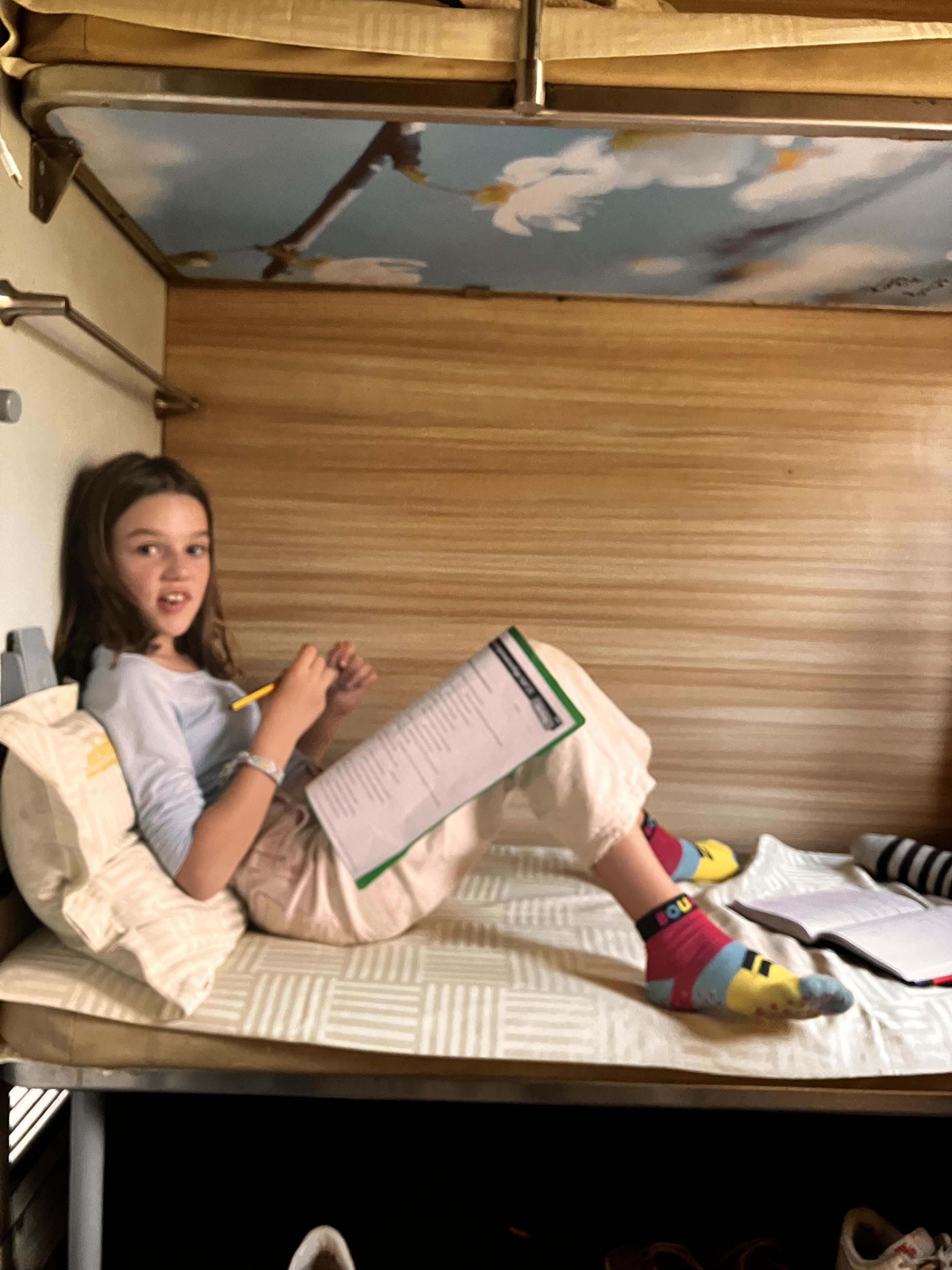
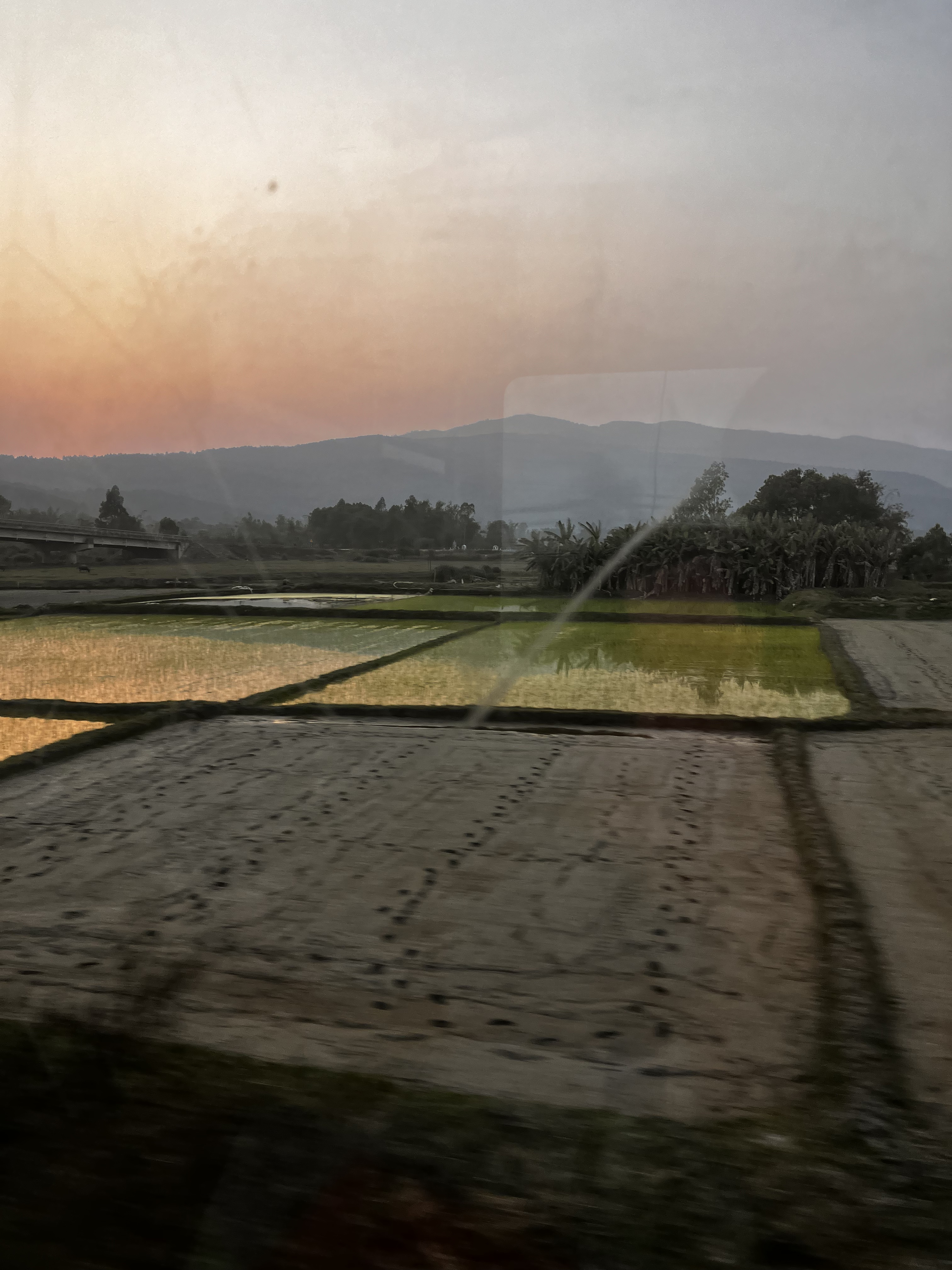
We head towards the center of the country. This time, we opt for the night train. It sounds romantic… on paper. In reality, the kids sleep like logs while I, squeezed into a bed that’s too short, struggle with the relentless clatter of the tracks. Sleep is hard to come by. So instead, I watch the night roll by until dawn, when the rice fields stretch out under a golden glow. Vietnam is one of the world’s largest rice producers, and here, between mountains and sea, water is everywhere. It shapes the landscape as much as it does daily life.

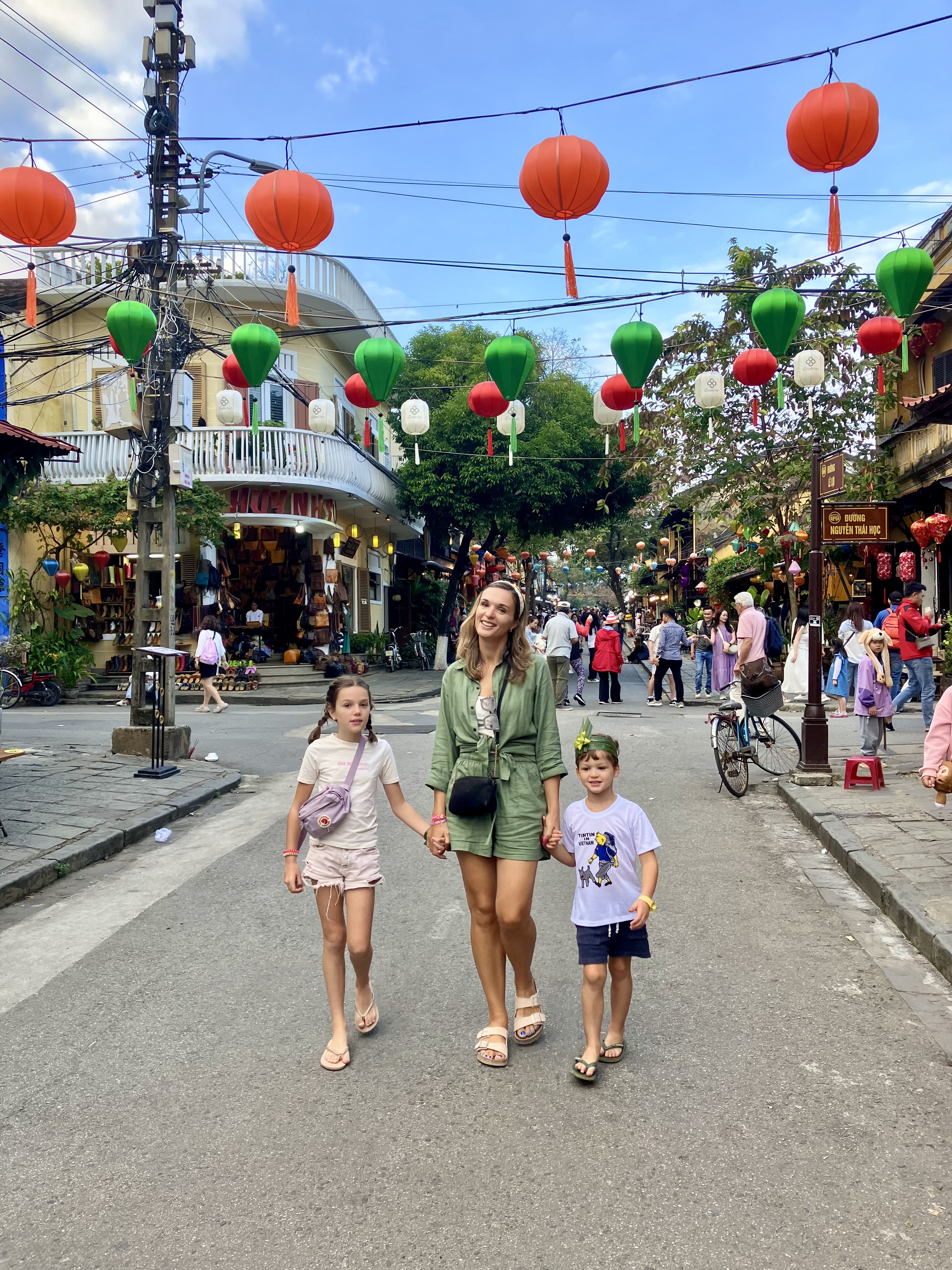
Our destination: Hội An. Once a bustling trading hub between China, Japan, and Europe, the city has traded commerce for a new kind of prosperity: tourism. After the tranquility of the North, we’re reminded just how overwhelming some Vietnamese cities can be. And Hội An is one of the epicenters. Yet, even amid the crowds, there’s something magical about this place. The hanging lanterns, the timeworn yellow façades, the scent of lacquered wood and spices… It’s impossible not to fall under its spell.

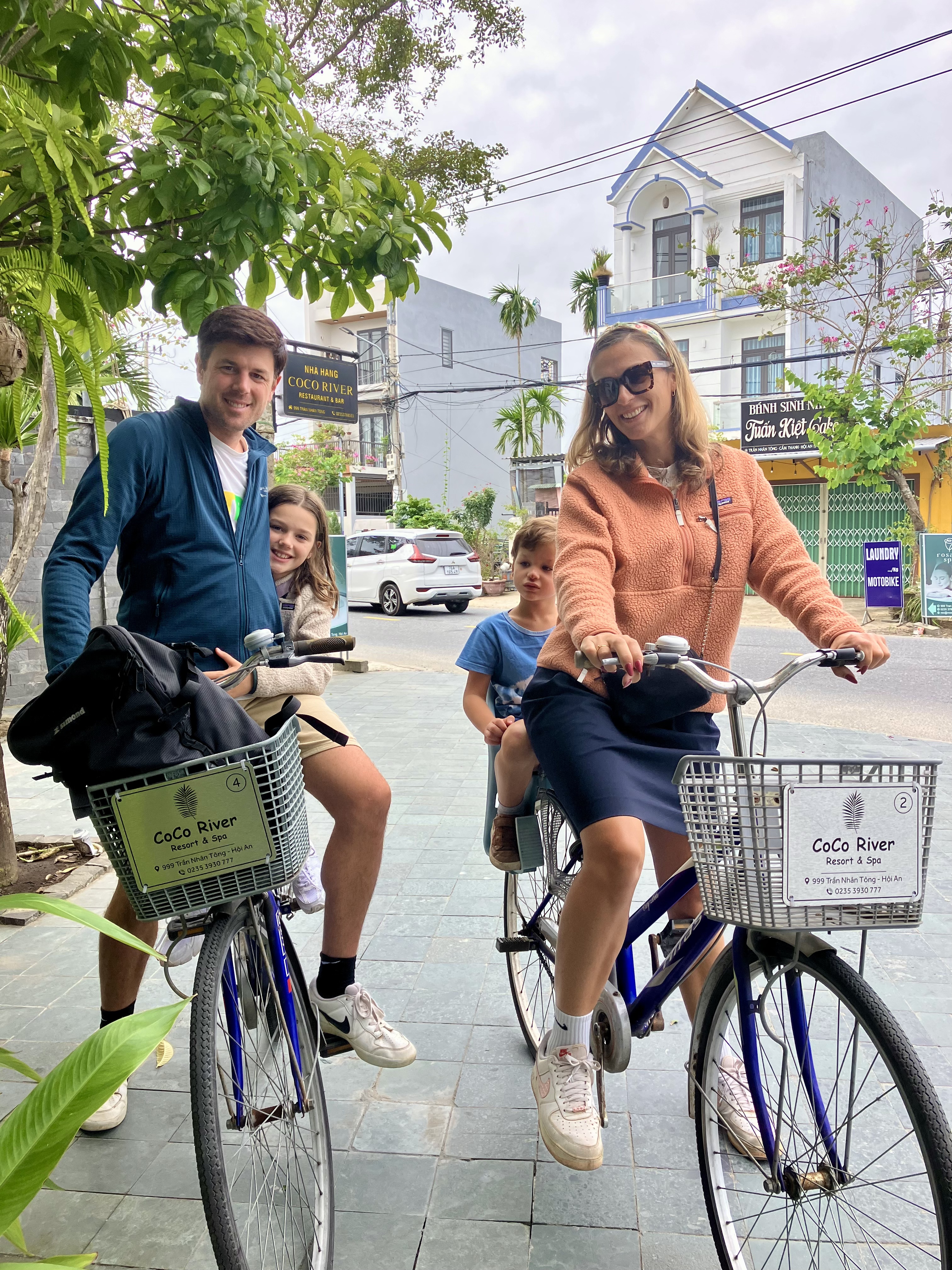
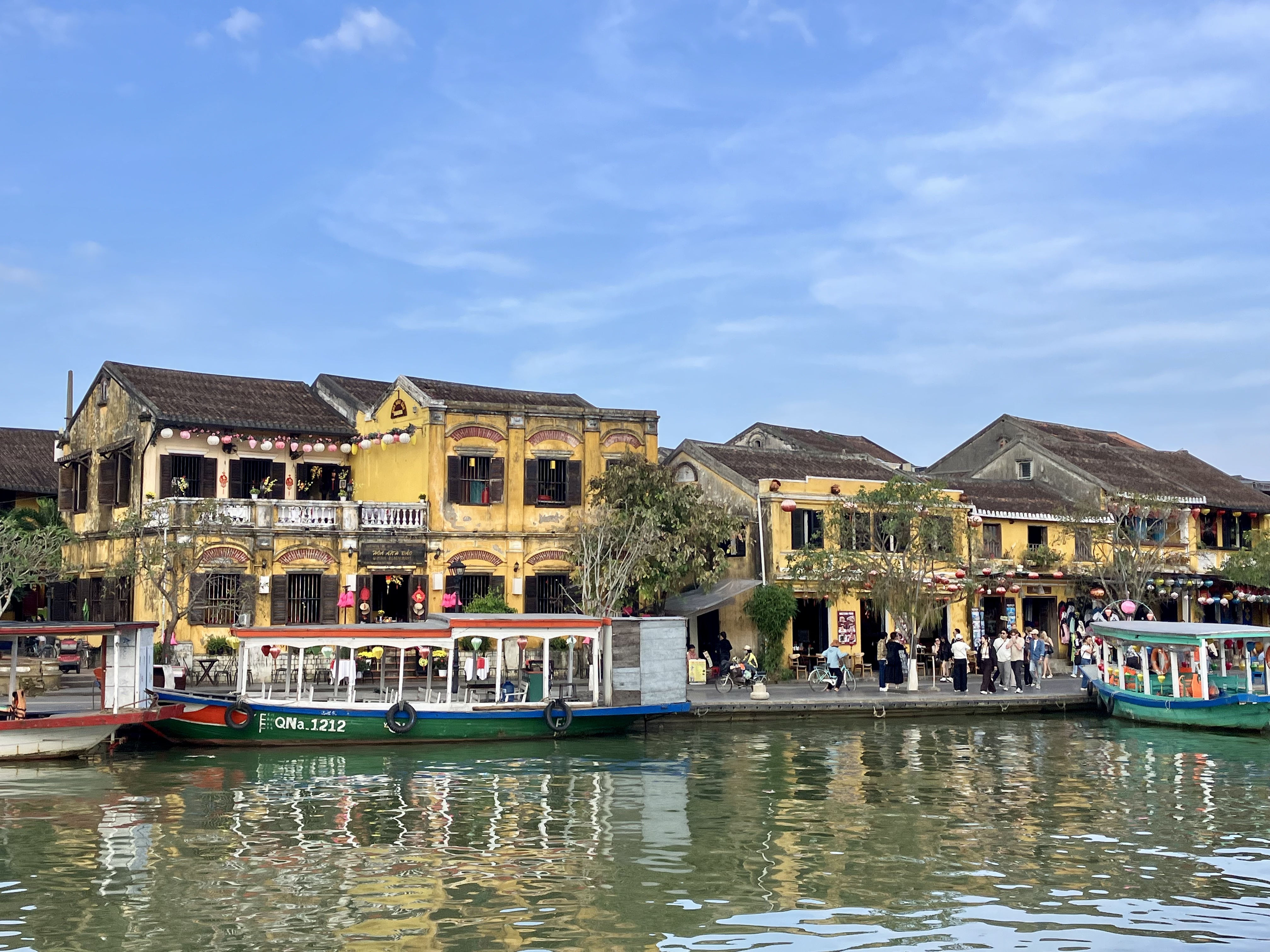
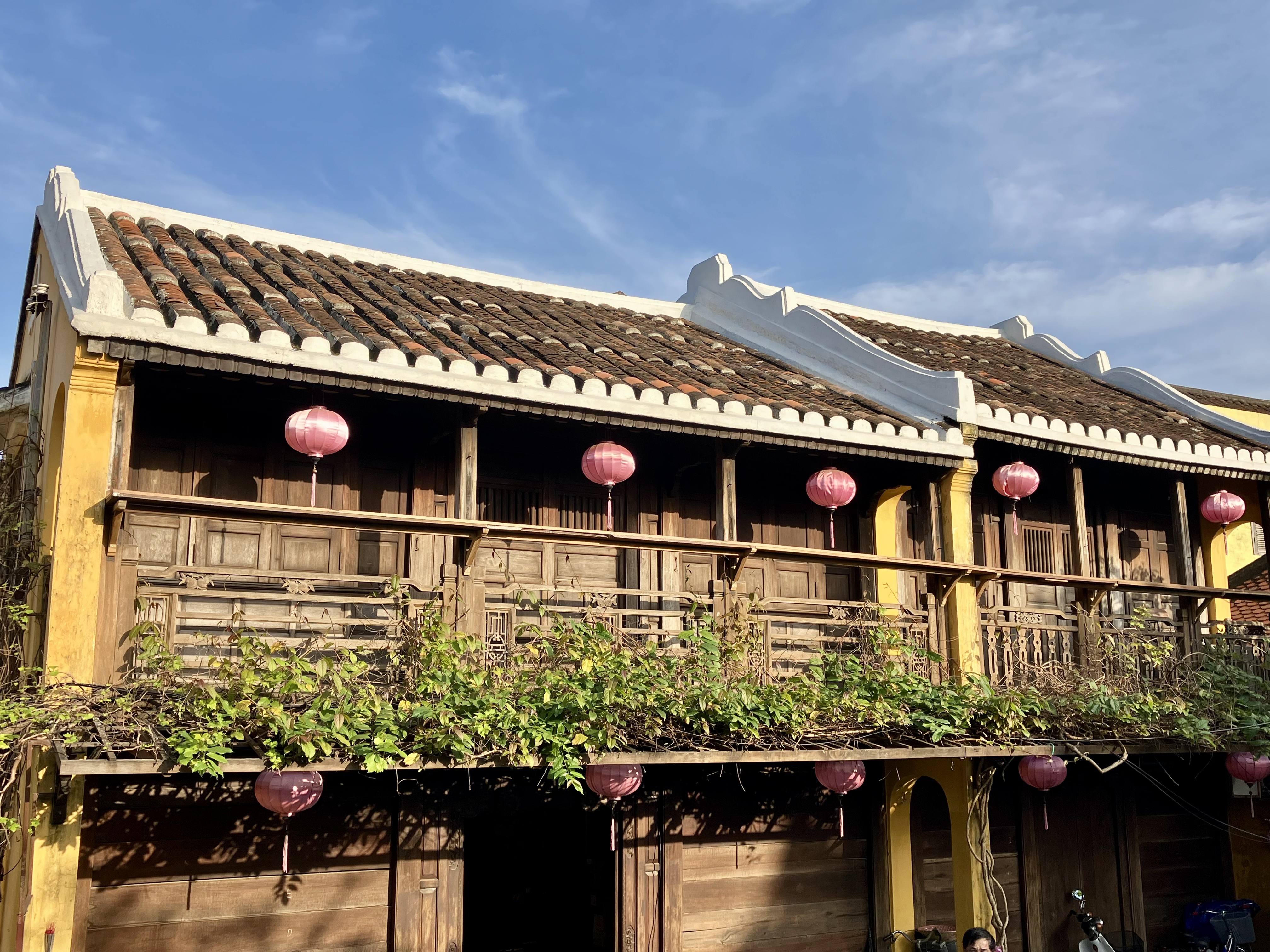
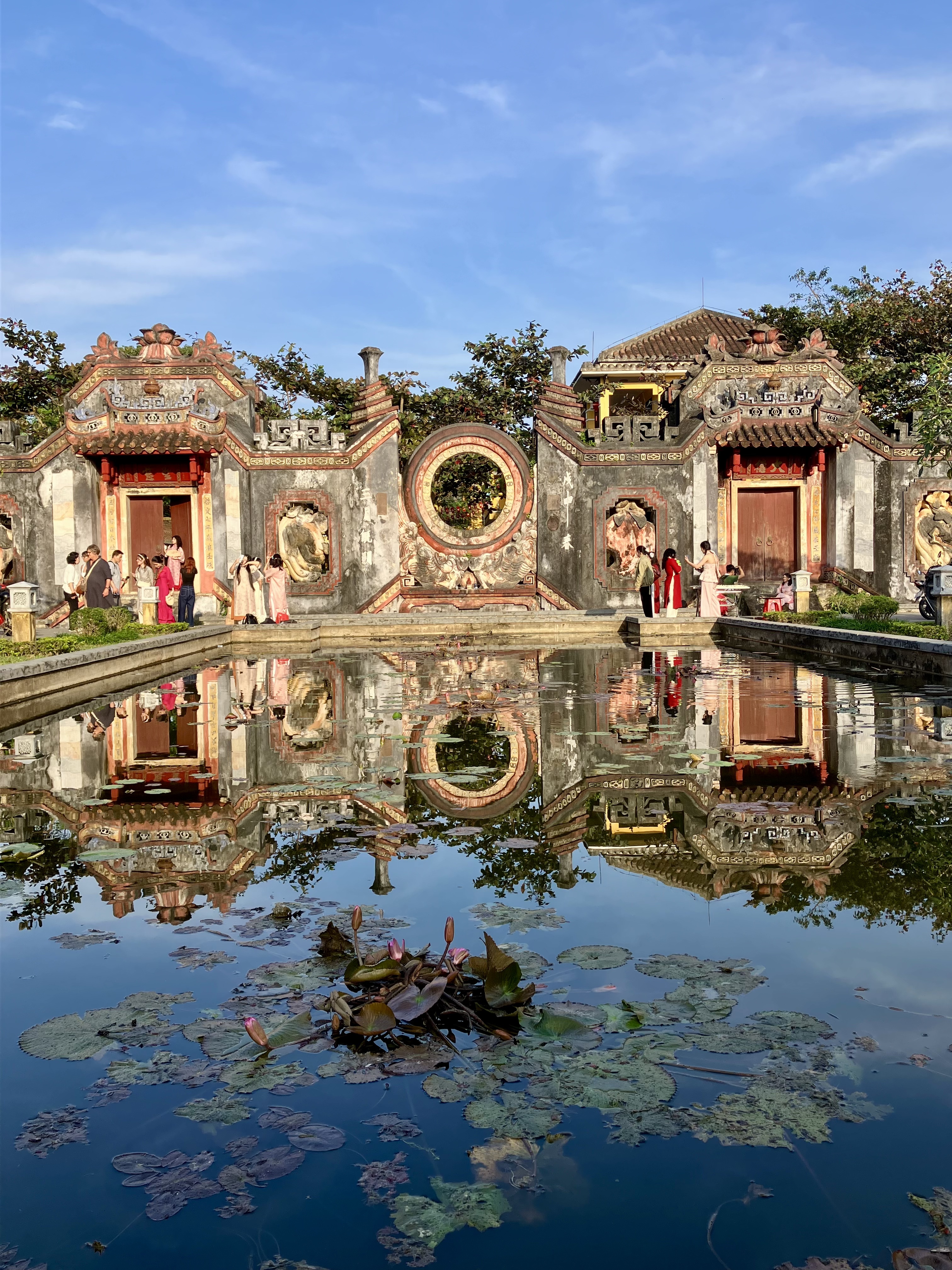
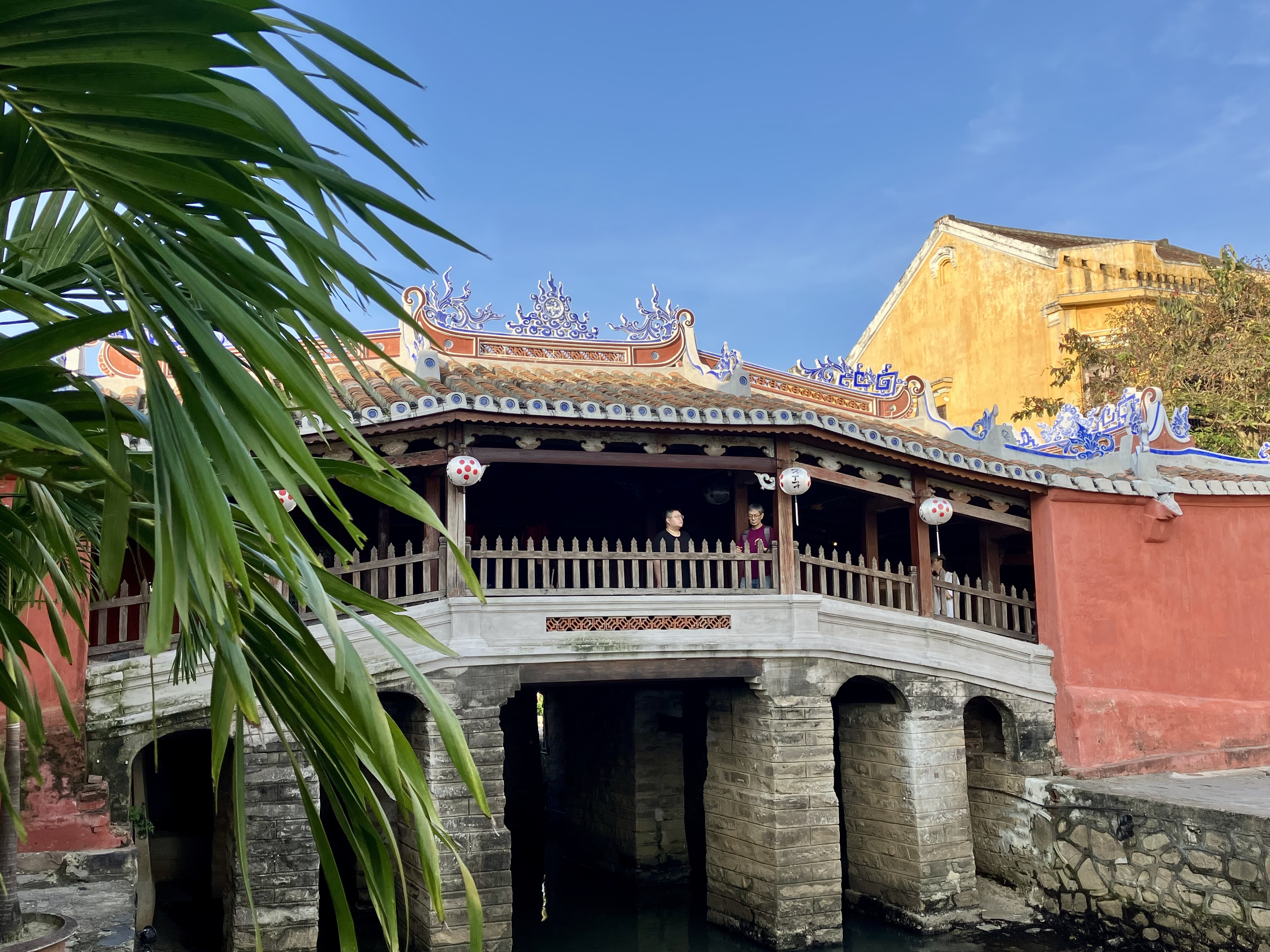
But we don’t limit ourselves to the packed streets. Hội An is also the perfect base for exploring the region. The beaches? We’ve heard they’re stunning, but with the cool temperatures, we leave them to braver souls. Instead, we hop on our scooters and escape into the countryside, weaving through rice fields and villages. After riding two-wheelers all over the place, we’re really getting the hang of it… and Nola & Matteo love it!
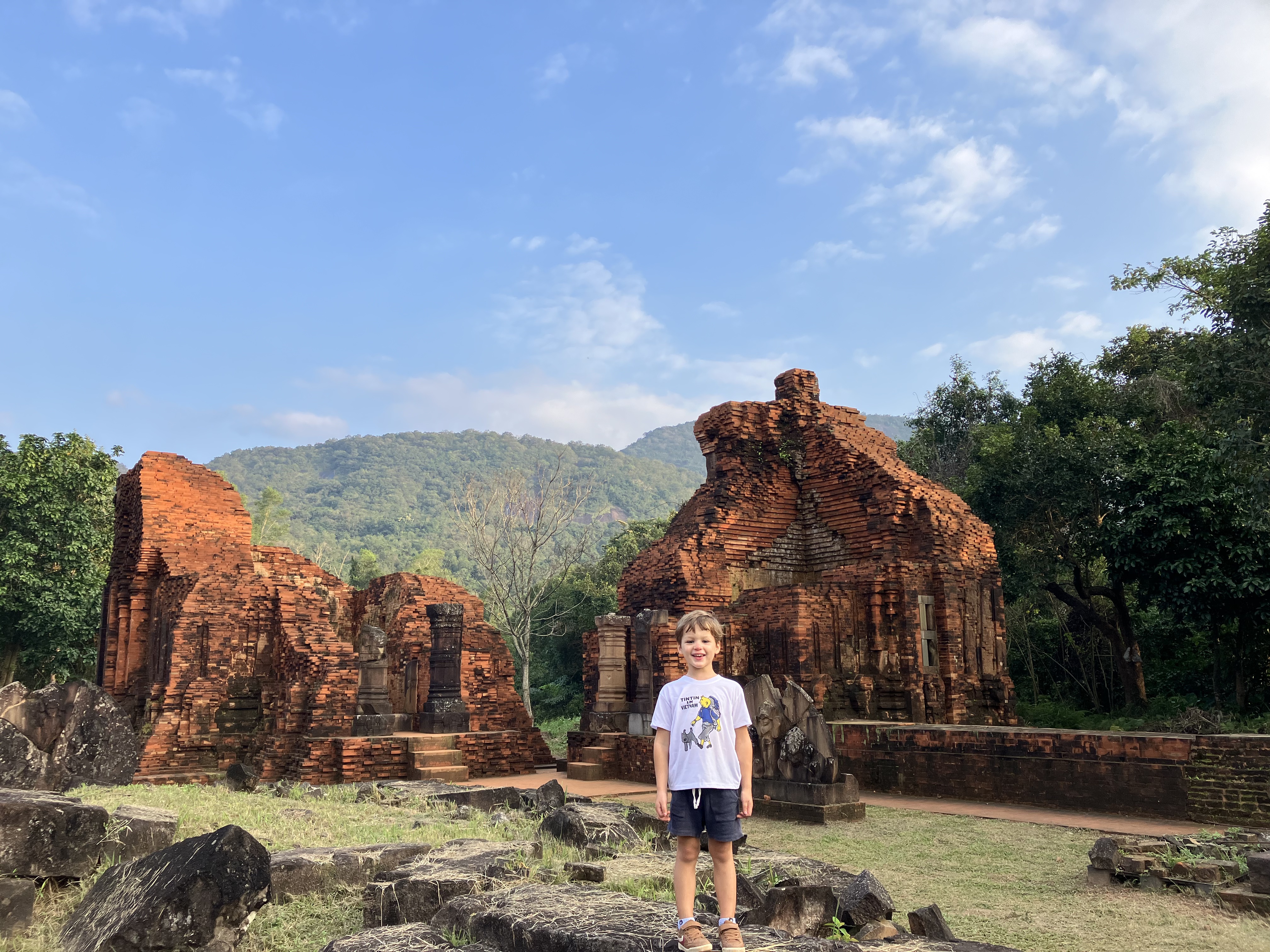
In the spirit of trying something new, we climb into a round bamboo boat—the kind that spins on itself at the slightest wrong move. A free carousel with a view of the palm trees. We laugh, we wobble, but we don’t tip over. Then, craving a bit more adventure, we head to Mỹ Sơn, a remnant of the ancient Champa kingdom. A kind of miniature Angkor: fewer temples, fewer tourists, but an equally mystical atmosphere.
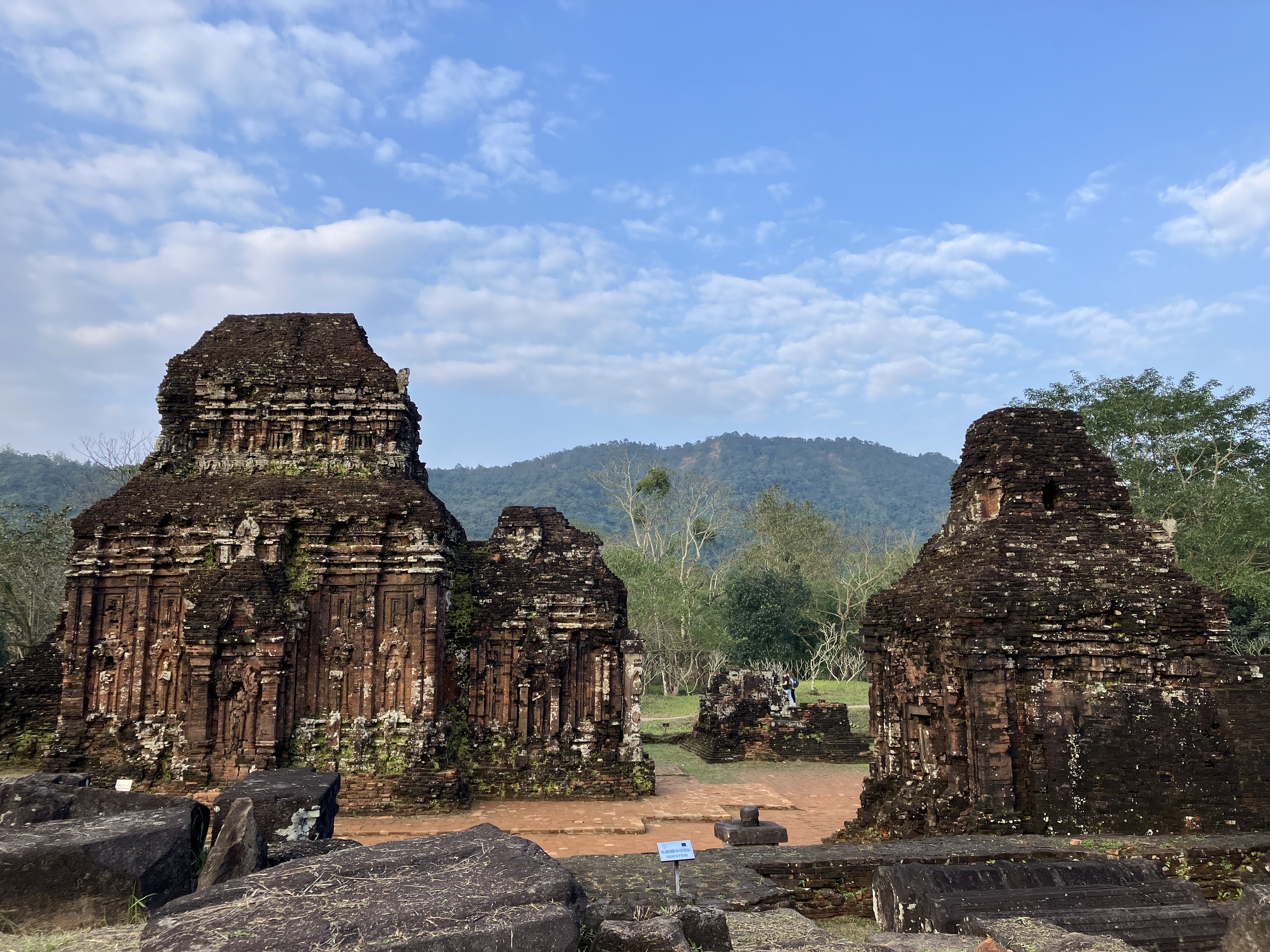
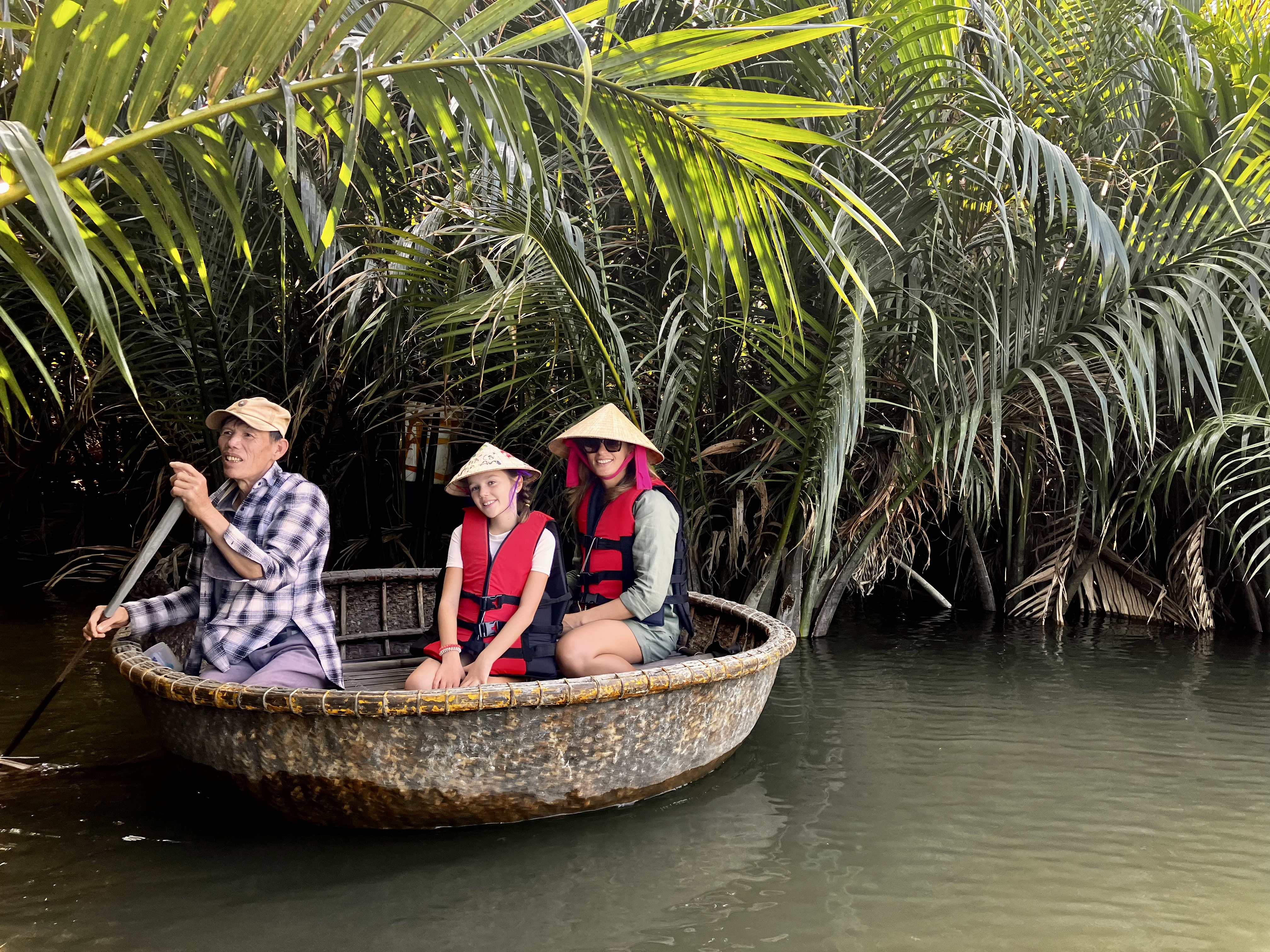

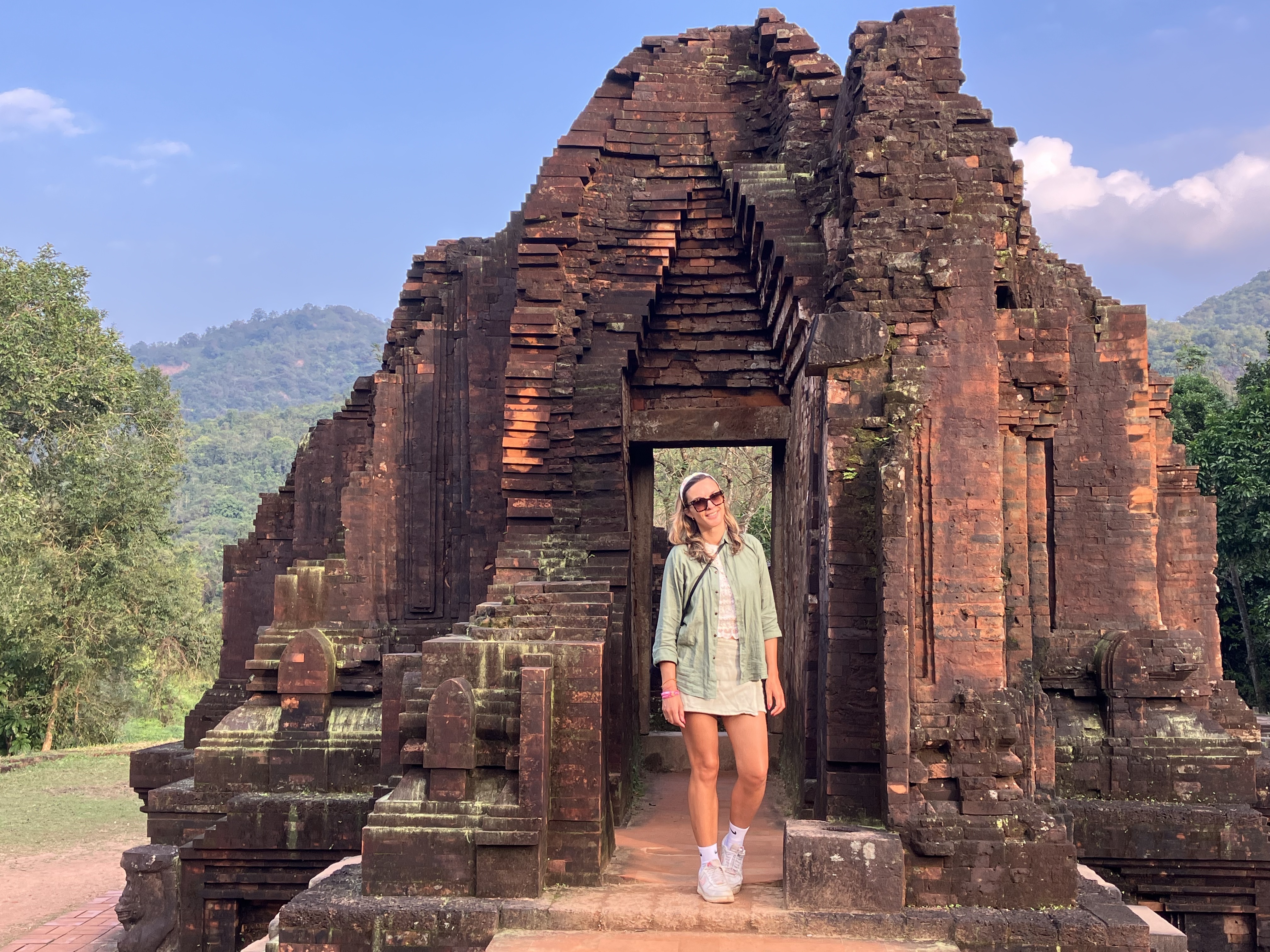
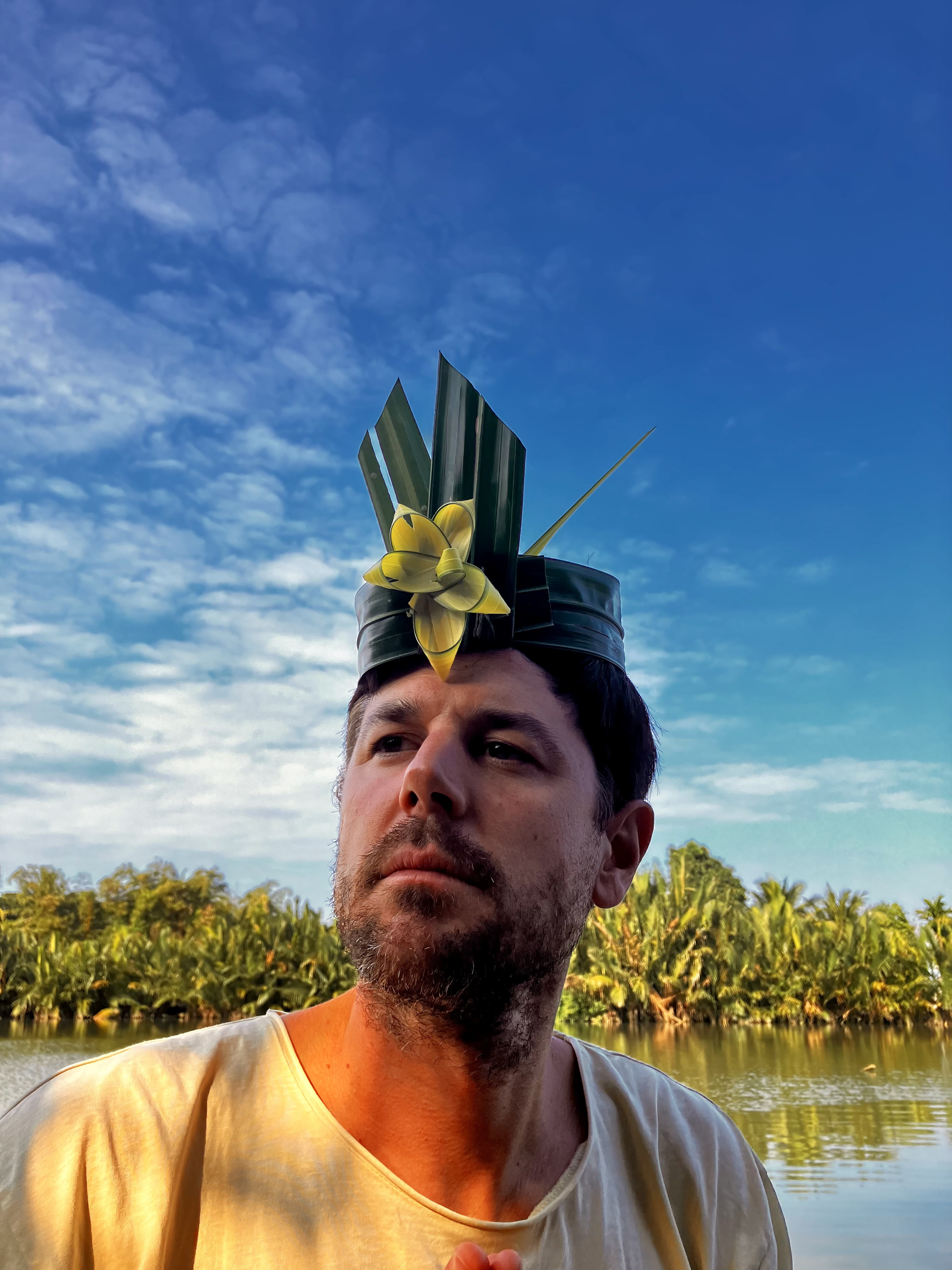
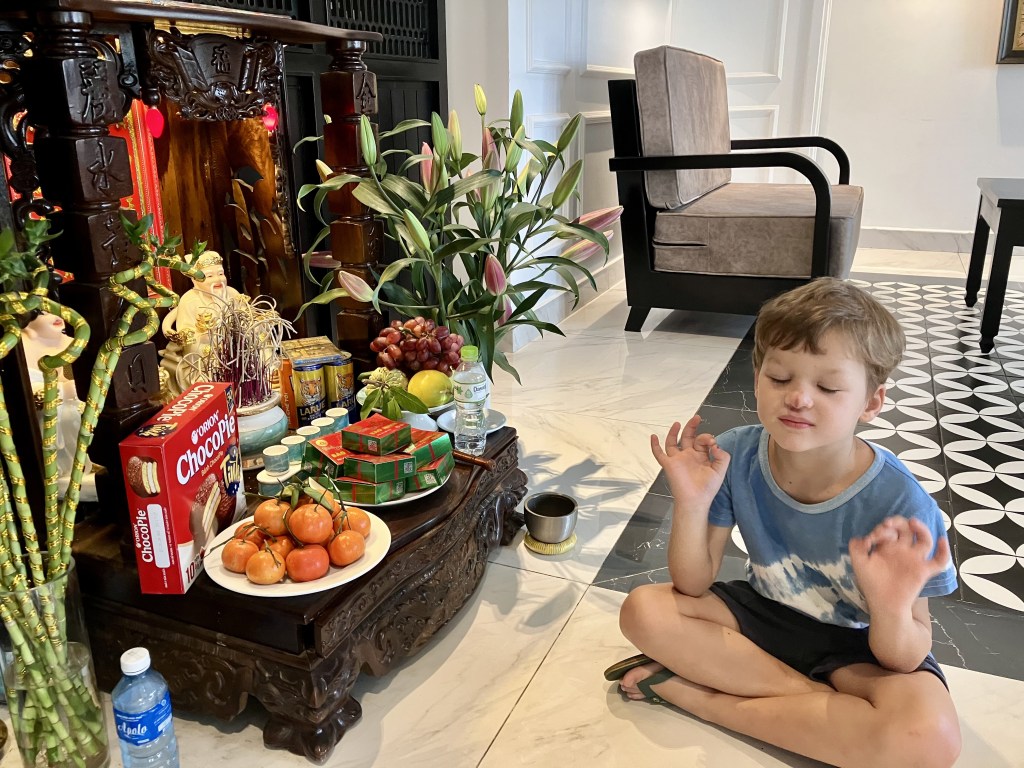
But what stands out the most these days is the sheer buzz of excitement you can feel on every street corner. Tết is approaching, the lunar New Year. Forget December 31st—it’s a non-event here. But Tết? That’s the celebration of the year. Everywhere we go, people warn us: “Be careful, everything will shut down!” “The train station will be packed—it’s Tết!” The whole country is on the move. Markets overflow with flowers and offerings, families rush to complete their last-minute preparations, and the roads are in joyful chaos. Everyone is heading home, and in a few days, all of Vietnam will come to a standstill.
Nola, looking puzzled, turns to me: “Is it just me, or do they always find an excuse to party here?” She’s not wrong. Because while waiting for the New Year, there’s another unmissable tradition: karaoke. A national sport. Anytime, anywhere, you might stumble upon an impromptu karaoke session that nearly bursts your eardrums. In bars, in restaurants, right on the street… and always with a lot (a lot) of alcohol.
No one complains, no one protests. But around 10 p.m., everything suddenly stops. It’s the law. A brutal silence after hours of chaos.
A contrast as striking as Vietnam itself.
So, Vietnam? It’s the place where we (kind of) slowed down. Well, in a round-the-world-trip way: staying three or four nights in the same spot, taking the time for school without rushing too much, and even—the ultimate luxury—starting some days at noon.
The country is undeniably beautiful. But let’s be honest: it won’t make it into our top 5. Is it Vietnam’s fault? A little. Ours? Also. A sometimes more distant population, omnipresent pollution, a winter that never let us go, and a staggering density of tourists for a country this size… We explored, we loved many things, but we’re not leaving with that electrifying feeling of an absolute favorite. And that’s part of travel too: not everything has to be a revelation.

 365 days of summer
Leave a comment