February 11, 2025 – Crossing the Pacific Ocean Towards Chile, 13-Hour Flight
Our plane slices through the sky, lost above the vastness of the Pacific. I don’t know if you’ve ever fully grasped how immense this ocean is—nearly 20,000 km long, 3 times the length of the Atlantic. 12 hours of flying over an endless sea, not a single island in sight. It’s our second time crossing it, and that eerie sensation of being suspended over nowhere still lingers.
I also know the next few days will be tough—thanks jet lag. Ten hours is no joke. But I find some comfort in knowing that the ones who’ll recover the fastest will, unsurprisingly, be Nola and Matteo.
Our emotions are mixed—a blend of excitement, apprehension, and impatience. Because this flight marks a turning point in our journey. Our adventure is a novel in two volumes. We’ve closed the chapter on Asia and Oceania, and now we’re starting Volume Two: the American continent. And what a volume it will be! Five and a half months of adventure across Chile, Brazil, Paraguay, French Guiana, Suriname, and Canada. A wild mix of cultures, landscapes, climates, and languages—Spanish, Portuguese, French, English, Dutch.
The plane begins its descent. Land appears—rugged, raw. Chile awaits, a country stretched like a thread between the Pacific and the Andes.
Welcome to the next chapter of our journey!
February 12 – Arrival on Easter Island
Just one night in Santiago, right next to the airport, and we’re off again. No alternative—there’s only one way to get to Easter Island: the daily flight from Santiago.
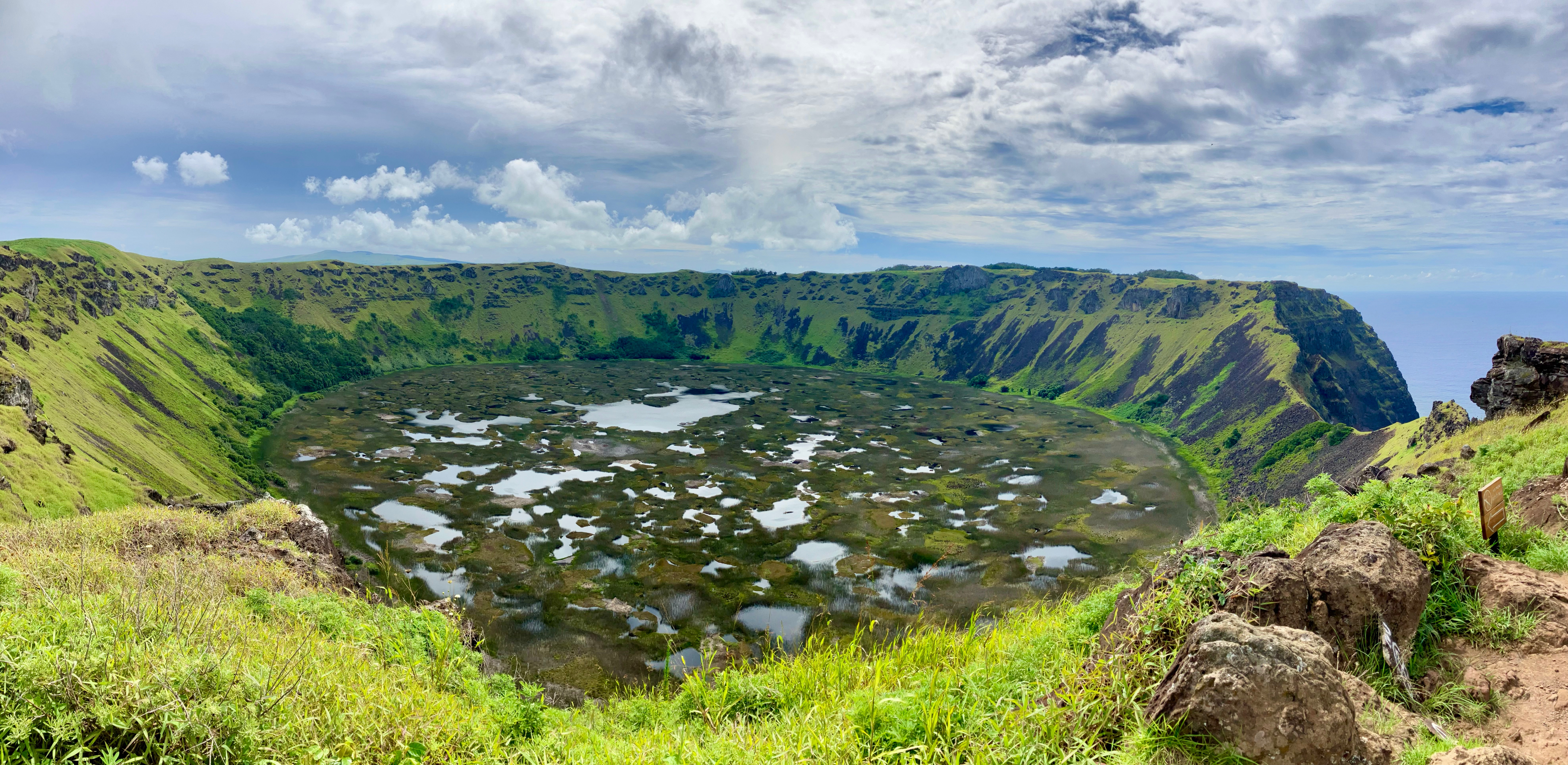
The moment we step off the plane, our first impression confirms what we saw from above—Easter Island is a rock lost in the middle of nowhere. Literally.
3,500 km from Chile, over 2,000 km from the nearest inhabited island (Pitcairn, 50 inhabitants—not exactly a party hotspot), it takes a week by boat to get here. No wonder it’s considered one of the most isolated places on Earth. The island consists of just one village, 8,000 people, 168 km²—a tiny speck in the vast ocean.

Its airport is just like the island: tiny. Well, except for the runway. That one was funded by NASA in the 1970s, just in case a space shuttle needed a backup landing site.
The plane literally parks right in front of the terminal—after all, it’s the only flight of the day.
Outside, our hostess is waiting for us, a bit overwhelmed: she manages three rentals at once. Busy day! She had planned for 2 cars to shuttle us to our apartment, just 5 minutes away… but one of the cars has mysteriously disappeared!
I still wonder how that’s possible? There’s 1 single plane a day, no traffic, and a five-minute drive. This is the third shuttle we’ve taken in 24 hours since arriving in Chile, and not one has been on time. I’m starting to think it’s a local tradition here. Maybe even an initiation rite.
February 14 – Easter Island, the Moai
Guess what? Our guide is an hour late. The wait is long, punctuated by sighs and exchanged glances. But when she finally arrives, without a single word of apology, our frustration quickly fades.
Because standing before us, there they are.
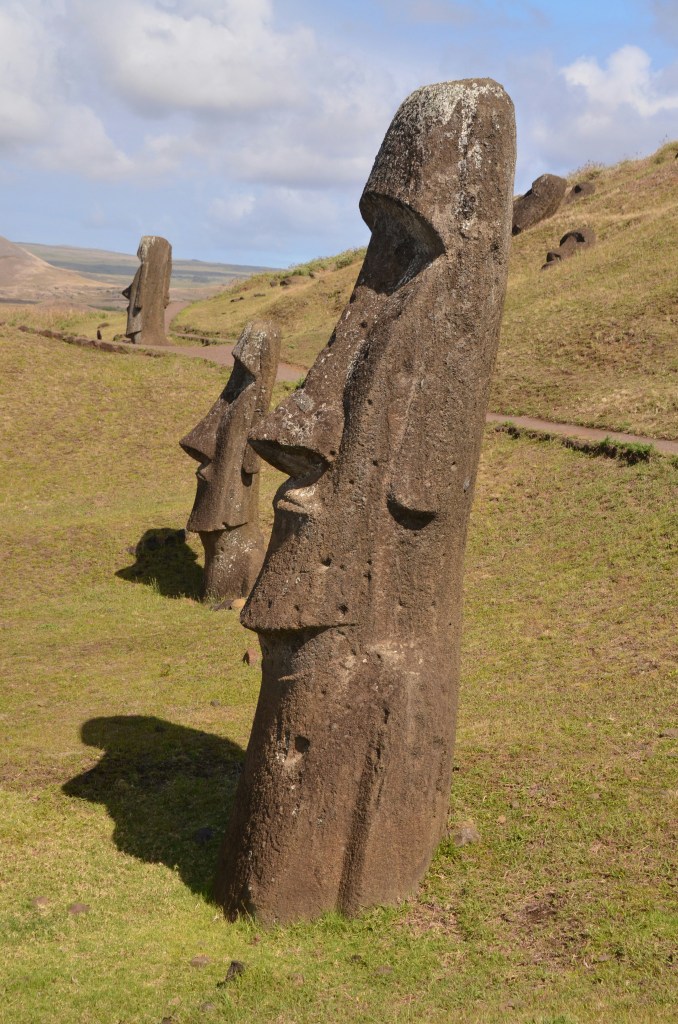
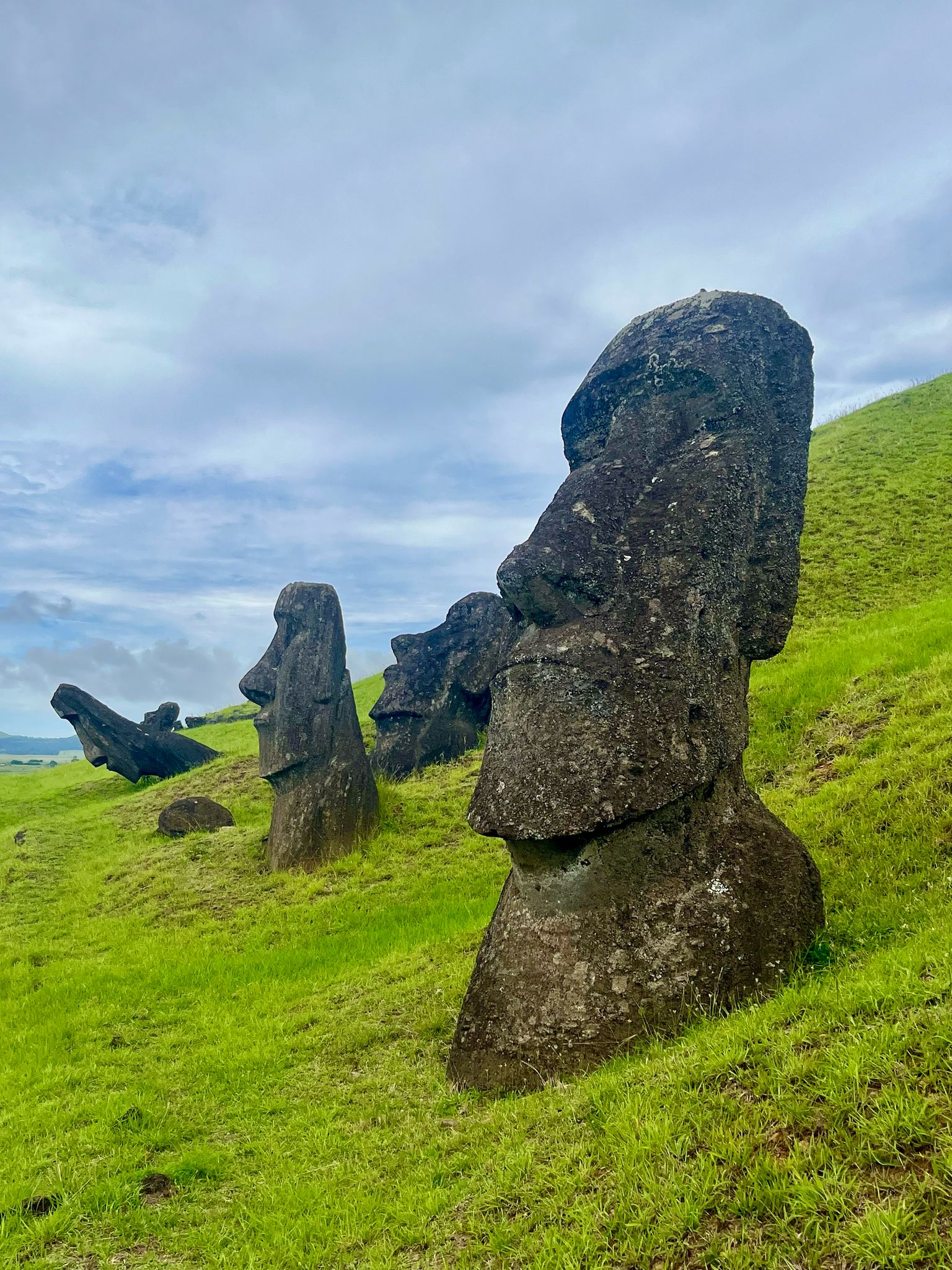
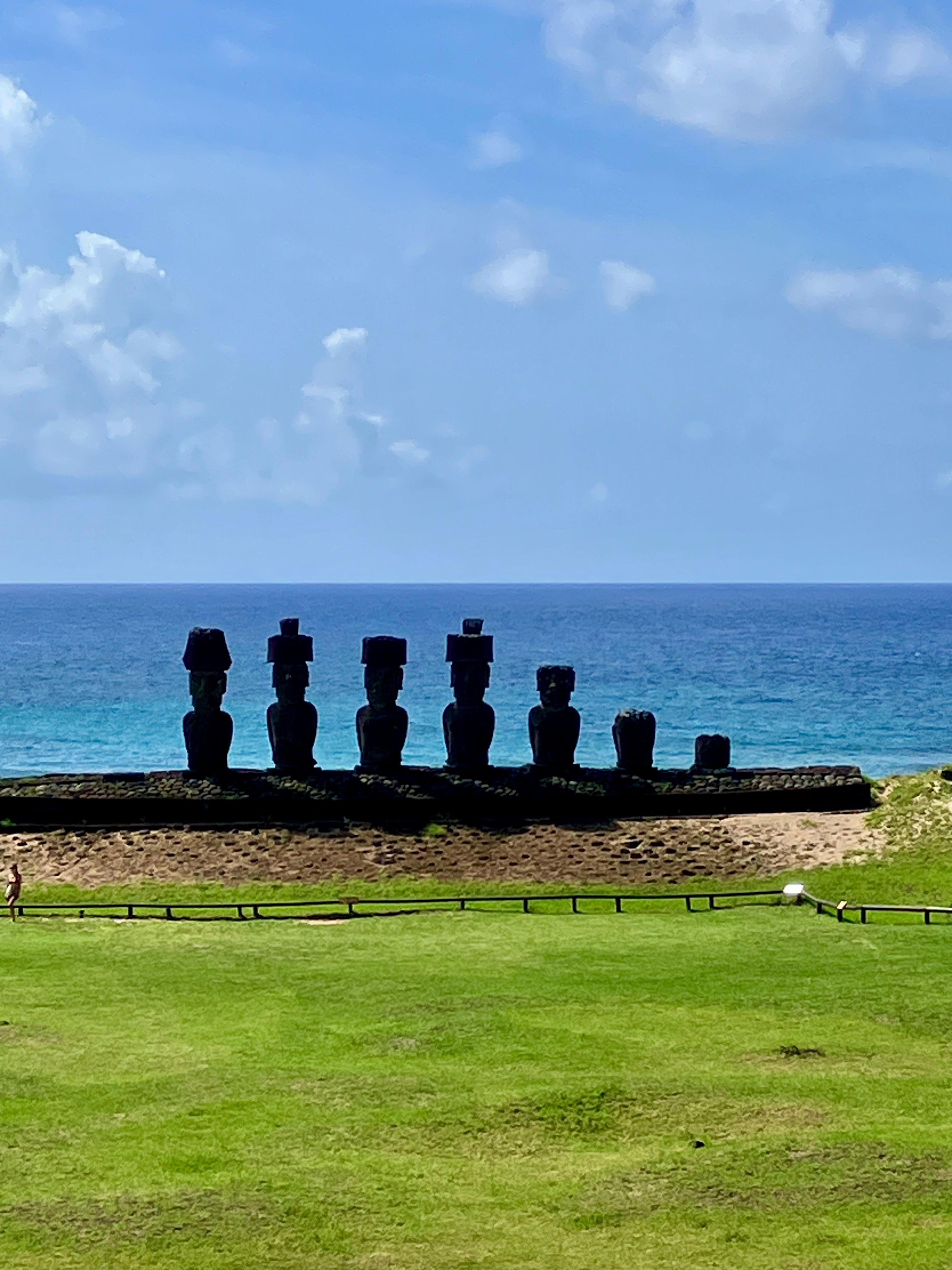
The Moai. These stone figures, frozen in time, stare at us with their empty gaze. Their presence is overwhelming, magnetic. We’ve seen them a hundred times in photos, yet nothing prepares you for the shock of seeing them rise from the landscape—imposing and solemn.
We are at the quarry, the place where these giants were carved. The site is majestic, and to think that we’re only seeing half their bodies—the rest remains buried underground.
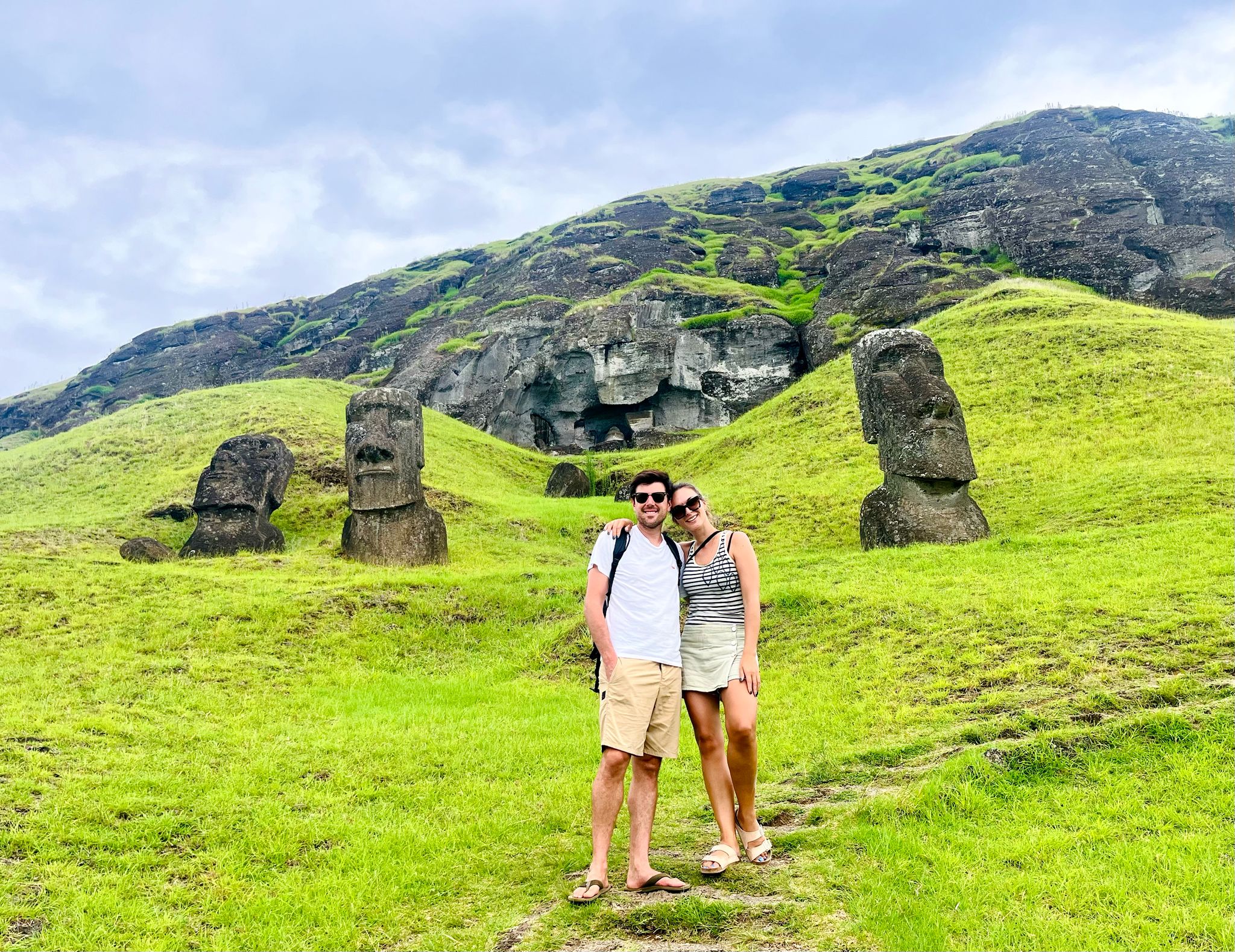
Another must-see (and there are many, but I’ll leave them for you to discover someday) is Ahu Tongariki, the largest ceremonial site on Easter Island. Fifteen Moai, perfectly aligned, dominate the horizon—imposing remnants of a time when the island’s 21 villages each had their own stone guardian and held ceremonies here. These statues represented deified ancestors, watching over their people. They all face inland, turning their backs to the ocean, looking over the inhabited lands.

But in the 18th century, everything changed. Beliefs shifted, tribal wars broke out, and the Moai were gradually toppled, some disappearing beneath the earth. The once-thriving Rapa Nui society plunged into internal conflicts and resource depletion.
The arrival of Europeans in 1722 marked another turning point. By then, the island’s population had already dwindled to 2,000–3,000 people, far from the 12,000–15,000 of its golden age. But the real devastation came in the 19th century, when imported diseases and Peruvian slave raids reduced the population to just a few hundred survivors.
How many people actually lived here before the decline? What exactly caused it? How were these statues—some weighing dozens of tons—moved across the island?
So many unanswered questions, surrounded by countless theories but no certainties. Some ancient writings have survived, but no one has ever deciphered them. The rest of the story has been lost to time. And perhaps it’s this lingering mystery that makes Easter Island so fascinating.
February 16 – Easter Island, 8:30 AM
I walk along the road, searching for a bakery. It’s 8:30 AM, and the sun is just beginning to rise. A bit late, perhaps, but here, the sun also sets at 9:30 PM. Long days to enjoy… and no guilt for staying in bed a little longer in the morning.
The village is incredibly quiet. I pass more stray dogs and wild horses than people. For a place known all over the world, it’s surprisingly peaceful. And what a contrast with Asia—especially Vietnam—where the chaos begins at 6 AM like a well-rehearsed symphony.
I follow a bumpy road riddled with potholes—and yet, this is one of the main streets of the island’s only village. And when I say village, I mean it: two main streets, a few side roads, and in twenty minutes, you’ve walked it all.
Oh, and do you know why it’s called Easter Island? No?
Because in 1722, a Dutch navigator landed here… on Easter Sunday. That’s it. Naming places wasn’t exactly an art back then. Unsurprisingly, the locals much prefer the island’s original name: Rapa Nui.
February 17 – The Annual Festival
In February, Easter Island pulses to the rhythm of Tapati, a timeless festival celebrating the Rapa Nui heritage. Two weeks of competitions, music, dances, and spectacular challenges.
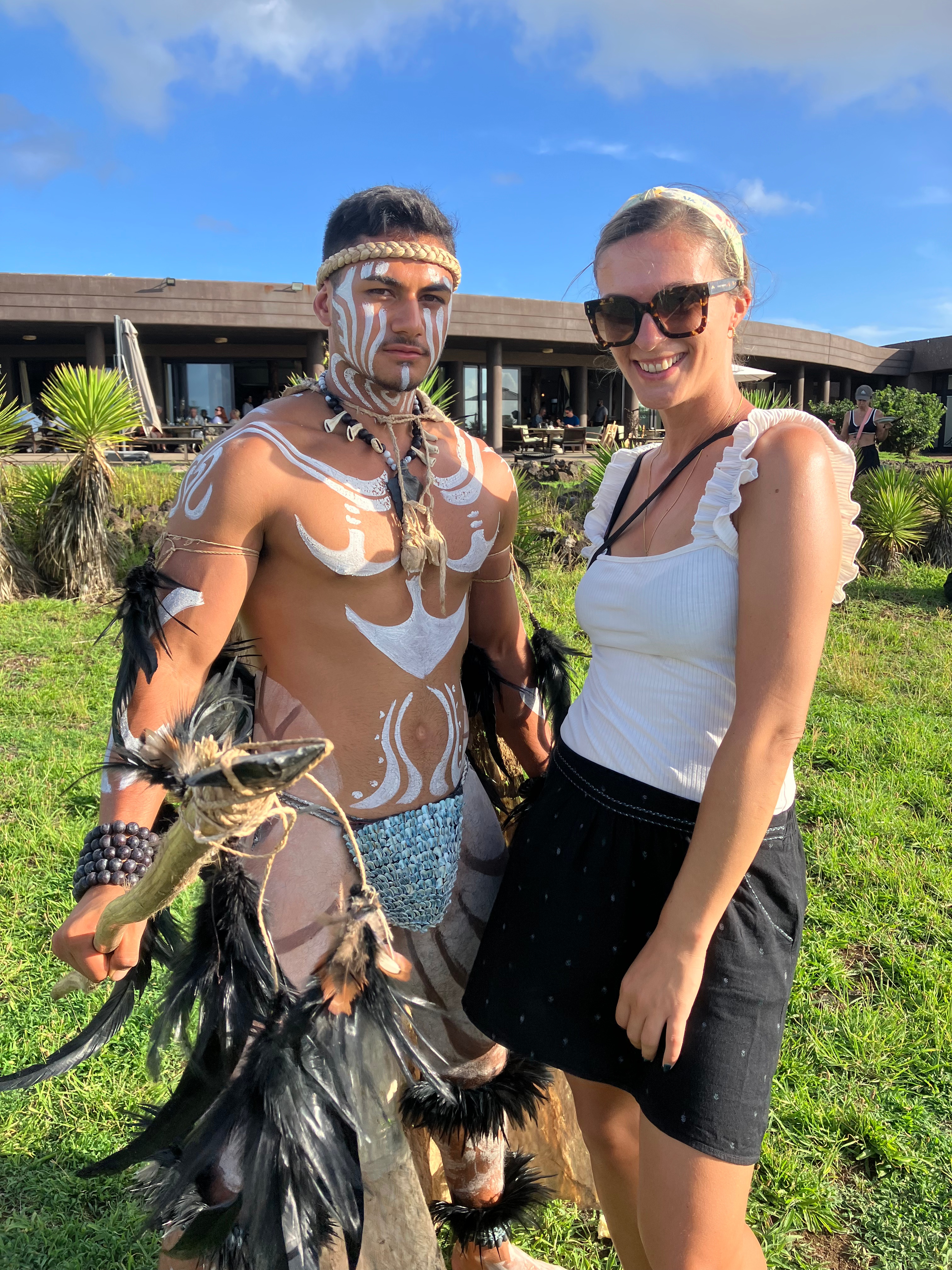
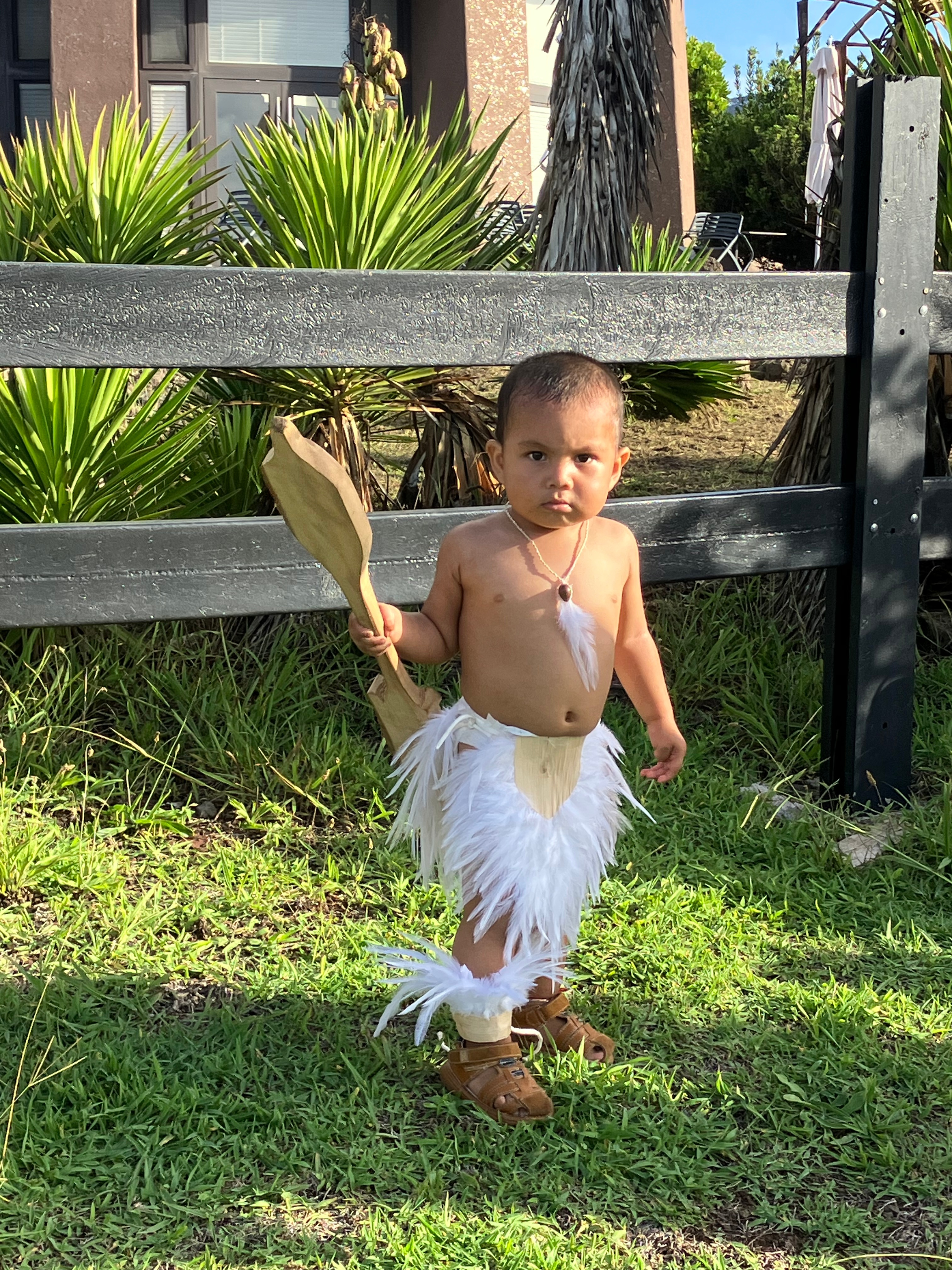
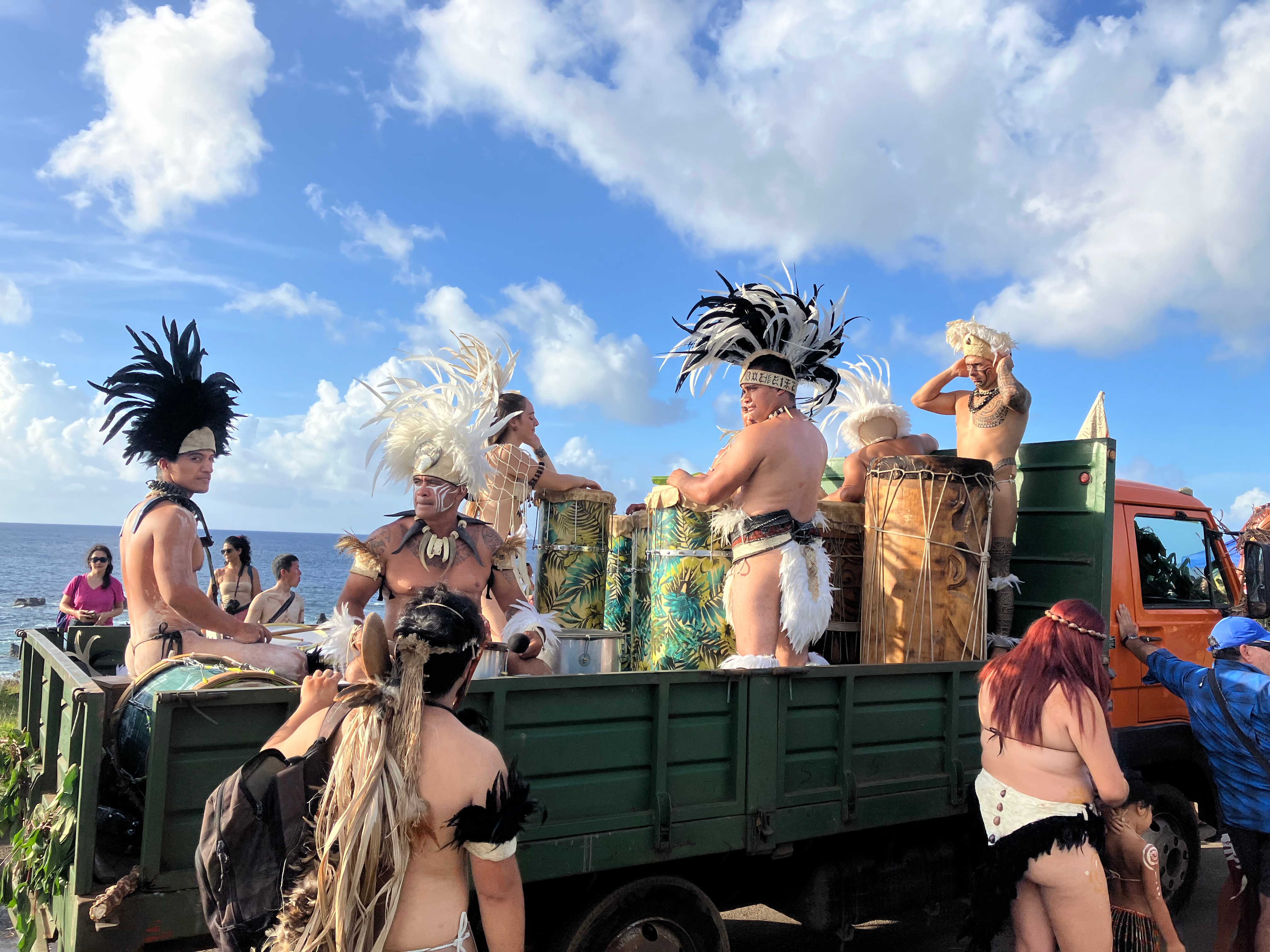
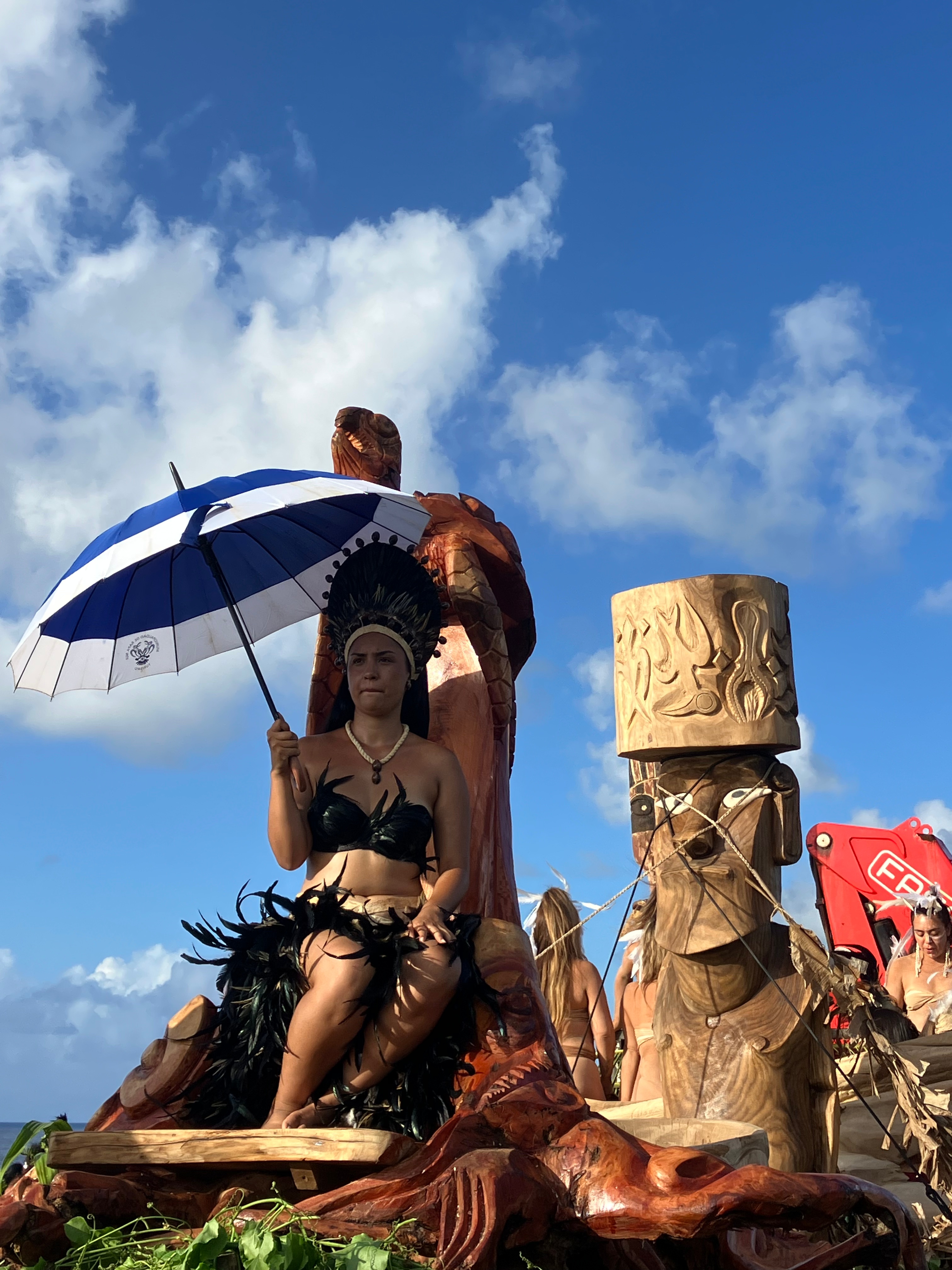
From what we saw, it felt like a giant carnival mixed with the Olympics—Easter Island edition. Canoe races, banana-trunk sledding down mountains, stone carving, parade floats…
And us, in the right place at the right time. Talk about luck!
February 19 – Easter Island, Heading to the Airport
I chat with our driver and ask him my favorite question of this trip:
“Are you happy?”
A small “yes” escapes his lips. He pauses, searching for words.
“Life here is expensive. You have to earn a lot to live comfortably. And then…” He hesitates, before giving a half-smile and adding:
“It’s a bit like the movie Groundhog Day here. Every morning, you wake up, and it’s the same day all over again. You see the same faces, walk the same streets… You really have to make an effort to break the routine, or else you just drift off.“
He looks at the road ahead, then continues, more seriously:
“And then, there’s the Chileans. They don’t understand that we don’t feel like we’re part of Latin America. We are Polynesians. We have a different culture, a different history, a different way of seeing the world.
Here, we speak Spanish, but our hearts beat to the drums of Rapa Nui. We dance like in Tahiti, we pray to our ancestors, we live by the rhythm of the ocean. Chile? It’s a distant country, an administration, a passport… but it’s not our soul.“
Our plane takes off for the mainland, and we leave Easter Island after a week with the feeling that we’ve touched something rare, something unique—a timeless moment that will stay with us forever.
 365 days of summer
Leave a comment