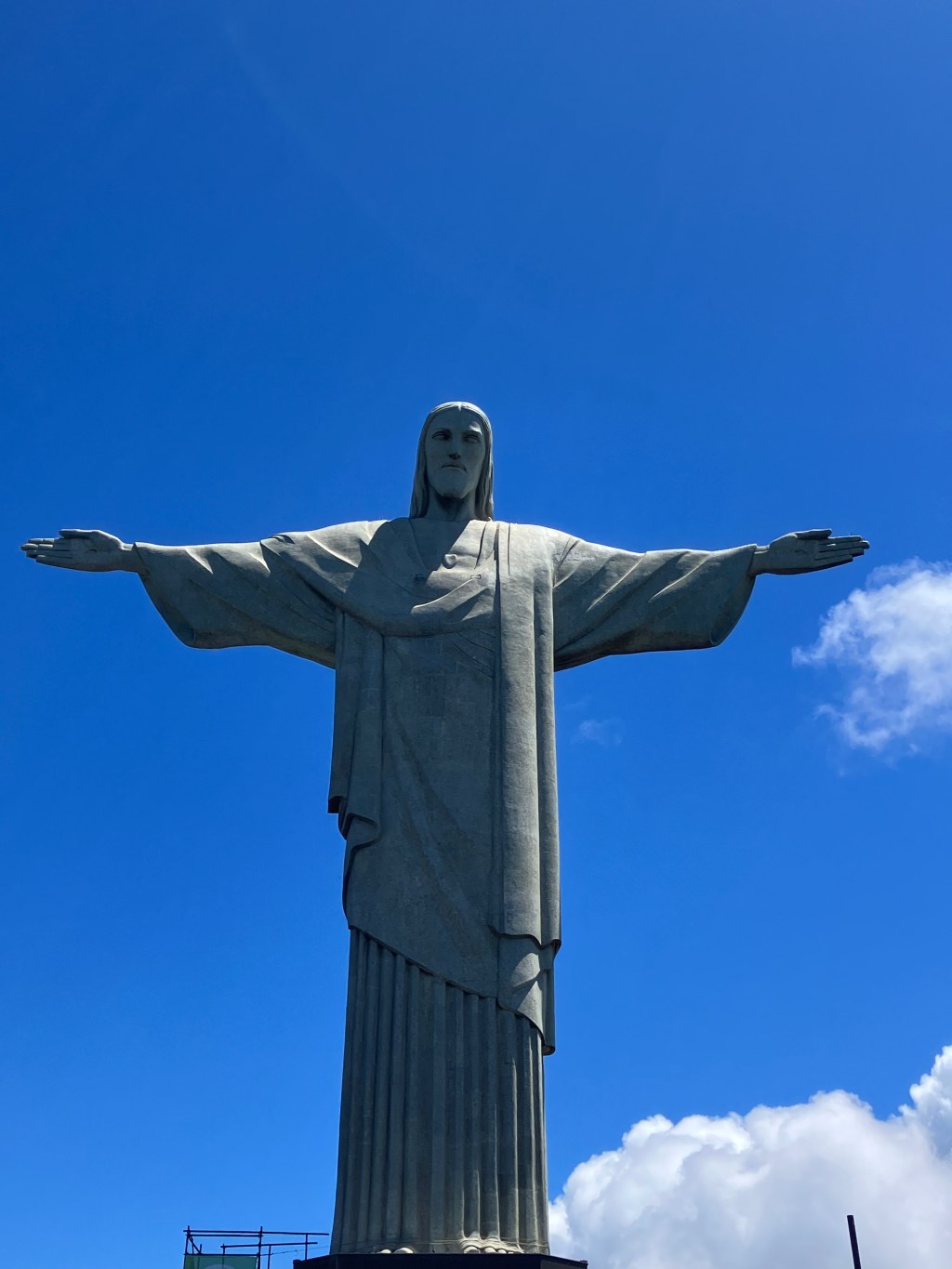
Let’s be honest: before arriving in Brazil, we had a few doubts.
What if the country turned out to be too dangerous?
What if two and a half months was too long, too repetitive?
What if… it just didn’t click?
Spoiler alert: we couldn’t have been more wrong.
Second confession: I struggled for a long time to figure out how to sum up a country this vast, this full of contrasts, this alive.
Because Brazil is 8.5 million square kilometers — that’s twice the size of the European Union — and home to over 200 million people.
It’s the fifth (or sixth) most populated country in the world.
From Europe, when we think of South America, we often picture Spanish, the Andes, Machu Picchu, tango, or ceviche.
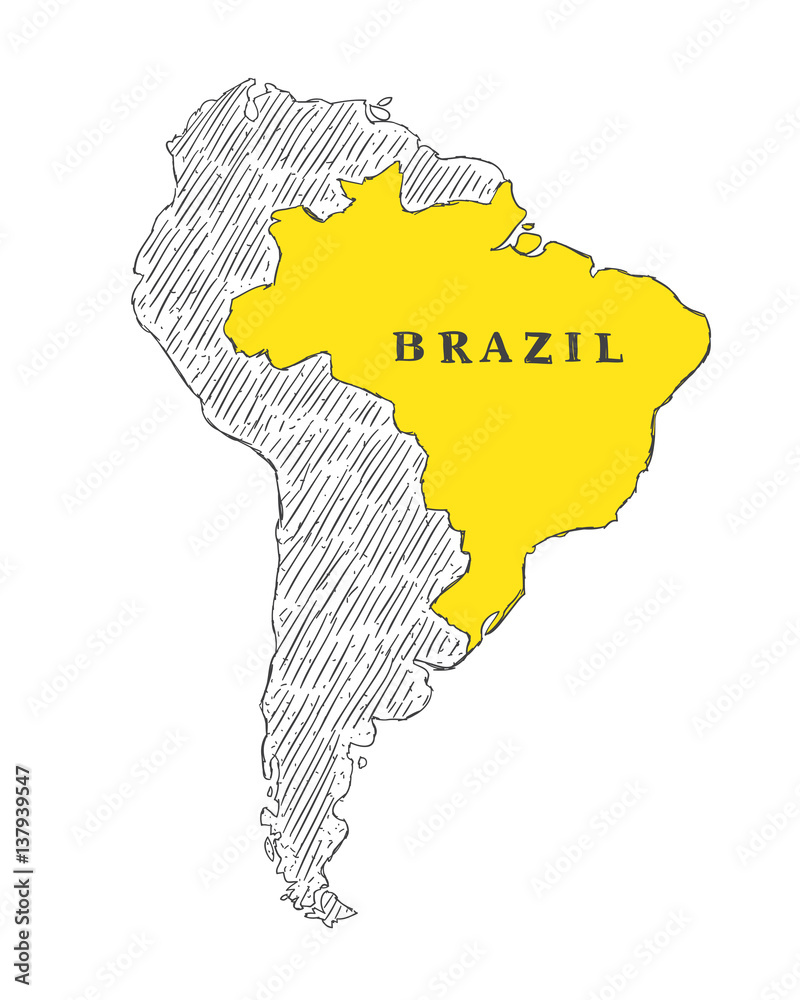
But Brazil — where the language is Portuguese — makes up over 40% of Latin America’s land area, nearly a third of its population, and about 40% of its economy.
A world of its own.
And yet, despite all that, the country remains strangely under the tourist radar.
Brazil attracts less than 6% of international visitors to Latin America — that’s fewer than the annual visitors to the Eiffel Tower!
I’ve lost count of how many friends have been to Mexico, Argentina, or Peru. But Brazil? Far fewer.
Too big? Too complex? Too dangerous? Poorly marketed? Probably a bit of all that. Maybe also because people speak Portuguese — Portuguese, and almost only Portuguese.
And yet, Brazil has it all.
Paradise beaches, impenetrable forests, sprawling megacities, colonial towns frozen in time, rhythms that follow you into the night… and a sincere generosity.
In two and a half months, we explored seven regions — from the most iconic to the most overlooked.
And what I’m trying to share through the upcoming posts is what Brazil awakened in us.
Not just the landscapes, but the stories behind them.
And what I believe defines this country and its people: their past, their warmth, their contradictions.
Region by region.
Let’s go — two and a half months of adventure ahead!
- The state of Rio De Janeiro
We’re in our rental car, somewhere along a breathtaking 100-kilometer stretch between São Paulo and the town of Paraty. The scenery is jaw-dropping. The road winds through lush green mountains, dense forests, waterfalls, and occasional glimpses of the Atlantic. A perfect snapshot of Brazil, just as we had dreamed it. Most of our worries have already vanished — and it’s been less than 24 hours.
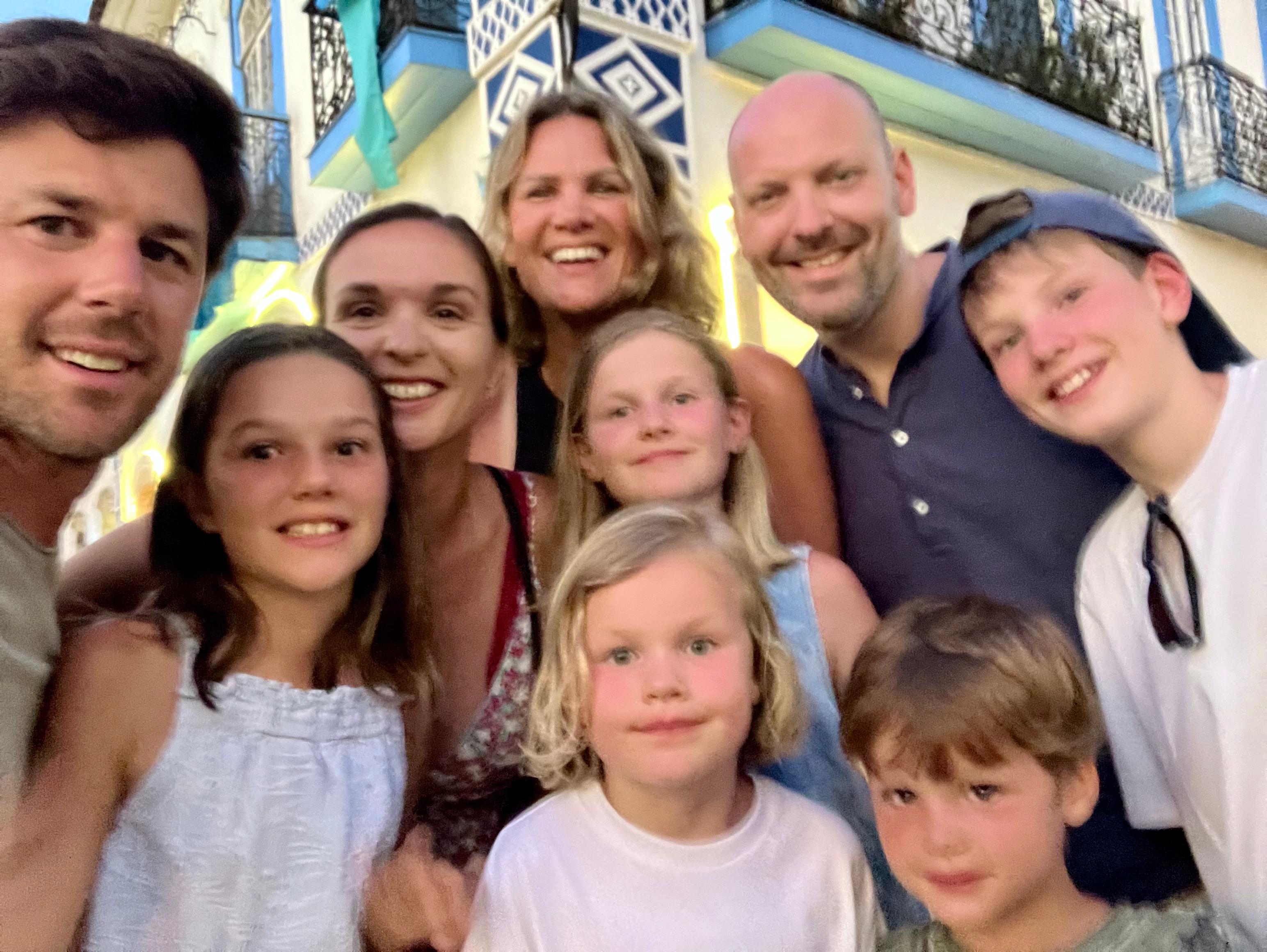
But let’s rewind to a little less than 24 hours ago: as soon as we landed in São Paulo, we met up with our friends Jorun, Anthony, and their three kids for a nine-day vacation together. On the agenda: the colonial town of Paraty, the island paradise of Ilha Grande, and, to end on a high note, Rio de Janeiro.
For anyone looking to discover Brazil, this itinerary is a no-brainer. It’s a perfect loop of nature, culture, and complete escape.
Paraty, a stunning colonial gem
After a 250 km drive that took us… over 7 hours (thank you, carnival holiday traffic), we finally arrive in the ultimate tropical postcard: Paraty. Yes, it had to be earned.
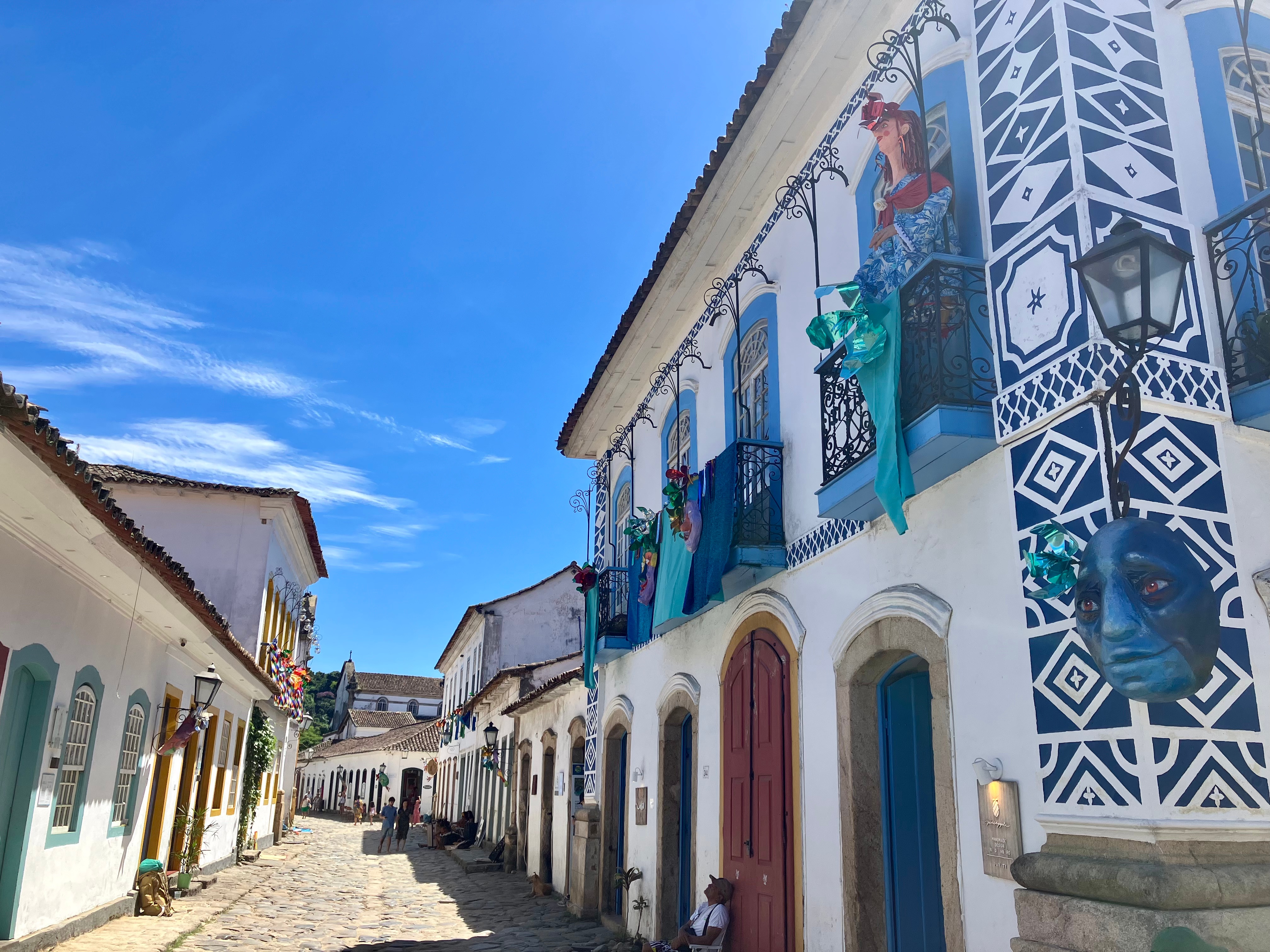
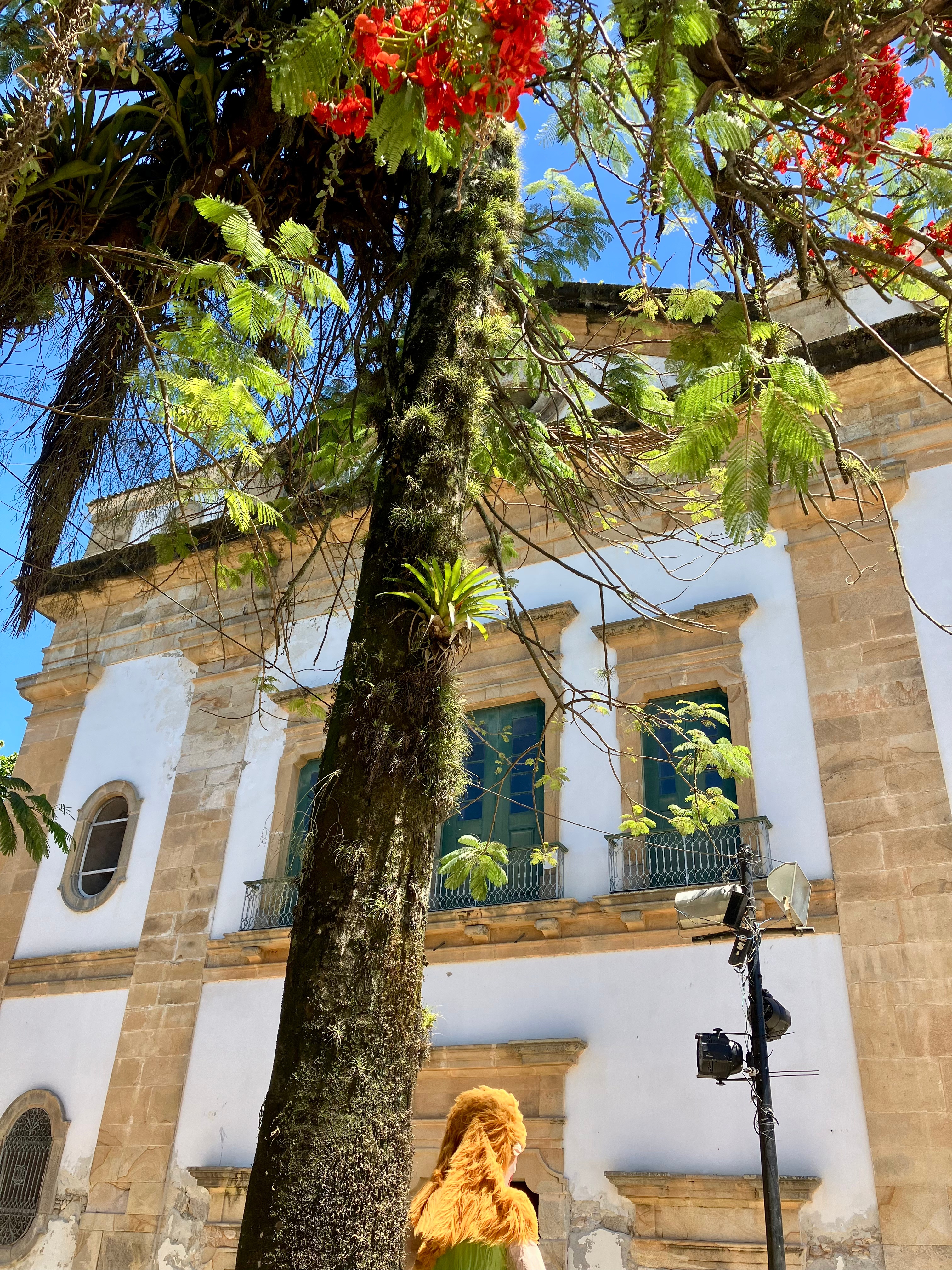
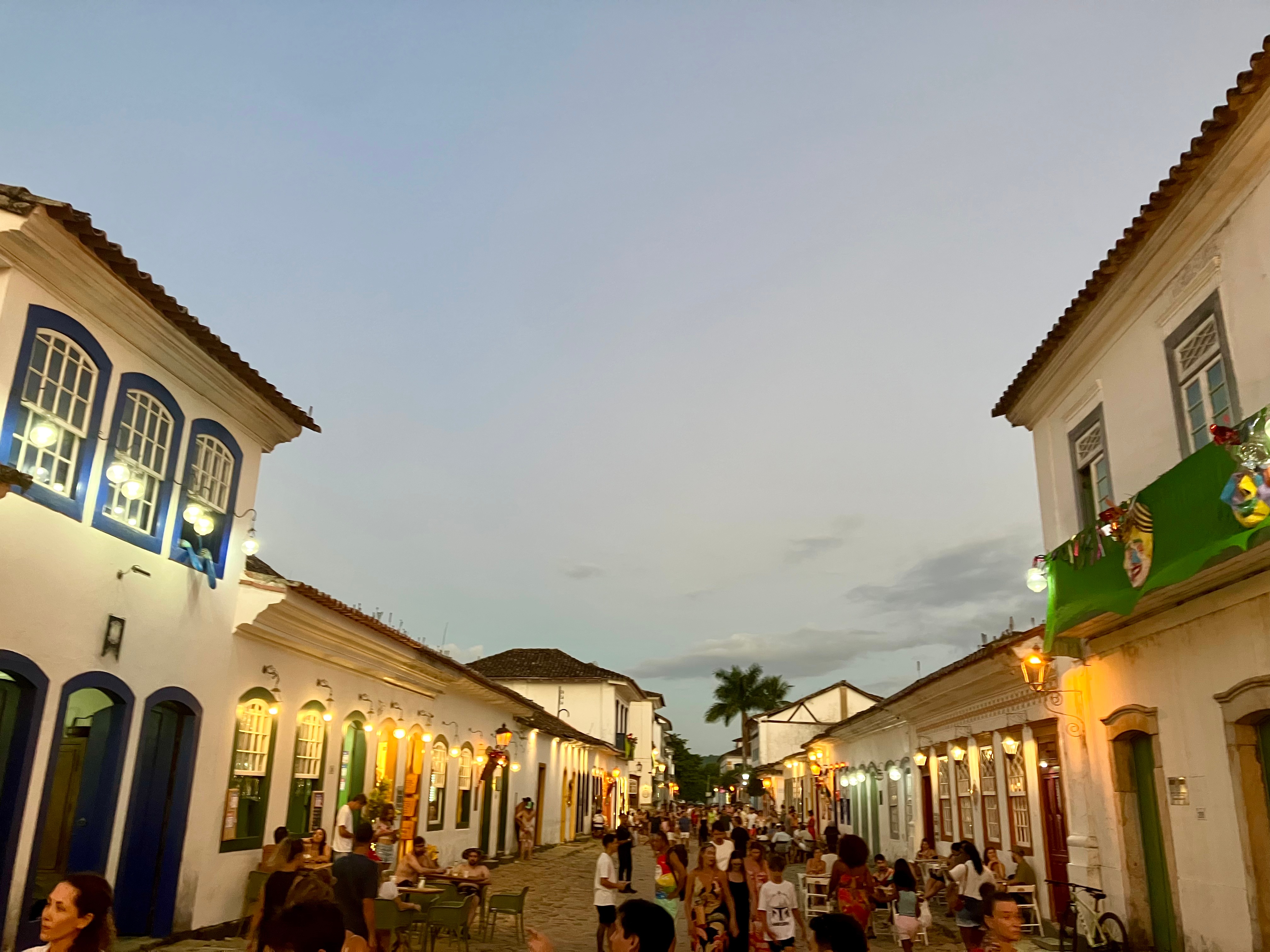
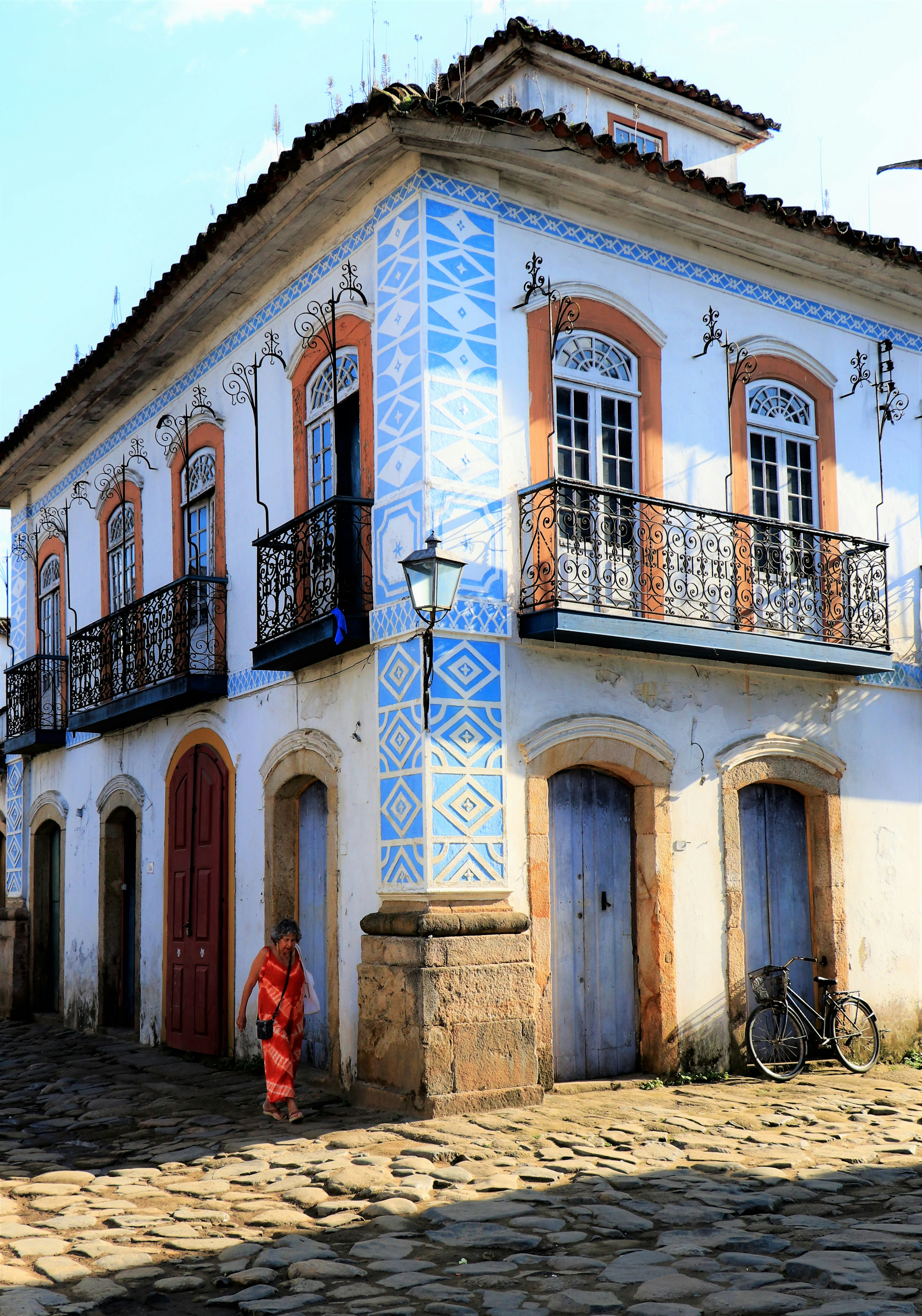
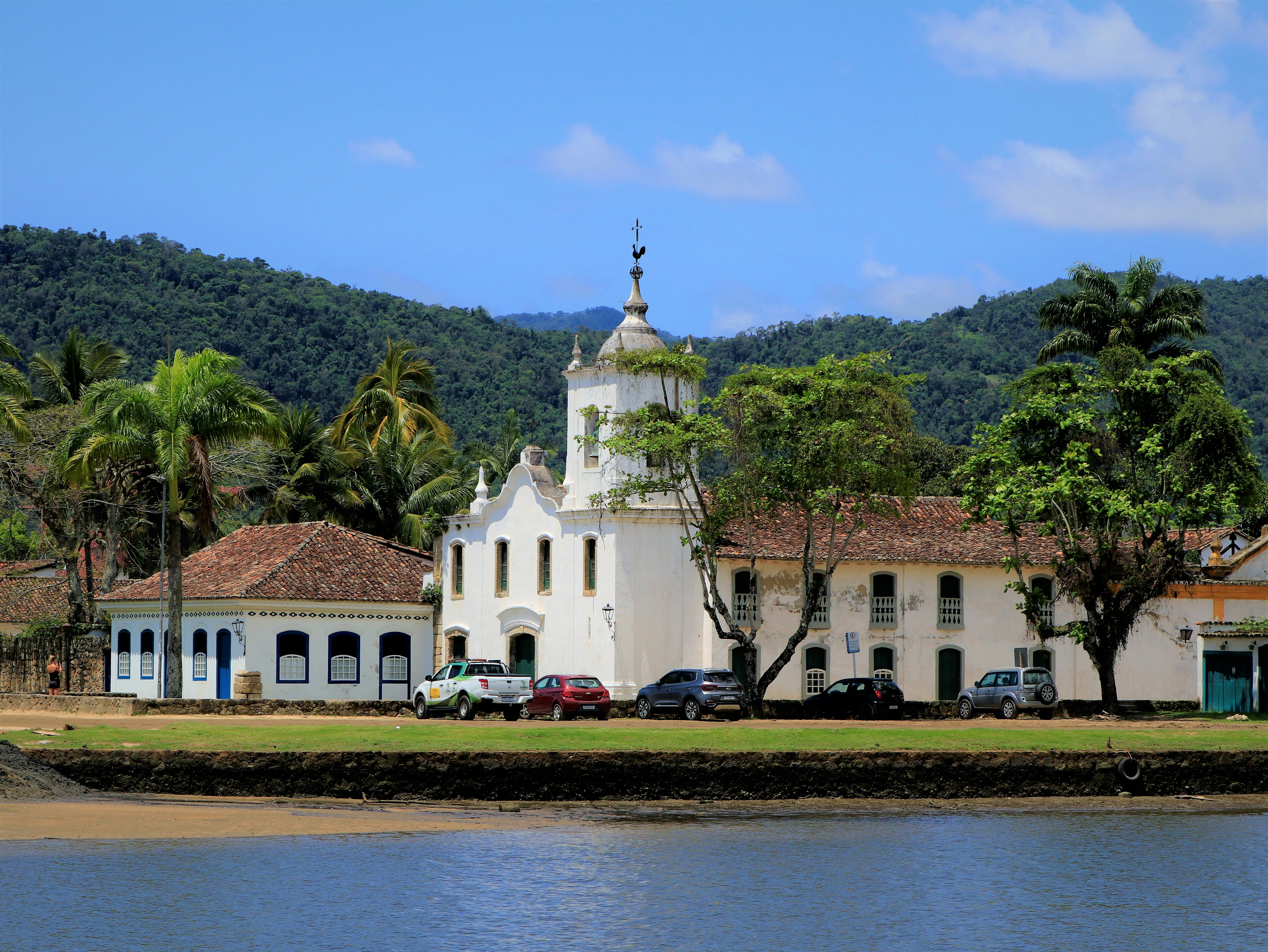
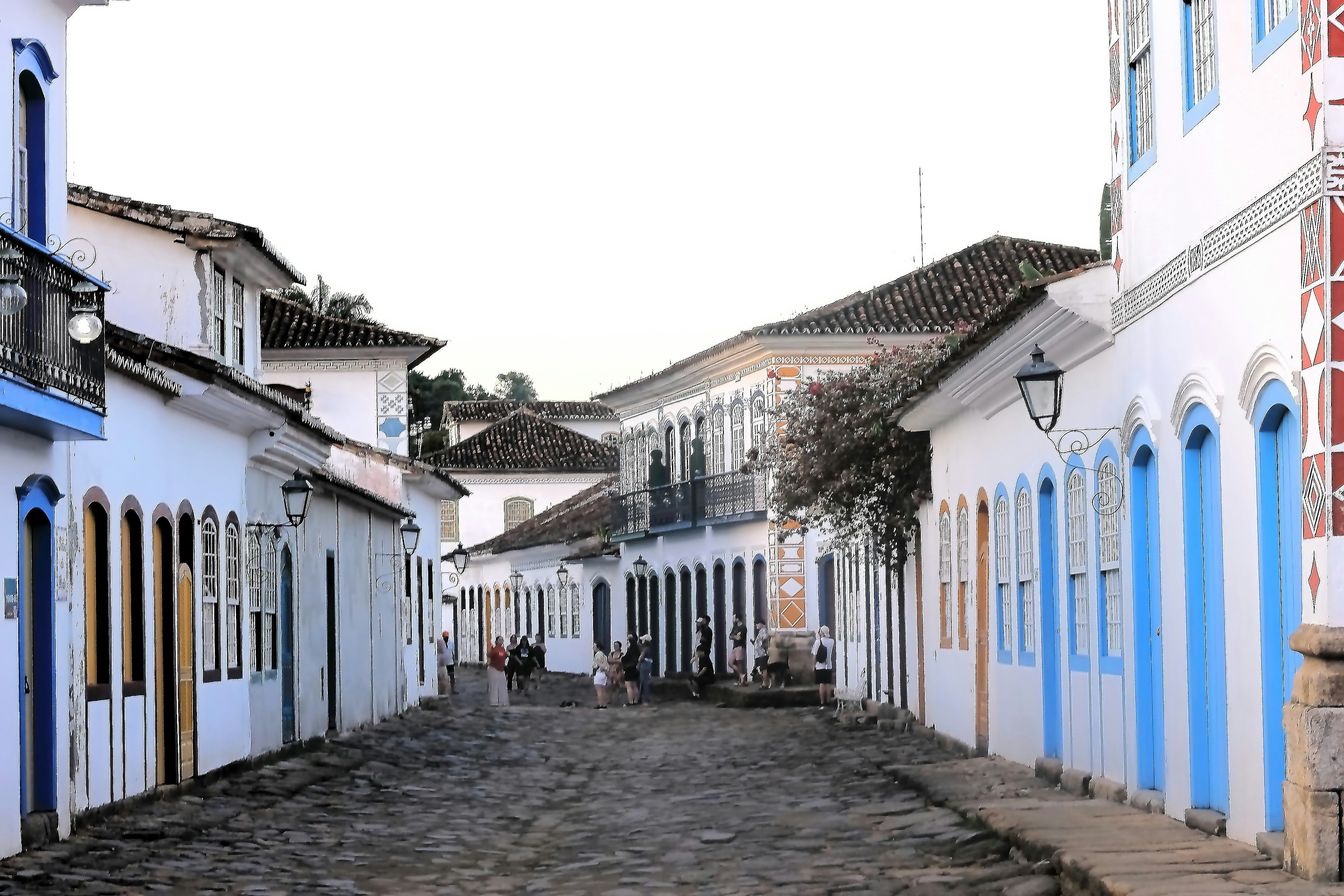
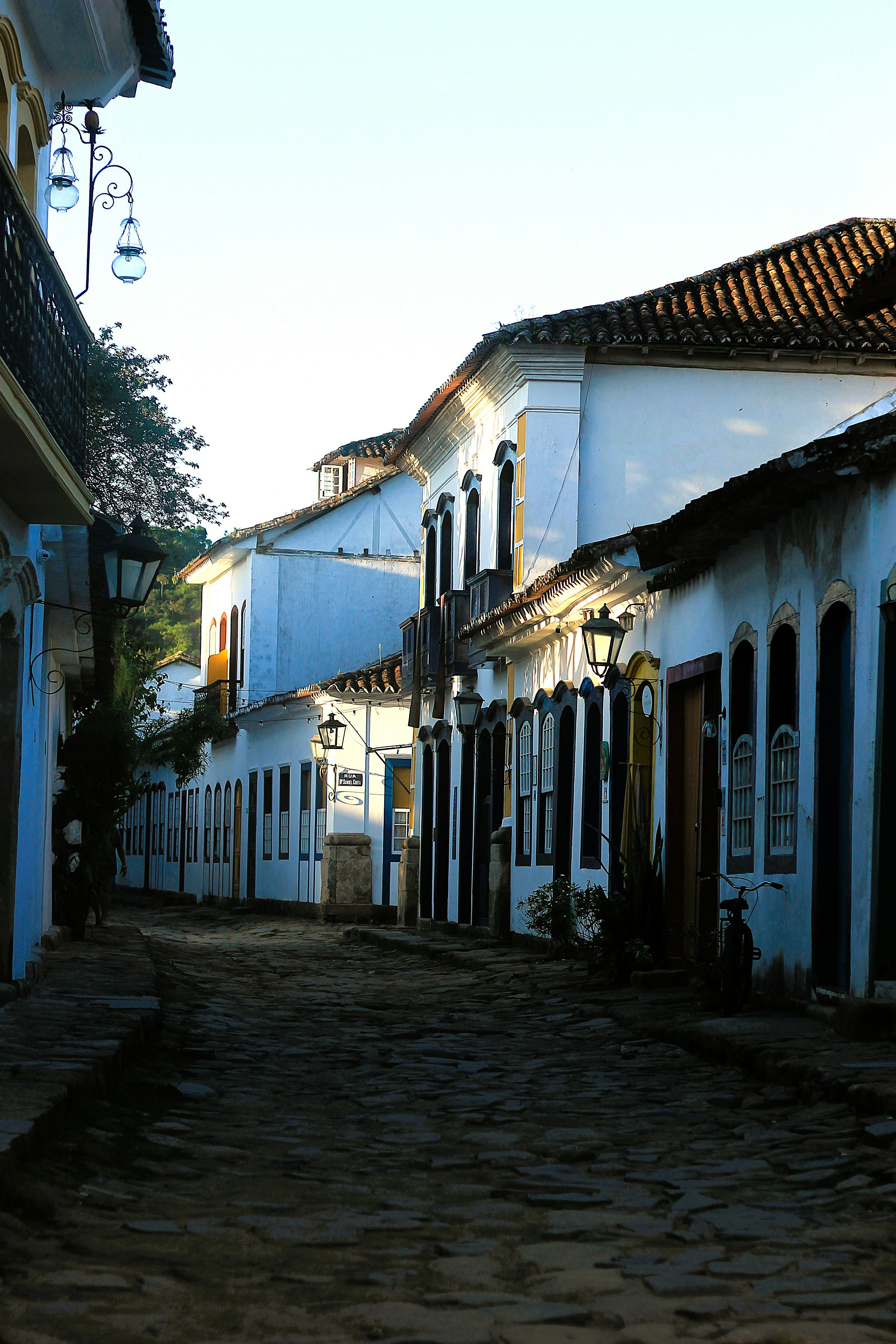
Paraty is a colonial gem frozen in time, listed as a UNESCO World Heritage site. Cobblestone streets that rattle your ankles, low houses with colorful shutters, baroque churches framed by palm trees — all set between the sea and the mountains like a living painting! What more could you ask for?
But this cinematic backdrop also has a golden past — quite literally.
In the 18th century, gold veins were discovered in the mountains of Minas Gerais, some 300–400 km further north (spoiler: I’ll get into that in the next post). And guess where all that precious metal passed through on its way to Lisbon? Paraty, of course.
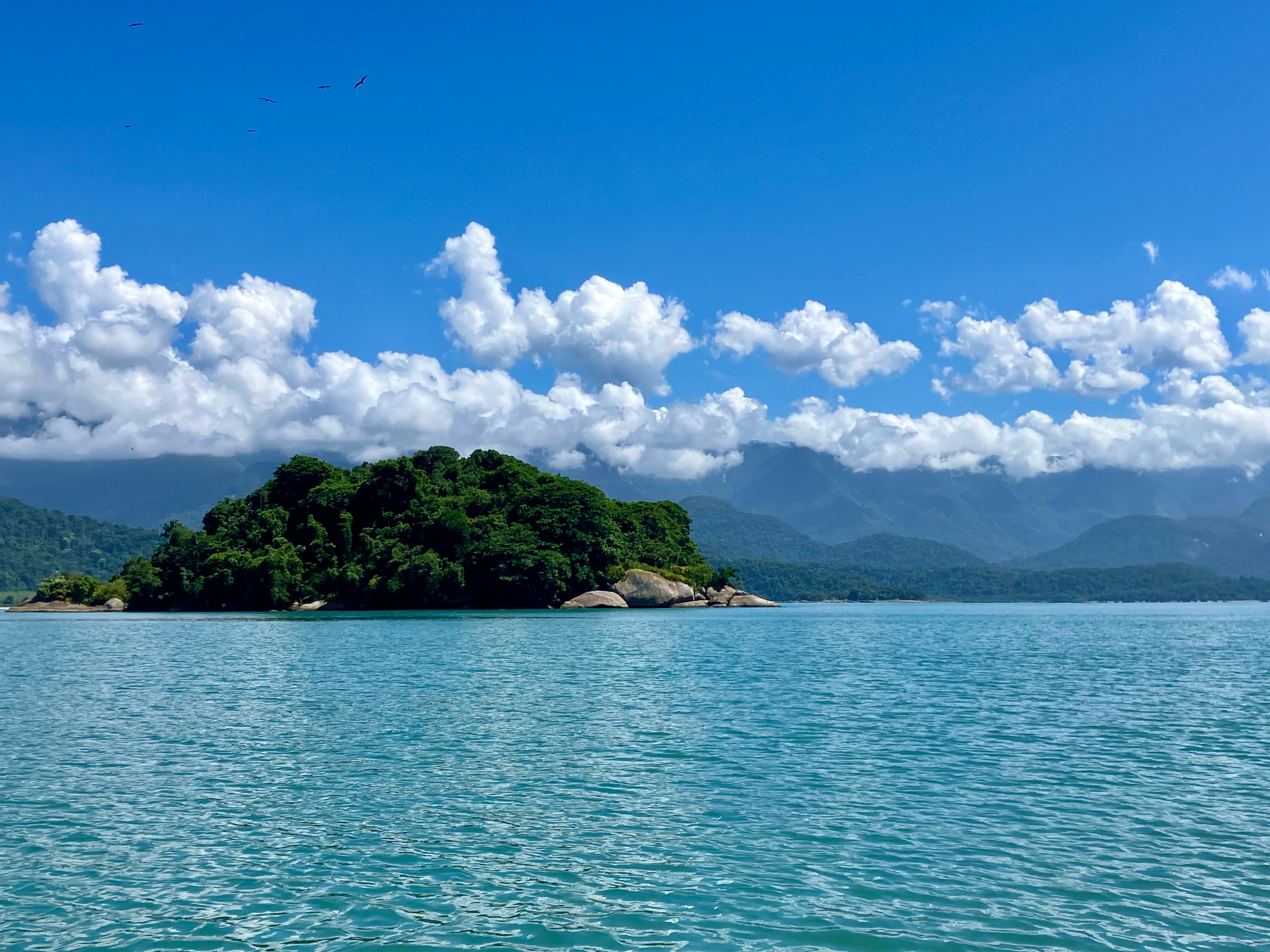
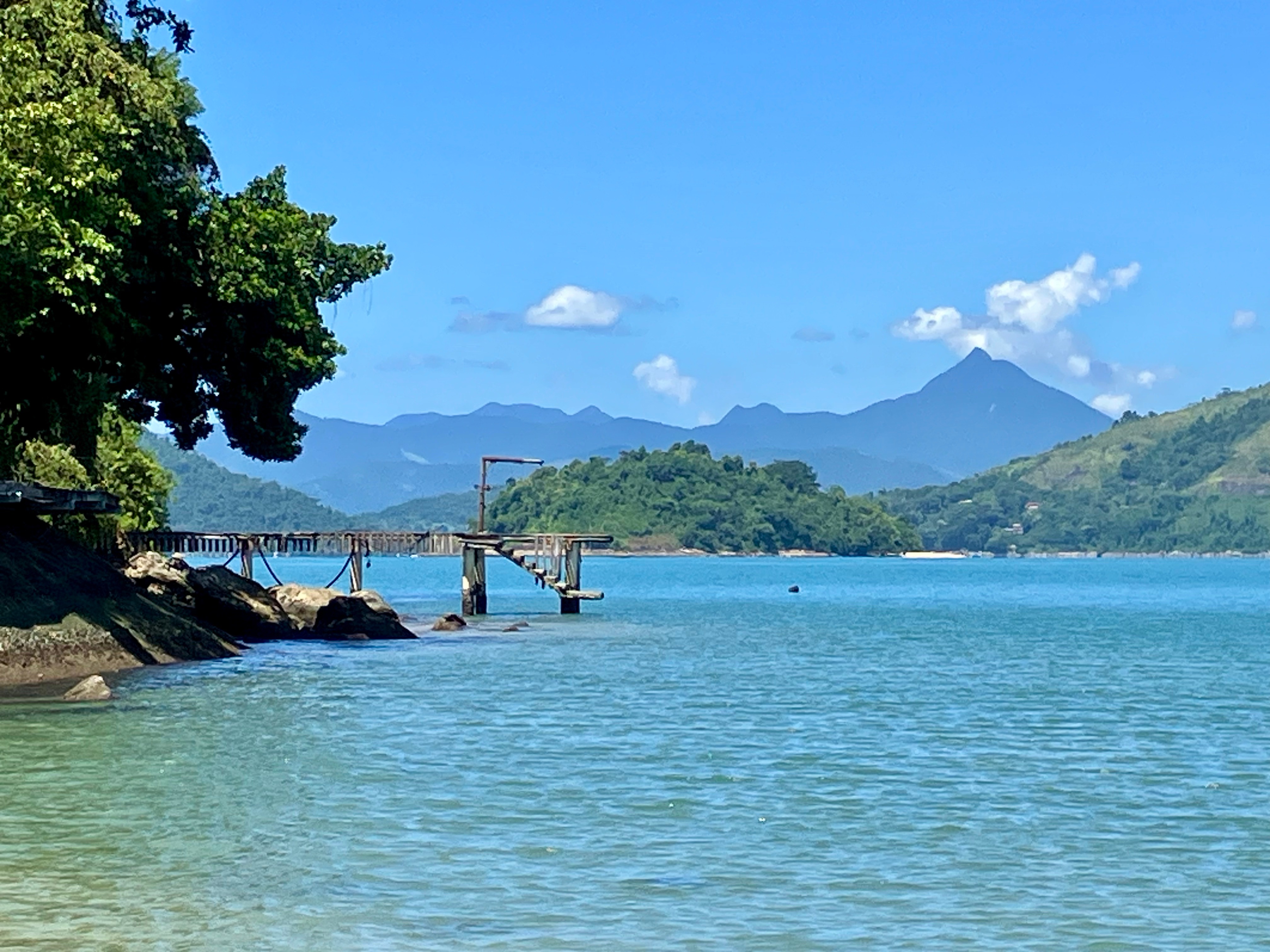
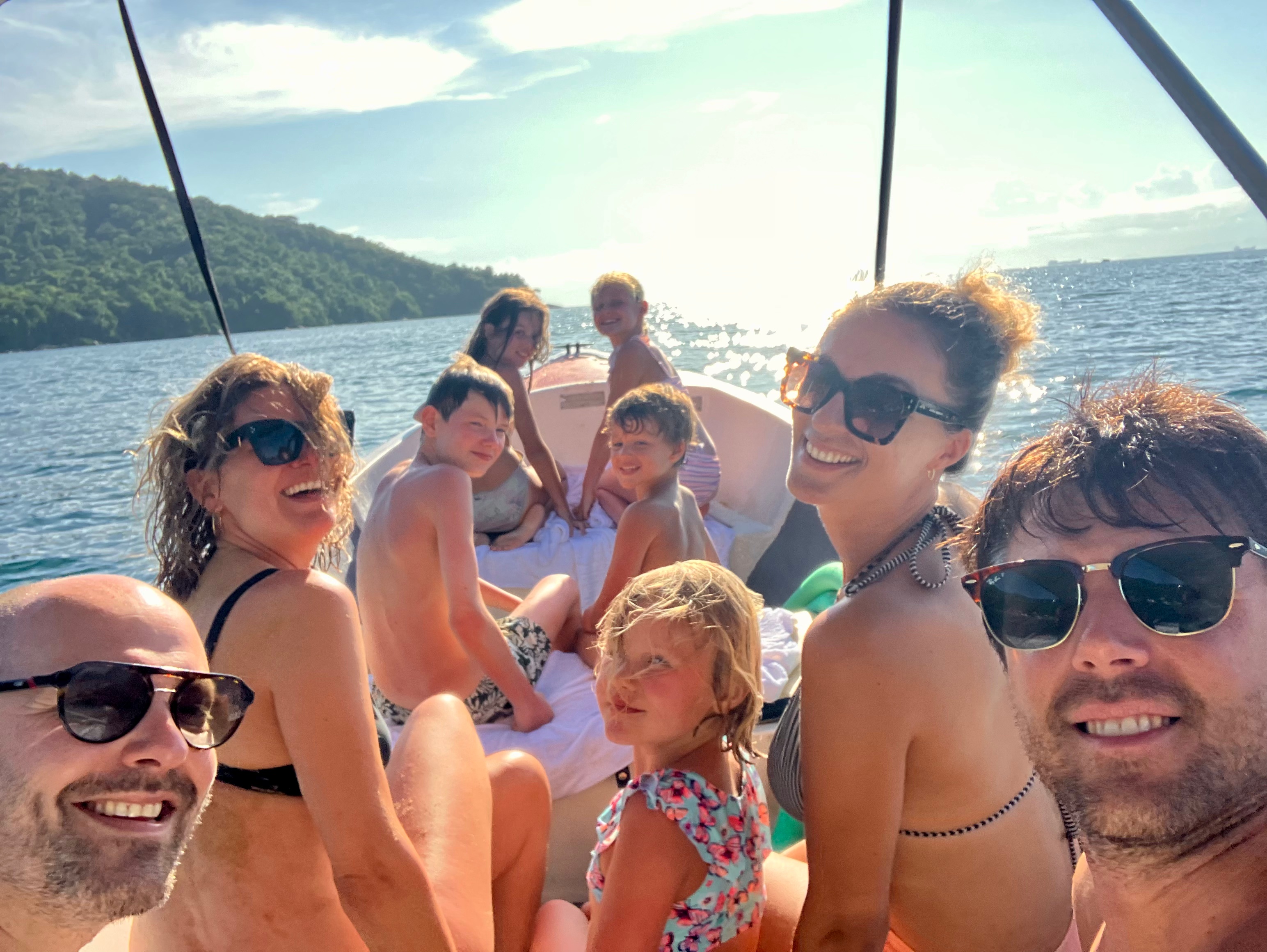
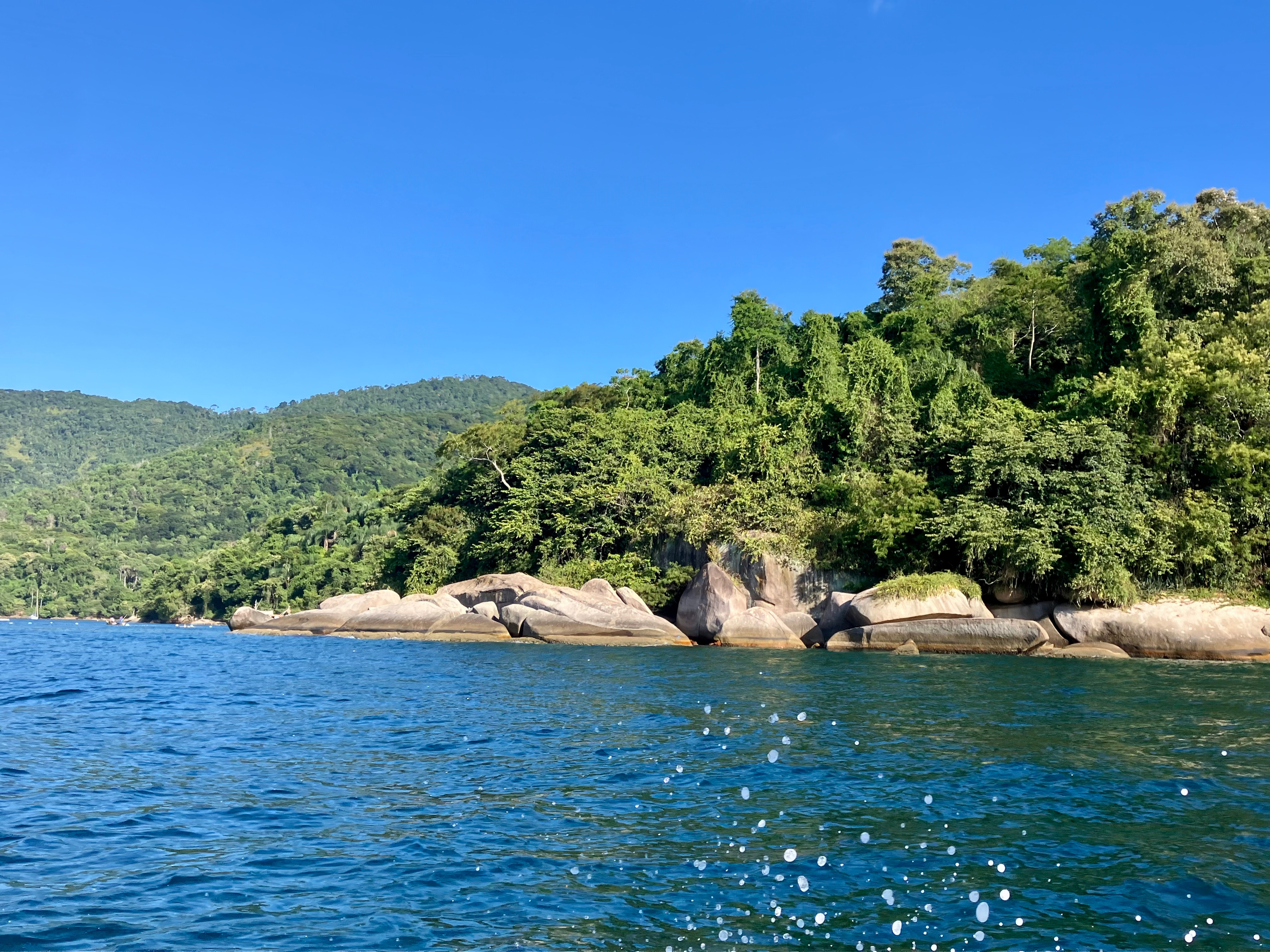
But Paraty isn’t just about its historic center: it’s also about secluded coves, pristine beaches, and tiny islands that look straight out of a movie intro. In fact, the photos from our boat trip probably tell the story better than I can (and they don’t make spelling mistakes).

Ilha Grande: Nature & Beach Life
We’re on a small boat after a 2.5-hour drive from Paraty, heading toward Ilha Grande. The island is said to be stunning — the perfect blend of dreamy beaches and tropical jungle. But that’s something we’ll only find out once we get there…
Because right now, on this tiny boat, we’re getting hit by gust after gust, wave after wave, straight in the face. We’re soaked to the bone — bags included — and it’s not even warm.
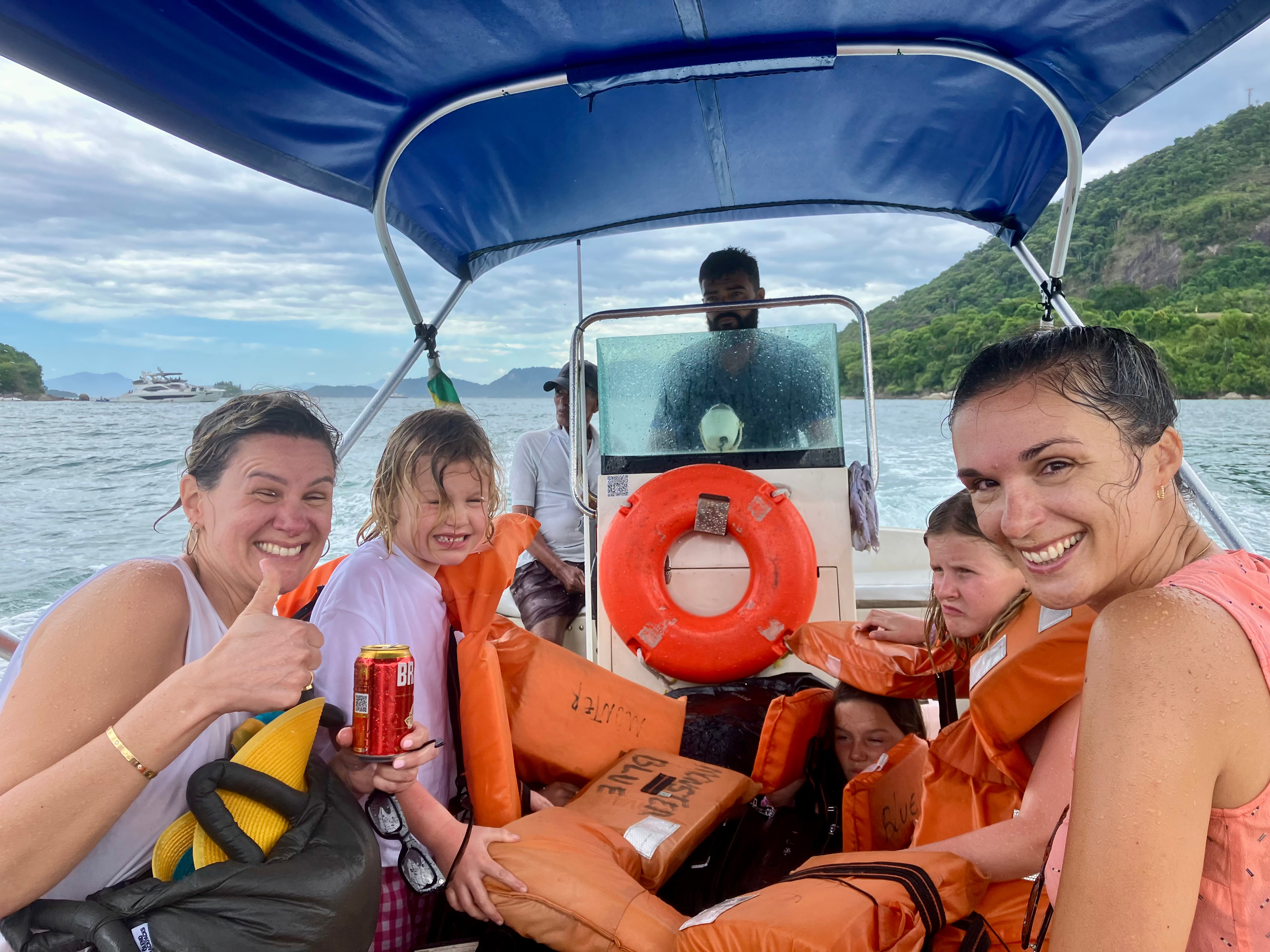
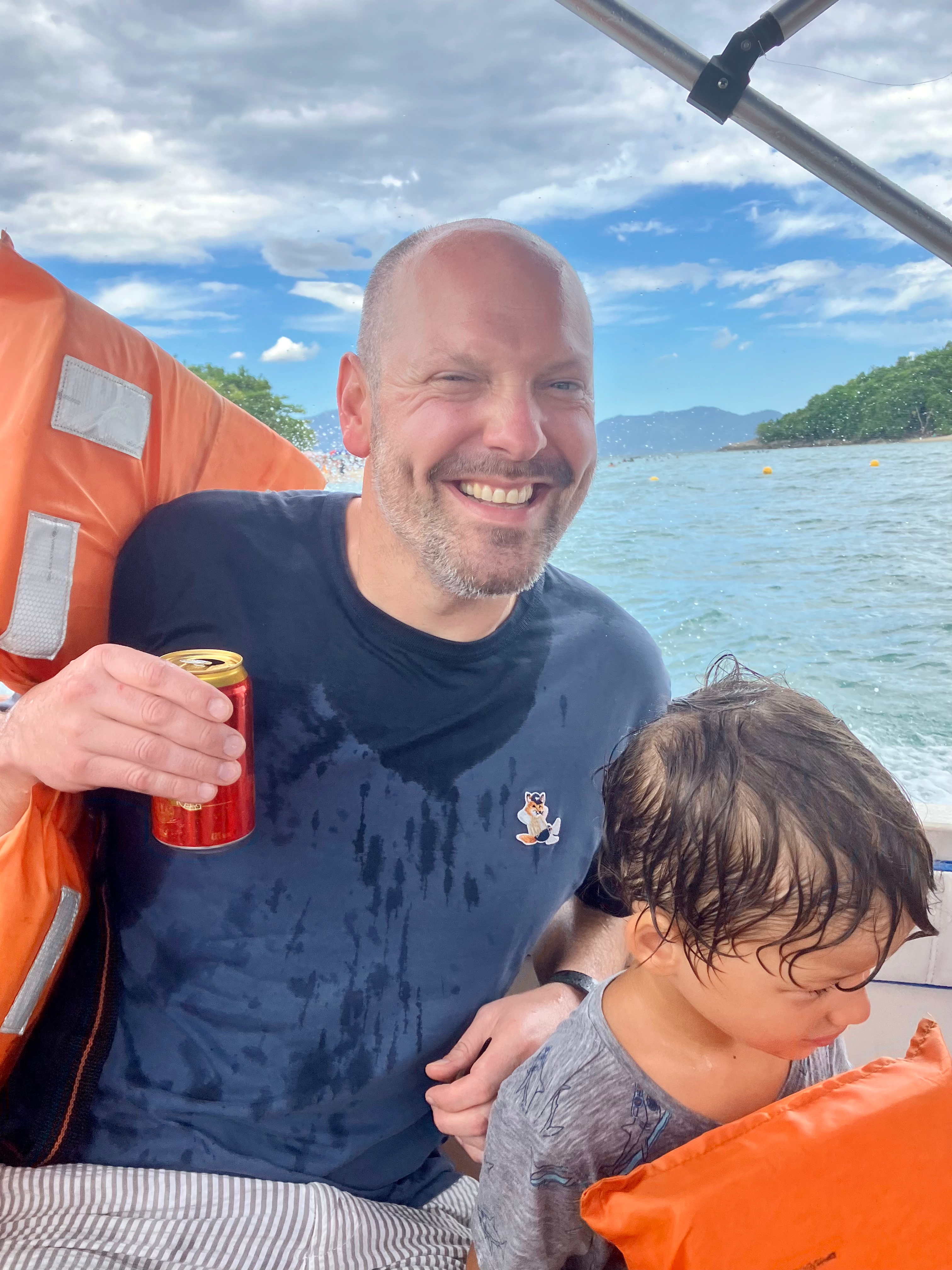
Matteo, meanwhile, built himself a sort of fortress out of life jackets. He stays well hidden inside, safe and sound. His head pops out now and then, like a submarine periscope, only to dive back in after realizing things haven’t gotten any better.
Given the situation, we crack open a few beers and laugh at the absurdity of the crossing.
We finally land, completely drenched, in a small cove.
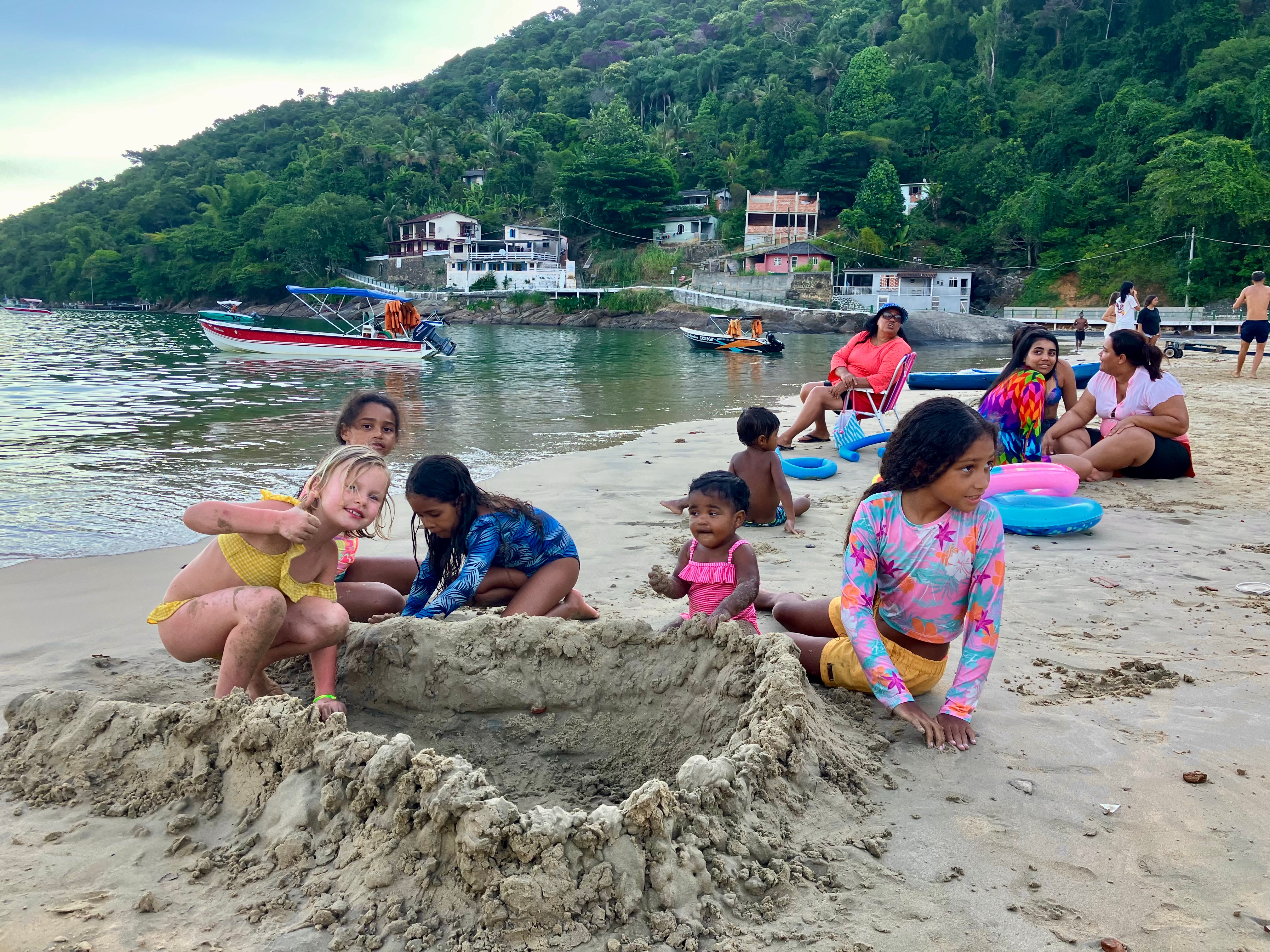
The afternoon stretches out with our feet in the sand, enjoying a late lunch right on the beach.
We follow it up with an impromptu football match against a group of Brazilian teenagers — Belgium vs Brazil, a 2018 World Cup remake. And just like back then, Belgium wins.
Not a single other non-Brazilian tourist in sight — just us.
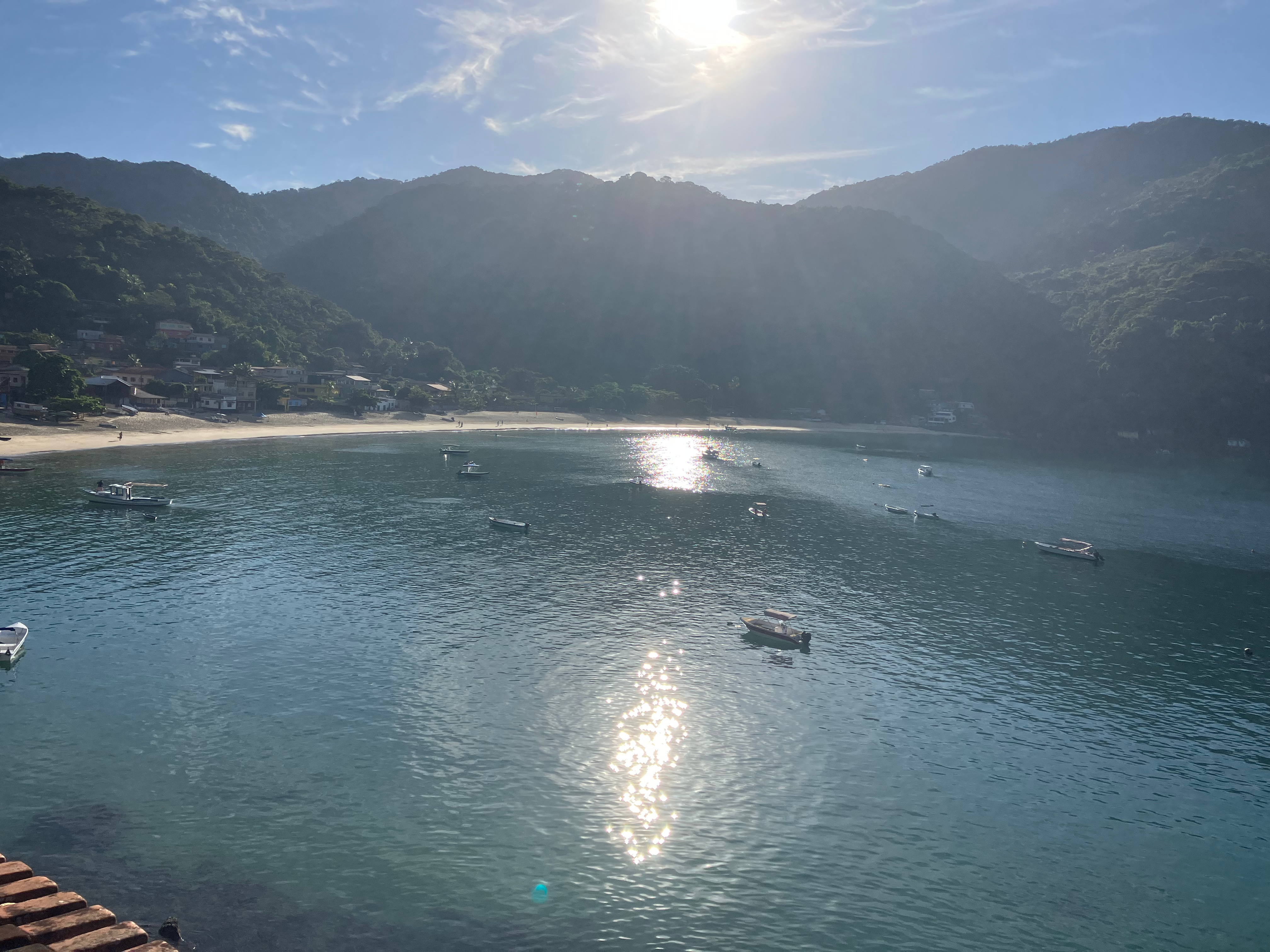
The village is tiny and isolated: a beautiful beach, a few narrow streets in the background, and that’s it. No cars, no roads, just boats.
They say part of Ilha Grande is super jet set… but definitely not this side!
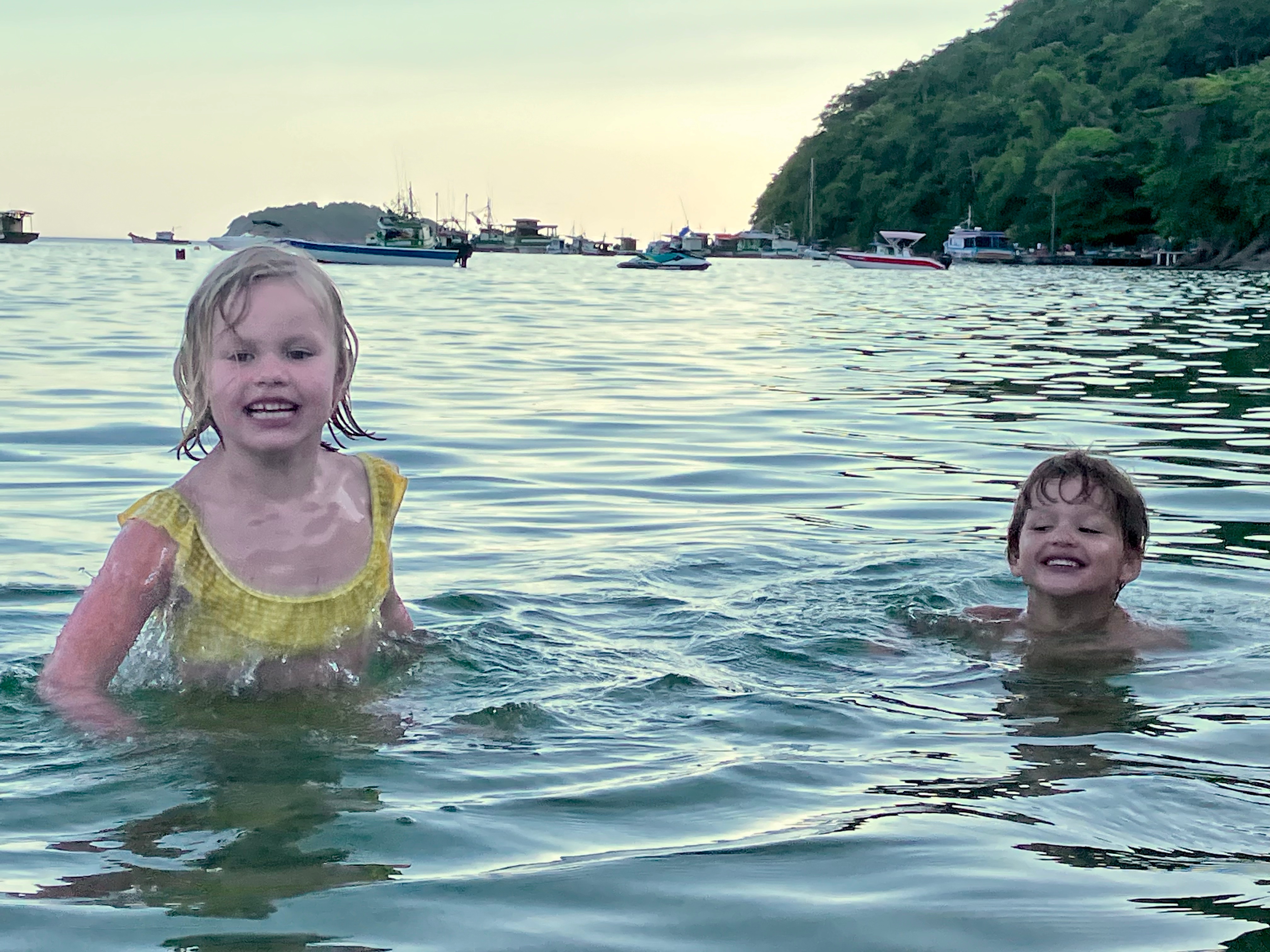
We soak up the slow island life: beaches, boat rides hopping from one paradise spot to another.
And we make the most of the house — a bit old-fashioned, sure, but with two unbeatable assets: it’s spacious, and the view over the ocean is absolutely mind-blowing.
From the terrace, it’s pure bliss.
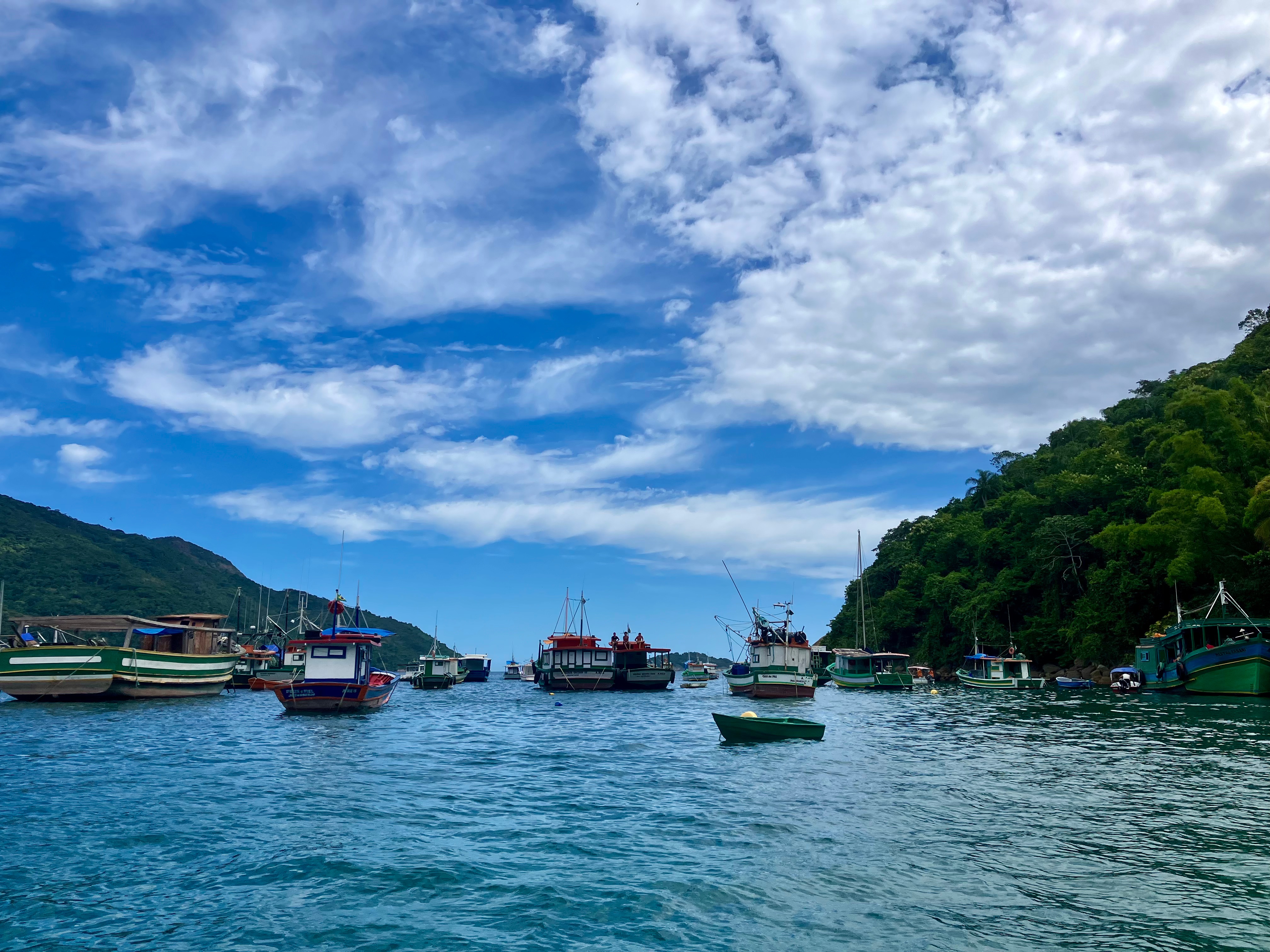
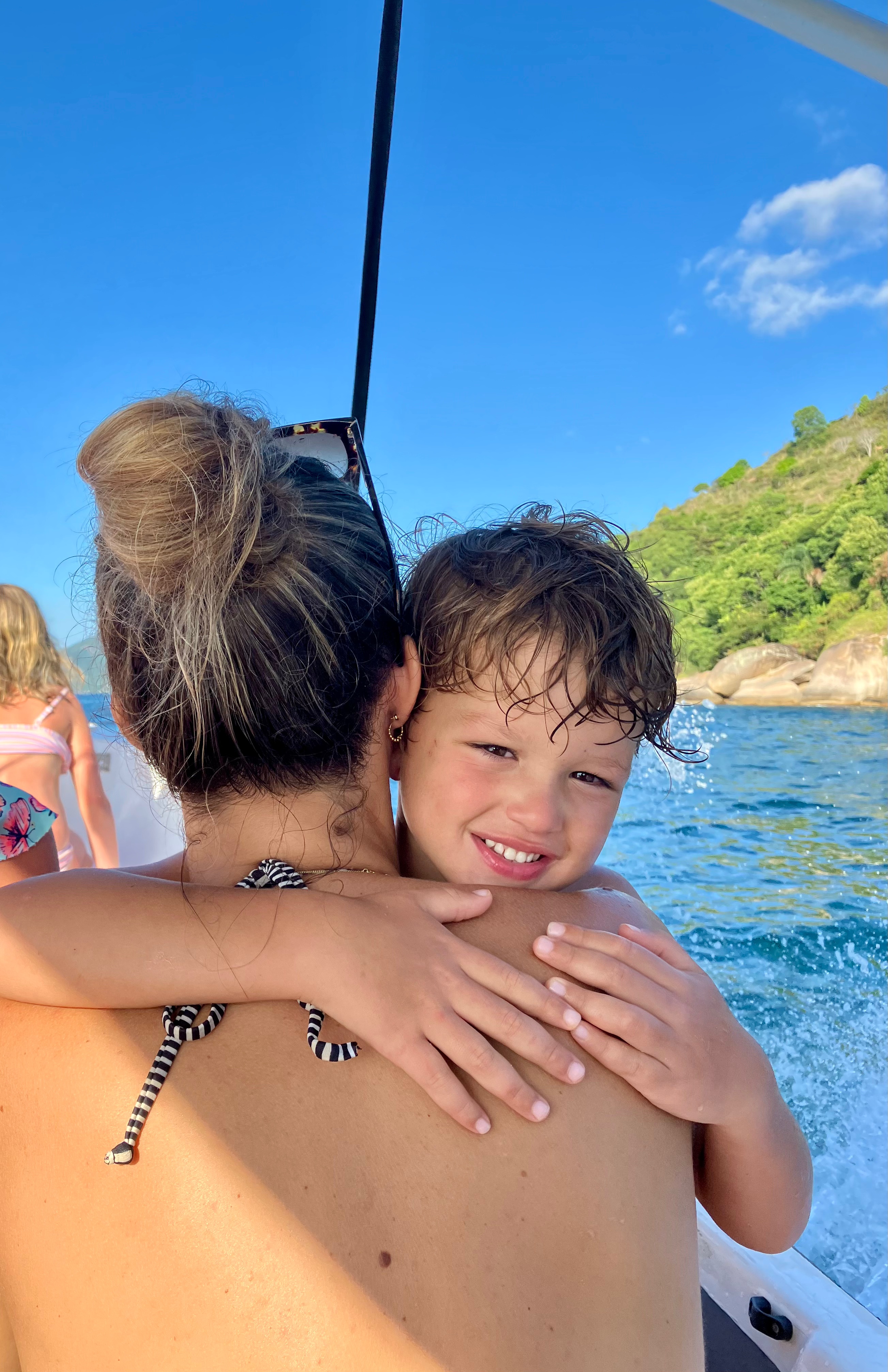
Two days later, we set sail again — this time under a blazing sun.
Destination: Rio, aboard a real boat, slow but riding higher on the water.
We’re a bit damp again… but this time it’s not because of the waves.
It’s just the heat sticking to our skin.
Rio de Janeiro, a cidade maravilhosa
It was Brazil’s capital from 1763 to 1960, and today it’s the country’s second-largest city, with nearly 7 million inhabitants.
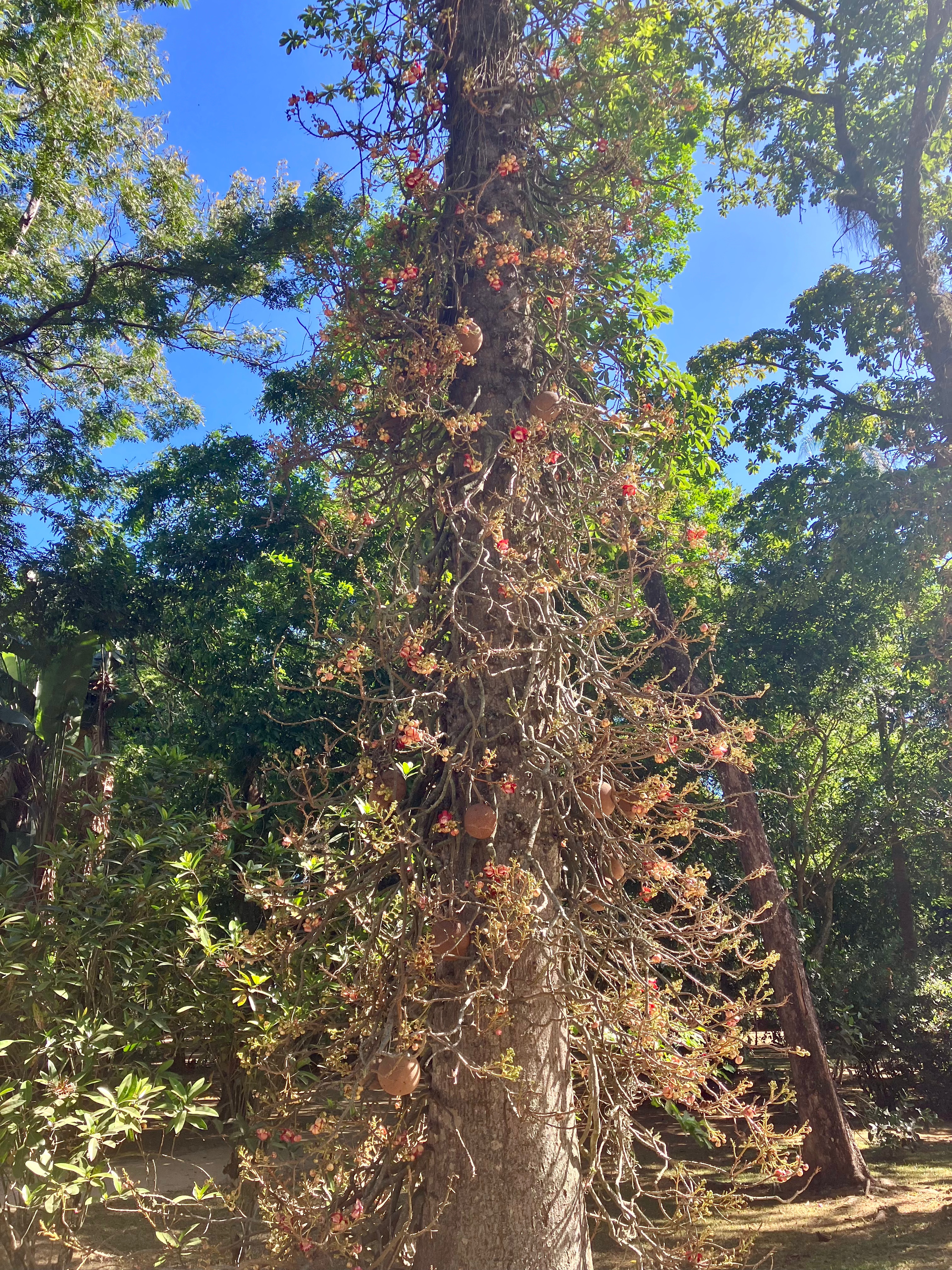
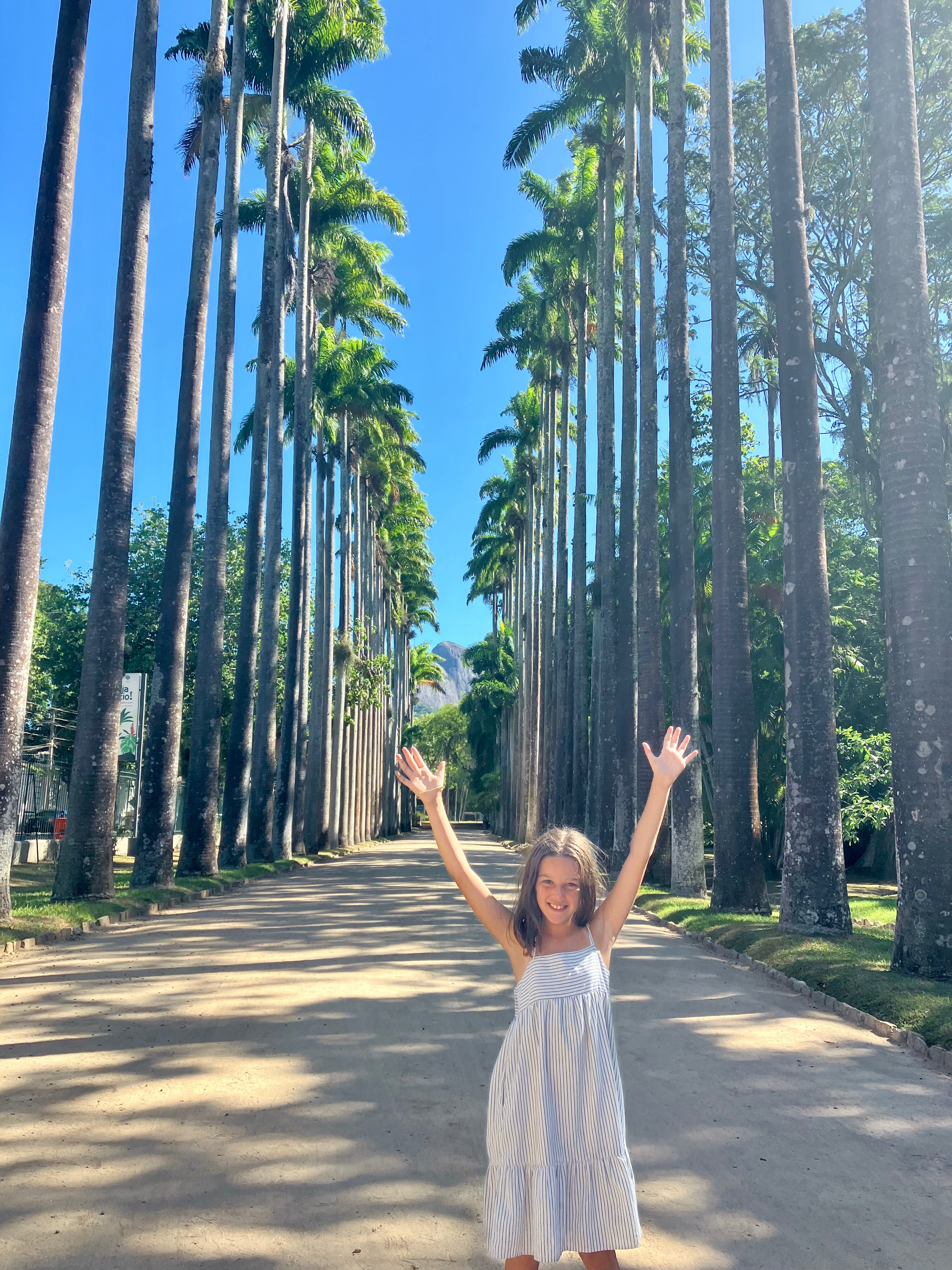
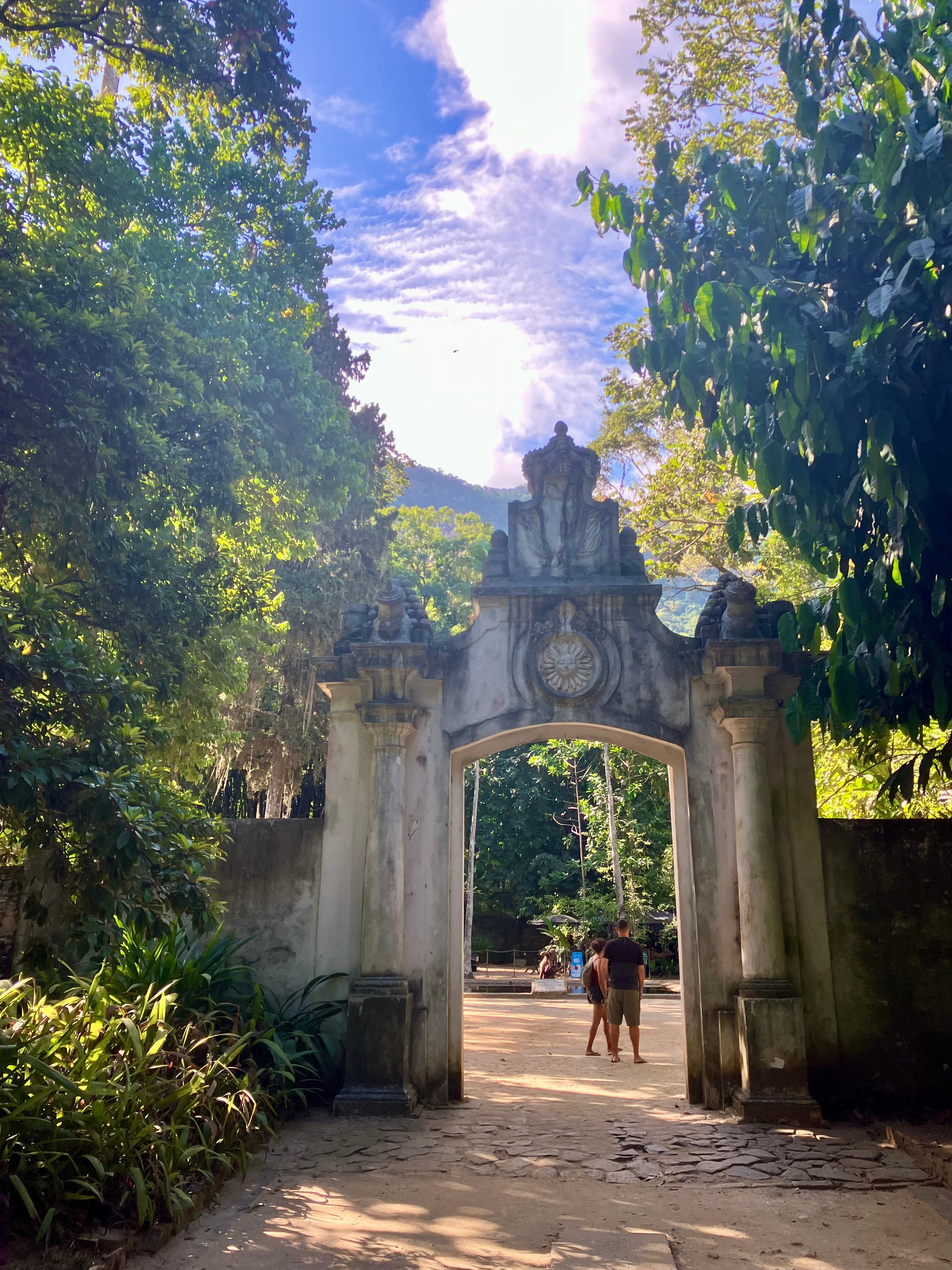
We only stayed for two and a half days — way too short to see everything, but already enough to get an eyeful: the botanical gardens, Sugarloaf Mountain, a long bike ride along the coastline, and of course, Christ the Redeemer.
We didn’t exactly take it easy with our friends Jorun & Anthony!
They call Rio a cidade maravilhosa — the marvelous city. And honestly, I get it.
There’s something hypnotic, almost unreal about it.
I used to think Sydney was the perfect spot to build a city, but Rio completely blew me away.
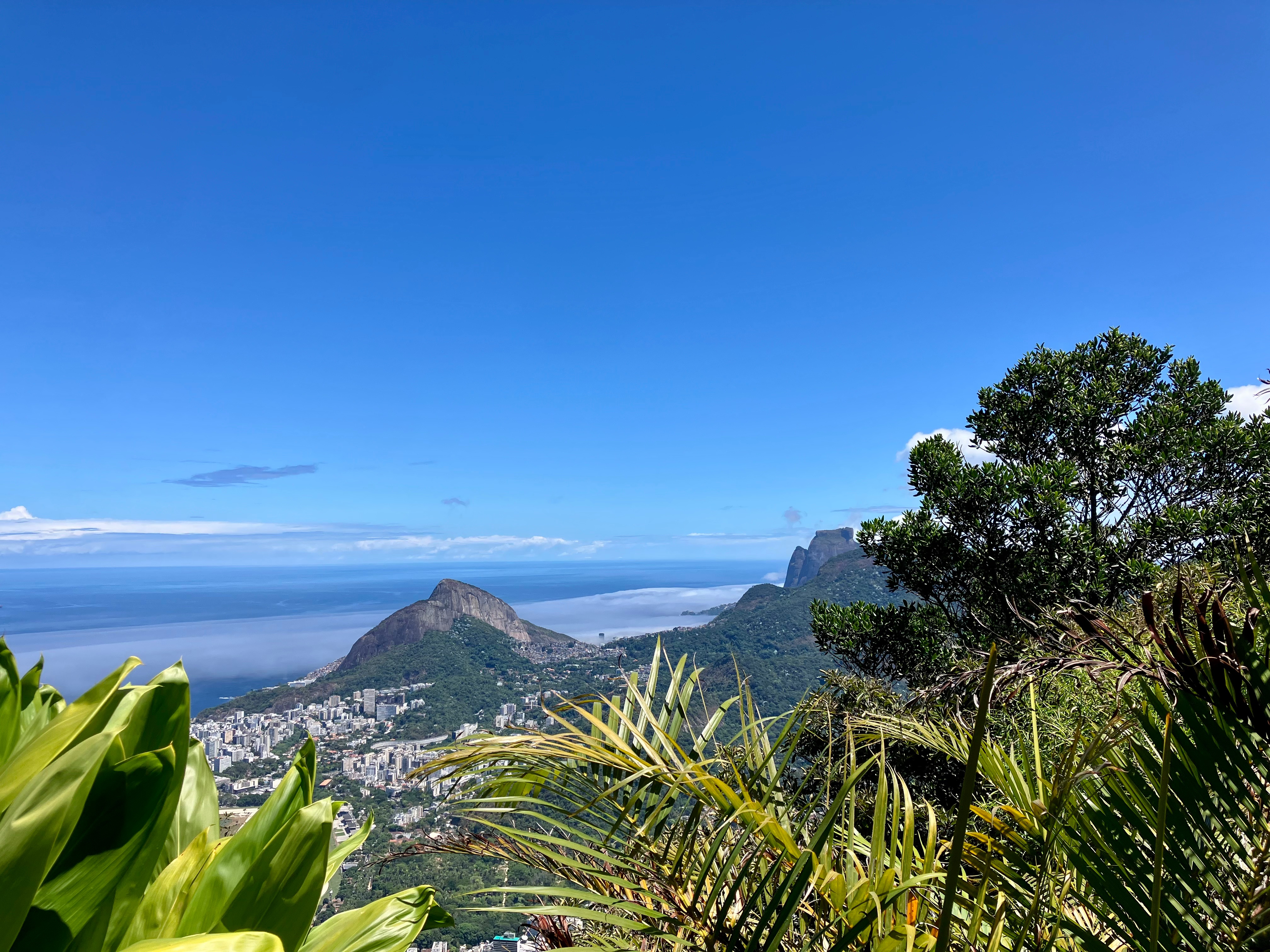
It’s like a movie set: hills — or rather giant granite blocks that seem to pop out of nowhere — diving straight into stunning beaches.
And just a 30-minute drive away (if you’re lucky enough to dodge the traffic), you can be hiking deep into the jungle of the Tijuca National Park.
Yep, a national park right in the middle of the city.
Who can top that?
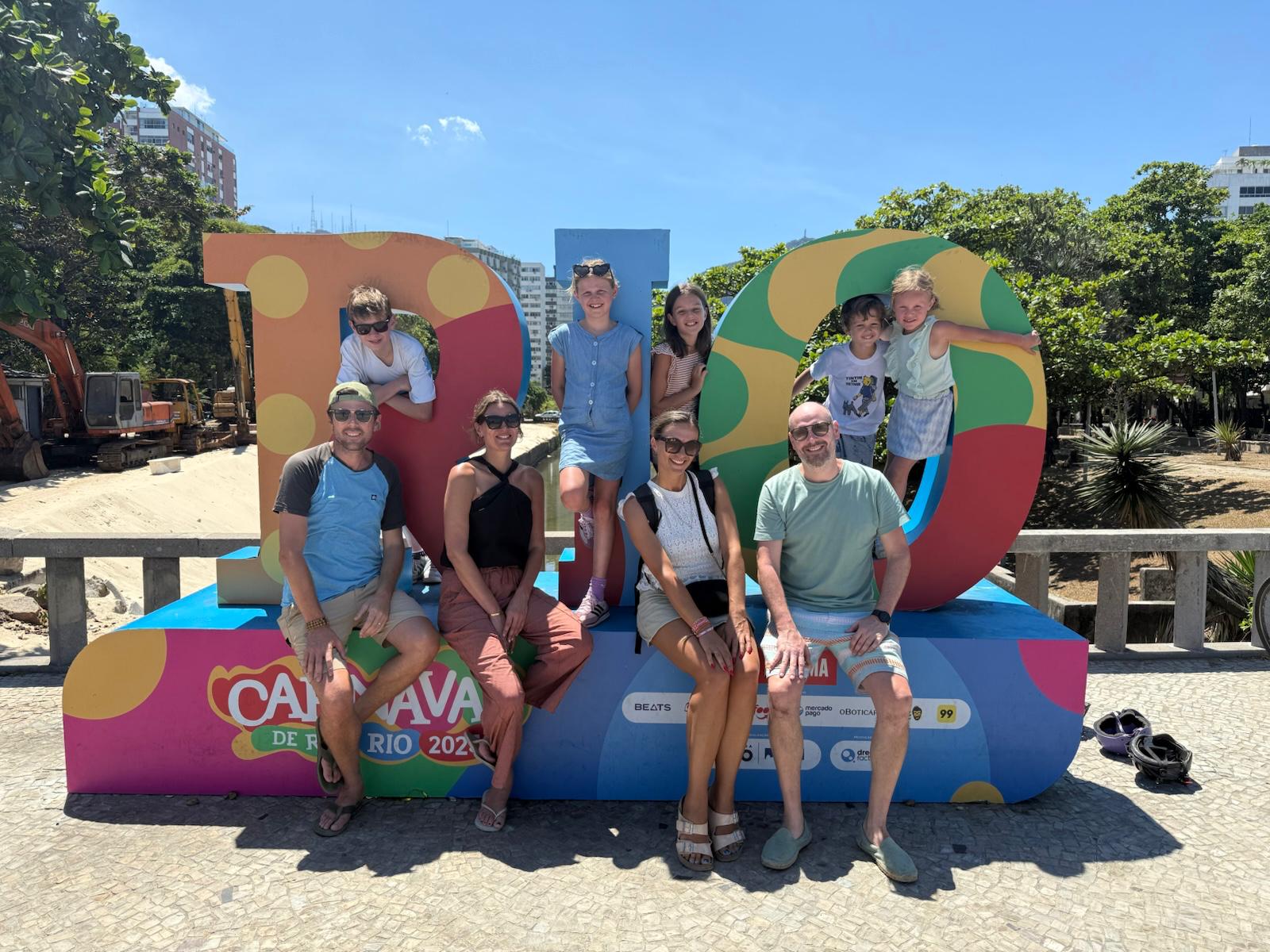
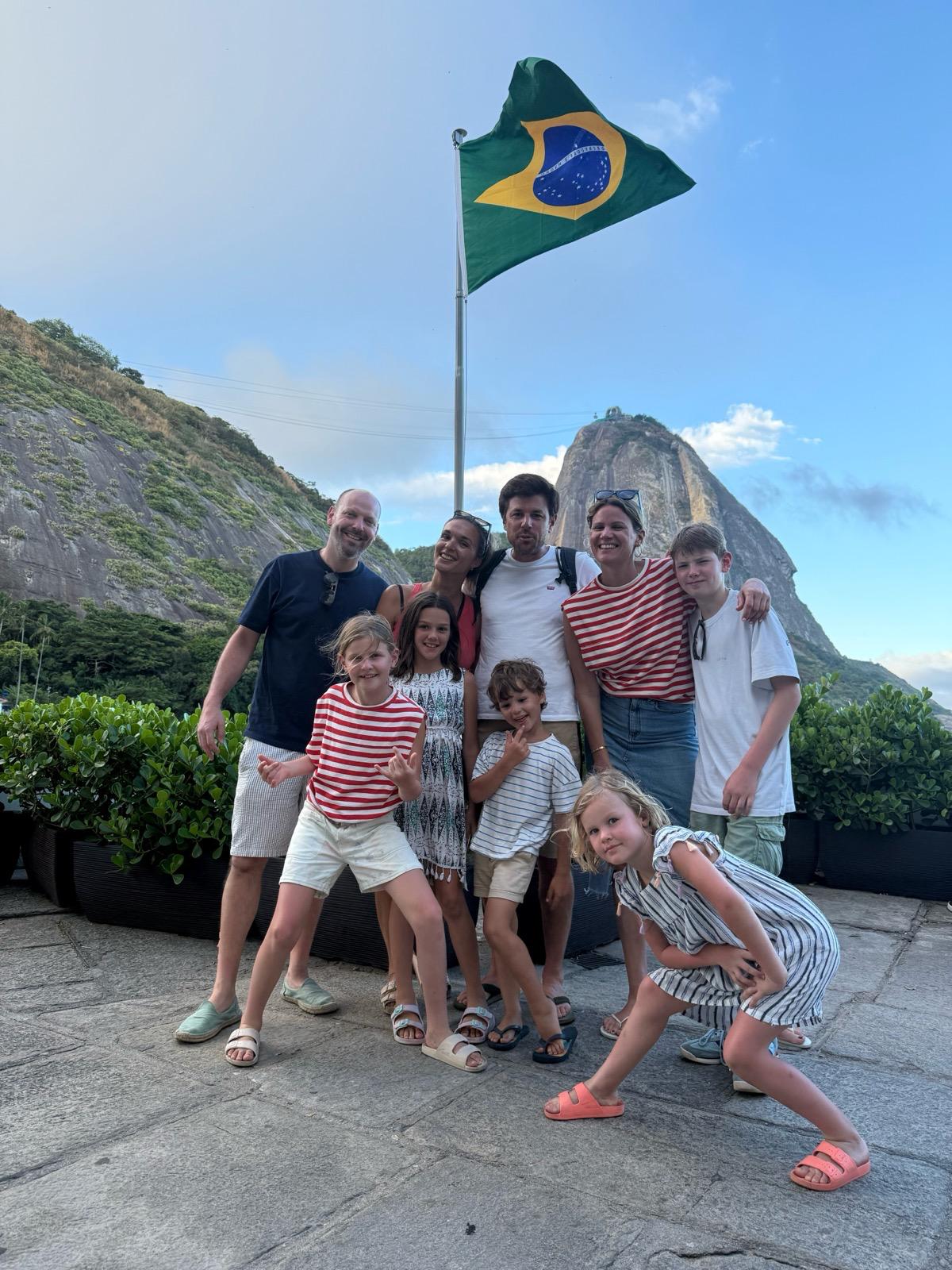
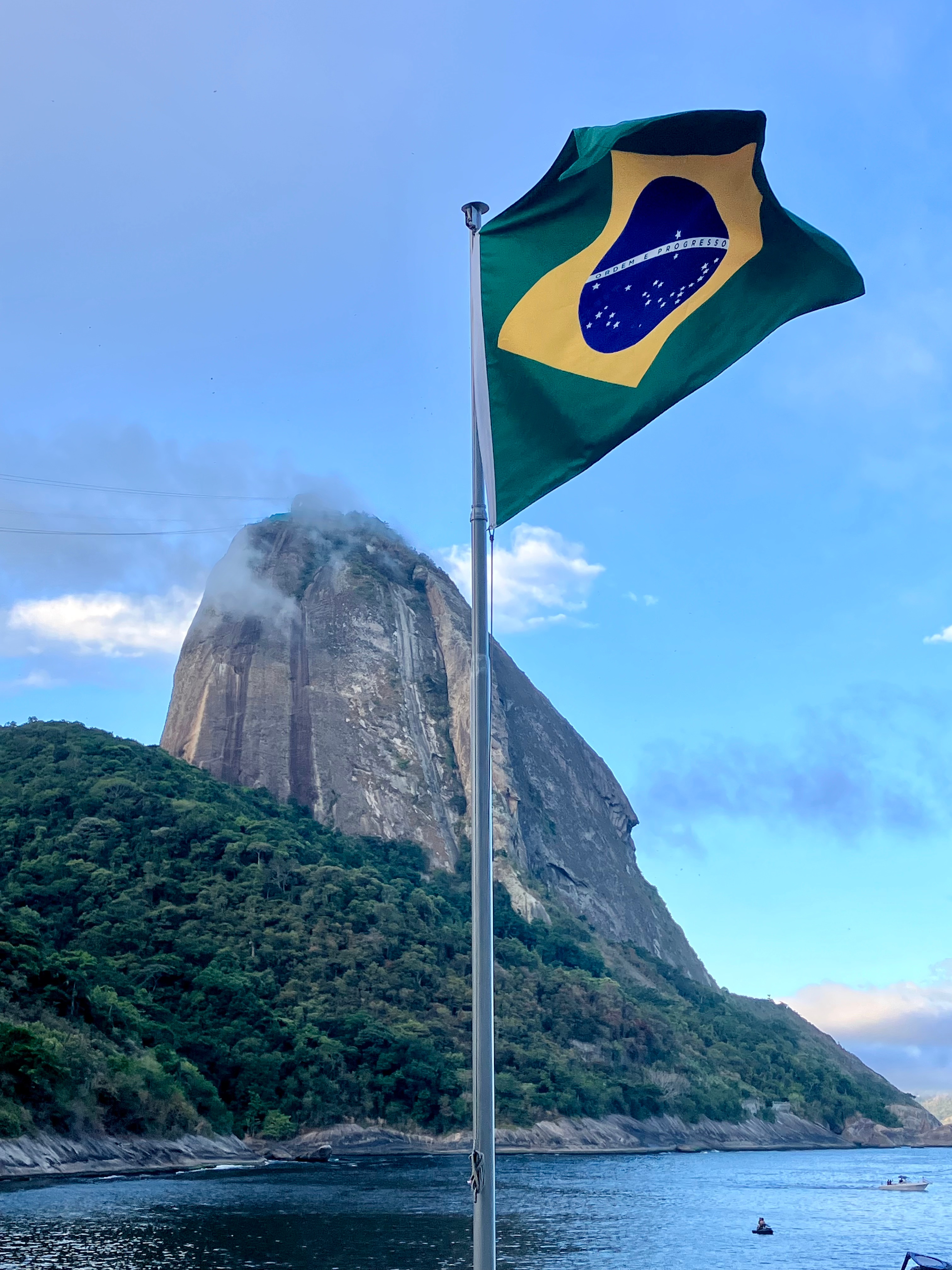
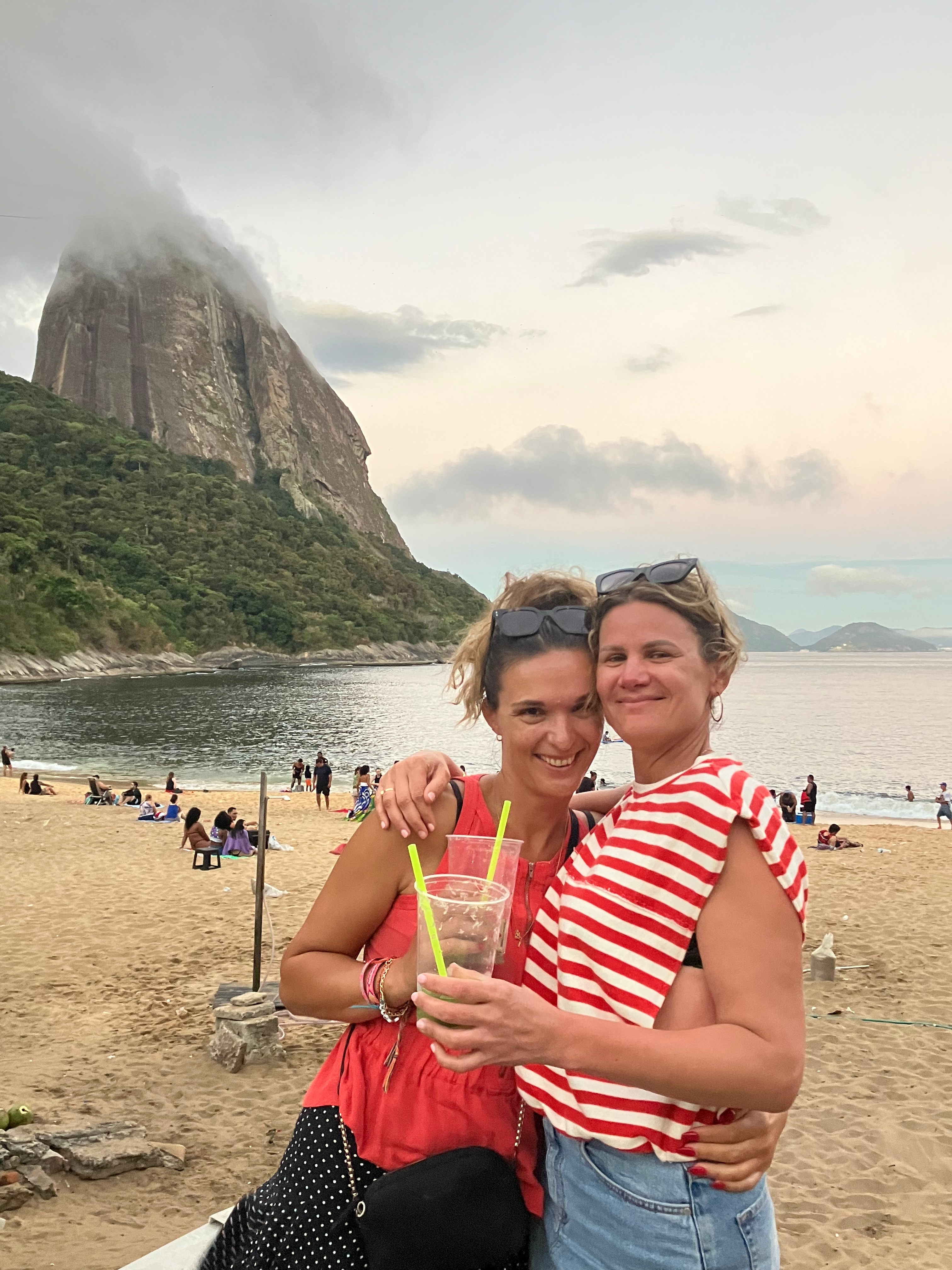
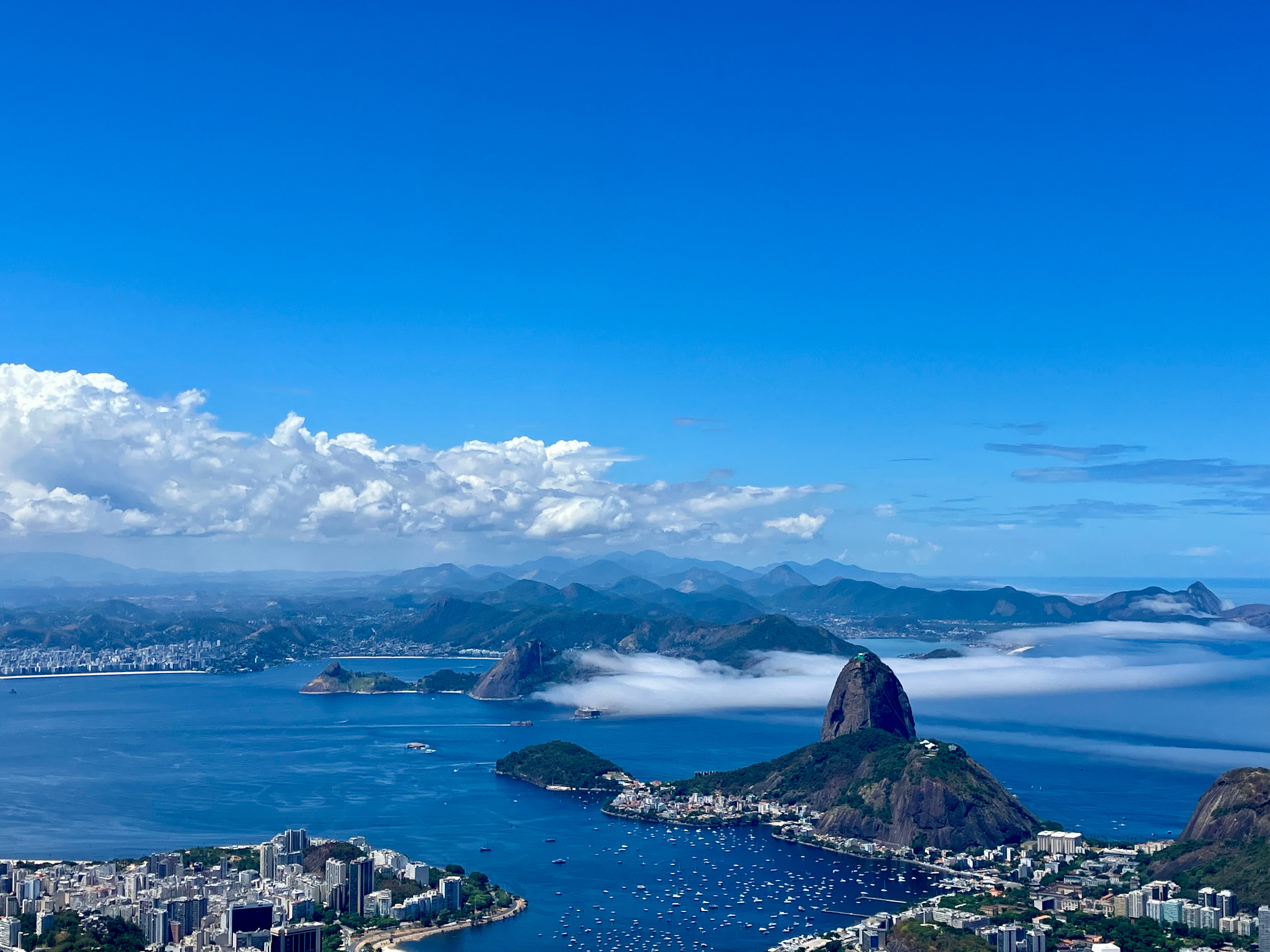
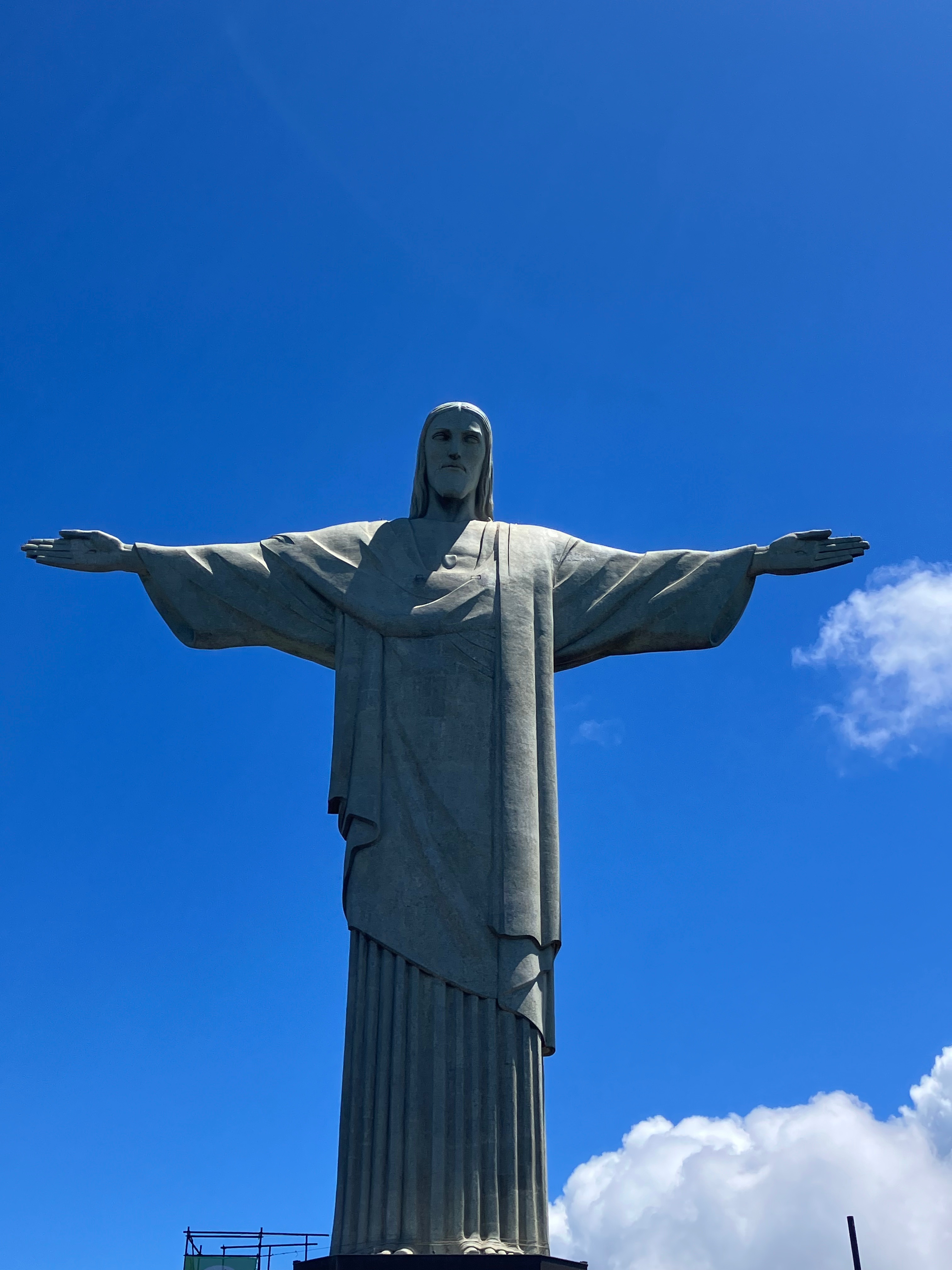
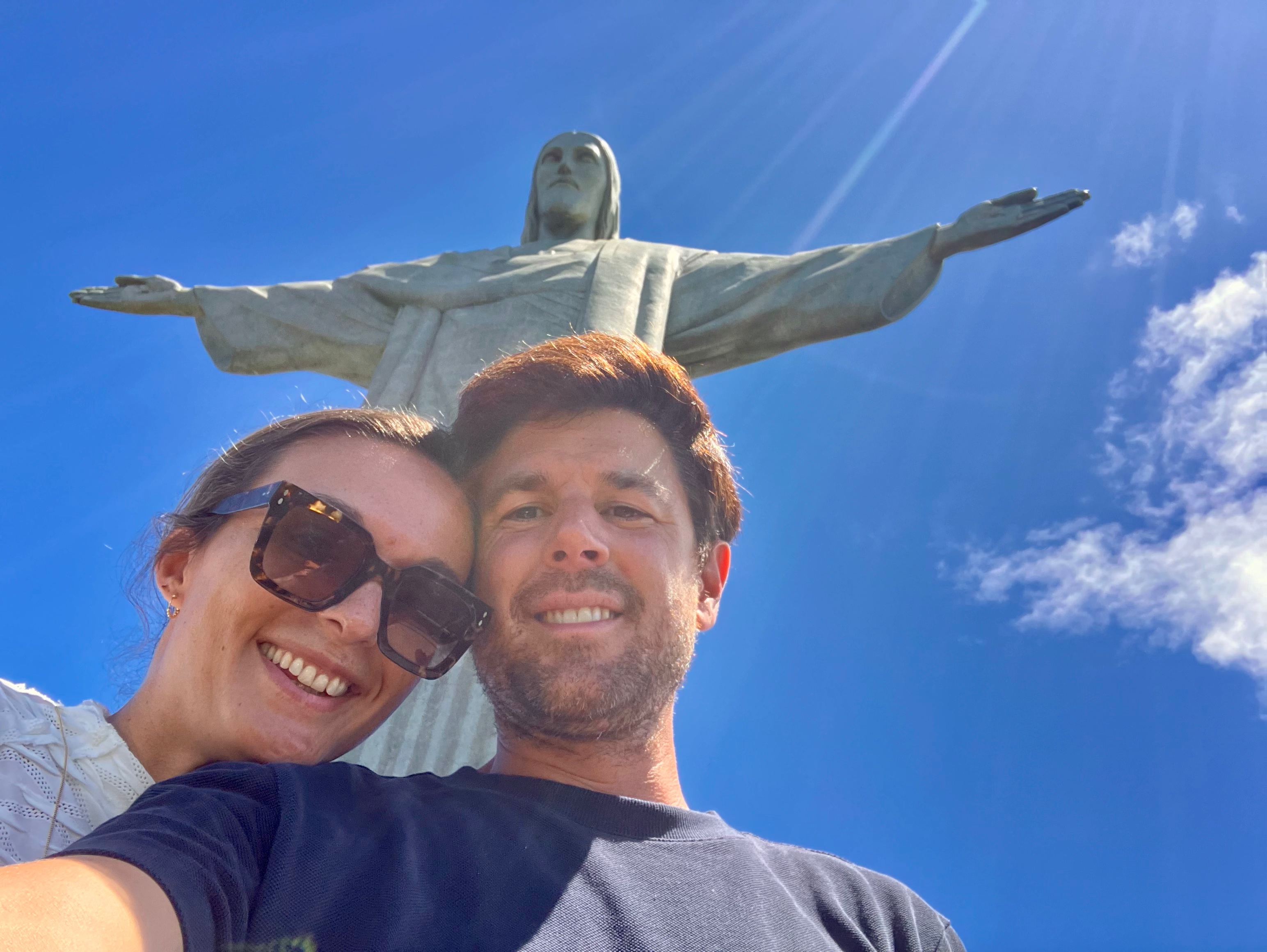
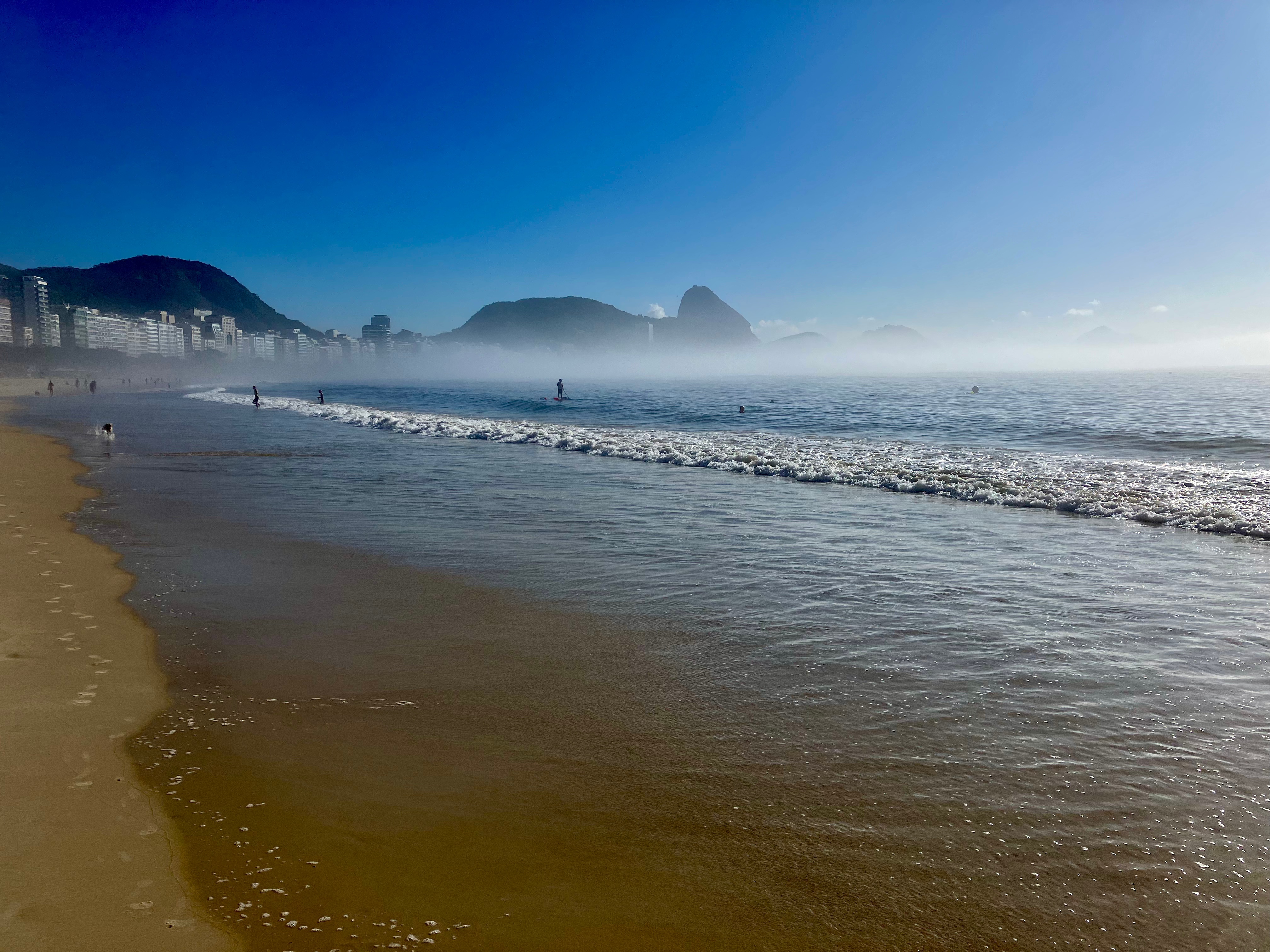
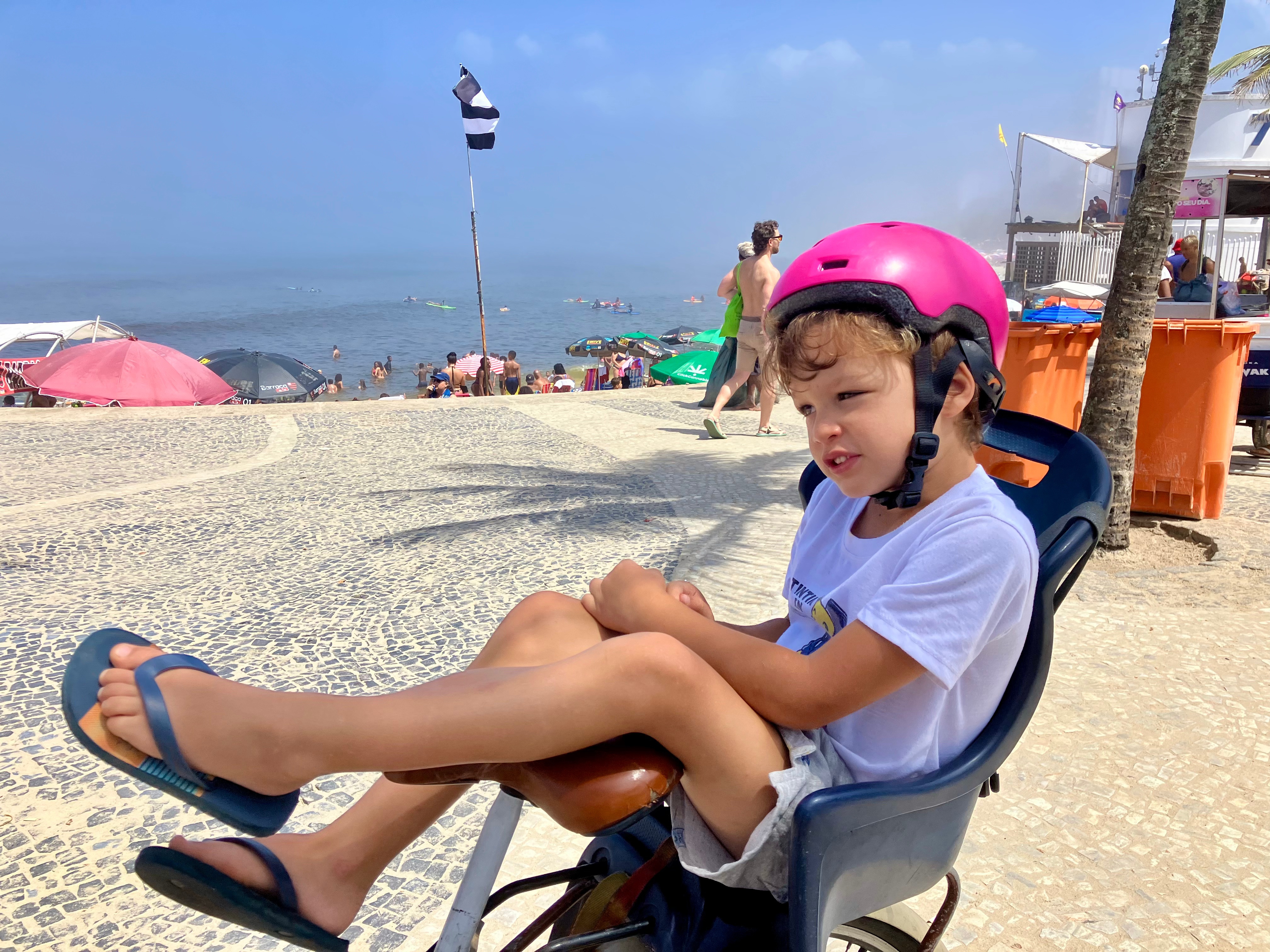
But Rio isn’t just about the scenery.
On land, it’s pure energy. A city in constant motion. It lives, it sings, it dances, it eats. Everywhere. All the time.
The restaurants, the lively streets, the beaches — everything overflows with life.
Rio — so beautiful… but also so dangerous.
It’s not all sunshine here. Nearly a quarter of the population lives in one of the city’s 1,000 favelas.
The city almost went bankrupt after the 2016 Olympic Games.
In the wealthier neighborhoods, police presence is heavy; but once you step out of those areas, violence, corruption, and gang control take over.
To reach the iconic beaches of Copacabana or Ipanema, you drive along highways that cut through mini-cities clinging to the hillsides — a far cry from the postcard-perfect image.
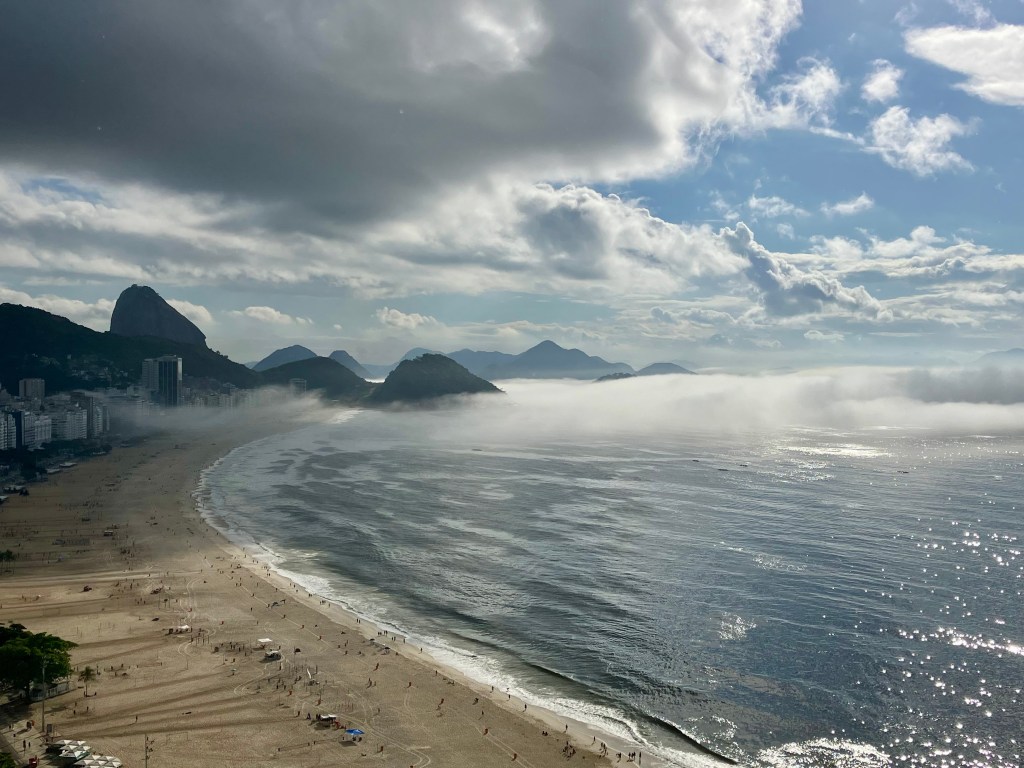
And yet, from our hotel in Copacabana, it’s easy to forget all that.
The view over Sugarloaf Mountain and the sweeping bay is pure magic.
Rio is a city of two faces — and somehow, both are mesmerizing.
We end this magical break with one last meal, toes in the sand, with Jorun, Anthony, Rafael, Filippa and Frances… before saying goodbye for the next five months.
What a trip! Nine days of pure happiness for us, and just as much for Nola and Matteo.
It was so great to travel together.
Just before heading off to the Nordeste — the second region of Brazil we’ll be visiting — there are two things I wanted to tell you about. Two local religions. Two national obsessions. Carnival and caipirinha.
It’s pretty much impossible to miss them if you’re here at the right time — and honestly, you wouldn’t want to.
Carnival: of course, everyone knows about Rio’s carnival, and the more clued-up might have heard of the ones in Olinda or Salvador.
But in reality, every village in Brazil has its own carnival: a slightly shaky stage, a tired sound system, and heaps of good vibes.
And it’s not just a one-night thing: we’re talking about several days of non-stop dancing, singing, and forgetting about the weather, the bills, and sometimes even where you live.
It’s by far the most important party of the year.
Unlike in Europe, where people politely watch from the sidewalk between two waffles, here carnival is something you live from the inside.
You don’t need to be a professional dancer or a sparkly bikini model to join in — you just follow a bloco, one of the street bands parading through the neighborhoods.
Anyone can join: grannies in flip-flops, kids dressed up as Spider-Man, slightly lost tourists.
At Brazilian carnival, there are no spectators — only participants.
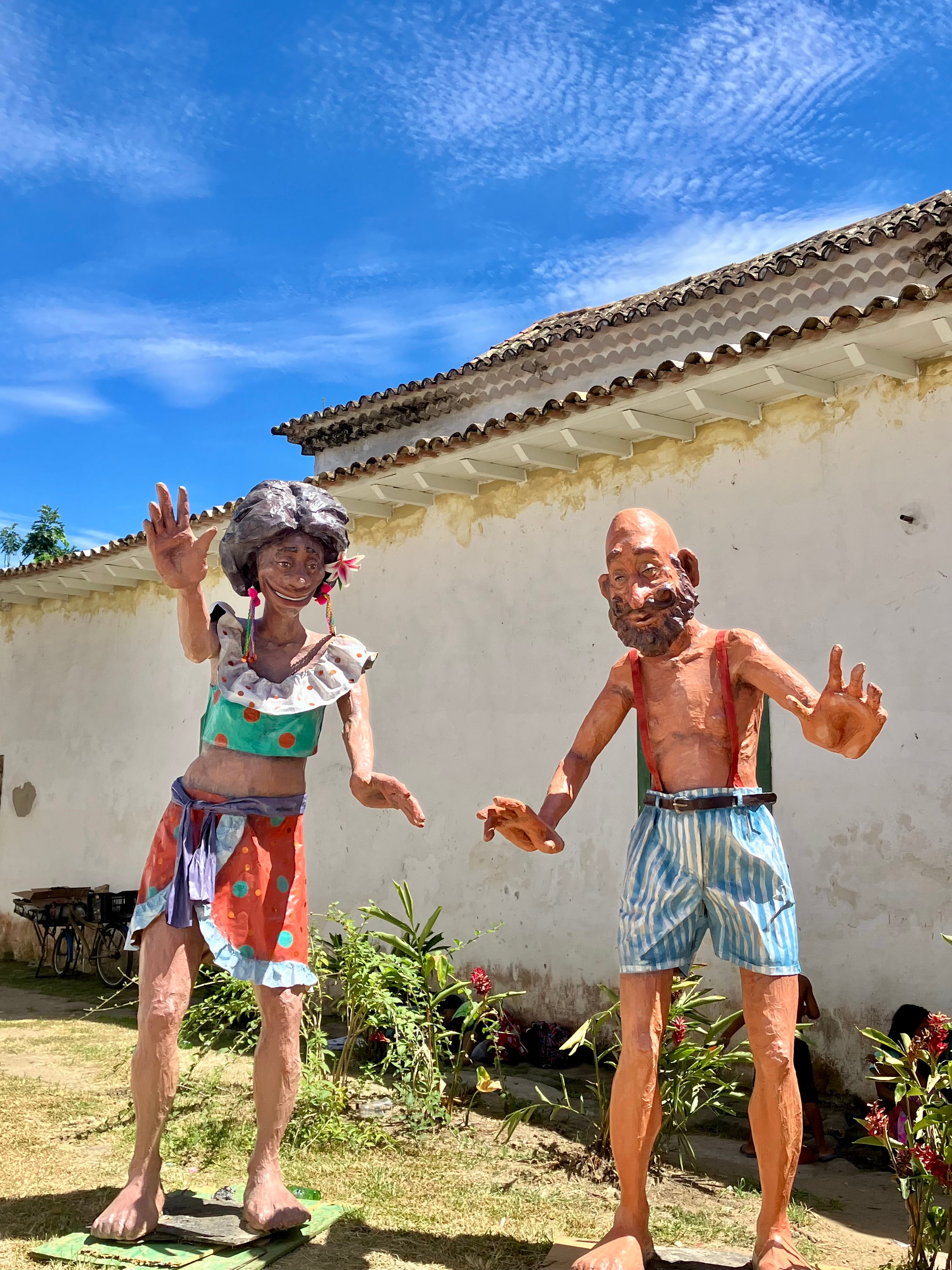
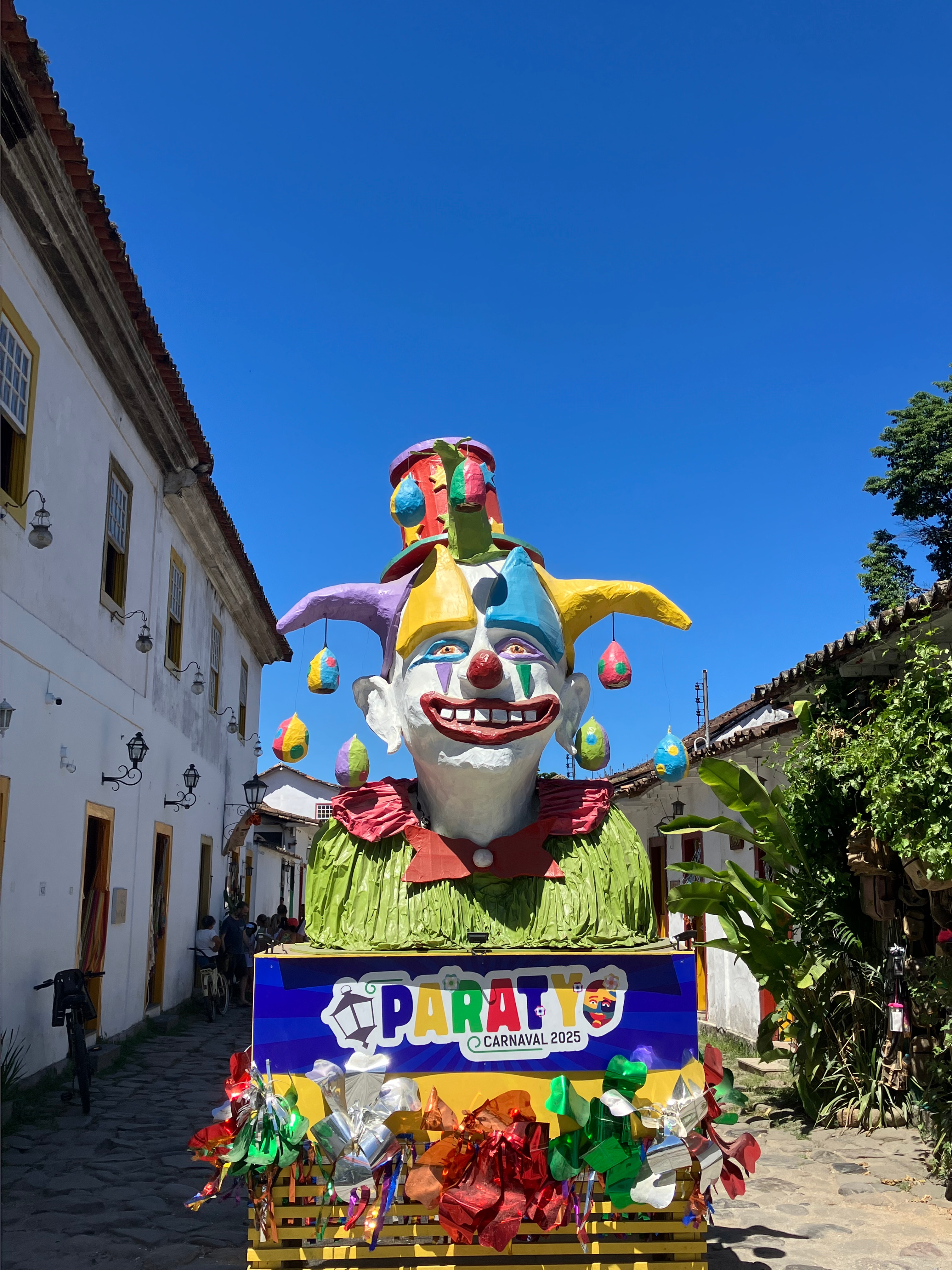
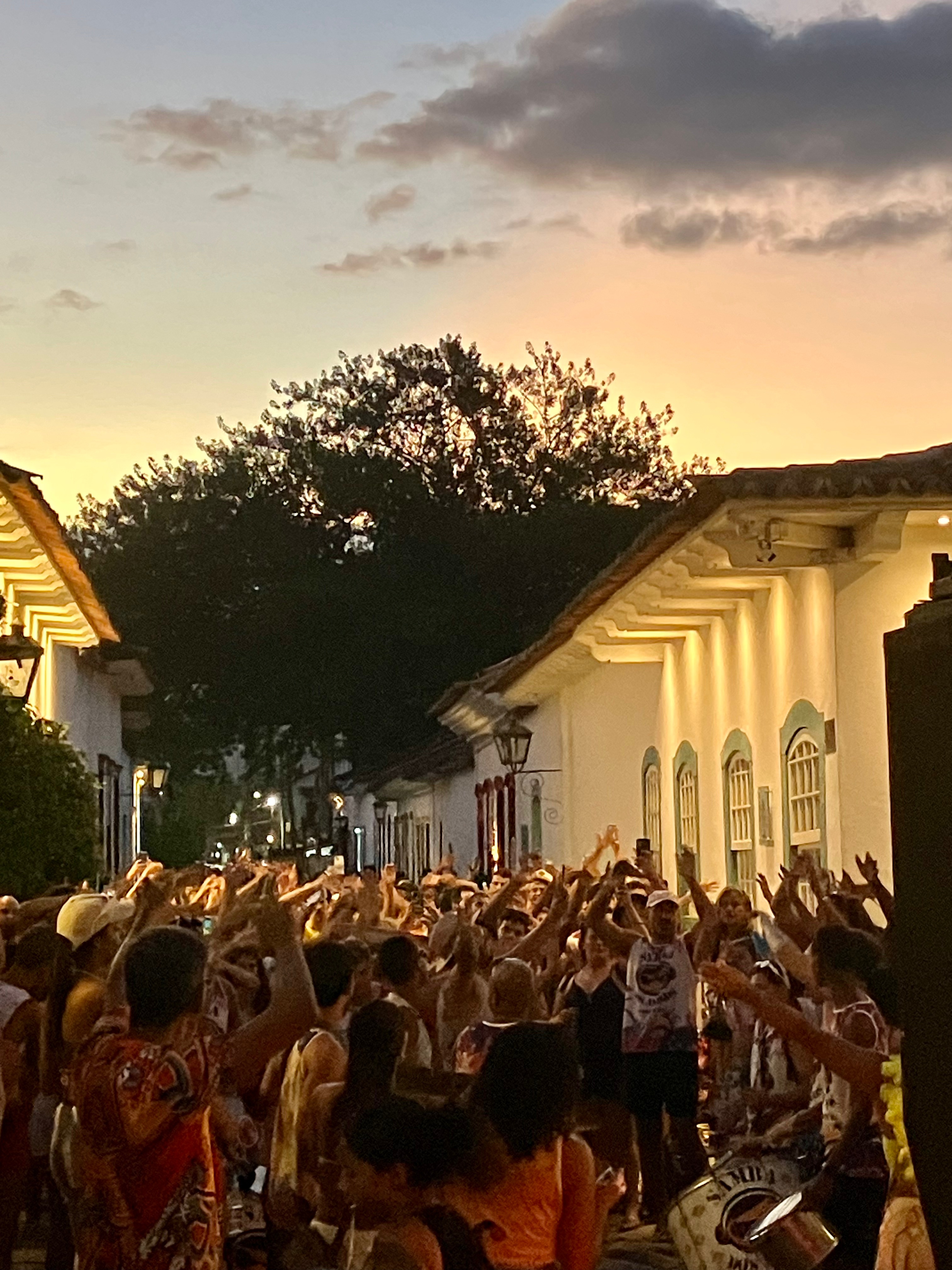
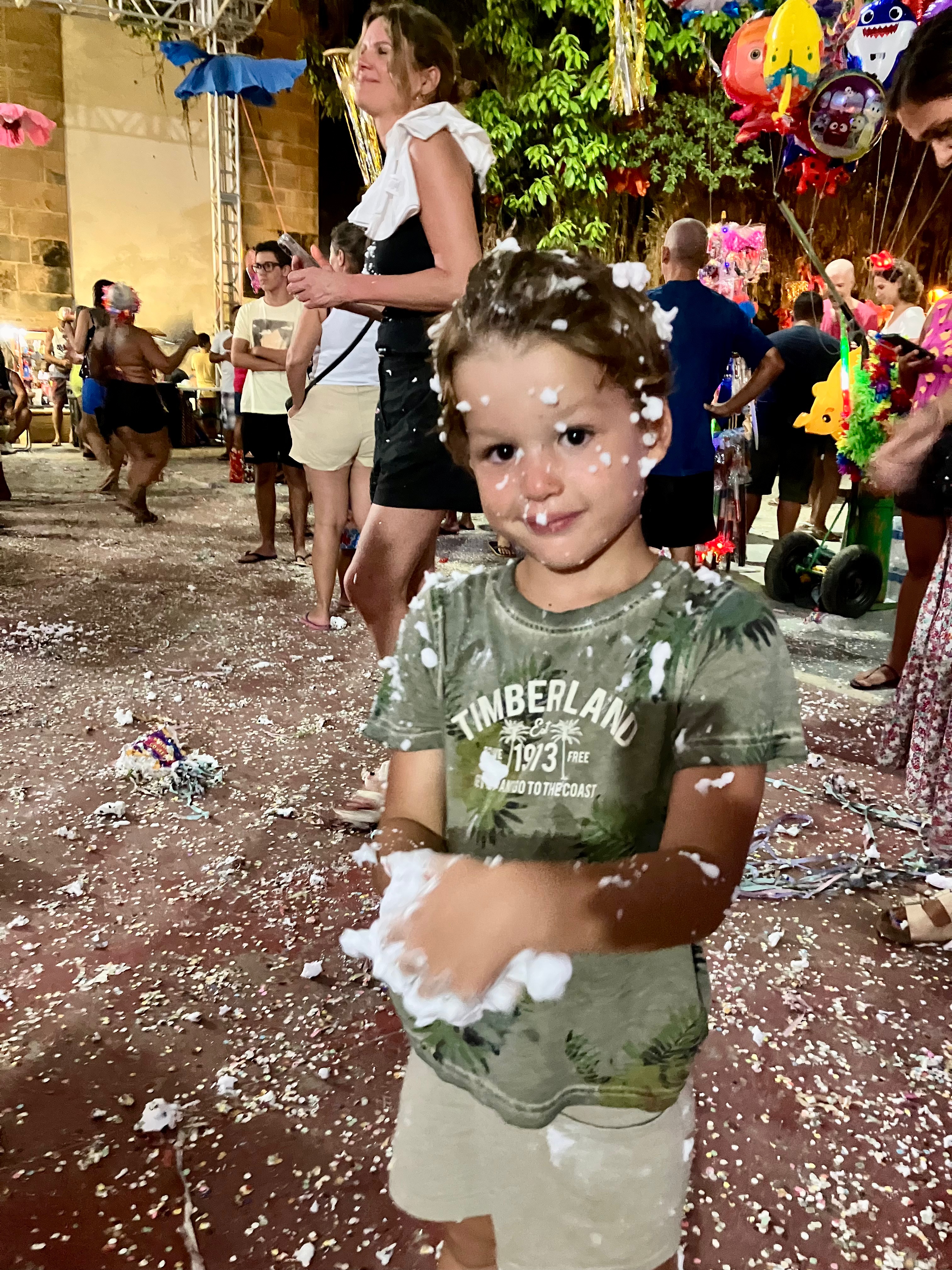
And historically, there’s a reason for all this (yes, we visited the Carnival Museum — we’re serious people, you know).
Originally, carnival was a white folks’ thing: a fancy masked ball vibe, champagne in hand, powdered wigs and all.
Then the Afro-Brazilian communities showed up with their drums, their rhythms, and their unstoppable energy… and they completely flipped the script.
Today, carnival is a street party: popular, vibrant, mixed — a place where every social class comes together and shines.
It’s the country’s biggest celebration, and everyone gets to be a star — even in a neon leopard-print thong.
Caipirinha: the religion of lime
Honestly, we could have squeezed the caipirinha into any chapter about Brazil. This national drink is everywhere.
On the beach, at the market, in bars, at a random street stand…
It’s cheaper than a glass of wine (and way more effective if you’re planning to dance the samba).
So with Jorun and Anthony, we did what every self-respecting traveler in Brazil is supposed to do: we embraced the tradition. Fully.
The classic recipe? Lime, sugar, and cachaça — the local holy water, which costs about €2 for a liter bottle.
But you’ll also find it made with strawberries, passion fruit (my personal favorite), or even mango.
2. Nordeste: heat, favelas, and endless beaches
It’s past 8 PM and we’ve just landed in Recife.
The temperature might be the same as in Rio, but the humidity?
Off the charts. It grabs you by the throat.
We pile into an old taxi. It’s pitch black outside, the kids are dozing off, but the atmosphere is anything but peaceful.
The streets are deserted, but not in a reassuring way.
The driver, one eye on the road and the other glued to the rearview mirror, keeps muttering: “É uma favela, é perigoso…” — it’s a favela, it’s dangerous.
Welcome to the Nordeste.
One of the poorest — and most violent — regions of Brazil.
And yes, poverty and violence often go hand in hand.
Here, poverty doesn’t even try to hide behind the palm trees.
It’s right there, out in the open.
It coexists with postcard-perfect beaches, brand-new skyscrapers, and air-conditioned shopping malls.
It’s part of the city.
It is the city.
And the favelas are its beating heart.
Honestly, I could have mentioned them in every chapter about Brazil — they’re that omnipresent. Recife, Rio, São Paulo, Salvador, Curitiba… Every major city has hundreds of them.
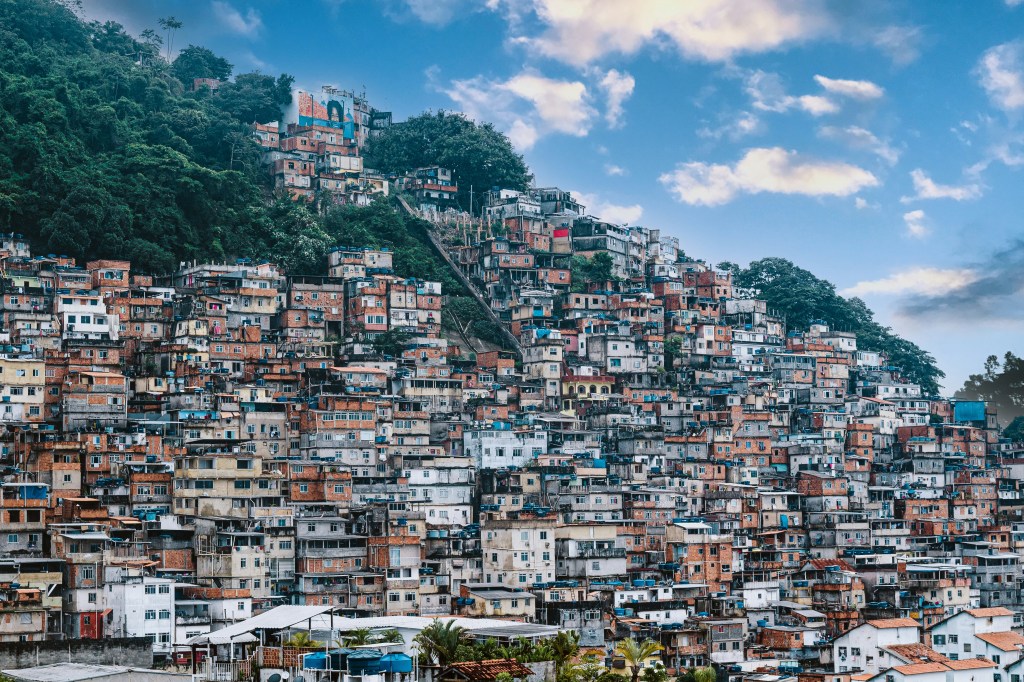
They’re not slums in the classic sense of the word.
They’re full-on neighborhoods — sometimes with solid brick houses, often hooked up to electricity, water, and sewage systems.
You’ll find shops, schools, and a real sense of community life.
The favelas were born from history. When slavery was abolished in 1888, the freed slaves were given neither land nor housing. Add to that the rural families fleeing the misery of the sertão — the dry, barren lands of the north — and you get a massive migration toward the cities.
With nowhere else to go, they built on the margins: on the hillsides, in unbuildable zones, in the blind spots of the State. What the government didn’t provide, they took.
Yes, there’s violence.
Yes, there’s trafficking, guns, and turf wars.
The Northeast has some of the highest homicide rates in the country — and Recife is often high on the list. And yet, it’s not like the competition is easy: Brazil’s national homicide rate is 25 times higher than that of France.
The tension hangs in the air. You can feel it.
But don’t fall for the clichés. Most of the people you meet at museums, restaurants, or hotels come from there — from the favela. In Rio, they say every fancy neighborhood has its twin favela clinging to the hill behind it, like a shadow. That’s where the people who provide all the labor live: the waiters, the cleaners, the guides, the street vendors…
The invisible Brazil, essential but barely seen. In fact, during our first 45 days in the country, we never once felt unsafe.
After 30 minutes in a rattling taxi, we finally reach our destination: Olinda, right across from Recife. But it’s not (just) for its history that we’re here.
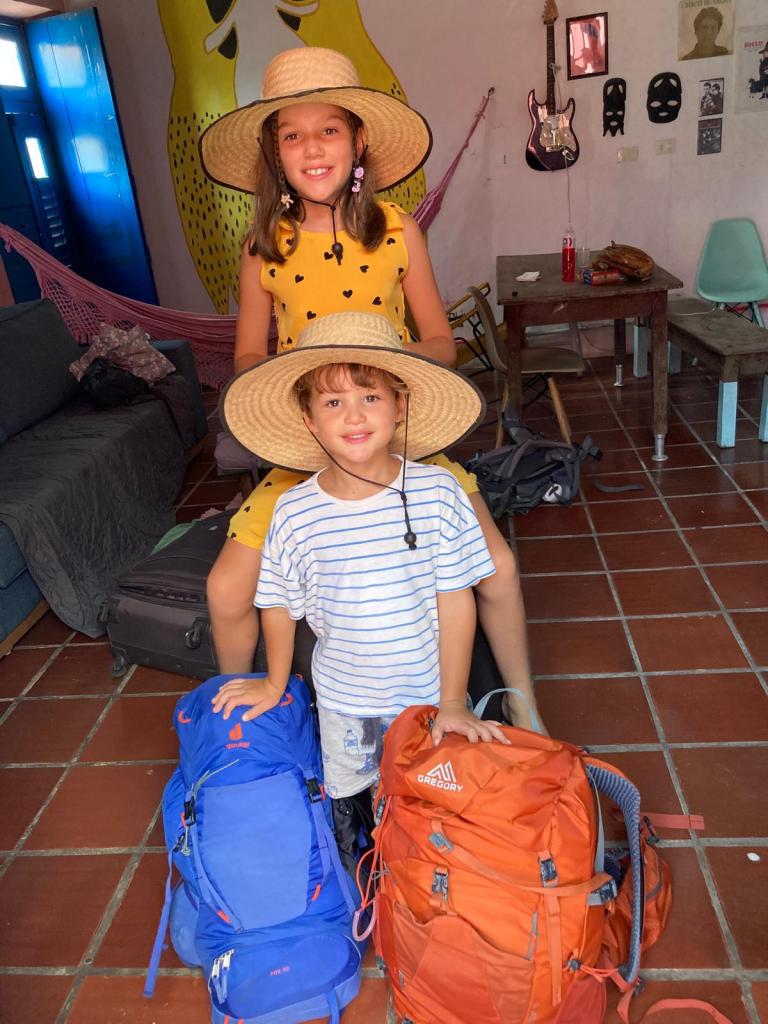
It’s here that we reunite with Suzanne’s mother and stepfather. More than seven months without seeing each other. Seven months without Matteo and Nola getting a hug from their grandparents.
The reunion feels so good. For them, for us, for the kids.
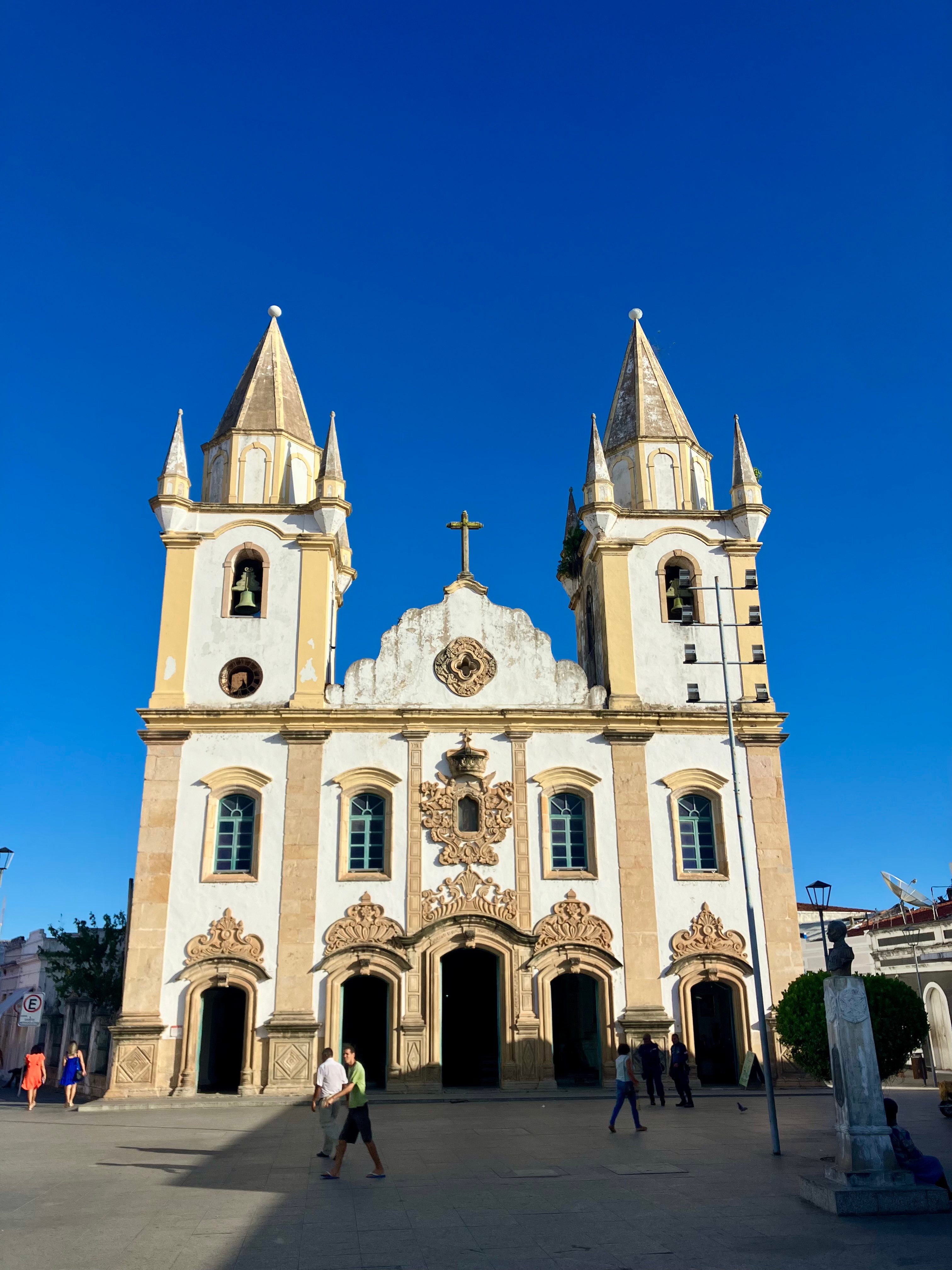
The next day, we set out to explore colonial Olinda.
We pictured it festive, joyful, colorful — and we weren’t wrong.
The last carnival parades were still echoing through the streets, giving us a real taste of its vibrant soul.
But we were also a bit disappointed by the city.
Olinda, a UNESCO World Heritage site since 1982, seems to have seen better days.
It’s beautiful, yes, but a bit worn-out.
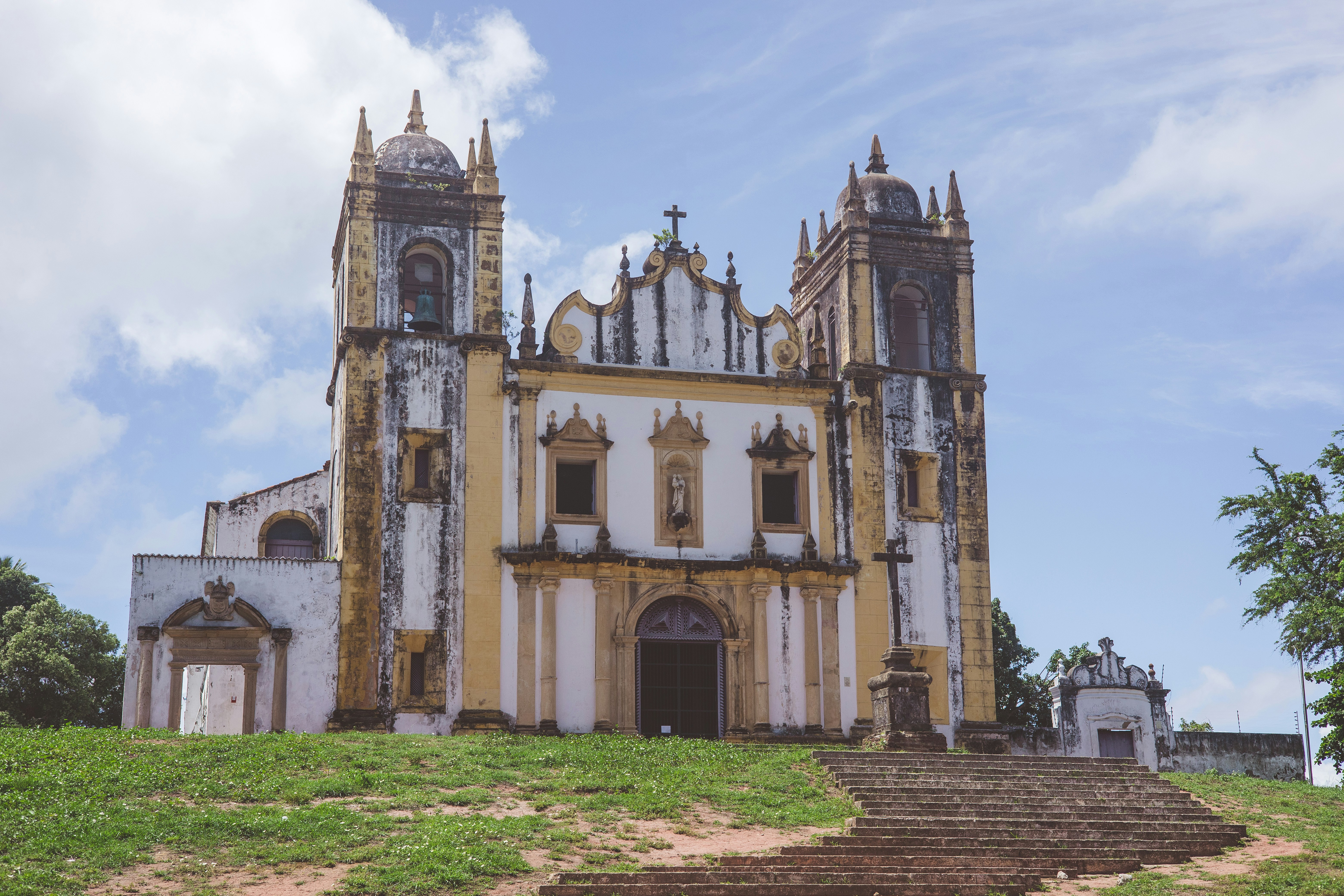
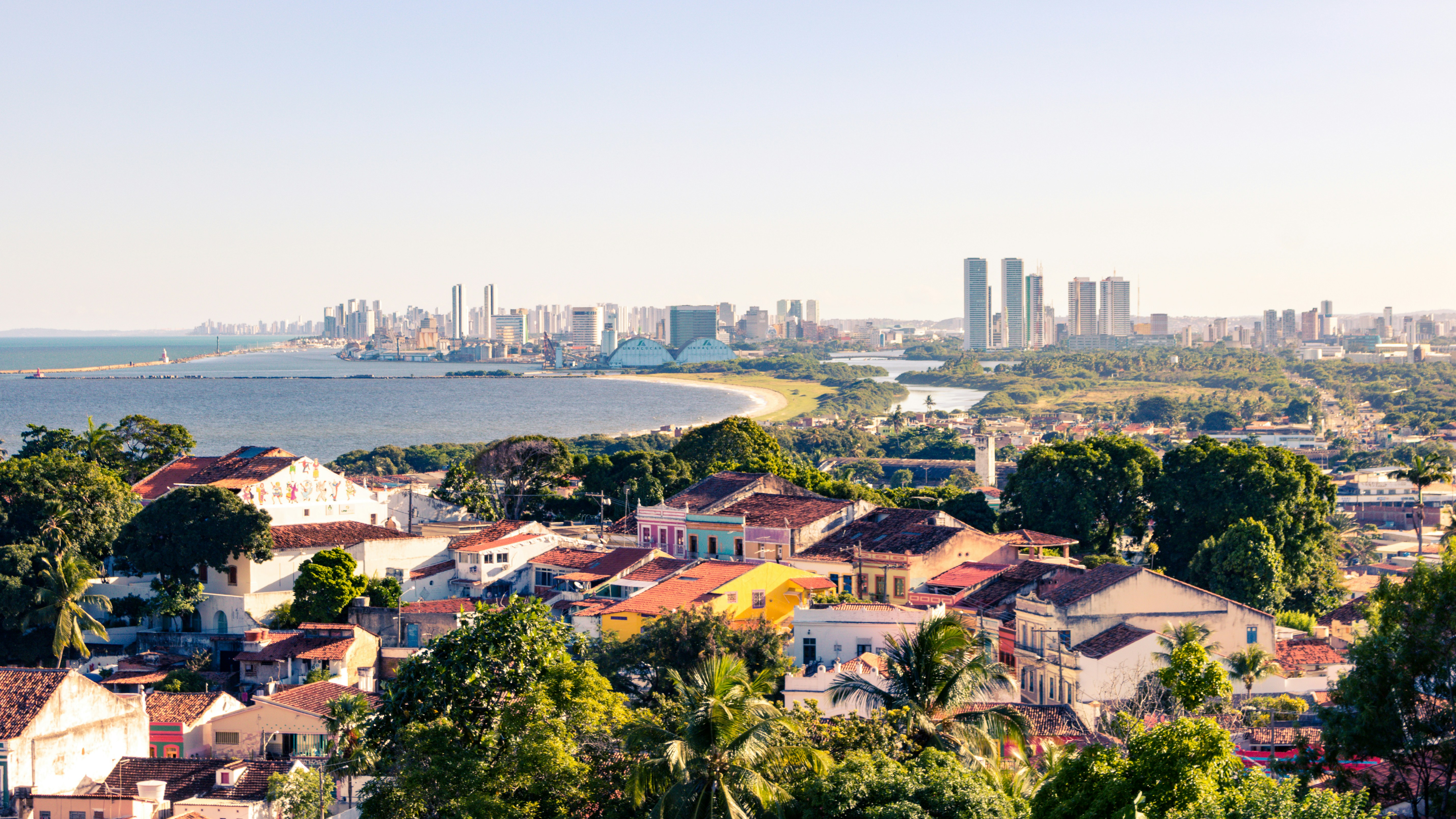
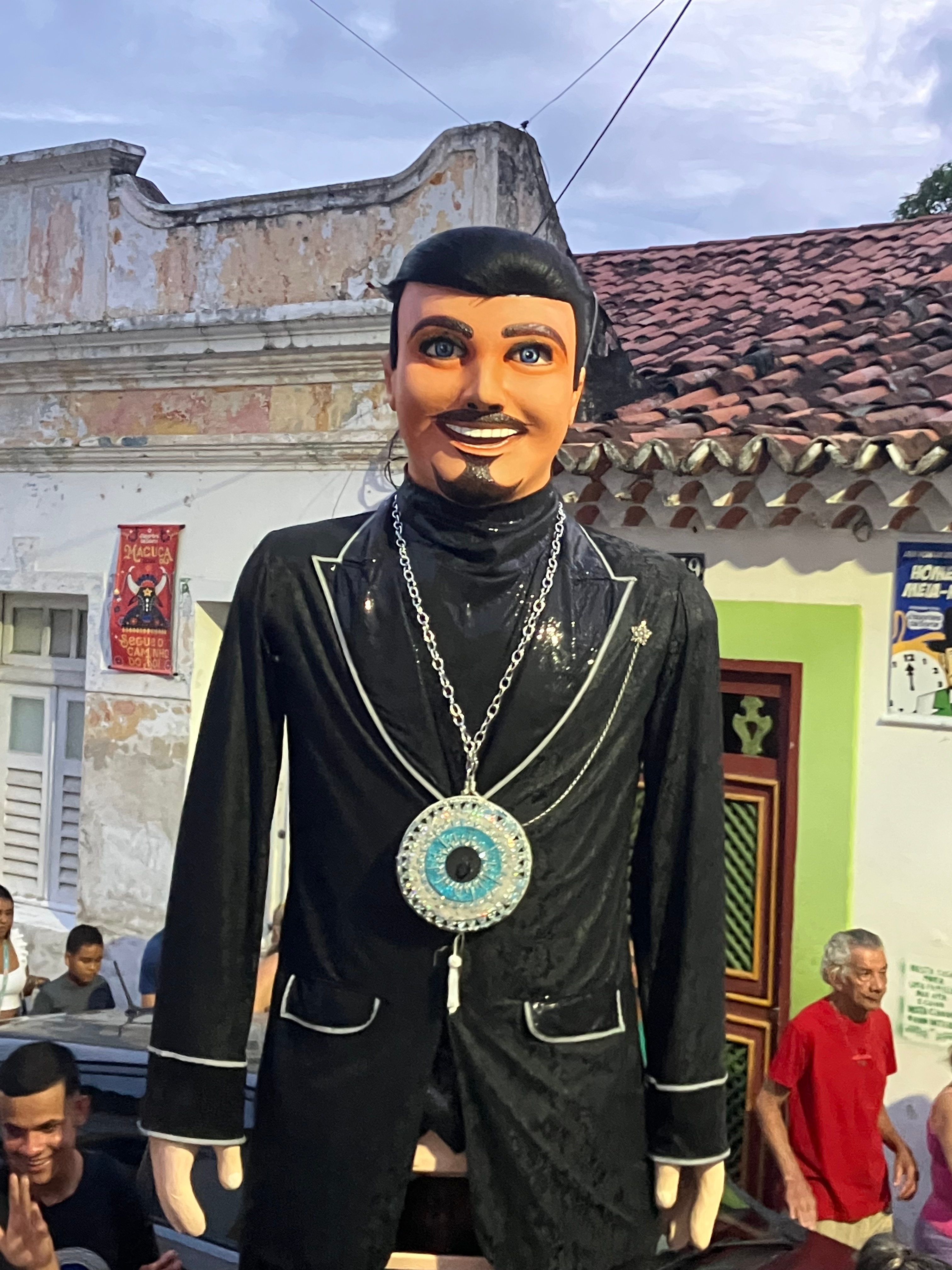
And yet, this city perched on the hills was once one of Brazil’s very first major colonial settlements.
An economic capital during the 16th and 17th centuries, it grew rich early on thanks to the first pillar of Brazil’s colonial economy: sugarcane.
Portuguese settlers got wealthy while African slaves worked themselves to exhaustion in the surrounding fields.
A classic story.
Until the Dutch showed up — and literally set the place on fire — in 1631, plunging Olinda into oblivion.
Thanks, guys.
After two days with my in-laws, they offered us the ultimate luxury of the year: six days just the two of us.
Alone…
Without the kids…
Our first and only little escape as a couple in this entire 365-day adventure!
Thank you, Toto and Mutti.
I thought it would feel like freedom. A relief.
And yet… it didn’t.
It felt strange. Those two little monsters are a part of us now. We’ve become a unit, a team, a real family. Of course, we argue (often), and yes, sometimes we dream of nothing but silence… but that’s our balance.
I would never have imagined myself saying that back in Belgium.
That said, it still felt pretty amazing.
I won’t tell you all the details, but those days together were filled with good food, long walks on the beach, and — of course, because traveling isn’t all cocktails and sunsets — plenty of logistics to plan the next steps.
Oh, and also my first real cold in seven months.
Turns out even your body can throw tantrums sometimes.
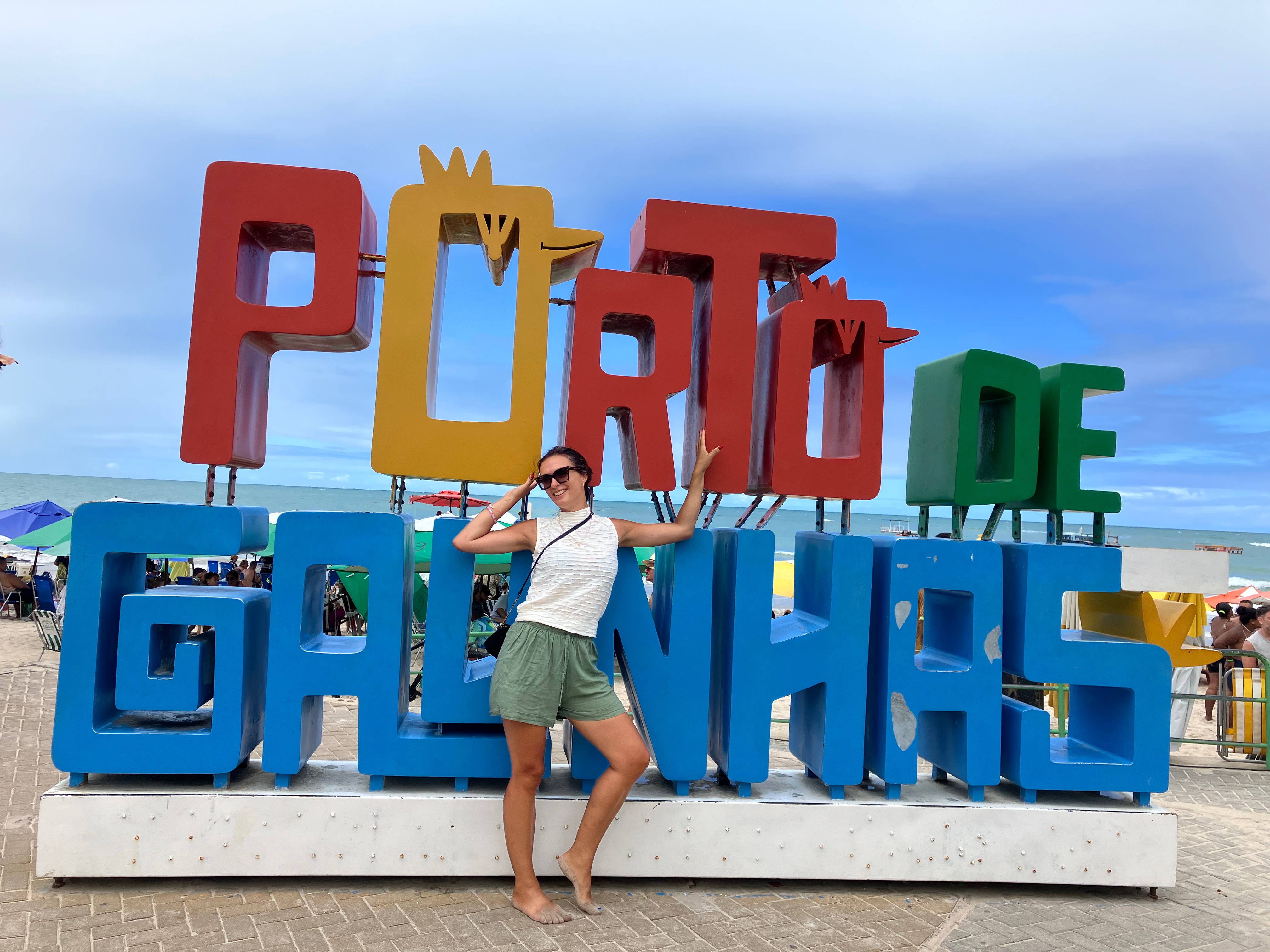
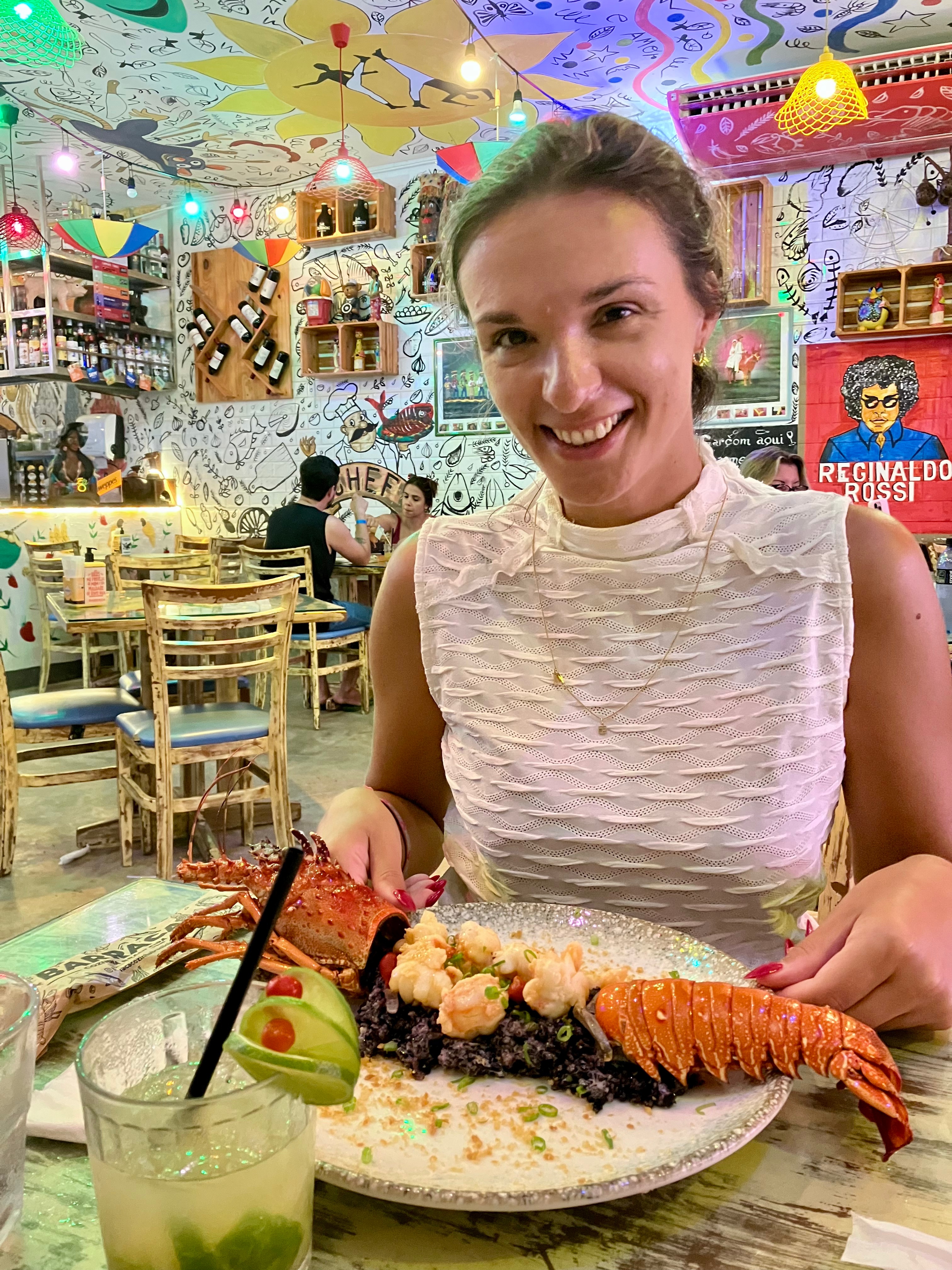
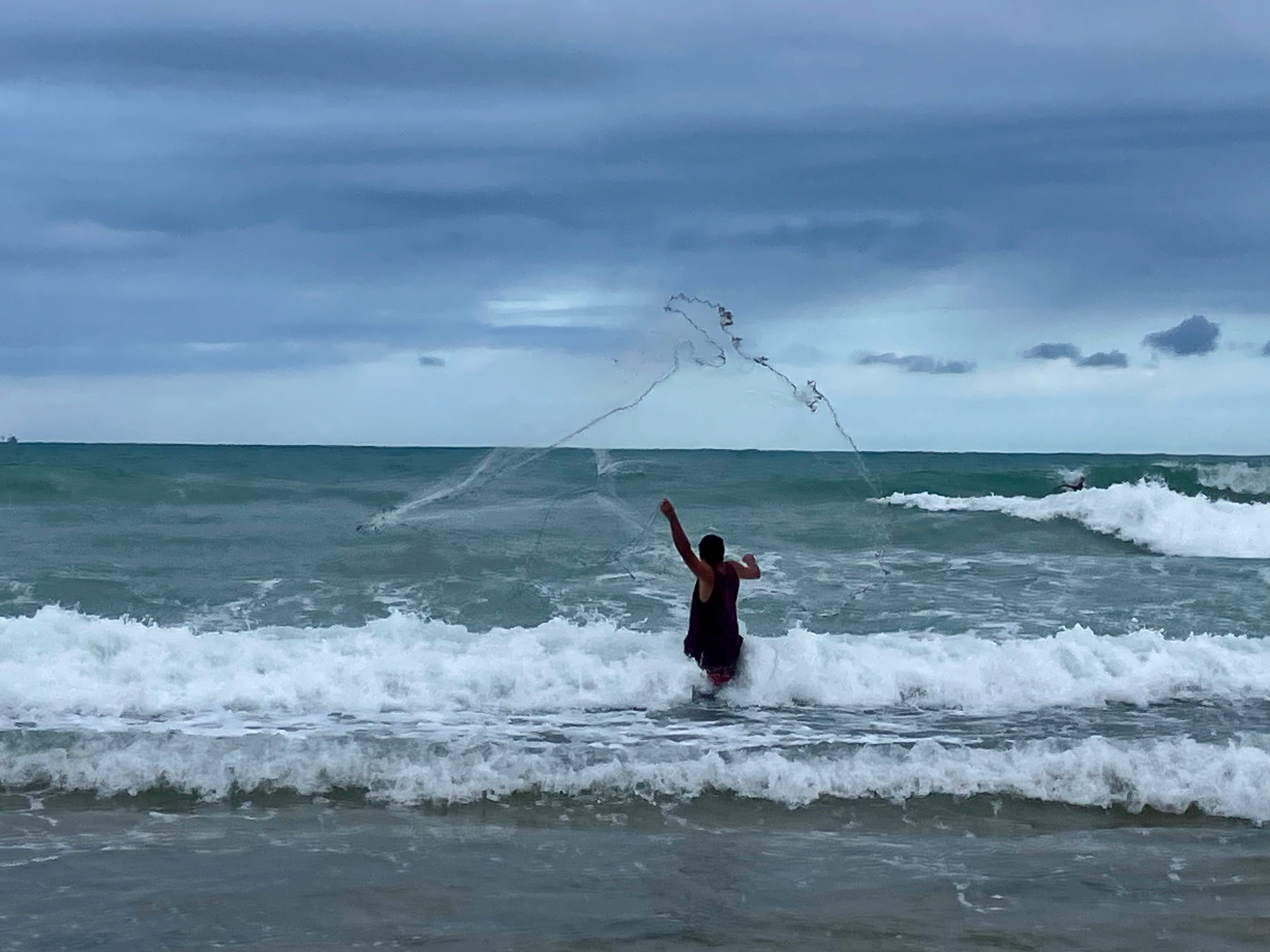
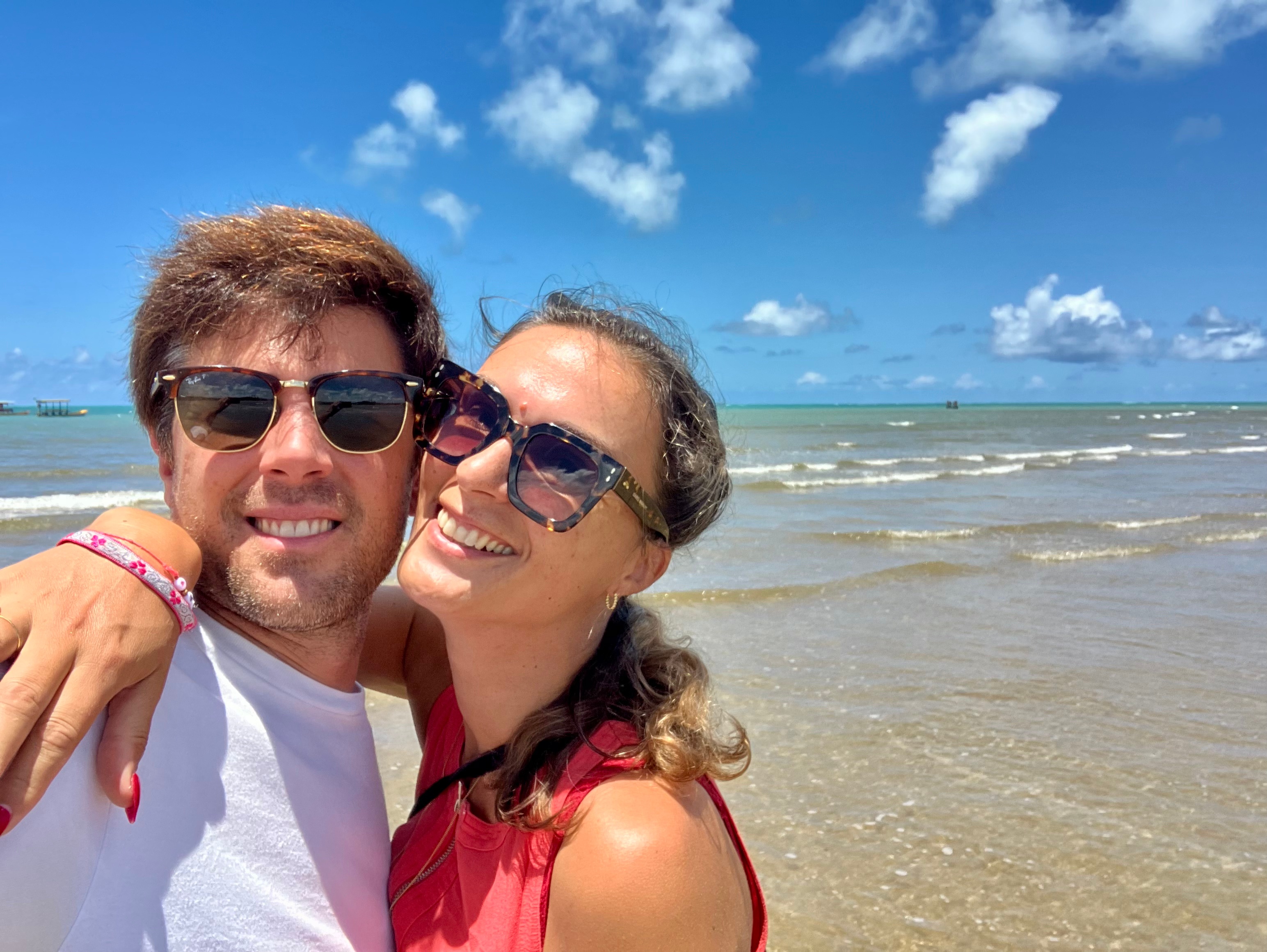
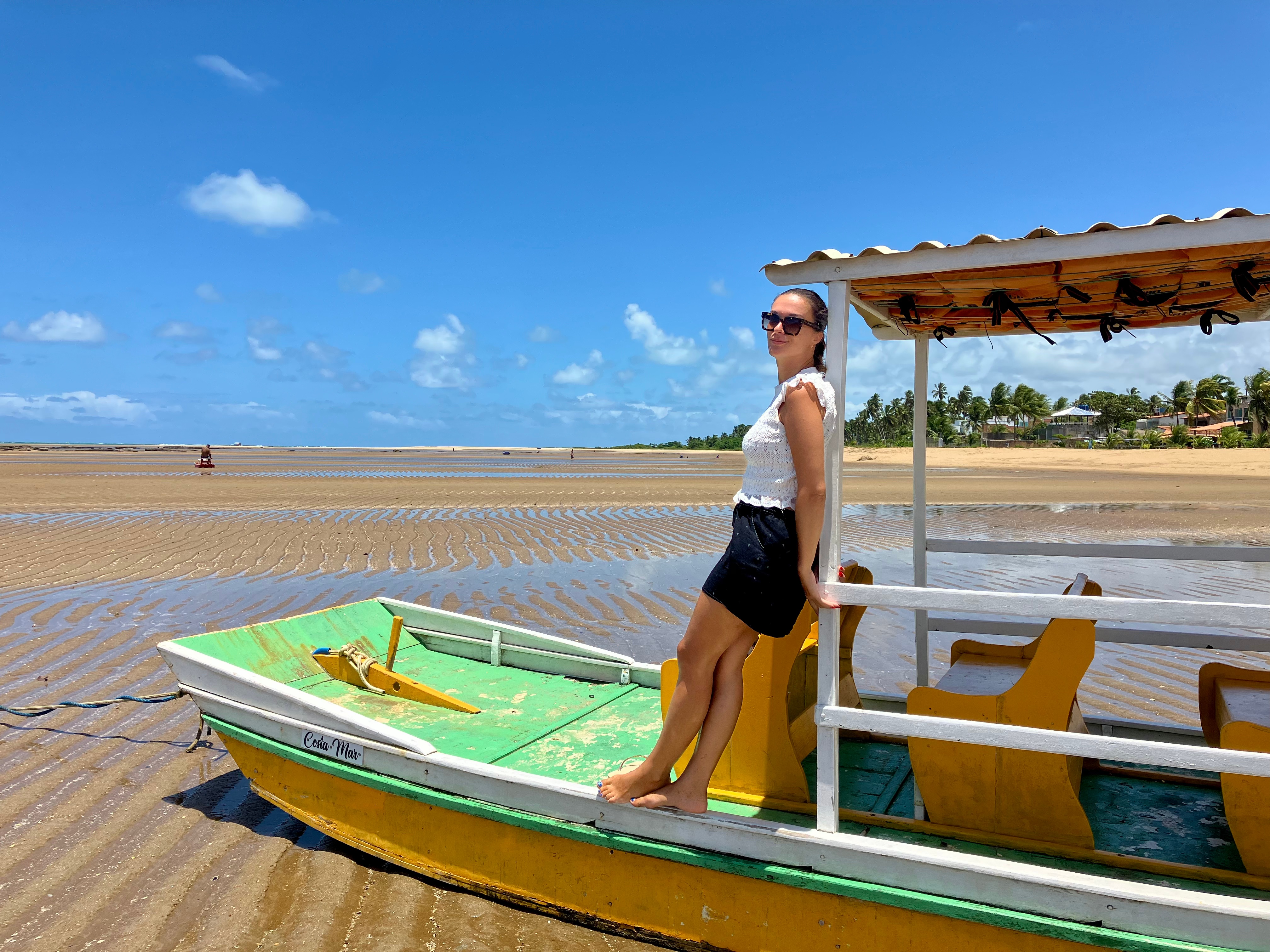
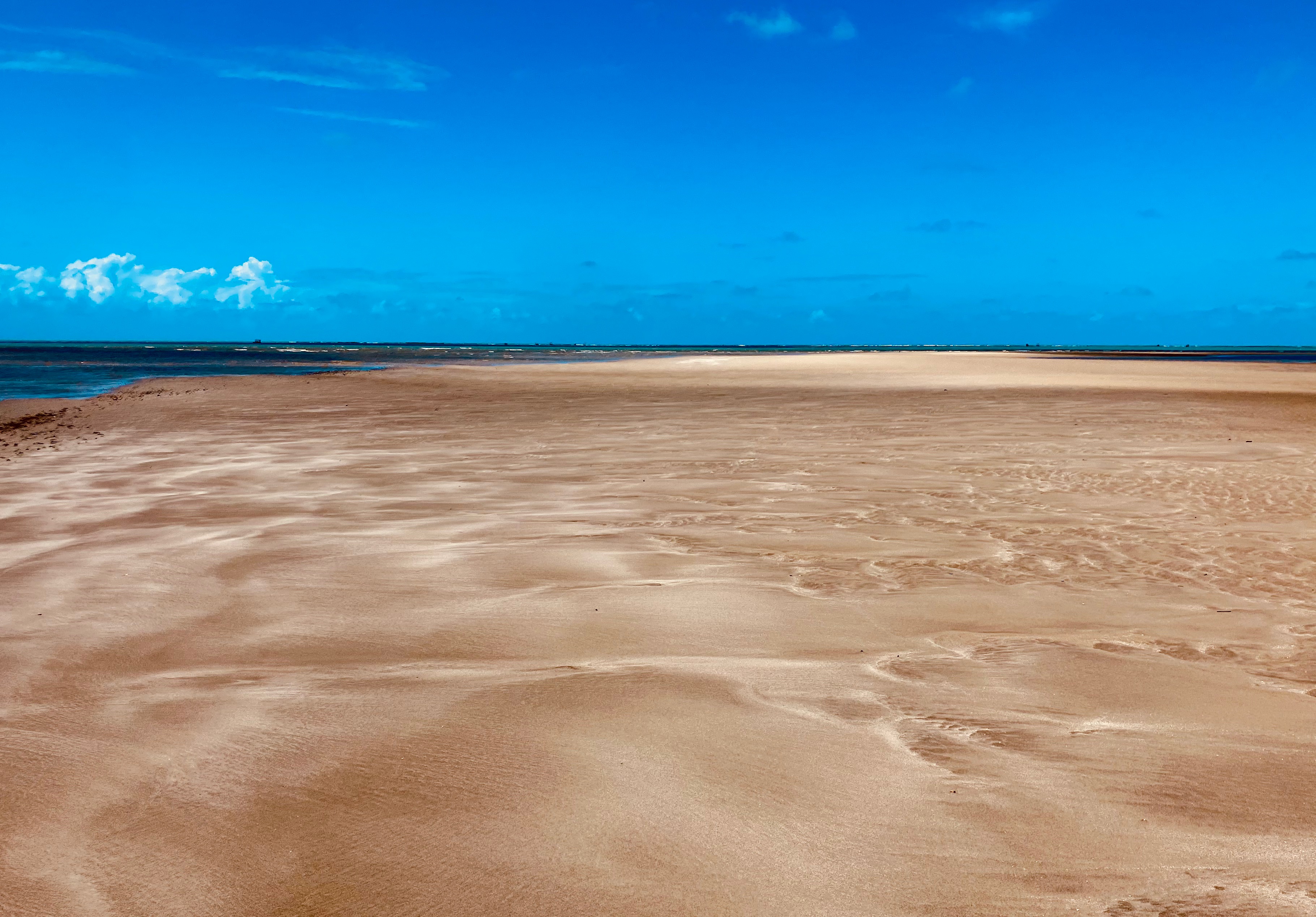
After picking up the kids and spending a couple more days with the in-laws, we hit the road again, heading south.
It has been amazing to spend that time together.
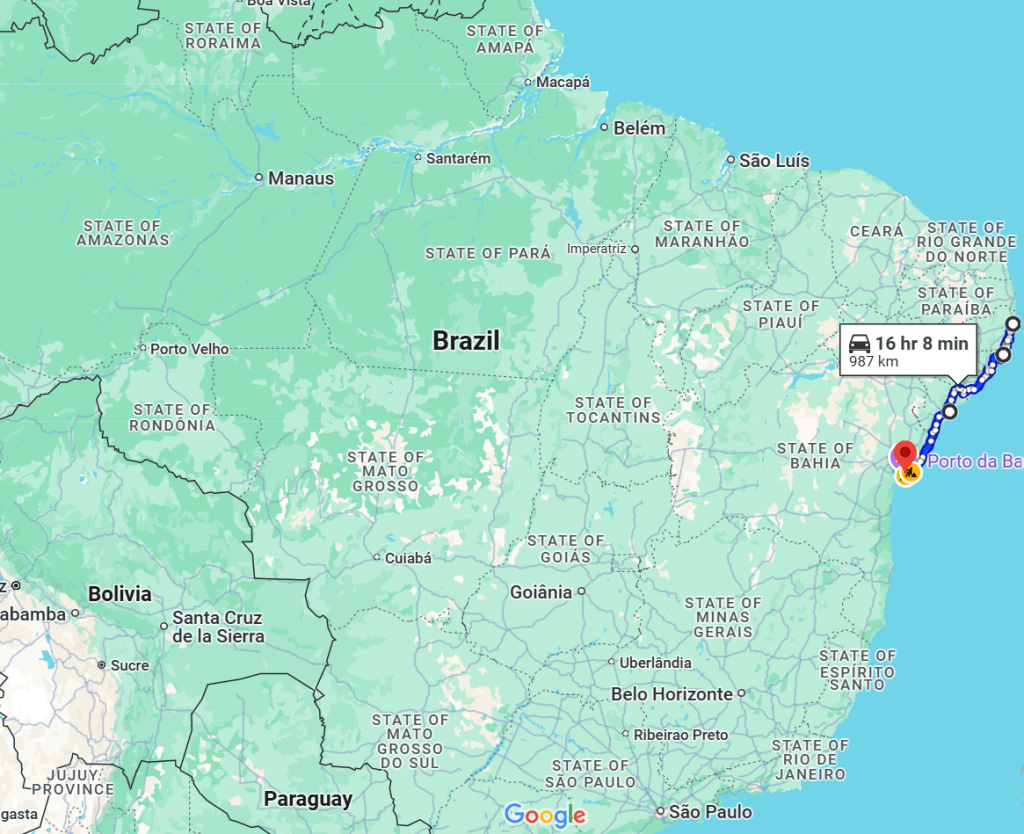
The Northeast stretches over 3,500 kilometers of coastline.
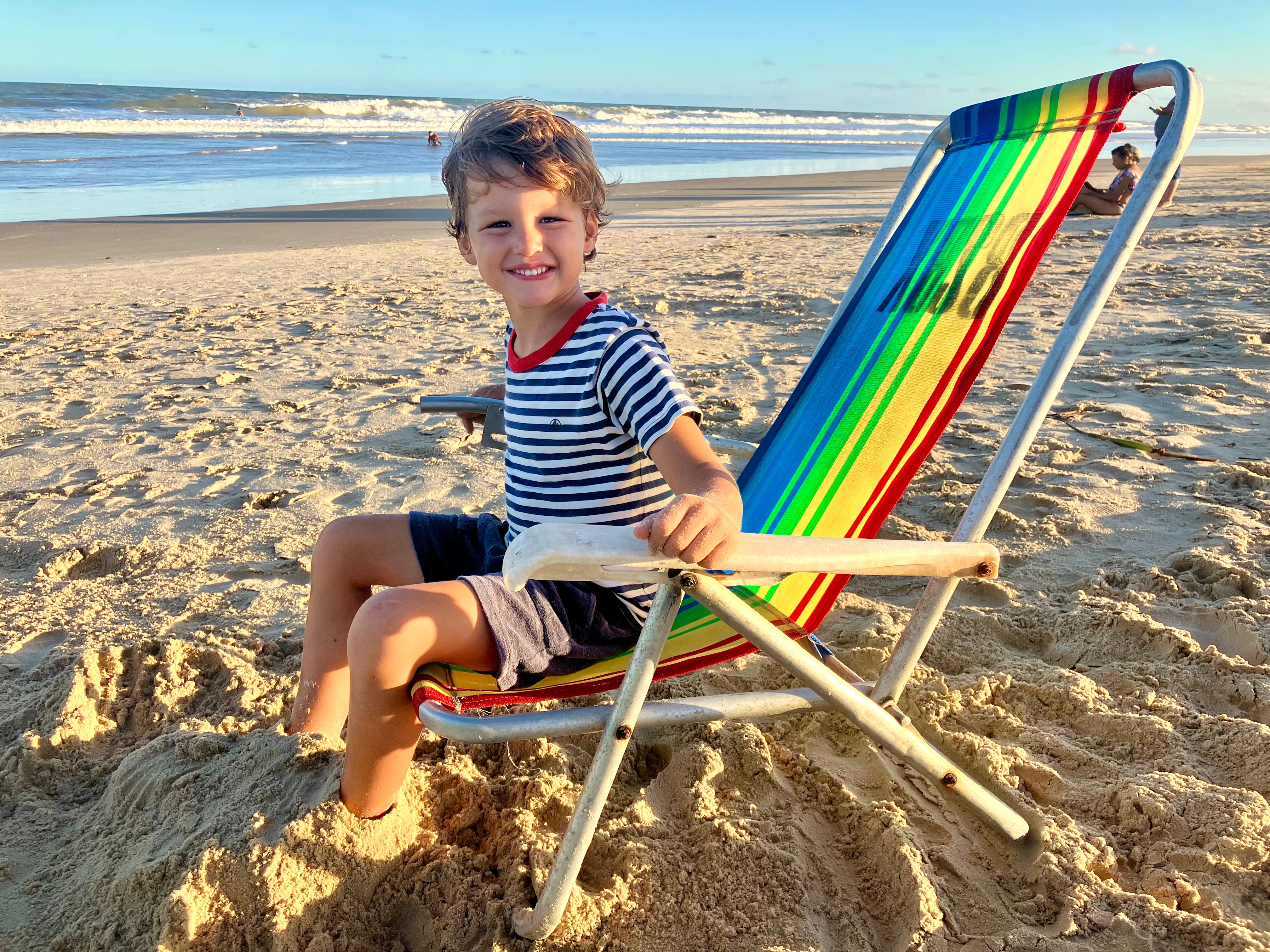
We didn’t cover it all, but we still managed to drive 1,000 kilometers along the ocean — often zigzagging through villages, dunes, and palm trees, sometimes hopping on a ferry. Here, there are no big highways: you need time, patience, and a car that can handle potholes.
And what do we pass along the way? Breathtaking landscapes.
The blue of the ocean flirts with the deep green of the tropical forests.
We see endless fields of sugarcane, cacao, and cotton.
But head further inland, and you hit the sertão: a dry, rugged region where rivers run dry for half the year, and the scenery is reduced to cacti and a few scorched bushes.
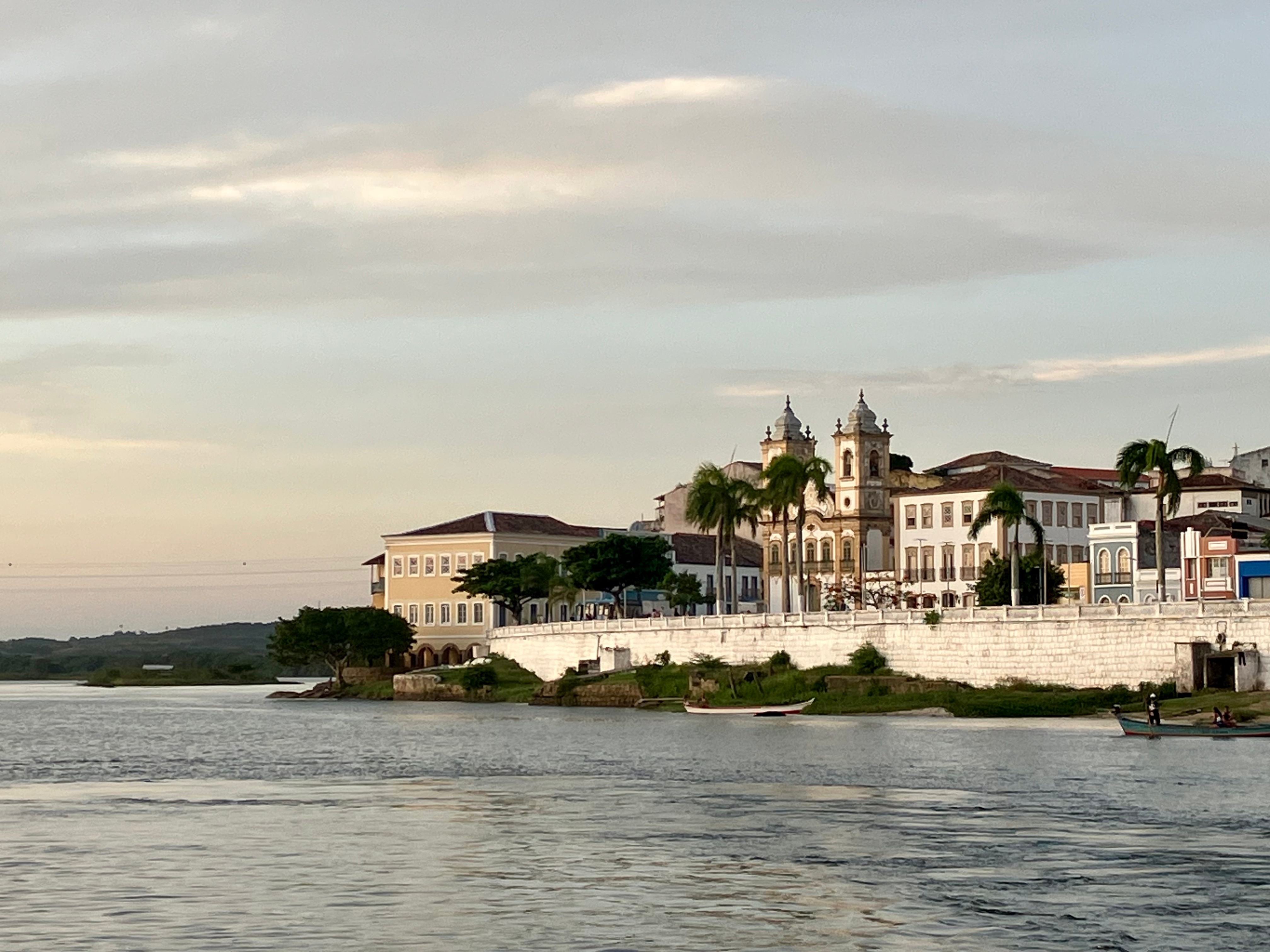
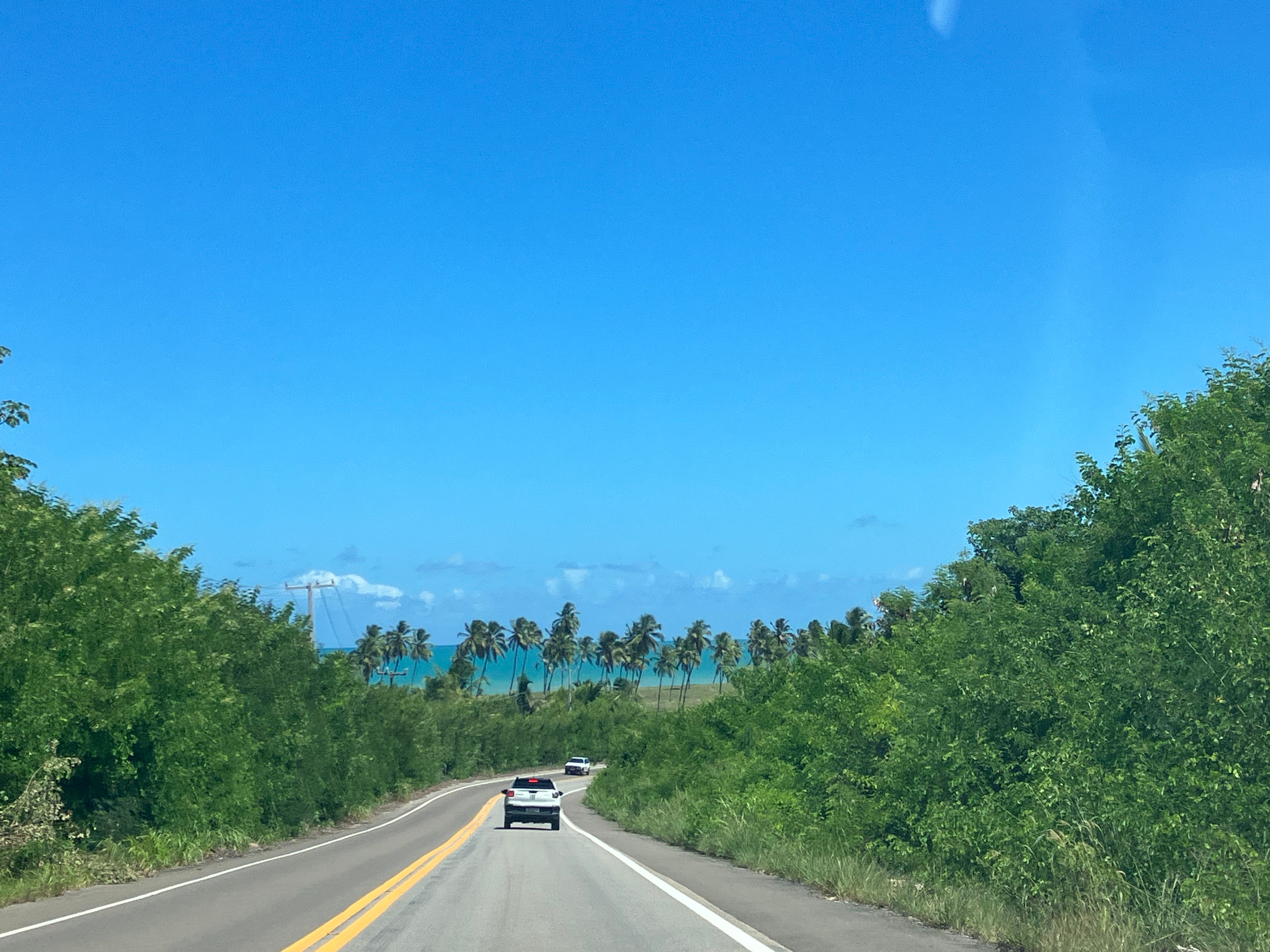
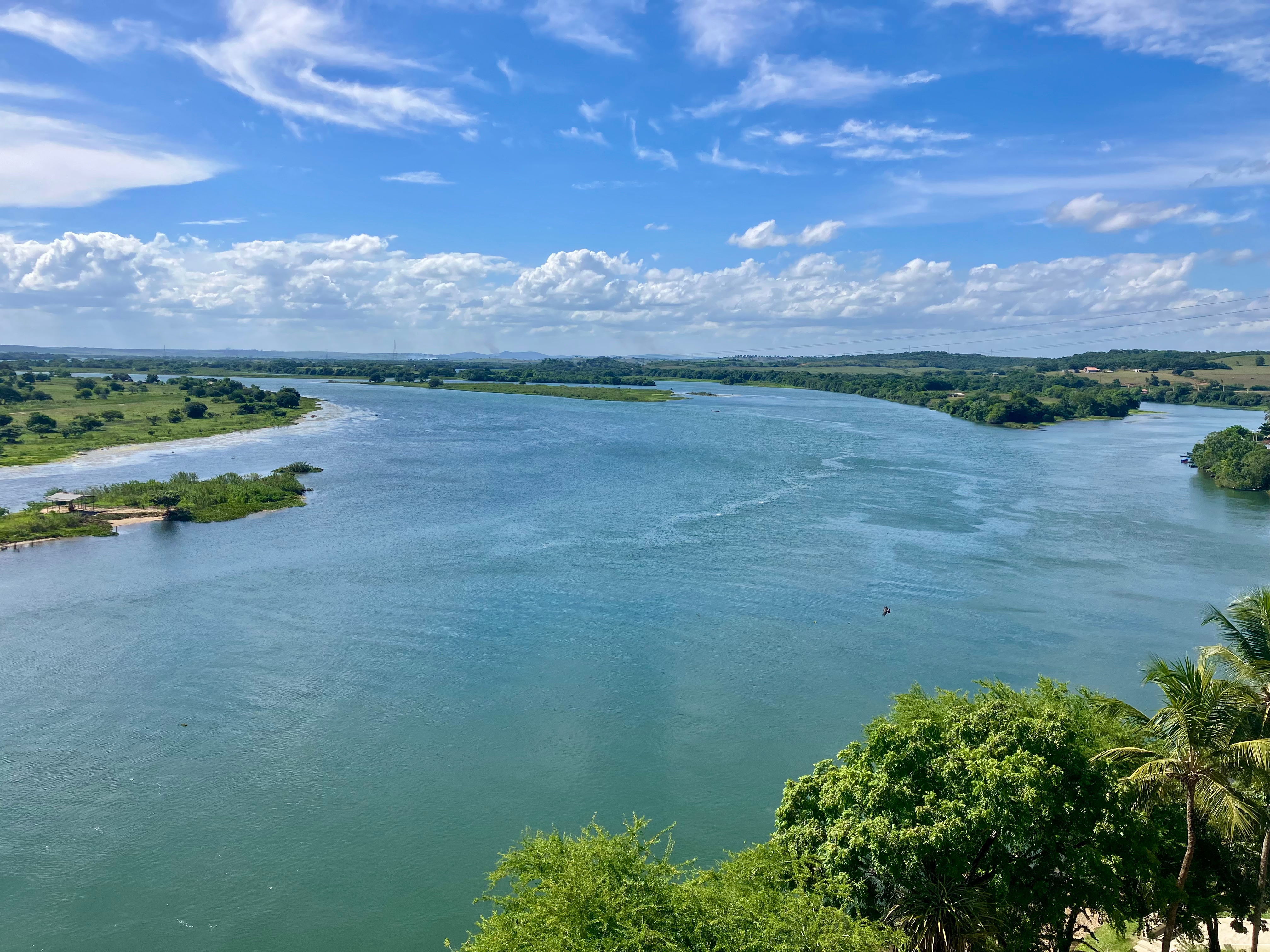
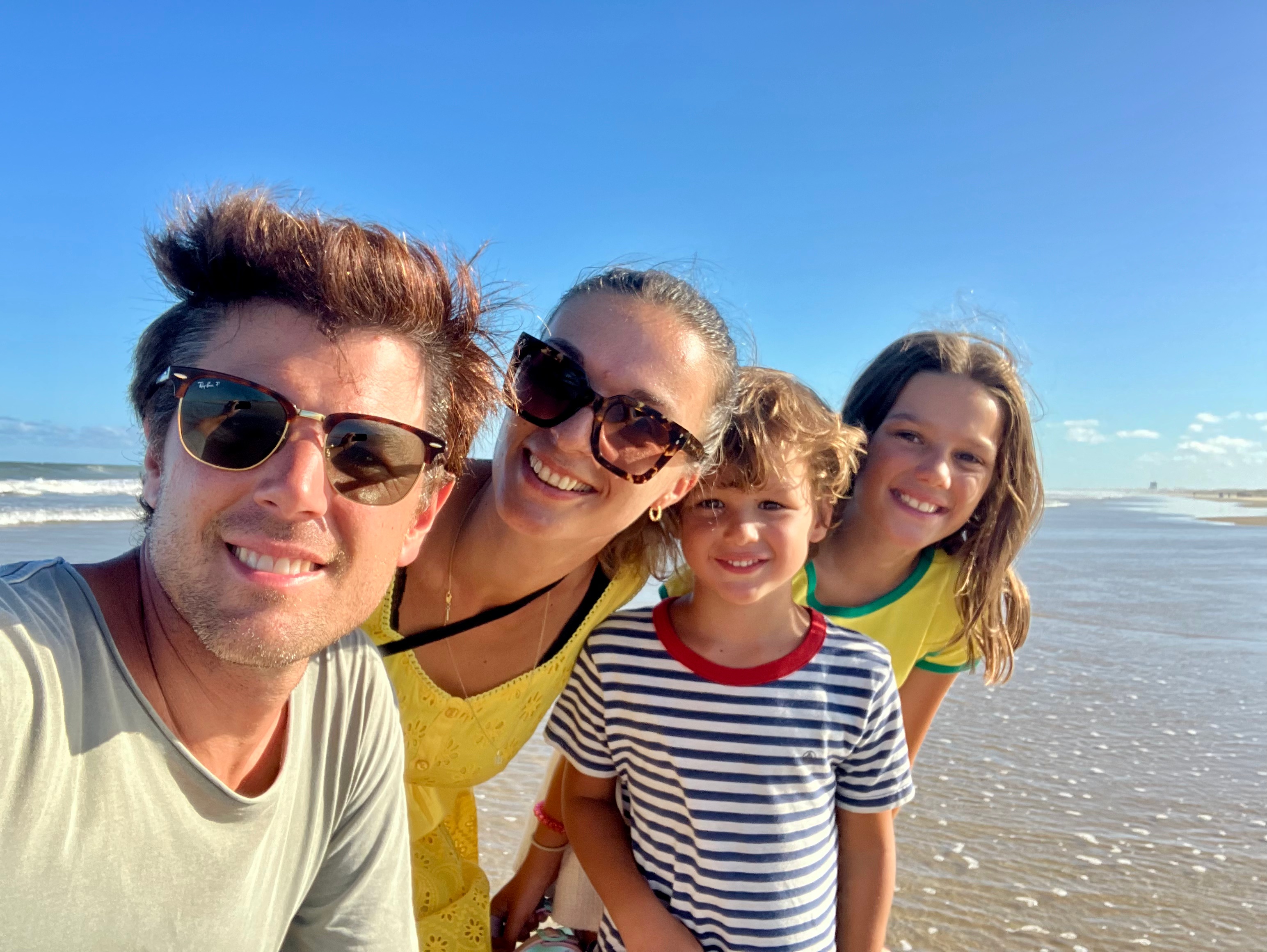
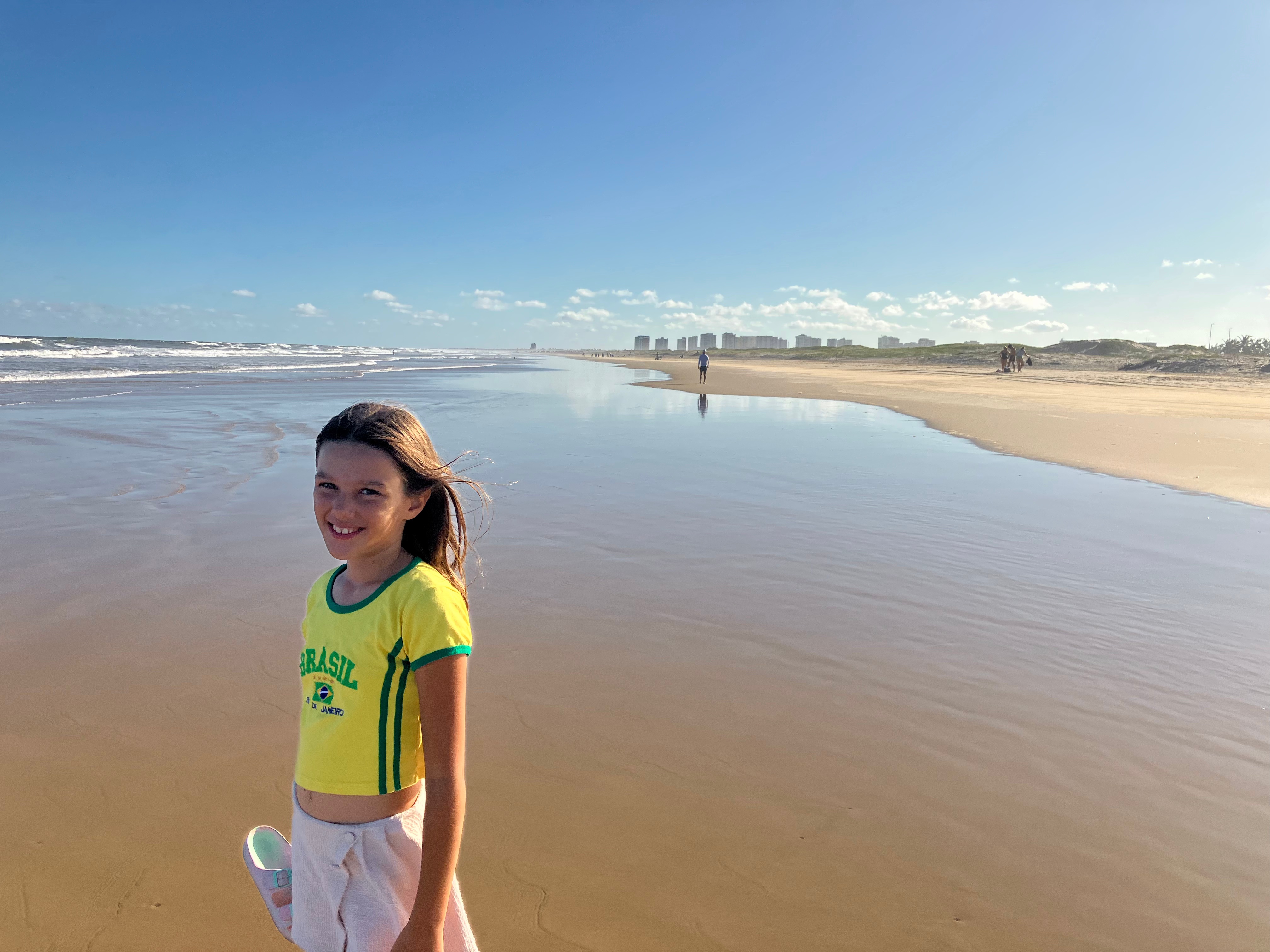
During this road trip along the coast, we also come face-to-face with another, harsher reality: the land.
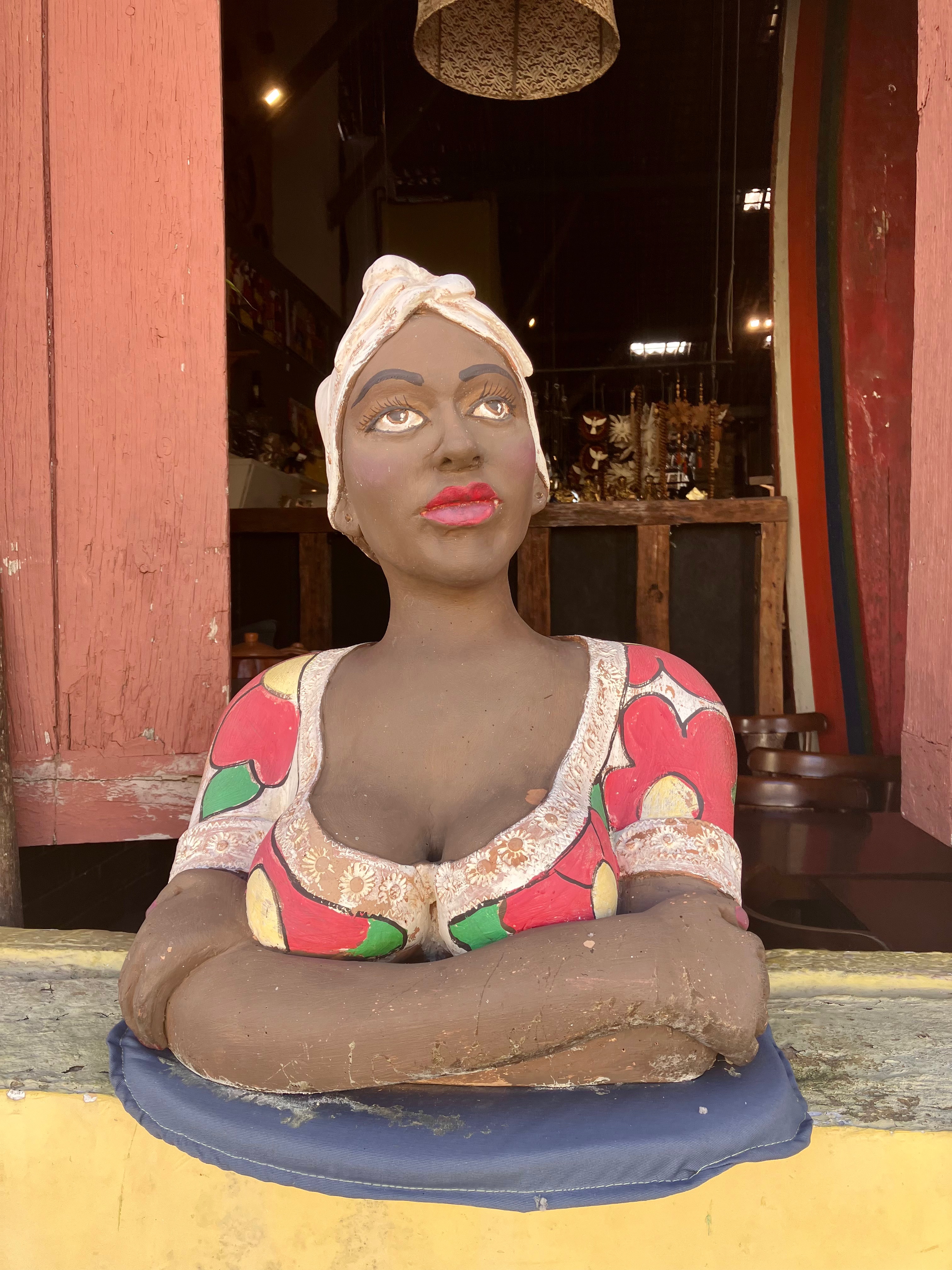
Brazil is a country of big landowners, and here it’s even more striking: 70% of the land is owned by just 4% of the population.
This imbalance goes all the way back to colonization and the rise of the big sugarcane fazendas.
People often talk about the cotton plantations in the American South, but it was no different here: endless plantations enriching a tiny elite on the backs of an exploited population.
And even today, this model still shapes Brazilian society.
On one side, the big landowners; on the other, a rural population struggling to get by.
After 12 days in the Northeast and more than 1,000 kilometers driving at an average of 50 km/h, we finally spot the sign: “Salvador de Bahia.”
A new story begins. Sending love your way!

 365 days of summer
Leave a comment