Our Latin American odyssey continues… still off the beaten path. After ten days wandering through Uruguay — that discreet, egalitarian country, like a sort of Europe in exile — we now drop our bags in Paraguay, the other “guay” of the continent. Lesser known. Less visited. Less everything, really.
And yet, the two countries do share some similarities: Spanish as the official language, modest size by Latin American standards, and a laid-back population that makes their bigger neighbors seem almost hyperactive. Oh, and of course, that famous “guay” ending they both carry.
But the comparison ends there. If Uruguay evokes a peaceful democracy, retirees sipping maté by the Atlantic and socialist gauchos, Paraguay is something else entirely. A rougher story, quieter too. A glorious yet tragic past, a more limited and unevenly shared wealth, and tourist clichés that are… well, nowhere to be found.
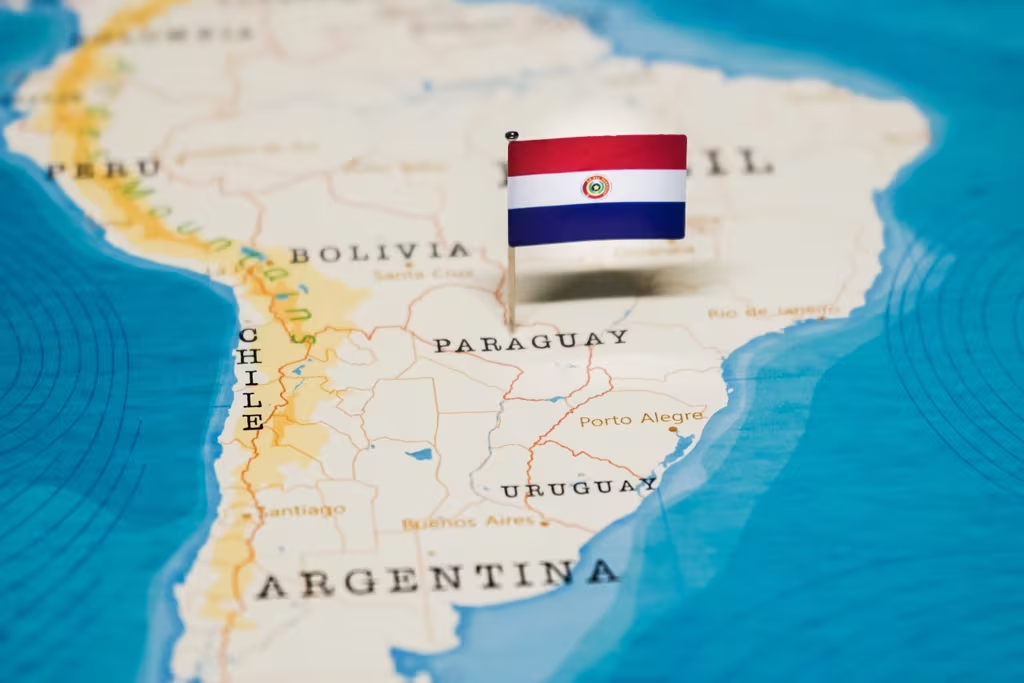
The stage is set. Welcome to a country you probably know nothing about — don’t worry, neither did we before we set foot here!
Paraguay: two worlds, one country
Let’s start with the basics. Where is this place, and what’s it like?
Paraguay covers just over 400,000 km² — about the size of Germany — but with the population of Bulgaria: fewer than 6.5 million people. Geographically, it’s split clean down the middle by the Paraguay River (yes, the naming session must have been wild).
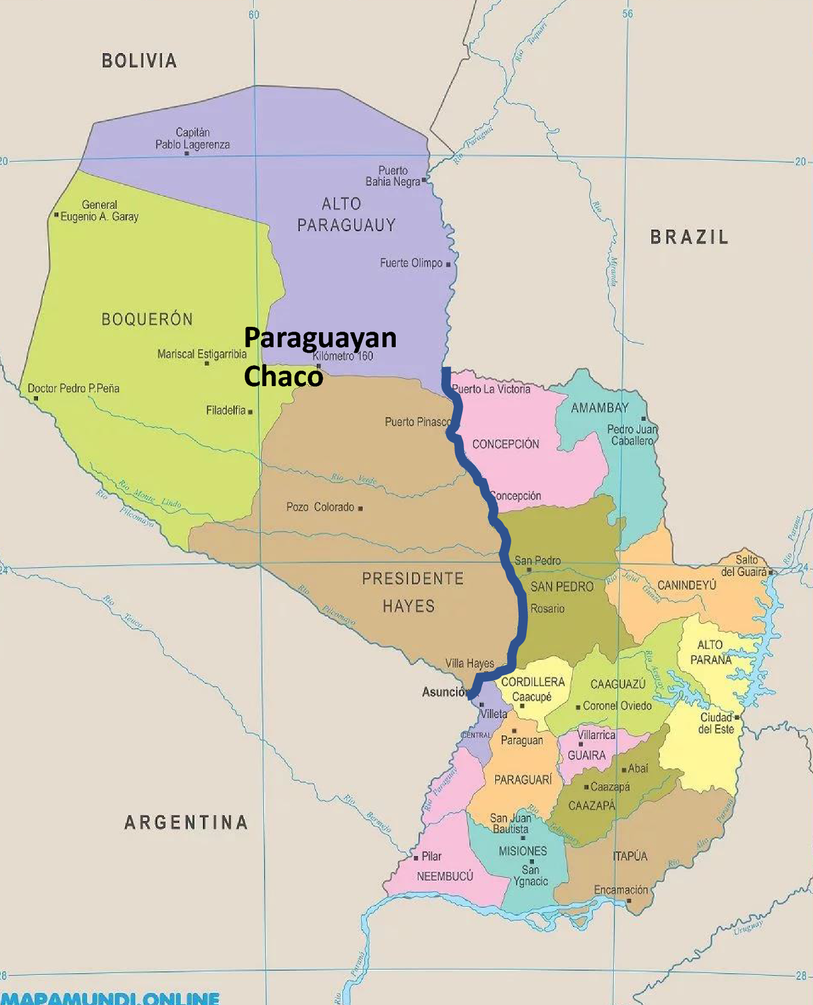
- To the west: an almost empty land called the Chaco, taking up 60% of the territory. That’s half of France covered in green desert. Flat, hot, dry, suffocating — where the land is poor, roads are rare, and mosquitoes are everywhere.
- To the east: a more populated area with gentle hills, secondary forests, farmland, and moderately lively cities. This is where you’ll find most of the country’s economy, infrastructure… and paved roads.
And right in the middle of it all, the capital: Asunción. This is where our trip begins!
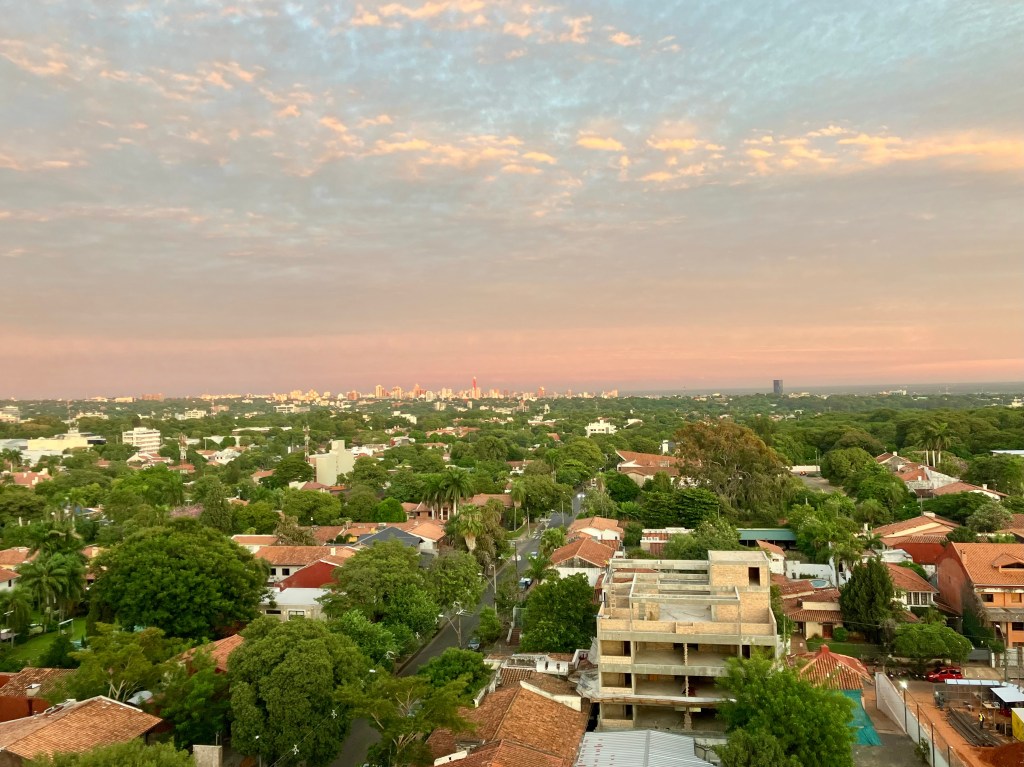
A tropical city where trees seem just as numerous as the houses.
And when I say tropical, I mean it — temperatures hover around 24 degrees… in the middle of winter!
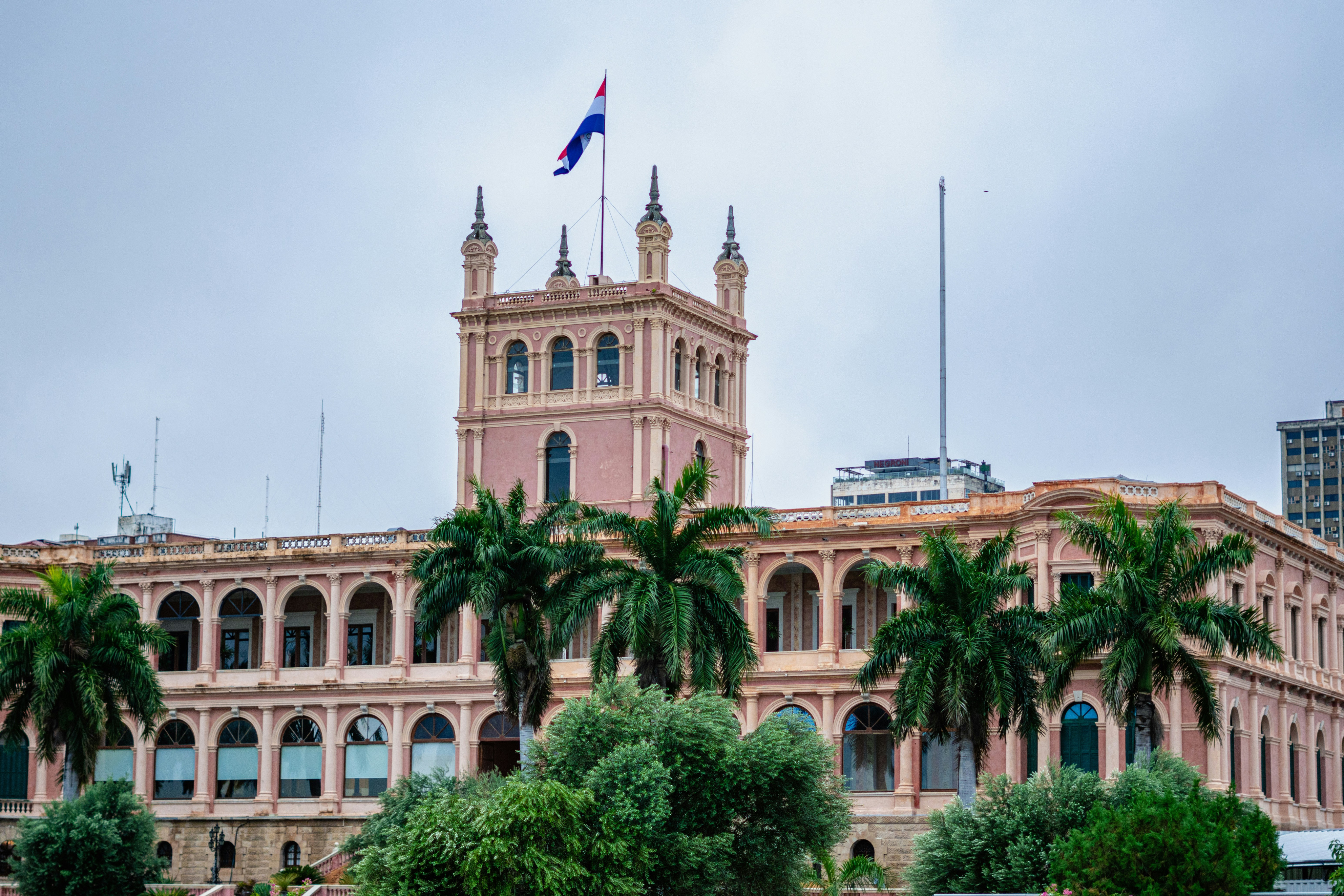
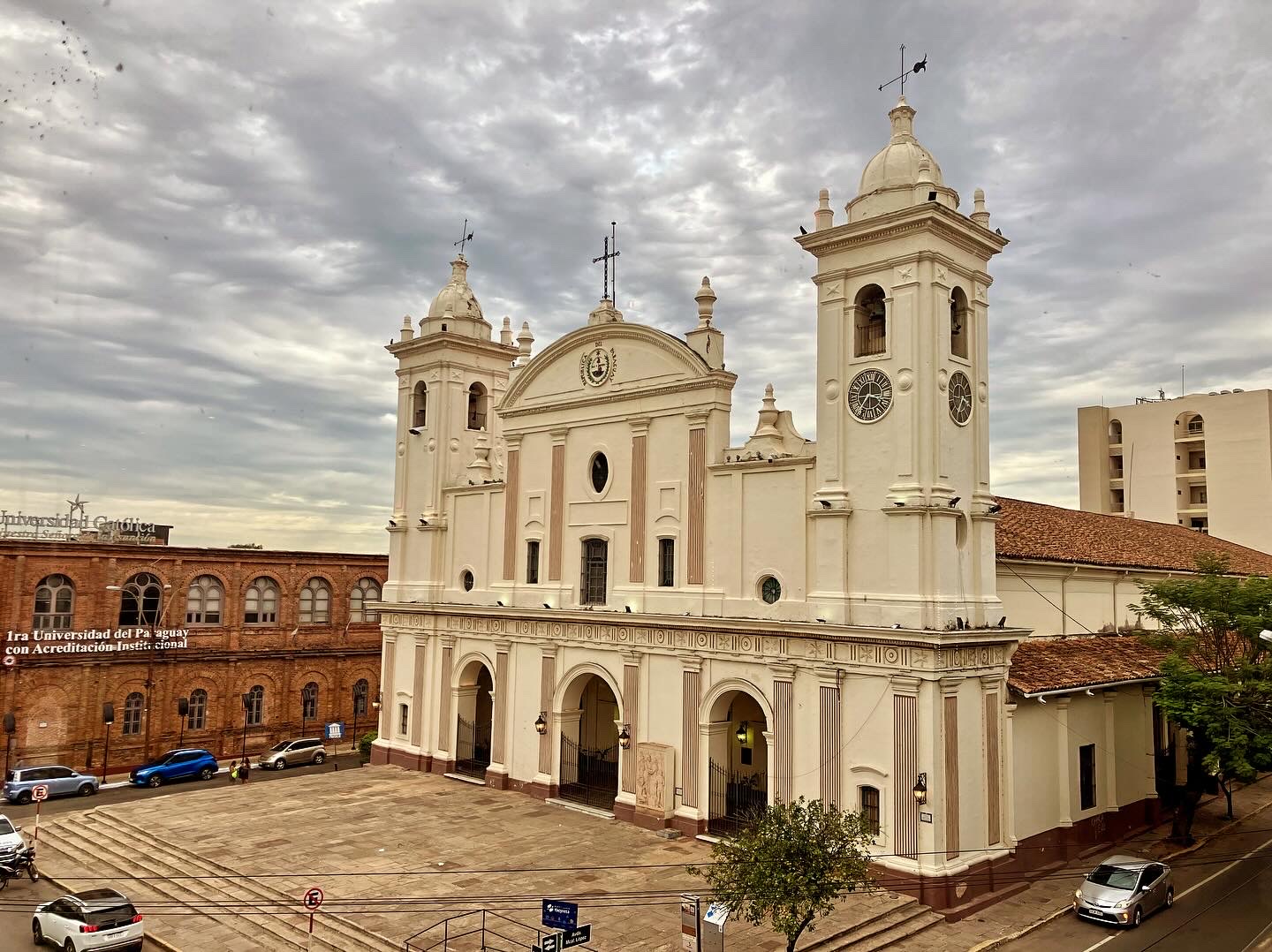
Asunción feels like a city trapped between a fading colonial past and a future that’s slow to arrive. It’s not chaotic like São Paulo or Buenos Aires. No, here things are… quieter.
Downtown, with its low, weathered houses, feels like a tired version of Cuba. Palm trees sprout between brutalist government buildings, as if to remind you: yes, you’re in the tropics. The whole place exudes a sense of neglect — the historic heart seems forgotten, while the wealthier eastern neighborhoods are getting gleaming new glass towers.
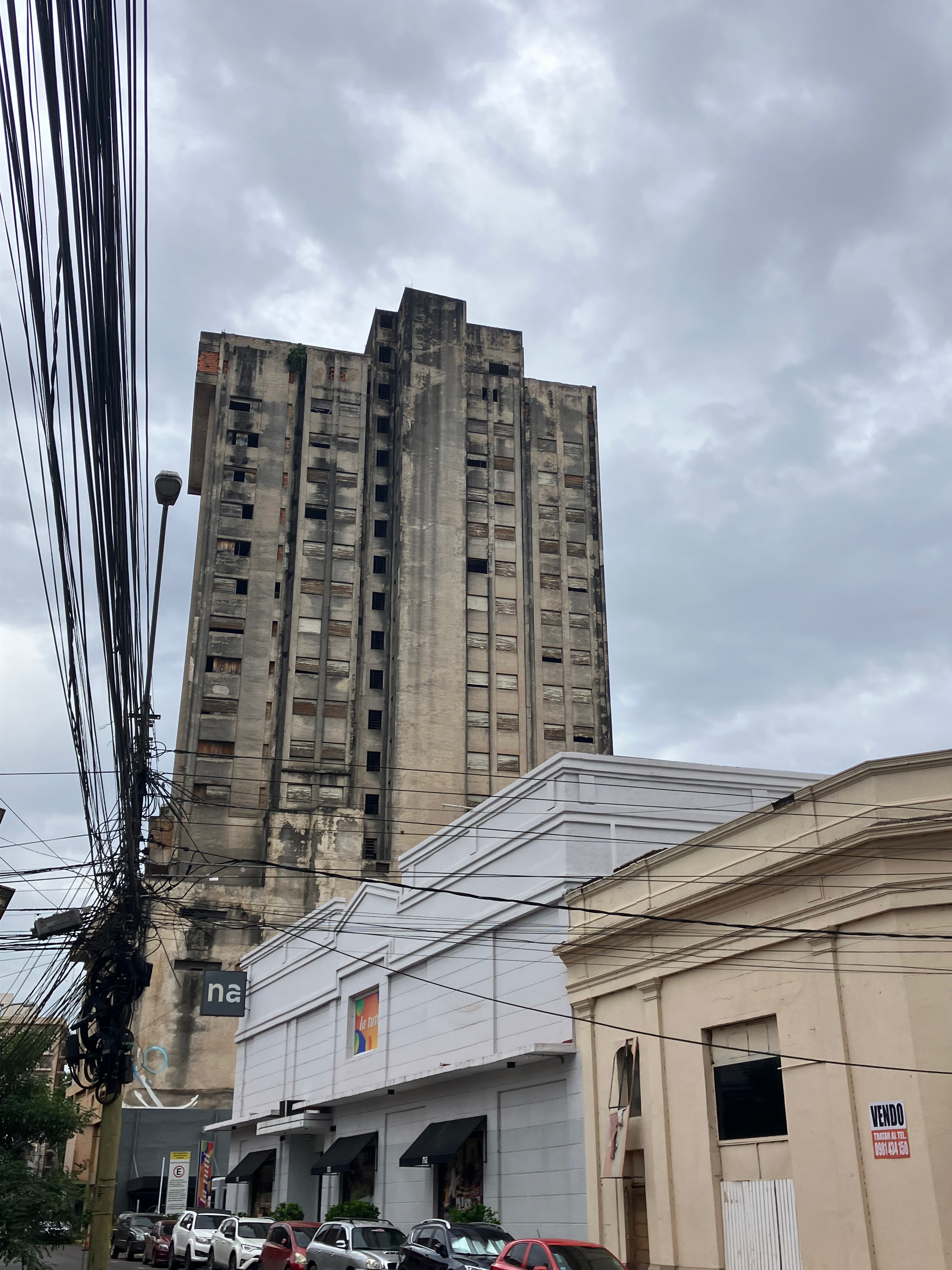
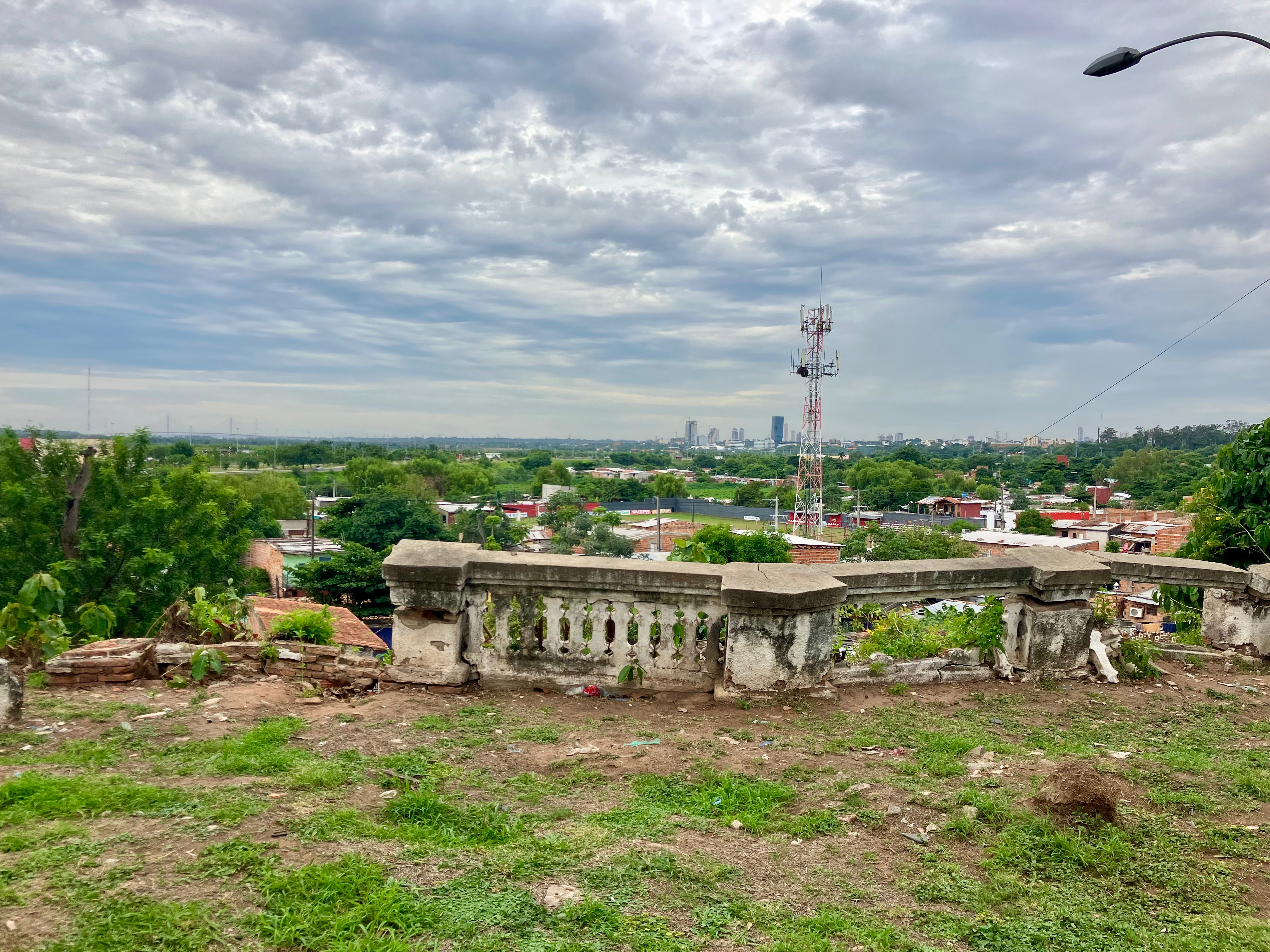
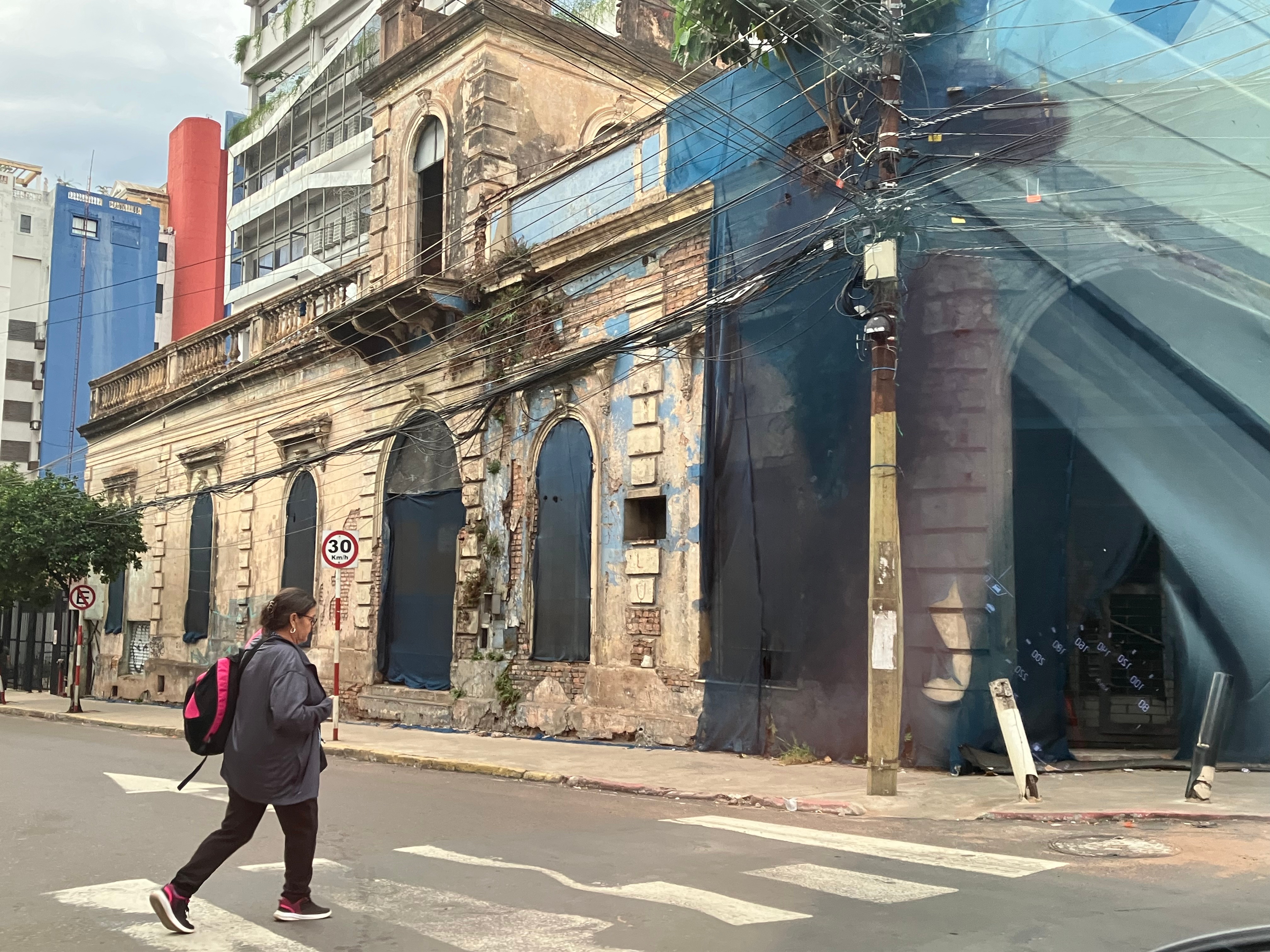
Inequality here is right in your face. On one side: a forgotten downtown where you don’t exactly feel safe. On the other: our modern building with a chic little apartment and an underground parking garage filled with Porsches, Maseratis, Lexuses and shiny SUVs. Our rental car feels embarrassingly out of place.
Is it a “beautiful” city? Not really. But it’s a must-see if you want to understand the country. About 50% of Paraguay’s 6.5 million inhabitants live crammed into what’s known as Gran Asunción. A human concentration on just 0.6% of the land. Convenient for grocery shopping, less so for coherent urban planning.
That said, we’re far from the hyper-secure vibes of some Brazilian cities with their gates and razor wire. Asunción feels softer, more laid-back. And the people — discreet, warm, curious — often seem surprised to see us. Tourists in a country that sees very few. A shy smile, a tentative question, a more open chat.
So, is it a must-see? Not really. But we spent two and a half peaceful days here. Some sightseeing, good food, a bit of shopping, and haircuts for everyone.



Encarnación, the Jesuit missions & Guarani culture
We leave the center of the country and head east, toward Encarnación. A six-hour drive. We start by crossing Greater Asunción via a road with a promising name: the “Circuito de Oro,” or Golden Circuit. It sounds like it should take you through time-frozen villages, like in Peru or Mexico. But here, reality is different: urbanized, rough, contrasting, and at times… a bit disheartening.
Once we clear the urban sprawl, it’s wide open countryside — or rather, a patchwork of immaculate roads, forests, endless soybean fields, and meadows where cows graze with vacant stares.
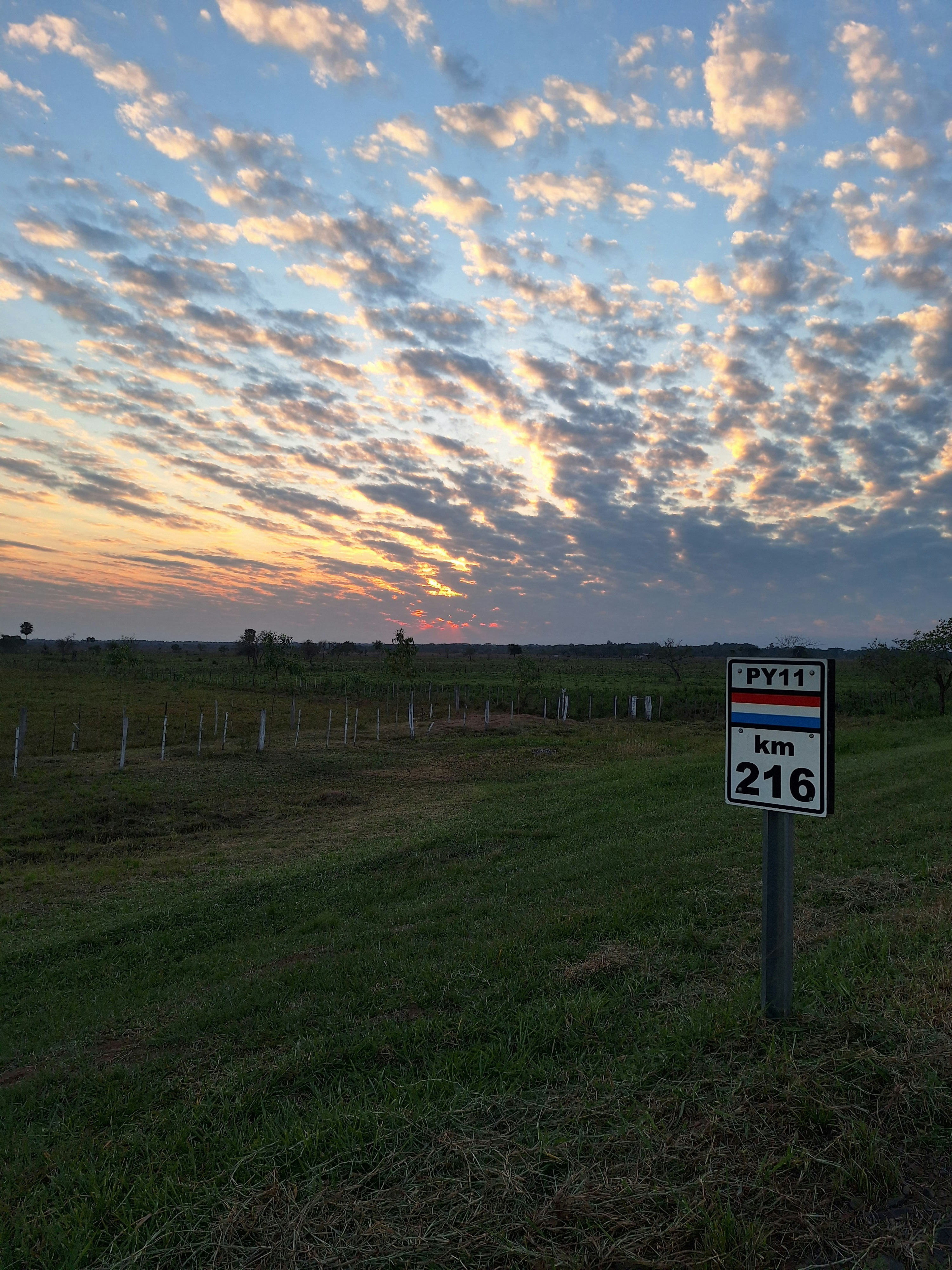

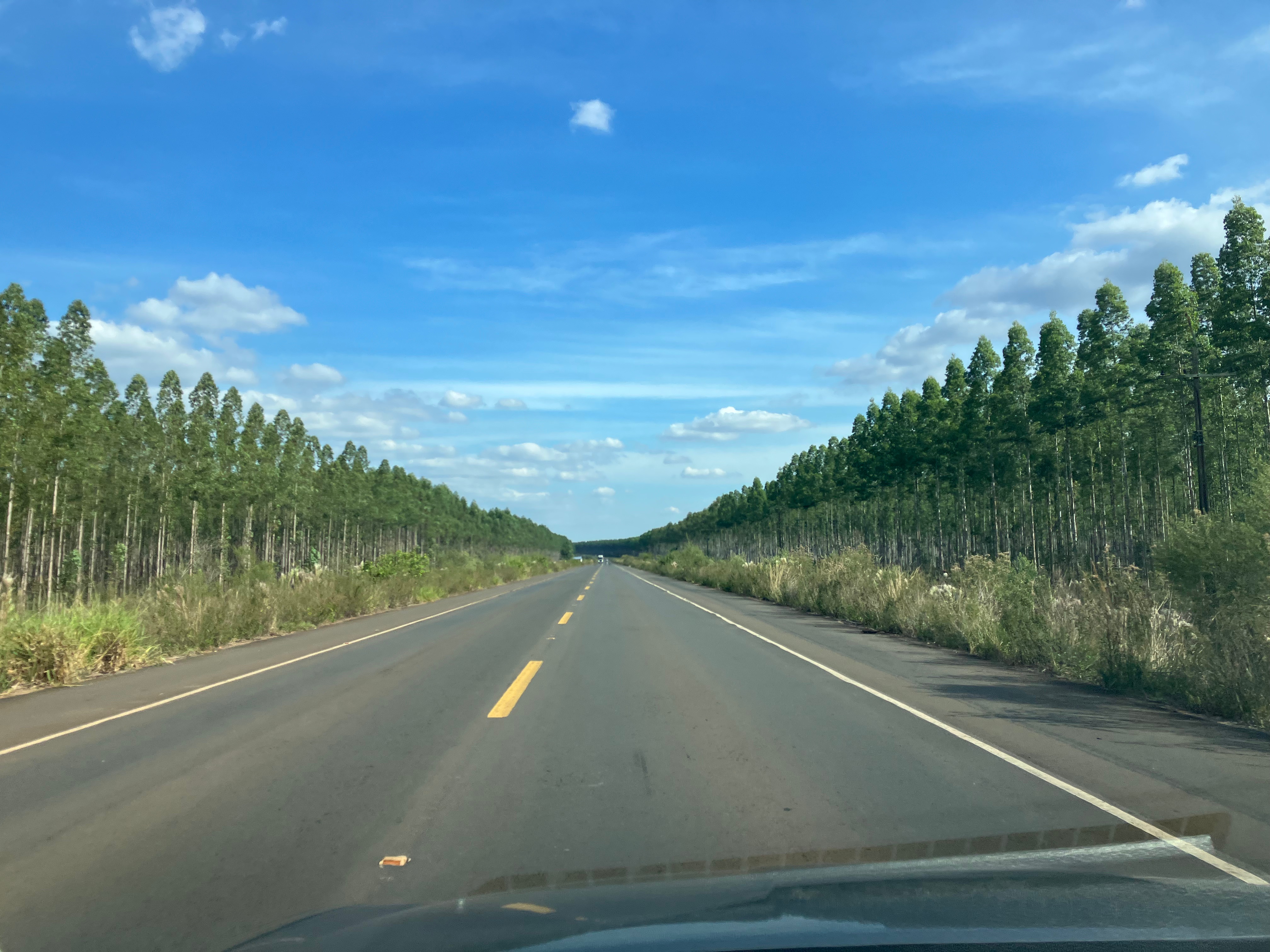
The landscape rolls gently, sometimes flat as a pancake. You could almost think you were in Flanders or the Netherlands two centuries ago.
But this rural scenery is the beating heart of Paraguay’s economy: the country is one of the world’s largest soybean producers (4th globally) and ranks in the top 10 for beef exports. Add maize, wheat, and you’ve got an economy firmly anchored in intensive agriculture.
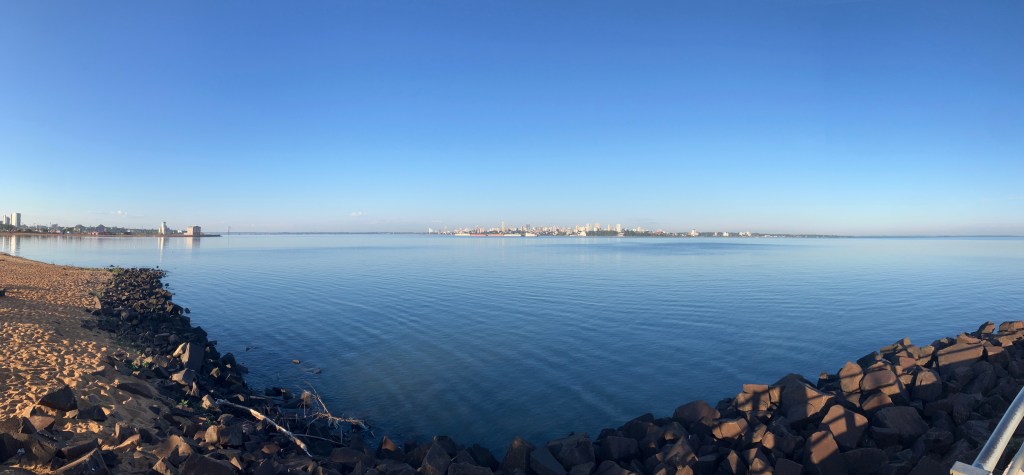
Six hours later, we arrive in Encarnación, a city on the riverbank facing Argentina. It’s nice. But that’s not why we’re here. We came for the Jesuit missions.
The Jesuit missions: an utopia deep in the jungle
Before we dive into the missions, let’s talk about the Guarani. Otherwise, you’ll be lost. The Guarani are one of the emblematic peoples of South America. Before Europeans arrived with their “good intentions” (read: weapons and disease), they inhabited a vast region covering Paraguay, Brazil, and Argentina. Semi-nomadic, they hunted, fished, and farmed. A simple life — but not a simplistic one.
Paraguay is where their legacy is strongest. The former president, Mario Abdo Benítez, was of Guarani origin. Their language, Guarani, is still co-official with Spanish. And it’s not just for show: around 90% of Paraguayans speak it at home. We spent time with locals — and honestly, the language is completely incomprehensible.
But the Guarani are more than just a language. They’re a vibrant culture — think harp music, traditions — and a history that’s anything but cheerful. Between invasions, exploitation, and near-genocide, their survival borders on miraculous.
And then came the Jesuits. Yes, the same robed guys we know.
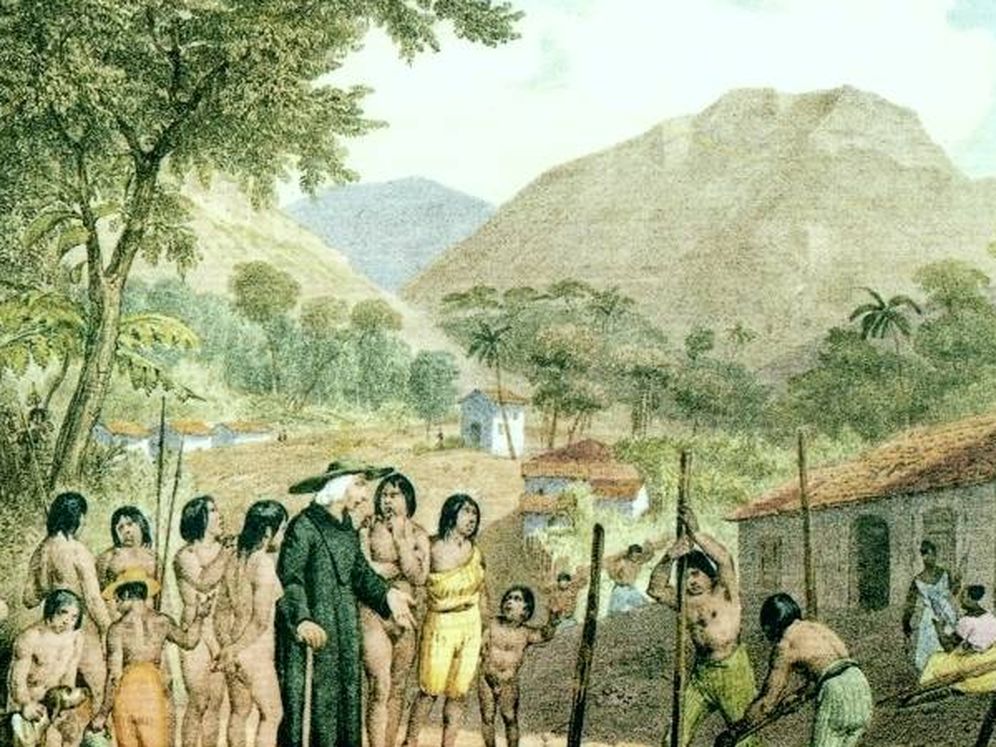
But here, they built an actual utopia in the jungle, blending Christian spirituality with Guarani traditions. Between the 17th and 18th centuries, they founded about thirty “reductions” across a vast region now split between Paraguay, Argentina and Brazil.
Don’t be put off by the grim-sounding word — these were organized villages.
Their idea? Protect the Guarani from slavery and Portuguese raids. And while they were at it, convert them too — or maybe it was the other way around?
Masses were in both Latin and Guarani. Nothing like a little linguistic fusion to spice up Sunday service.
This model was revolutionary for its time: a nearly egalitarian society (well, for the time—let’s not get carried away), education accessible to the children of Guaraní chiefs, elite craftsmanship, and even a certain level of political autonomy. A sort of semi-autonomous Christian Republic deep in the forest. A UFO in colonial Latin America.
I’ve read quite a bit about it, and honestly, I still don’t know whether the Jesuits’ actions were a good thing or not. On the one hand, they were clearly part of the broader colonial project: evangelizing, “civilizing,” turning semi-nomadic Guaranís into obedient, sedentary little Christians. Not exactly freedom-friendly.
But on the other hand… they did genuinely protect them, learned their language, accepted their culture, and even helped it flourish. It wasn’t assimilation in the bulldozer sense of the word.
And let’s not forget—there were usually just two Jesuits per mission, for sometimes 3,000 to 7,000 Guaranís. Hard to imagine a reign of terror or some kind of disguised prison. It wasn’t a theocratic dictatorship: it was something strange, imperfect, but sincere.
As is often the case with history, you have to resist the urge to draw quick conclusions. A clue, perhaps?
Too effective, too influential—the model eventually made people uncomfortable: the Spanish grew suspicious, the Portuguese grumbled, and even the Pope started to think the missionary zeal was getting a little out of hand. In 1767, the Spanish king made his decision: the Jesuits were expelled. End of the road for a project that lasted over 150 years.
The missions slowly fell into ruin. The 140,000 Guaranís who had lived there were left to fend for themselves. And the dream of a just society in the heart of the jungle was frozen in time, reduced to ruins.
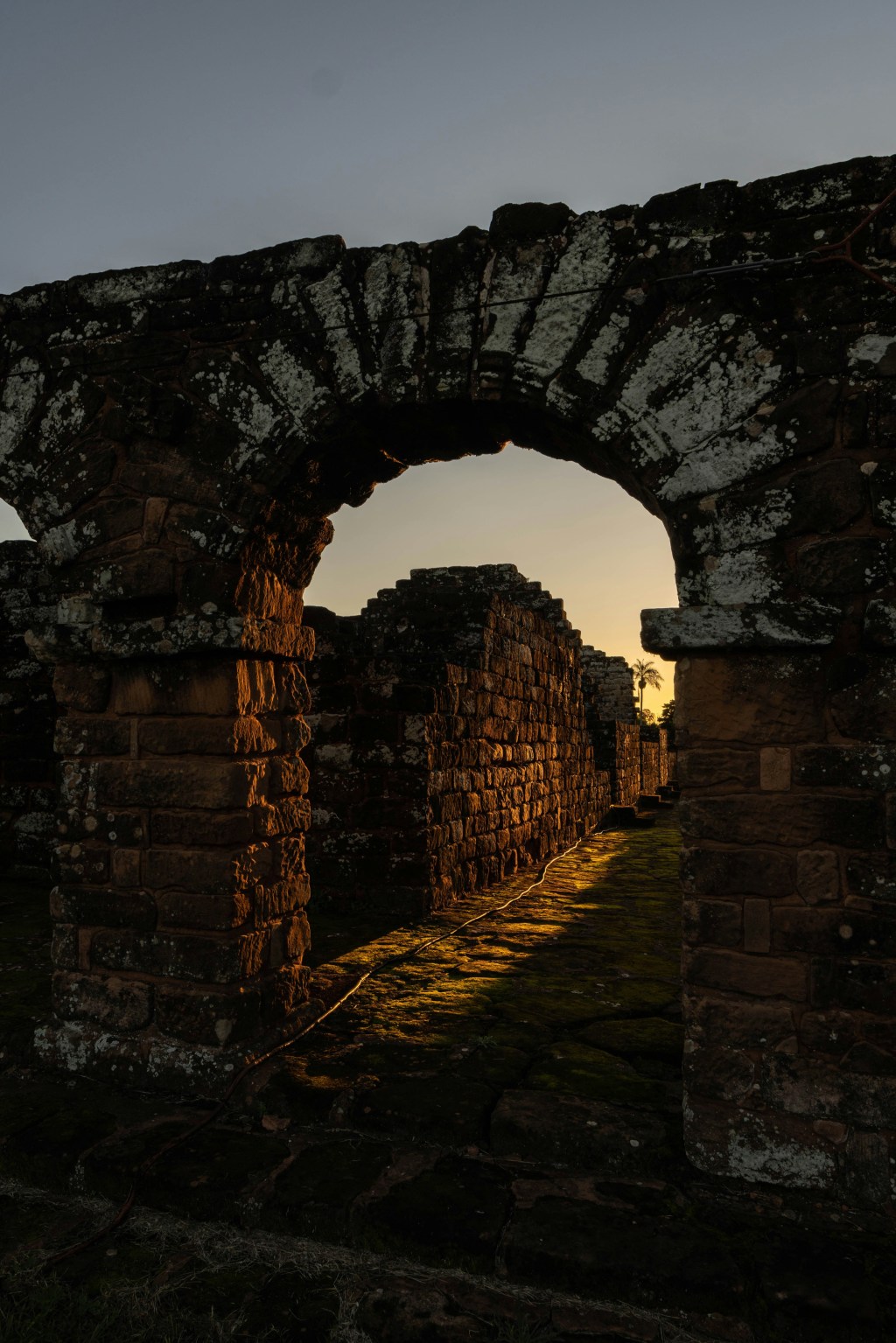
Well… not entirely. Because the ruins are still there. We visited five of them in Paraguay and Argentina over two days. All are UNESCO World Heritage sites — and as empty as a movie theater showing a silent film. We saw one other couple, far off in the distance. Not a single other tourist.
Each site tells a different story. Some are melancholic ruins. Others still retain a sense of grandeur. You can picture the 6,000–7,000 Guarani living in sturdy homes, surrounding massive churches and cathedrals they built themselves.
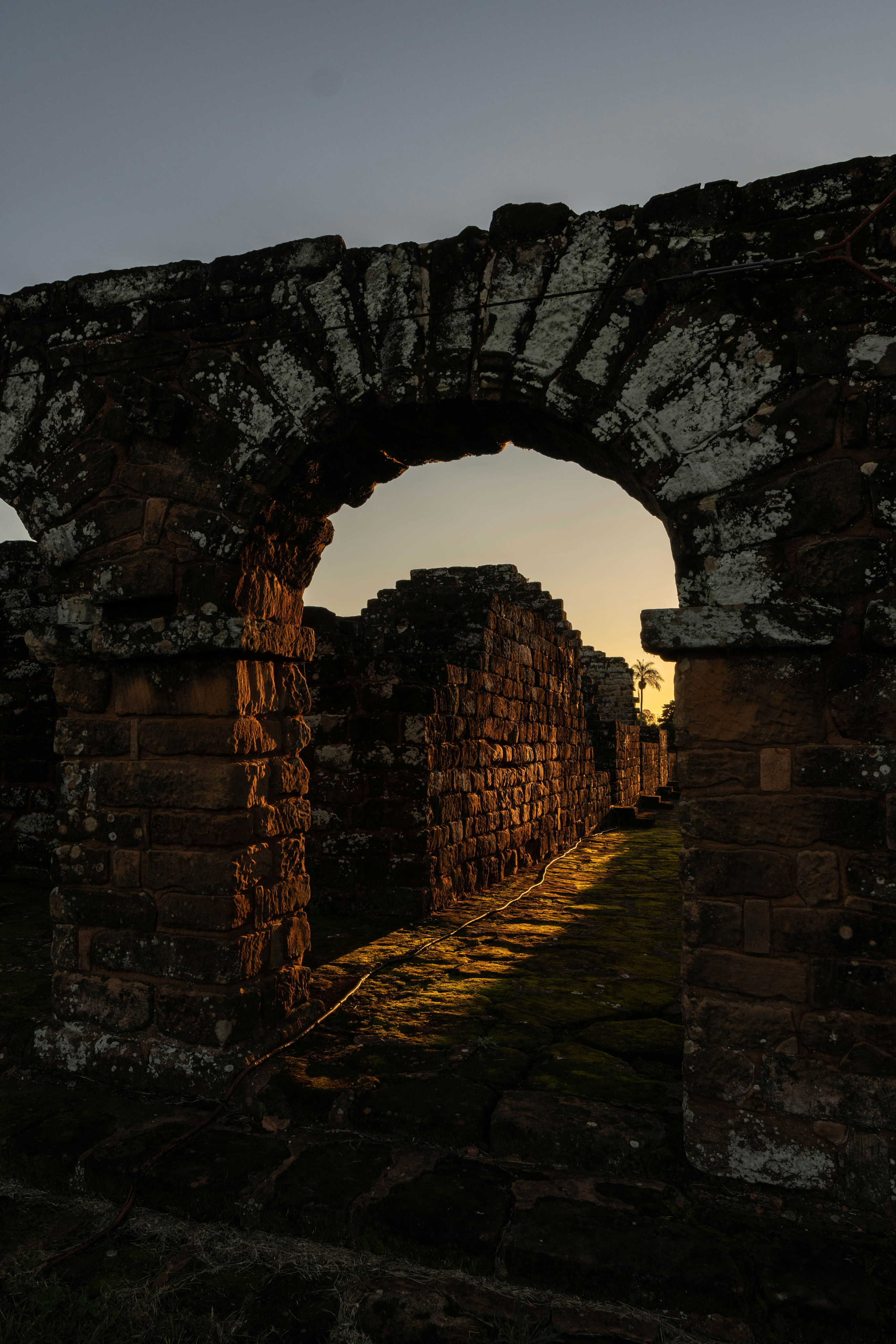
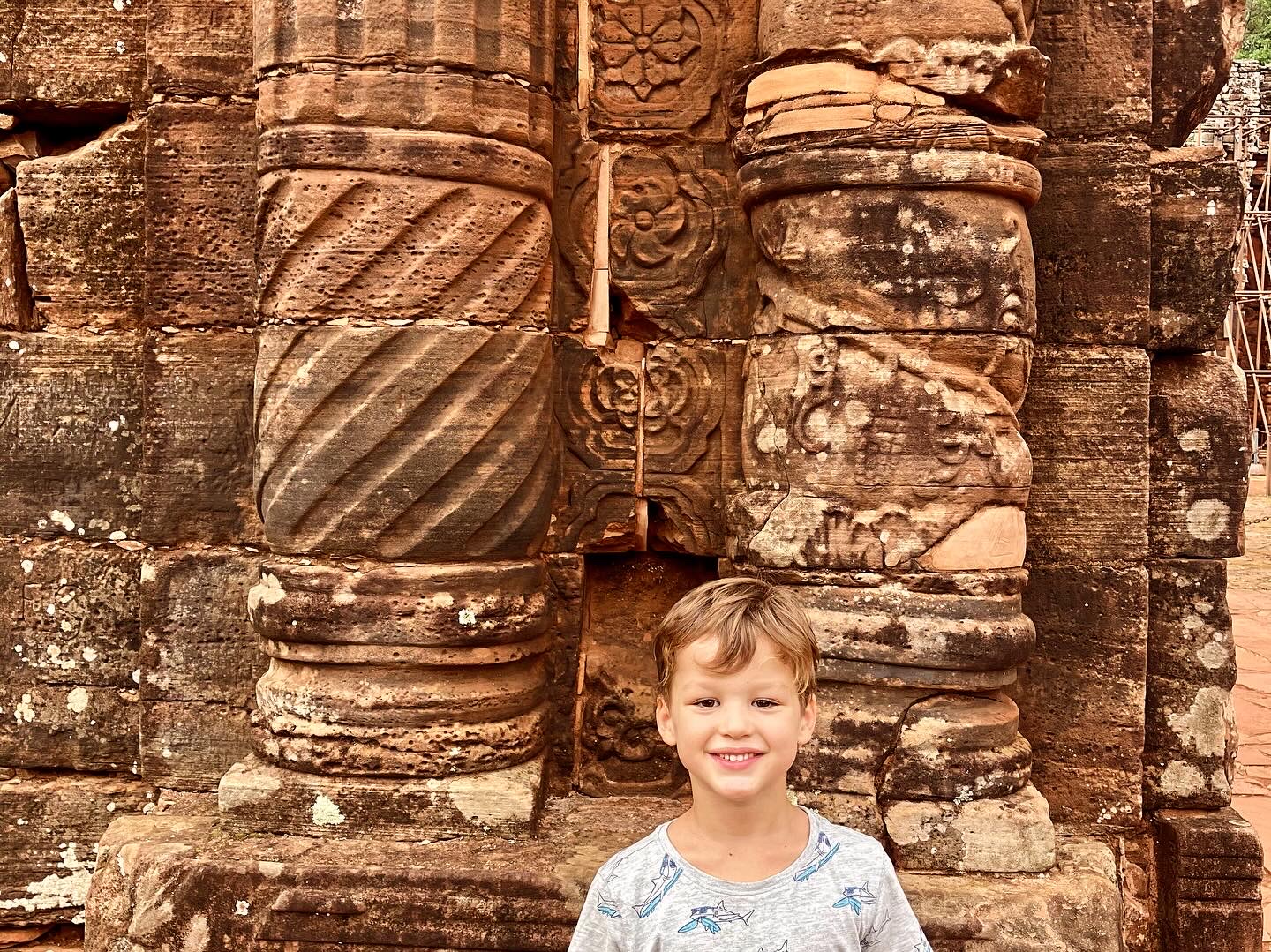
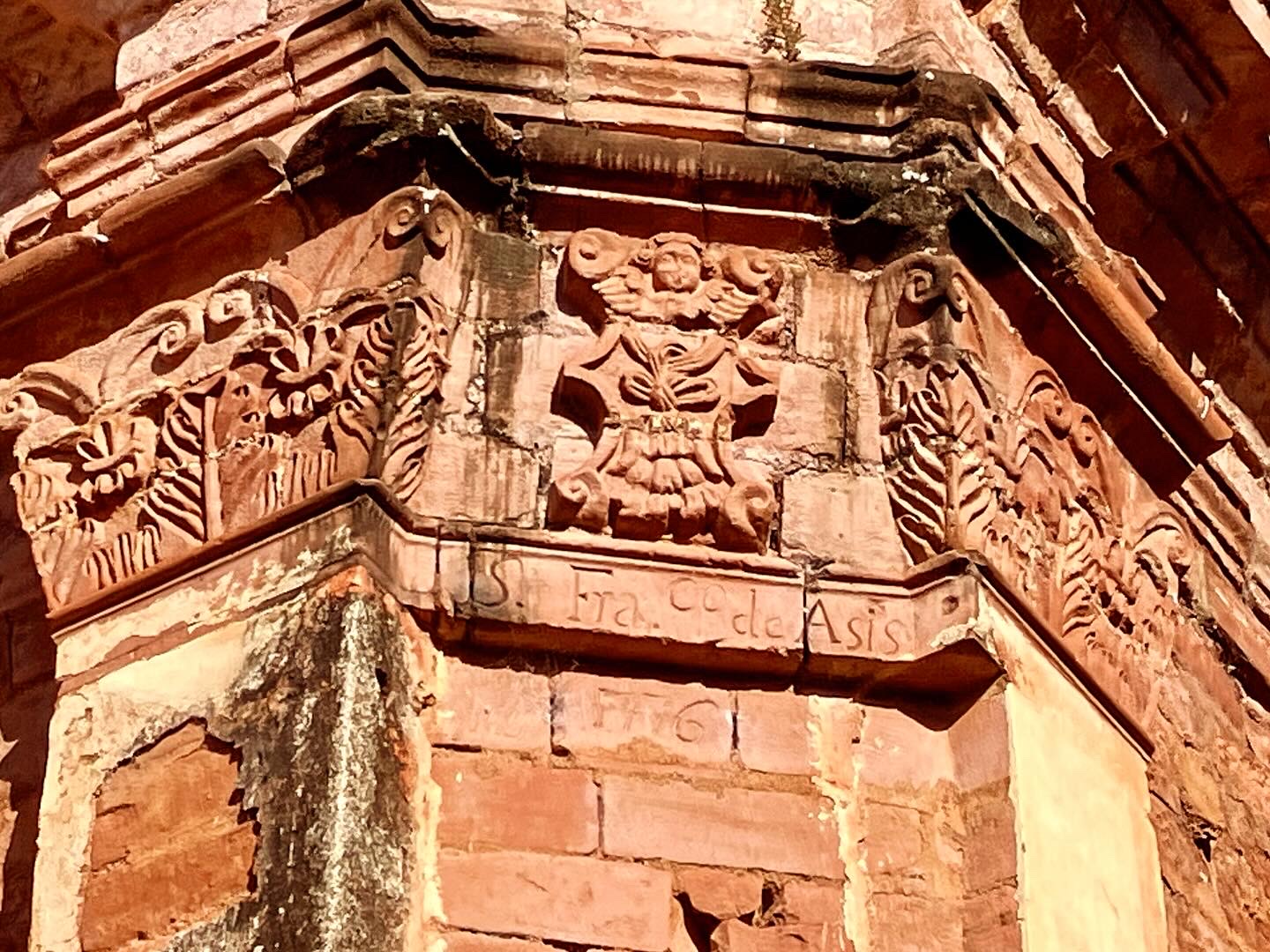
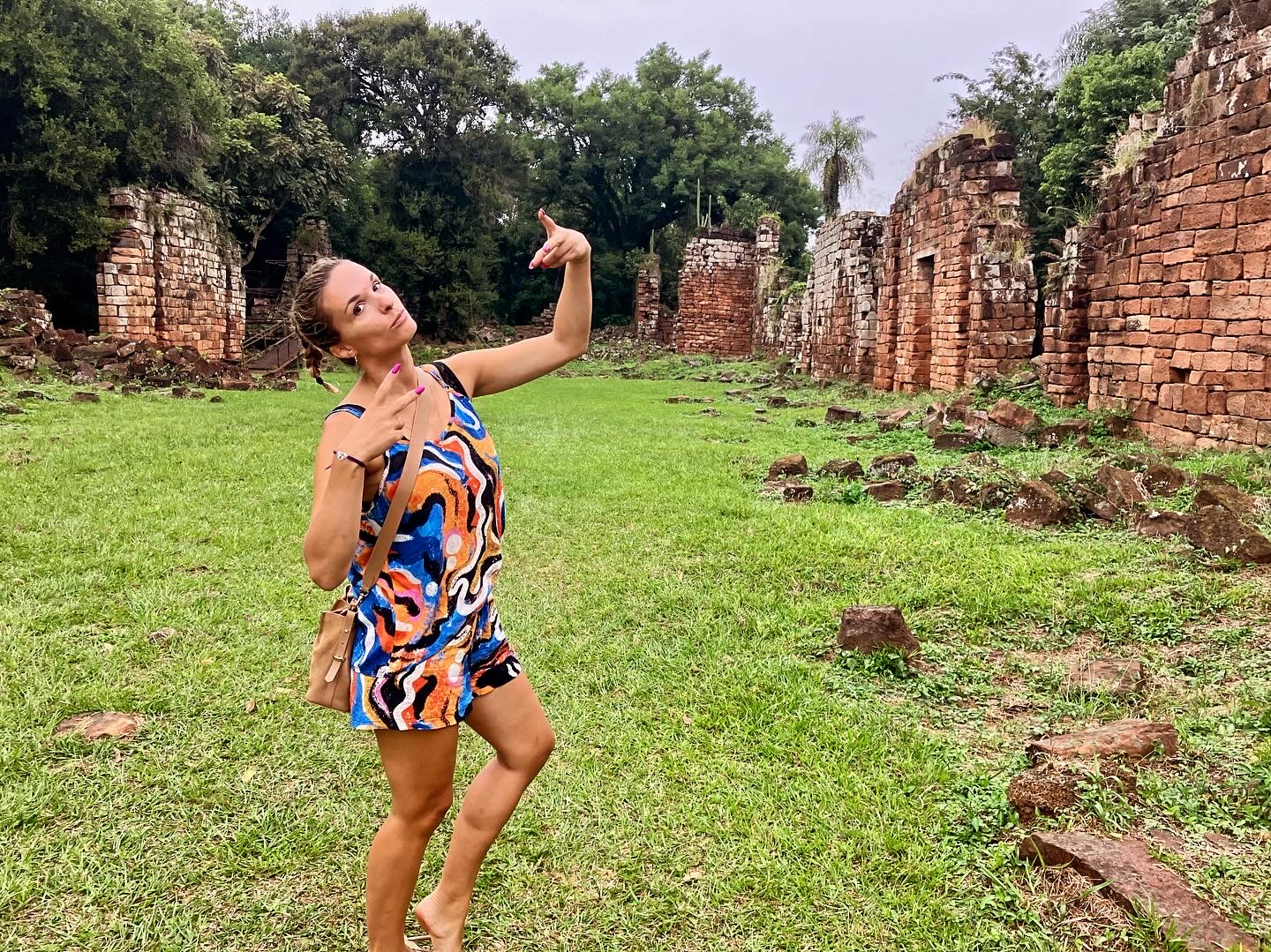
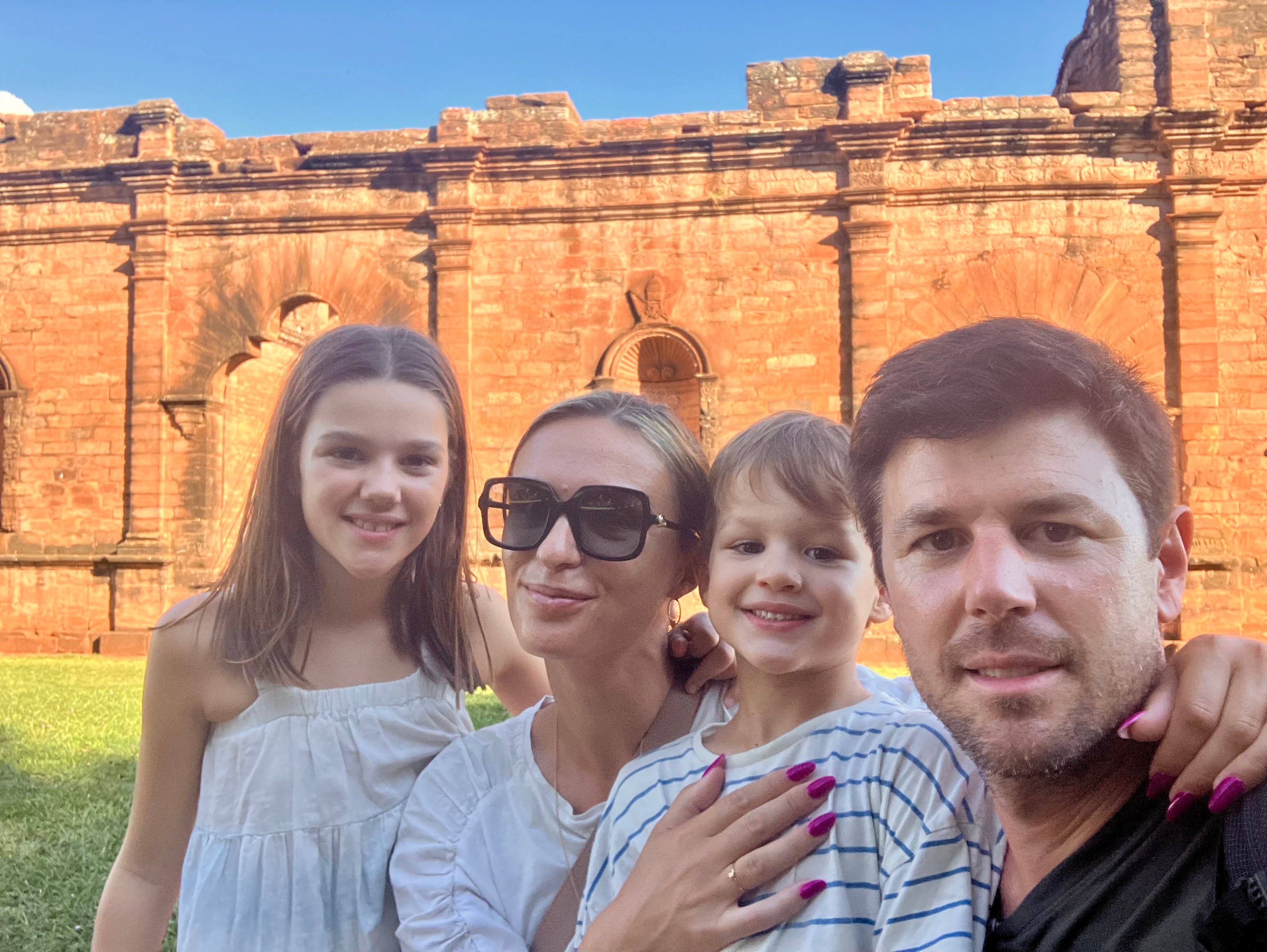
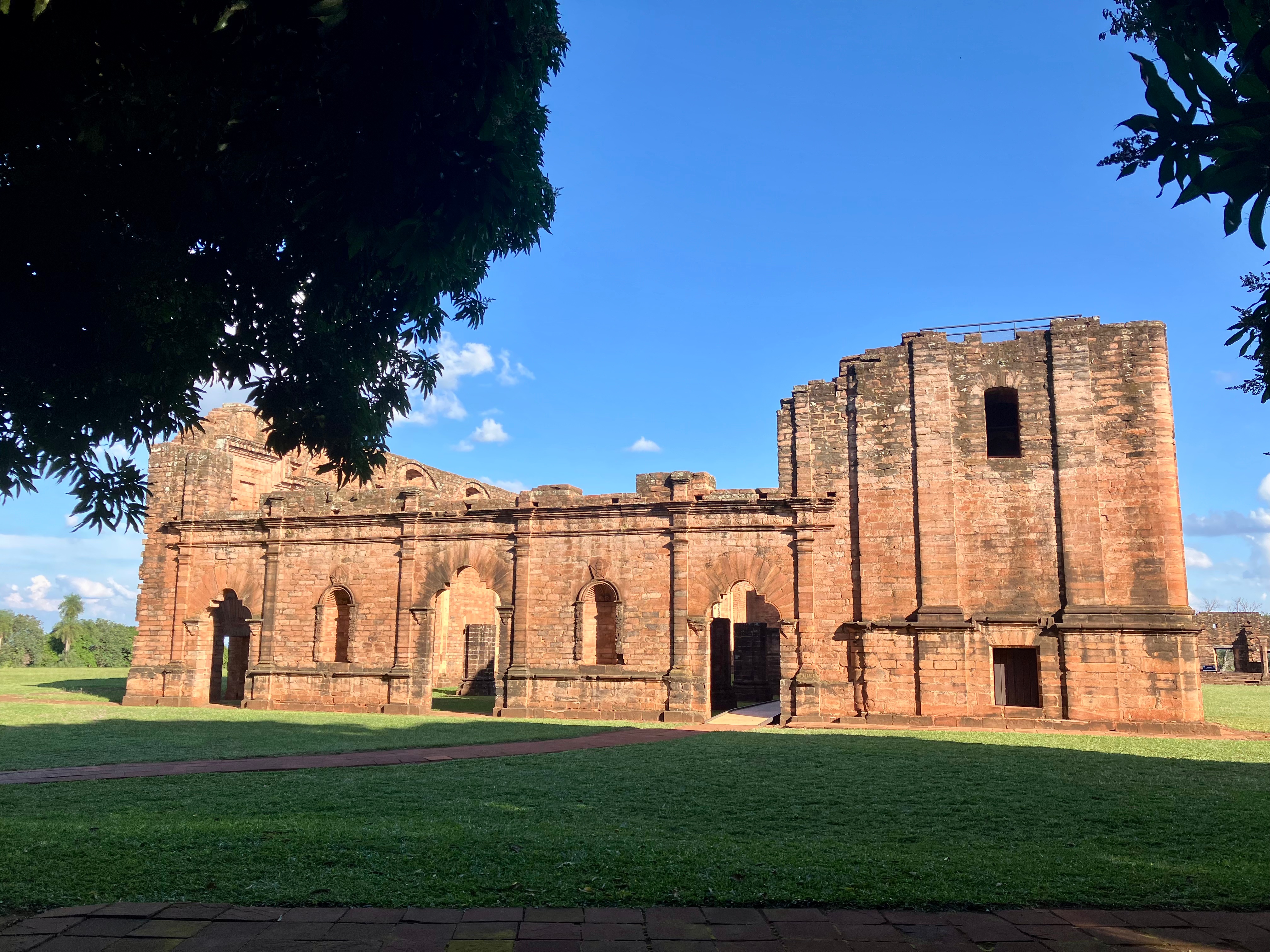
So, was it the most beautiful site we’ve seen during our 365 Days of Summer? Honestly, no. But the atmosphere — that silence heavy with memory, that sense of standing face-to-face with history’s ghosts — that was unforgettable.
Final stop: Ciudad del Este
After three days in the region, we head north toward Ciudad del Este. This border town with Brazil, just a stone’s throw from Argentina, is a tropical mess — in the best and worst ways.
It’s chaotic, sure. But it’s also the beating heart of Paraguay’s informal sector — a polite way of describing everything that escapes taxes, receipts and accounting. And here, that’s no exception: about 69% of all jobs are in this invisible but very real economy.
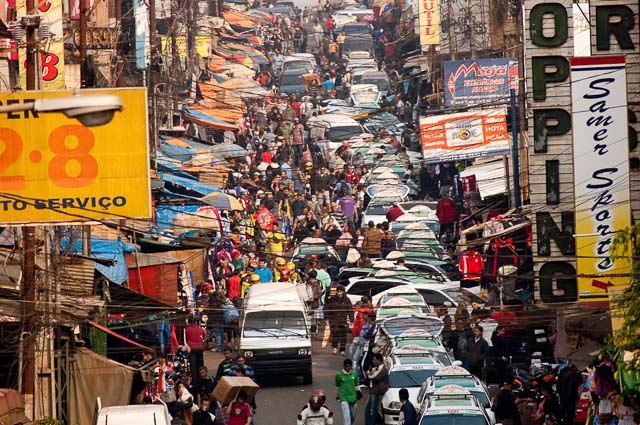
Ciudad del Este is the country’s third-largest city — and kind of a Las Vegas for black-market trade. Endless stalls, mountains of smartphones, piles of football jerseys, counterfeit perfumes, and all sorts of improbable gadgets.
And of course, no VAT and no receipts. Welcome to the kingdom of cross-border commerce, where the economy lives its best life far from the government’s reach.
It’s creative, efficient… but also a huge long-term barrier to growth, redistribution, and public services.
But Ciudad del Este isn’t just shady shopping. It’s also the gateway to the Itaipu Dam, co-managed with Brazil, east of the city. This concrete monster has the highest water flow of any dam in the world. It not only provides Paraguay with 100% green electricity — it also makes it the planet’s top net exporter of electricity. Not bad for a country most people can’t even place on a map.
We don’t stay long. We cross the Friendship Bridge linking the two countries — and just like that, we’re back in Brazil.
So, Paraguay?
In 2025, Lonely Planet named Paraguay one of the top 10 countries to visit. Honestly, when I read that, my first thought was: the biggest problem with Lonely Planet is that there are only 195 countries in the world… so they’ve got to keep spinning the wheel each year.
Let’s be honest: it’s probably the country with the fewest things to see among all the places we’ve visited.
Now hold on — we obviously haven’t seen everything. I’m sure getting lost in the Chaco, deep in nature or semi-deserted lands, would be a stunning experience. There’s also a gorgeous wetlands region… but with virtually no tourism infrastructure.
So, are we disappointed? Not at all.
Because the real treasure here is the Paraguayan people: kind, calm, welcoming. It’s refreshing to be in a place where things move a bit slower, where no one honks their horn, where you can chat for twenty minutes with a stranger in a supermarket without second-guessing yourself.
And above all, what a personal enrichment it is to better understand this corner of the world that no one talks about. Its culture, its history, its paradoxes. Busting a few clichés, taking time to think… It may not be very Instagrammable, but it’s deeply human.
Sending you all love.

 365 days of summer
Leave a comment