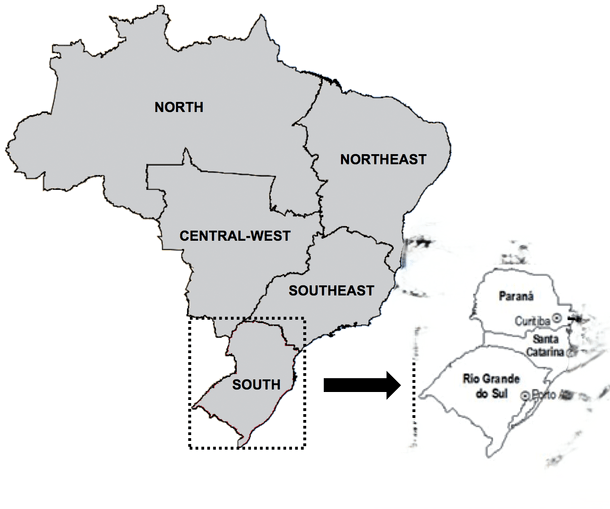
5. The states of Santa Catarina & Paraná, April 23 – May 1, 2025.
For our fifth major region, we’re heading to the south of Brazil.
First stop: Curitiba, capital of Paraná.
Let’s be honest: if you’ve never heard of Curitiba or of the region, you’re not alone. But here, it’s a hit.
A sort of Brazilian Zurich – with a bit more concrete and a bit less chocolate.
Many Brazilians told me it’s “the best city to live in Brazil.”
Why? Because you can walk around without looking over your shoulder every three seconds, there’s little corruption, efficient public transport (really), and urban planning that’s even been studied in architecture schools abroad. No less.
So yes, it’s pleasant… but we’re still in Brazil.
From our European point of view, we weren’t exactly blown away.
Still, between two rain showers and a lovely, cosy apartment, we took the time to relax a bit.
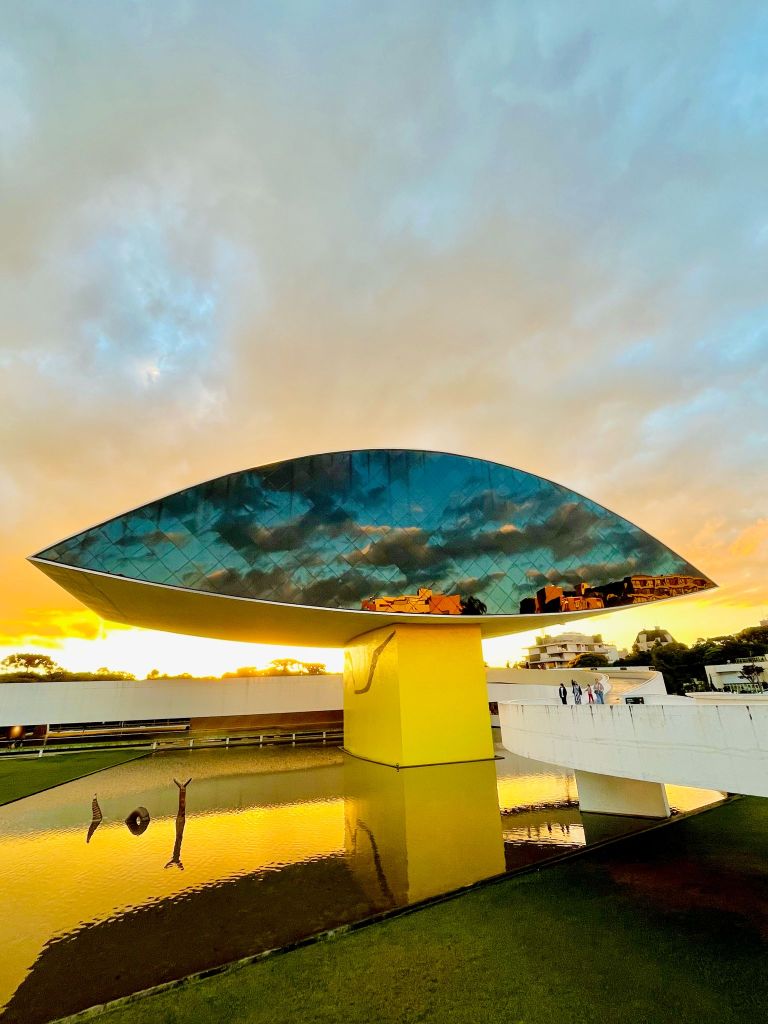
That didn’t stop us from discovering two or three little architectural gems.
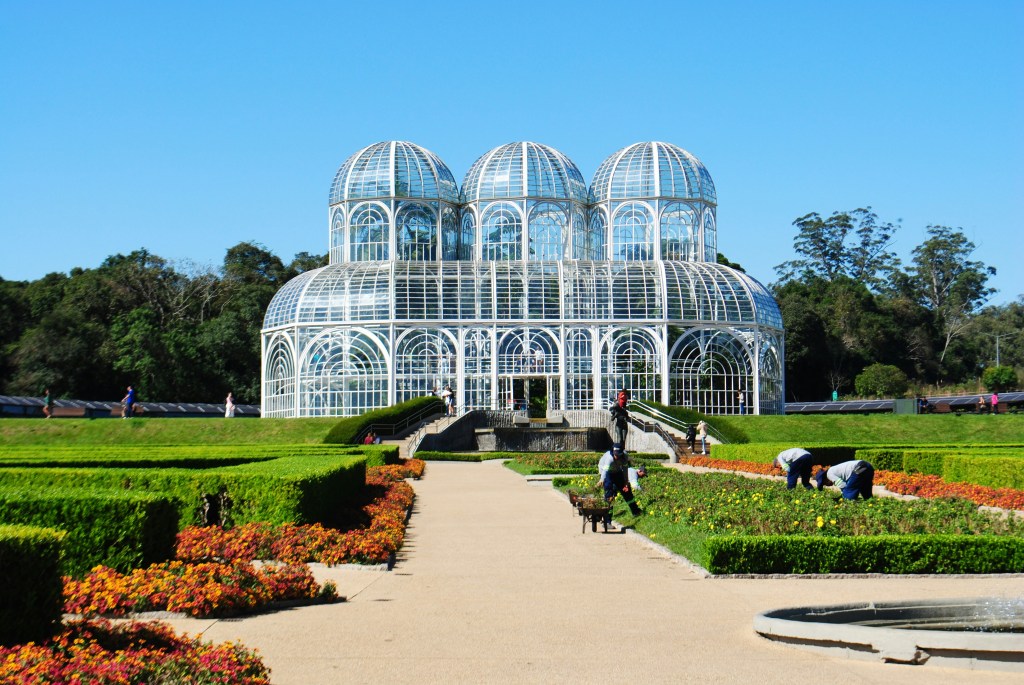
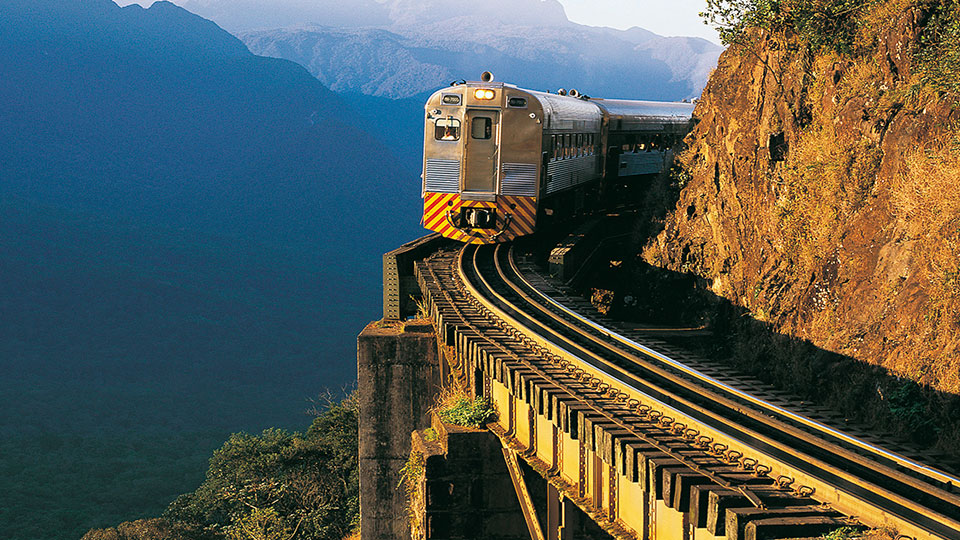
But it’s also from downtown that the Curitiba–Morretes scenic train departs, heading to a small coastal town. It’s ranked among the 25 most beautiful train rides in the world — and even if we haven’t tried them all, the scenery is seriously impressive: misty valleys, tropical forests clinging to cliffs, and the train crossing rocky ridges with a 500-meter drop. The kids, however, were only mildly thrilled by the four-hour trip.
The next day, we pick up our rental car and head south toward Santa Catarina, a land of contrasts… and bratwurst.
Here, the German heritage is more than just a few words on a museum sign. Timber-framed villages, the largest Oktoberfest in Latin America (often ranked second biggest worldwide after Munich), bakeries selling strudel alongside guava pastries — it’s all part of the local flavor.
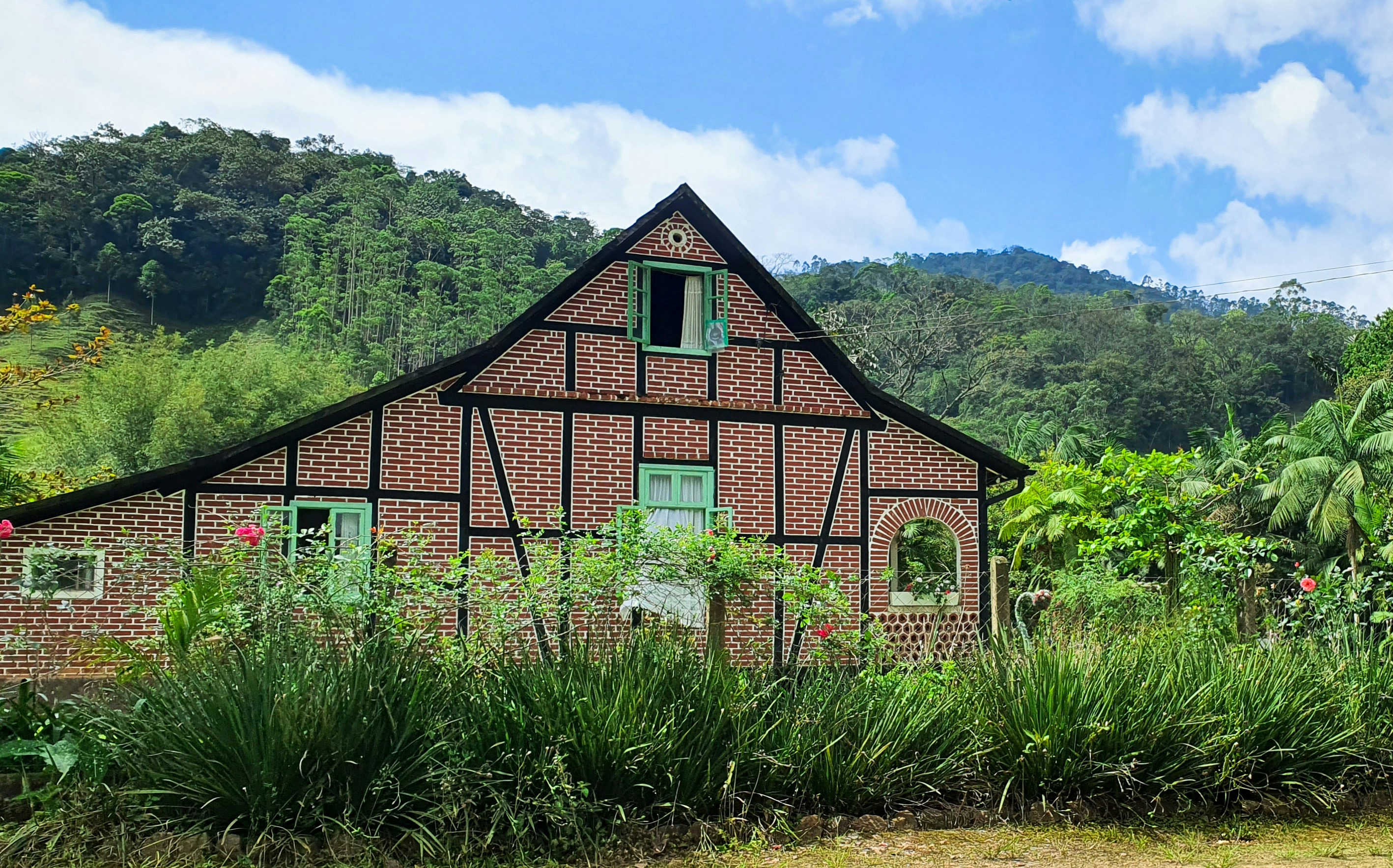
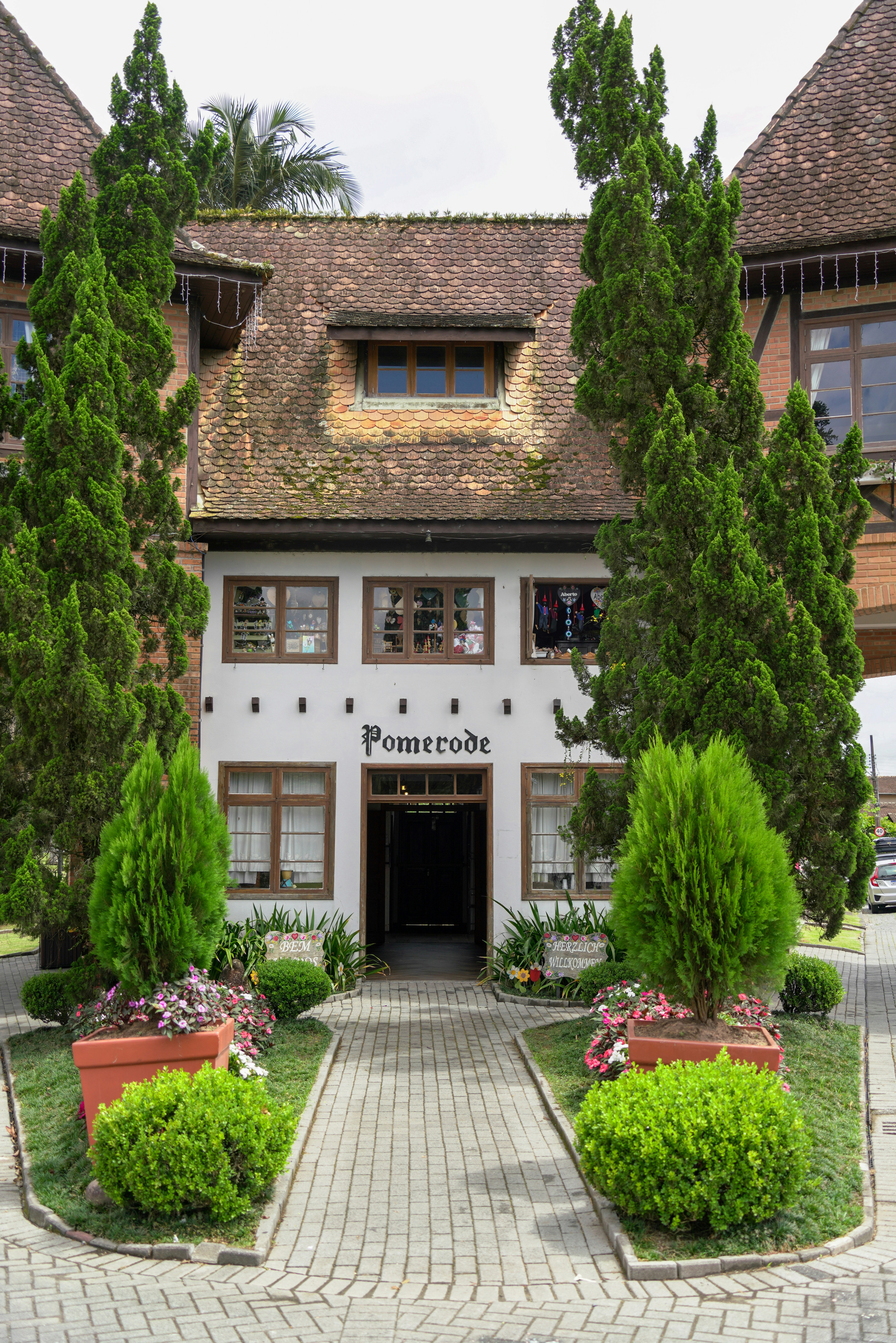
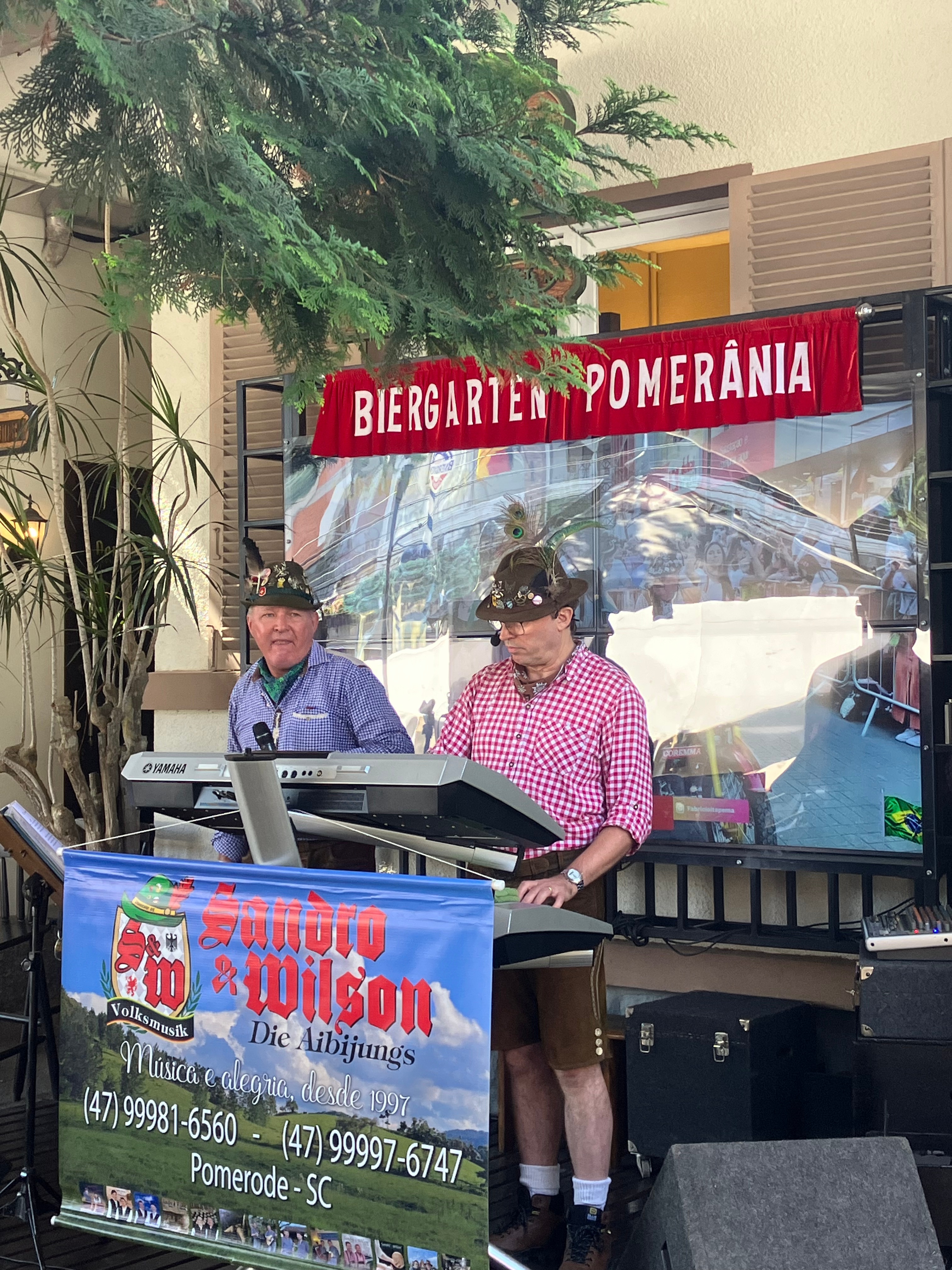
Alright, I see what you’re thinking… No, these aren’t former Nazis. Wrong guess. This German immigration dates back to the 19th century. Back then, poor families from Mecklenburg, Pomerania, or the Hunsrück—rural regions in northern and western Germany today—were fleeing poverty, bad harvests, and a future with no horizon. And Brazil was waiting with open arms. To repopulate its South, especially after the gradual abolition of slavery, it offered Europeans almost free land and the promise of a fresh start. Many Germans said yes.
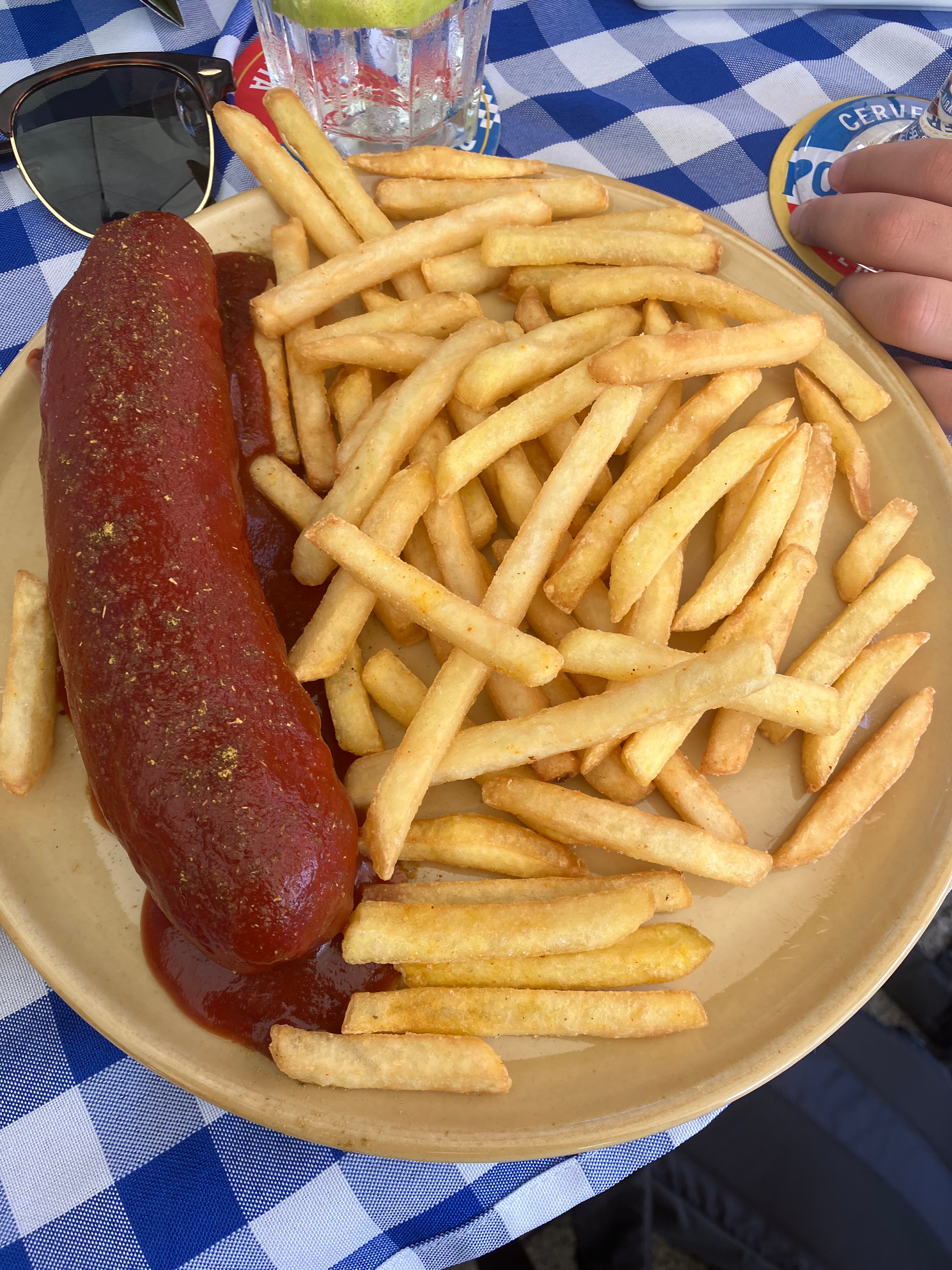
The result? Towns like Blumenau or Pomerode, with a Bavarian vibe, and Brazilians singing “Ein Prosit” as if it were in their DNA. For us, after nine months on the road, it felt almost exotic to eat a big handmade sausage and enjoy a cold German beer
So, to be honest, if you’re only on a 2–3 week vacation, there’s no need to come here. But after nine months away from home, it gave us a good laugh. And once you step out of the German vibe, you very quickly find yourself in a fully Brazilian jungle atmosphere.
Even though the Southeast (São Paulo, Rio…) has historically been the richest region in the country, it’s here in the South — in Paraná and Santa Catarina — where the human development indicators are the highest in Brazil. In fact, these two states rank in the national top 4 for HDI. Decent roads, reliable infrastructure, better-organized cities: you can feel that things run a bit smoother here than elsewhere. Maybe it’s a legacy of European immigration, or maybe it’s just a local model that works? But one thing’s clear: the South of Brazil sometimes feels like a different country.
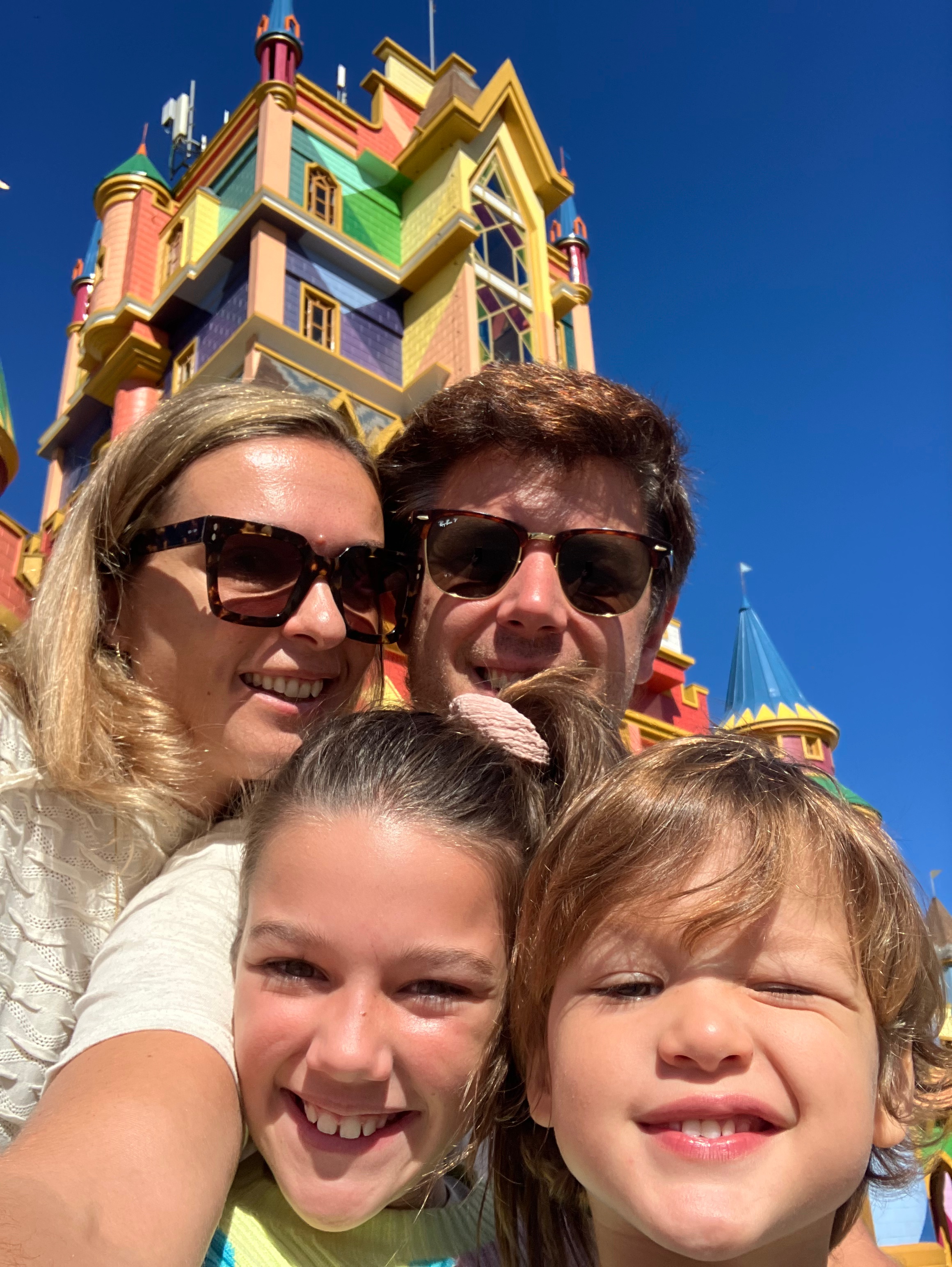
We ended the region with the real highlight for the kids — and you’ve got to please them once in a while — which was Beto Carrero World. Yes, that’s the name. And yes, it’s huge: the third largest theme park in the world (no kidding). Founded by a former cowboy turned brilliant entrepreneur, the park is a wild mix of Disneyland, local folklore, and western sets. You go from a medieval castle to a pirate show, then eat a giant churro while watching a Madagascar performance. Kitsch to the max. But for 60 euros for four people, we couldn’t ask for more. The result: 9 hours of screaming, loops, popcorn — and a return to the Airbnb completely wiped out… but happy.
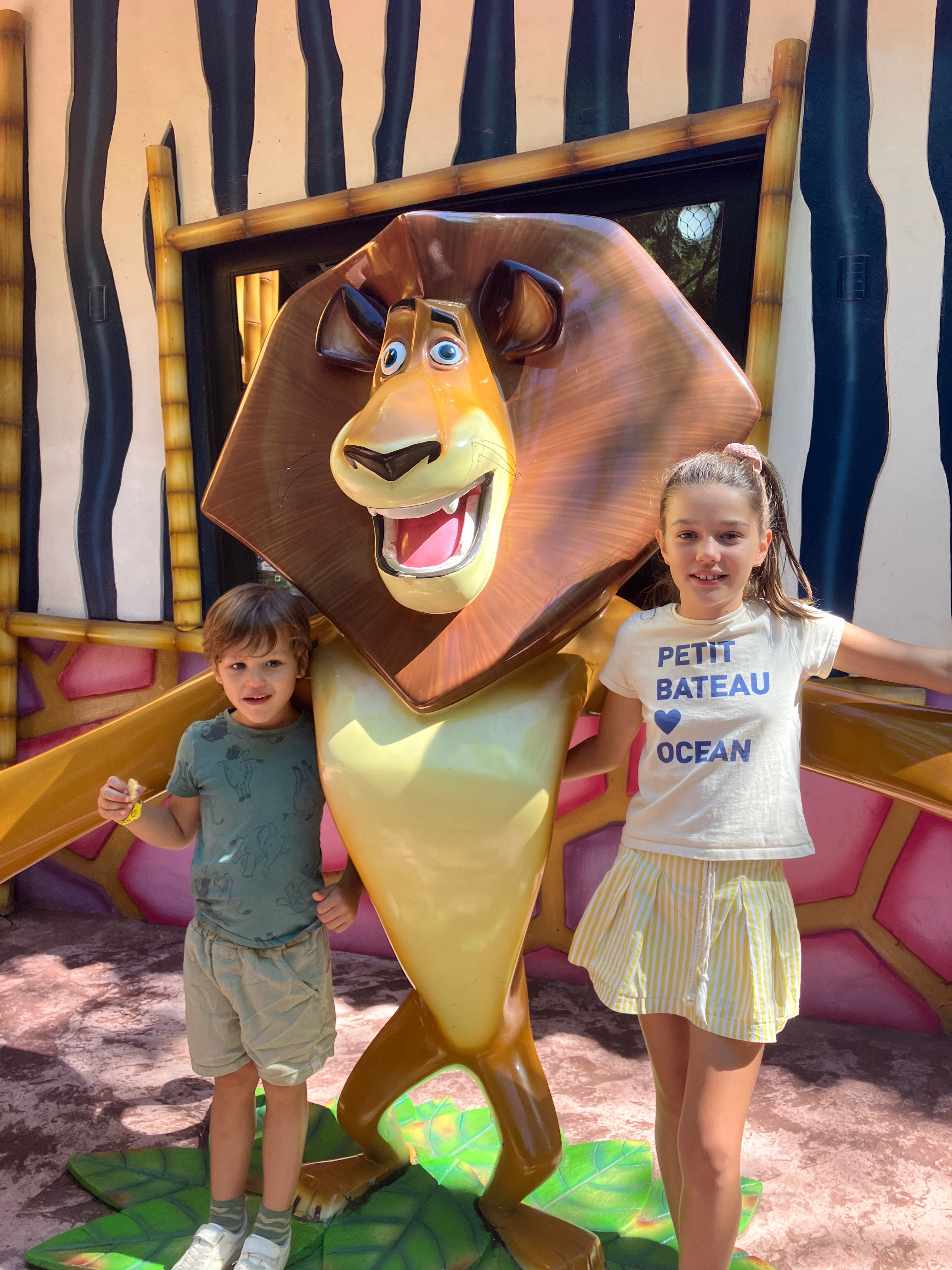



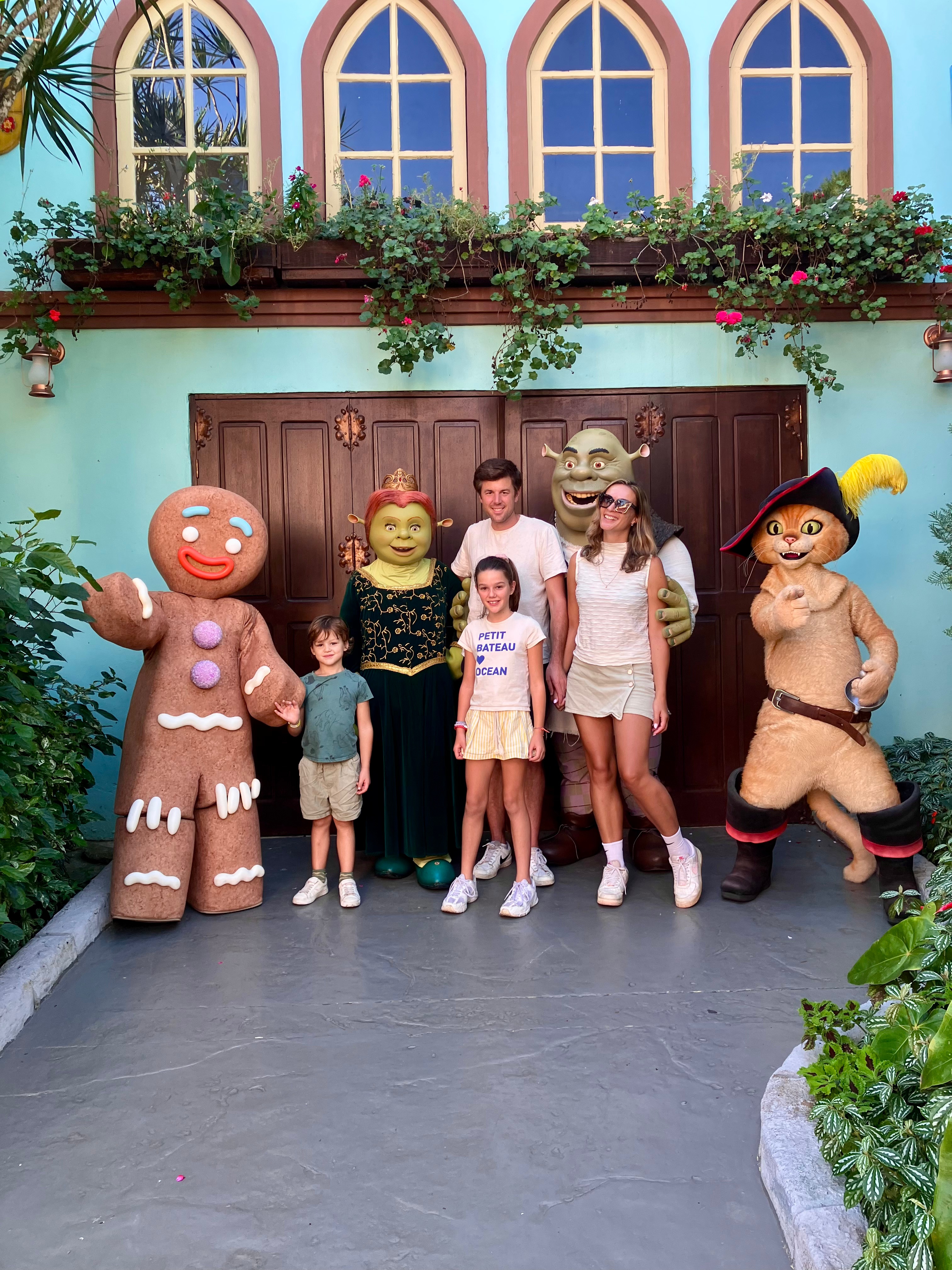
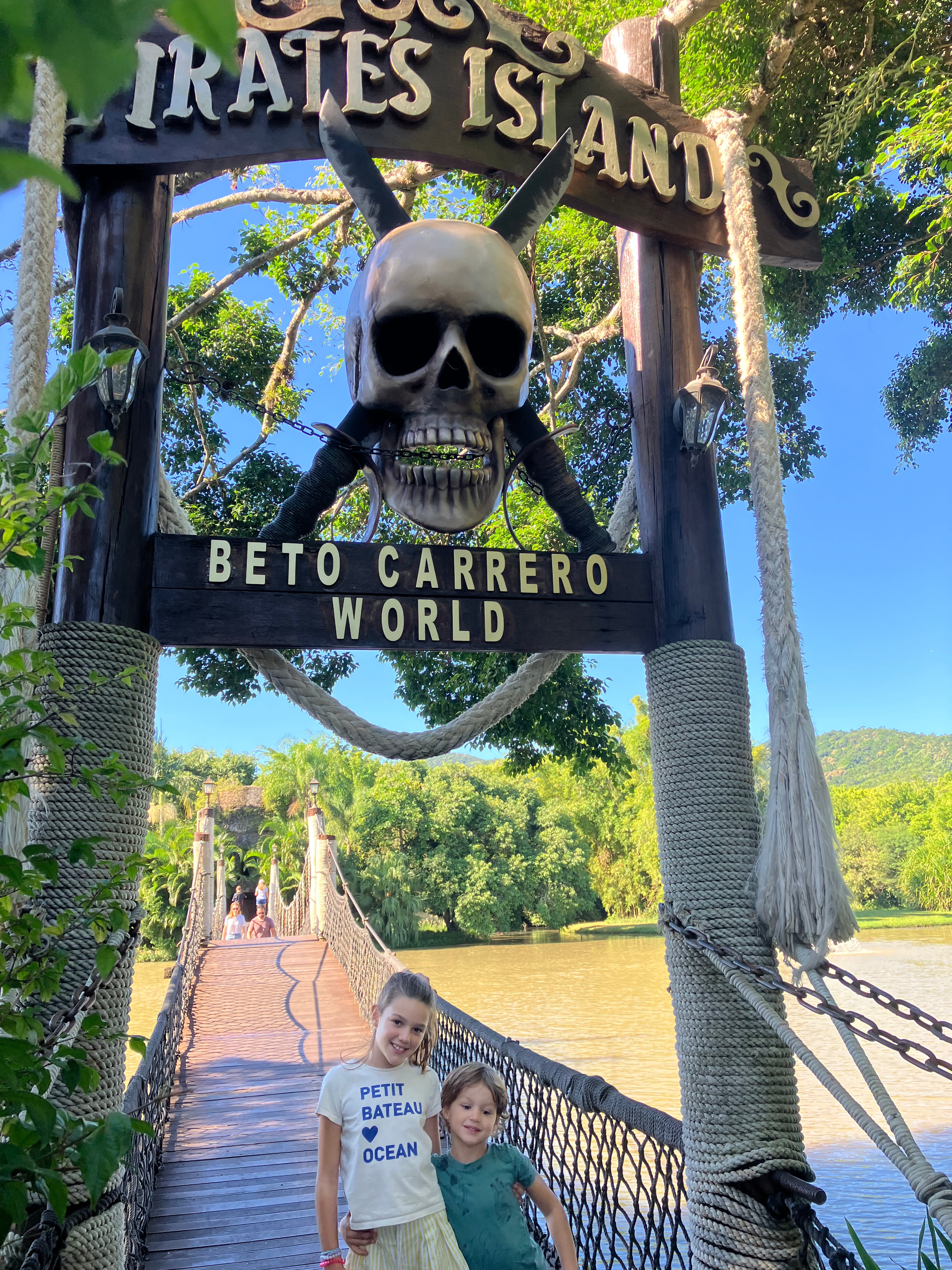
Last stop in the state of Paraná, with a total change of scenery: goodbye rides, hello natural wonders — heading to the legendary Iguaçu Falls, among the most spectacular in the world.
Iguacu, the wasp, and the pope
1:30 PM: A quick lunch before heading out to discover the legendary Iguaçu Falls. We get up, the bus is about to leave. Suzanne finishes her last sip of Coca-Cola when suddenly, I hear her scream. A wasp just stung her… right on the lip.
Panic. We rush to the nearest dispensary. Once there, she’s taken care of quickly. They apply treatment and ask us to wait half an hour to make sure there’s no allergic reaction. Her lip swells, but it stays under control.
Meanwhile, the dispensary guy is following with great enthusiasm the announcement of the new pope, Leo XIV, just declared. He’s super excited. He tells me — dead serious — that he hopes this pope is not the Antichrist. Apparently, there’s a prophecy circulating about this. I try hard not to burst out laughing, especially when he adds: “The prediction might come true… or not.” Thanks for the analysis, brother.
I gently change the subject with all the tact I can muster. No way I’m diving into a tropical prophetic debate. So I switch to one of my favorite topics (no, not football, too easy): the role of religion in Brazil and its impact on elections. Jackpot. The guy loves talking about it.
You have to understand, in Brazil it’s impossible to walk 300 meters without running into a building marked “Casa de Deus.” These are evangelical churches, often set up in simple houses. As soon as a new neighborhood pops up, an evangelical temple follows. Officially, they’re churches. In reality: community centers disguised as religious ministries, where people talk way more about prosperity than spirituality.
Today, more than 30% of Brazilians identify as evangelical compared to only 51% Catholic. A staggering explosion in the last twenty years, with a parallel decline of Catholicism, which was still at 90% in 1980. It’s not just a religious shift: it’s a major cultural and political transformation. Evangelicals promote a return to “traditional values”: God, family (19th-century style), rejection of feminism, LGBTQ+ rights… And of course, they defend the right to get rich, as long as you pay your tithe and make a little donation to the church. No joke!
Politically, this movement helped bring Jair Bolsonaro to power in 2018 (alongside economic movements). For those who forgot: he’s basically the Brazilian Trump. Homophobic, sexist, racist, nationalist, authoritarian… He ticks all the boxes. His record? Nothing positive on the horizon. A poorer country, six times more gun permits issued (from 117,000 to over 673,000 between 2018 and 2022), a ridiculous international image, record Amazon deforestation, catastrophic COVID management with 700,000 deaths (the guy denied the virus’s severity, promoted ineffective treatments, and delayed vaccine purchases), and inequalities even more abyssal than before. Even the business elite eventually abandoned him. He did manage one thing: making the rich even richer.
And the best part: this champion of the Christian family has had three wives, five acknowledged children, legal scandals… and yet he continues to preach divine morality on TV. I told you, he’s the local Trump.
Despite this apocalyptic resume, 49% of voters backed him in 2022. Lula eventually won, but the country is more divided than ever. One Brazilian out of two supports the Bolsonaro family, the other Lula. And 70% of people admit they no longer dare to talk politics with their close ones. Quite an atmosphere.
The dispensary guy confirms all this. Meanwhile, Suzanne’s lip swells a bit more. No serious allergy, just a nice Angelina Jolie-style volume. We decide to leave anyway. The falls won’t wait.
Iguaçu Falls: higher and stronger than ever
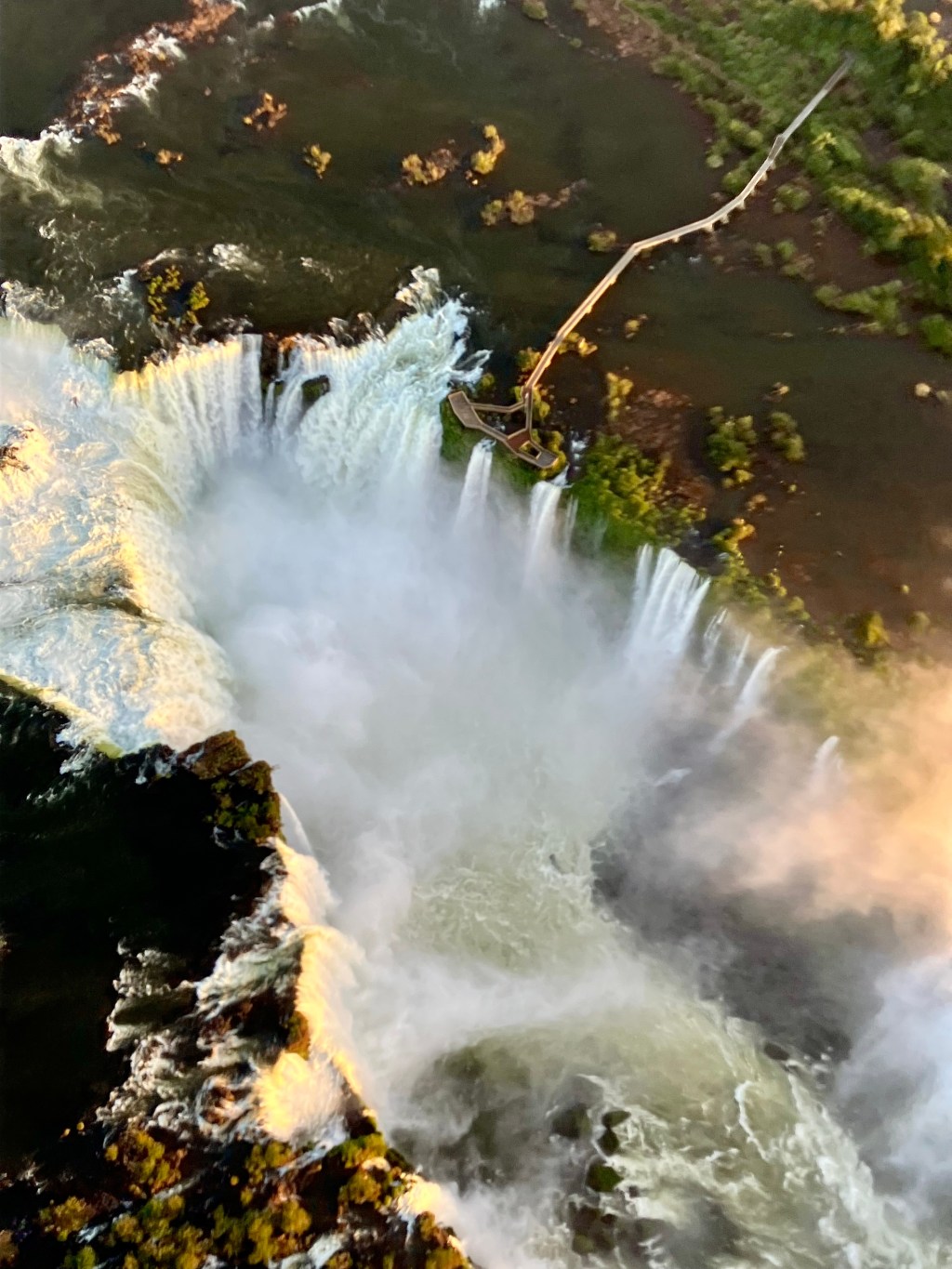
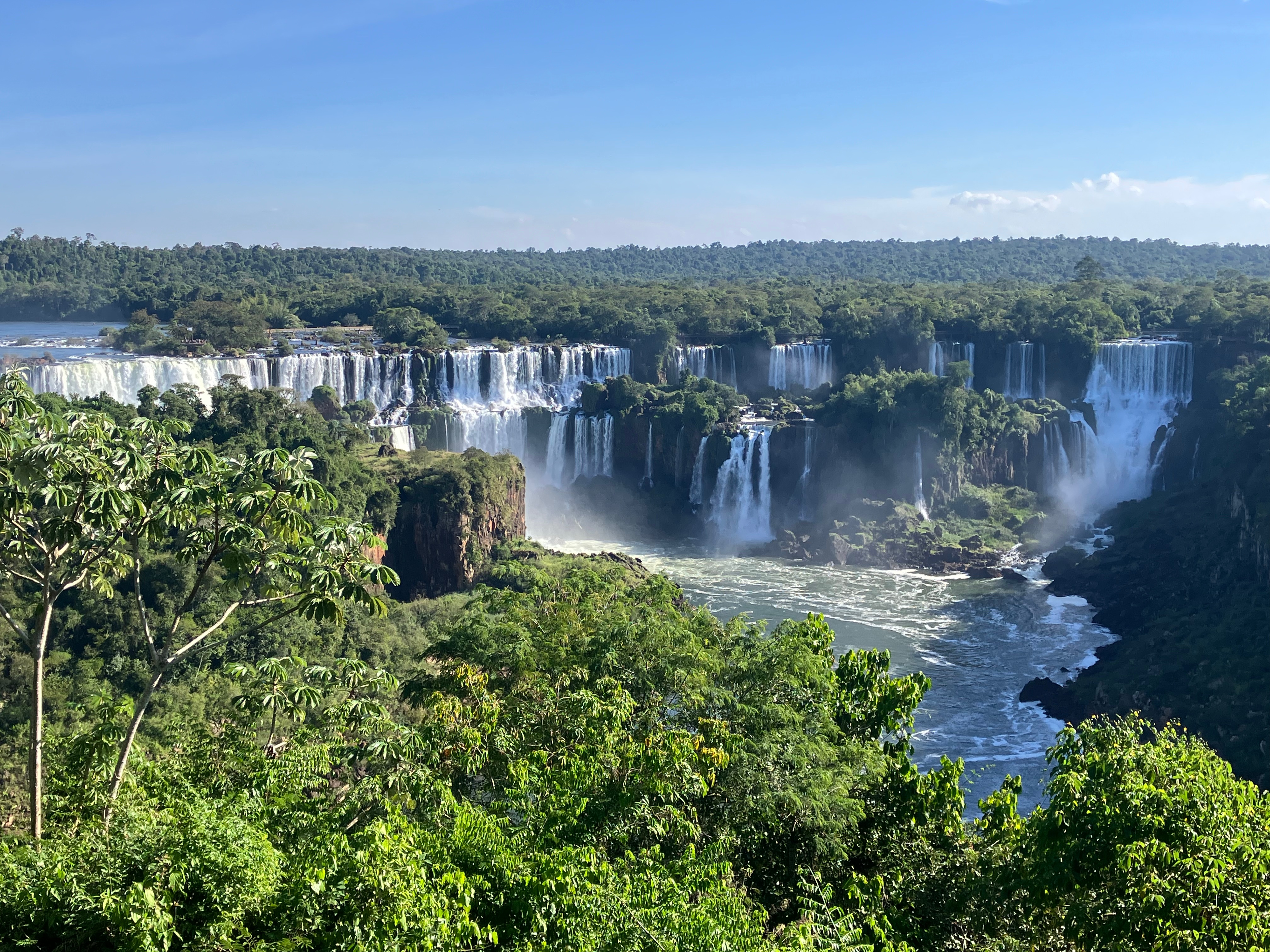
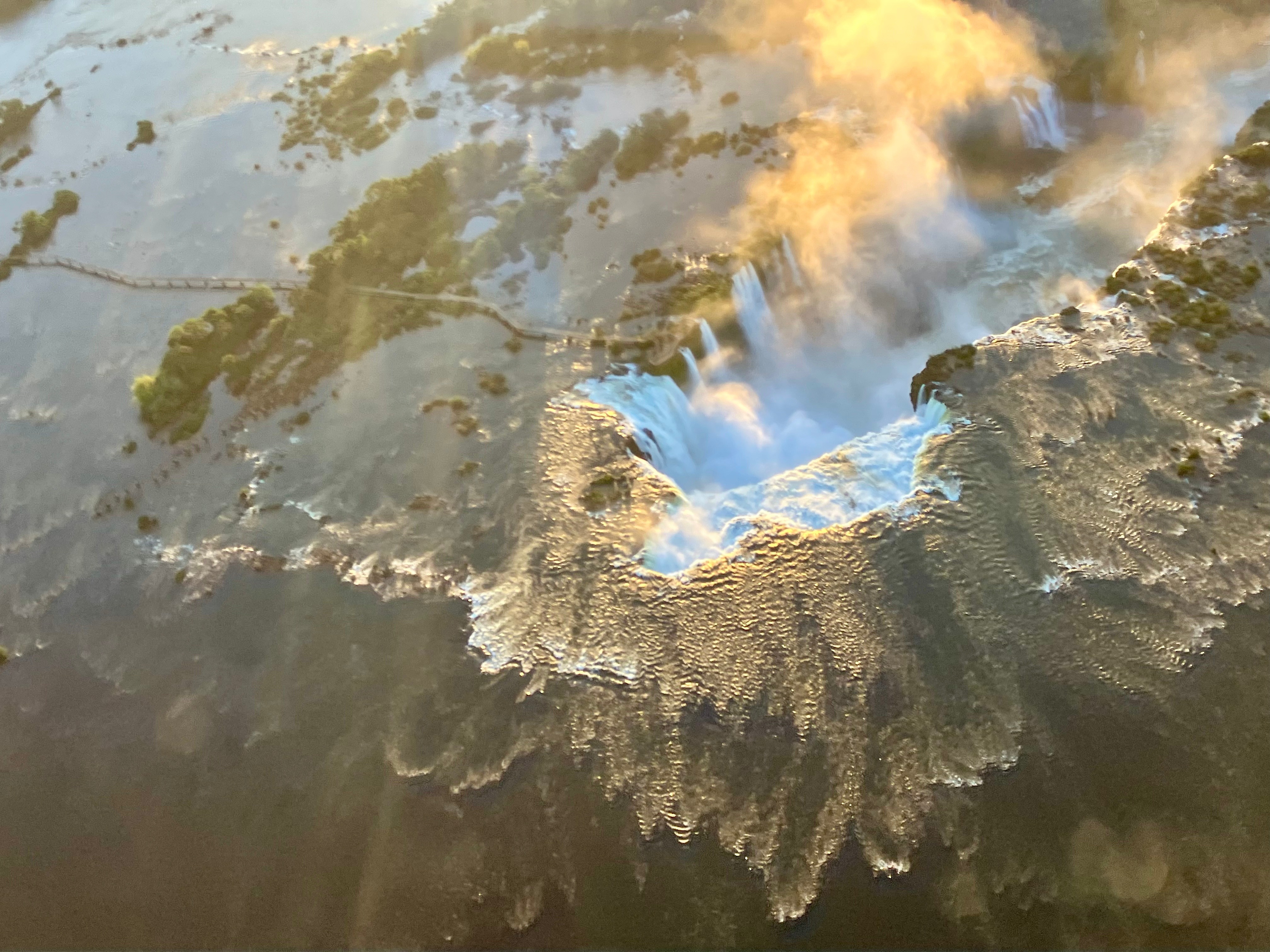
Iguaçu isn’t just a waterfall. It’s a symphony orchestra of 275 cascades, some reaching 82 meters high, lost in the heart of two UNESCO-listed national parks. One of the most beautiful natural sites in the world. Voted in 2011 as one of the New Seven Wonders of Nature.
We had already been there before. And yet… Getting stunned again in the middle of the jungle never gets old. This place is magical. When I tell the kids stories about lush forests and enchanted rivers, I think of Iguaçu. It always reminds me of that scene from The Lion King, when Simba grows up chilling with Timon and Pumbaa. Yes, I know, I probably should stop flaunting my movie culture in this blog. Or maybe not 😉
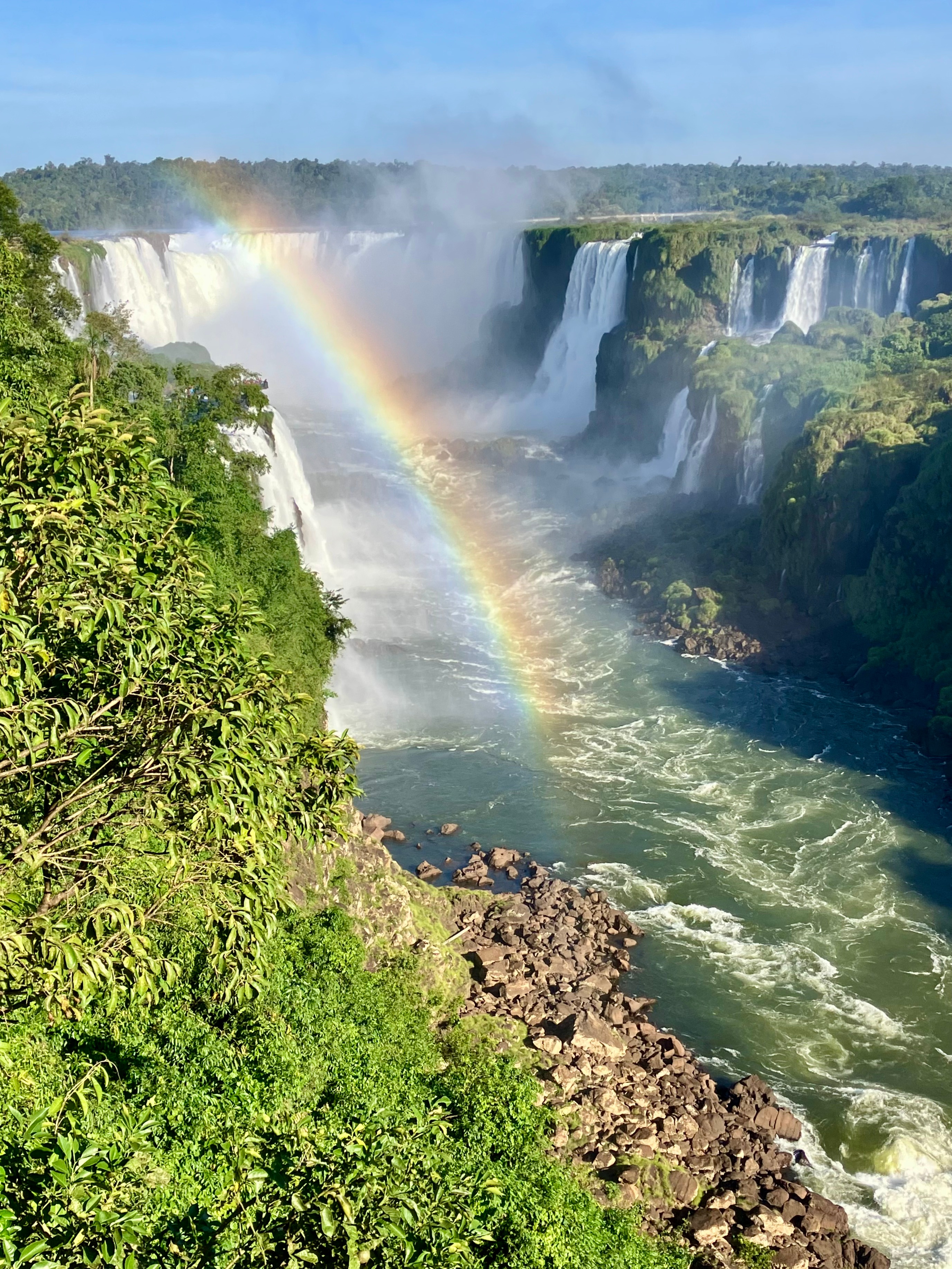
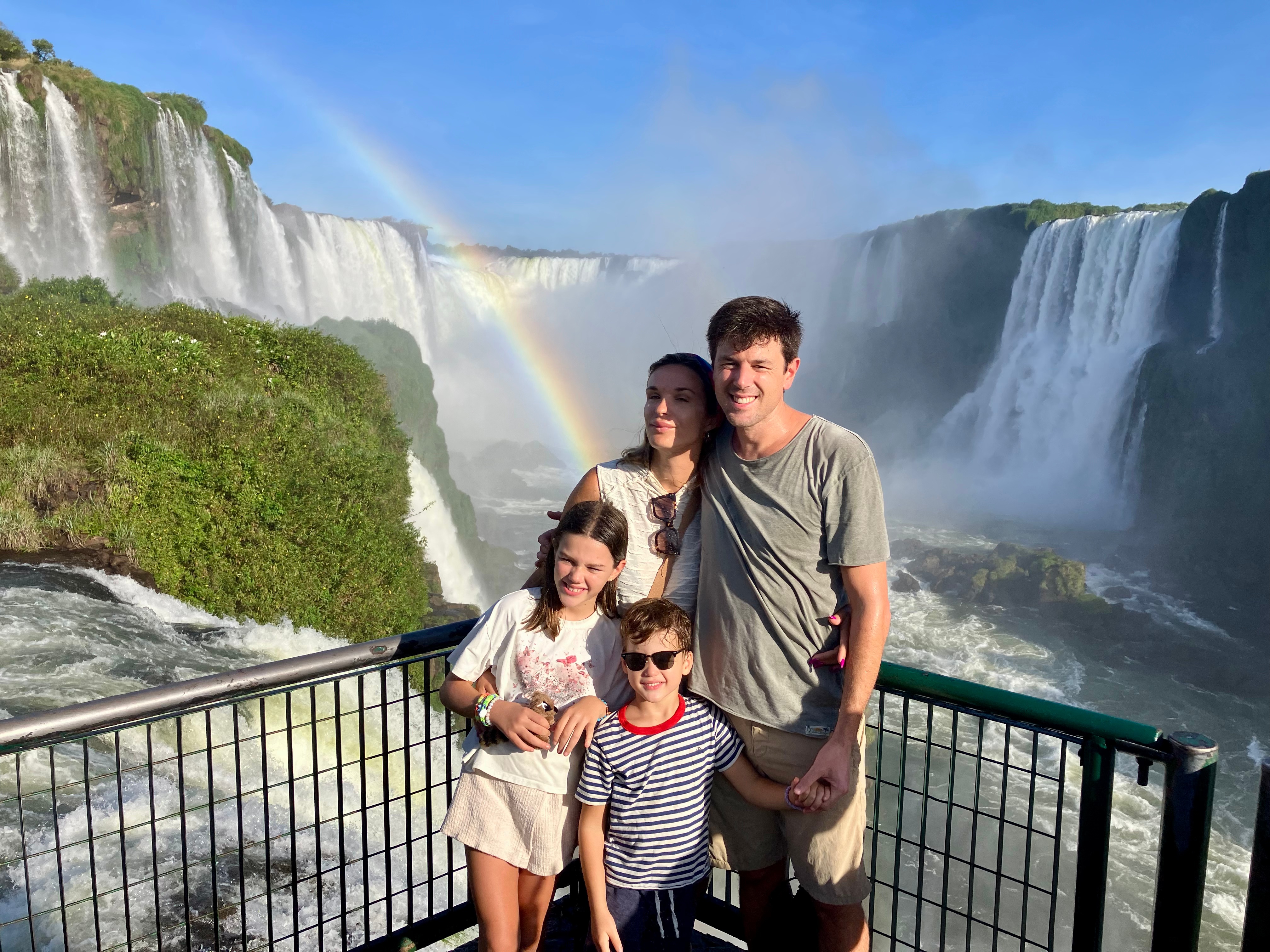
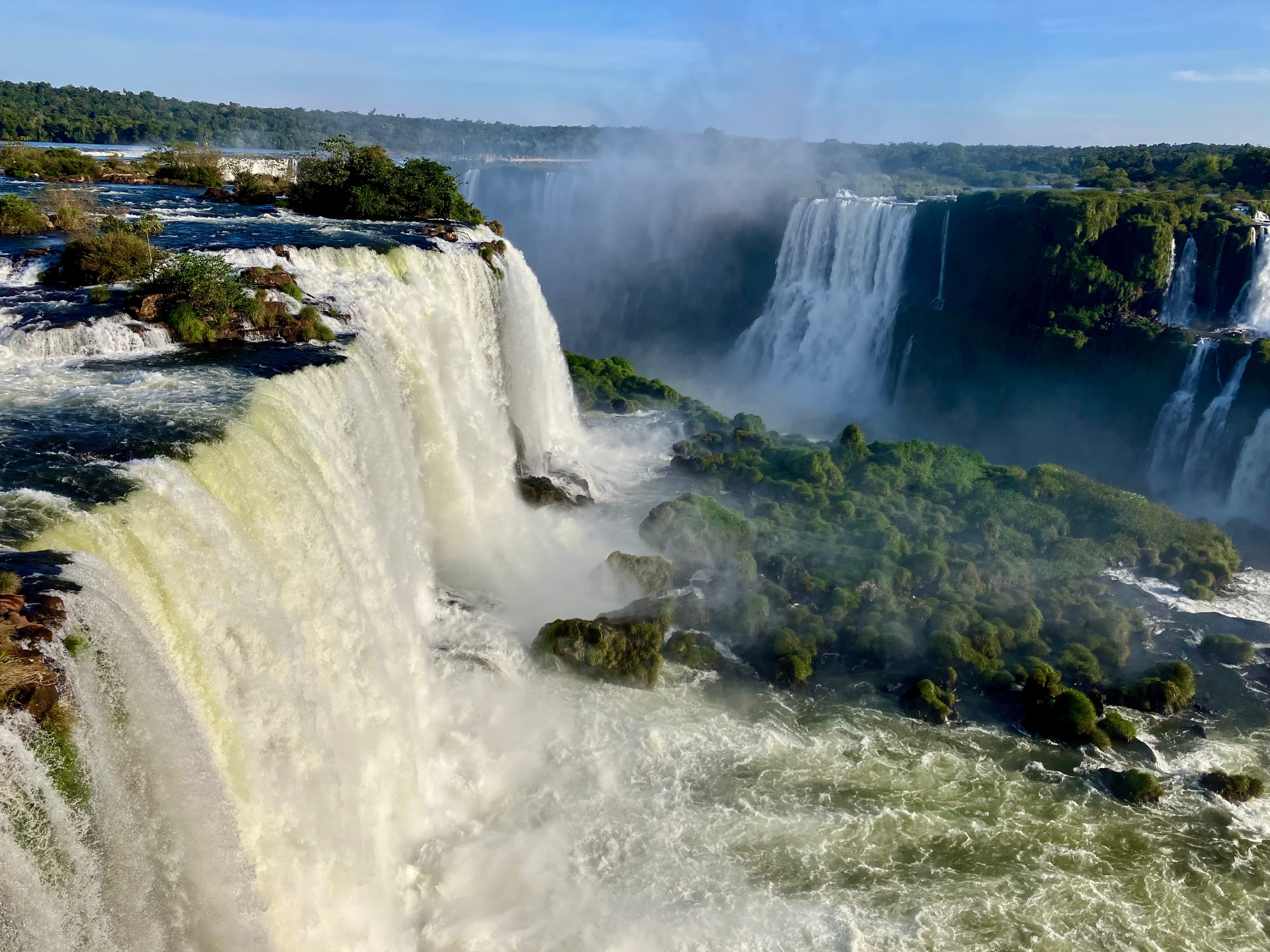
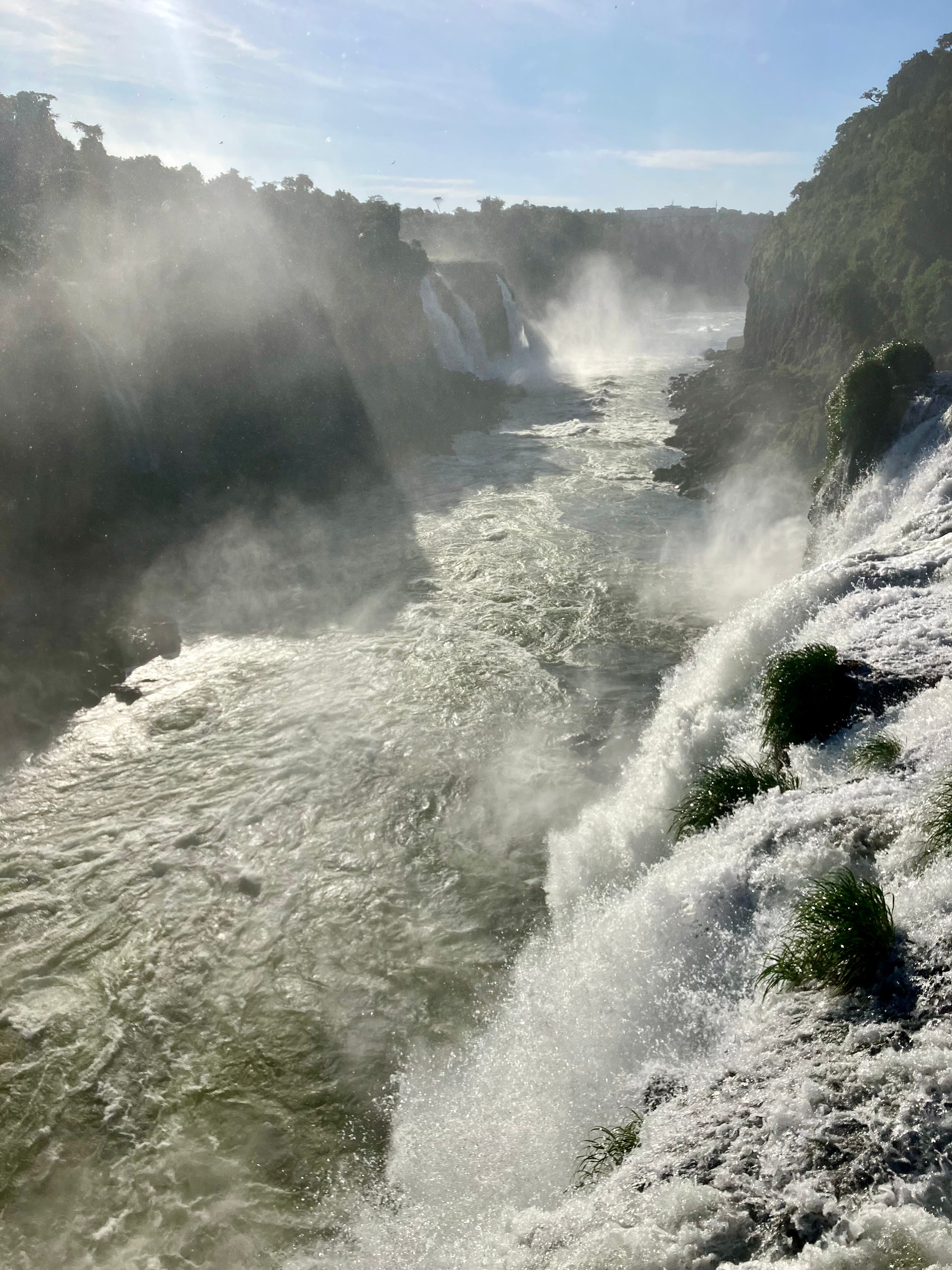
After the amazing walk along the falls, we catch the bus back to the entrance. From there, we continue on foot along the main road. And then, surprise: a helicopter parked right in front of us. The kids are glued to the spot. Curious, we approach the neighboring building — that’s where you book the flights.
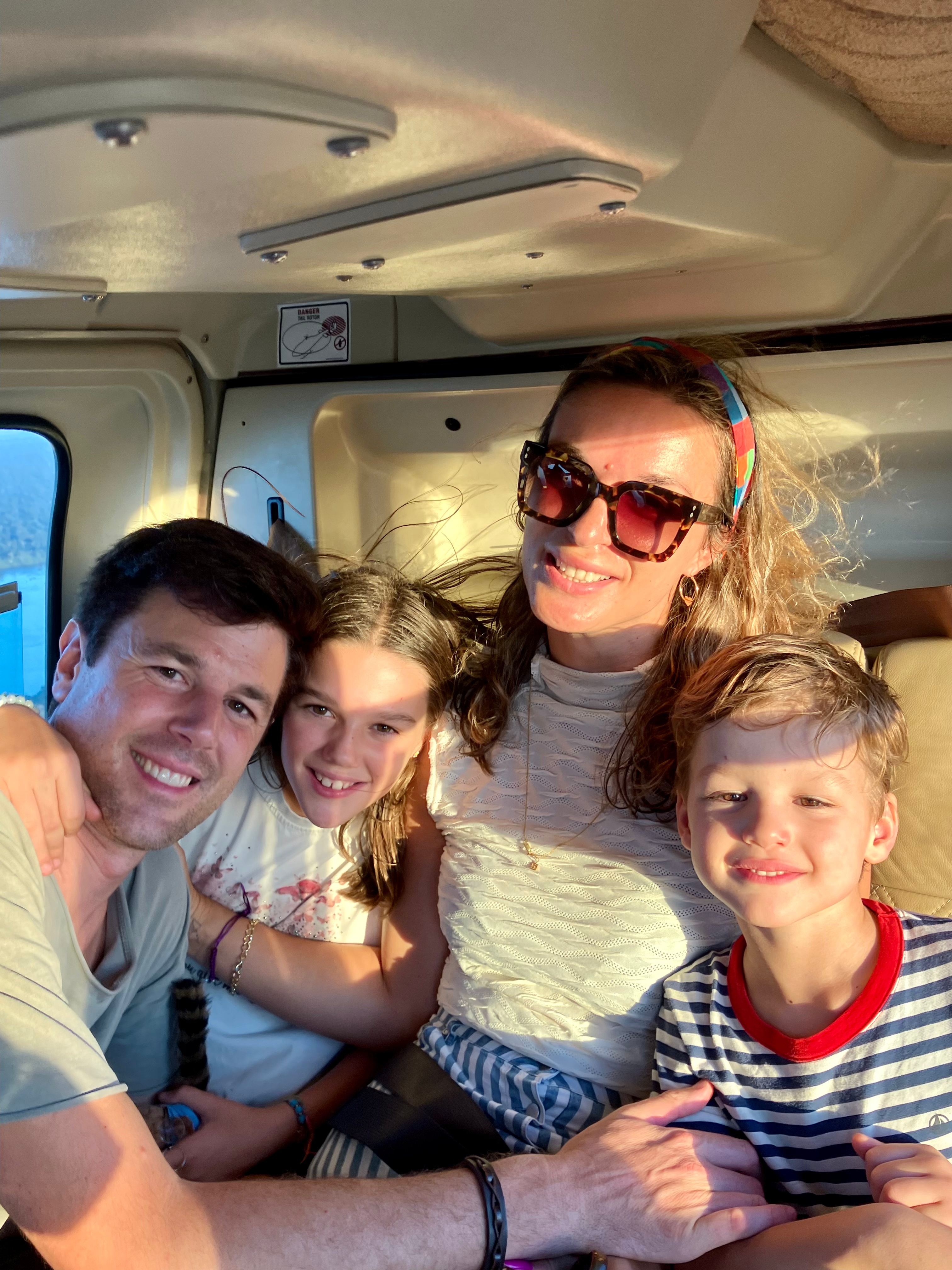
We go in, thinking it’s going to be way too expensive. The receptionist gives us the price, says a flight is scheduled in five minutes… and seeing our hesitation, offers a 50% discount for the kids. Three minutes later, we’re in the helicopter.
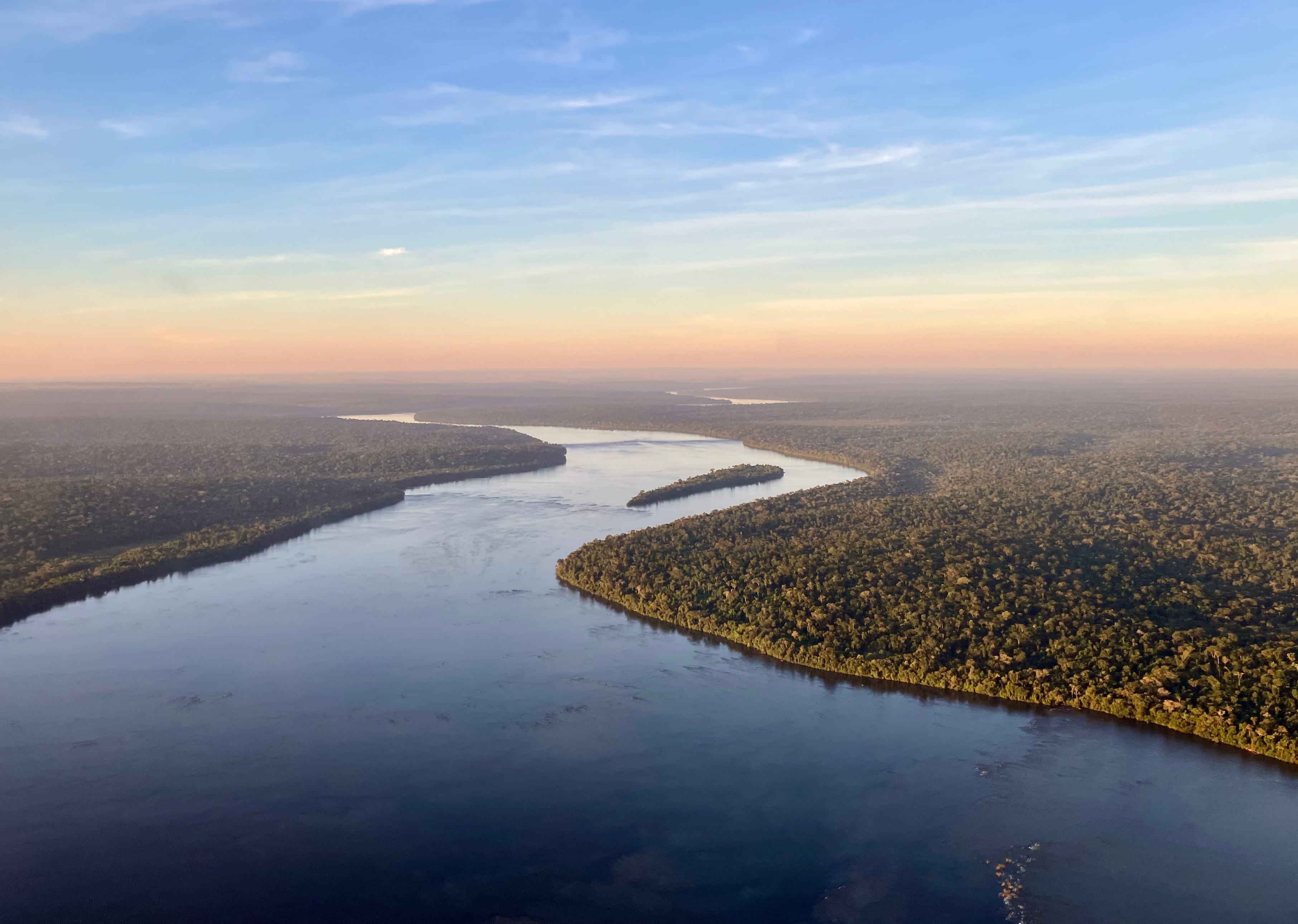
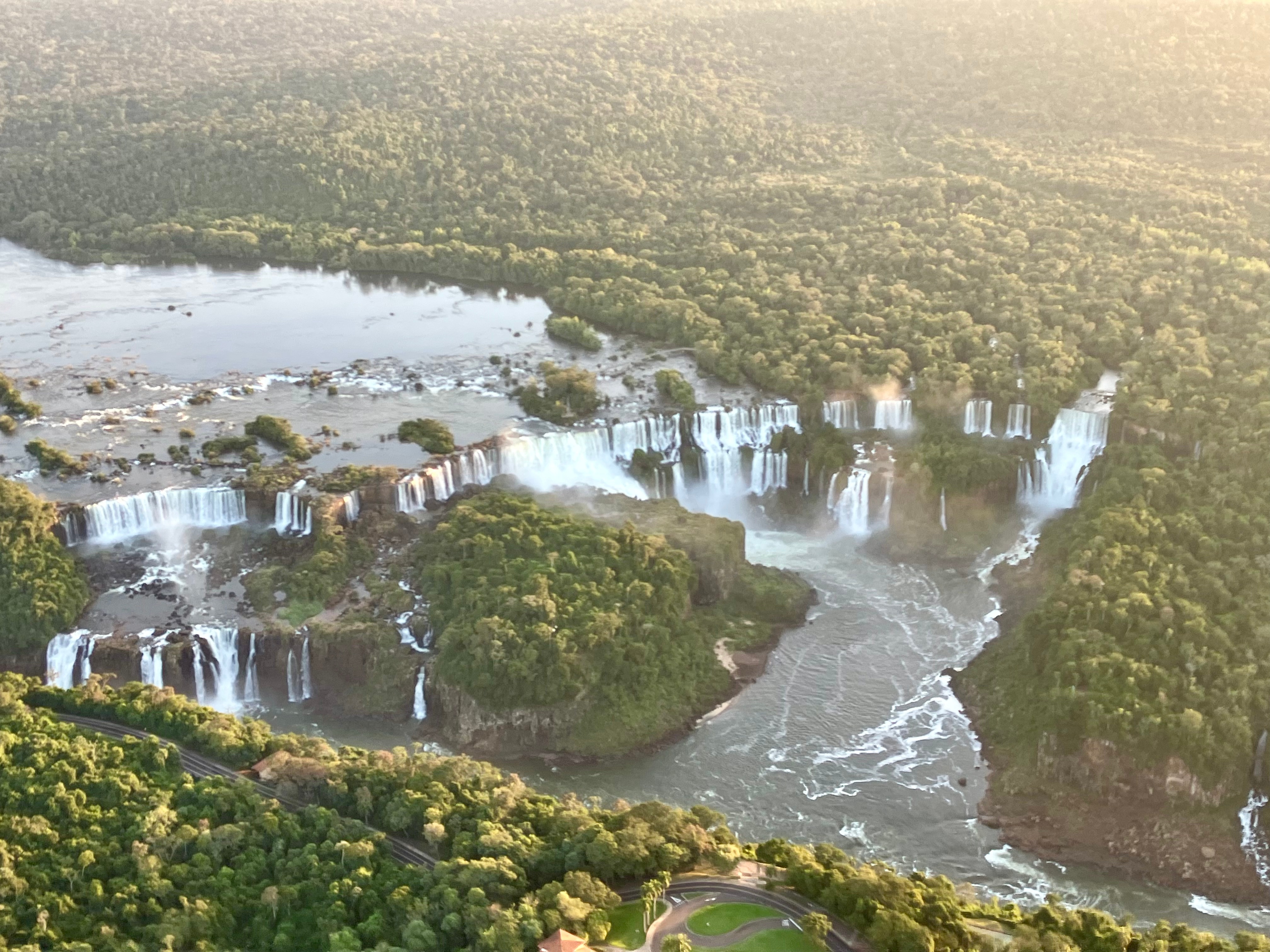
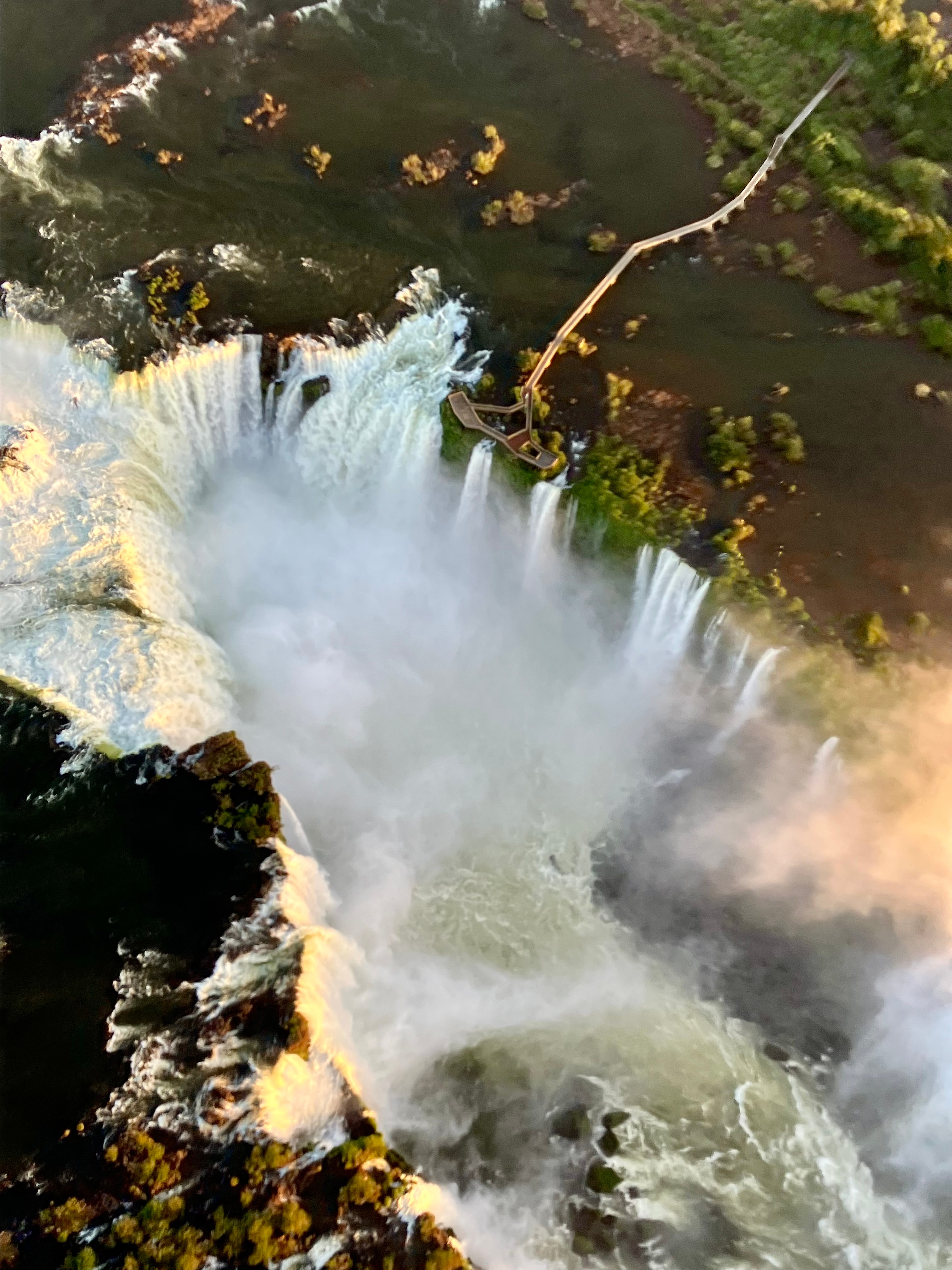
Quick takeoff. Figure-eight turns. Flying over some of the most impressive falls in the world. A suspended moment, etched into our memories. A helicopter ride is always an adrenaline break. But above Iguaçu, it’s also an immersion in raw beauty. We get off the aircraft, still buzzing, our hearts light.
Tomorrow, we head southwest. Destination: the Pantanal, one of the most beautiful wildlife sanctuaries in the world.
While waiting for the jaguars, sending you our love!
And for your amusement (or not), here’s Suzanne’s lip, two days after her encounter with a Brazilian wasp!

 365 days of summer
Leave a comment