After Uruguay and Paraguay, welcome to countries #3 and #4 in the very exclusive club of ‘almost never visited destinations in Latin America’
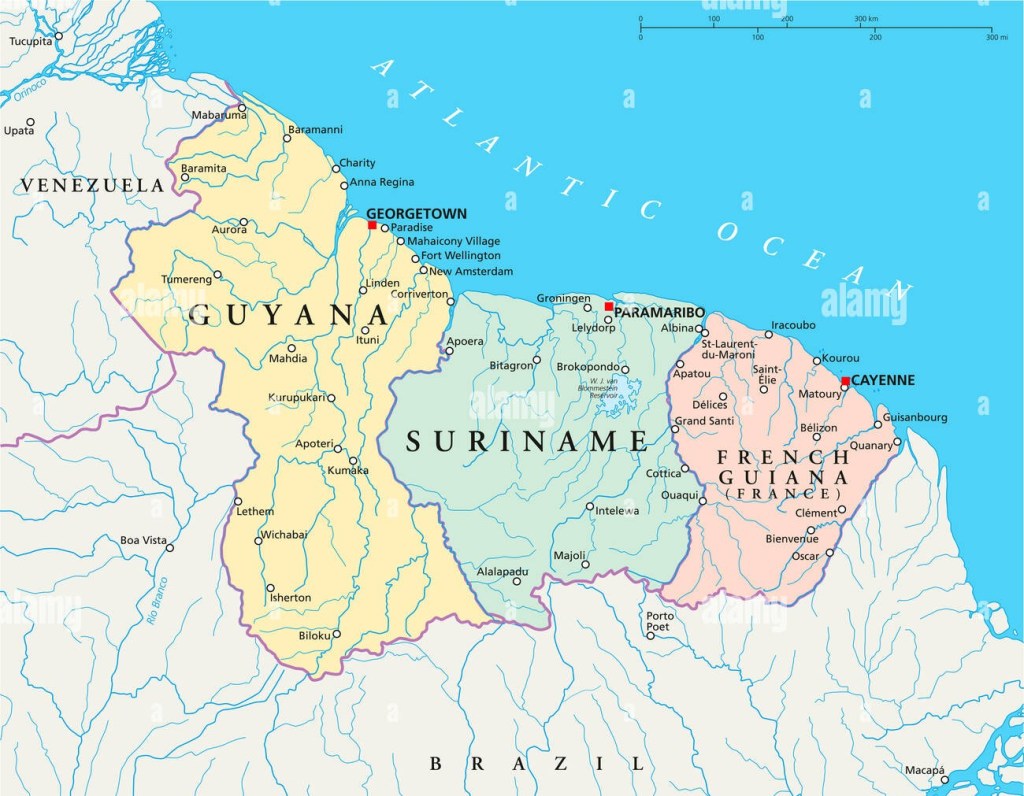
To wrap up our South American trilogy of the unexplored, we decided to drop our backpacks in French Guiana for 10 days, then in Suriname for 8 days. Two of the three countries (along with Guyana) that make up this mysterious region known as the Guianas.
Historically, these two patches of jungle followed almost the exact same script. Colonised in the 17th century — one by the French, the other by the Dutch. Plantation economy in full swing. And to keep it all running, the good old model of slavery: Africans torn from their continent to work under 35-degree heat in the shade.
But since I already wrote a whole piece on that dark chapter — slavery — in a previous post about Brazil (you know, the one with baroque churches and the sound of drums), I’ll spare you the replay.
Suriname gained independence in 1975, riding the wave of nationalist movements in the 60s and 70s. French Guiana, on the other hand, stayed… French.
Unlike Suriname, there was never a mass independence movement in French Guiana — no political elite pushing for it, and no real backing from the French state either.
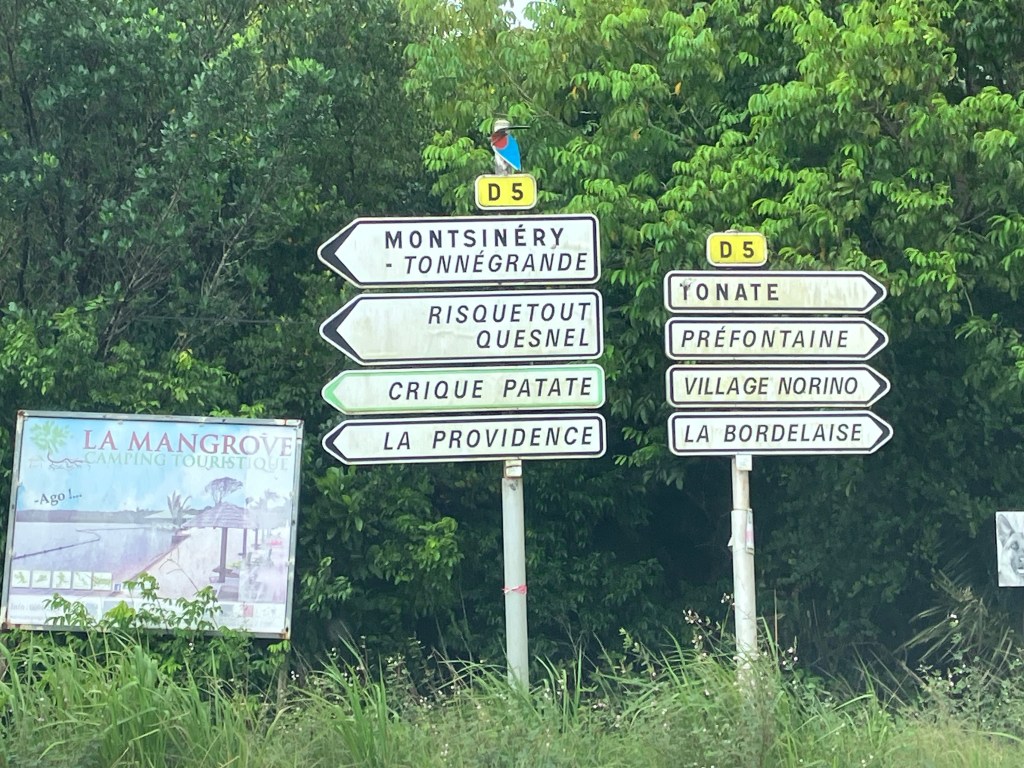
So in 2025, you can still cross the Atlantic and be greeted by a sign that says “French Republic,” pay in euros, and speak French — all in the middle of Latin America.
French Guiana is, to this day, the largest French département.
A tropical territory, 7,000 kilometres from Paris, that shares France’s longest land border: 730 kilometres with Brazil. No less.
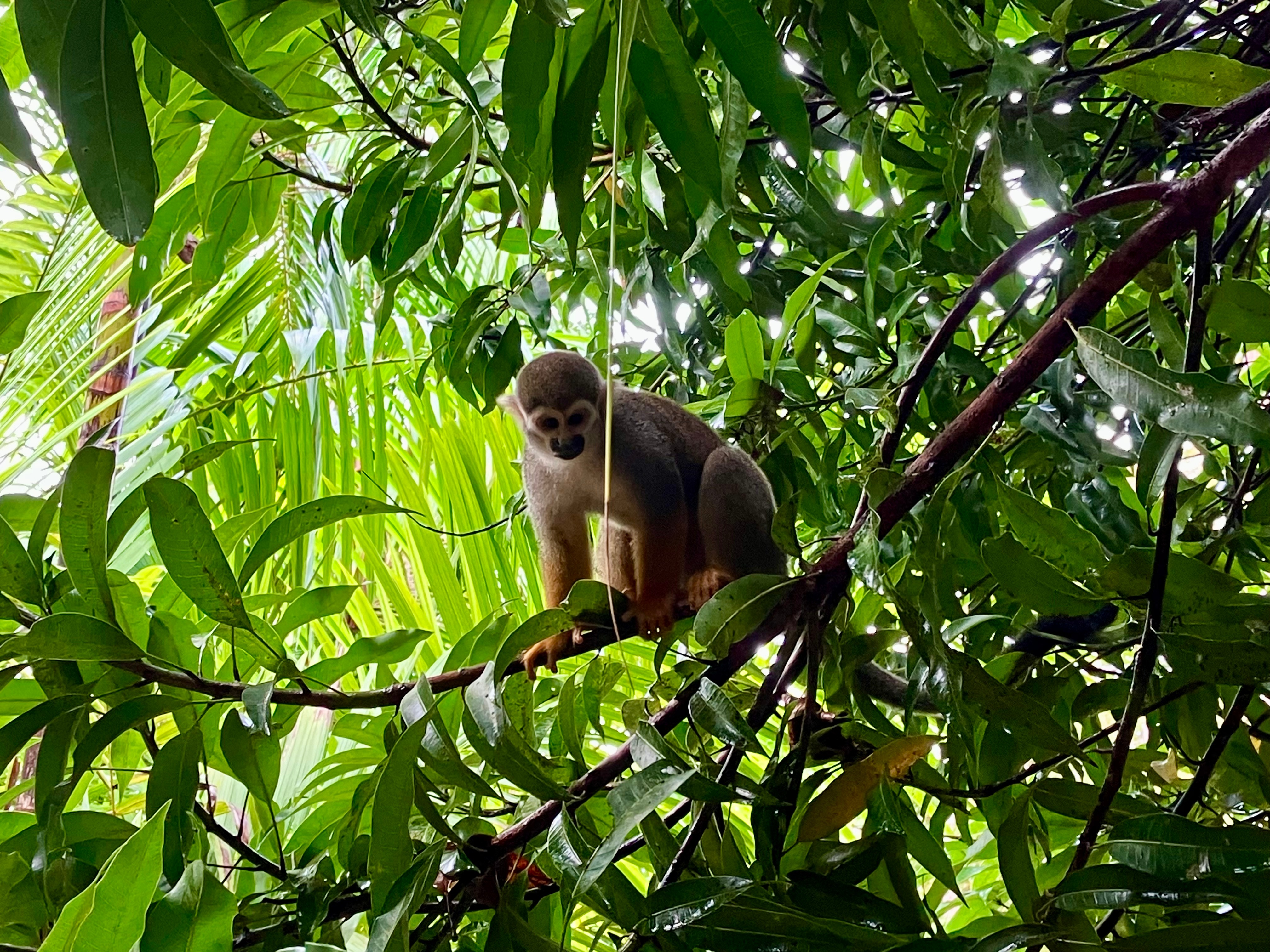
Geographically, it’s (almost) just as straightforward: over 90% of both countries is covered in tropical rainforest — one of the highest percentages in the world. And the rest? Just a handful of towns and villages clinging to the coastline. The farther you go inland, the lower the population density drops… until it becomes virtually nonexistent.
And anyway, there are no roads. Nada. To get to the interior: it’s dugout canoe or small plane — think Into the Wild, equatorial edition.
Our odyssey begins in the far east — way east — in Cayenne, the laid-back (but sticky) capital of French Guiana.
2 or 3 slow-paced days: a visit to the zoo, lounging by the pool, a bit of shopping, and strolling along the coast…
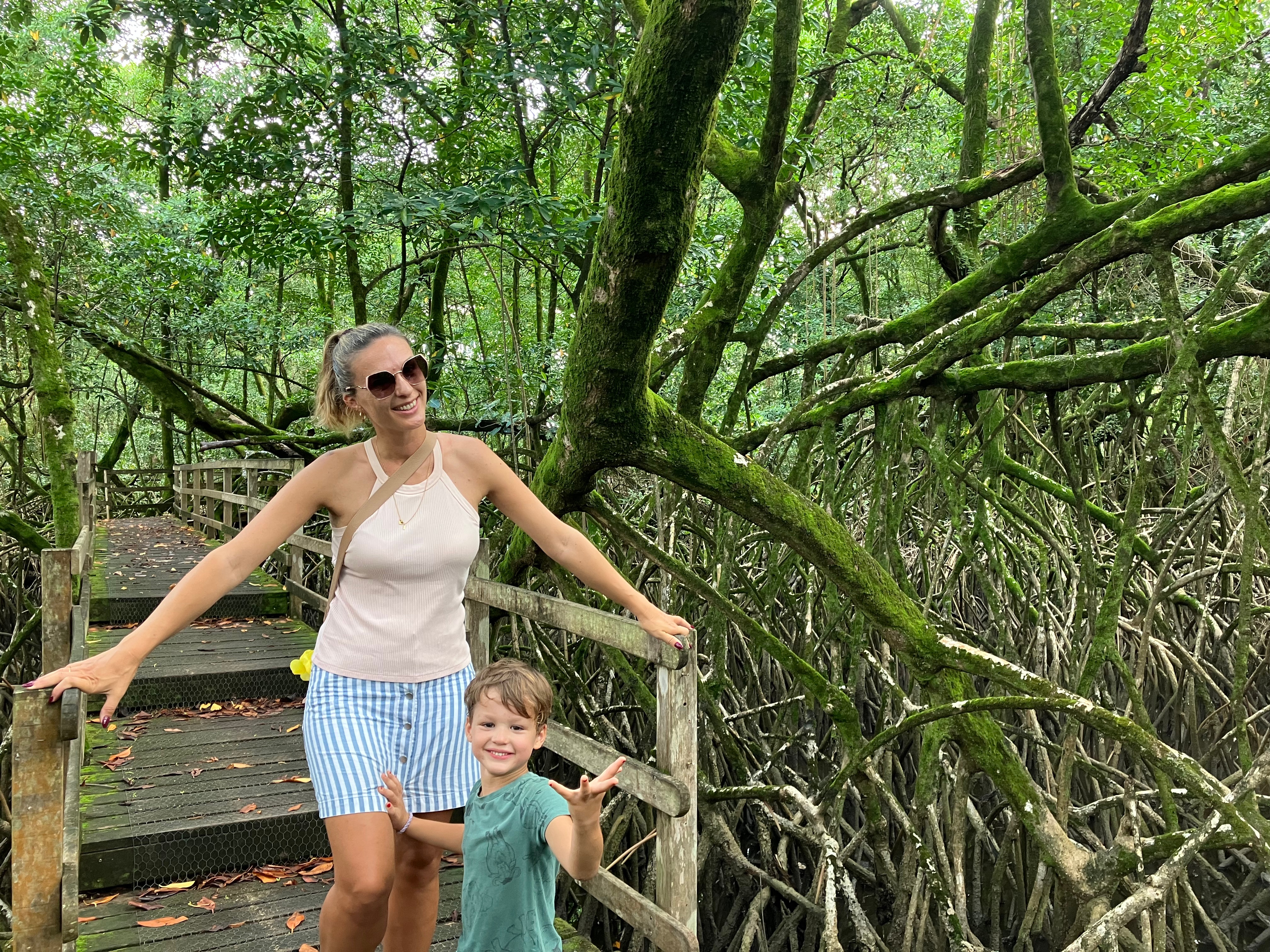
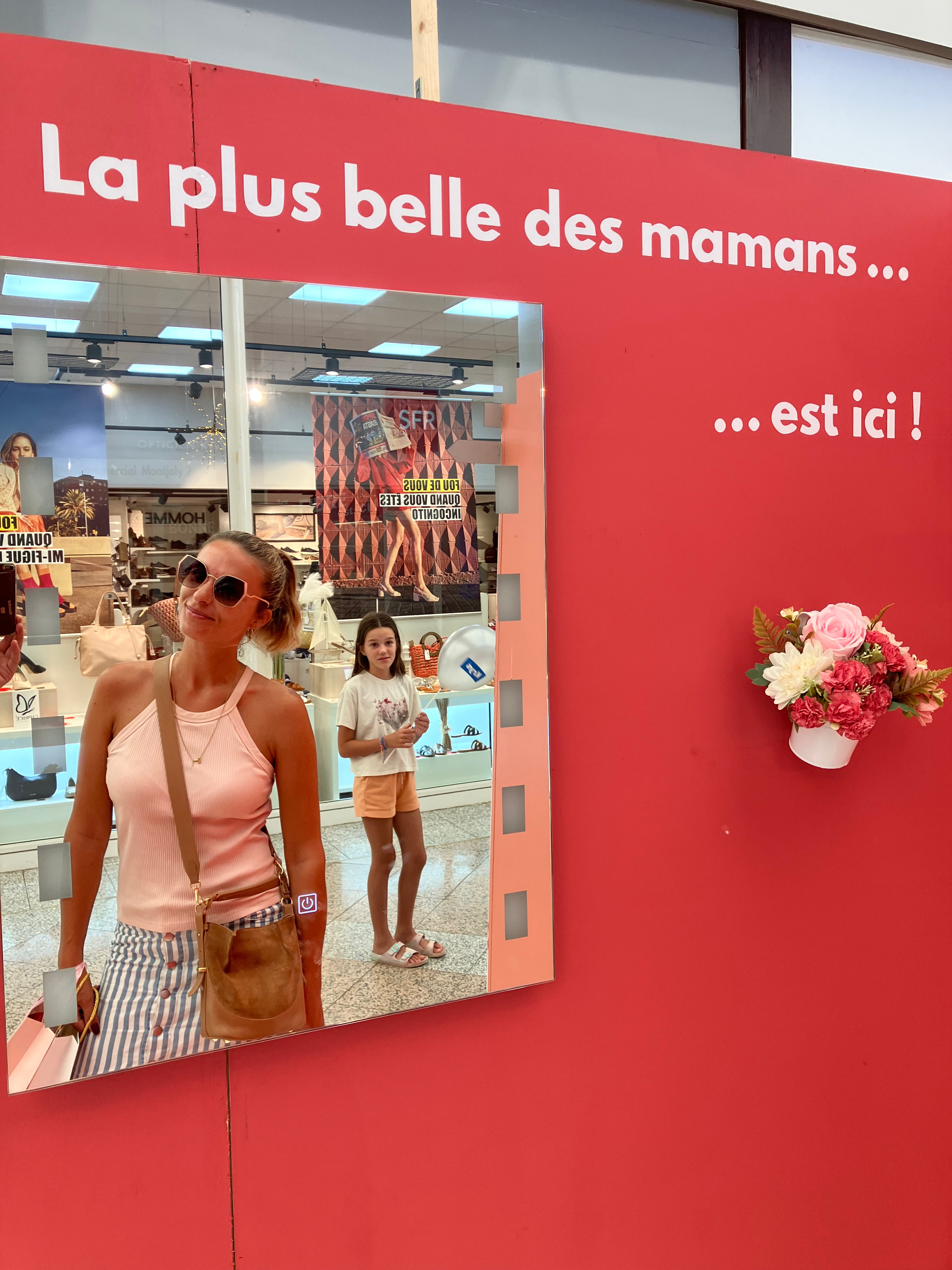
And most importantly, we’re waiting for our special guest: Bouvy (aka “parrain” or godfather to Nola), freshly landed from Europe for a week of properly tropical adventures. Naturally, we’ve cooked up a little tailor-made itinerary for him. Spicy. Sweaty. Unforgettable.
Wednesday – The Molokoi
Bouvy barely has time to step off the plane before we jump right into it: the two of us head out for an overnight stay in a carbet — a simple wooden shelter typical of French Guiana — before setting off at 7 a.m. for the longest marked hiking trail in the region: the Molokoi.
20 kilometres, 30 degrees in the shade, 95% humidity, and torrential rain in the afternoon just to spice things up.
20 kilometres of ups, downs, slips and 805 metres of elevation gain — the kind of hike that makes your legs remind you of it for the next two days.
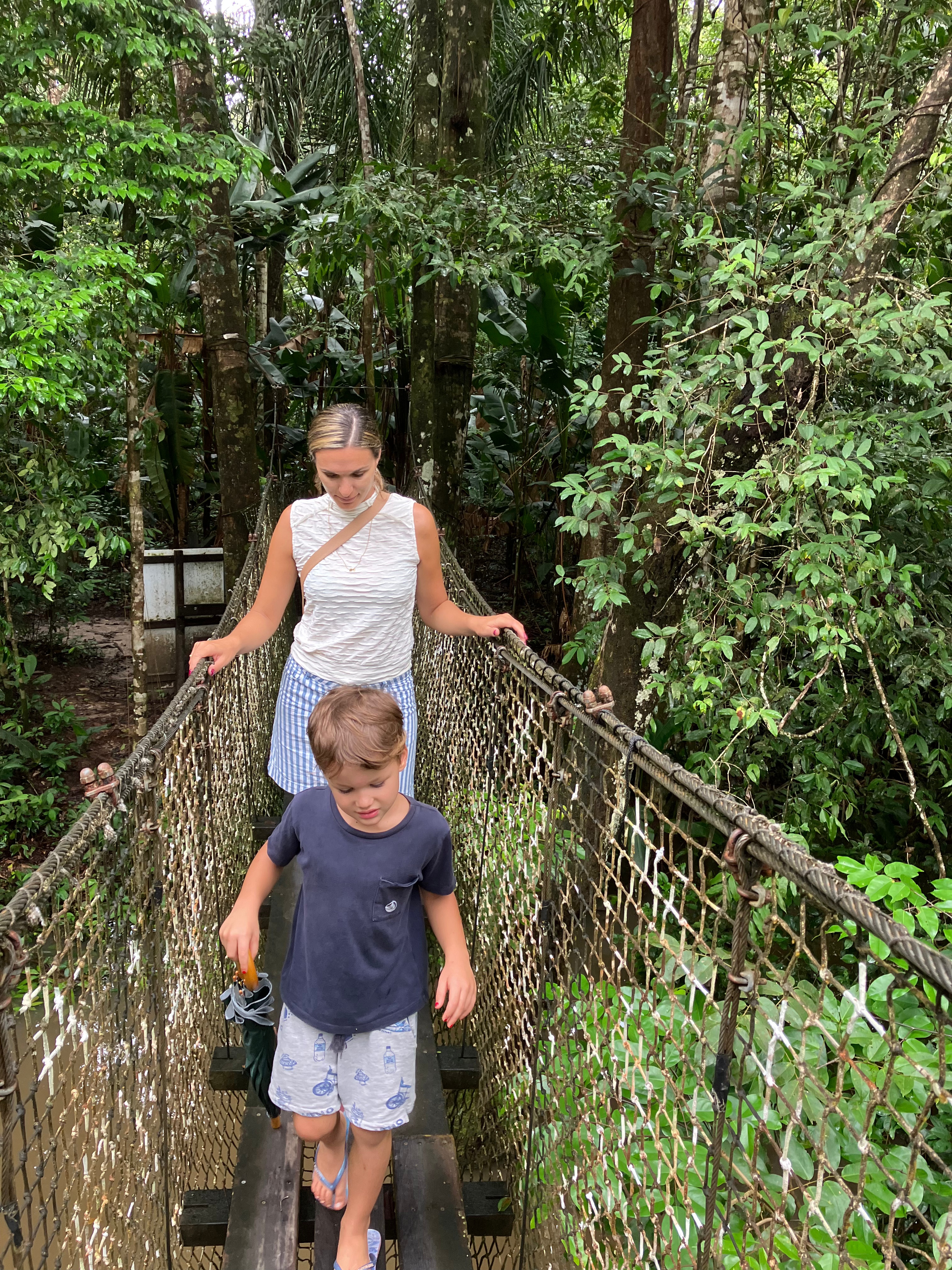
The jungle is everywhere. Dense, green, alive. Roots twist across the ground, rivers cut through the trail, and the mosquitoes greet us like an official welcome committee. Our feet are permanently soaked, often trudging through mud… and yet, there’s this real sense of immersion. Raw, unfiltered nature. It’s exhausting — but exhilarating.
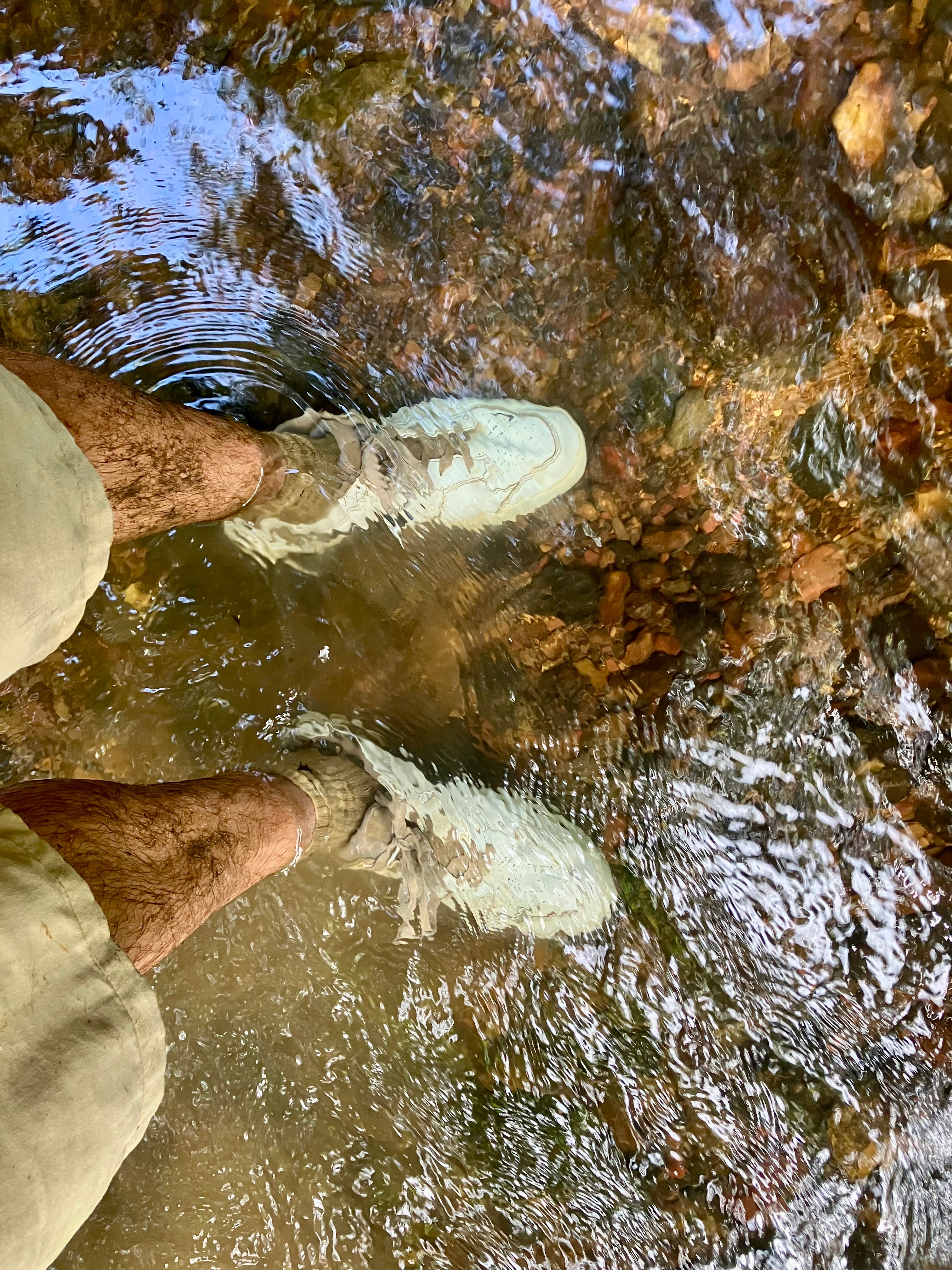
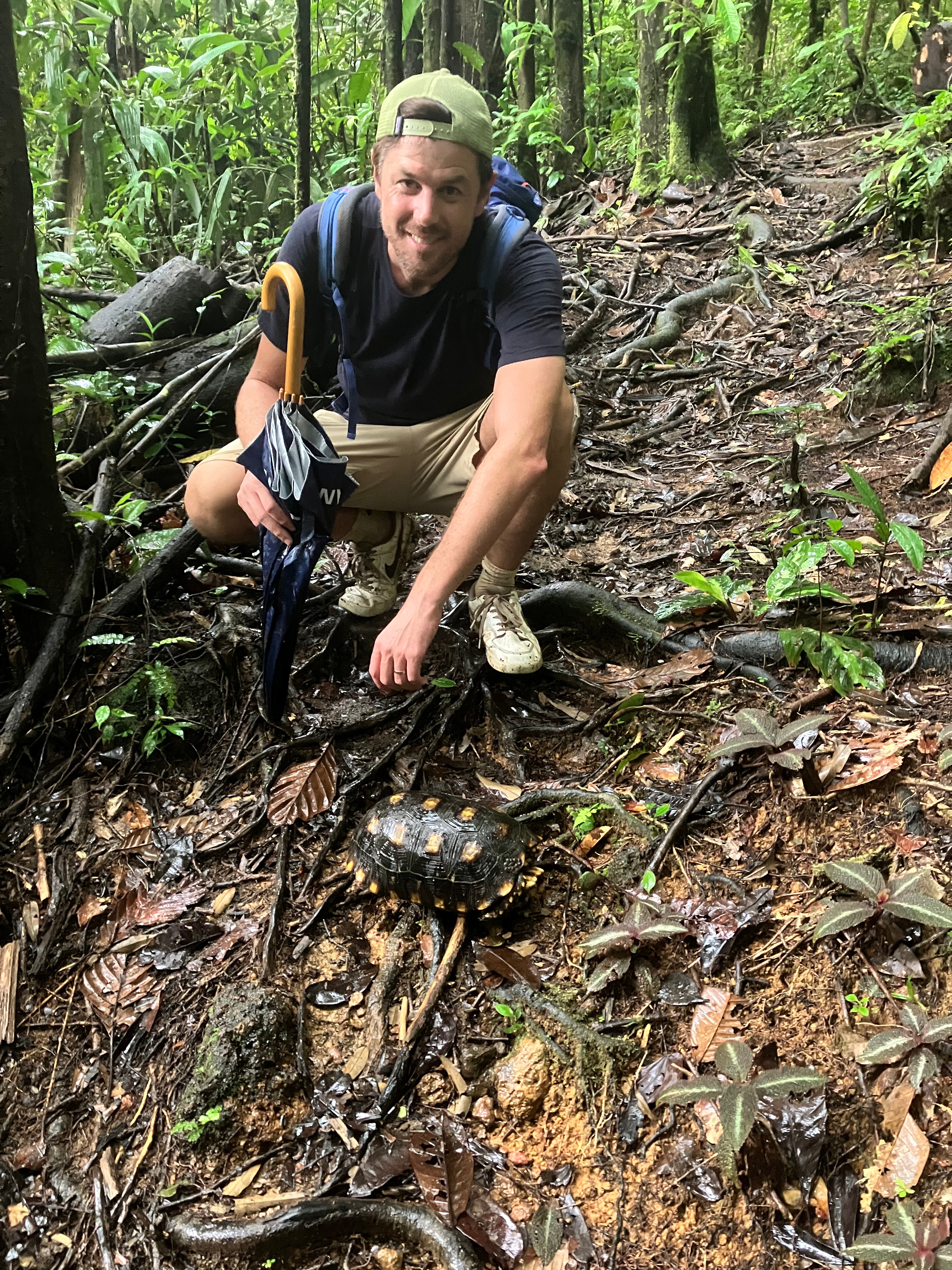
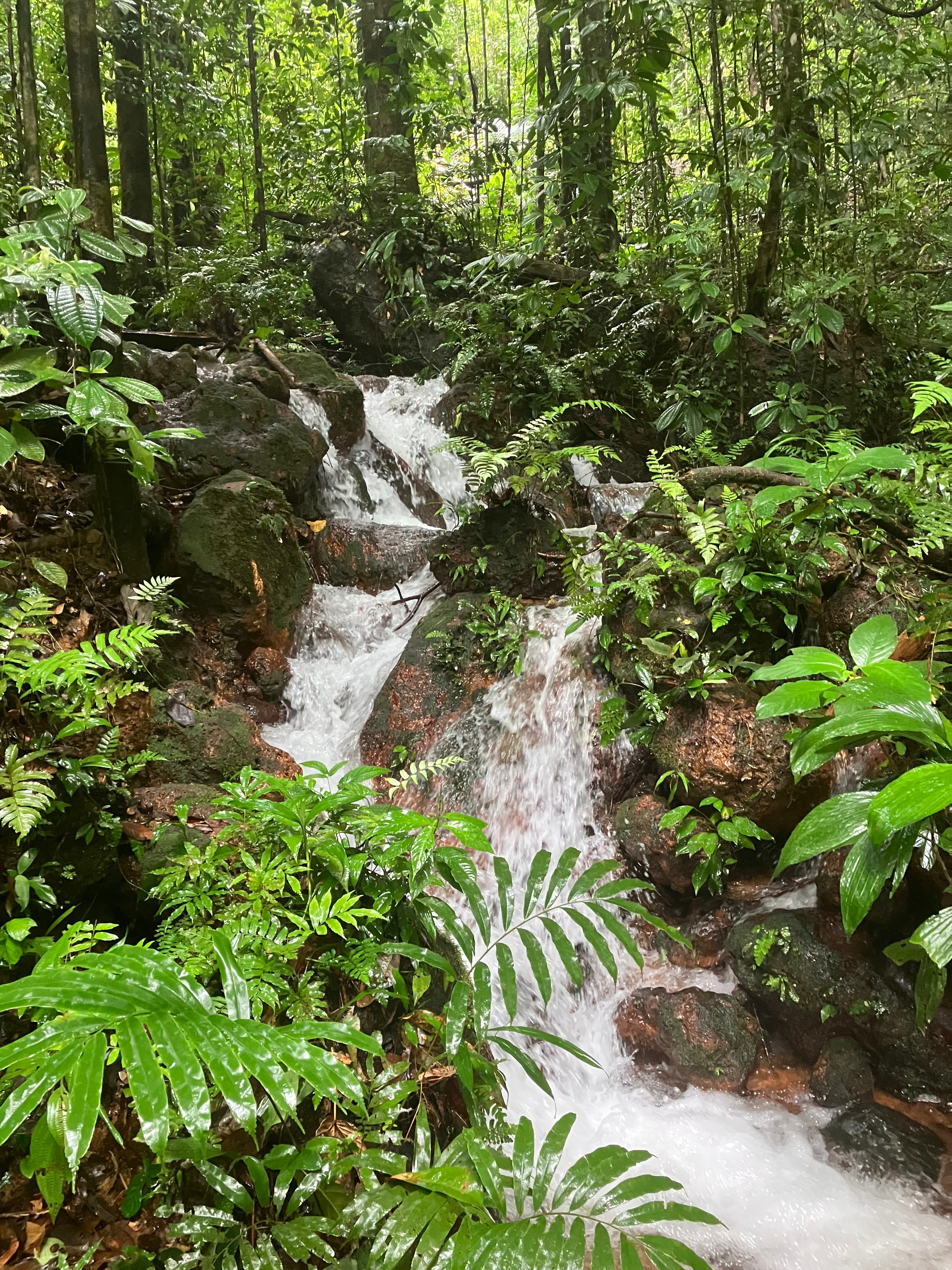
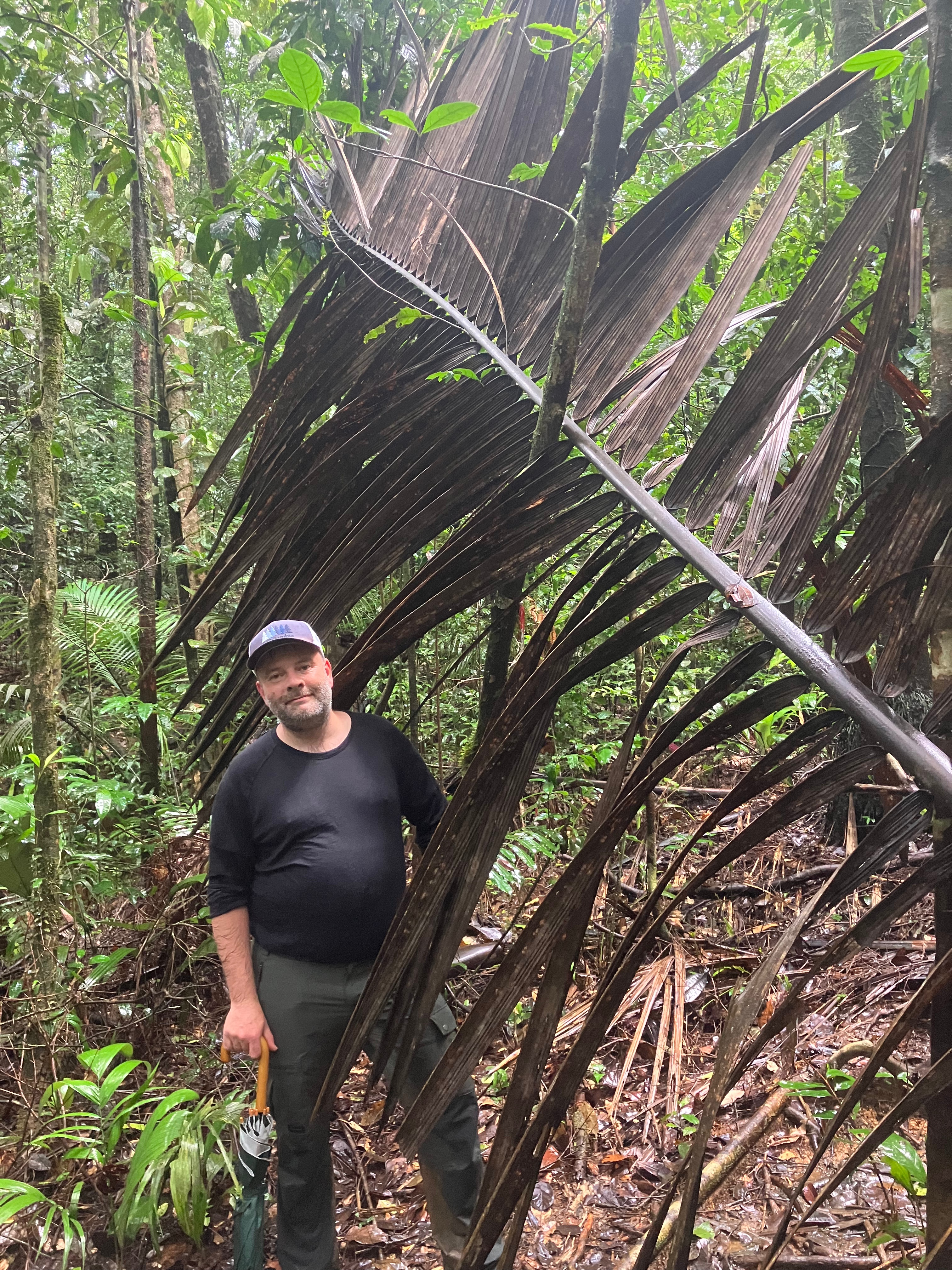
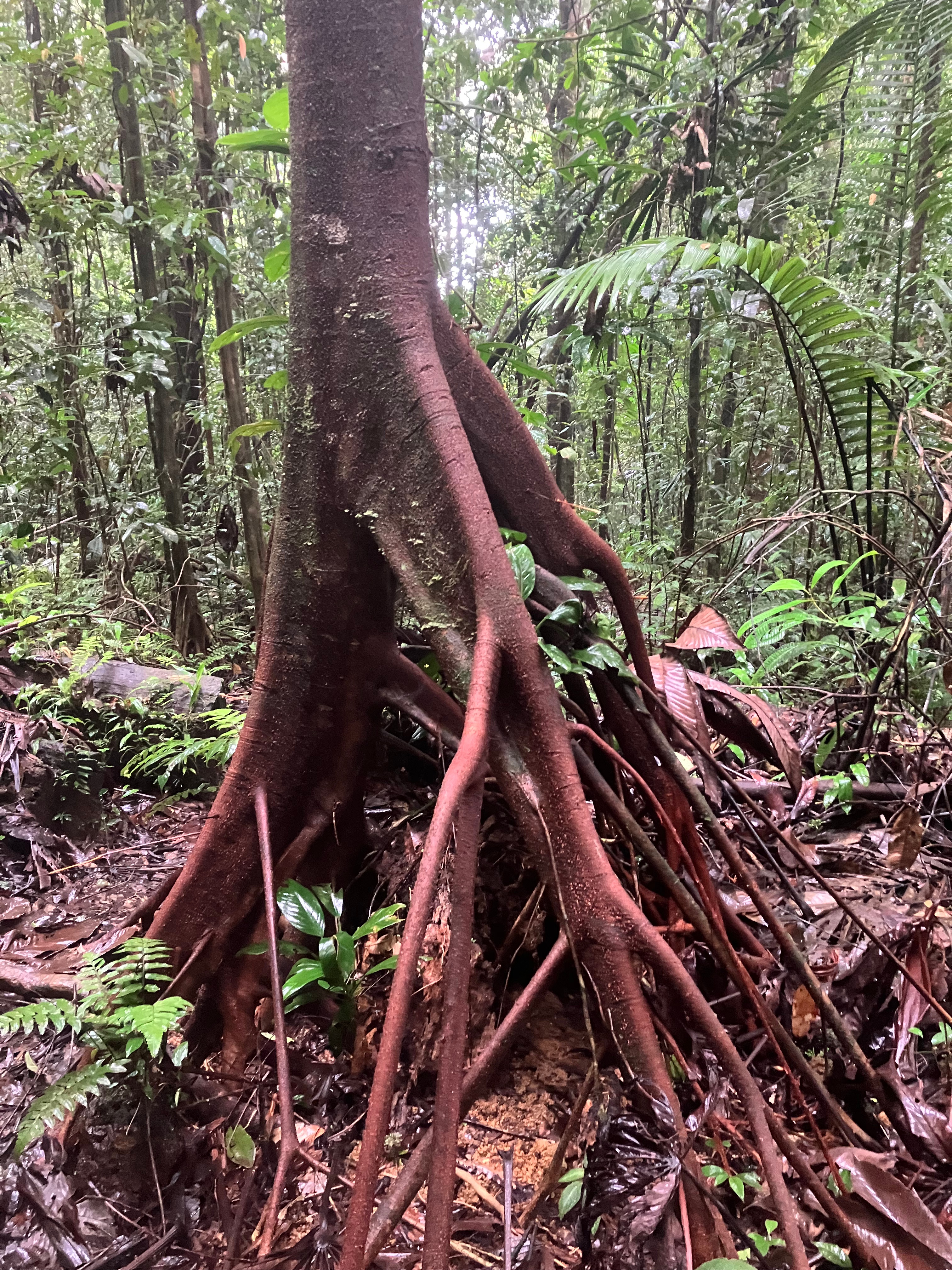
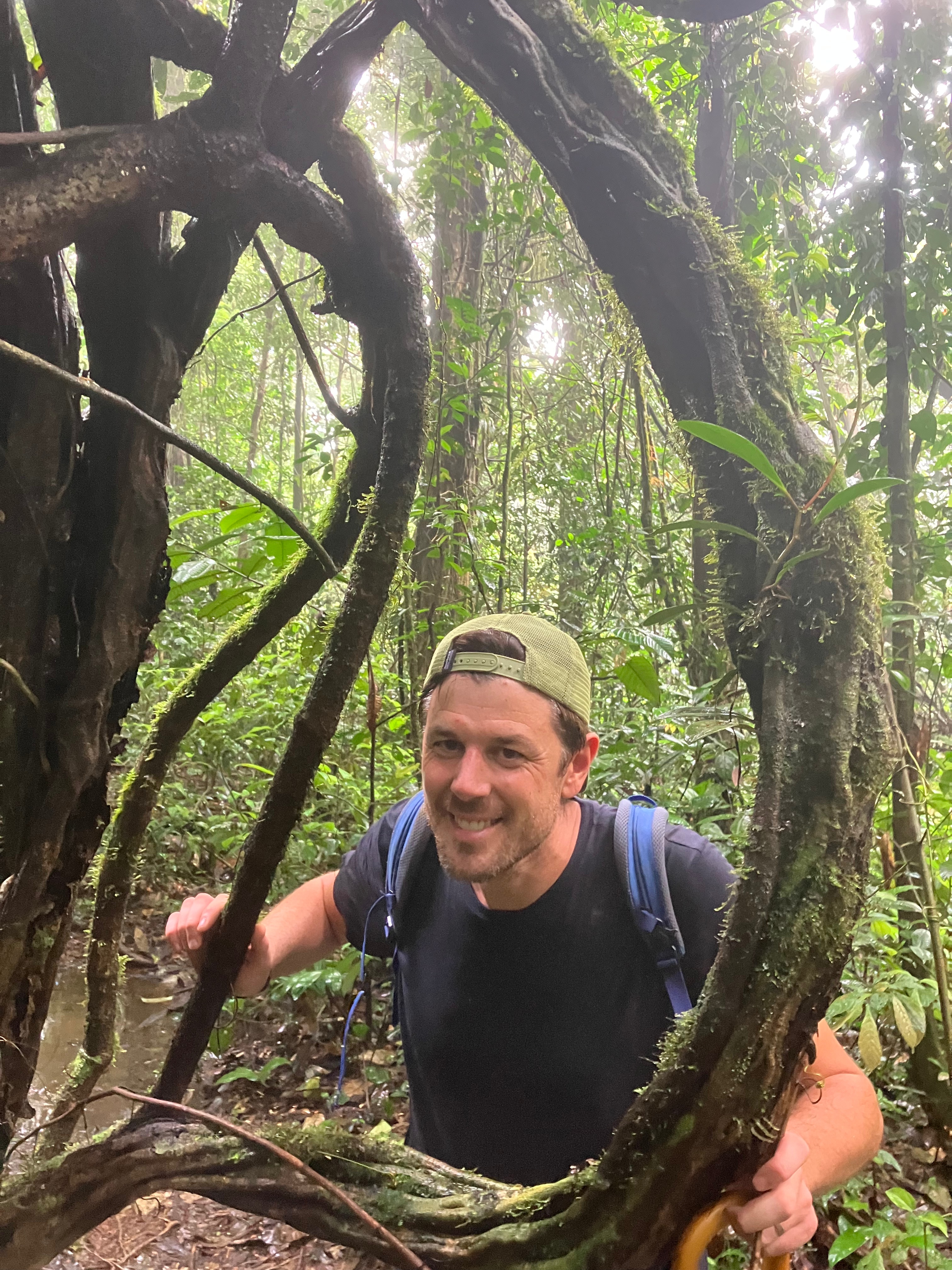
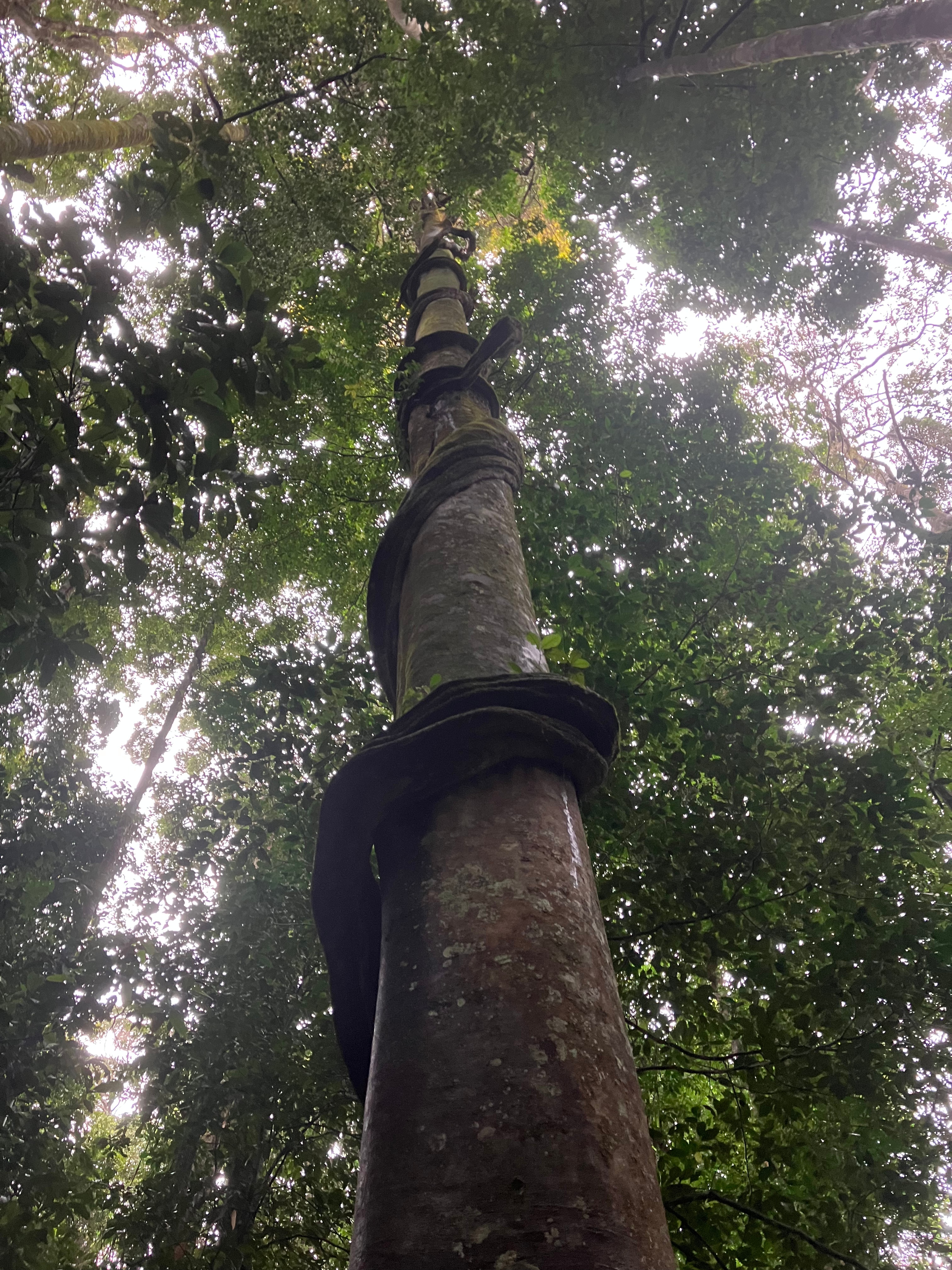
By evening, we’re wiped out — but proud.
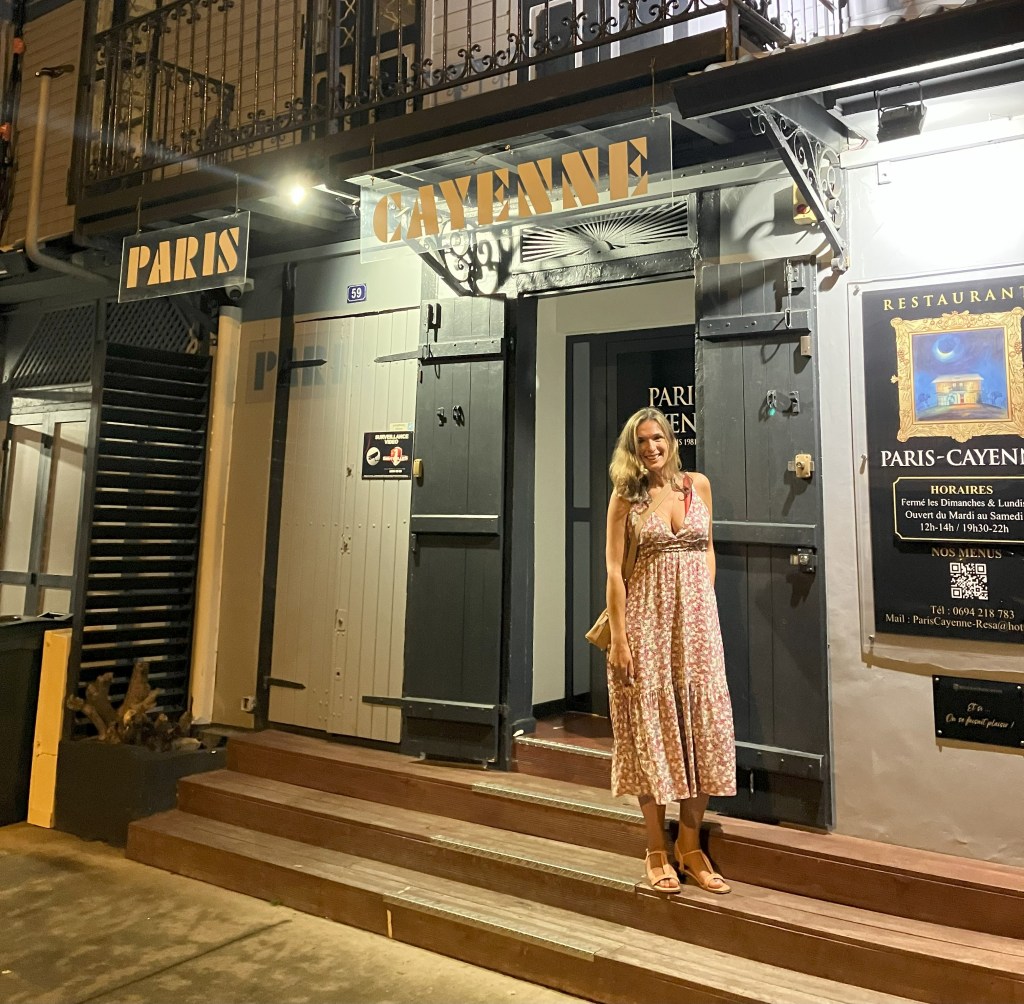
Still, I manage to find just enough energy to put together a little surprise dinner for Suzanne’s birthday.
Happy birthday, my love!
Friday – The Space Centre
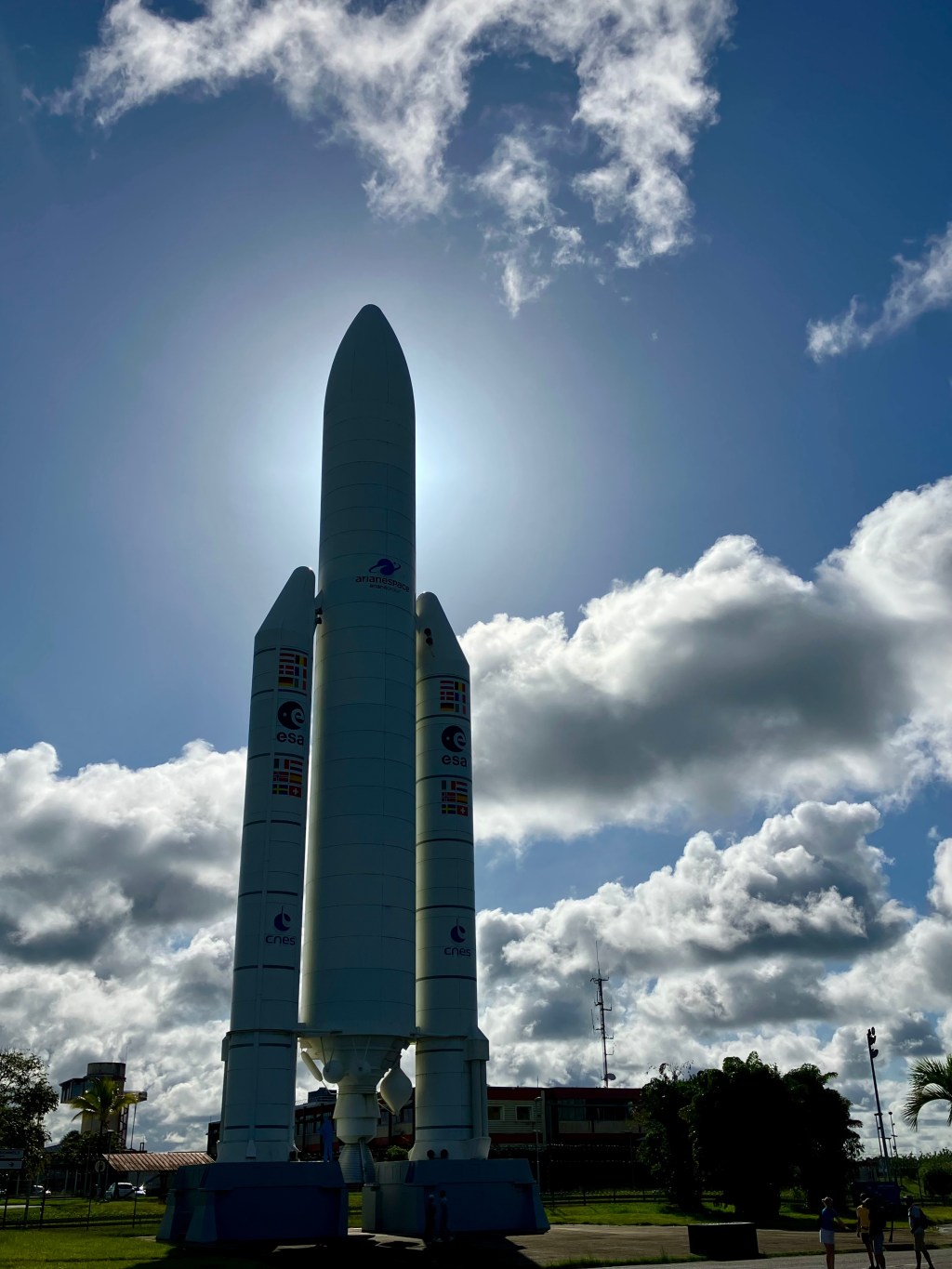
After a transition day, time for a change of scene: we head to Kourou and the Guiana Space Centre. Well… “Guianese” is a bit of a stretch. In reality, this is Europe’s spaceport.
100% of France’s — and Europe’s — civilian and military satellites lift off from here, thanks to the Ariane and Vega rockets.
All of it happening from this little strip of Amazonian forest, wedged between mangroves, swamps, and howler monkeys.
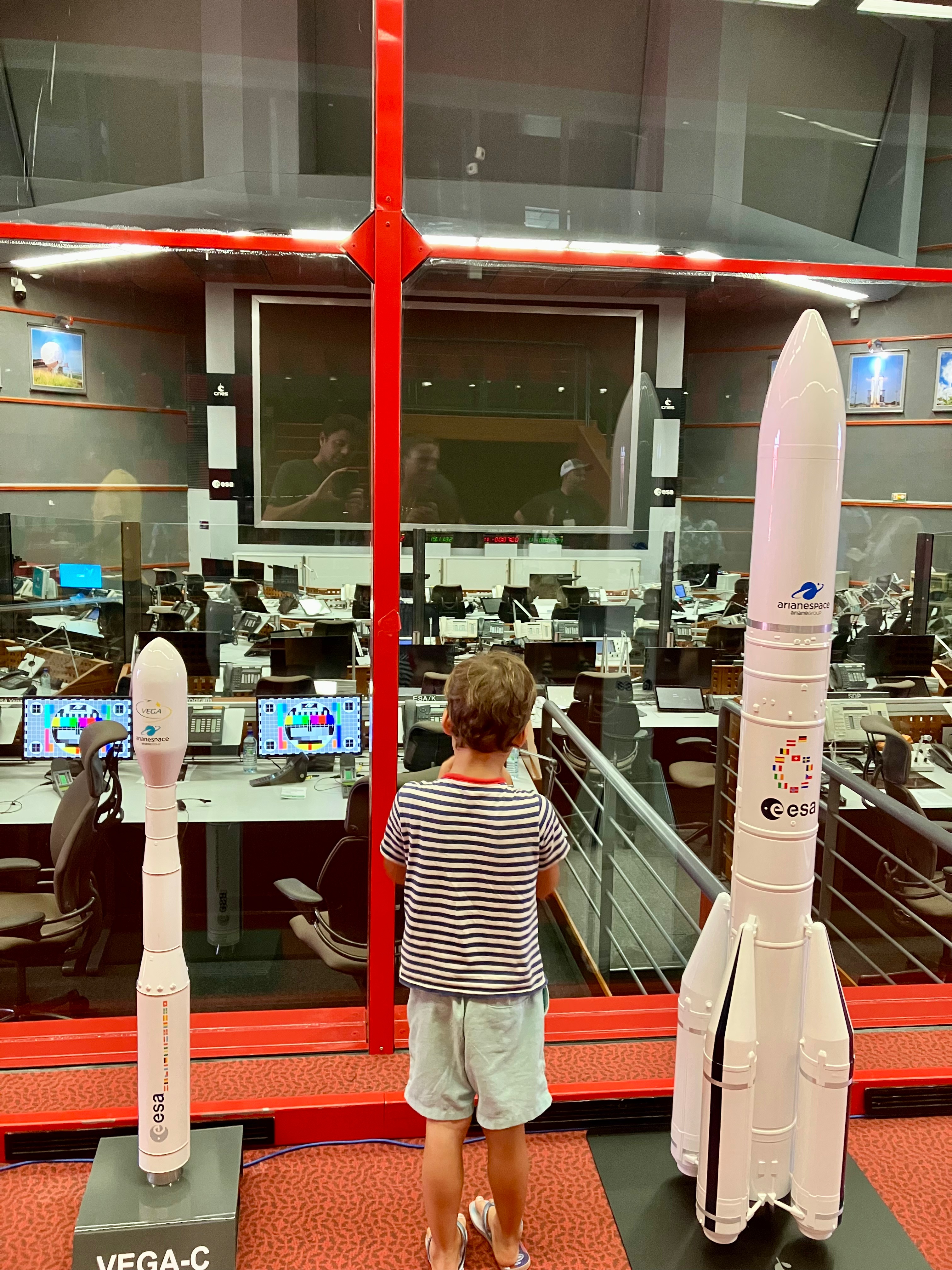
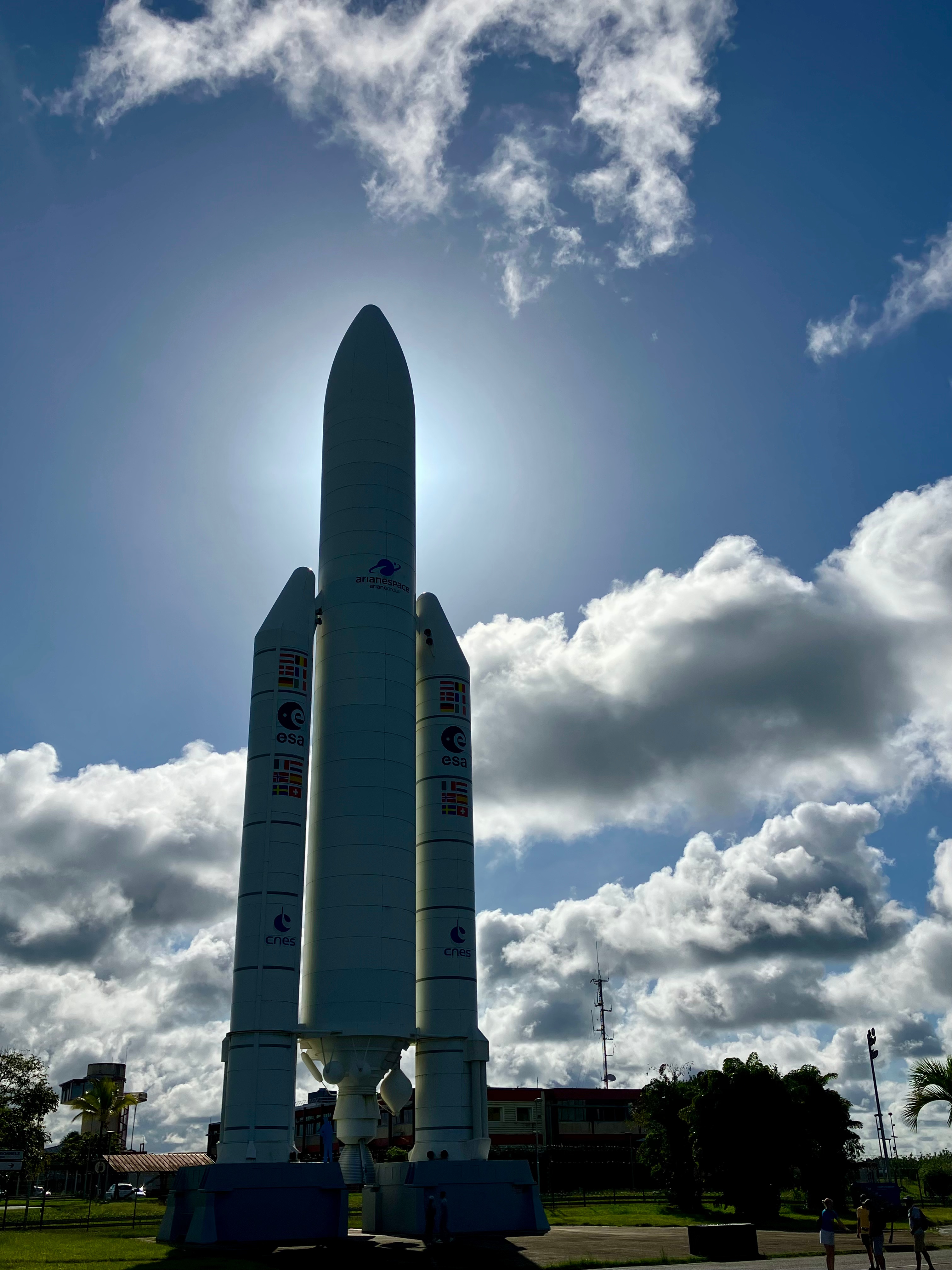
The site is huge — nearly 700 km², bigger than Paris. It’s so vast that it even includes a nature reserve, home to jaguars, caimans, and all sorts of tropical creatures — literally just steps away from the launch pads.
The visit is well worth it. Even for the less geeky among us. Even Nola loved it — and that says a lot.
And let’s be honest: standing in a real launch zone hits differently than scrolling through the NASA app.
Spoiler alert: no photos allowed… so you’ll just have to take our word for it.
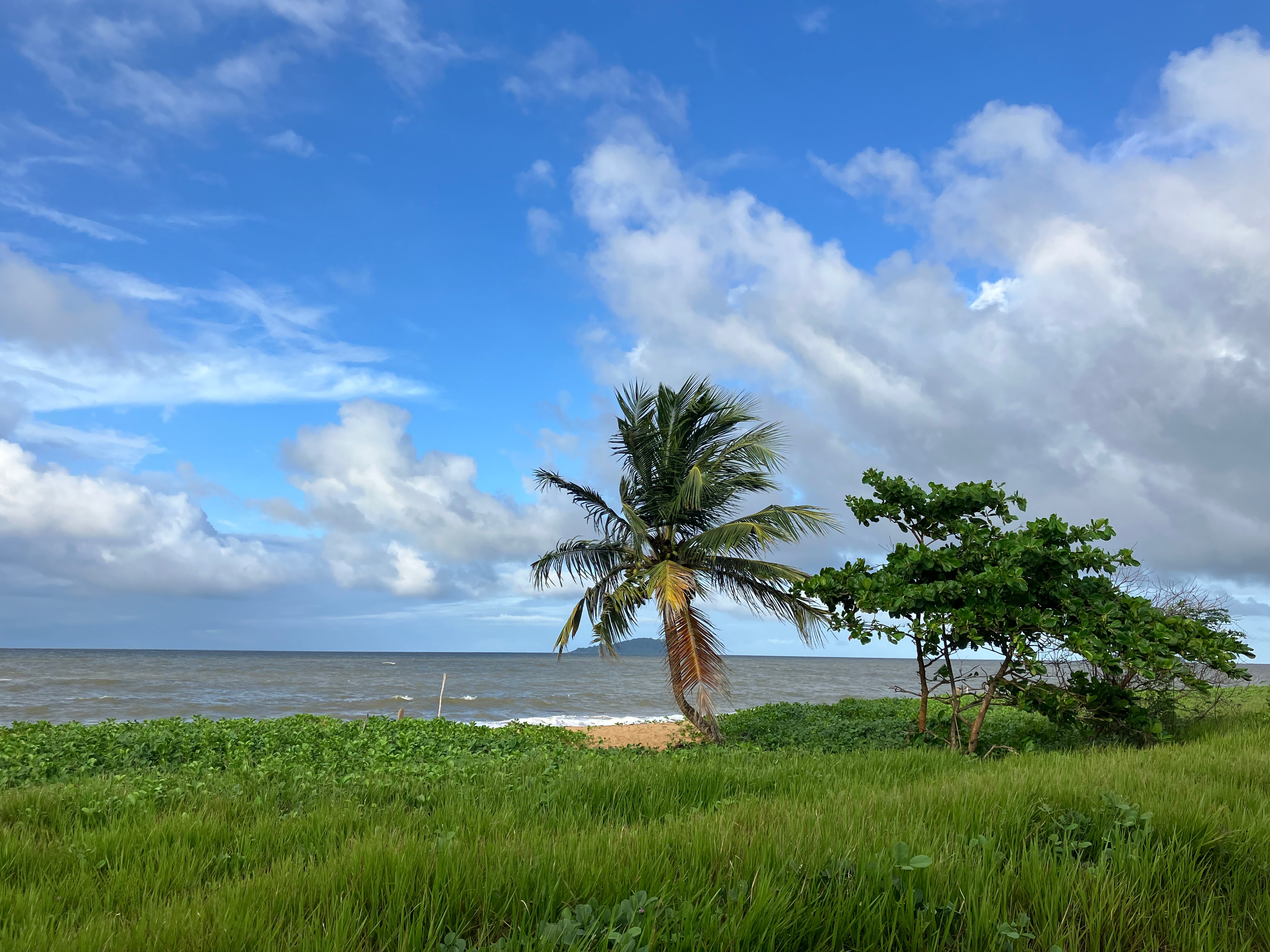
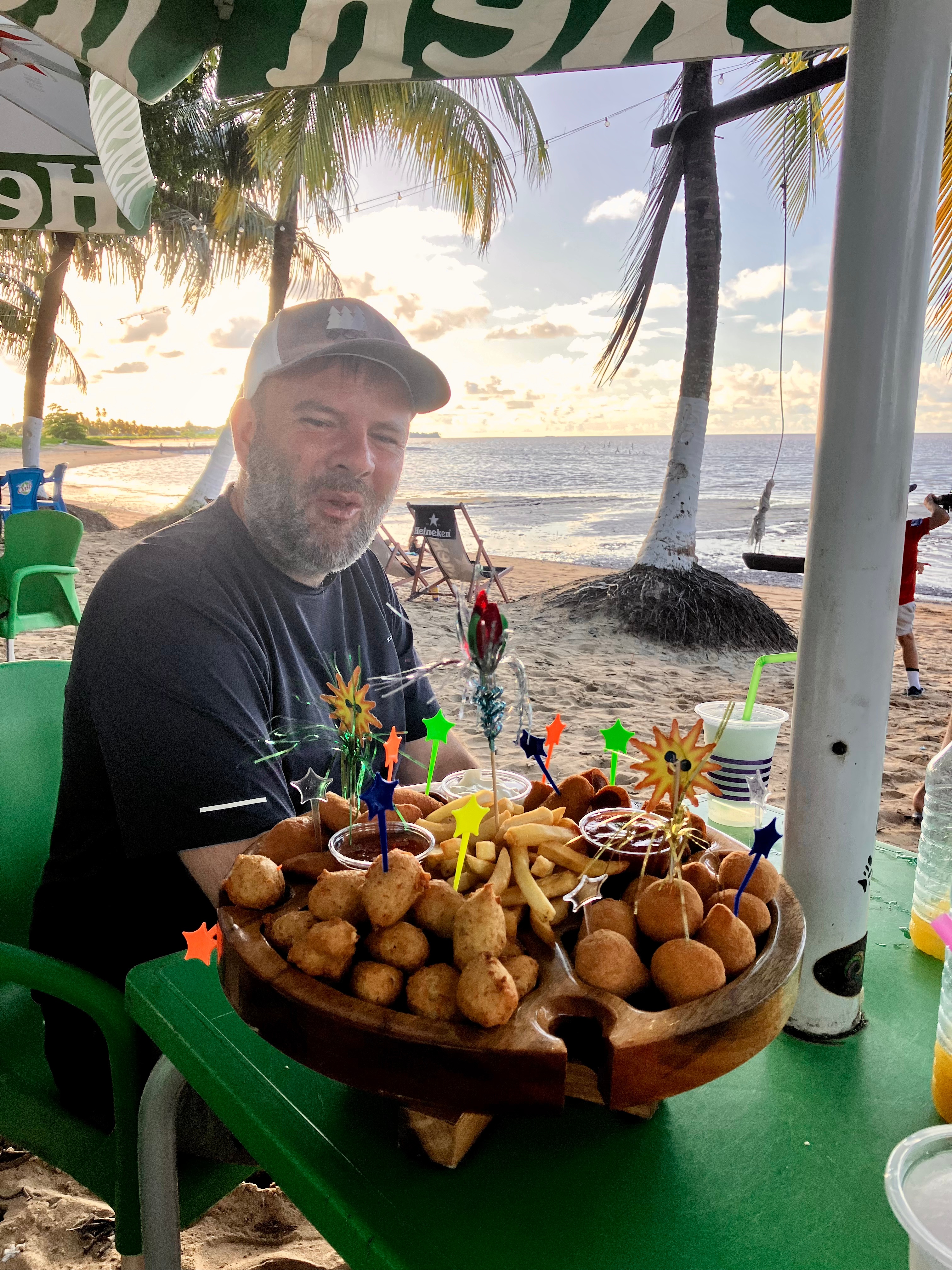
The day ends gently: a sunset cocktail with our feet in the sand, looking out over the Atlantic Ocean.
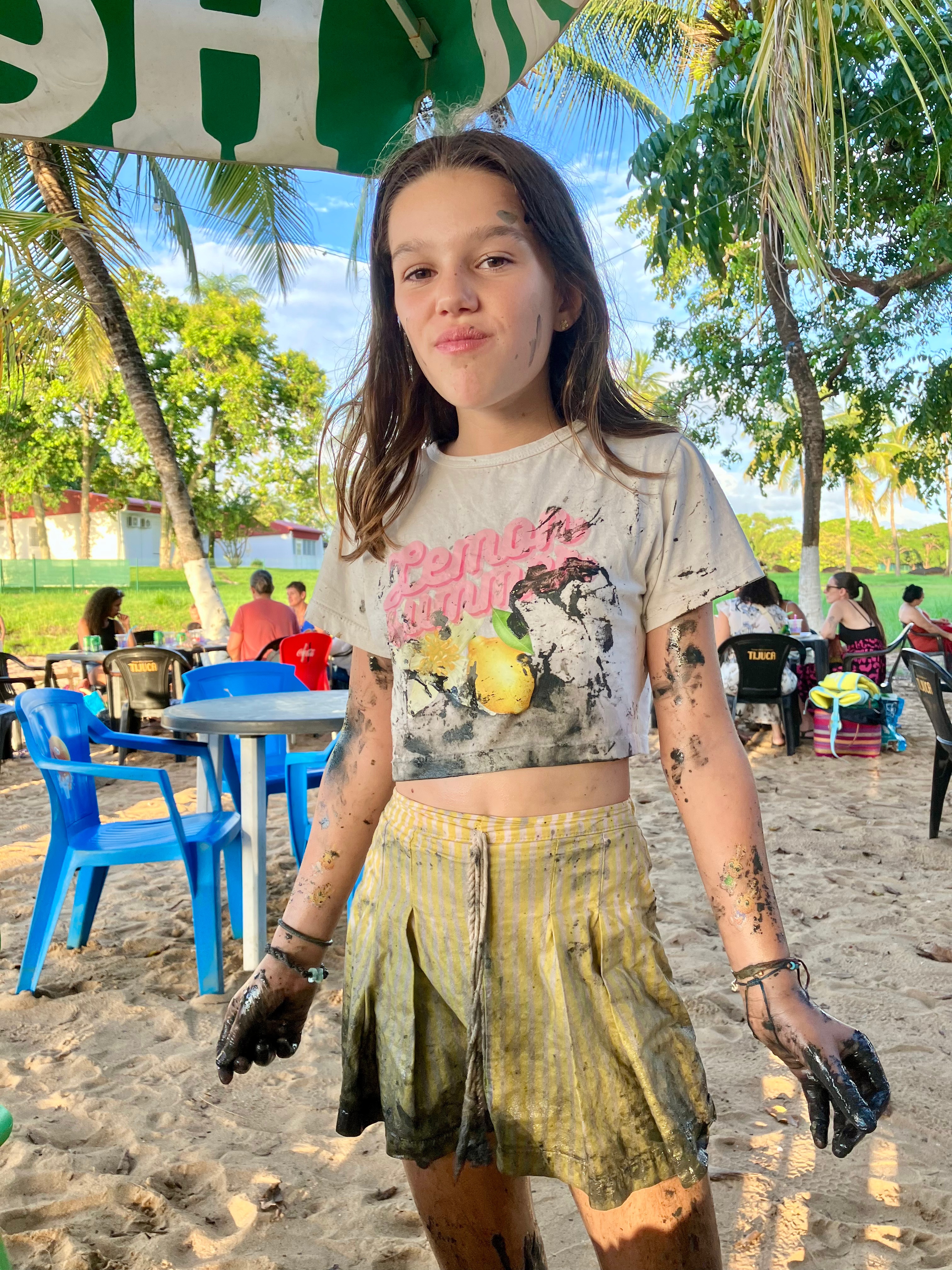
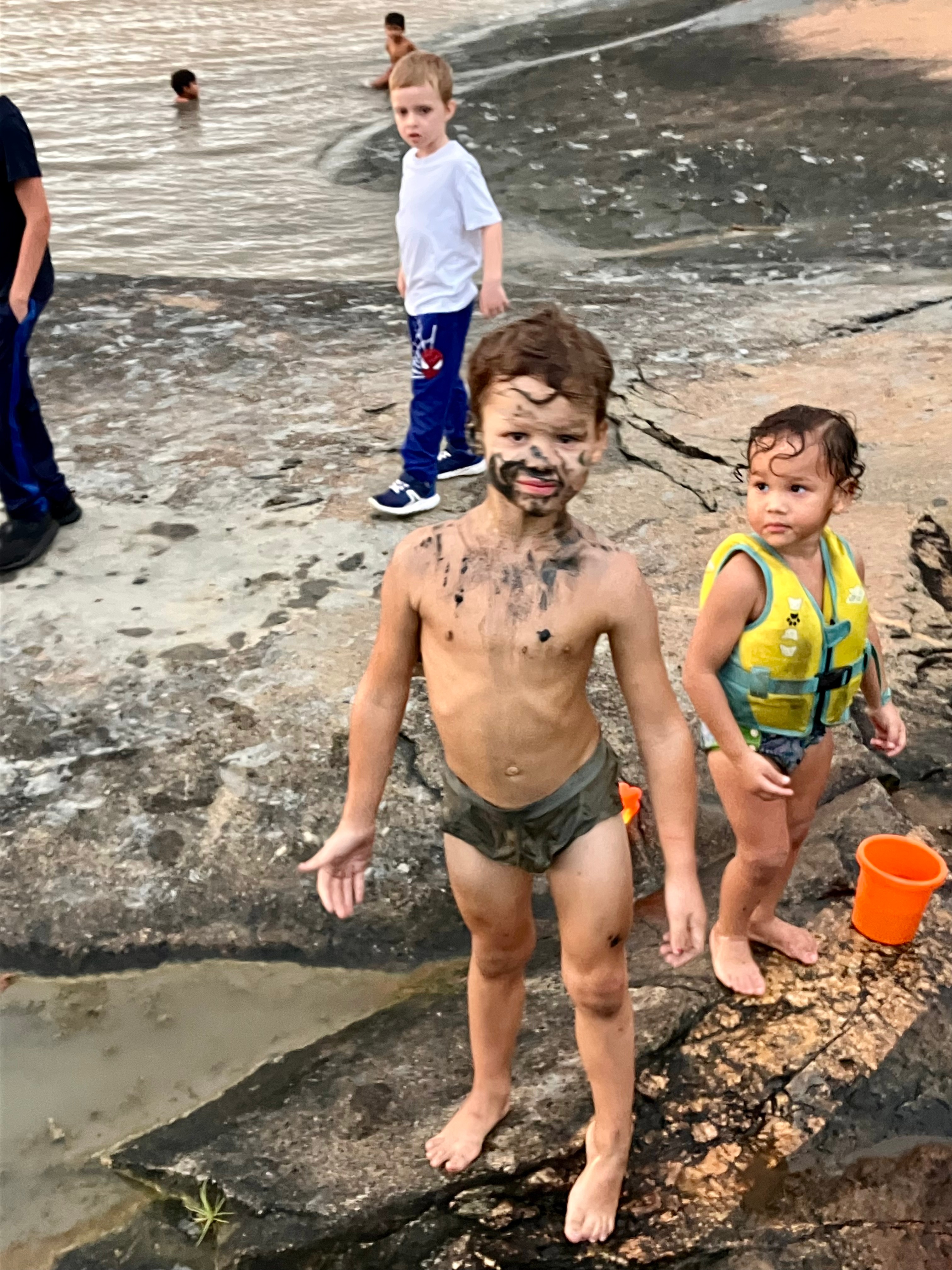
The kids are splashing around in the sea — a murky mix of water and mud, typical of the local beaches.
They take the opportunity to chat in French again, after months of not being understood by Brazilians or Spanish speakers, and to make new friends.
Bit by bit, French Guiana’s striking contrasts start to sink in.

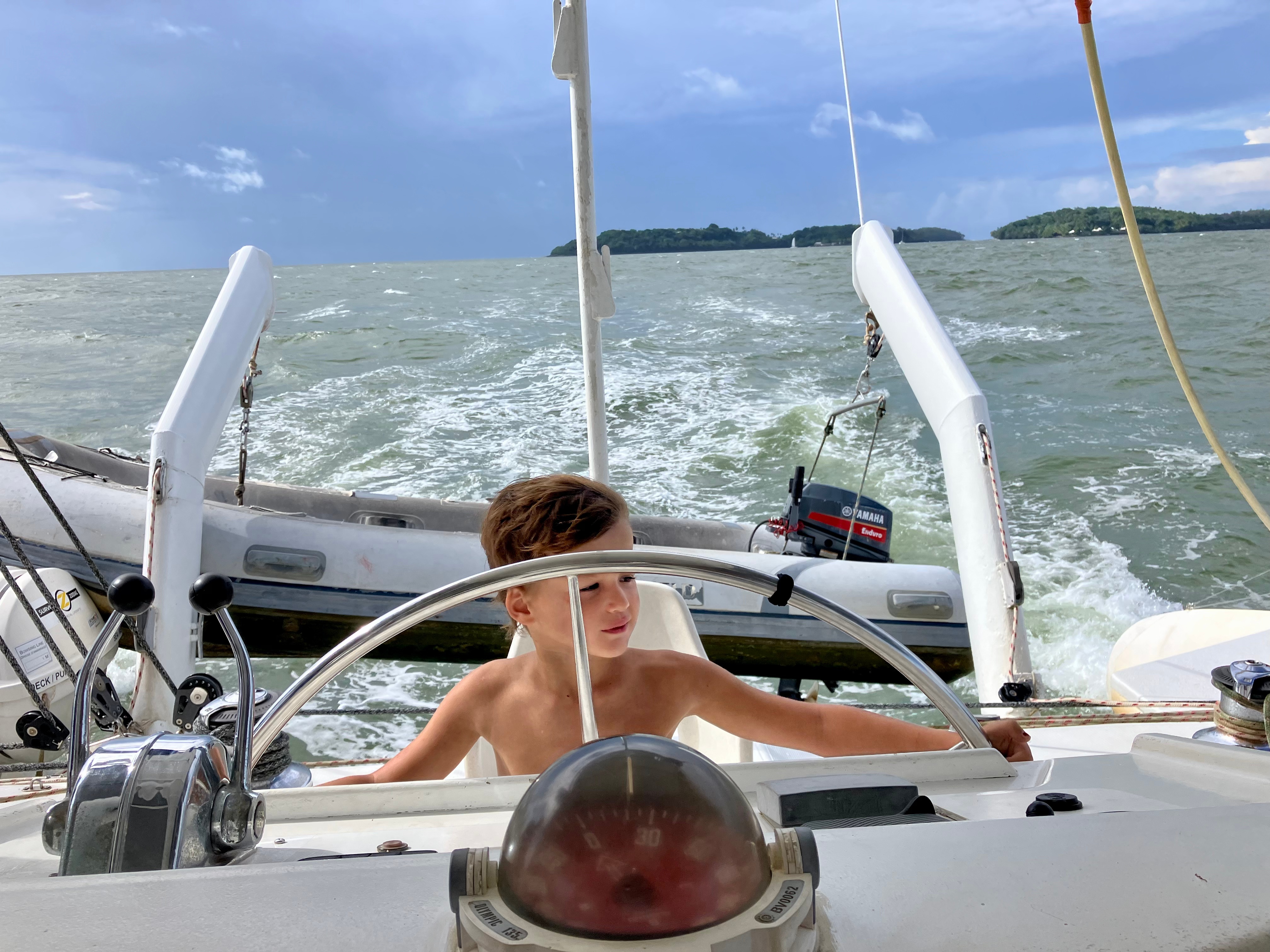
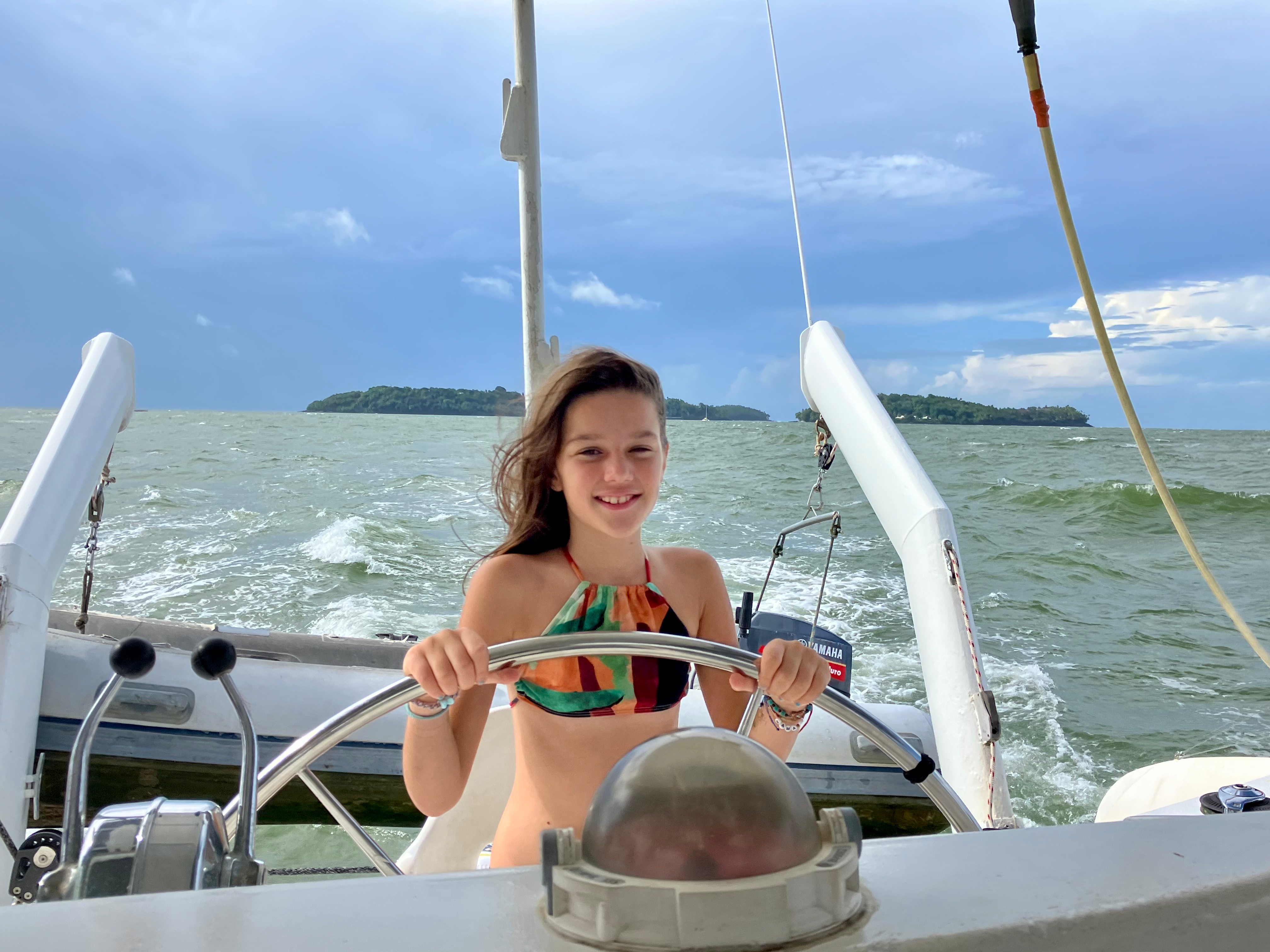
Saturday – Catamaran excursion to the Îles du Salut, 14 km off the coast of Kourou.
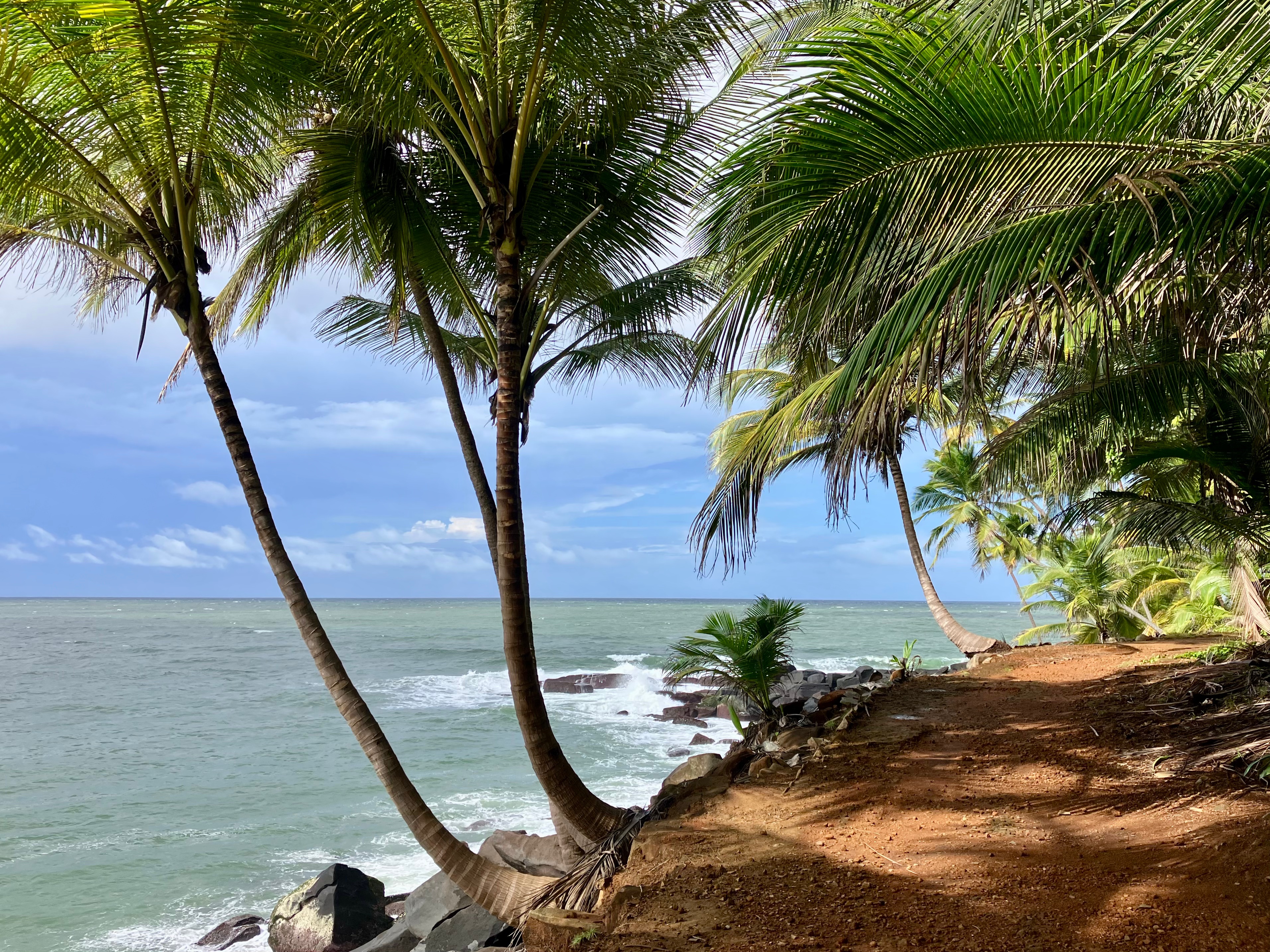
The place is stunning: three lush islets, fringed with turquoise waters and inhabited by curious agoutis and capuchin monkeys. A real postcard setting.
But behind all that beauty lies a dark chapter of French history: these islands were once home to one of the Republic’s most feared penal colonies.
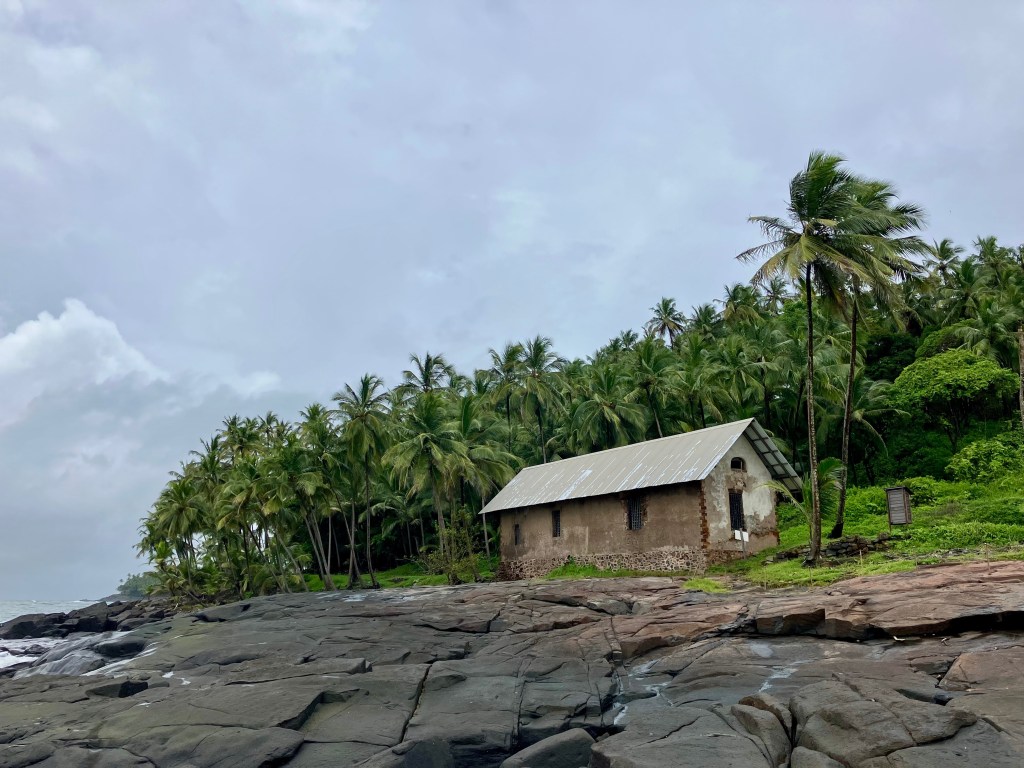
This is where Captain Dreyfus was imprisoned for four long years, wrongly accused of treason.
Later, Zola would publish his famous J’accuse, shaking public opinion and exposing the absurdity of the entire system.
On site, the contrast is striking: paradise-blue sea, swaying palm trees… and silent prison ruins.
You’d almost forget this place was once a land of death.
A large number of prisoners died here — from disease, abuse, or quite simply… despair.
You can still see, facing the ocean, the exact spot where corpses were thrown into the sea, where they ended up as shark food.
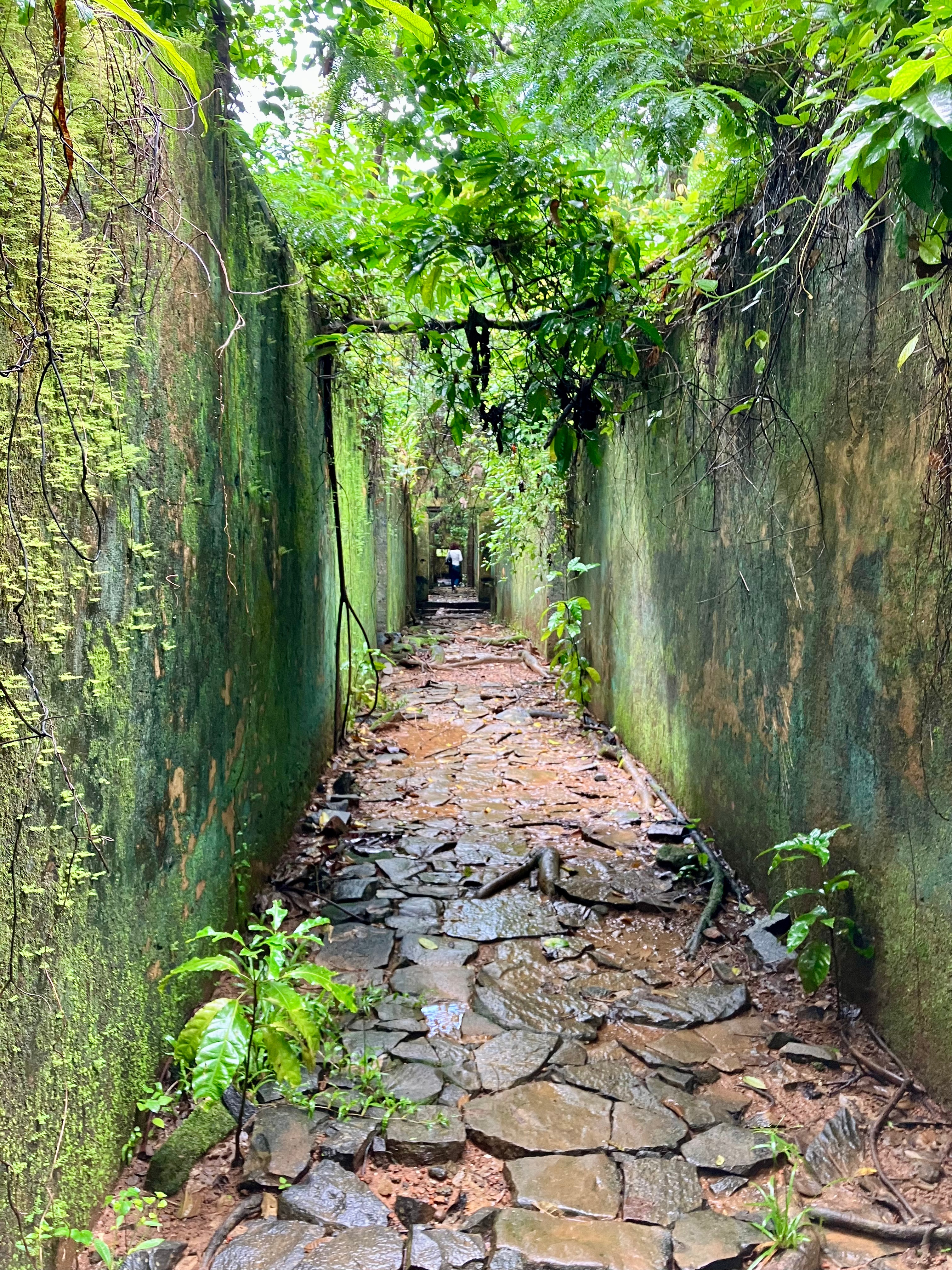
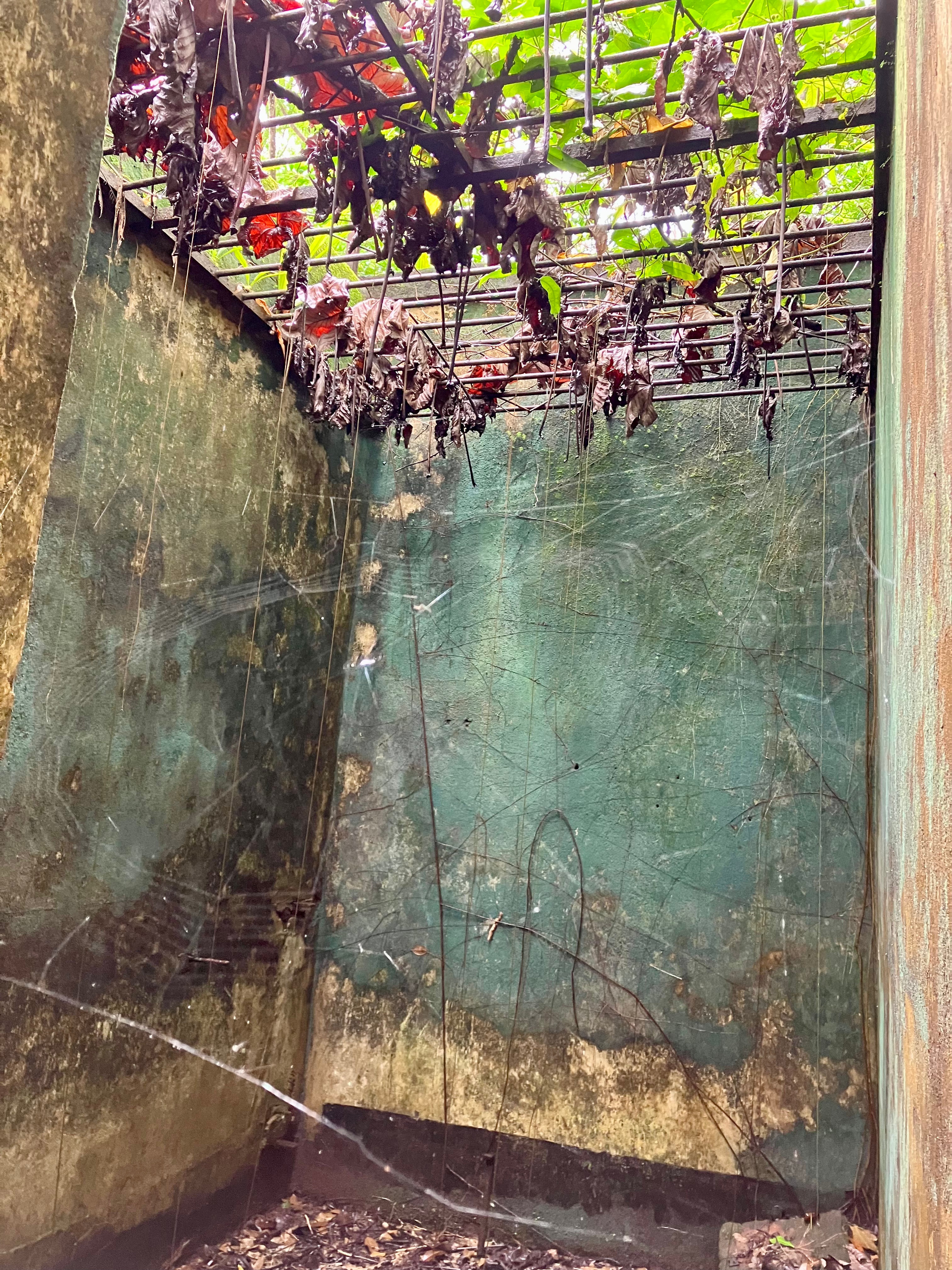
Here, unlike penal deportation in Australia, French Guiana was never meant to be a fresh start. It wasn’t a colony to build — it was an open-air cemetery. A final stop for those the Republic no longer wanted.
Very few convicts managed to rebuild their lives here. Those who survived were often left on the margins — without rights, without a future.
For nearly a century, French Guiana was quite literally France’s penal colony. Camps were everywhere: in Cayenne, in Saint-Laurent, deep into the forest.
They locked up everyone: political prisoners, repeat offenders, criminals… even petty thieves sentenced to life for stealing a loaf of bread.
At the height of the system, there were nearly 7,000 inmates — for a free population of barely 25,000.
That’s one in four people — a mind-blowing ratio.
From Paris, French Guiana was seen as empty, hostile, remote — perfect for burying people alive.
Monday – Saint-Laurent du Maroni
Last stop on our Guiana journey.
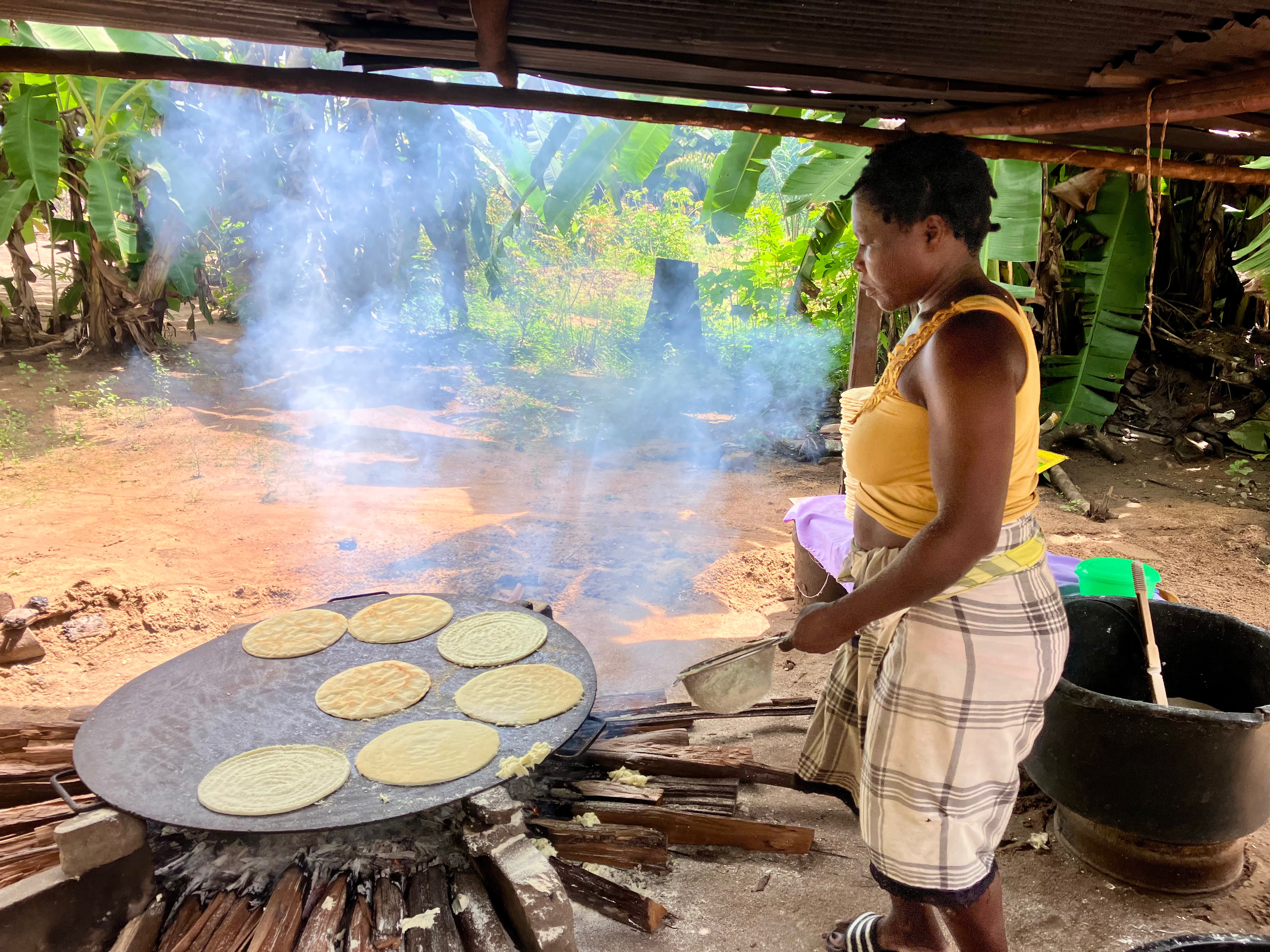
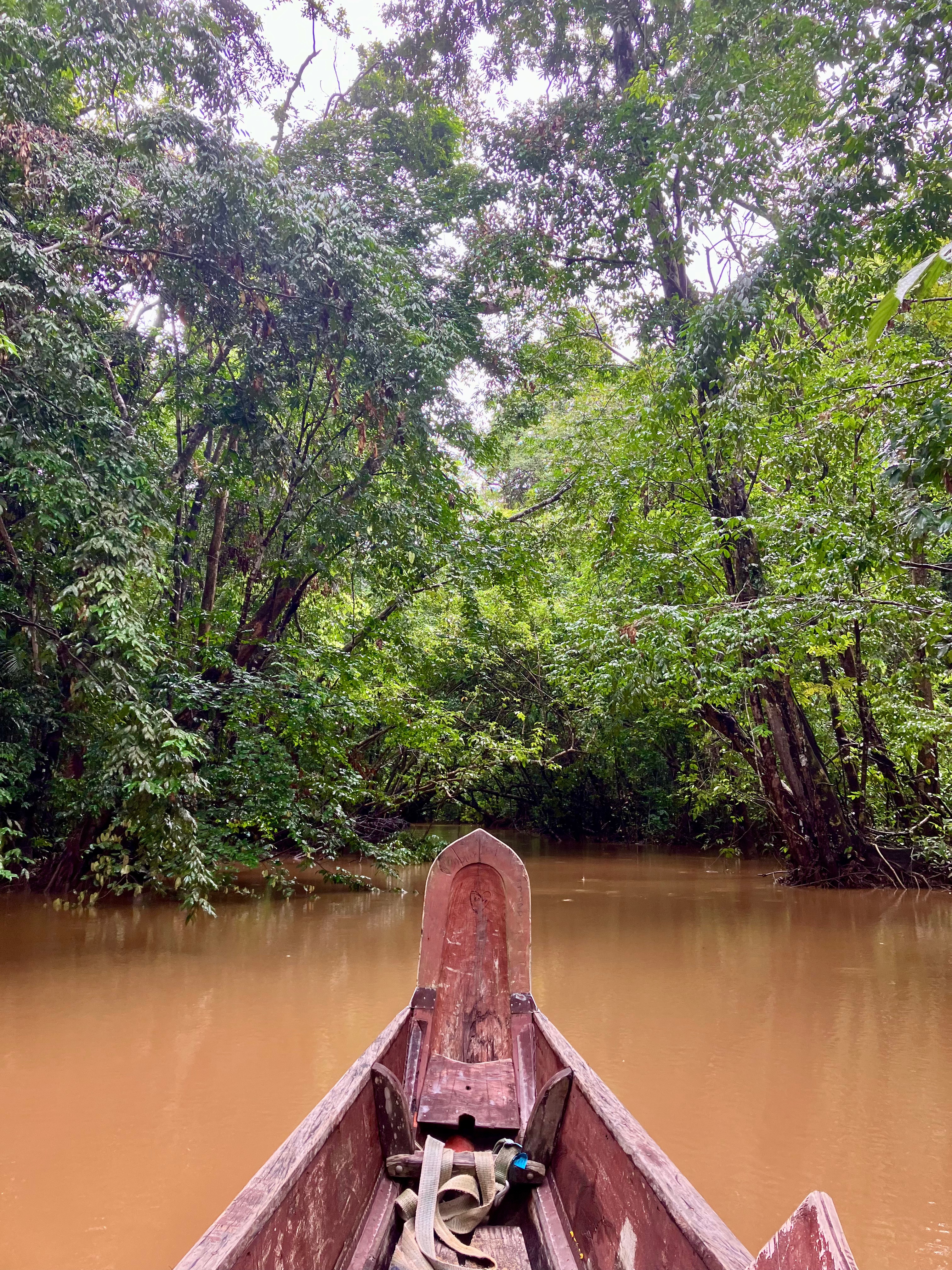
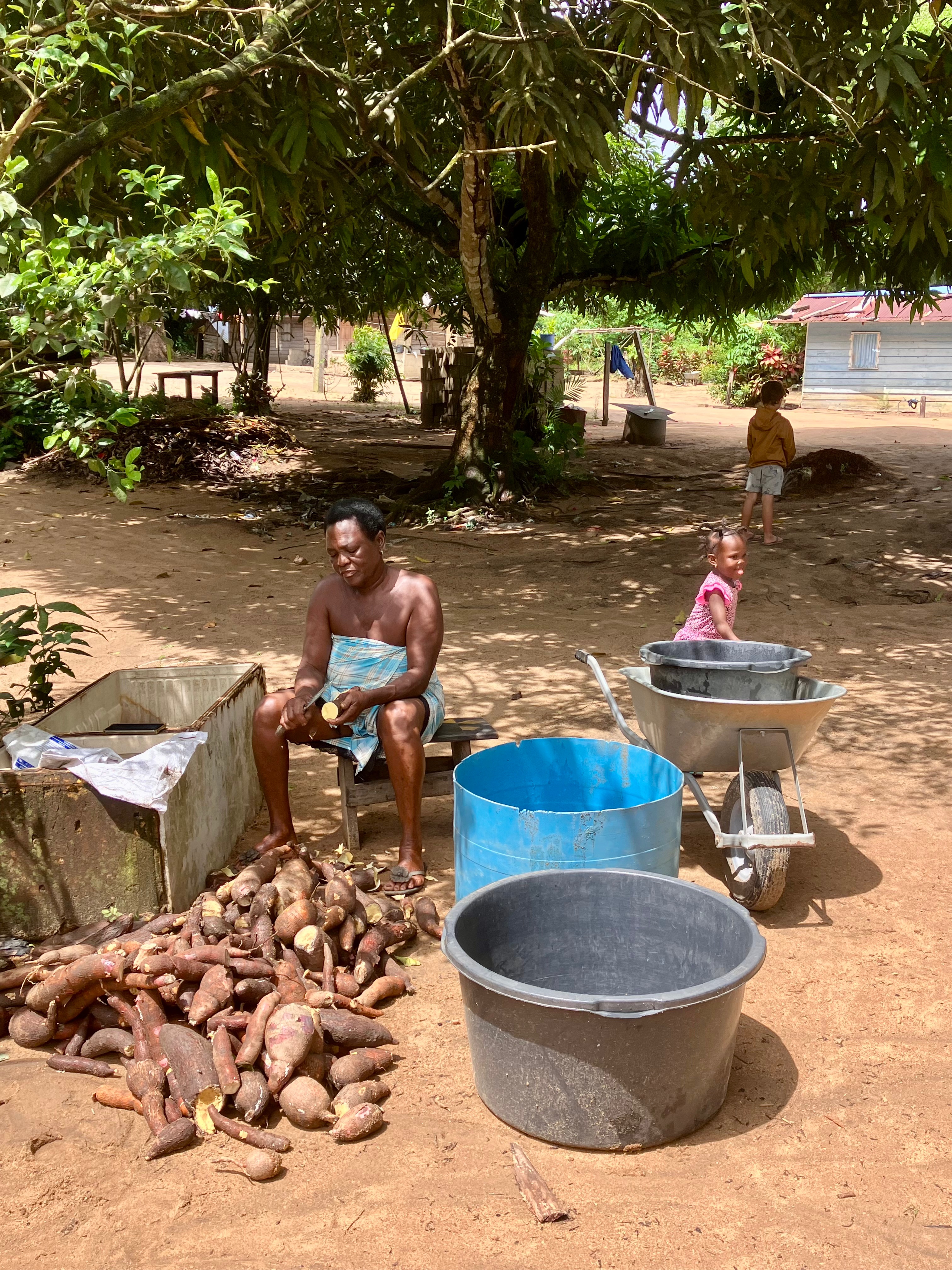
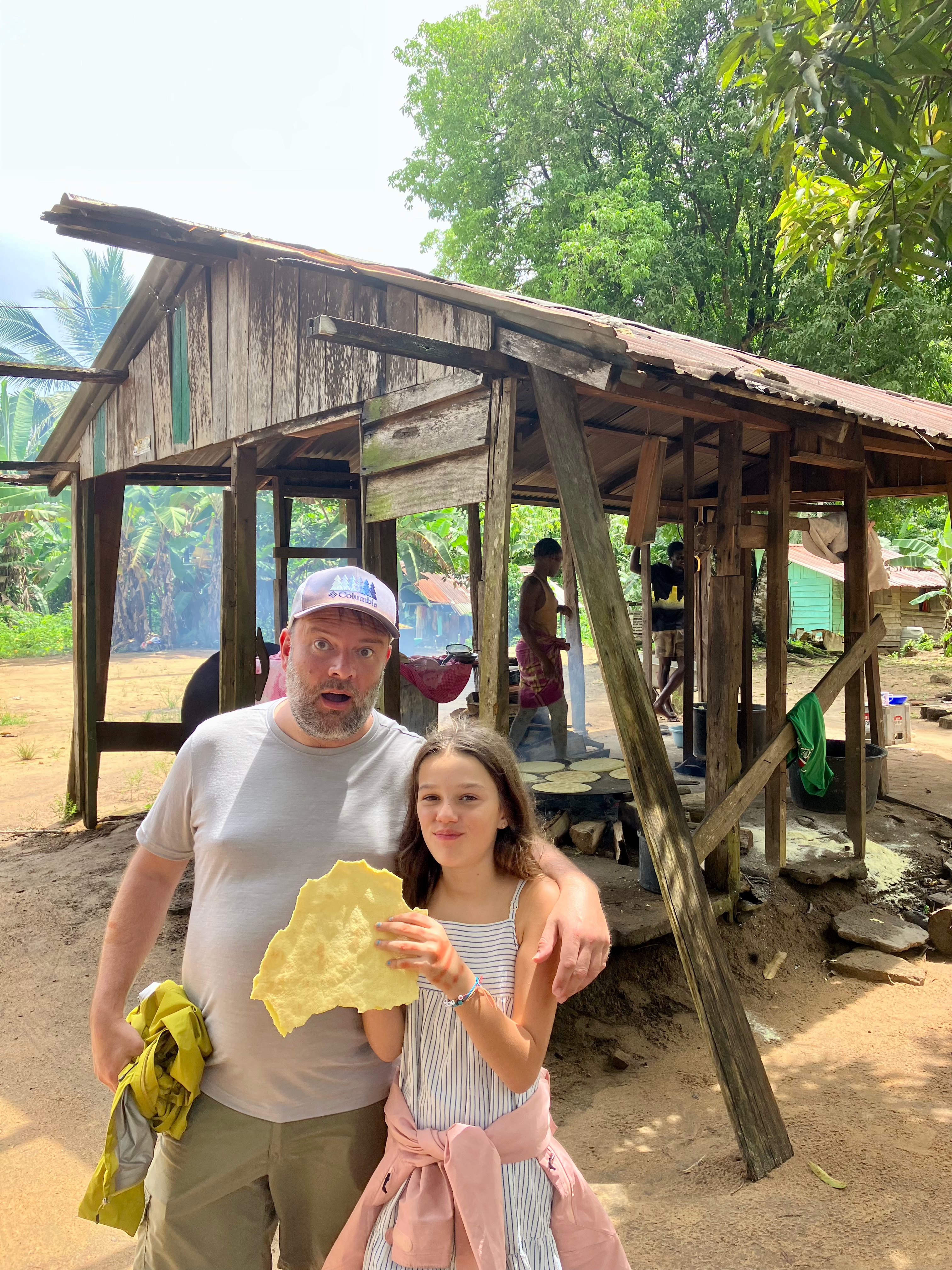
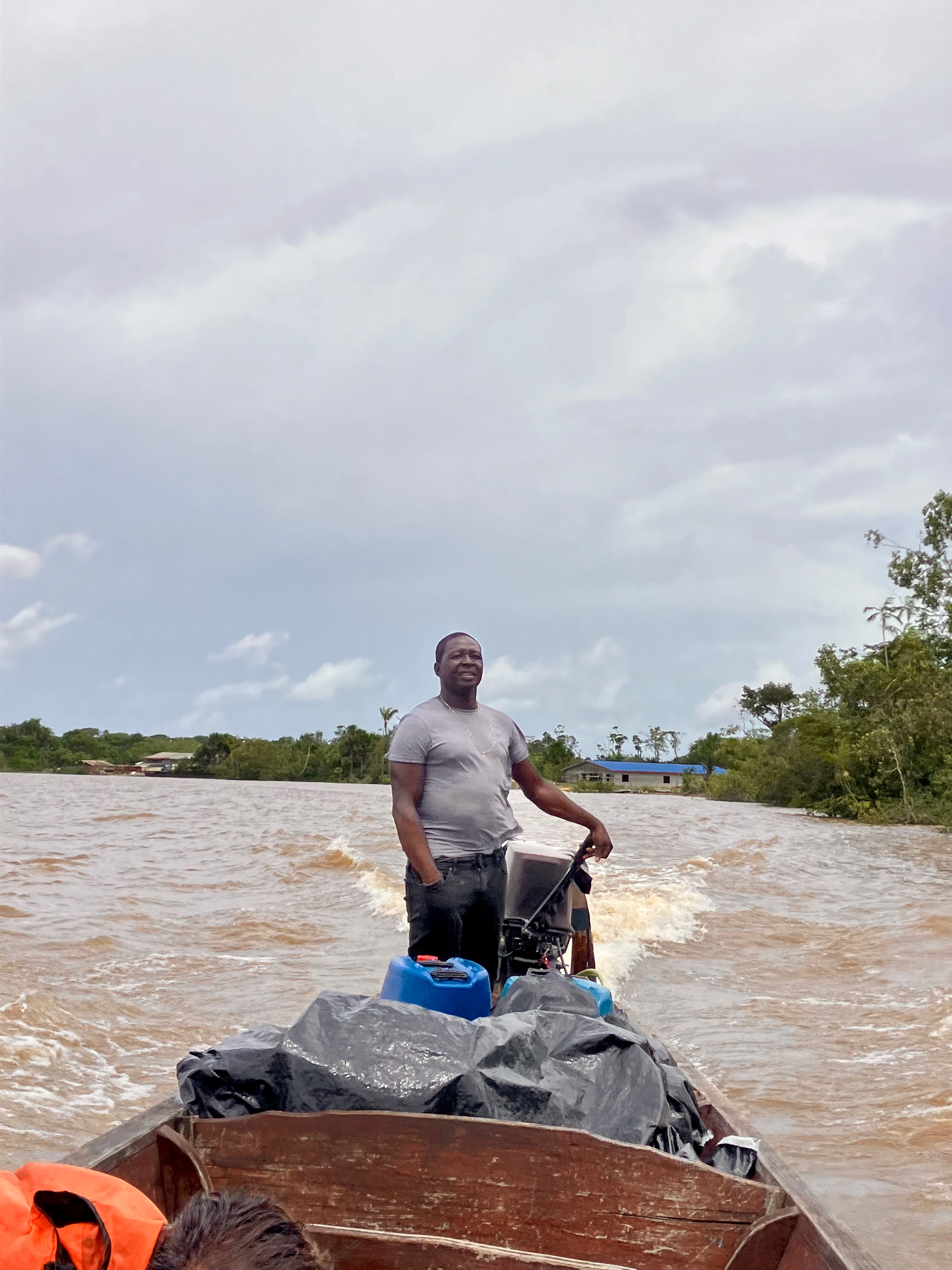
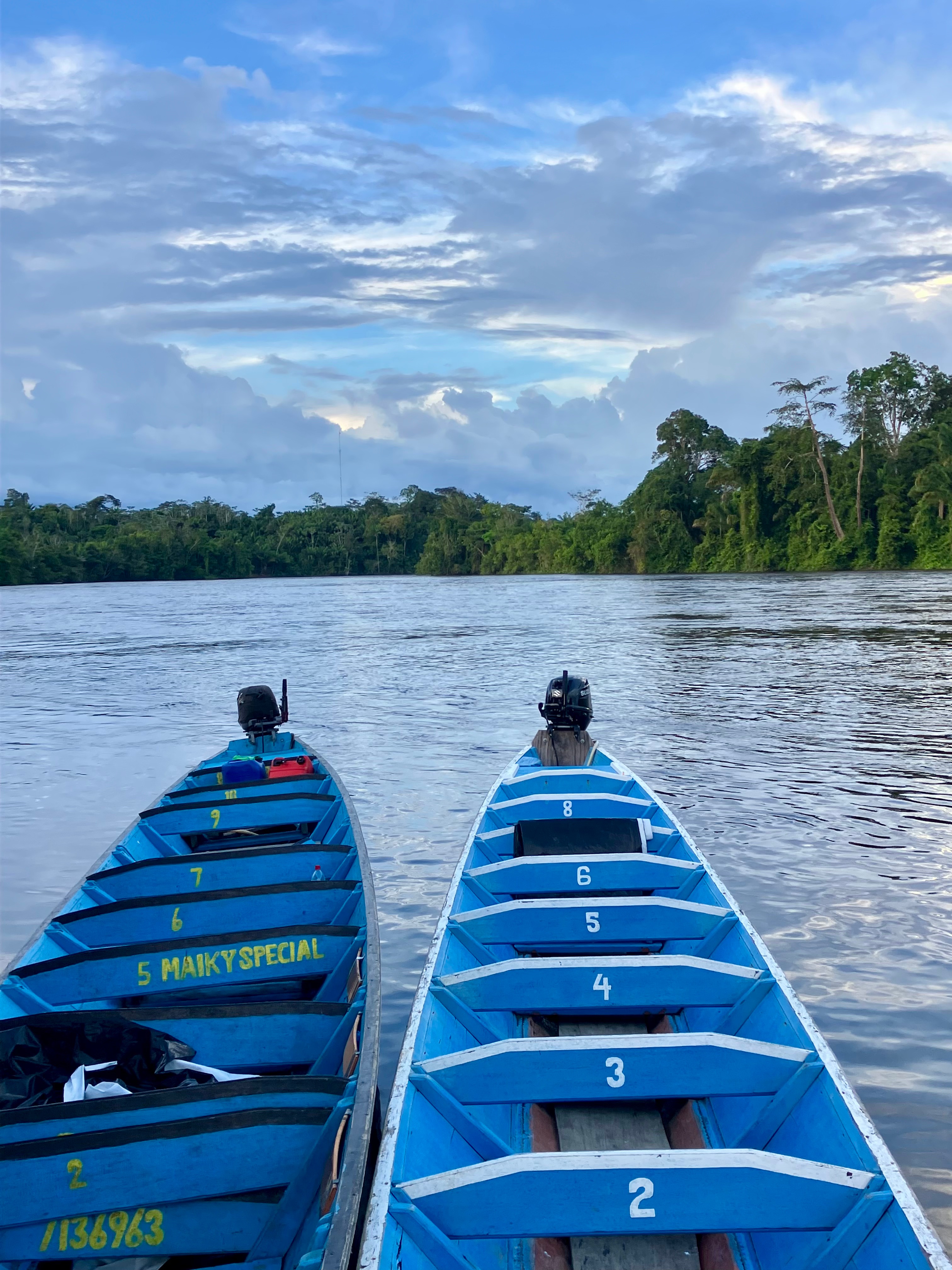
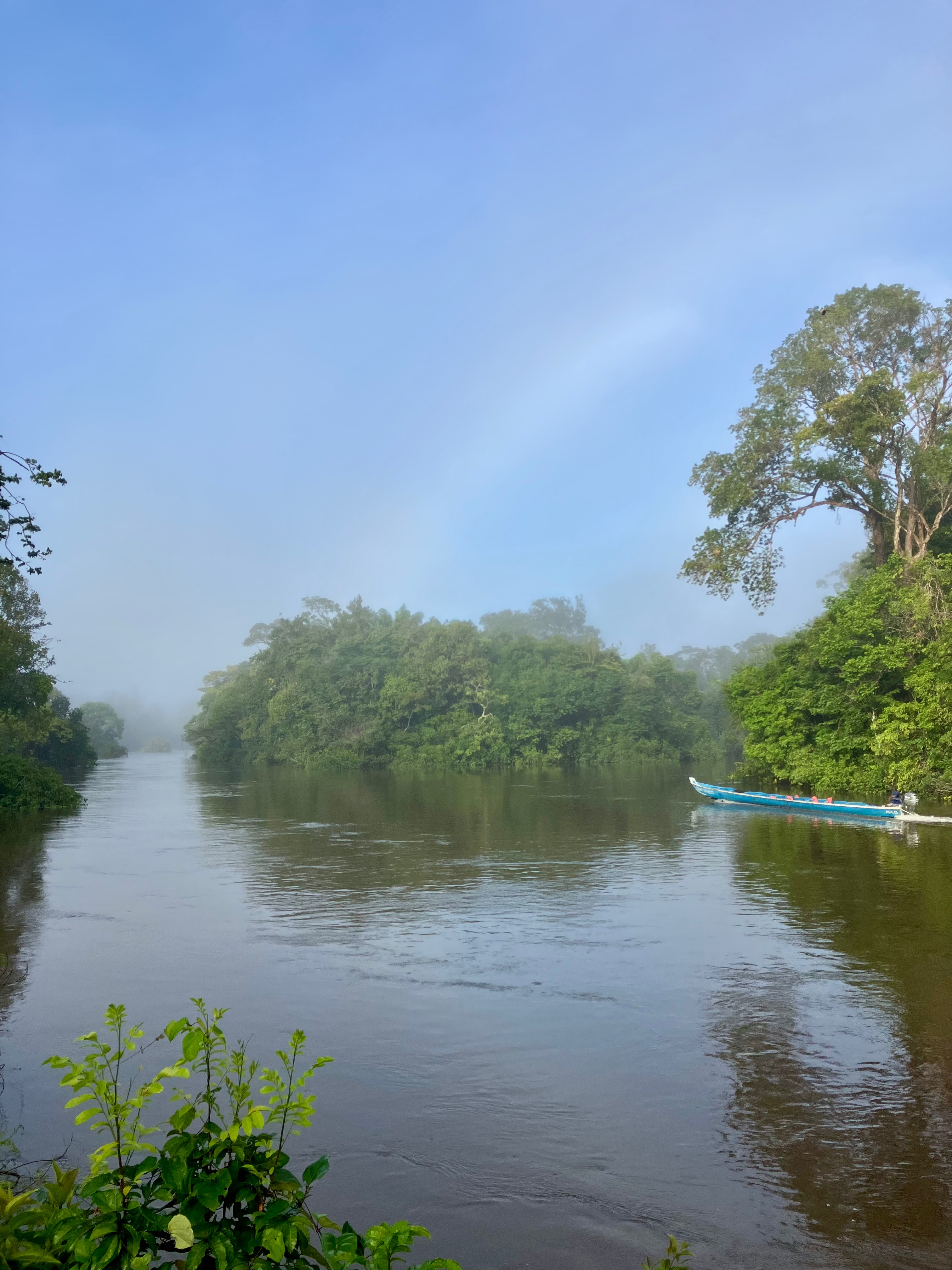
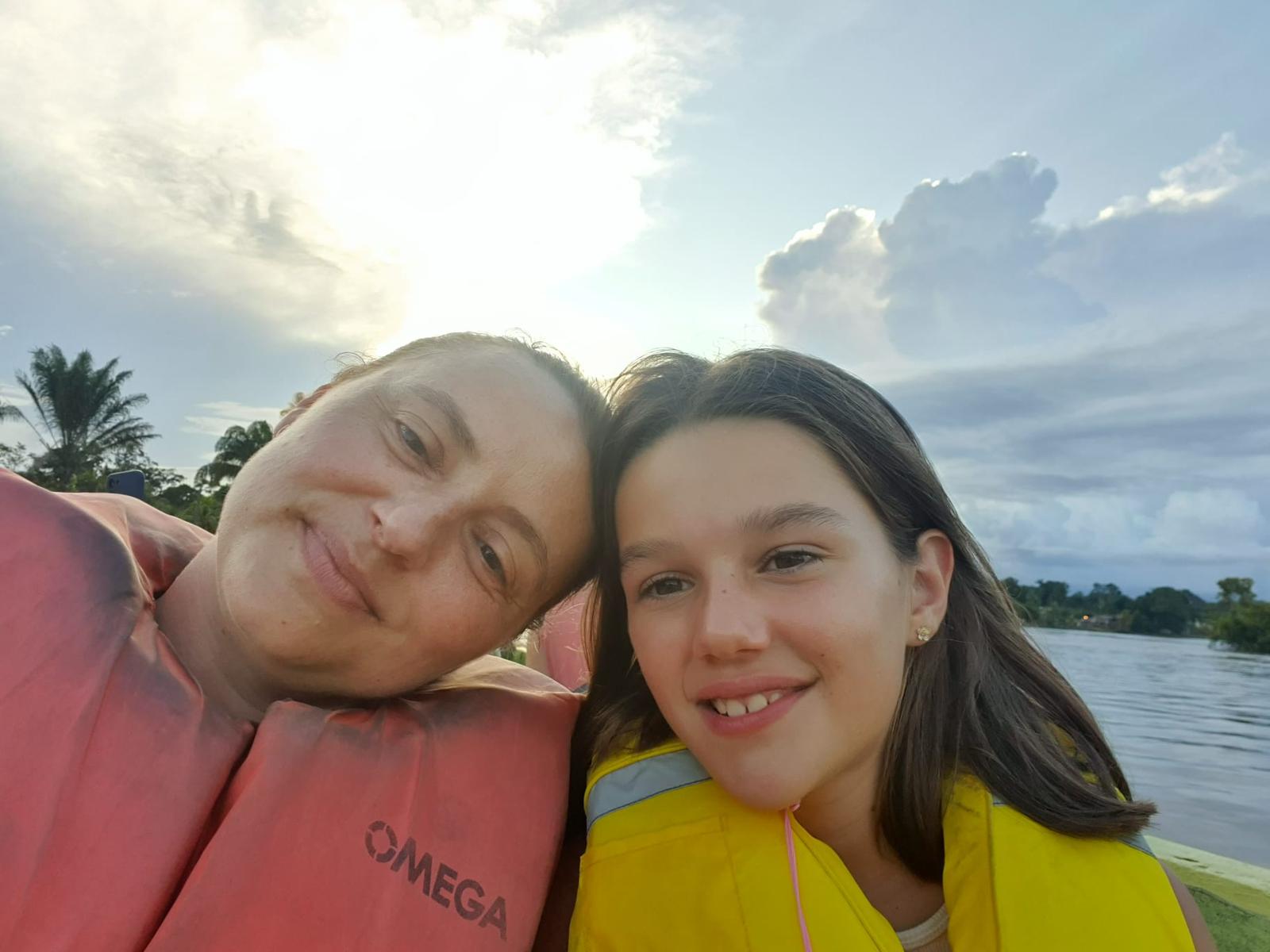
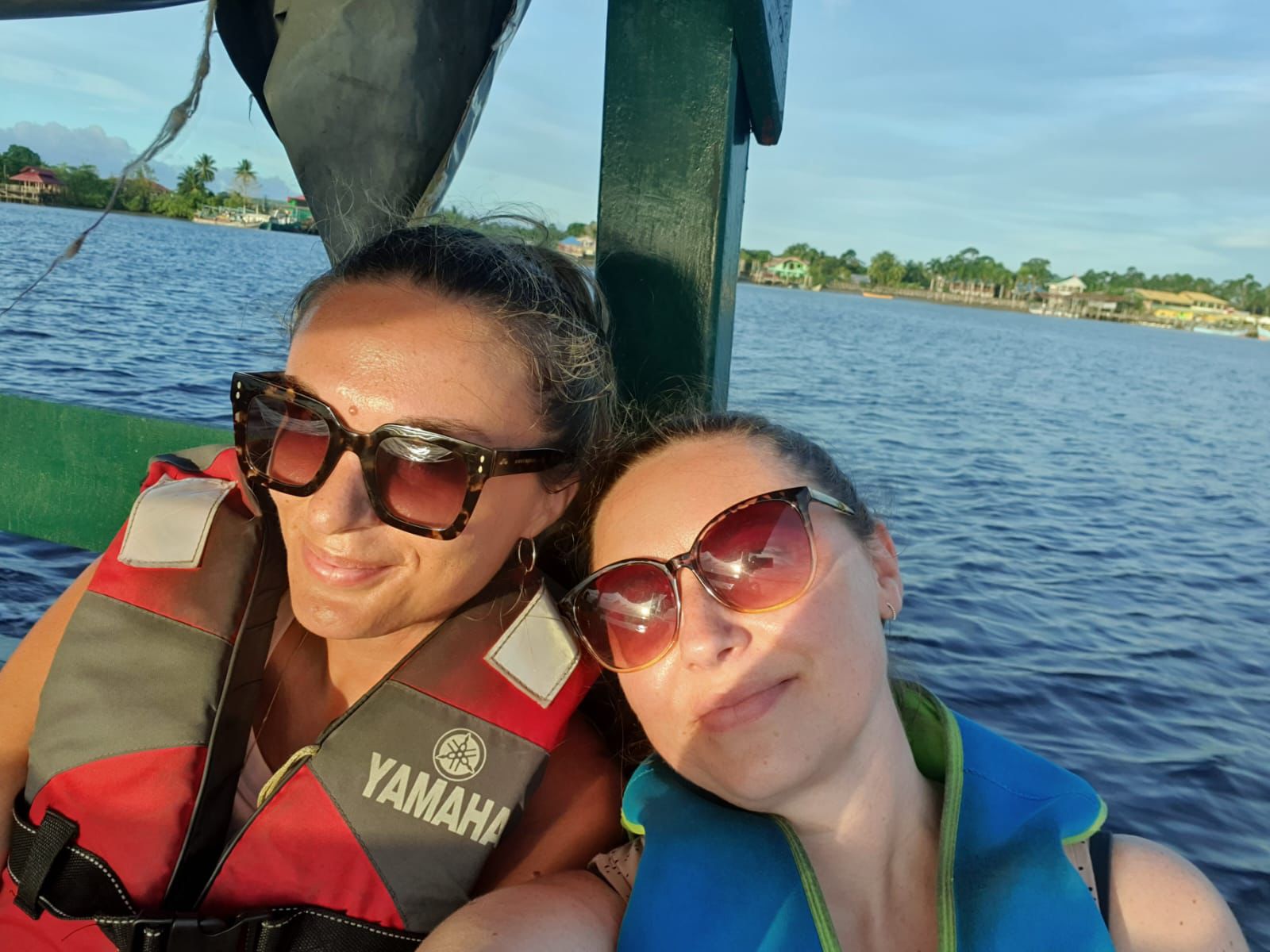
We head upriver on the Maroni by dugout canoe — that liquid border between Suriname and France. The ride is beautiful: visiting villages only reachable by pirogue, gliding beneath the canopy, golden light filtering through the giant leaves…
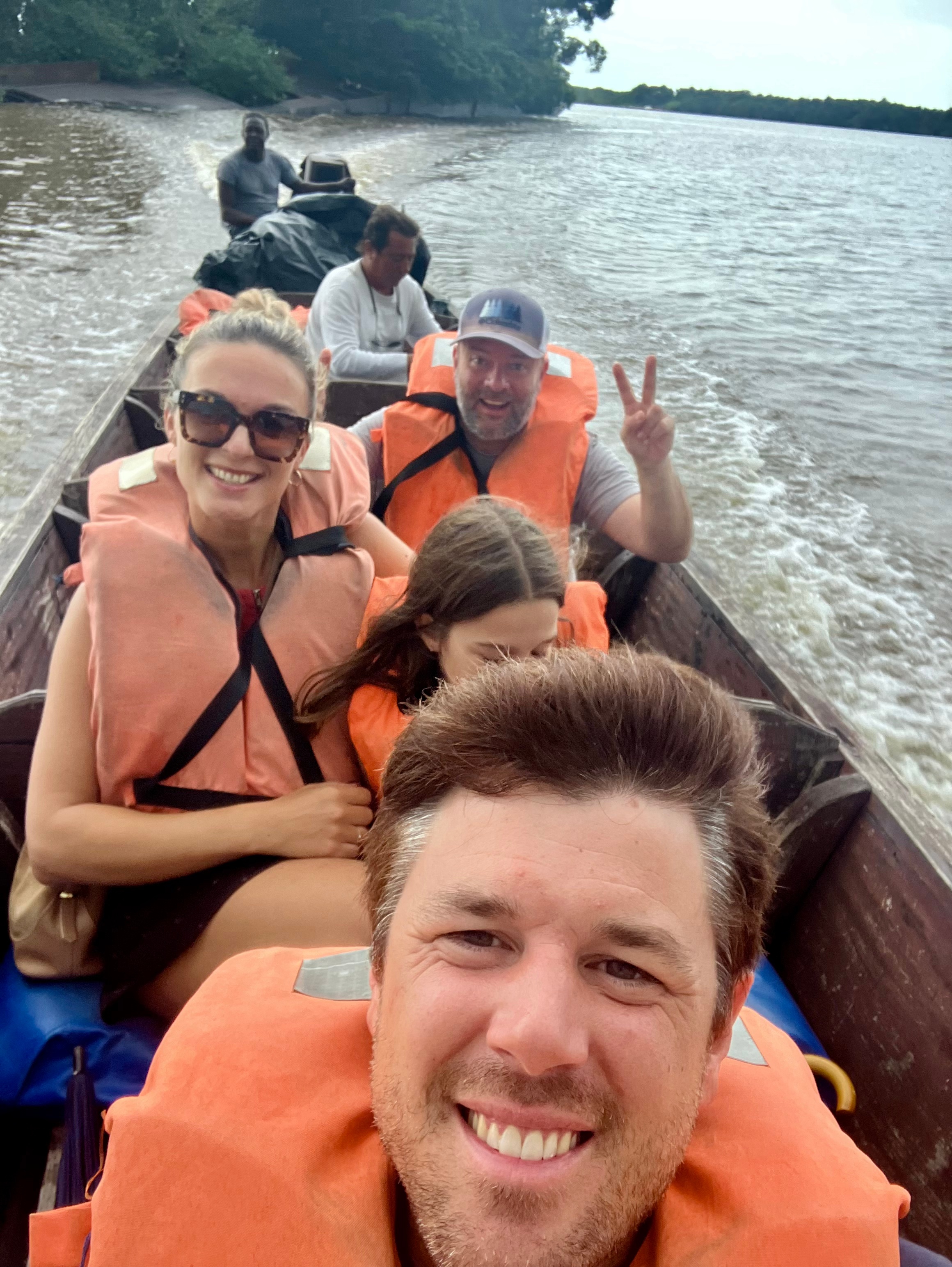
In the afternoon, we make the most of our last hours together. Pool, sunshine, laughter with Bouvy… our Guianese interlude is slowly coming to an end.
Tuesday – A turbulent departure
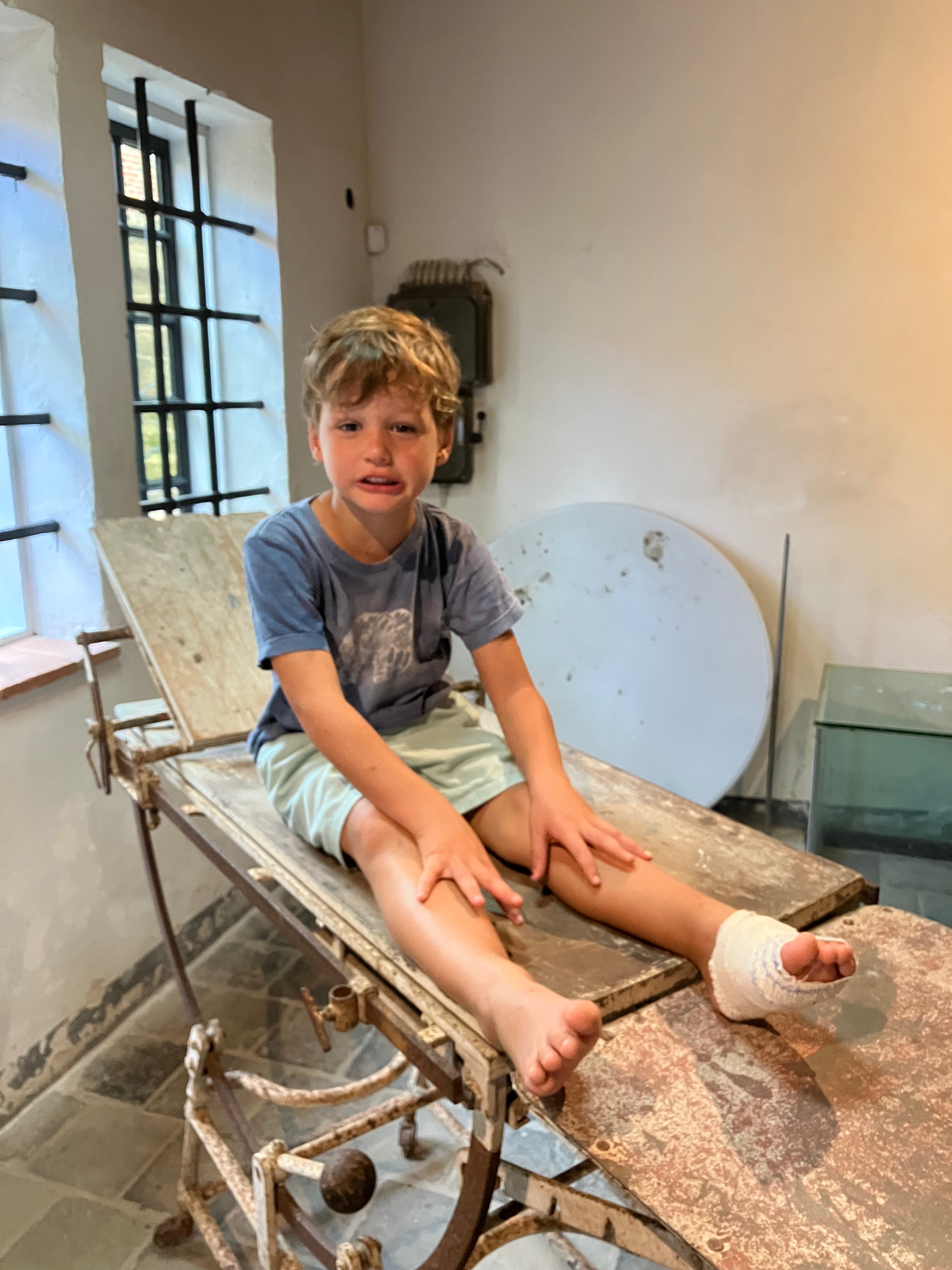
Matteo wakes up with a fever of 38.5°C and a burning foot. Swollen, red, hot. He can’t walk.
No time to hesitate: straight to the emergency room. By noon, we have to cross the border, and I’m absolutely determined to get him treated on the French side.
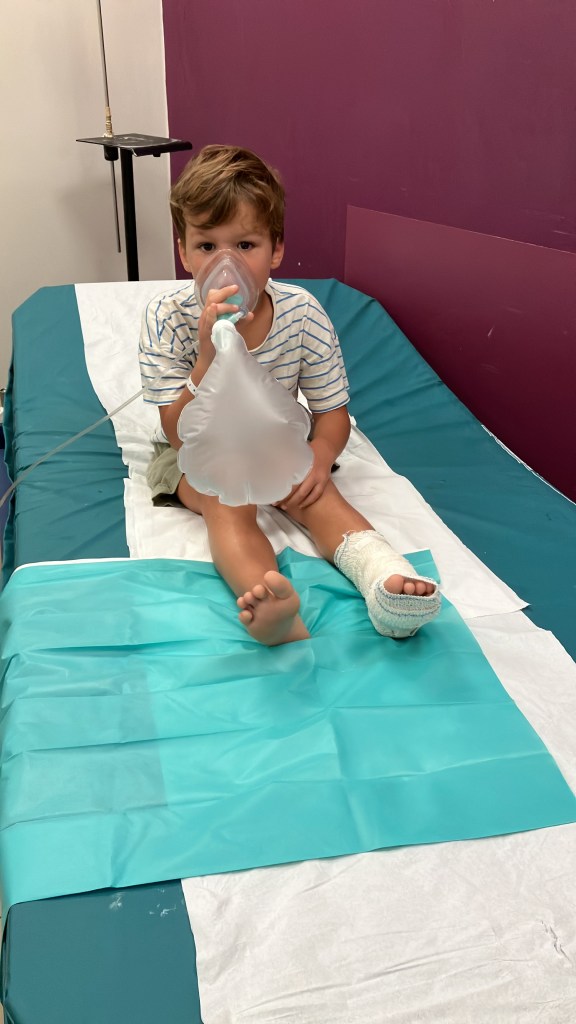
Believe me, taking your 4-year-old to the hospital is never fun… but if you can avoid doing it in Suriname, all the better. Not that it’s hell over there — but let’s just say, to keep it polite, things are a bit better on the French side.
In the waiting room, it’s peak Guiana atmosphere: I hear five different languages around me. French, Portuguese, Spanish, Taki-Taki (the local language), and a kind of tropical Dutch.
A true Babel, equatorial edition.
A few hours later, the diagnosis: a local infection caused by a small piece of wood lodged in Matteo’s foot.
Nothing serious, but he does need antibiotics.
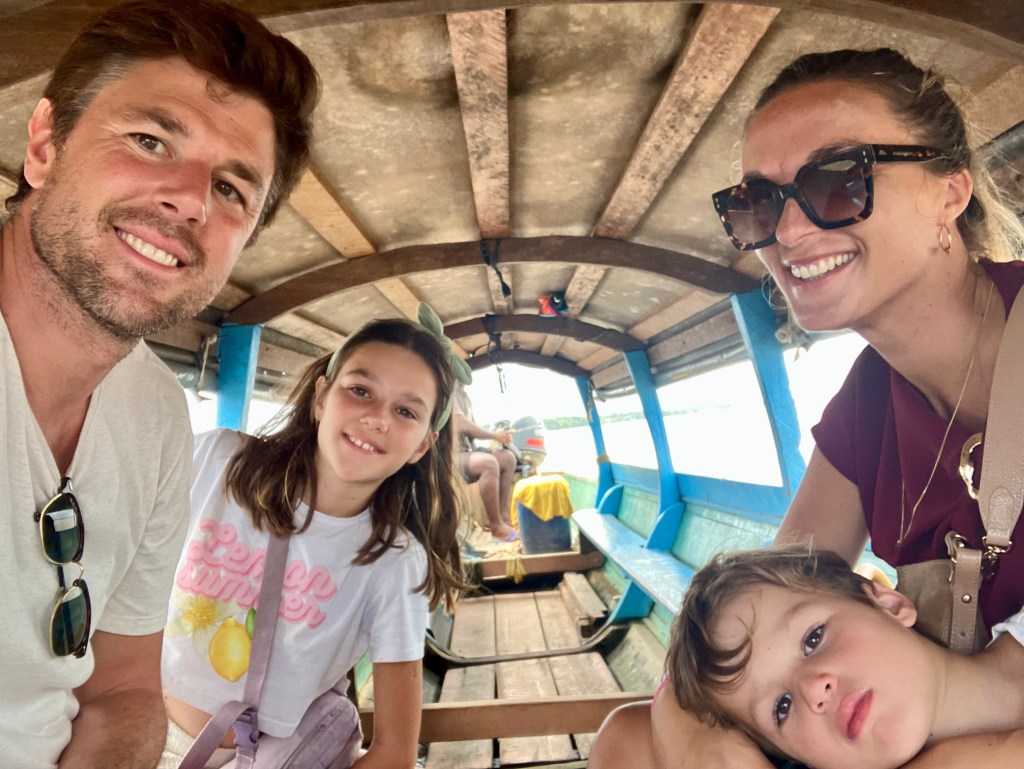
We dash to the pharmacy, toss our bags into the trunk, and at exactly noon, we hop into a dugout canoe to cross the Maroni River.
But first, a goodbye hug for Bouvy, who’s heading back to Cayenne before flying home to Belgium.
Ten minutes later, we’re on the other side. Welkom in Suriname!
A border crossing where the official languages are French and Dutch… For a Belgian, it’s a surprise: our two national languages side by side, right in the heart of the Amazon!
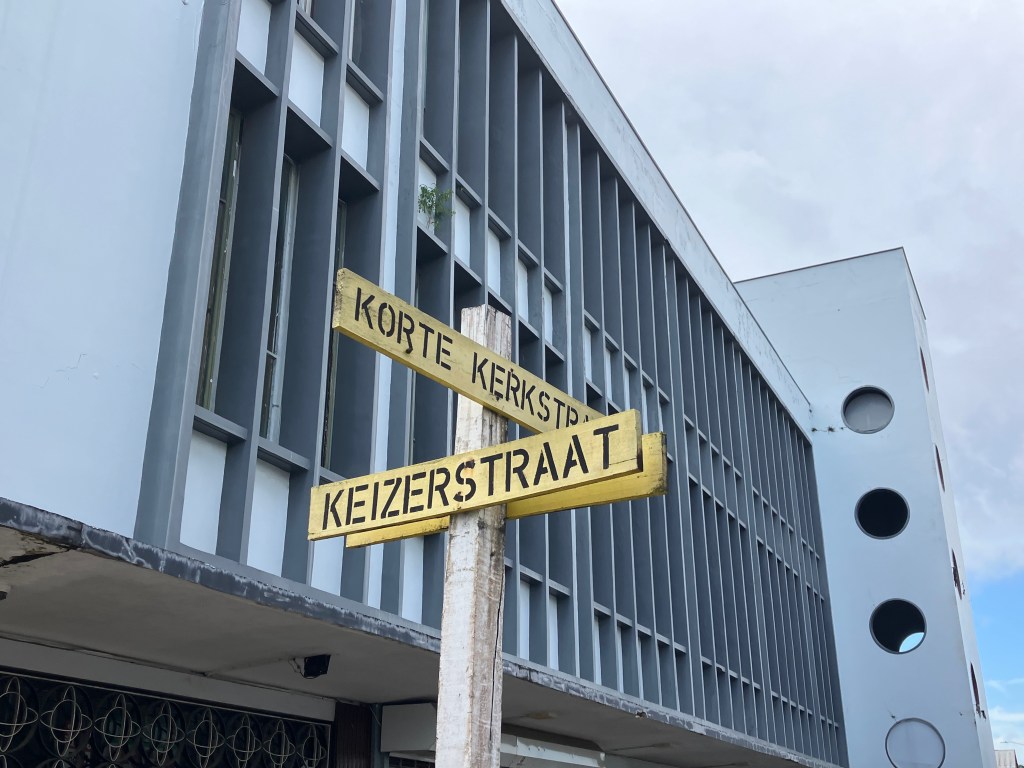
Here, Dutch is still the language of schools, administration, and road signs.
But at home, people often speak something entirely different: Sranan Tongo, Javanese, Hindi, English, Chinese…
A joyful linguistic jumble.
After an hour and a half on the bus, we arrive in Paramaribo, excited to reunite with our second special guest: Naomi (aka Tante Bomi, for those in the know).
Apparently, after visiting us in Bali, she wasn’t discouraged — and decided to explore Suriname with us too.
Paramaribo? A bit of a letdown, to be honest.
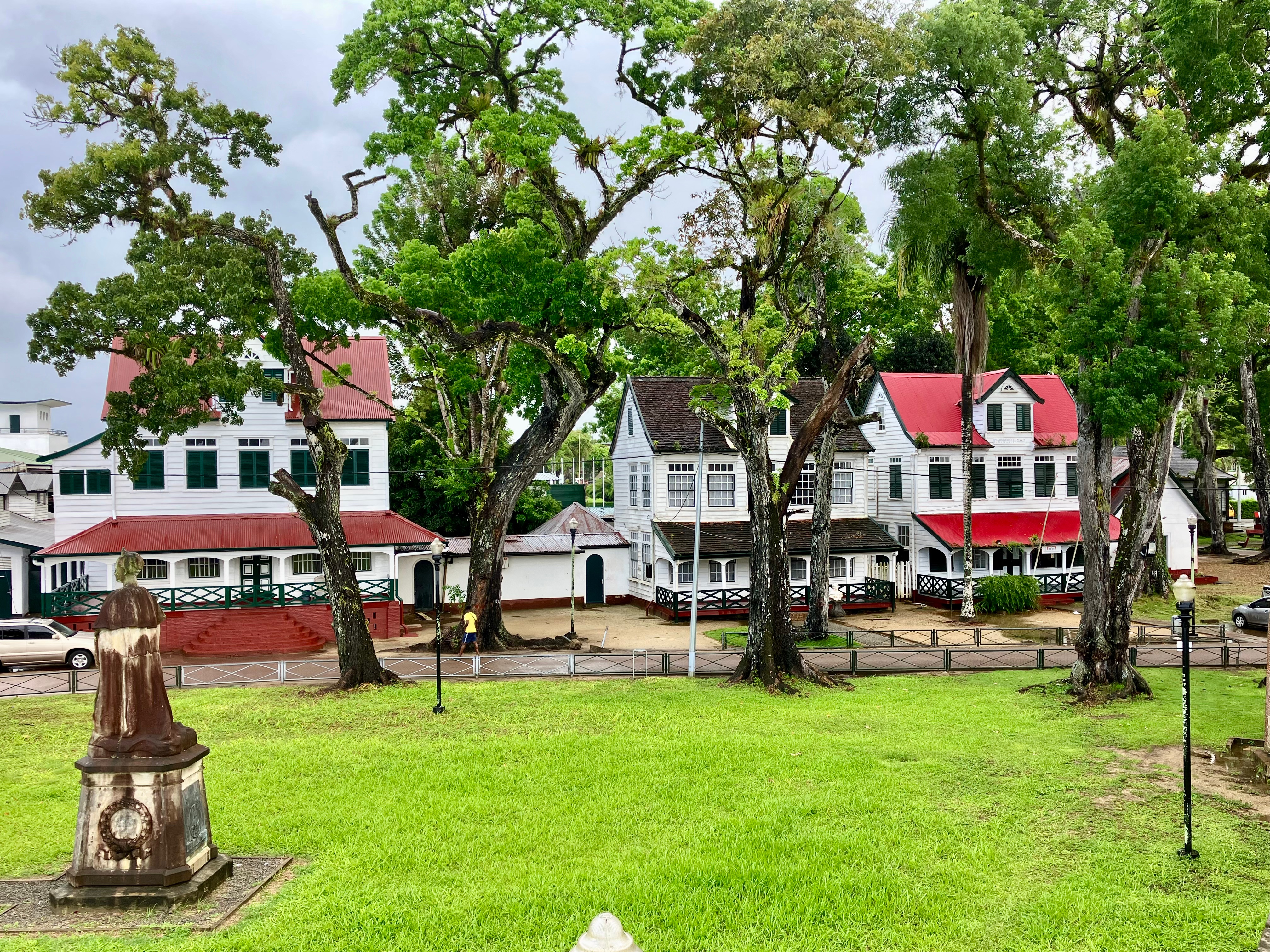
Yes, the charming wooden colonial houses are there — in good numbers, even.
But many are falling into disrepair, eaten away by humidity and time.
A few streets have character, but you quickly feel like you’ve seen it all.
Despite its UNESCO listing, the city could really use a refresh — though it’s hard to say who has the means (or interest) to take that on.
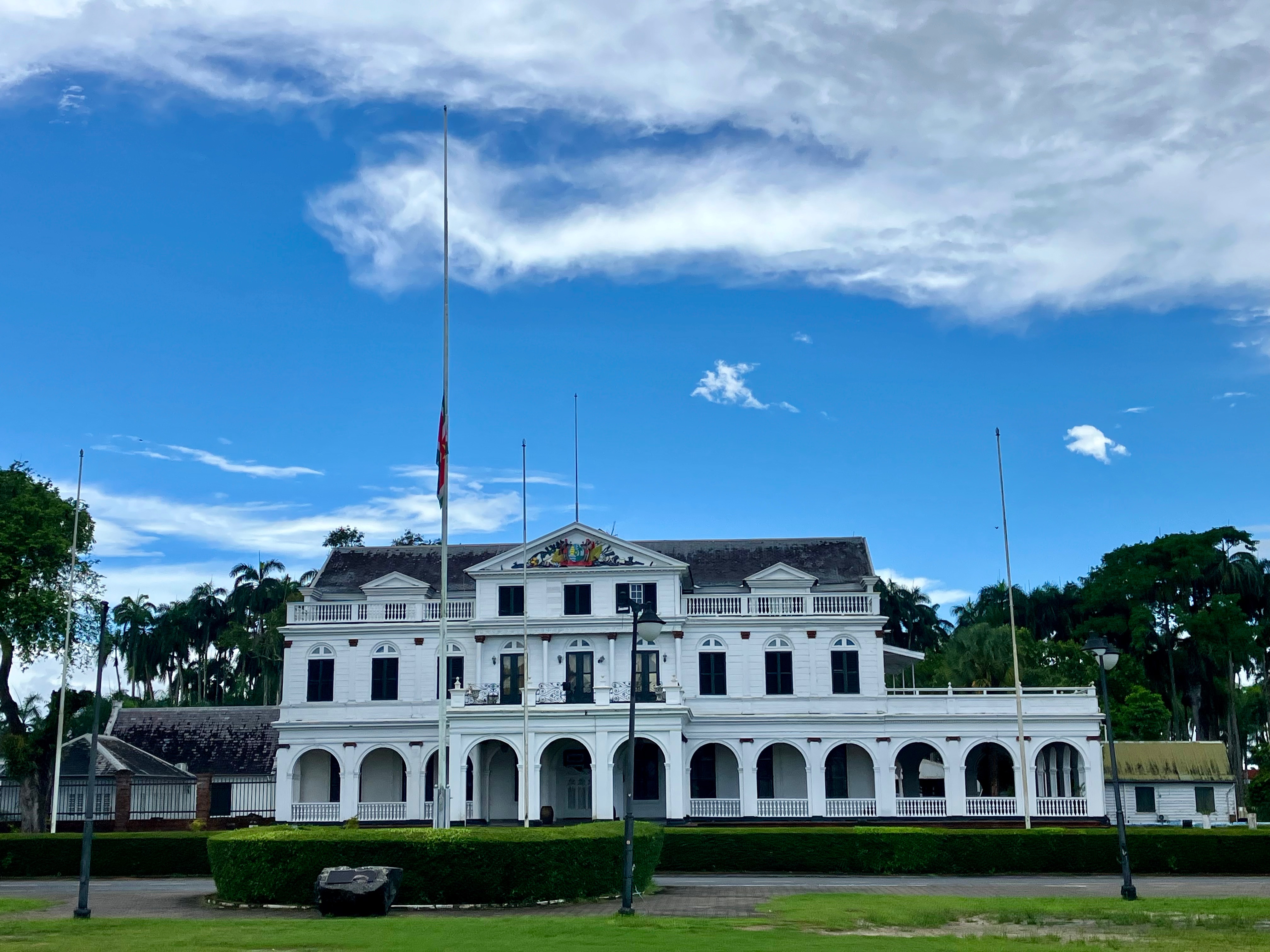
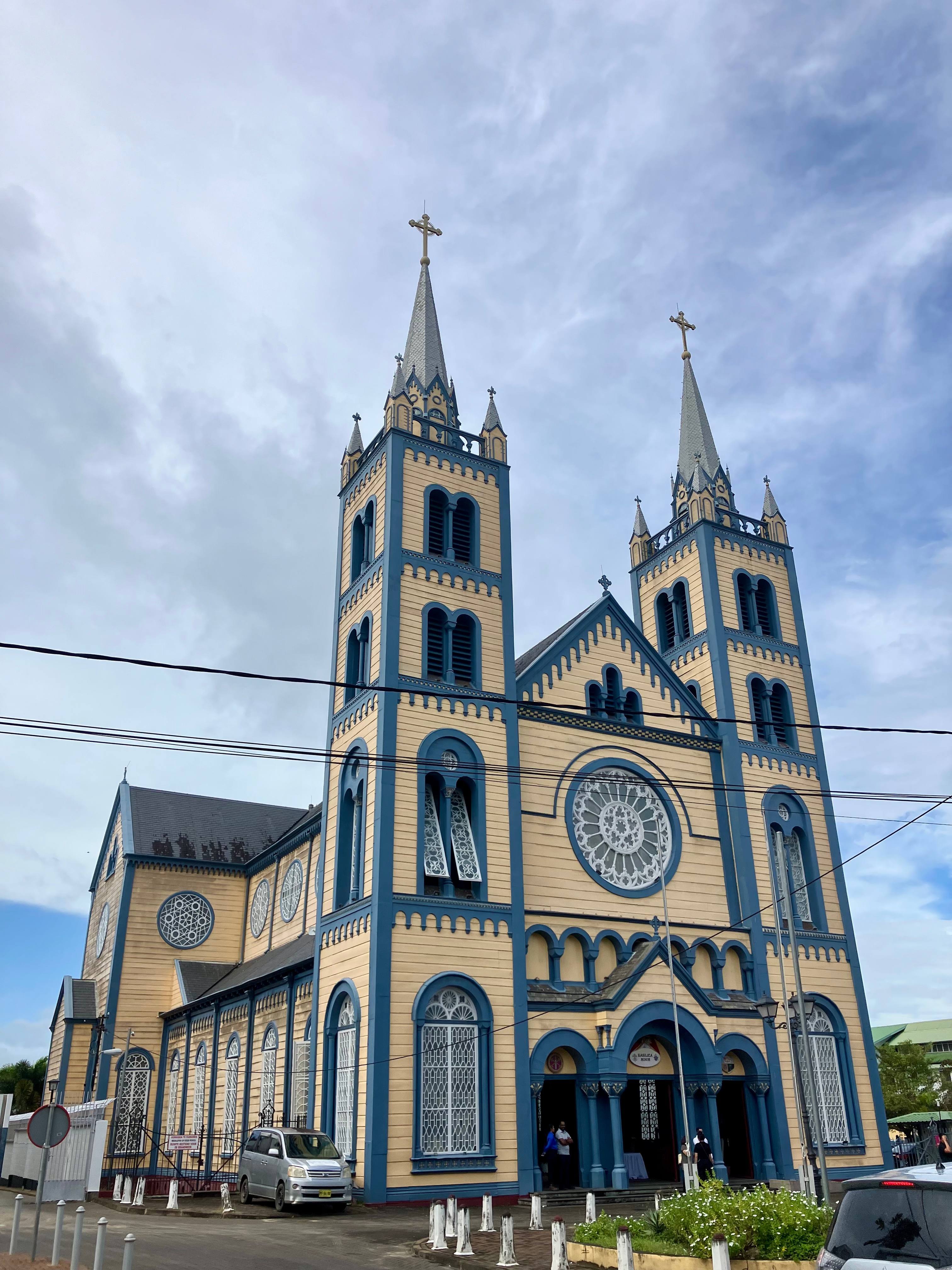
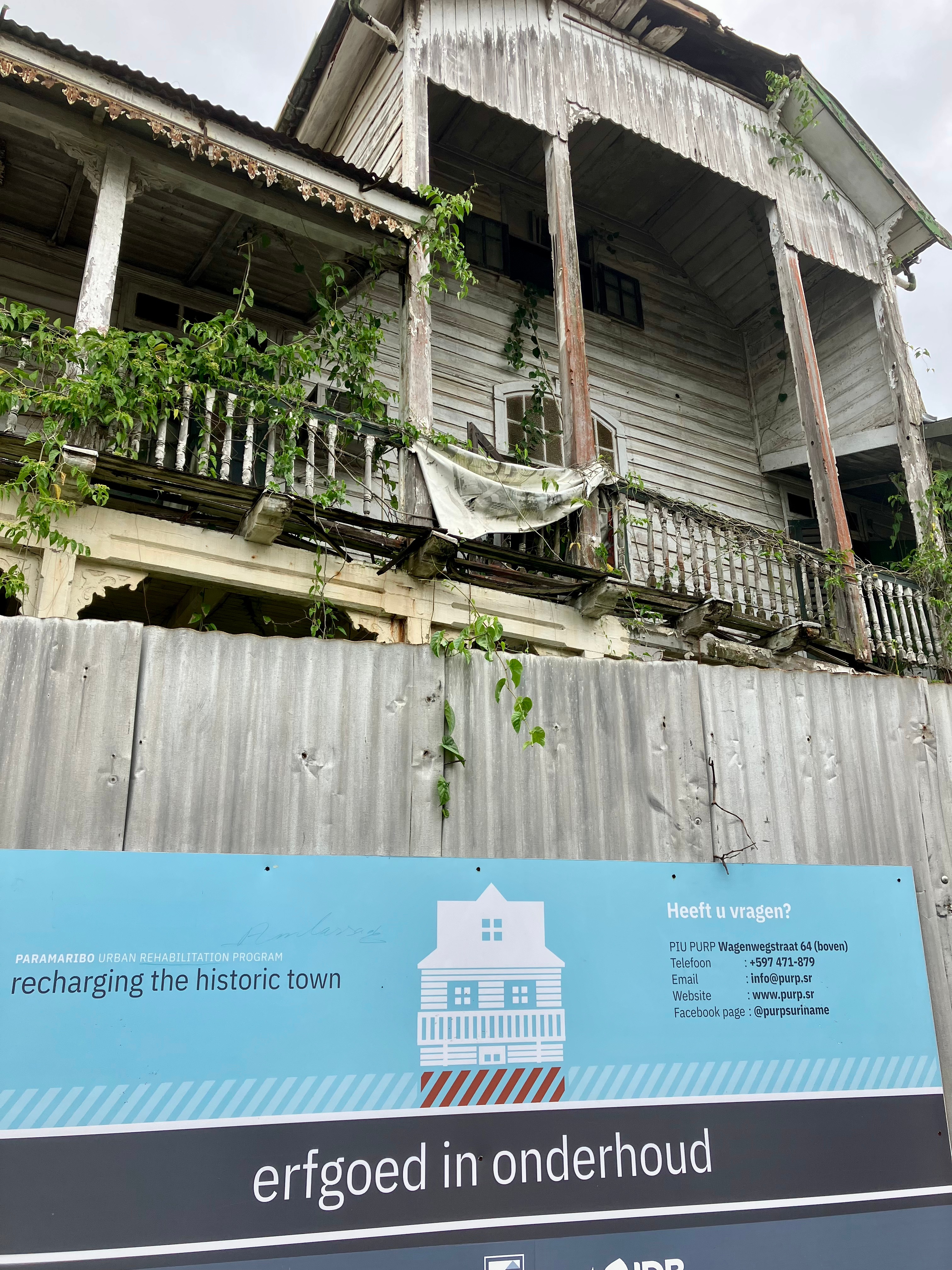
Because Suriname is poor. Very poor. Independent since 1975, the country has a GDP 3.5 times lower than that of its neighbour, French Guiana. And even that number is misleading, given the extreme inequalities.
The kicker? Somewhere between 20 and 30% of the GDP is said to come from cocaine trafficking.
Suriname has become a major transit hub between Colombia and Europe — helped along by a weak and deeply corrupt state.
And yet, the country is rich in resources: tropical hardwoods, gold in abundance, stunning nature reserves… and now, oil.
A lot of oil. Massive offshore fields were discovered two years ago and could very well change the economic landscape.
In fact, we arrived just after the elections, where the main debate was: how should this newfound wealth be shared with Suriname’s 600,000 citizens?
Or, more cynically: how do you prevent it from going straight into the pockets of yet another multinational… or a handful of well-connected locals close to power?
But let’s come back to the everyday — to what truly gives a journey its soul: the people you meet.
The best conversations I’ve had weren’t necessarily in the expected places… but rather at the barber’s, or in a taxi.
Places where locals and migrants-turned-locals mix in the most unexpected ways.
Slices of life, raw and spontaneous. Always an unexpected moment, often a touching one.
As for barbers, I’ve gone around the world: an Afghan in Australia, an Iranian in Canada, some Vietnamese, a Paraguayan, Chinese, Brazilians… the list grows with every stop.
So in Paramaribo, I tell myself: “Finally, a country where I can explain what I want in a language I actually speak!” (Dutch, for those keeping track).
Wrong. My barber only speaks English.
Oh well — I always say the same thing anyway: “Just two centimetres,” and let them get on with it.
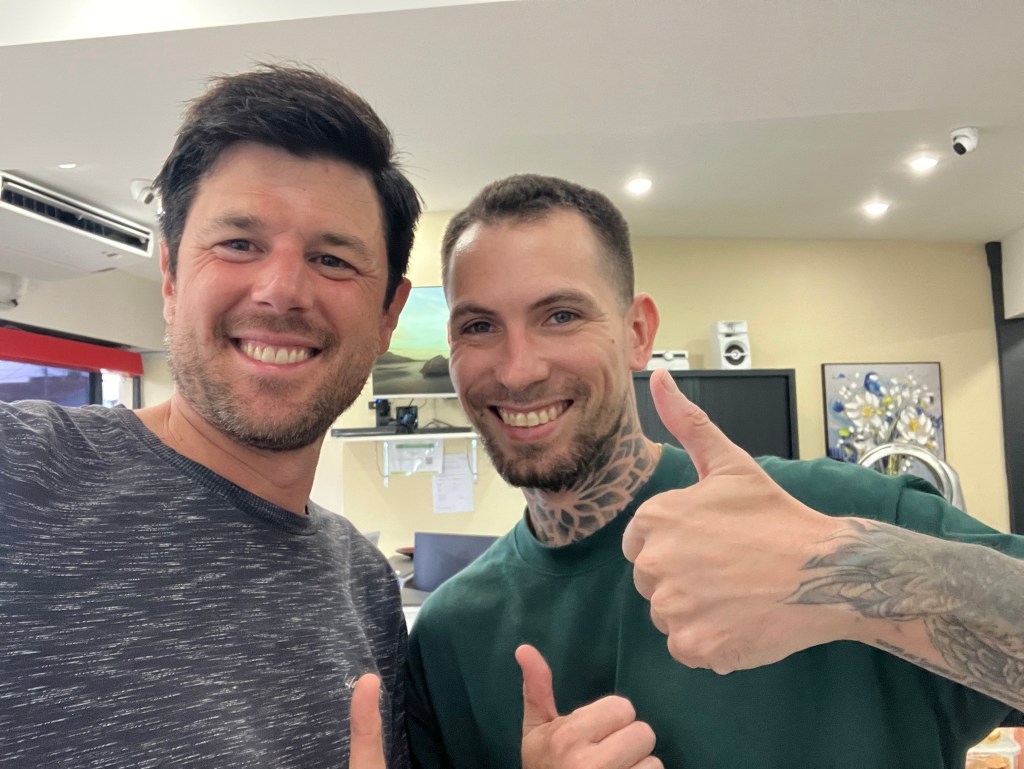
We chat casually in English for five minutes, then I ask him where he’s from.
“From Cuba,” he replies.
And just like that, without thinking, we switch to Spanish.
The conversation flows non-stop for the next hour.
He tells me he left Cuba five years ago. A backpack, 800 dollars in his pocket, and a one-way ticket to Suriname — officially as a tourist, but with no intention of going back.
He didn’t know a soul here. No plan, no contacts — just the need to survive somewhere else.
A few days later, in a random bar deep in the jungle, I chat with a Cuban couple who had just arrived and had been living here for five months.
He’s a doctor at the local hospital, she works in the bar. And they’re living the same story.
The same beloved country that had become unlivable.
The same oppressive surveillance system.
The same crushing poverty.
And the same despair that forces people to flee.
These kinds of exiles are rarely talked about in Europe.
And yet, Latin America is full of Cubans, Venezuelans, and sometimes Colombians who have fled their homelands in search of a slightly less uncertain future.
Each time I speak with one of them, the same thought hits me:
It takes immense courage to leave everything behind — your family, your roots, your language, your sense of place — and start over from nothing, in a country you know almost nothing about.
It takes courage… and also a lot of despair.
But what strikes me the most is how migration has been dehumanized in Europe.
We talk about flows, quotas, crises.
Rarely about people.
And yet, every migrant I’ve met — and believe me, there have been between 30 and 50 on this trip — carried with them a deep wound.
The pain of having had to leave the country they love.
After Paramaribo: into the jungle
Three hours by bus, one hour by dugout canoe, and we arrive at what will be our home for the next three days.
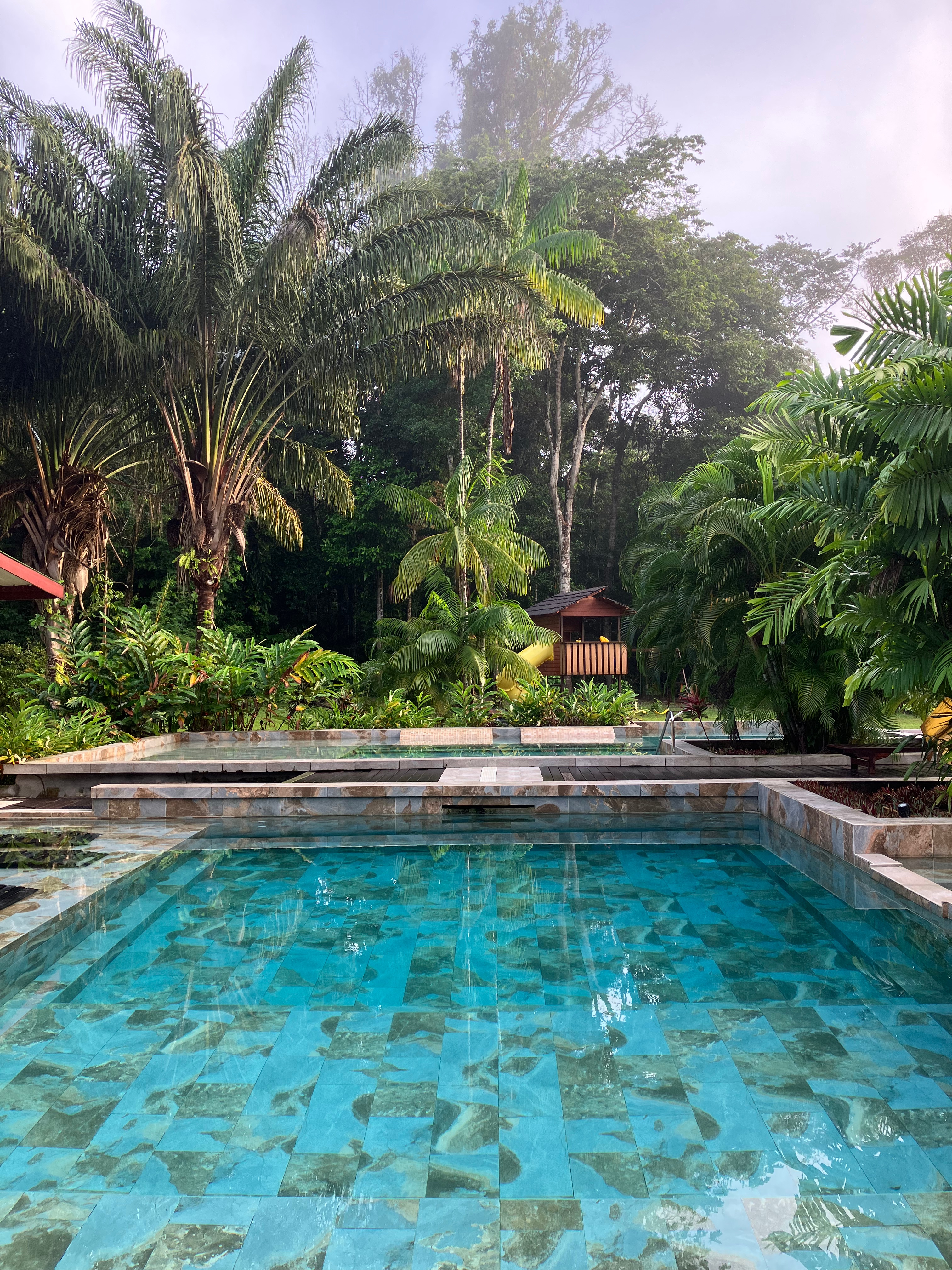
An isolated lodge, nestled between the dense forest and the Suriname River. The place is stunning. Quiet, green, alive.
The lodge is rustic. Very rustic.
All five of us sleep in one room, without air conditioning. Not unpleasant, but… let’s say… sticky.
Yes, airco is a luxury, we get that.
But when you’re living in a tropical climate, with 95% humidity and nights where your body sticks to the sheets by 8 p.m., you quickly realize that airco isn’t just about cool air.
It’s about drying the room.
Because here, everything is damp: the mattress, the pillow, the clothes in your backpack — which start to smell a bit like a basement by day two…
The kind of smell that only disappears after two washes and a good dose of sunshine.
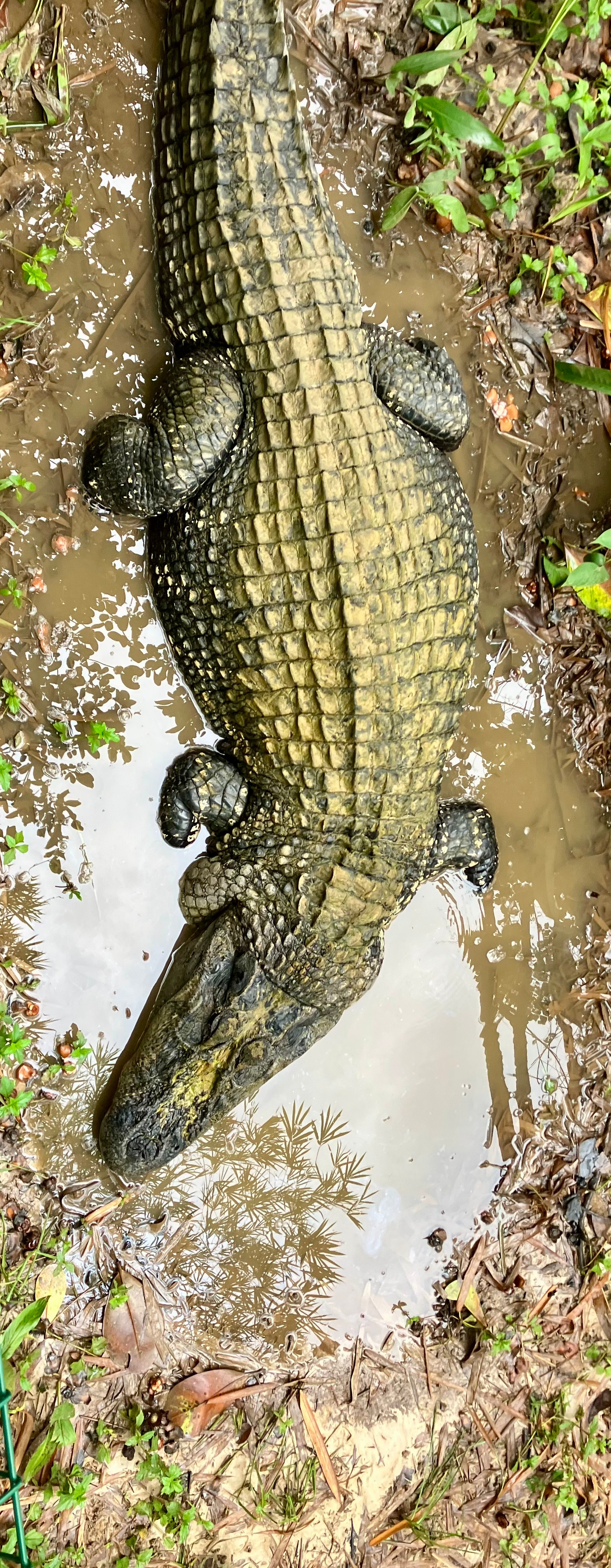
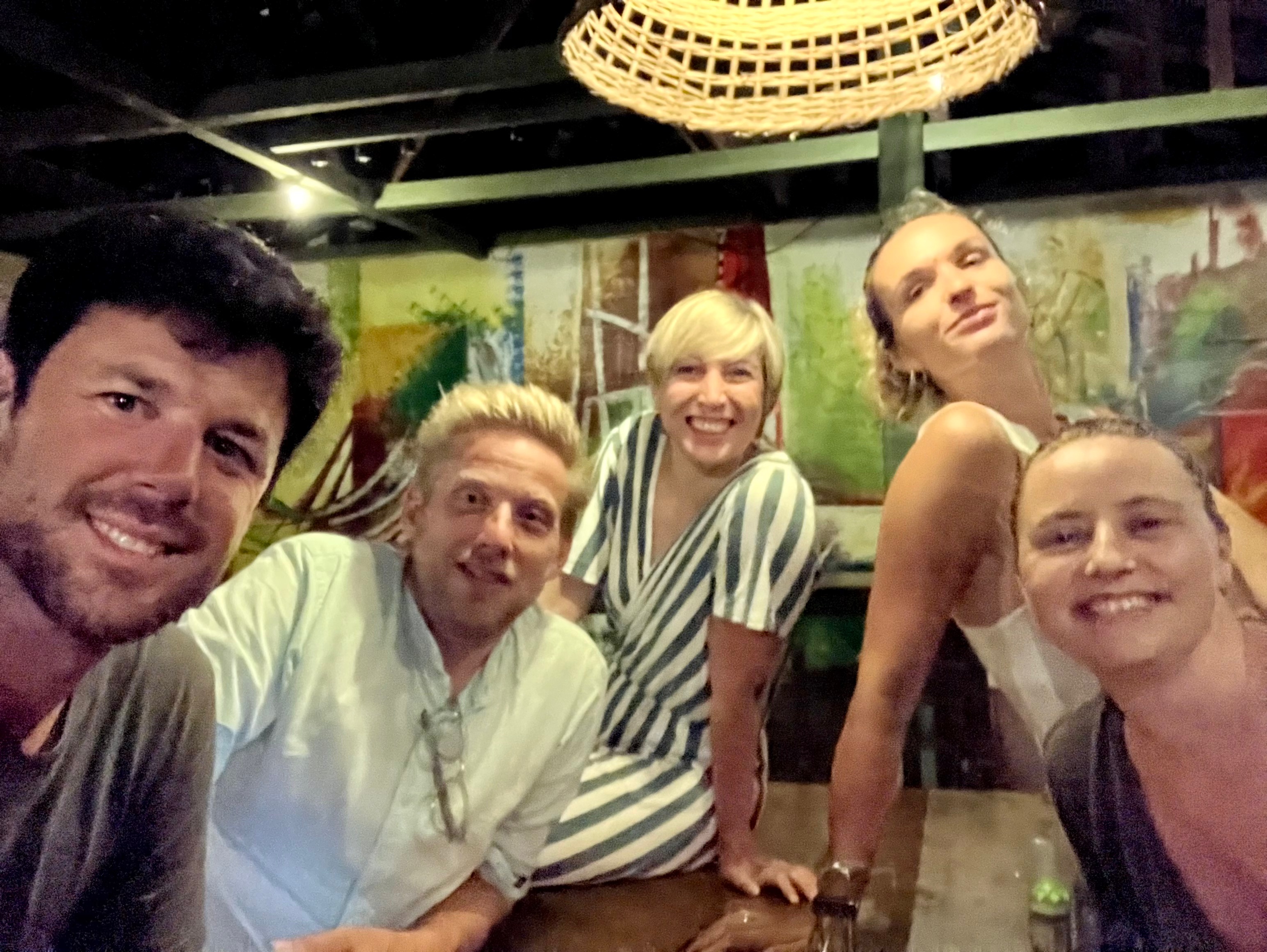
The pace is easy: a bit of lazing around, mellow evenings with some Dutch travellers, a few jungle walks, a failed attempt to spot caimans (spoiler: we didn’t see a single one — but honestly, after Brazil, we’ve seen enough to last a lifetime),
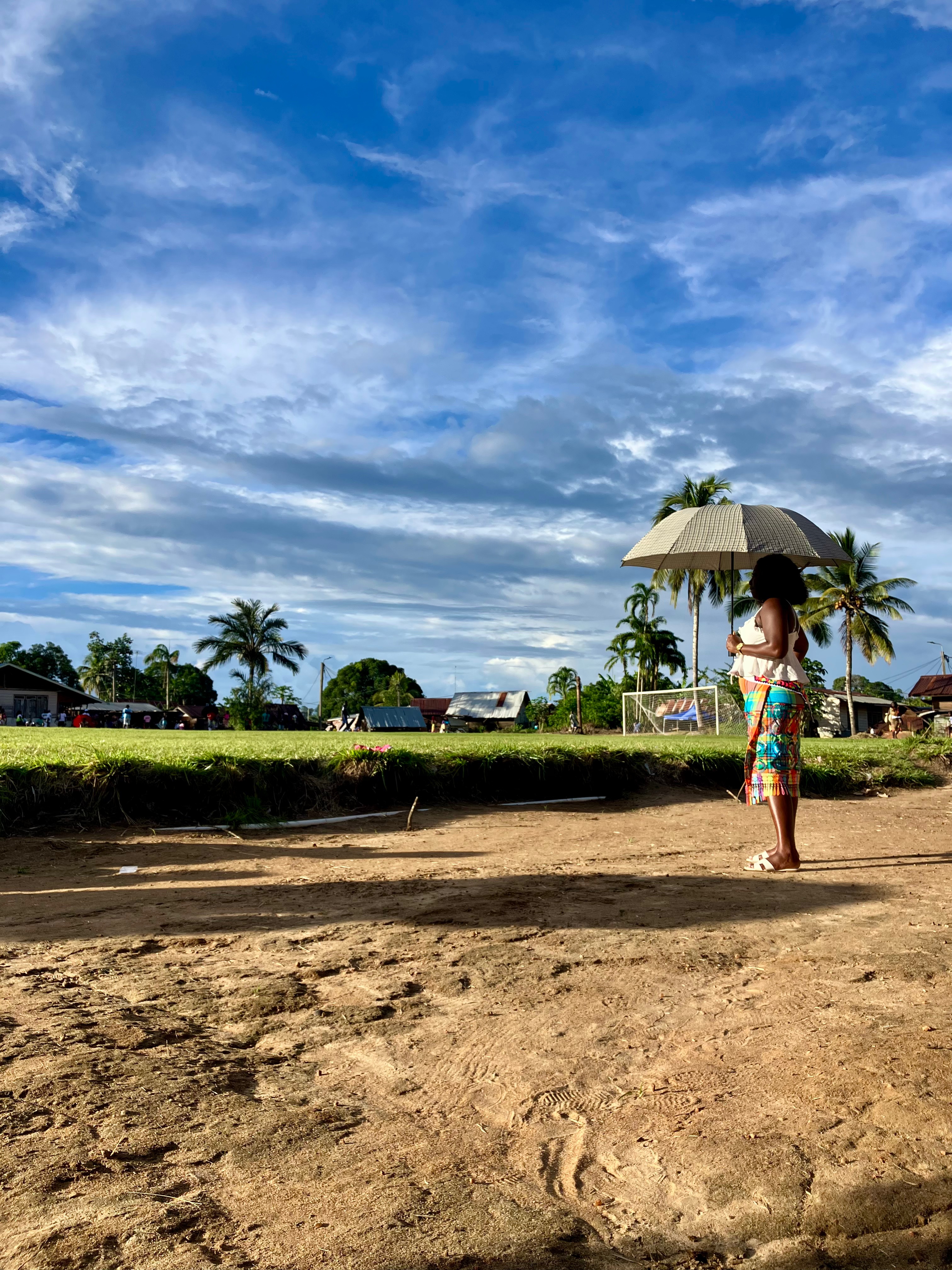
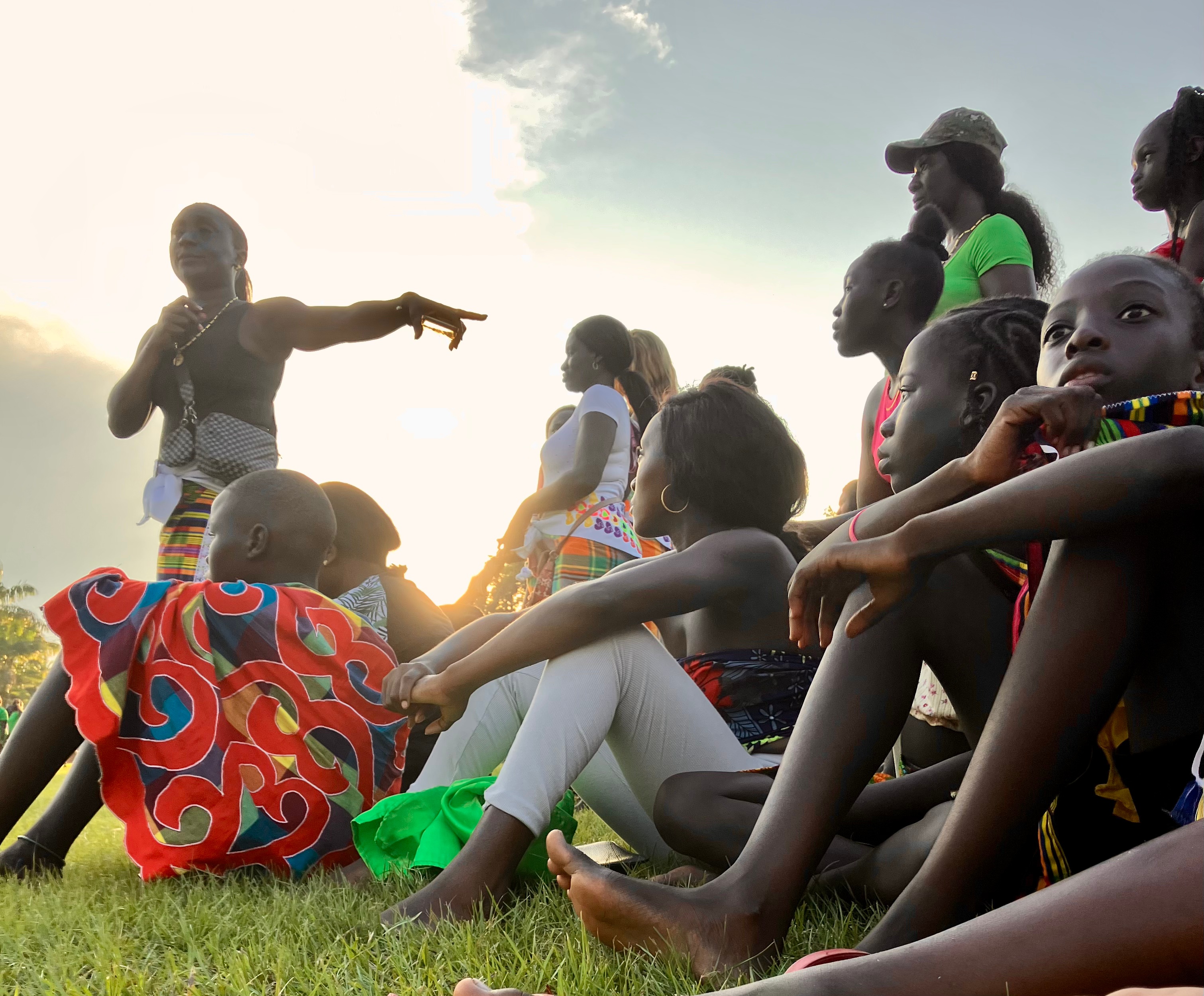
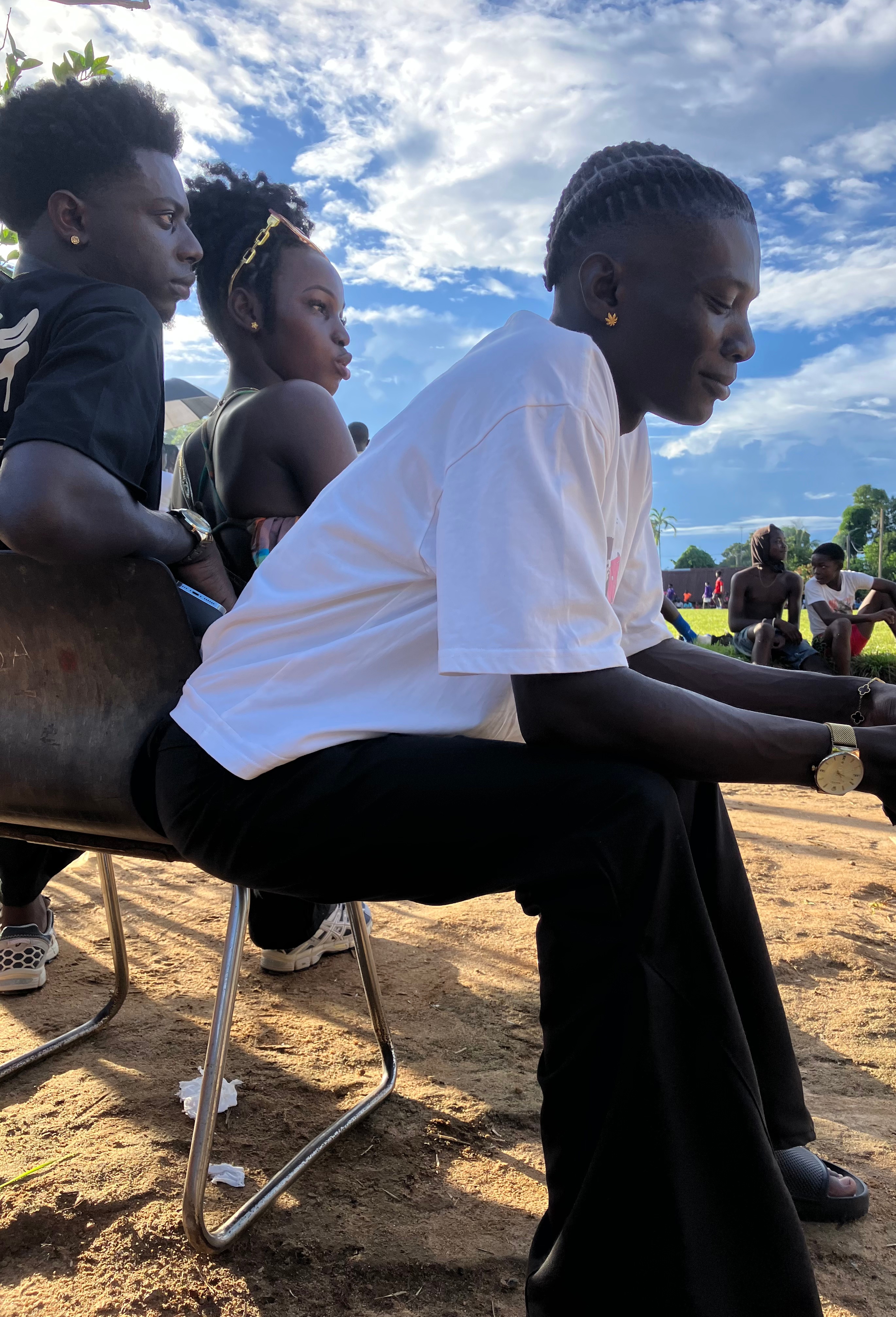
and above all, the visit to a Maroon village — probably the most powerful moment of our time here.
Just like in French Guiana, Suriname is home to descendants of African slaves, deported to work on plantations under Dutch colonial rule.
Many of them fled the coasts and fields to seek refuge inland, where access was harder.
There, they founded autonomous, resilient, and independent communities, deeply rooted in their African heritage.
They’re known as the Maroons — just like across colonial America.
To this day, nearly 15% of the population in Suriname and French Guiana is of Maroon origin, living in villages often isolated along the rivers.
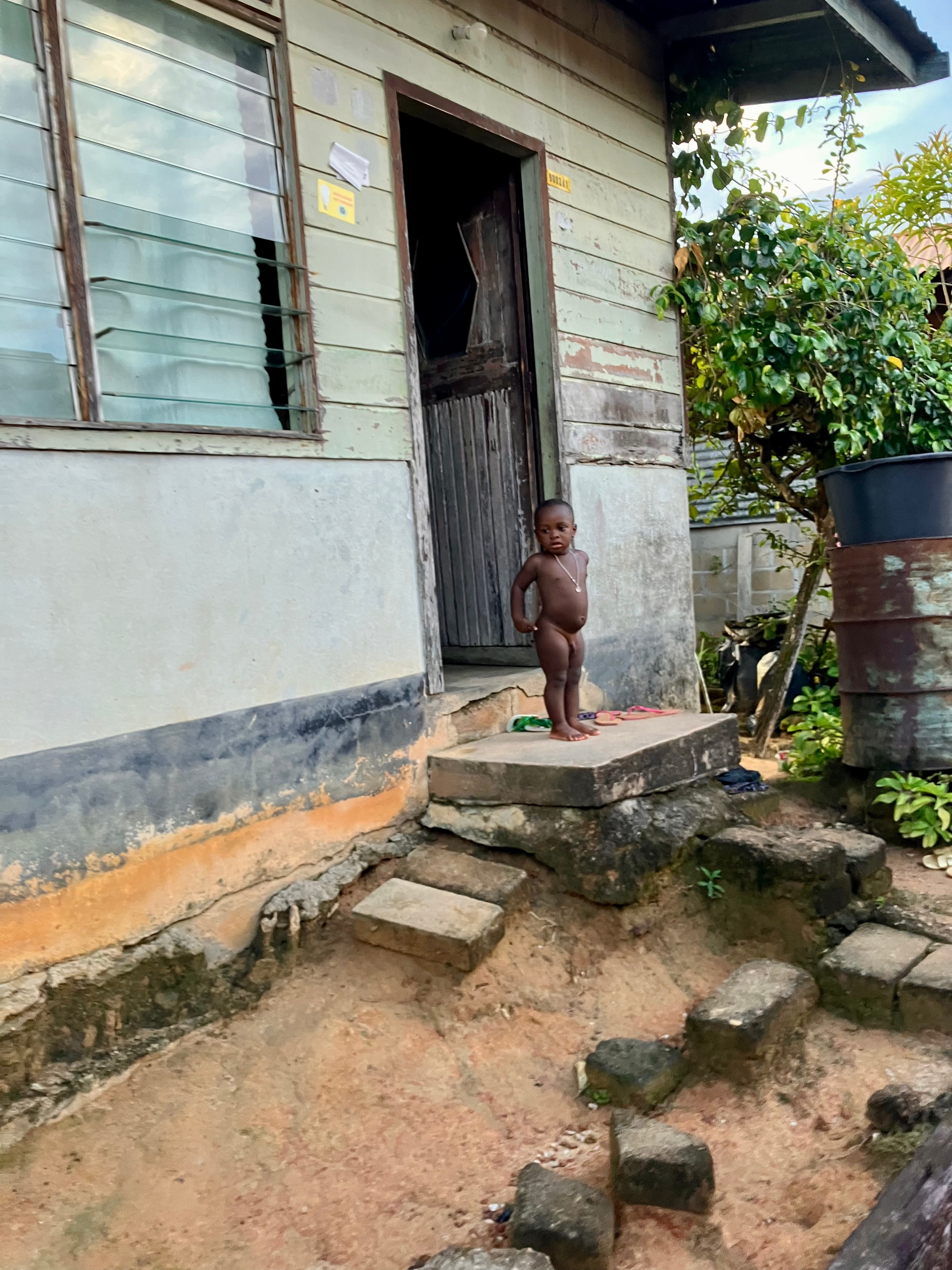
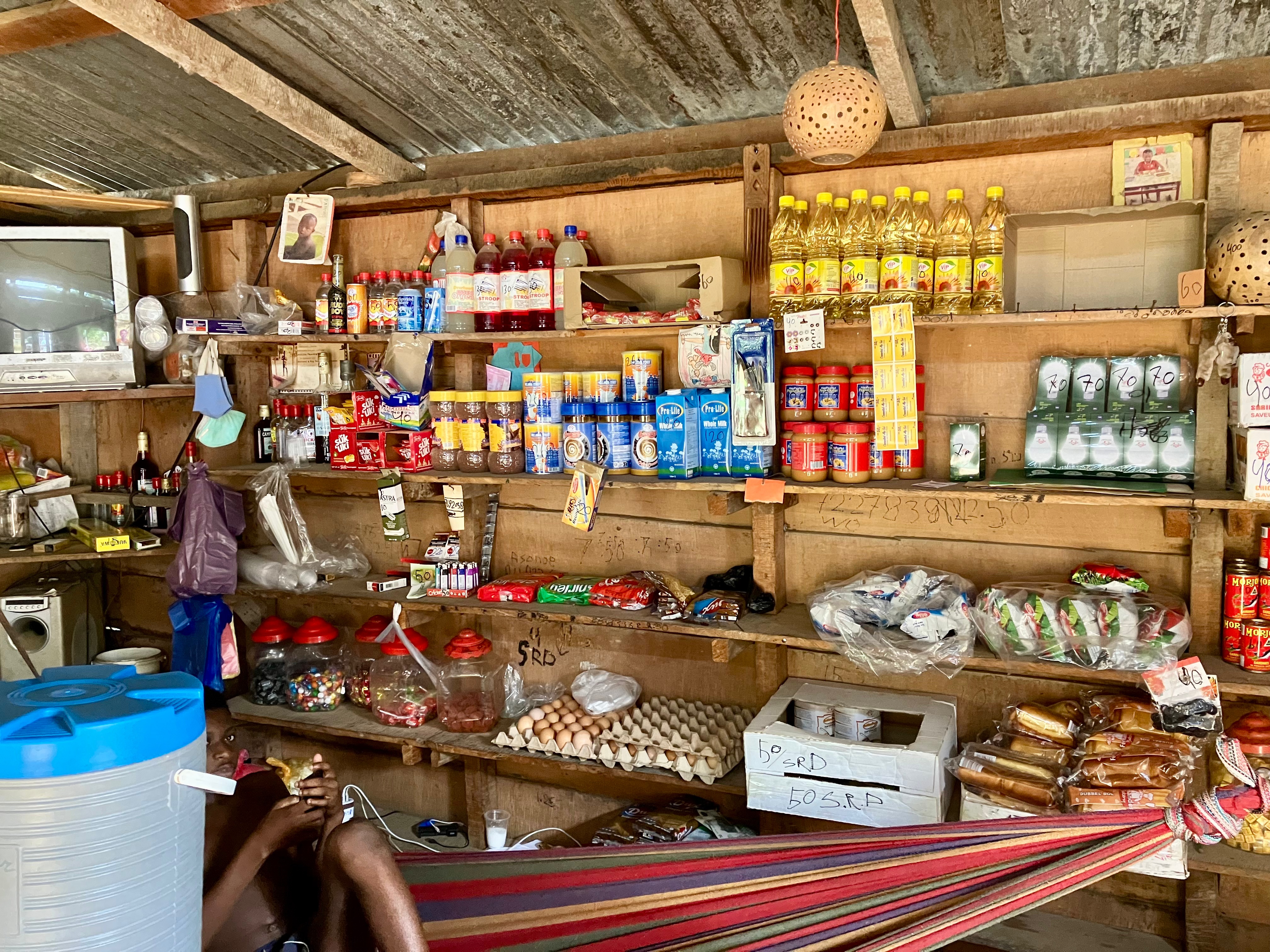
They usually live in rustic, sometimes precarious conditions — but with a clear and palpable pride.
You’ll see women washing clothes in the river, children bathing naked…
If I told you we were in Africa, you’d believe me.
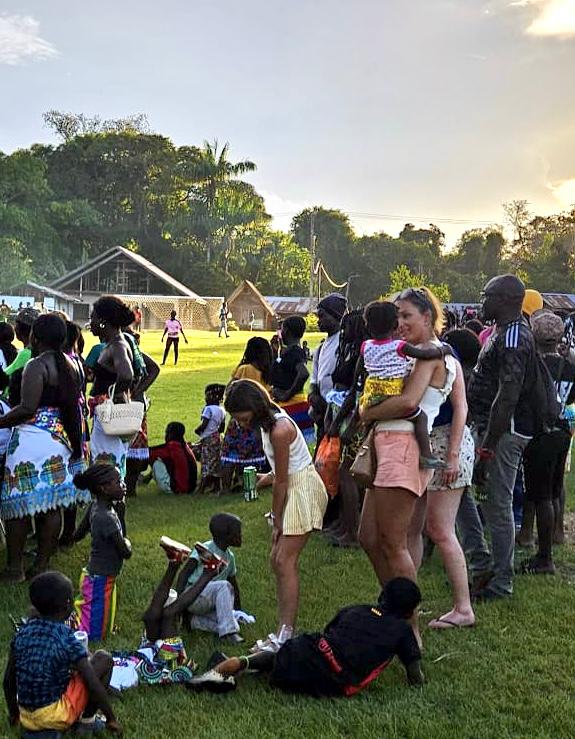
During our visit, we were welcomed with curiosity, a few shy smiles — not quite the warmth of Fiji, sure — and a few puzzled glances.
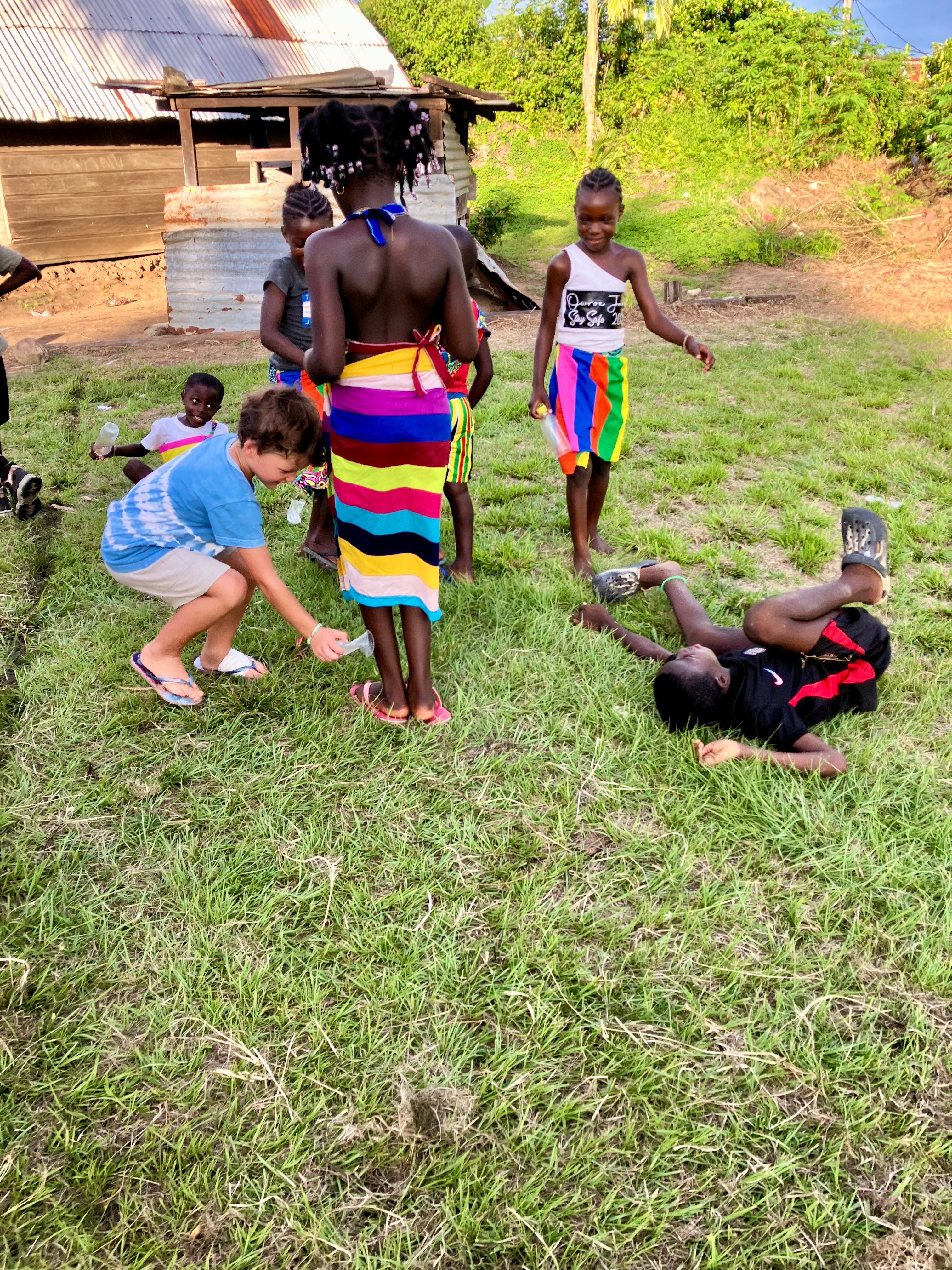
As always, it was the children who were the most open and eager.
They spent dozens of minutes playing with us, a simple but hilarious game: passing a water bottle between our legs without us catching it.
Every time they succeeded, the whole group burst into laughter — contagious, pure, and spontaneous.
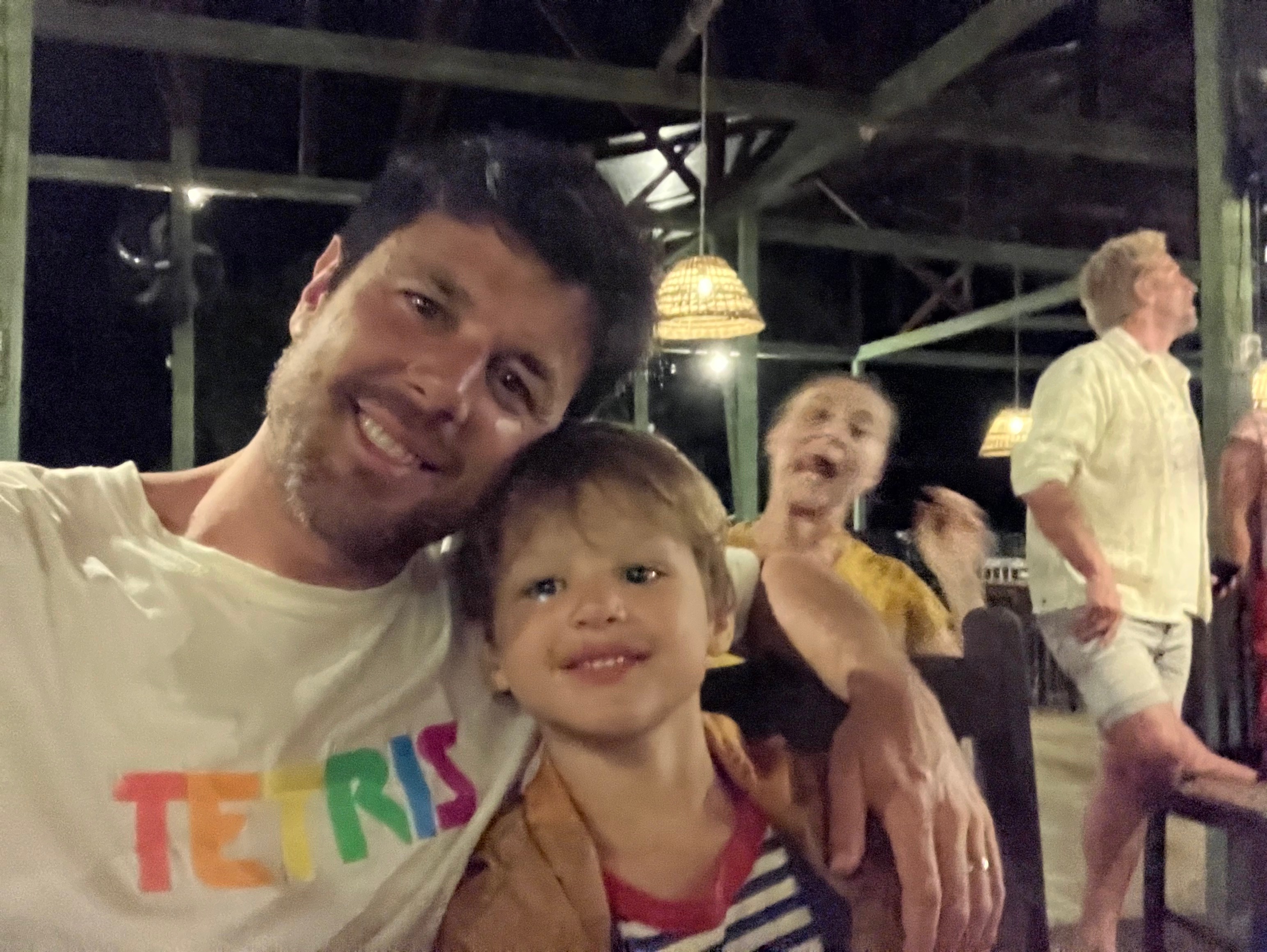
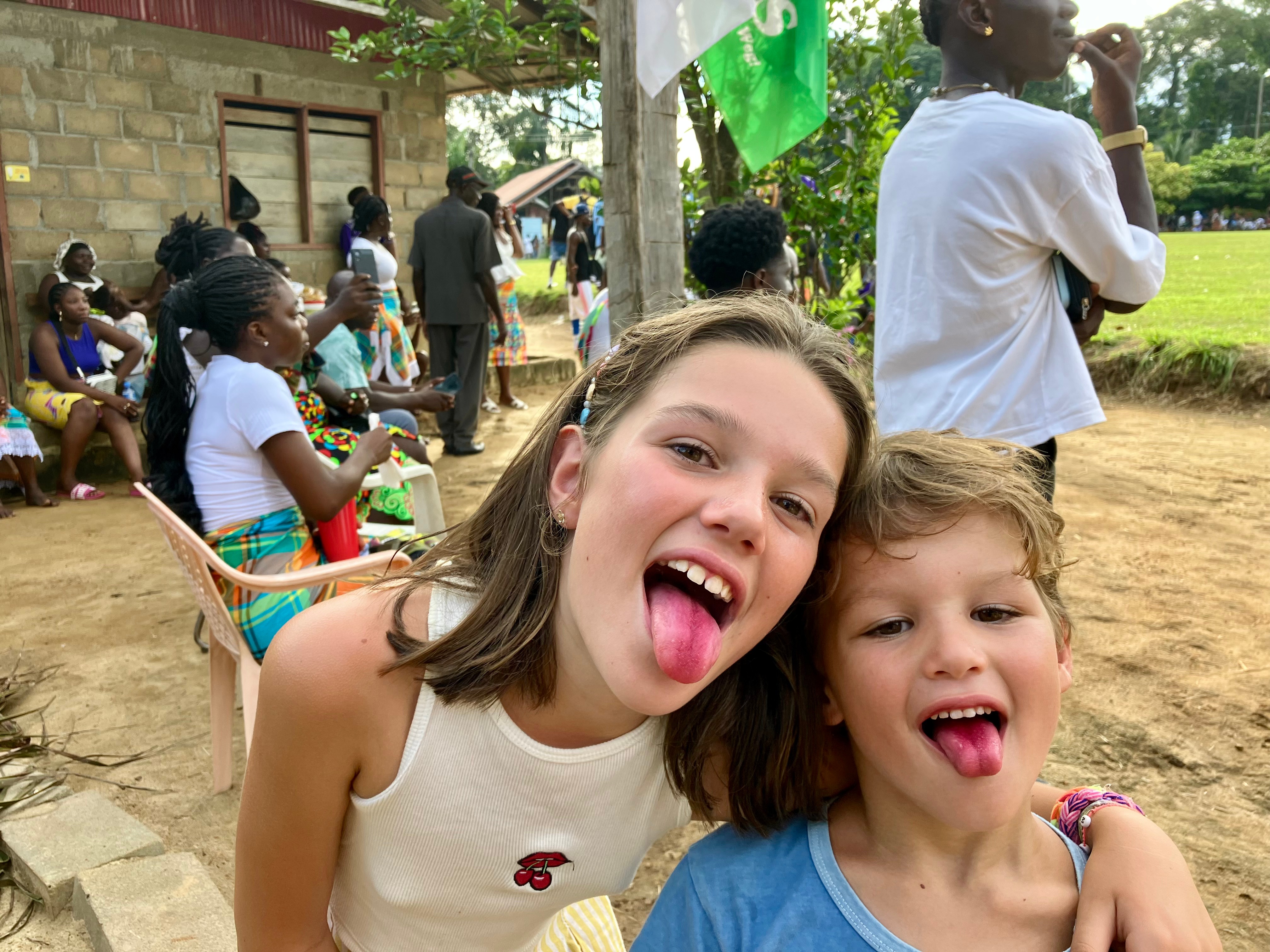
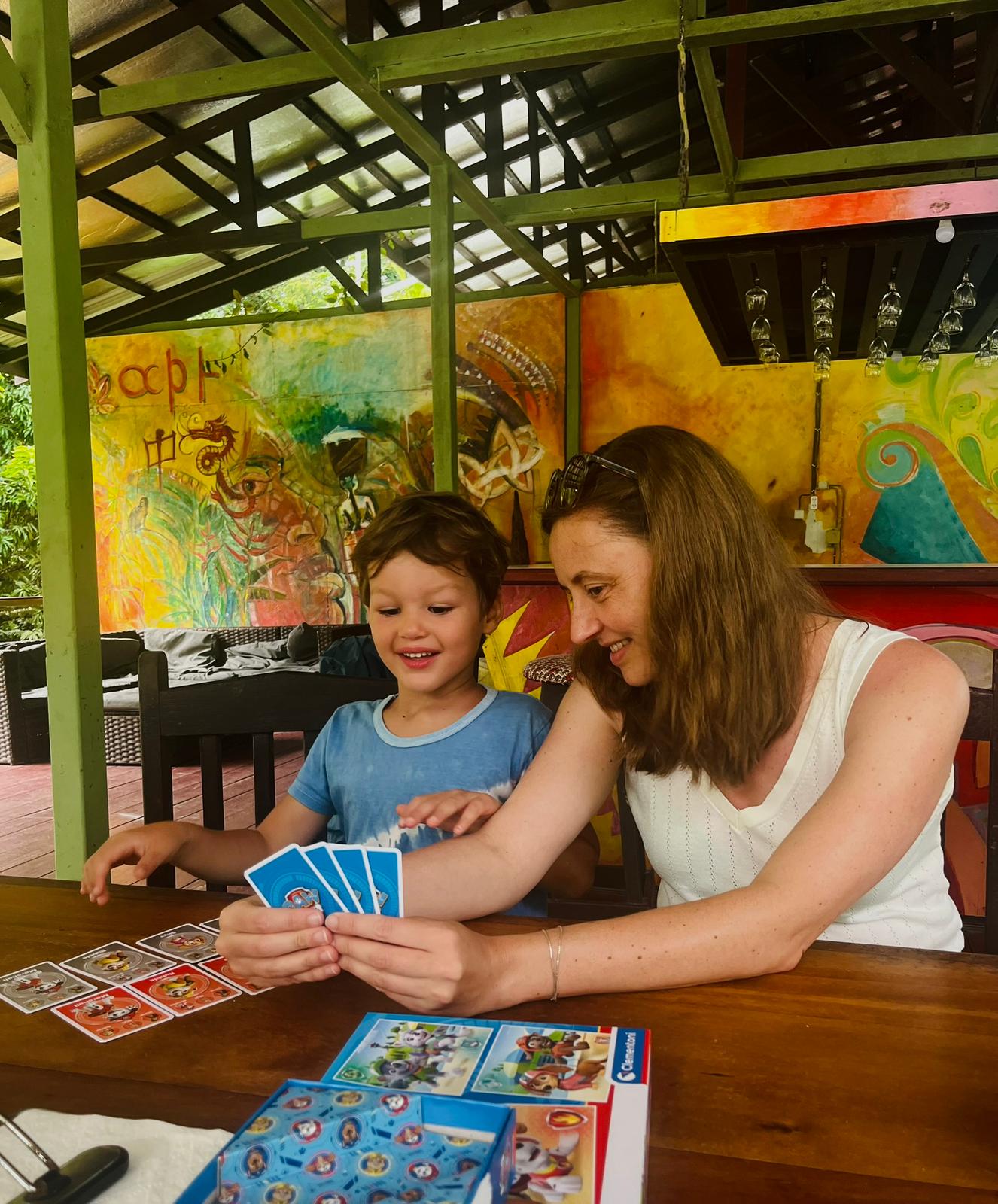
June 8, 2025 – Matteo turns 5 today. Already.
And out of those five years, he’s spent one roaming the globe. A year of visibly growing up.
No surprise, really — when you spend your days with adults and a big sister who’s four and a half years ahead, you grow up fast.
He’s an awesome little guy: funny, clever, a bit cheeky, bursting with energy, a hugging and kissing machine, and perfectly capable of walking for hours without complaining (well… almost).
Since the start of the trip, he’s shown remarkable adaptability: a new bed every two or three days, constantly changing locations, activities non-stop… and he just rolls with it. He adapts. He watches.
His favourite question — repeated like a little chorus, no matter the country: “How many nights are we sleeping here?”
These days, he barely remembers Belgium. And even that “barely” is probably thanks to the calls with family, friends, and the stories we tell him.
To him, Belgium is this kind of lost paradise — a mythical place filled with mountains of toys.
A slightly idealised vision, of course.
I do wonder if he might have preferred a birthday surrounded by friends… and a giant cake!
Luckily, today, Belgium joined us in the heart of Suriname.
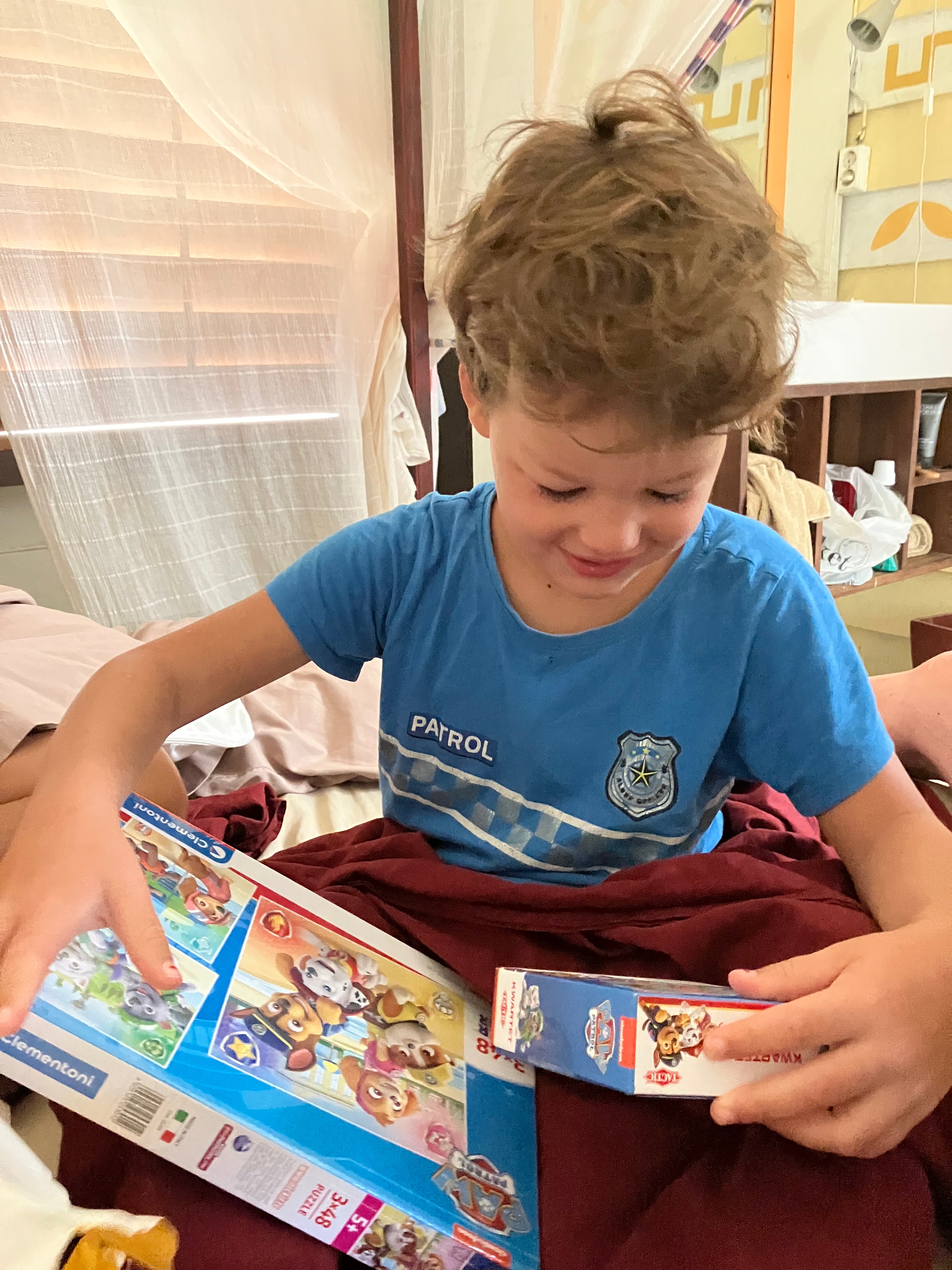
We’d planned ahead and filled our bags with little surprises back in Paramaribo — just to make sure we didn’t show up empty-handed in the middle of the jungle.
Happy birthday, Matteo. We love you.
We spend two more quiet days by the sea before, at 2 a.m., a taxi comes to pick us up for the airport.
On June 11, 2025, exactly four months in, we leave the South American continent for our final stop: Canada.
We’re excited to discover completely different landscapes and hit the road again in a campervan — the very same kind of campervan everyone loved so much during our adventure in Australia.
Honestly, we didn’t expect much from French Guiana and Suriname.
Modest expectations — vague, even.
And yet, both countries pleasantly surprised us.
Sharing the experience with our friends definitely played a part.
What a joy to see them again, to reconnect through different kinds of conversations — and, let’s be honest, to share the constant attention the kids demand.
In the end, French Guiana and Suriname gave us far more than we’d imagined: discovery, quality time, meaningful encounters, and raw, untamed landscapes.
Sending love — and see you very soon for the Canadian chapter of our journey!
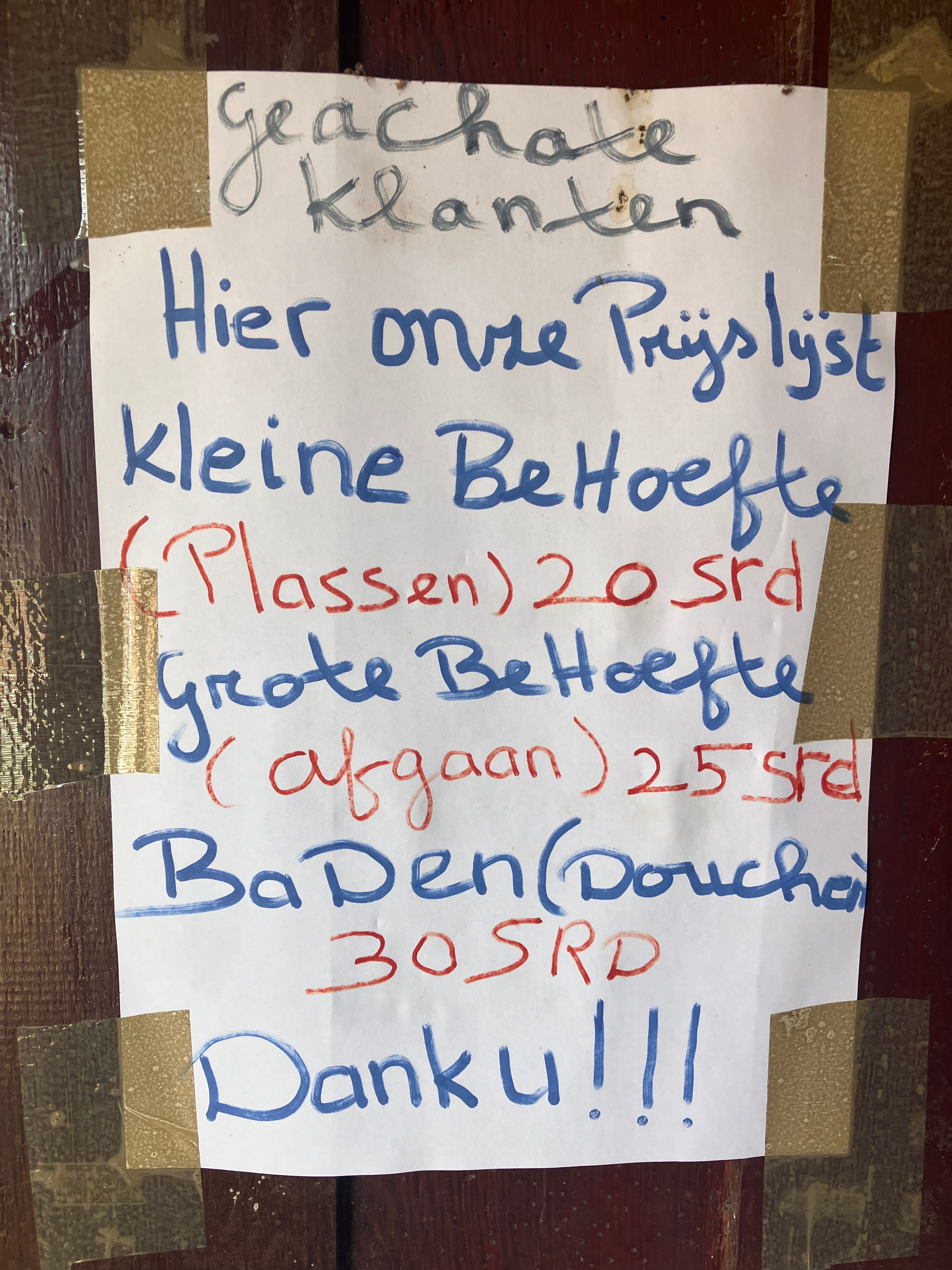
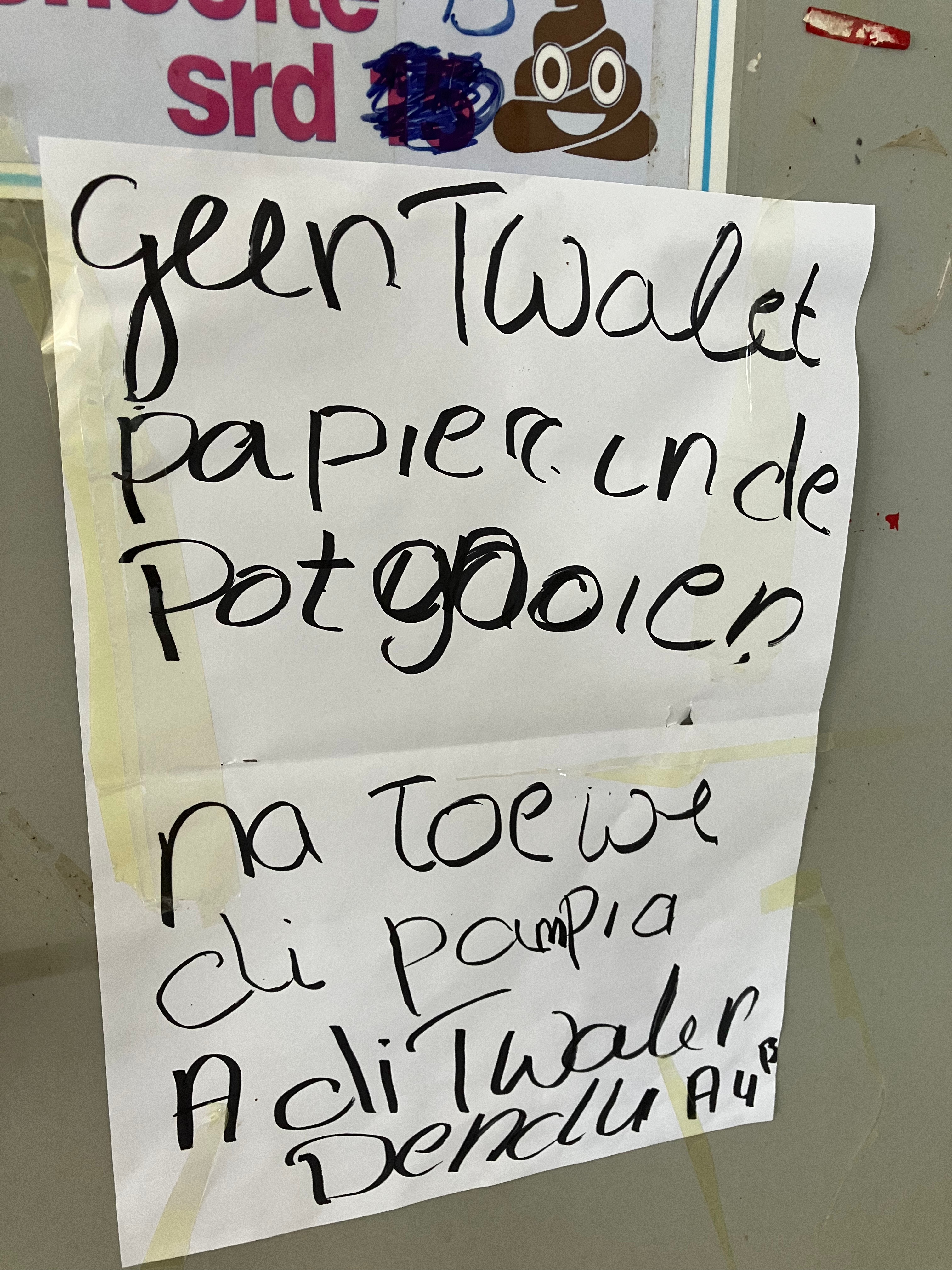
P.S.: for the Dutch speakers in the room… a little bonus coming up!
 365 days of summer
Leave a comment