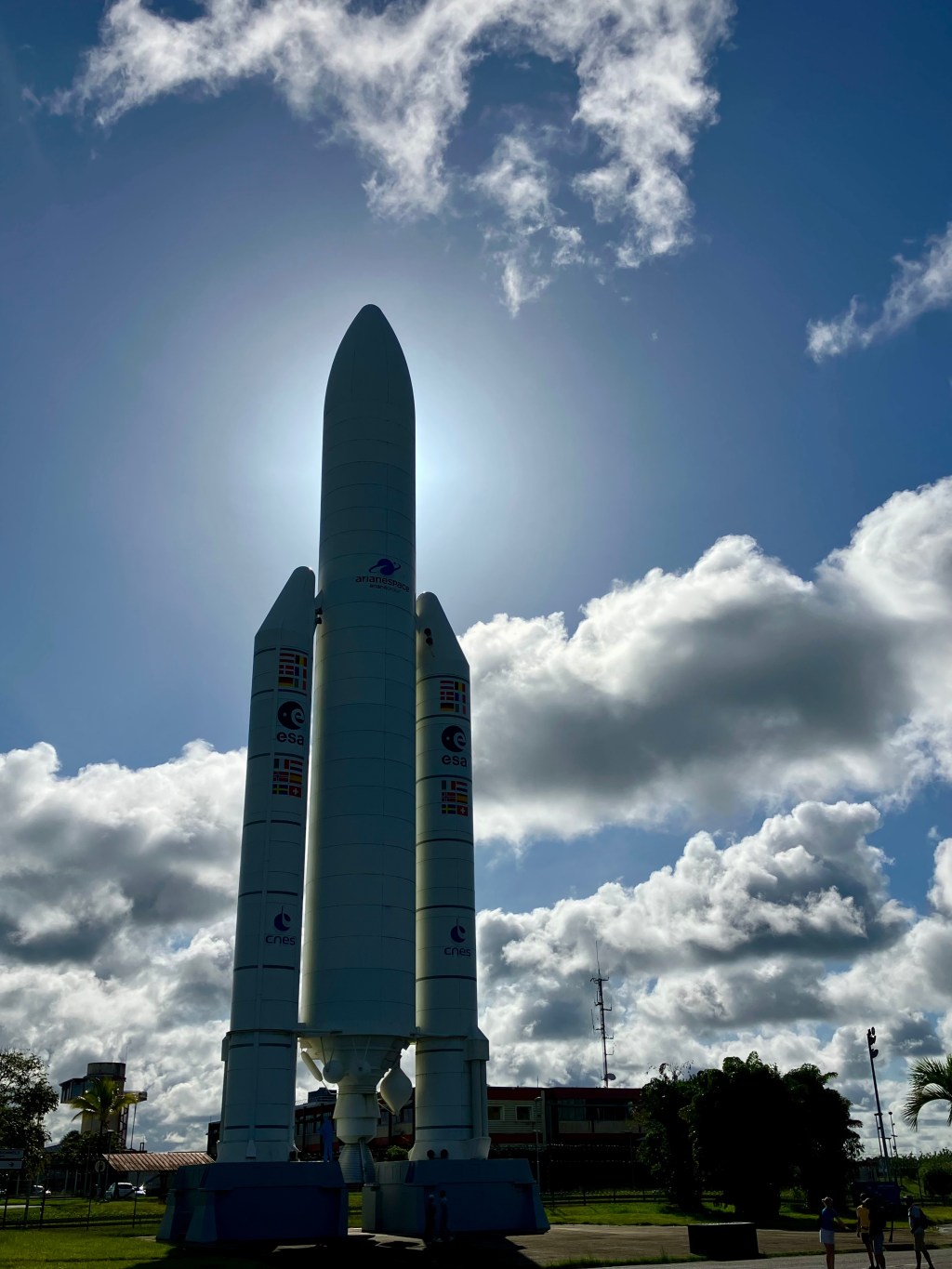
In this post I’ll talk about a lot of things, including Japanese toilets—yes, they’re fascinating, you’ll see—Japanese friendliness, the enchanting islands of Okinawa and Kyushu, and of course, what it really feels like to set foot in Japan. But I’m saving the best for last, so no skipping ahead to the conclusion! Before that, let’s take a little detour through history, geography, and a dash of sociology. Yes, to understand Japan, you first need to delve into its depths. My Japanese friends, please forgive the gaps in my narrative: this is merely the perspective of a gaijin, a foreigner with a rather fragmented understanding of your country.
For over two centuries, from 1639 to 1853, Japan lived in almost total isolation, closing its doors to the outside world to preserve its culture and avoid European presence (a good choice given what Europeans did with their colonies). This 214-year isolation paradoxically helped forge a unique national identity deeply rooted in millennia-old traditions.
Geographically, Japan is a mountainous archipelago of 377,000 km² with 125 million inhabitants packed in like sardines. Imagine: it’s almost twice as small as France but with twice the population. To complicate matters further, 70% of the land is composed of mountains, hills, and volcanoes… Essentially, every square centimeter of habitable land is a treasure. As a result, cities are overcrowded, Tokyo is bursting with its 37 million inhabitants (for the metropolitan area). The Japanese are literally stacked on top of each other, with nearly 90% of the population crammed into urban areas.
But beware, this infernal density might become a thing of the past, as Japan is in the midst of a demographic crisis. The population is melting away like snow in the sun. All 47 prefectures of the country saw their populations decrease in 2023! Couples are having very few children, barely 1.4 per woman, and they’re taking their time. There’s also a real issue with gender equality in Japan. That’s on the agenda for the next post 😉. Experts predict that Japan could/should lose 1/6 of its population (20 million souls) in 25 years.
If all countries did the same, we’d have 1.6 billion fewer people on Earth in a quarter-century!
Despite this challenging environment, Japan has something in its blood: an unwavering resilience forged by centuries of history. After being razed by World War II, the country rose from the ashes like a high-tech phoenix, becoming a global power while retaining its cultural soul.
It’s this duality between tradition and innovation, where modernity coexists with traditions unchanged for centuries, between past and future offering a striking contrast between skyscrapers and ancient temples, that makes Japan so fascinating, so unique, so different from everything we’ve encountered in our previous travels!
Week 1: The Okinawa Islands
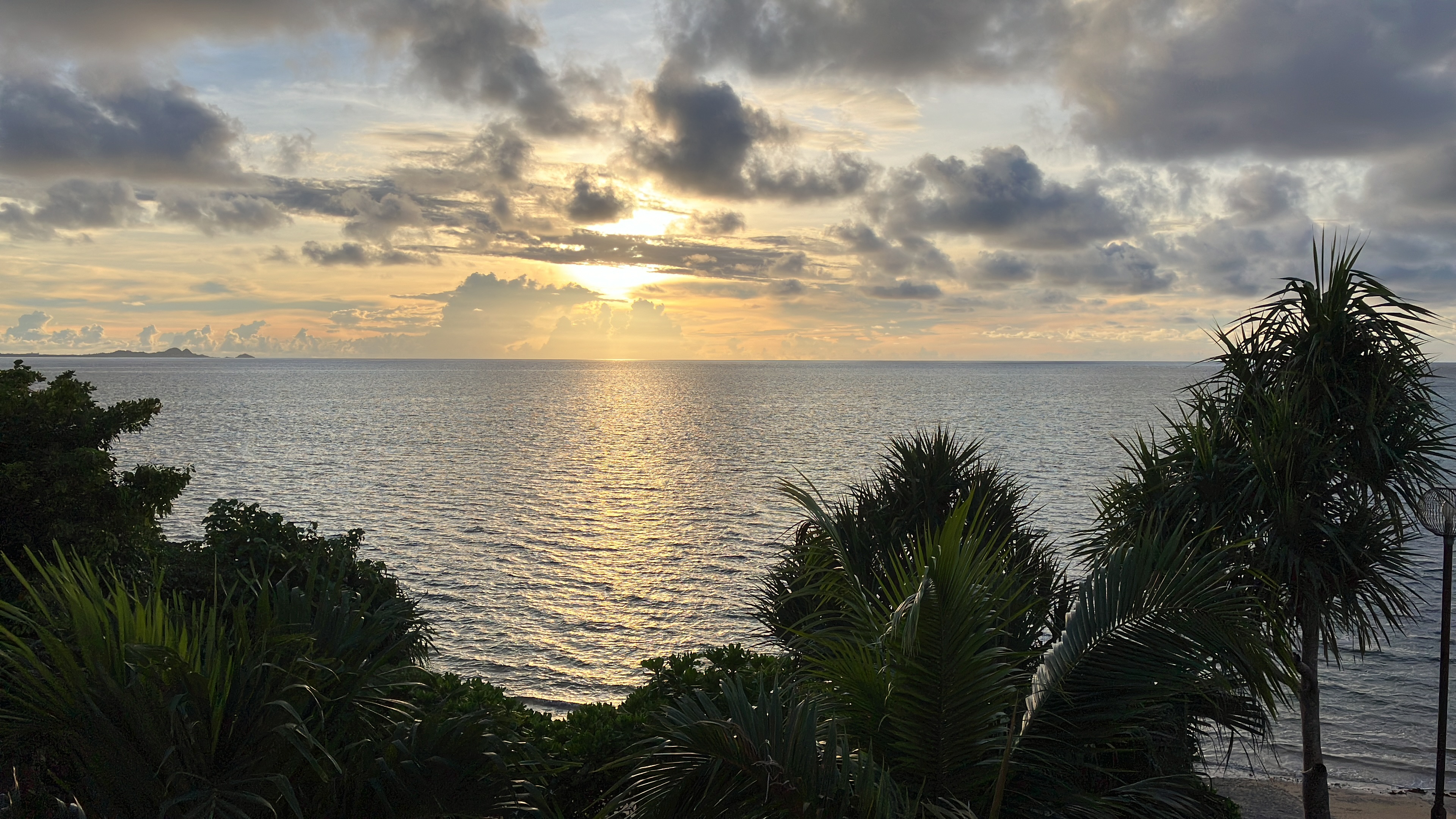
Over 2,000 km from Tokyo (a 3.5-hour flight, as far as Brussels to Athens or Casablanca), the Okinawa Islands stretch languidly in the East China Sea. Close your eyes and let yourself be transported: the turquoise blue of the ocean, the emerald green of lush vegetation… No, you’re not in Bali or Thailand, but indeed in Japan.
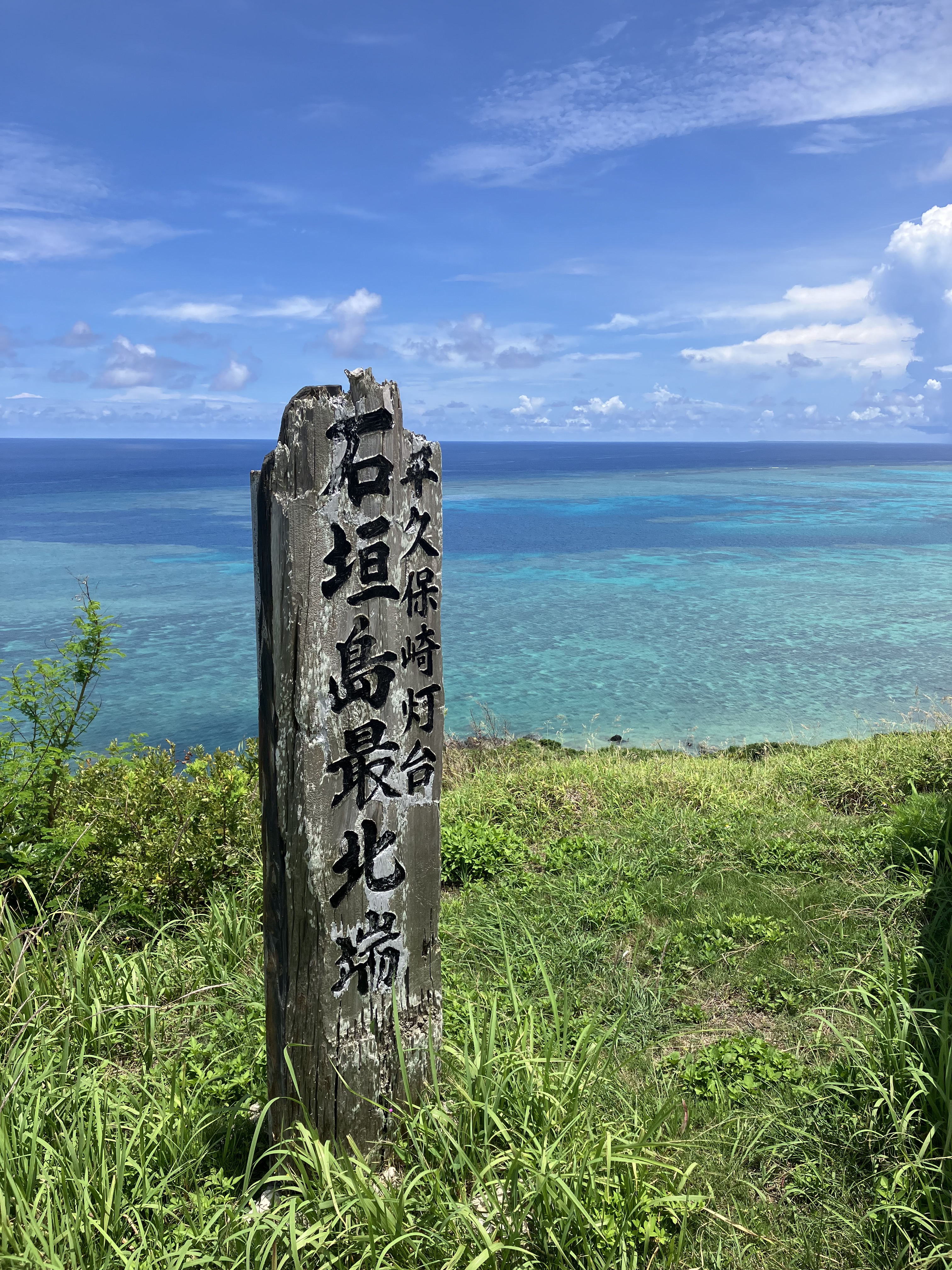
We chose Okinawa for a week of relaxation under the sun and to discover a Japan quite different from Tokyo, Osaka, or Kyoto. And it was a success! We explored two islands: first Okinawa itself, the capital of the archipelago and its economic heart, then Ishigaki, a remote island in the middle of the ocean, just a breath away from Taiwan.
Okinawa, the name might ring a bell. It’s here that one of the bloodiest battles of the Pacific took place between April and June 1945. 250,000 deaths in 3 months. Chilling numbers. The visit to the memorial was quite traumatic for Nola, with some pretty graphic images and an experience in a cave that made you relive the life of Japanese people hiding with the deafening noise of nearby bombings.
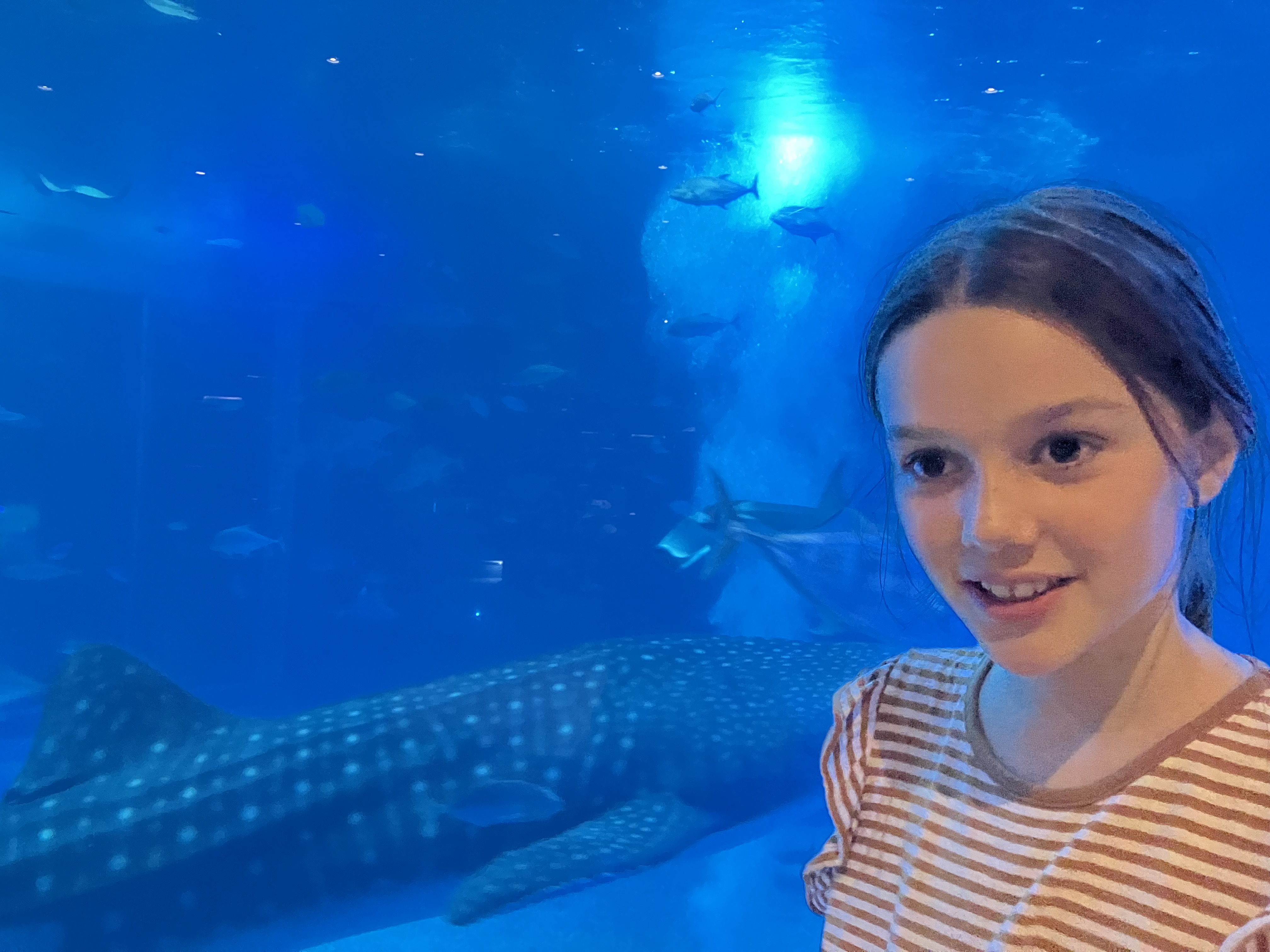
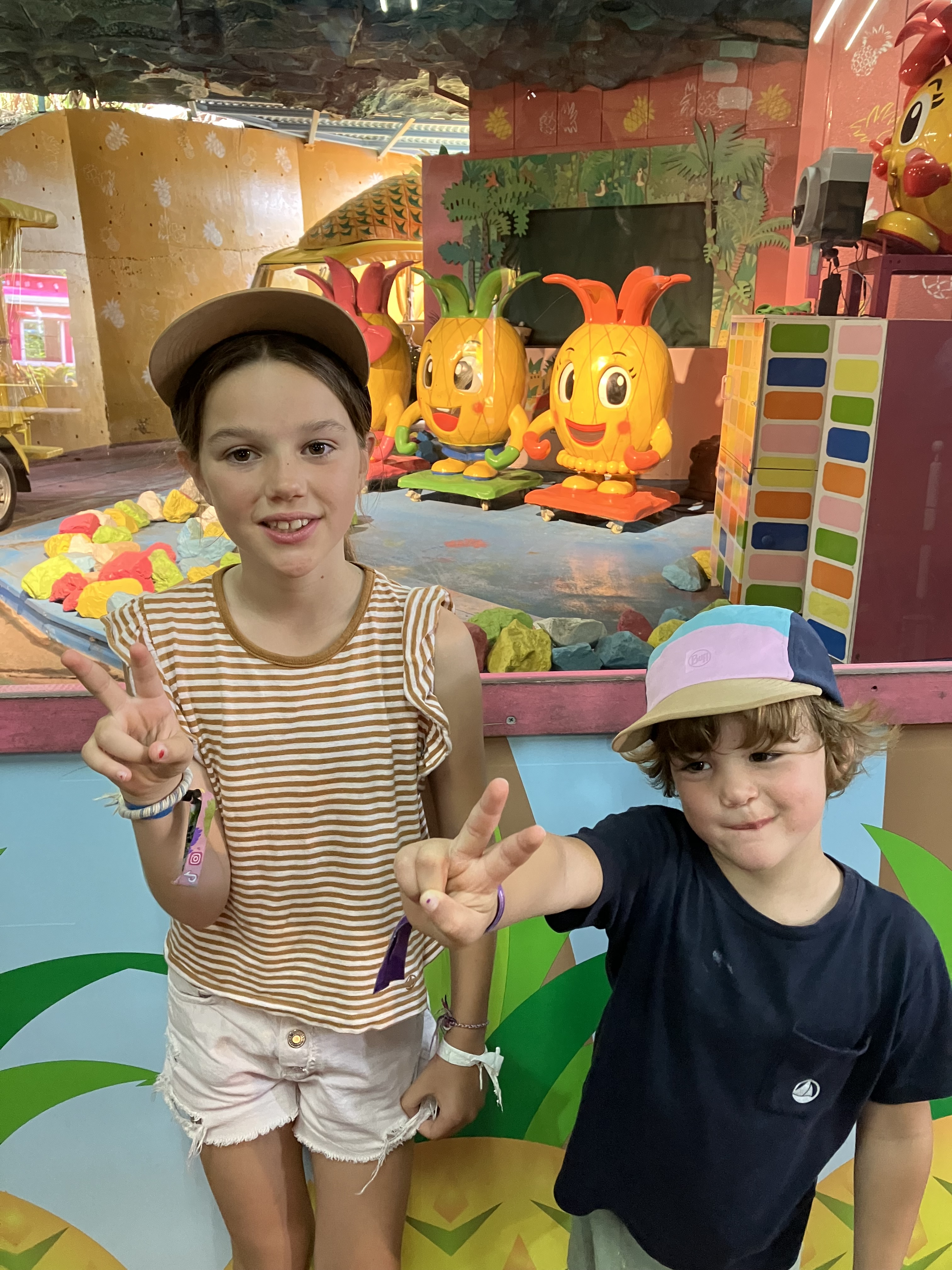
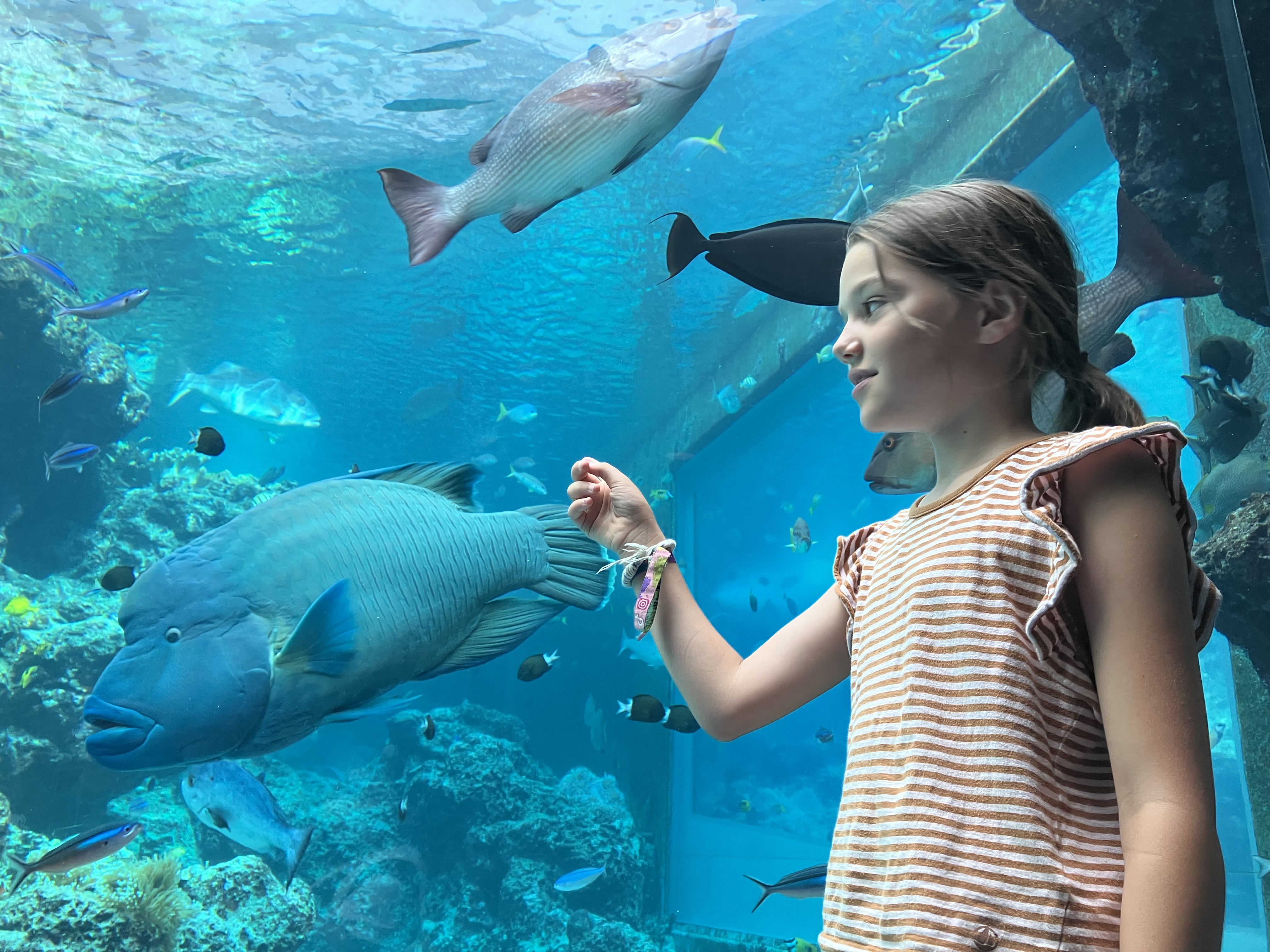
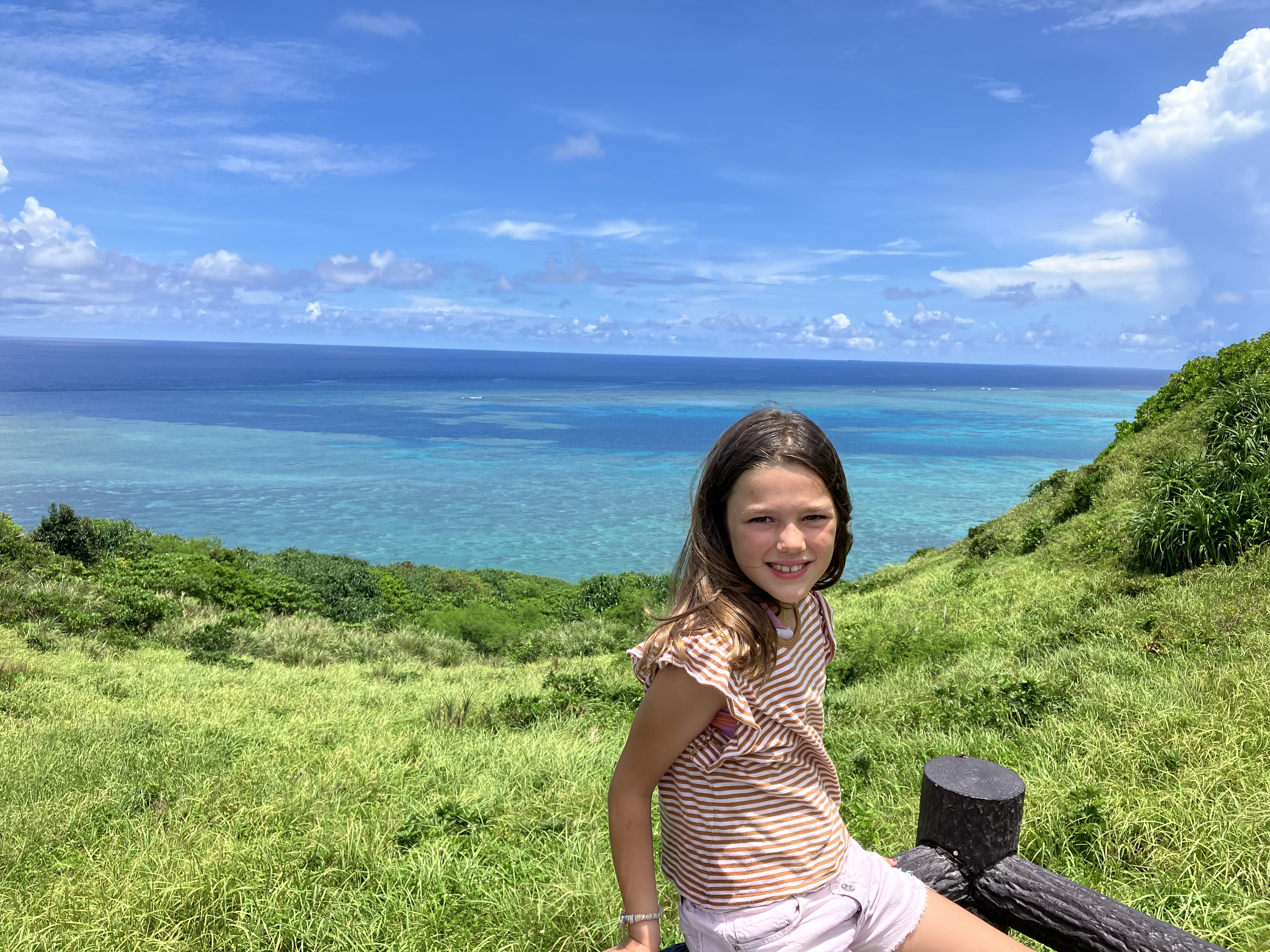
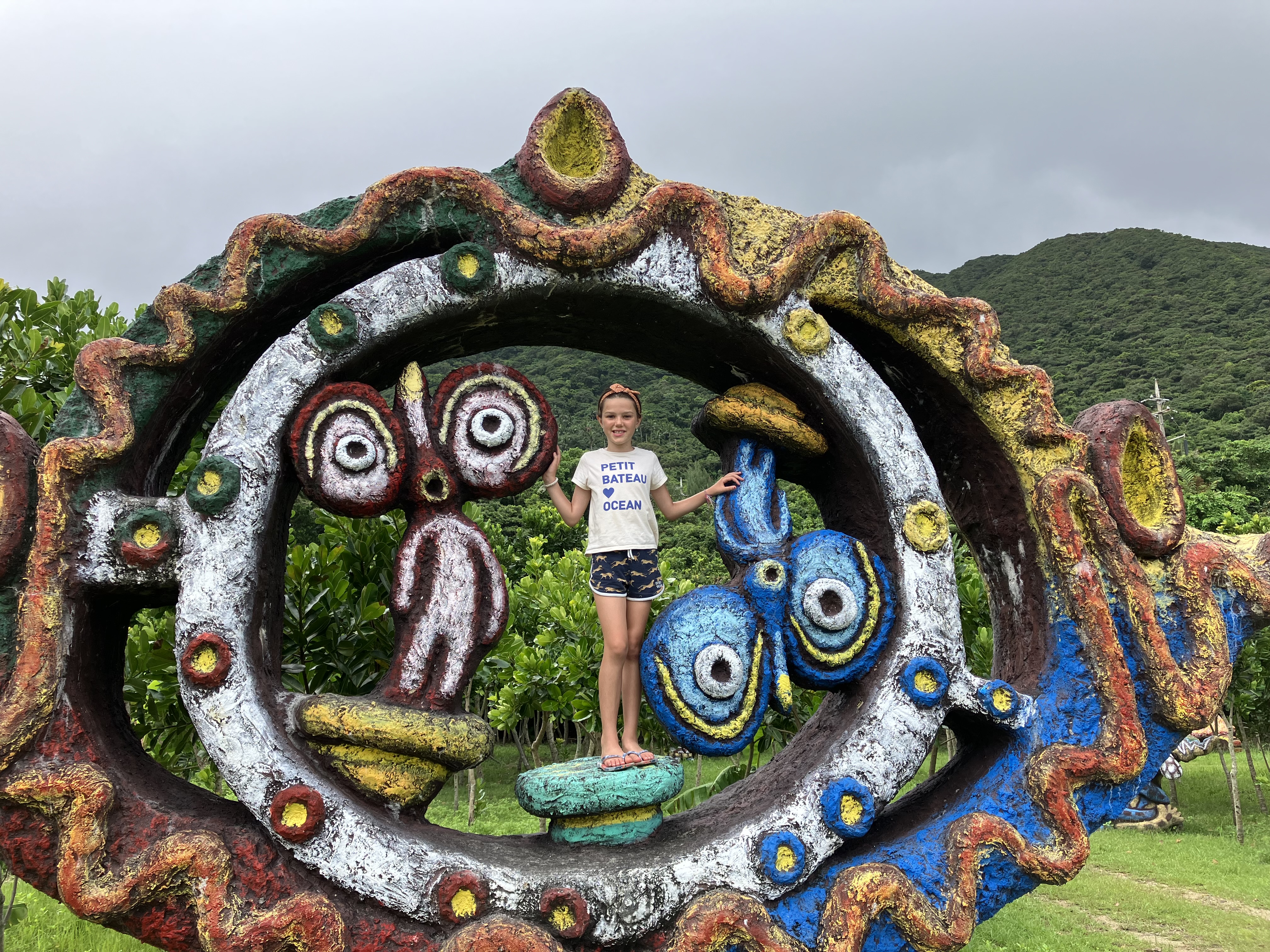
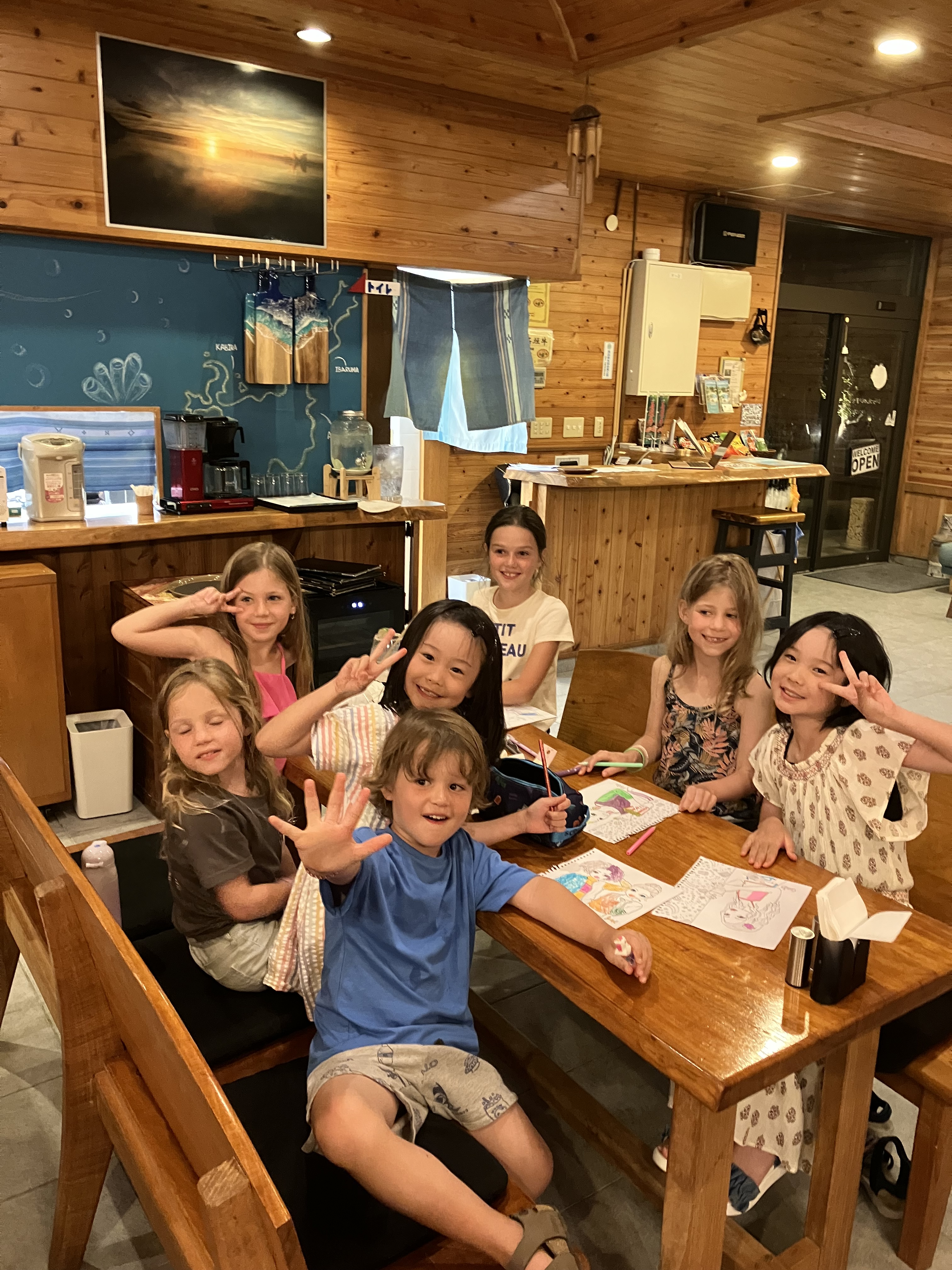
For the rest, we just recovered from the jet lag, visited the world’s second-largest aquarium, got lost in parks as bizarre as they are fascinating (yes, there’s a park dedicated to pineapples, and everyone loved it), and, most importantly, practiced the subtle art of doing nothing. We took the car, cruised along the coast, stopping here and there to admire postcard-worthy spots.





Week 2: Kyushu Island
When we talk about an island, Kyushu is not a tiny speck lost at sea. It’s the southernmost of the four main Japanese islands, with an area of about 35,000 km², almost the size of Belgium, and a population of 14 million inhabitants.
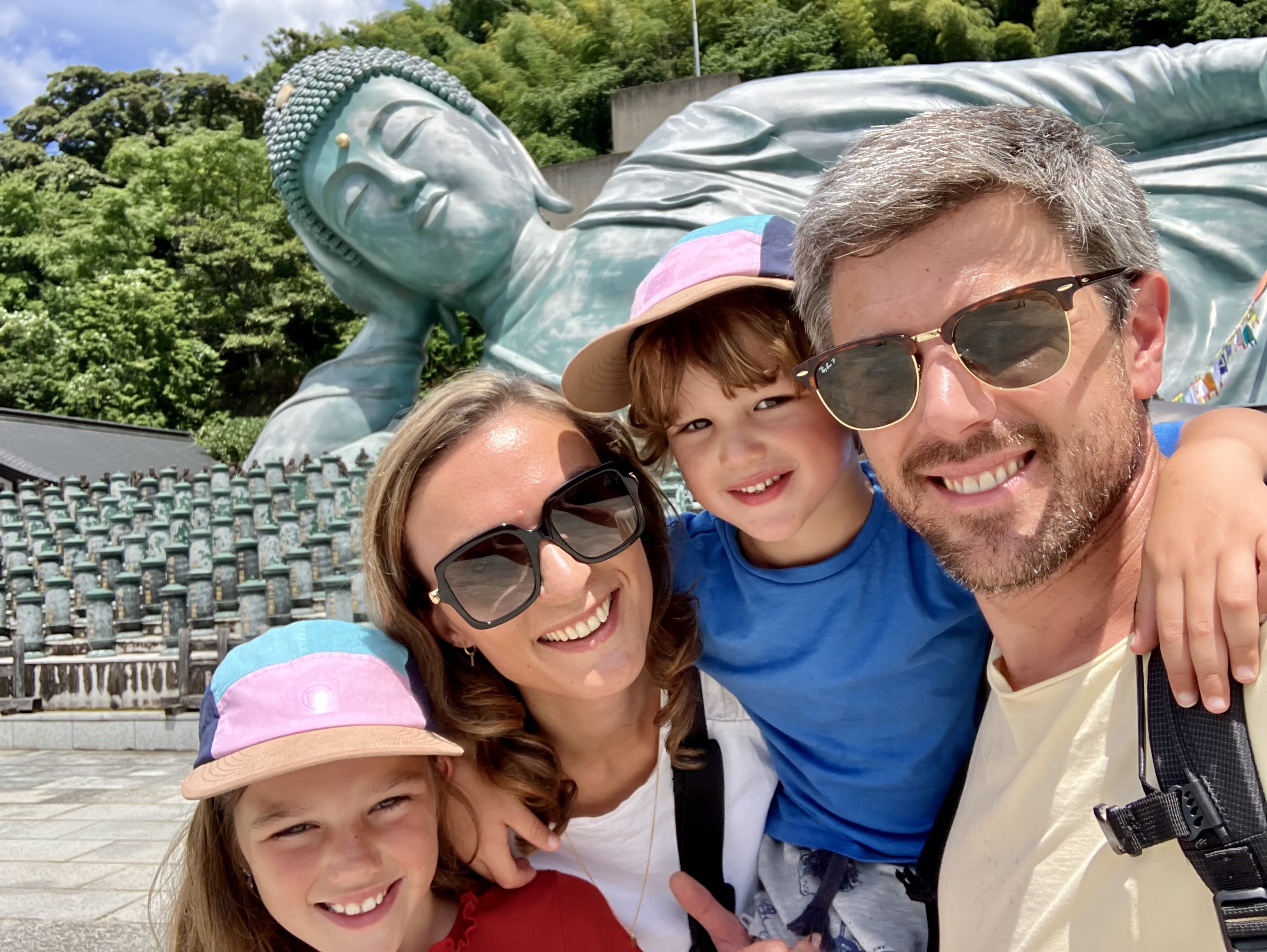
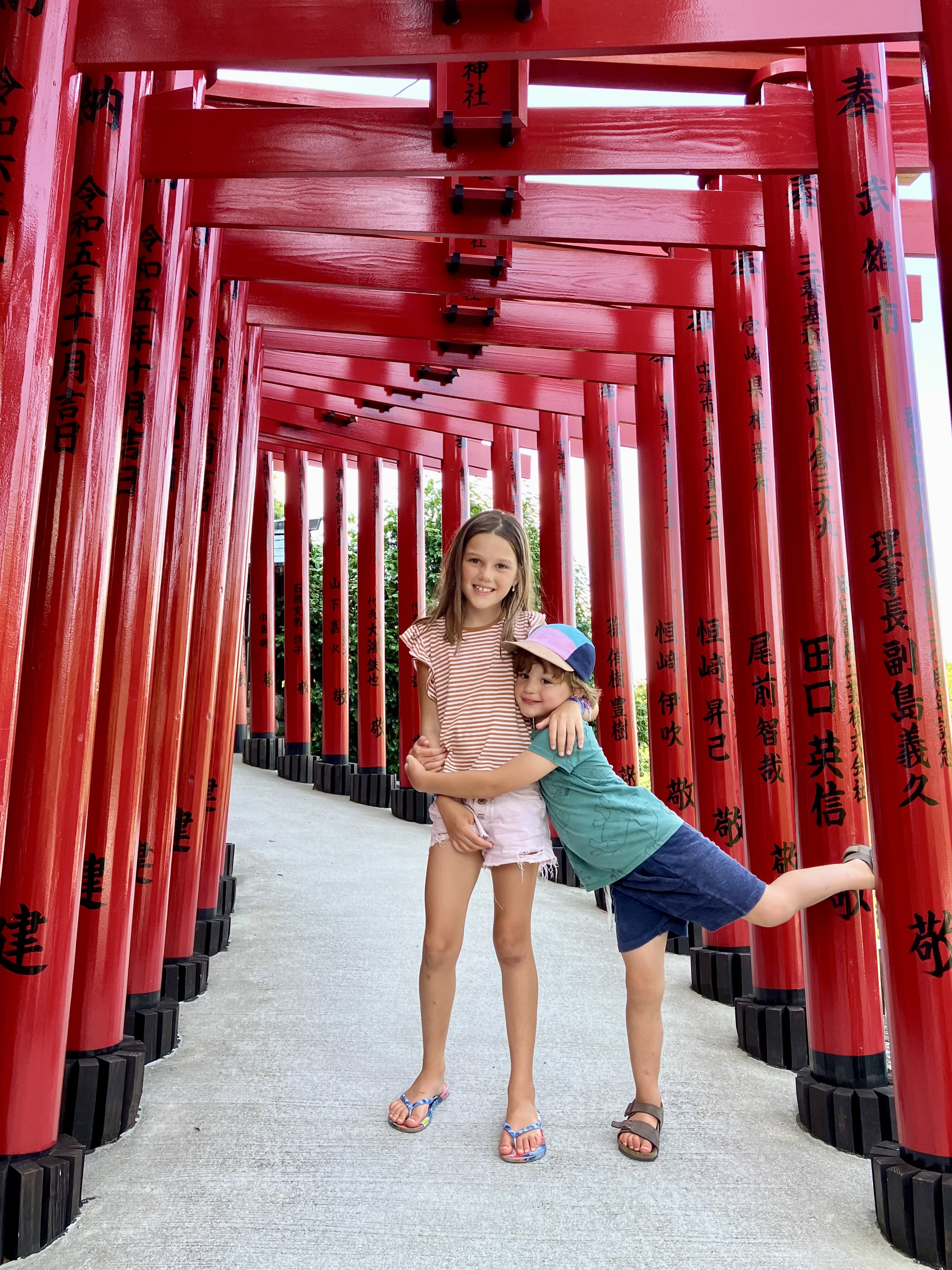
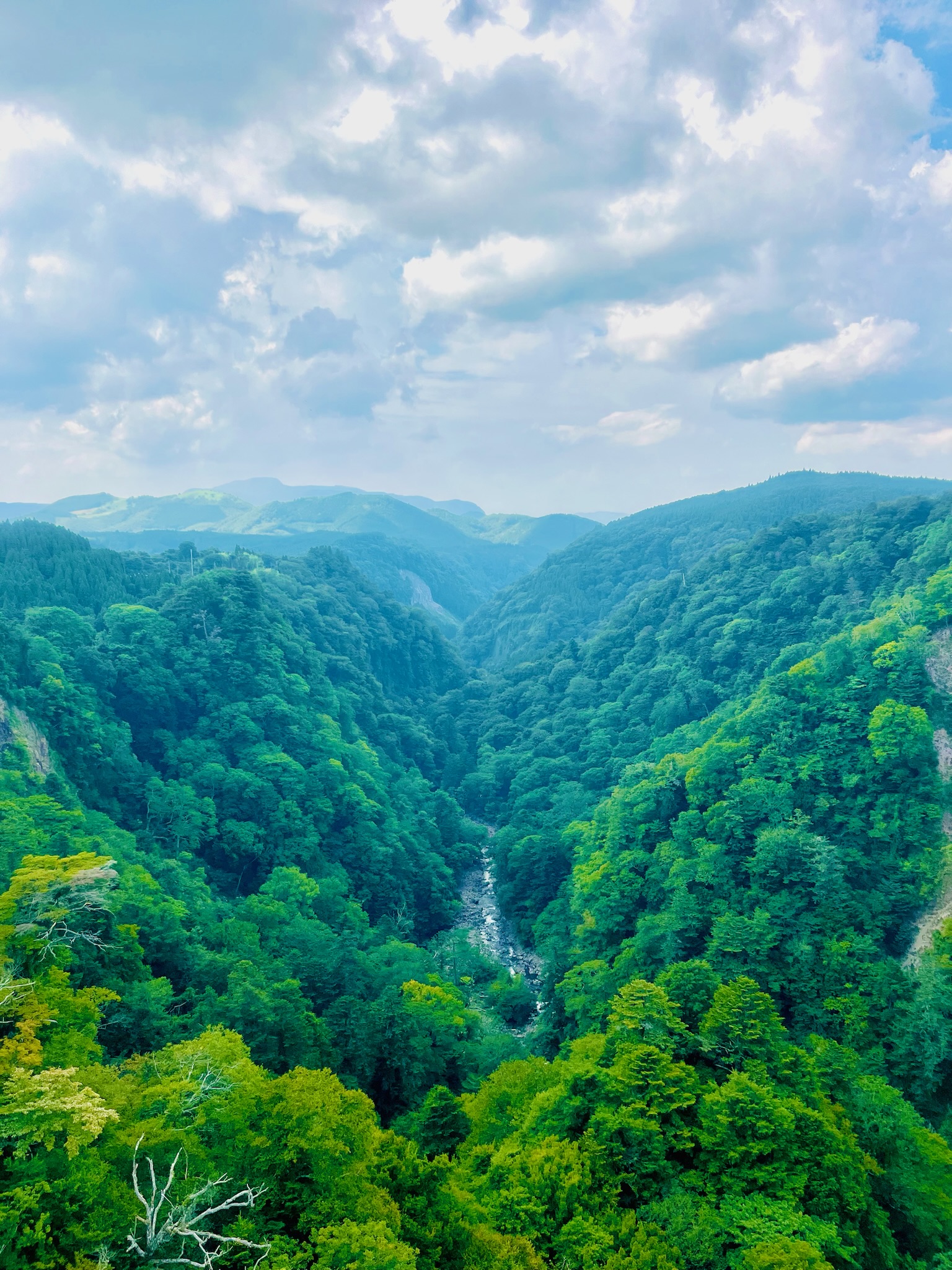
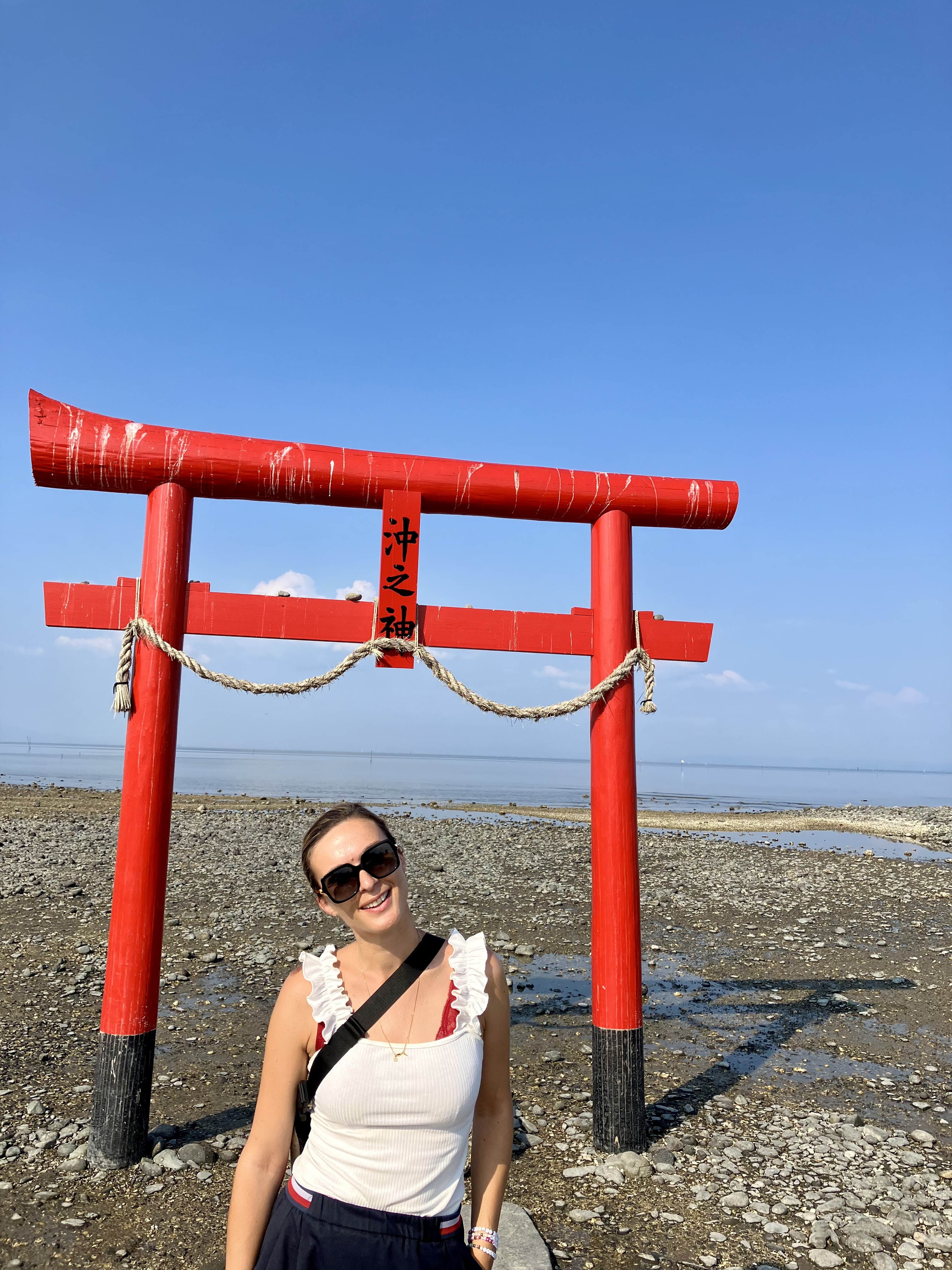
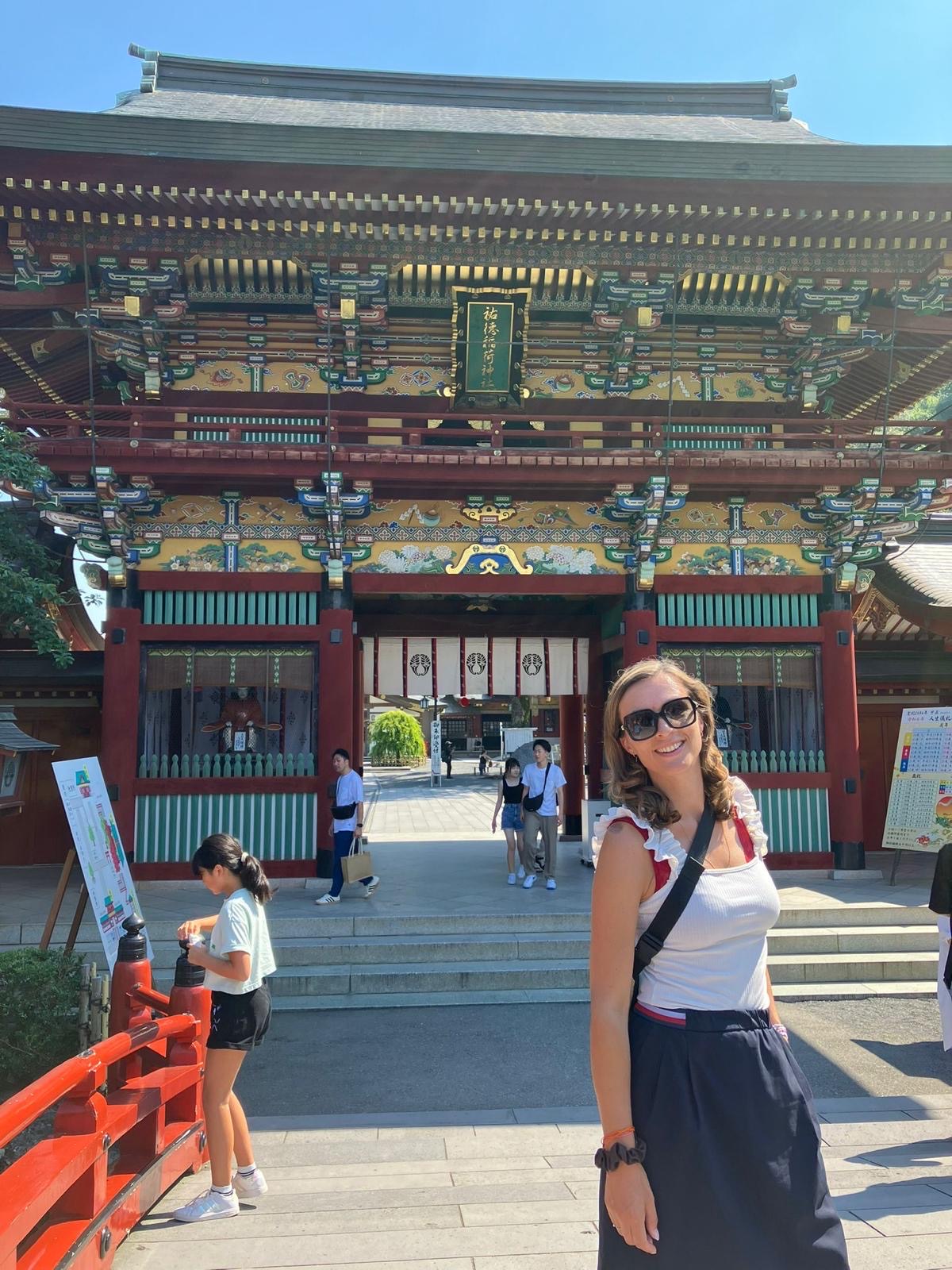
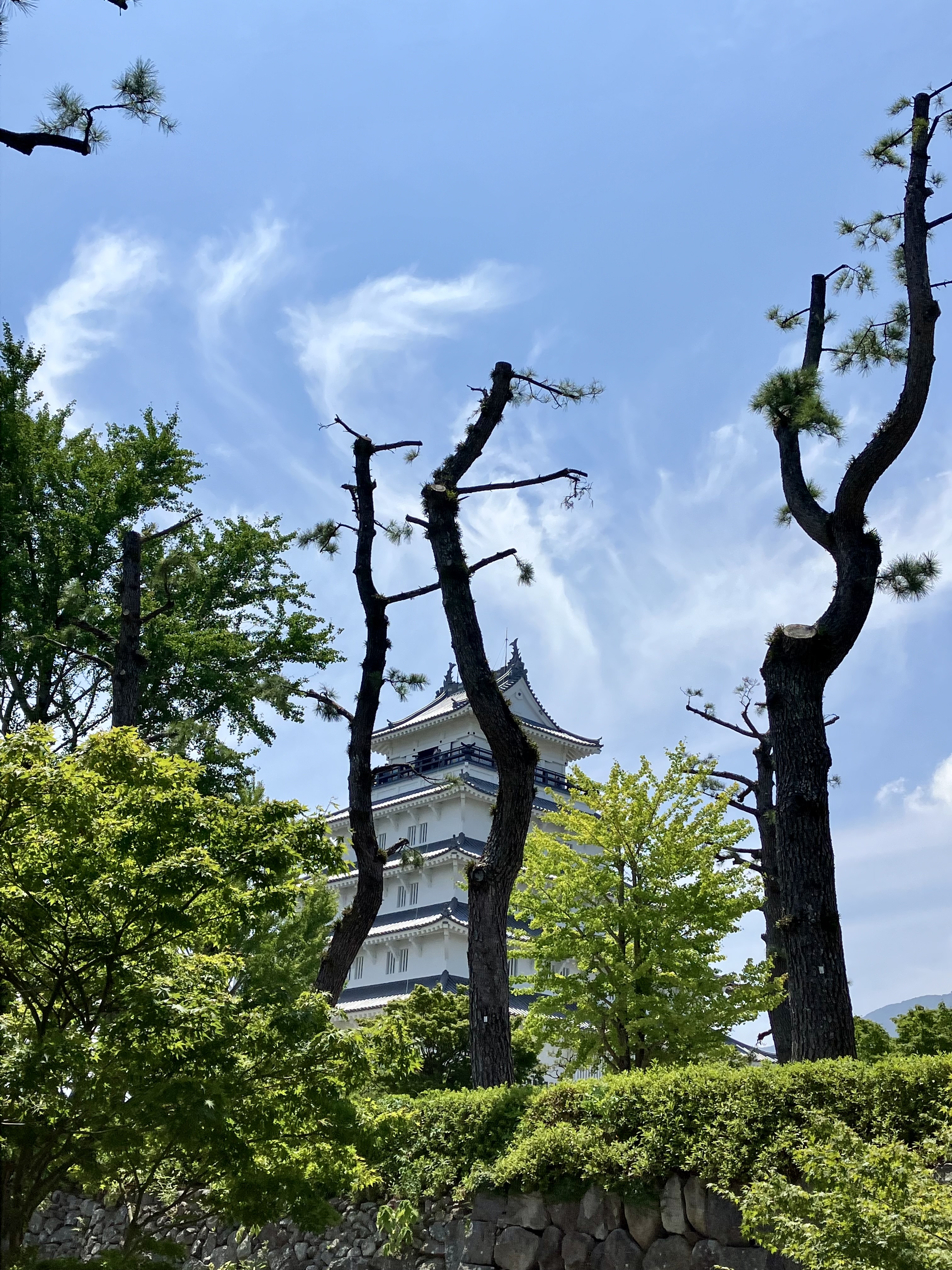
We thoroughly explored the island with our trusty Toyota (what else?), staying two nights at each stop to savor every region. Among our stops, Nagasaki, a city sadly famous for being hit by the second atomic bomb in 1945, impressed us with its poignant museums, the volcanic region of central Kyushu, and the shrines (these are Shinto worship sites—the indigenous religion of Japan).
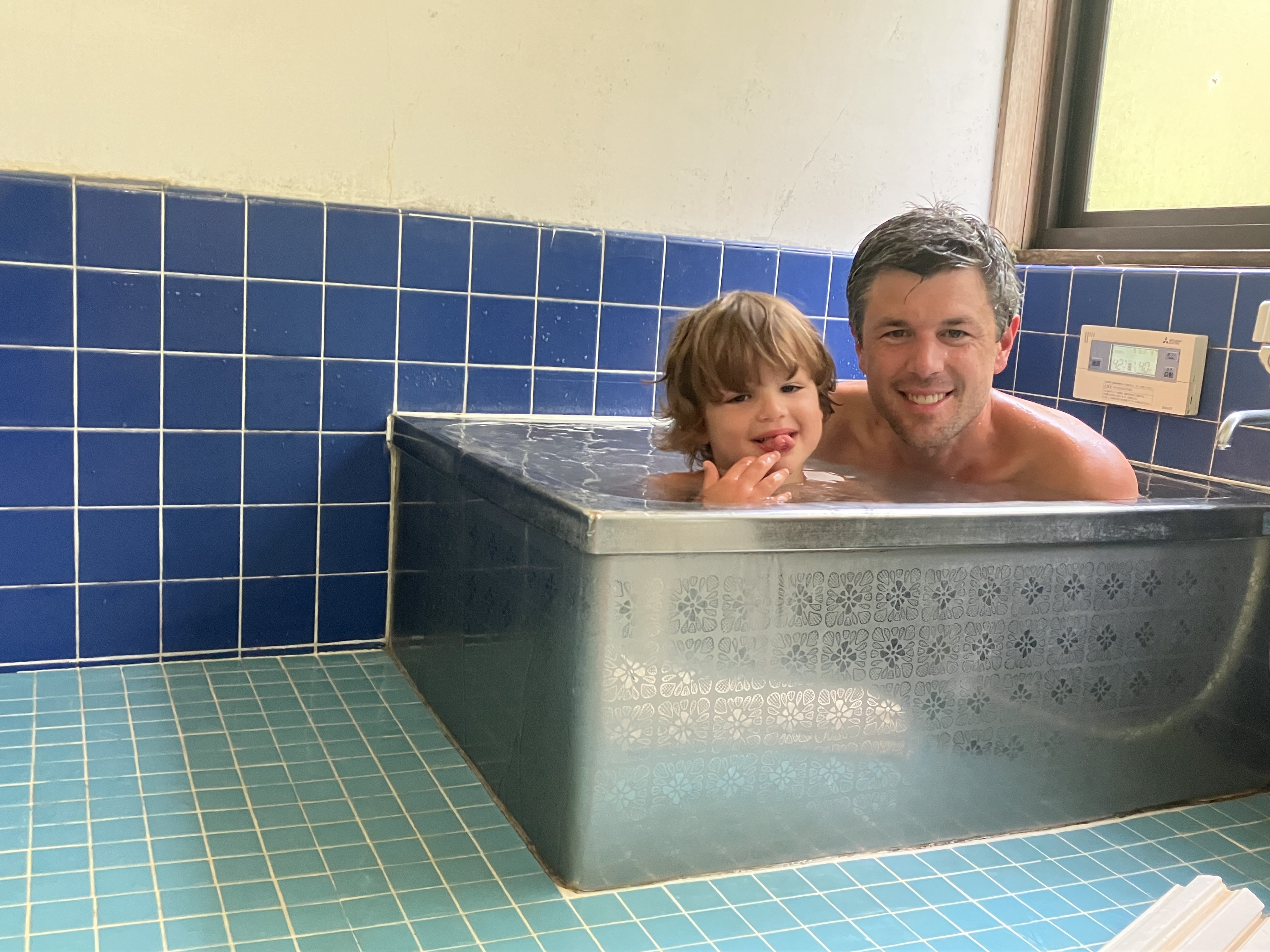
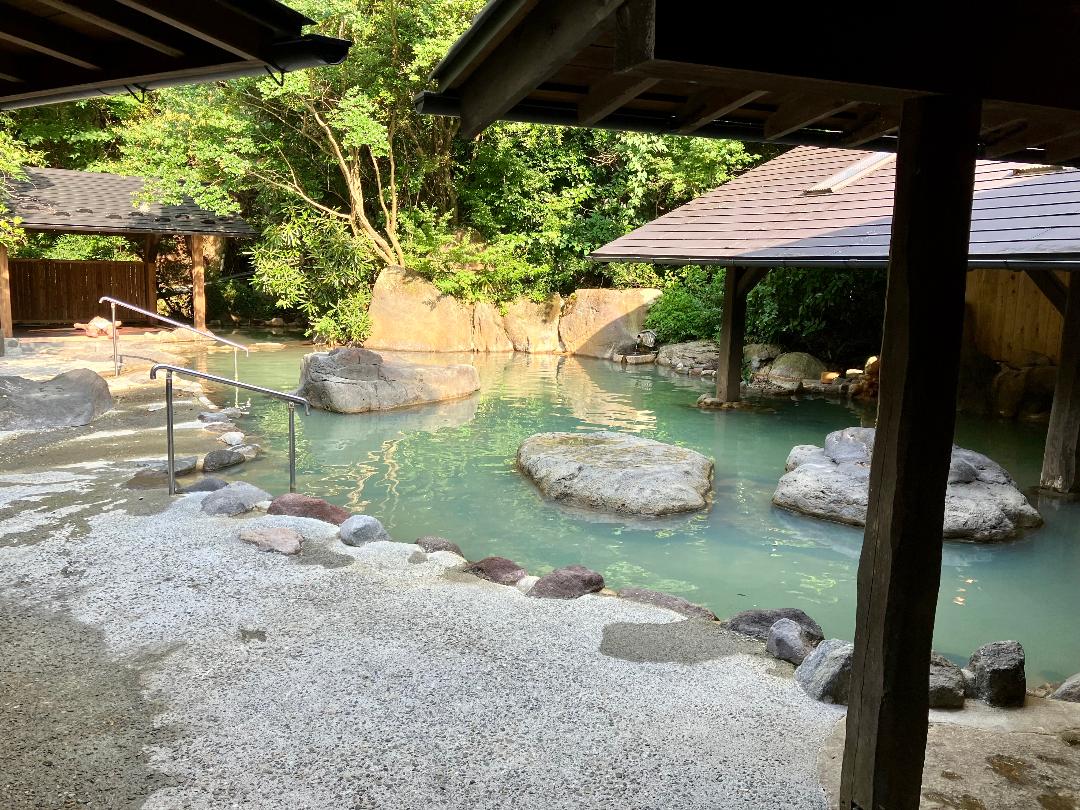
Special mention to the onsen, these Japanese public baths that turn each soak into a mystical experience. We spent 5-6 hours at Kurokawa Onsen, hopping from bath to bath in luxurious hotels, each offering a specific effect for the skin and health. These places exude serenity… well, a bit less with Matteo, I admit, but he did his best 😉. And all this with a family pass at €20, a real bargain for a trip to the Land of the Rising Sun!
A week far, very far from the tourist trails… Not a Westerner in sight, just this wonderful feeling of being alone in the world. What a difference from Kyoto, where you sometimes wonder if you’re there for tourism or for the selfie wars.
A Pleasure to Be with the Japanese
The Japanese are delightful, with a rare kindness, but never overbearing. They always keep a low profile while being ready to help at the slightest need.
A few things particularly impressed us:
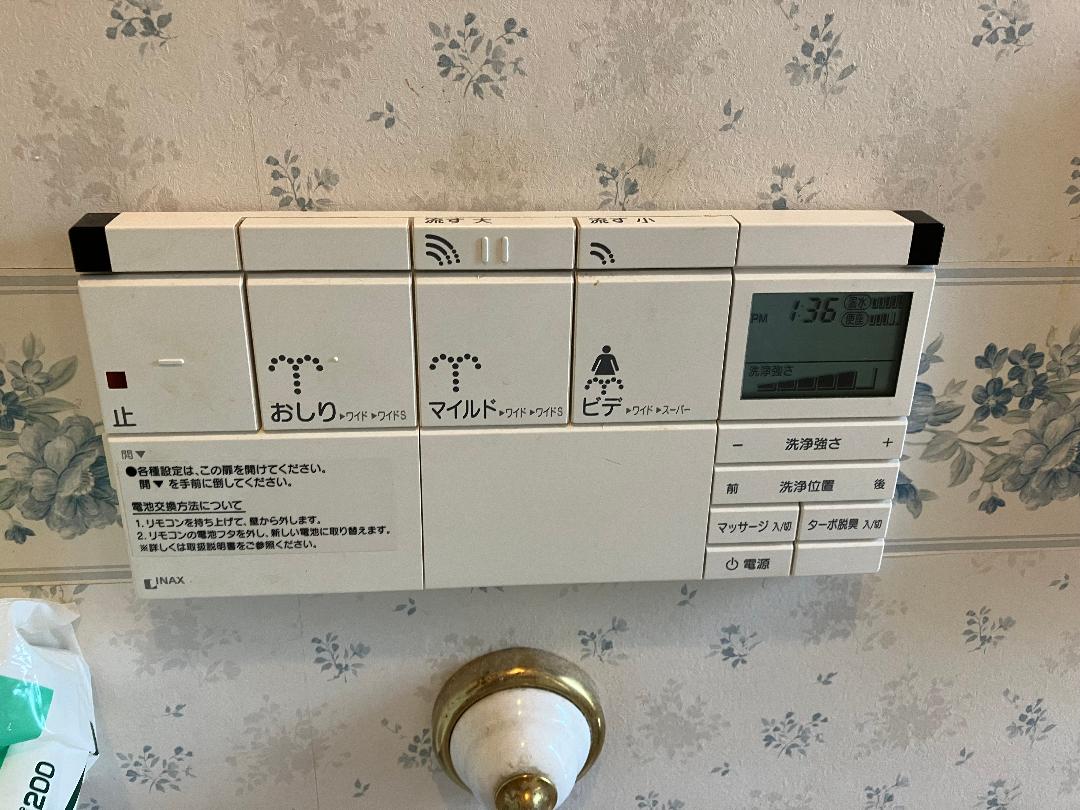
The Famous Japanese Toilets: Much has certainly been written about Japanese toilets. Even though we know about them, they still remain magical. Elevator music to mask noises, air fresheners to hide odors, but especially the toilet seat, which, let’s admit, has more features than a cutting-edge smartphone: heated seat, rear spray, bidet spray, jet speed control… It’s simple, Matteo refuses to use the toilet for fear of a surprise spray or because he hates the seat that, for some unknown reason, decided to be scorching hot while it’s already 35 degrees outside. Our Matteo still prefers the rustic European toilets… he knows how to use them, unlike the Japanese ones who need a manual.
Their Style: The Japanese have a sense of chic that seems straight out of a fashion magazine. Sometimes you wonder if they’re preparing for a runway show, even when just going out to buy bread.
The Almost Supernatural Calm: Imagine a shinkansen (bullet train) with 100 people, and you hear absolutely no noise! We found ourselves telling our kids to whisper, and despite their heroic efforts, they were the only ones disturbing this sacred silence. One might even think the train was designed for on-the-go meditation.
The Sense of Safety: I won’t even dwell on this; it’s so impeccable it’s almost boring!
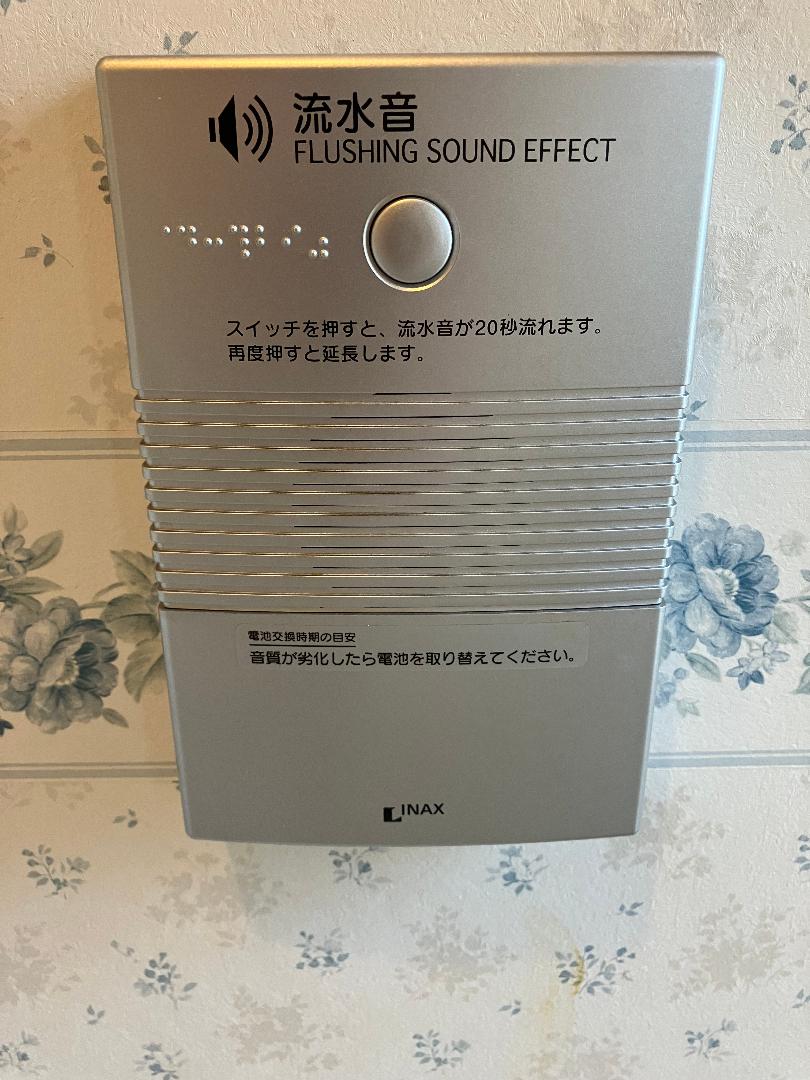

Traveling in Japan is a true pleasure. And yes, Google Translate sometimes saves the day to help us understand menus and to avoid us ordering strange things 😉. But don’t get me wrong, Japan also has its little quirks that I’ll tell you about in the next post. Stay tuned!
But how are you really doing?
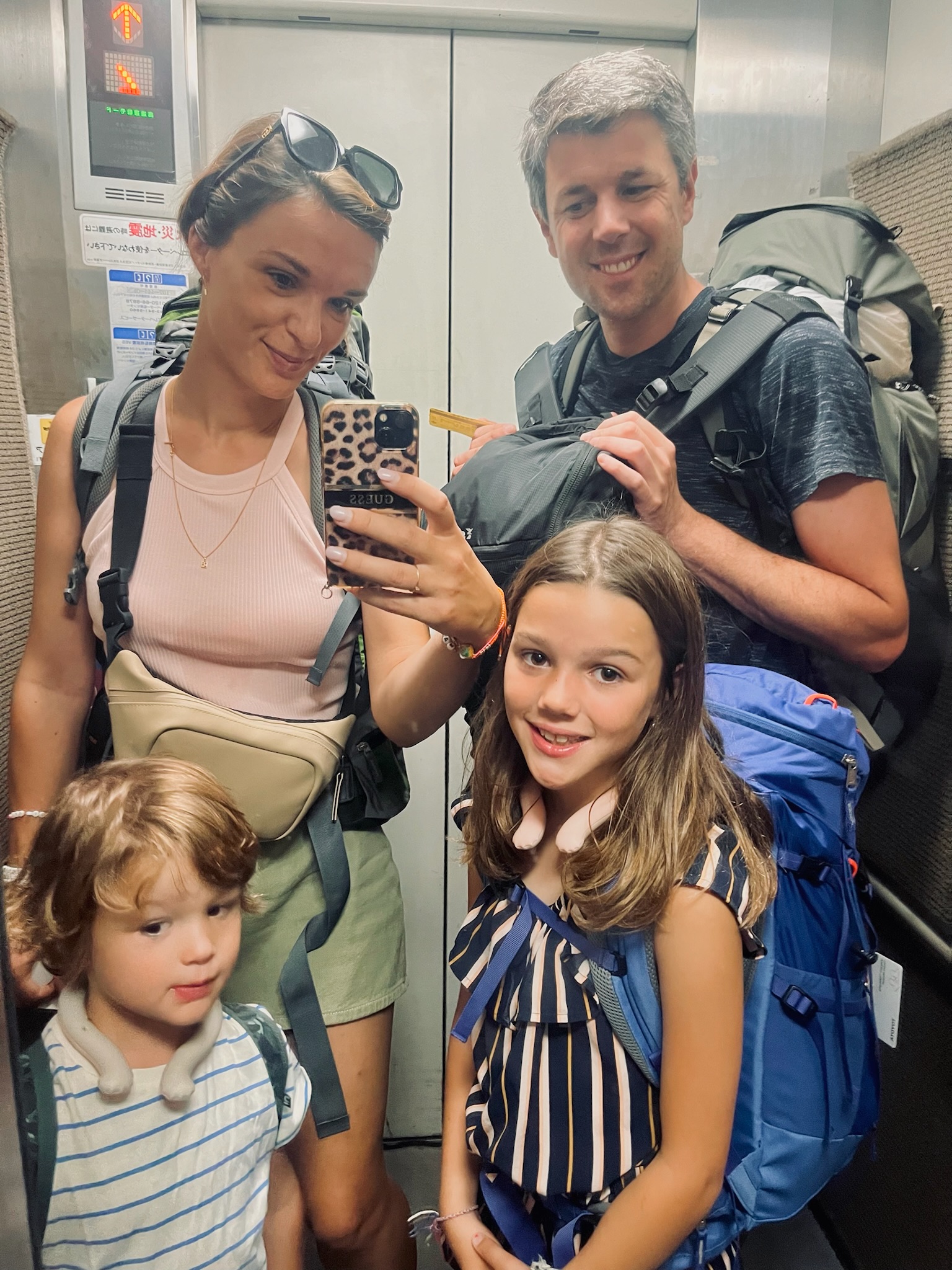
Well, as promised at the beginning, I can’t let you go without telling you how we really feel. We feel good, very good even, thanks for asking. After two weeks, we’re finally starting to “settle” into the journey. Thoughts of Belgium are fading, we’re slowing down, breathing. But I won’t lie: we haven’t yet reached that nirvana that long-term travelers know well.
For now, we’re in vacation mode. We’re savoring. We’re getting closer, discovering ourselves, even if the kids might not yet grasp the magnitude of what traveling for a year means. Honestly, I’m not sure Suzanne and I get it much better 😉.
So what’s next, you ask? Japan is far from a homogeneous block. Its size and climates have sculpted a mosaic of lives and landscapes that change with each kilometer. And that’s exactly what we’ll explore in the coming days: Osaka, Kyoto—the city of a thousand temples—and the Japanese Alps, these mountains where tradition and modernity brush against each other without ever truly touching.
I hope this post resonated with you. Drop your comments, your questions; that’s what we’re here for.
Sending hugs.